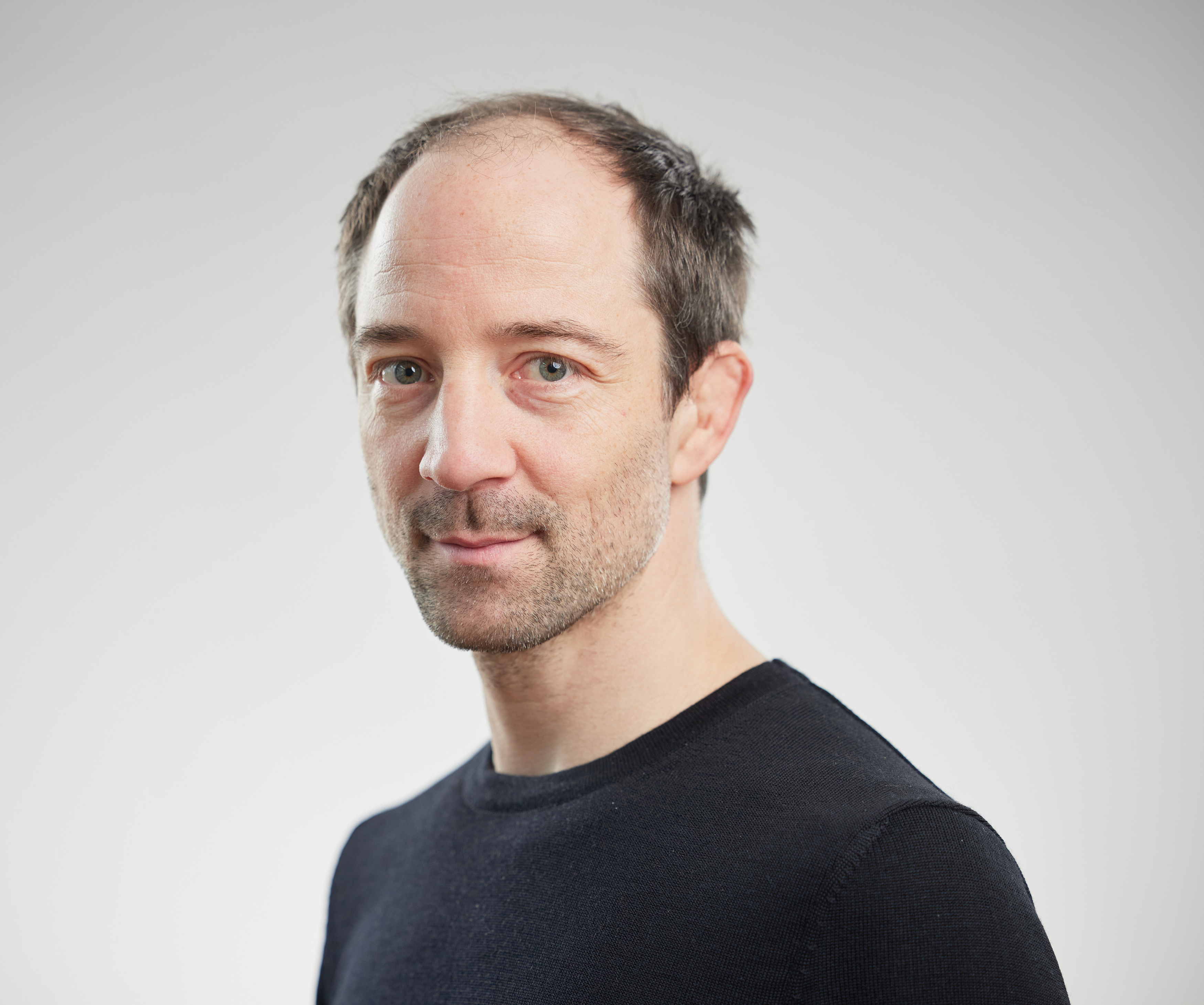
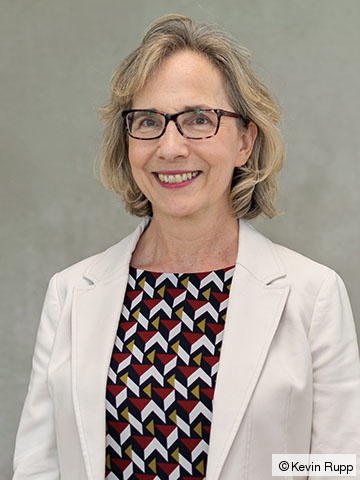
Prof. Heinrich Lukas is a Professor of Data Science in Physics at the Technical University of Munich, affiliated with the TUM School of Natural Sciences and the Department of Physics. His research focuses on experimental particle physics, leveraging advanced data science techniques and computational methods in collaboration with the ATLAS experiment at CERN's LHC. He actively contributes to detector calibration, high-energy collision analysis, and machine learning applications in physics. Recent work includes studies on vector-like quarks, Higgs boson properties, and off-shell phenomena, utilizing cutting-edge simulation-based inference and cloud computing infrastructure. His interdisciplinary projects span from collider physics to healthcare-related studies, such as analyzing dermatitis treatments in clinical registries. Key research interests include: Machine learning-driven particle physics analysis Collider data interpretation (ATLAS experiment) Jet physics and flavor tagging Searches for Beyond Standard Model particles Computational infrastructure optimization Publications (2025) highlight contributions to missing transverse momentum reconstruction , vector-like quark searches , and neural simulation-based inference . Collaborations involve international teams working on ATLAS Run-2 datasets and LHC Run 3 computing frameworks. Current efforts emphasize leveraging AI infrastructure for particle physics while maintaining involvement in medical data analysis.
Oskar Engels is a Researcher and Doctoral Student at the Educational Measurement and Data Science department at the Leibniz Institute for Science and Mathematics Education (IPN) since 2023. His research focuses on educational measurement, data science, item response theory, vertical scaling, and missing data analysis. He previously served as a Scientific Assistant at the Institut für Bildungsmonitoring und Qualitätsentwicklung from 2022 to 2023. Education: Master in Sociology, University of Hamburg (2022) Bachelor in Sociology, University of Hamburg (2018) Research Interests: His work centers on refining statistical methods for educational assessments, including modeling item responses, scaling techniques across grade levels, and handling missing data in educational datasets. These interests align with the IPN’s methodological research and machine learning initiatives. Contact: Email engels@leibniz-ipn.de | Phone: +49-(0)431-880-1315 | Location: Room 35c, IPN, Kiel, Germany.
Prof. Dr. Steffi Pohl is a Professor of Methods and Evaluation/Quality Assurance at the Department of Methods and Evaluation/Quality Assurance, Faculty of Education and Psychology, Freie Universität Berlin. She holds editorial roles in prominent journals like Psychometrika and Journal of Educational and Behavioral Statistics . Her research focuses on psychometrics, log data analysis, missing data mechanisms, and causal inference in educational assessments. Steffi Pohl's academic journey includes a Diplom in Psychology from Freie Universität Berlin (1998–2004) and a Ph.D. in Psychometrics (2005–2010) from Friedrich-Schiller-Universität Jena. She has held various research positions, including at the National Educational Panel Study (NEPS) and the University of Hertfordshire, UK. Her work emphasizes methodological advancements in testing, missing data, and measurement invariance across populations. Her research interests span psychometric modeling, log data analysis, and addressing challenges in large-scale educational assessments. Key contributions include innovations in response time analysis, disentangling engaged/disengaged test behaviors, and improving cross-cultural comparisons in educational rankings. She has been recognized with the 2020 Early Career Award from the Psychometric Society and the 2011 Gustav A. Lienert Dissertation Prize. In addition to research, Pohl teaches courses on empirical social research methods and multivariate analysis techniques. She actively contributes to university governance as a member of the Academic Senate at Freie Universität Berlin and serves as a trusted advisor for the German National Academic Foundation.
Andreas Zendler serves as Director of the Institute of Computer Science at Ludwigsburg University of Education (2023-25), where he has held various leadership positions since 2004, including Head of the Department of Computer Science (2018-2022) and Director of the Institute of Mathematics and Computer Science (2011-2016). As a Professor (C4) for Computer Science and its Didactics since 2004, he has shaped computer science education programs including the BA/MA degree program in Computer Science. Zendler earned dual doctorates - a Dr. rer. nat. in Practical Computer Science from the University of Potsdam (1997) and a Dr. phil. in Experimental Psychology from the University of Regensburg (1988), followed by his habilitation in Practical Computer Science at the University of Potsdam (2000). His academic journey spans computer science, psychology, and education, creating a unique interdisciplinary foundation for his research. His research focuses on empirical computer science didactics, software engineering for cloud computing, data science, and the digitalization of teaching through SaaS models. He investigates content and process concepts for computer science teaching, compares learning effectiveness of instructional methods, and develops research methodologies specifically for educational contexts with small sample sizes. His work bridges theoretical frameworks with practical classroom applications across STEM disciplines. Zendler's publication record reveals a consistent trajectory from foundational software engineering research toward educational applications. His recent work (2018-2025) demonstrates increasing specialization in computer science education, particularly in competence measurement frameworks like cpm.4.CSE/IRT and their adaptations for small sample sizes. His upcoming publications indicate a strategic pivot toward AI applications, exploring how LLMs and GPTs can transform both data science practices and software engineering education. Throughout his career, Zendler has served as a dissertation reviewer for Practical Computer Science since 2001 and contributed to numerous research projects funded by organizations including the European Union, the Bavarian Research Foundation, and the German Aerospace Center (DLR). His project leadership spans bioinformatics, educational informatics, and software engineering domains. His methodological expertise includes experimental design for teaching research (particularly 3-factorial designs with repeated measurements), statistical evaluation approaches for small samples, and handling missing data in educational contexts. This technical proficiency supports his broader mission to establish rigorous empirical foundations for computer science education.
Anna-Carolina Haensch is a Lecturer at the University of Munich in the Chair of Statistics and Data Science in Social Sciences and the Humanities and an Assistant Professor at the University of Maryland in the International Program in Survey and Data Science. Her interdisciplinary work bridges statistics, computational social science, and natural language processing, with a focus on methodological innovation in social research. Education: PhD in Sociology, University of Mannheim (2017-2021) M.Sc. in Survey Statistics, University of Bamberg (2014-2017) B.A. in Political Science/Sociology, Ludwig-Maximilians-Universität München (2011-2014) Dr. Haensch's research centers on missing data, synthetic data, and big data applications in social sciences. She develops advanced statistical methods for survey data harmonization, multiple imputation techniques, and leverages natural language processing to analyze complex social phenomena. Her work consistently addresses methodological challenges in social research with practical applications for data collection and analysis. Her recent publications reveal a significant trend toward integrating large language models with traditional survey methodology, exploring how AI can enhance data collection, analysis, and interpretation in social science research. She has made substantial contributions to understanding missing data patterns, developing synthetic data approaches, and examining the societal implications of AI tools across multiple domains including mental health, political science, and housing policy. Scientific Awards: 2022 AAPOR Burns "Bud" Roper Fellow Award 2022 AAPOR Warren J. Mitofsky Innovators Award (as part of CTIS team) 2022 AAPOR Policy Impact Award (as part of CTIS team) 2011-2017 Max-Weber-Programm (undergraduate and graduate stipend) Dr. Haensch actively mentors the next generation of researchers, currently supervising 3 PhD theses on statistical education, machine learning applications in social sciences, and synthetic data generation with LLMs. She has guided approximately 6 master's theses and 15 bachelor's theses at the University of Munich since 2022, with topics primarily related to synthetic data, multiple imputation, and LLM applications. Her teaching spans statistical methods, data science techniques for survey researchers, and specialized topics in big data analysis. She has secured teaching grants including a €20,000 promotion for the RAINER project (R Assistant IN Error Resolution) for 2024-2025 and a €10,000 LMU-NYU Scholarship in 2023. She serves on several important boards including the Eurostat EMOS Board (2024-2026), the Ethics Commission of Faculty 16 at LMU (2023-2025), and as Women's Representative at the Institute for Statistics, LMU (2024-2026). Her collaborative work with the University of Maryland Social Data Science Center and involvement in the Global COVID-19 Trends and Impact Survey demonstrates her commitment to large-scale data collection initiatives and real-time social research.
Junyi Zhu is a Research Professor at the Research Centre of the Deutsche Bundesbank. His research focuses on labor economics, applied microeconomics, and public economics with a particular emphasis on household finance, wealth distribution, and policy analysis. He has contributed to significant projects like the Panel on Household Finances (PHF) in Germany, providing microdata insights into household wealth dynamics. His work bridges theoretical economic models with empirical analysis, addressing issues such as credit constraints, tax policy, and wealth inequality. Affiliations: Deutsche Bundesbank Research Centre since 2010 Research interests include the redistribution effects of price level changes, household saving behaviors, and the interplay between inheritance and marital sorting. His publications span journals like the Journal of the European Economic Association and German Economic Review . Zhu has presented at numerous international conferences, including the World Congress of the International Microsimulation Association and the European Meeting of the Econometric Society. His work emphasizes policy-relevant findings, such as solutions to bracket creep and the design of effective economic stimulus measures. Despite extensive contributions, no specific scientific awards are documented in the provided materials.
Andreas Dengel is a Professor of Computer Science at the Rhineland-Palatinate University of Technology (RPTU) and Managing Director of the German Research Center for Artificial Intelligence (DFKI) in Kaiserslautern. He leads the Smart Data & Knowledge Services research area and the DFKI Deep Learning Competence Center, with additional professorship rights at Osaka Metropolitan University since 2009. He earned his doctorate in Computer Science from the University of Stuttgart in 1989 following undergraduate studies in Computer Science with Economics at RPTU (then TU Kaiserslautern). His academic promotions progressed from C3 to W3 Professor at RPTU between 1993-2013. Professor Dengel's research centers on Machine Learning and Pattern Recognition with applications in Earth Observation, document analysis, and semantic technologies. His work bridges theoretical AI with industrial implementation, notably through NVIDIA-certified deep learning frameworks and multi-institutional Earth Observation projects. He pioneered quantified learning approaches for satellite data interpretation and human behavior modeling. Recent publications (2025) demonstrate his focus on diffusion models for geospatial data, multi-view learning for missing Earth Observation data, and gaze-based confidence detection systems. These works highlight cross-disciplinary integration of deep learning with environmental science and human-computer interaction. His extensive honors include: ICDAR Outstanding Achievement Award (2019) Order of the Rising Sun with Gold Rays (2021) Order of Merit of Rhineland-Palatinate (2022) IAPR Fellow distinction NVIDIA Pioneer Award He has secured over €100 million in third-party funding and supervised 500+ theses. His MIND graduate school supports 20 industry-sponsored students, while international exchange programs with Japanese institutions foster cross-border research. As FFPA Chairman and acatech member, he shapes national AI policy including Germany's "Lernende Systeme" platform. His leadership spans DFKI's Deep Learning Competence Center (NVIDIA Excellence Program awardee) and research groups developing Robust Machine Learning for defense systems, Ageing Smart environments, and Earth Digital Twin technologies through EU and national projects.
Nico Remmert serves as a Research Assistant at the Department of Education and Psychology, Methods and Evaluation/Quality Assurance unit of Freie Universität Berlin under Prof. Dr. Steffi Pohl since February 2021. Concurrently pursuing a PhD in Psychology since 2021, his work bridges statistical methodology and clinical psychology. His educational background includes: Bachelor's in Psychology (2014-2018, Freie Universität Berlin) Master's in Psychology: Clinical and Health Psychology (2018-2020, Freie Universität Berlin) Master's in Statistics (since 2020, Humboldt-Universität Berlin) Research focuses on psychometric innovation in misophonia assessment and clinical avoidance behavior modeling. Key contributions include developing the Berlin Misophonia Questionnaire (BMQ-R) and pioneering methods using missing responses/response times to quantify avoidance. Current work integrates Item Response Theory with latent-state-trait models for clinical diagnostics. His publication pattern reveals concentrated expertise in sound intolerance disorders and missing data methodology, with 6 major outputs between 2022-2023 spanning questionnaire validation, avoidance behavior modeling, and misophonia networks. Award highlights: Misophonia Student Research Grant from soQuiet (2023) Incentive Funds for Research Implementation (2022) As a Research Assistant, he secures competitive funding while teaching statistics/diagnostics courses since 2021. International collaborations include research stays at King's College London with Silia Vitoratou's Psychometrics and Measurement Lab, supported by Misophonia Research Fund participation. Embedded in Prof. Pohl's research group, he contributes to the Methods and Evaluation/Quality Assurance team's mission in advancing psychological assessment techniques through rigorous statistical approaches.
Prof. Dr. Claus H. Carstensen is a full professor at the Faculty of Human Sciences , Otto-Friedrich University of Bamberg , holding the Professorship for Psychological Methods of Empirical Educational Research . His work focuses on educational assessment methodologies, particularly in longitudinal studies and large-scale educational surveys. Professional Background : Professor at University of Bamberg (2008–present) Junior Professor at Kiel University (2002–2008) Research roles at IPN Kiel and Australian Council for Educational Research Academic Leadership : Scientific Director of Scaling and Test Design at LIfBi (2014–present) Interim Head of Department at LIfBi (2016–2017) Member of National Educational Panel Study (NEPS) Network Committee Research Interests center on psychological methodology and empirical educational research , with specific expertise in: Item Response Theory (IRT) applications Longitudinal modeling of educational trajectories Competence diagnostics across the lifespan Large-scale assessment design and analysis International comparative research in education Publication Trends demonstrate sustained focus on educational measurement through: Developing cross-classified multilevel IRT models Advancing plausible value estimation with missing data Addressing response style analysis in cross-cultural assessments Refining test scaling and linking methods Improving assessment for special educational needs Contributing to PISA and NEPS technical frameworks Academic Contributions include: Co-editing Multivariate and Mixture Distribution Rasch Models (Springer, 2007) Co-developing MULTIRA software for multidimensional Rasch models Technical leadership in NEPS (National Educational Panel Study) Editorial roles in Psychological Methods and Studies in Educational Evaluation Membership in DGPs (German Psychological Society) and Psychometric Society Current organizational roles encompass: Dean of Faculty of Human Sciences (2023–2025) Chair of Examination Committees for M.Sc. programs Conflict Commission Chair at University of Bamberg IT Security Team member
Prof. Dr.-Ing. habil. Volker Kühn serves as Professor and Head of the Institute of Communications Engineering at the University of Rostock within the Faculty of Computer Science and Electrical Engineering. He concurrently holds the position of Vice Dean of the Faculty while directing academic operations as Chairman of both the Electrical Engineering and Medical Information Technology Examination Boards. His research integrates wireless communications theory with biomedical applications, specializing in spatial modulation techniques, information bottleneck optimization, and electrical impedance tomography signal processing. Current work focuses on machine learning-enhanced physiological monitoring systems and distributed compression algorithms for sensor networks, with significant contributions to bias-free spectral estimation from irregularly sampled data. Analysis of his 2021-2025 publications reveals three dominant research thrusts: (1) neural network applications for medical signal processing, (2) information-theoretic optimization of communication protocols, and (3) advanced spectral estimation methods for biomedical and sensor data. This interdisciplinary approach bridges communications engineering with healthcare technology development. Prof. Kühn actively mentors students as Study Advisor for Electrical Engineering and Academic Advisor for Medical Information Technology. His leadership extends to the ITG Technical Committee 5.1 on Information and Systems Theory and IEEE societies. The Institute of Communications Engineering under his direction maintains specialized laboratories for wireless communications testing, medical signal acquisition, and MIMO system prototyping, supporting both fundamental research and industry collaboration projects in 5G/6G technologies and healthcare IoT.
Prof. Dr. Alois Kneip is a leading academic at the Department of Economics , University of Bonn, with affiliations to the Institute for Finance & Statistics and the Hausdorff Center for Mathematics . His research focuses on advanced statistical methodologies, particularly in Functional Data Analysis , Aggregation Theory , and Nonparametric Statistics . His work spans interdisciplinary applications, including econometric modeling, growth curve analysis, and high-dimensional regression. Key contributions include developing frameworks for Malmquist indices , DEA efficiency scores , and functional principal component analysis . Recent publications emphasize spatial regression, parameter cascading, and reconstruction of fragmented functional data. Alois Kneip’s research has been published in top-tier journals such as the Journal of the American Statistical Association , Annals of Statistics , and Econometric Theory . His methodological innovations bridge theoretical statistics with practical problems in economics, finance, and biomedical data analysis. He actively contributes to teaching and academic leadership at the University of Bonn.
Dominik Liebl is a Professor of Statistics at the University of Bonn's Department of Economics and a member of the Hausdorff Center for Mathematics (HCM), a Cluster of Excellence funded by the German Science Foundation (DFG). He also holds a visiting associate position at Colorado State University's Department of Statistics. His research spans Functional Data Analysis , Nonparametric Statistics , and Longitudinal Data Analysis , with applications in energy economics, finance, e-commerce, emotion psychology, and biomechanics. Recent methodological work focuses on simultaneous inference and statistical fairness . The articles in his profile demonstrate a strong emphasis on functional data methodologies applied to diverse domains like COVID-19 seroprevalence , electricity markets , and human movement science . Key subfields include confidence band design , biomechanical hypothesis testing , and high-dimensional econometric modeling . He actively contributes to open science through R-packages at CRAN/GitHub and serves as Associate Editor for the Journal of the Royal Statistical Society: Series C.
Prof. Achim Stahl serves as University Professor and Chair at RWTH Aachen University, where he directs JARA-FAME (Jülich Aachen Research Alliance - Fundamental Forces and Particle Physics) and leads the 3rd Physics Institute B with approximately 70 scientists, engineers, and administrators. His research spans multiple domains of particle physics and experimental physics with significant contributions to major international collaborations including CMS at CERN, JUNO, Double Chooz, and the Einstein Telescope project. PhD in Physics from University of Heidelberg (1993), thesis: 'Installation, optimization and analysis of the ALEPH event trigger and investigation of muonic decays of tau leptons' Diploma in Physics from University of Tübingen (1988) with optimal mark 1.0 Habilitation with book 'Physics with tau leptons' published in Springer Tracts in Modern Physics Prof. Stahl's research spans multiple frontiers of particle physics. His primary interests include neutrino physics (mass hierarchy and CP-violation with experiments like JUNO, T2K, and Double Chooz), gravitational wave detection with the Einstein Telescope project, CP-violation studies through electric dipole moment searches, CMS experiment data analysis with tau leptons, and medical physics applications including radiation therapy and GEANT4 simulations. He has extensive hardware experience in detector development, including trigger systems, PMT readout, calorimeters, and position sensors. His recent publications demonstrate expertise across diverse areas of particle physics, with significant contributions to Higgs boson physics, neutrino oscillations, CP violation studies, and detector development. A substantial portion of his work focuses on the CMS experiment at CERN and the JUNO neutrino experiment, reflecting his leadership in these major international collaborations. His publications show equal strength in theoretical analysis and experimental hardware development, particularly in trigger electronics and precision measurement systems. While specific awards aren't detailed in the available information, Prof. Stahl has achieved an h-index of 120, reflecting significant impact in his field. His leadership roles include membership on the executive board of JUNO and serving as speaker of the DFG research unit FOR 2319 'Bestimmung der Massenhierarchie mit dem JUNO-Experiment'. Prof. Stahl has supervised numerous students throughout his career, including 20 theses that led to 11 OPAL papers during his time at the University of Bonn. He coordinates national activities on the Einstein Telescope and is deeply involved in multiple neutrino projects. His research is supported by significant grants enabling participation in international collaborations and hardware development for major experiments. His team has developed innovative detector technologies including integrated PMT readout systems and trigger electronics for neutrino experiments. As director of the 3rd Physics Institute B at RWTH Aachen, Prof. Stahl leads a substantial research group focused on fundamental physics questions. He is a founding member and current director of the JARA section FAME, which focuses on CP-violation and the matter-antimatter asymmetry in the universe. His team is actively developing technologies for the Einstein Telescope project, contributing to the JUNO neutrino experiment, conducting research with the CMS experiment at CERN, and applying particle physics techniques to medical applications.
Prof. Barbara Klein is a Professor of Social Work Organisation and Management at Frankfurt University of Applied Sciences' Faculty 4: Social Work and Health. She serves as Dean of the faculty, Spokesperson of the FUTURE AGING Research Center, and Vice President of the International Society for Gerontechnology (ISG 2024). Her work focuses on new technologies in social and healthcare, including assistive robotics, organizational management, and ethical implications of technology in care. Her education includes a Dr. phil. from Goethe University Frankfurt and extensive leadership training. She has held visiting professorships at Osaka University and Northumbria University. Klein has led numerous research projects funded by EU, BMBF, and Hessian ministries, addressing aging populations, assistive technologies, and universal design. Key awards include the 2019 Hessian Research Award and the 2013 Hessian State Prize for Universal Design. She teaches in social work and digital health programs, mentoring students across disciplines. Her research explores innovations like telepresence robots, smart home systems, and ethical frameworks for healthcare robotics.
Jong-Hwan Kim is a Professor at KAIST's College of Engineering, specialized in robotics and artificial intelligence. His research focuses on neural networks, autonomous systems, computer vision, and human-robot interaction. He has published extensively in top-tier conferences like CVPR, ICRA, and IEEE Transactions. Key contributions include work on developmental learning networks, episodic memory models, and AI applications in robotics and healthcare. He co-chaired the RiTA conference series and has collaborated with institutions globally. His research bridges theoretical advancements with practical applications in robotics, medical diagnostics, and multimodal AI. Affiliations: KAIST (main), Seoul National University (PhD 1987) Research Highlights: Visual odometry, gesture recognition, emotion modeling, and robotics task intelligence Recent projects include text recognition via finger movement, Alzheimer's disease classification using EEG-FNIRS fusion, and multimodal emotion recognition systems. His work emphasizes interdisciplinary approaches, integrating robotics, computer vision, and cognitive science.