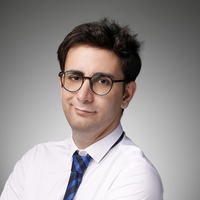
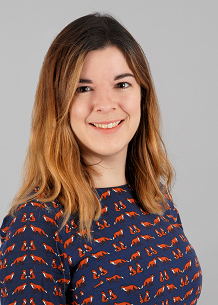
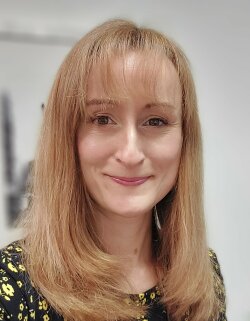
Baoyu (Stone) Chen is an Associate Professor at Iowa State University's Department of Biochemistry, Biophysics and Molecular Biology. His research focuses on cell morphogenesis and migration, particularly the regulation of the actin cytoskeleton by surface receptors. Chen's work integrates biochemistry, genetics, and structural biology to study signaling pathways in organisms like C. elegans. Education: B.S., Chemical Engineering, Hunan University (2000) M.S., Biochemistry, Tsinghua University (2003) Ph.D., Chemical Biology, Pennsylvania State University (2008) Postdoctoral Fellow, University of Texas Southwestern Medical Center (2008-2015) Research Interests: Mechanisms of actin cytoskeleton regulation via membrane receptors Role of WAVE complex in axon guidance and synaptogenesis Development of chemical tools for in vivo studies Structural biology of cytoskeletal regulators Recent work highlights discoveries in Netrin-DCC signaling pathways, genetic basis of mirror movement disorders, and endosomal trafficking mechanisms. His lab employs interdisciplinary approaches to bridge basic research and therapeutic discovery. Labs/Teams: Stone Chen Lab (focusing on actin cytoskeleton signaling)
Thomas Rudolfsson is a Lecturer and Doctor of Medicine in Physiotherapy, researching sensorimotor function in neck disorders and neurodevelopmental conditions. His work bridges occupational health and clinical neuroscience. Primary research streams: Neck coordination training for chronic pain Sensorimotor development in autism spectrum disorder (ASD) Workplace interventions for flexible work arrangements Quantitative movement analysis methodologies Recent studies (2023-2025) examine motor planning differences in autistic children using kinematic measurements and neuroimaging. Earlier clinical trials demonstrate sensorimotor improvements through neck coordination exercises. Contributes to Forte Centre research on work-related musculoskeletal disorders.
Amir Valizadeh is a Postdoctoral Associate in the Department of Psychiatry at Yale School of Medicine and the VA Connecticut Healthcare System. He holds an MD from Tehran University of Medical Sciences (2019). His research integrates computational biology, machine learning, and clinical expertise, focusing on multi-omics integration, epigenomic profiling, and biomarker discovery in psychiatry and immunology. Education & Training: MD in Medicine, Tehran University of Medical Sciences (2019) Postdoctoral Research Fellow, Tehran University of Medical Sciences (2022) Research Assistant, Research Center for Molecular and Cellular Imaging (2020) Student Researcher, Research Center for Immunodeficiencies (2018) Research Interests: Valizadeh’s work explores the interplay between computational methods and clinical research. Key areas include: AI-driven precision diagnostics (e.g., DNA methylation-based ketamine response prediction in PTSD) Epigenetic mechanisms in HIV reservoirs and SIV/HIV transcriptomic alterations Systematic reviews on schizophrenia’s mirror neuron dysfunction and multiple sclerosis therapies Labs & Affiliations: He is affiliated with the Xu Lab, focusing on translational research in psychiatry and immunology. His work bridges computational biology and clinical applications, such as leveraging AI for disease biomarker discovery. Grants & Future Work: While specific grants are not detailed, his research aligns with emerging areas like AI in healthcare and epigenetic therapies for infectious diseases.
Dr. Hannah Hobson is a Senior Lecturer in the Department of Psychology at the University of York. Her research focuses on language and communication challenges in developmental and acquired conditions, including autism spectrum disorder, developmental language disorder, and stroke survivors. She has a particular interest in how language interacts with emotional processing and the neural systems underlying social cognition. She also advocates for reproducible and ethical research practices in psychology. Education: Bachelor of Arts in Experimental Psychology, University of Oxford (2009-2012) Doctor of Philosophy (DPhil) in Experimental Psychology, University of Oxford (2012-2016) Research Interests: Language disorders and their impact on emotional and social functioning Neural mechanisms of imitation and social interaction Alexithymia and its relationship to language Improving reproducibility in psychological research Recent Articles Focus: Her work examines intersections between language impairment, neurodiversity, and social cognition, with recent studies addressing topics like mask-wearing effects on autistic individuals, developmental language disorder in legal contexts, and participatory autism research practices. Teaching & Service: Leads the Clinical Research Methods module in the Developmental Disorders and Clinical Practice MSc. Actively involved in editorial roles promoting open science. Collaborations: Works with researchers at City University, University of Bath, and University of Warwick, focusing on developmental and clinical psychology.
Dr. Kimberly Cuevas is an Associate Professor in the Department of Psychological Sciences at the University of Connecticut, with offices in Waterbury and Storrs. She earned her Ph.D. from Rutgers University in 2009. Her research examines cognitive development from infancy through childhood, emphasizing brain-behavior relationships and neural maturation processes using EEG and ECG methodologies. Her research interests span cognitive development, developmental neuroscience (including EEG/ECG applications), neural mirroring systems, and latent learning. She investigates how brain maturation underpins executive functions, memory formation, and learning processes during early development. Dr. Cuevas’ publications focus on neurocognitive development, with recurring themes in EEG correlates of executive function, memory binding mechanisms, reward-temperament interactions, and neural mirroring systems. Her work employs longitudinal designs, meta-analyses, and innovative neurophysiological approaches to map developmental trajectories from infancy through childhood. Fellow, Eastern Psychological Association (elected, 2020) Early Career Outstanding Paper Award, APA Division 7 (2015) Kucharski Young Investigator Award, ISDP (2015) Sandra G. Weiner Award (2005) National Psi Chi Research Award (2002) She leads two NIH-funded grants: co-PI on R01HD109221 (2023-2028) studying infant learning psychometrics, and co-PI on R01HD104945 (2022-2027) analyzing neural rhythms in early development. She directs the Cognitive and Affective Psychophysiology (CAP) Lab, which investigates neurobehavioral development using psychophysiological methods.
Professor Philip Gerrans is a faculty member in the School of Humanities at the University of Adelaide, within the Faculty of Arts, Business, Law and Economics. His research focuses on using psychological disorders to study the mind, with a particular emphasis on neuropsychiatry, cognitive modeling, and philosophical issues in mental health. He collaborates with the Swiss Centre for Affective Sciences, integrating computational models of neural processing with experiential phenomena. Current projects include the relationship between emotional processing and self-representation, and the philosophical implications of psychedelic experiences. He is eligible to supervise Masters and PhD students in these areas. Key research interests include developmental disorders (e.g., autism), moral psychopathology, delusional disorders, and the application of predictive coding frameworks to mental health. His work bridges neuroscience, philosophy, and clinical psychology, addressing topics like self-dissolution during psychedelic use, neural models of depression, and the cognitive basis of delusions. He emphasizes interdisciplinary methods, combining empirical research with theoretical analysis. Professor Gerrans has published extensively on topics such as depersonalization disorder, mirror neuron systems, and the neurochemistry of emotion. His recent work explores the intersection of psychedelic science and consciousness studies, as well as the computational underpinnings of psychiatric disorders. He maintains active collaborations across disciplines and institutions, contributing to both academic discourse and clinical understanding.
Jess Reynolds is an Adjunct Research Fellow at The University of Western Australia Medical School in the Department of Paediatrics, with expertise in developmental neuroscience and pediatric disorders. Her research focuses on understanding developmental coordination disorder and brain development in children through advanced neuroimaging techniques. Dr. Reynolds specializes in developmental coordination disorder research, with particular emphasis on white matter microstructure, functional magnetic resonance imaging, and developmental trajectories in young children. Her work examines how environmental factors, maternal health conditions, and genetic predispositions influence brain development and motor coordination in pediatric populations. She employs sophisticated neuroimaging techniques to investigate fractional anisotropy and mirror neuron systems in children with developmental disorders. Analysis of Dr. Reynolds' recent publications reveals a strong focus on developmental coordination disorder across multiple contexts. Her research consistently examines brain structure and function in pediatric populations, with particular attention to white matter microstructure using advanced MRI techniques. She has conducted significant work on environmental impacts on child brain development, sex differences in neurological outcomes, and the psychosocial impacts of developmental disorders on children and families. Her research bridges clinical pediatrics, neuroscience, and developmental psychology to address critical questions in child development. Dr. Reynolds has served as Investigator 04 on the Waterloo Foundation-funded project "Effect of an exercise intervention on physical activity levels, quality of sleep and mental health outcomes in children and youth with developmental coordination disorder" (October 2020 - December 2023). This collaborative research involved multiple institutions and focused on developing interventions to improve outcomes for children with developmental coordination disorder. She has established productive research collaborations with investigators including Licari, Whitehouse, Reid, Evans, and Alvares across multiple studies examining developmental disorders from neurological, psychological, and social perspectives.
Dr Melissa Licari is a Senior Research Fellow within the Child Disability Team at The Kids Research Institute Australia and the University of New South Wales. She holds an Adjunct Lecturer position in the School of Human Sciences at The University of Western Australia. Her work focuses on clinical characterization and intervention of pediatric movement disorders, with strong collaborations with UWA's Paediatric Exercise Programs including MiniGym and UniGym initiatives. Her research interests span developmental coordination disorder, autism spectrum disorder, attention deficit hyperactivity disorder, cognitive neuroscience, and developmental neurology. Dr Licari has developed a unique fingerprint of expertise that includes developmental coordination disorder (100%), attention deficit hyperactivity disorder (36%), pervasive developmental disorder (30%), autism (30%), functional magnetic resonance imaging (19%), intellectual disability (19%), physical activity (18%), and mirror neurons (18%). Her research publications demonstrate a strong focus on neurodevelopmental disorders across multiple settings. The most recent work examines transdiagnostic approaches to movement difficulties, national survey impacts on families, diagnostic service gaps, and the effects of developmental coordination disorder across home, school, and community environments. Her work frequently appears in high-impact journals including Autism in Adulthood, Disability and Rehabilitation, PLoS One, and Research in Developmental Disabilities. Dr Licari has received significant recognition with 1374 citations and an h-index of 20. Her research has been widely shared across social media platforms with mentions on news outlets, X (Twitter), Facebook, and Bluesky, and has garnered substantial academic attention with readers on Mendeley. She serves as principal investigator on multiple active research projects including 'Expanding the Impact: Addressing the Unmet Needs of Adults with Developmental Coordination Disorder' (Waterloo Foundation, 2025-2026) and previously led projects on exercise interventions for children with developmental coordination disorder and Australia's National Action Plan for DCD. Dr Licari also supervises honors, master's, and doctoral research projects related to pediatric movement disorders and neurodevelopmental conditions. As a dedicated advocate, she serves on the boards of Developmental Coordination Disorder Australia and the International Society of Research and Advocacy for Developmental Coordination Disorder. She spearheaded Australia's first national survey on Developmental Coordination Disorder (Impact for DCD, 2020), which has expanded internationally to include Tourette syndrome (Impact for Tourette's, 2025) and childhood apraxia of speech (Impact for CAS).
Thomas Decramer serves as Assistant Professor at the Department of Neurosciences within KU Leuven's Faculty of Medicine, where he leads research in the Experimental Neurosurgery and Neuroanatomy group. He holds significant academic governance roles as member of the Biomedical Sciences Doctoral School Committee, Faculty of Medicine Council, and Department of Neurosciences Council, reflecting his institutional influence in medical education and research strategy. His research program centers on translational neurosurgical innovation, with dual ongoing projects investigating endoscopic impacts on olfaction (2024-2028) and diffusion MRI of cranial nerves (2024-2028). Key specialties include skull base surgery, functional neuroanatomy, and advanced neuroimaging applications for Parkinson's disease, epilepsy, and neuro-oncology. His work bridges intraoperative techniques with electrophysiological validation, particularly in visual cortex mapping and subthalamic oscillation modulation through physical interventions. Recent publications (2024-2025) reveal a distinct pattern of clinically driven neuroscience: 60% focus on surgical innovation (endoscopic approaches, implant design), 30% on neurophysiological mechanisms (body representation, beta oscillations), and 10% on diagnostic imaging advances. The research consistently employs multimodal methodologies including photon-counting CT, diffusion tractography, and intracortical recordings, often through large collaborative networks across neurosurgery, oncology, and rehabilitation medicine. Scientific Awards: No awards documented in source materials As co-promotor for two major doctoral projects, Decramer supervises PhD candidates investigating olfactory outcomes in endoscopic surgery and cranial nerve imaging biomarkers. His research is institutionally funded through KU Leuven's internal grant mechanisms, supporting both clinical trials and experimental neuroanatomy work within the university hospital ecosystem. Teaching responsibilities span neurosurgery residency training and graduate neuroscience courses including Advanced Studies in System and Cognitive Neurosciences. The Experimental Neurosurgery and Neuroanatomy research group operates within KU Leuven's University Hospitals Leuven infrastructure, maintaining specialized capabilities in intraoperative neurophysiology, high-resolution imaging, and translational surgical models. Current team collaborations include the Neurology Department's Movement Disorders Unit, ENT Oncology Service, and the Laboratory of Biological Psychology for primate neurophysiology studies.
Dr. Francys Subiaul is an Associate Professor in the Department of Speech, Hearing and Language Sciences at the George Washington University, within the College of Arts and Sciences. His academic work bridges cognitive science, developmental psychology, and biological anthropology, with a focus on the origins and mechanisms of social and cultural learning. Ph.D. in Anthropology and Psychology, Columbia University B.A. in Psychology and Biological Anthropology, Boston University Dr. Subiaul's research centers on the cognitive foundations of human uniqueness, particularly imitation and cultural learning. He investigates how children and adults learn from others, the developmental trajectory of these skills, and how they compare to non-human primates. His work spans social-cognitive development, primate cognition, autism, and more recently, human-canine communication. He leads the Social Cognition Lab, where students from various disciplines engage in behavioral research. His recent publications reveal a consistent focus on imitation mechanisms, cultural transmission, and comparative cognition. Themes include domain-specific imitation, summative imitation, vicarious learning, and the evolution of social learning. His work increasingly explores the interface between human cognition and animal behavior, particularly in canids. Obituary: Ralph L. Holloway (2025) Raising an Eye at Facial Muscle Morphology in Canids (2024) Generative Cultural Learning in Children and Adults (2023) Are there dedicated neural mechanisms for imitation? (2023) Intuitive invention by summative imitation (2020) Dr. Subiaul has mentored numerous research assistants across BA, MA, PhD, and post-doctoral levels in his lab. He has been continuously tenured since 2012 and teaches courses such as Foundations of Human Communication, Autism: Insights into Mind, Brain & Development, and Dean’s Seminars on the Evolution of the Human Mind and Primate Cognition. He emphasizes a teaching philosophy centered on awakening curiosity through big questions and critical thinking assignments. His lab conducts research using tasks like the Standard Simultaneous Chaining Task, Tracking Task, and Social Feedback paradigms, often involving eye-tracking and touch-screen technology to study social cognition in children and comparative species.
Karen Bunday is a Senior Lecturer in Psychology at the University of Westminster, Faculty of Science and Technology, and a member of the Centre for Psychological Sciences. Her research focuses on motor neuroscience, particularly how the central nervous system controls movement using neurophysiological techniques such as transcranial magnetic stimulation (TMS) and peripheral nerve stimulation (PES). Her educational background includes a BSc in Psychology from Royal Holloway, University of London (2003), and a PhD in Neuroscience from Imperial College London (2007). She conducted postdoctoral research at the Systems Neuroscience Institute, University of Pittsburgh, USA, and later served as a Research Associate at the Institute of Neurology, UCL. Karen's research interests center on human motor control, including corticocortical connectivity, corticospinal pathways, action observation, skilled hand movement, and motor disorders. She employs electrophysiological methods to investigate both healthy individuals and patients with sensorimotor impairments such as spinal cord injury and peripheral neuropathy. Her recent publications (2021–2024) reflect a strong focus on gait adaptation, cerebellar contributions to motor control, corticospinal excitability, and neuroplasticity after spinal injury. The articles demonstrate a consistent trajectory in understanding motor learning, adaptation, and rehabilitation mechanisms, with an emphasis on translational neuroscience. Scientific Awards and Recognition: While no formal awards are listed, her sustained publication record in high-impact journals such as Journal of Neuroscience , Current Biology , and Experimental Brain Research , along with an H-index of 15 and 18 publications, reflects significant scholarly impact. Peer Review and Academic Service: Karen has served as a peer reviewer for leading journals including Journal of Neurophysiology , Brain Stimulation , Frontiers in Human Neuroscience , Cortex , NeuroImage , and Cerebral Cortex , contributing to the scientific community over a sustained period. Grants and Funding: She has secured both international and UK grant funding to support her research, though specific grant details are not provided. Supervision and Teaching: Karen leads the Advanced Research Techniques in Cognitive Neuroscience (6PSYC022W) and Cognitive and Clinical Research Methods (5PSYC011W) modules. She also delivers seminars in Biological Psychology and Physiological Systems. She currently supervises doctoral researcher Balpreet Malli, whose thesis explores cognitive effects of online listening. Laboratory and Research Environment: Her work is conducted within the Centre for Psychological Sciences at the University of Westminster, where she applies TMS, PES, and electromyography to probe motor system function. Her research bridges basic neuroscience with clinical applications in motor rehabilitation.
Associate Professor Bernadette Fitzgibbon is Deputy Director of Research at Monarch Mental Health Group and holds academic appointments as Associate Professor at the Australian National University (ANU) and Monash University. Her work bridges clinical neuroscience, mental health, and chronic pain management, with a focus on innovative treatments such as brain stimulation and psychedelic therapies. Associate Professor, ANU – College of Health and Medicine, School of Medicine and Psychology Associate Professor, Monash University – Central Clinical School, Department of Psychiatry Deputy Director of Research, Monarch Mental Health Group Her research centers on understanding and treating chronic pain and mental illness through neurostimulation techniques like transcranial magnetic stimulation (TMS) and theta burst stimulation (TBS), as well as exploring the therapeutic potential of psychedelic compounds. She integrates neuroimaging, neurophysiology, and clinical trials to develop next-step treatment services. Bernadette’s recent publications highlight her leadership in clinical brain stimulation research, with studies on depression, fibromyalgia, PTSD, autism, and meditation. Her work demonstrates strong translational impact, with several trials already influencing clinical practice. Key themes include neuromodulation efficacy, biomarker discovery, and biopsychosocial mechanisms of pain and mental health. Her scientific contributions have been recognized through multiple awards: Vice-Chancellor's Commendation for Doctoral Thesis Excellence (2013) Young Researcher of the Year (2014) Young Tall Poppy Science Award (2014) Australasian Brain Stimulation Society Early Career Award (2018) Invited Tess Cramond Lecturer (2021) Plenary speaker at the Neuromodulation Society of Australia & New Zealand (2022, 2024) Bernadette has secured over $2.5 million in research funding and led multiple clinical trials as Primary Chief Investigator. She has served on national advisory boards, including as Chair of the Australian Brain Alliance EMCR Network (2017–2021) and Executive Member of the Australian Brain Alliance. She is also an editorial board member of the Journal of Clinical and Translational Neuroscience and has organized STEM leadership programs for mid-career women. Her external affiliations include: Research Affiliate, Epworth Foundation (2019–present) Honorary Senior Fellow, Department of Physiotherapy, University of Melbourne (2019–present) Honorary Researcher, Alfred Hospital (2016–present)
Prof. Ehud Zohary is a Professor of Neurobiology at The Hebrew University of Jerusalem's Edmond and Lily Safra Center for Brain Sciences (ELSC). His primary research focuses on visual perception, neural mechanisms underlying scene analysis, and visual recovery after early blindness. His lab investigates how the brain integrates sensory information to form coherent visual representations, particularly in unique populations such as children recovering from congenital cataracts. Research Themes: Visual perception, neuroplasticity, social cognition, and multisensory integration Key Projects: Vision recovery studies in Ethiopian children (Project EyeOpener), neural correlates of shape perception, and social scene understanding His work combines functional MRI, psychophysics, and computational modeling to explore how visual information is processed across hierarchical brain regions. Recent studies highlight deficits in social action understanding and gaze following in newly sighted individuals, underscoring the critical role of early visual experience. Lab Members: Includes PhD students Ilana Naveh, Sara Attias, Asael Sklar, and postdocs such as Maayan Raveh. Collaborations include multidisciplinary teams studying neuroplasticity and developmental vision.
Dr. Caroline Catmur is a Reader in Cognitive Psychology at King's College London's Institute of Psychiatry, Psychology & Neuroscience, where she joined in August 2015. Her research focuses on the psychological and neural mechanisms underlying social cognitive abilities including imitation, empathy, and theory of mind. She leads the Experimental and Social Psychology Research Group (EASY) within the Department of Psychology. Dr. Catmur earned her PhD in Psychology from University College London and completed her undergraduate studies with a BA in Experimental Psychology from the University of Oxford. Prior to her current position, she served as a Lecturer in Cognitive Psychology at the University of Surrey. She is also recognized as a Fellow of the Higher Education Academy for her contributions to teaching and learning. Her research program investigates social cognition through multiple lenses, with particular emphasis on how social experience shapes the brain's mirror neuron system, how brain stimulation can illuminate social interaction mechanisms, and how empathic abilities develop. Her work bridges cognitive psychology, neuroscience, and clinical applications, particularly in understanding autism spectrum disorders and alexithymia. She has made significant contributions to understanding the relationship between language development and emotional processing, face perception mechanisms, and the cognitive foundations of theory of mind. Dr. Catmur's recent publications reveal a strong focus on mental state attribution, with increasing attention to computational approaches to theory of mind and the intersection of artificial intelligence with human social cognition. Her work consistently examines individual differences in social cognitive abilities, particularly regarding autism spectrum conditions and alexithymia, while maintaining a strong foundation in experimental cognitive psychology methods. Philip Leverhulme Prize in Psychology from the Leverhulme Trust (2015) Fellow of the Higher Education Academy Dr. Catmur has secured significant research funding from major organizations including the Royal Society, Economic and Social Research Council, Experimental Psychology Society, John Templeton Foundation, and Wellcome Trust. She has led two major research projects: 'The Role of Cultural Evolution in Human Understanding' (2022-2024, John Templeton Foundation) and 'Mirroring intentions? Establishing the contribution of mirror neurons to action understanding' (2016-2019, Leverhulme Trust). Her work has been widely disseminated through numerous peer-reviewed publications and has gained attention in both academic and public spheres. Dr. Catmur is actively involved with the IoPPN Virtual Reality Research Lab, a world-leading multidisciplinary group dedicated to VR-based research, assessment, and treatments to improve mental health and enhance well-being. She also contributes to the Research Centre for Technology and the Body, exploring how embodied technology shapes human experience from basic tools to modern interfaces.
Prof. Dr. Patrizia Thoma serves as Professor at the Institute of Cognitive Neuroscience within the Faculty of Psychology at Ruhr University Bochum. She leads the Clinical Neuropsychology Workgroup and co-directs the Neuropsychological Therapy Centre, providing diagnostics and therapy for cognitive-affective impairments following acquired brain damage. Her research investigates neurocognitive mechanisms of altered social cognition across psychiatric disorders (alcohol dependence, depression) and neurological conditions (stroke, traumatic brain injury, brain tumors). Key foci include emotion recognition, empathy, and social problem solving, with emphasis on differentiating impairment profiles between patient groups and developing internet-based diagnostic/therapeutic tools like the 'SoCoBo' online therapy platform. Recent publications (2020-2024) reveal intensive development of technology-assisted interventions for sociocognitive deficits, featuring randomized trials of digital therapies, systematic reviews of telemedicine applications, and specialized studies on brain tumor and traumatic brain injury populations. This work demonstrates strong translational movement from basic social cognition mechanisms to clinical rehabilitation tools. Prof. Thoma actively trains psychological psychotherapists to become clinical neuropsychologists through the Neuropsychological Therapy Centre. Her research integrates clinical service delivery with experimental investigation, maintaining direct connections between patient care and scientific advancement in neurorehabilitation.