
Daniel A. Klain is a Professor in the Department of Mathematics & Statistics at the University of Massachusetts Lowell , part of the College of Sciences. His career focuses on geometric and discrete mathematics, with significant contributions to Convex Geometry and its intersections with probability and combinatorics. Education: Ph.D. in Mathematics (1994), Massachusetts Institute of Technology B.S. in Mathematics (1990), Massachusetts Institute of Technology Research Interests span Convex Geometry, Geometric Tomography, Integral Geometry, and Combinatorics. His work explores geometric inequalities, valuations, and symmetrization techniques, often bridging classical geometry with modern probabilistic and discrete methods. Article Trends highlight his focus on Convex Geometry and Integral Geometry, with studies on Steiner symmetrization, shadow covering, and valuations. His publications also reflect interests in geometric probability, number theory, and educational insights. Scientific Awards and Grants: Mathematical Sciences Teaching Excellence Award (2010, 2003) Sigma Xi Young Faculty Award (2000) Jon A. Bucsela Prize in Mathematics (1990) NSF Graduate Fellowship (1990) National Merit Scholar (1986) NSF grants (2003, 1998, 1996) for convex geometry and geometric analysis Service and Collaborations: Active in teaching, research, and academic service, Klain has co-authored works in geometric probability and presented at numerous international workshops and seminars. His career integrates rigorous mathematical inquiry with educational innovation.
جستوجوی استاد و پژوهشگر
استاد راهنما، استاد دانشگاه یا پژوهشگر مناسب برای مسیر پژوهشیتان را پیدا کنید و با او ارتباط بگیرید.
نمایش ۱۶-۳۰ از ۱۲۹ استاد راهنما
اطلاعات این پروفایلها از صفحات عمومی دانشگاهها جمعآوری شده و ممکن است بهروز نباشد.
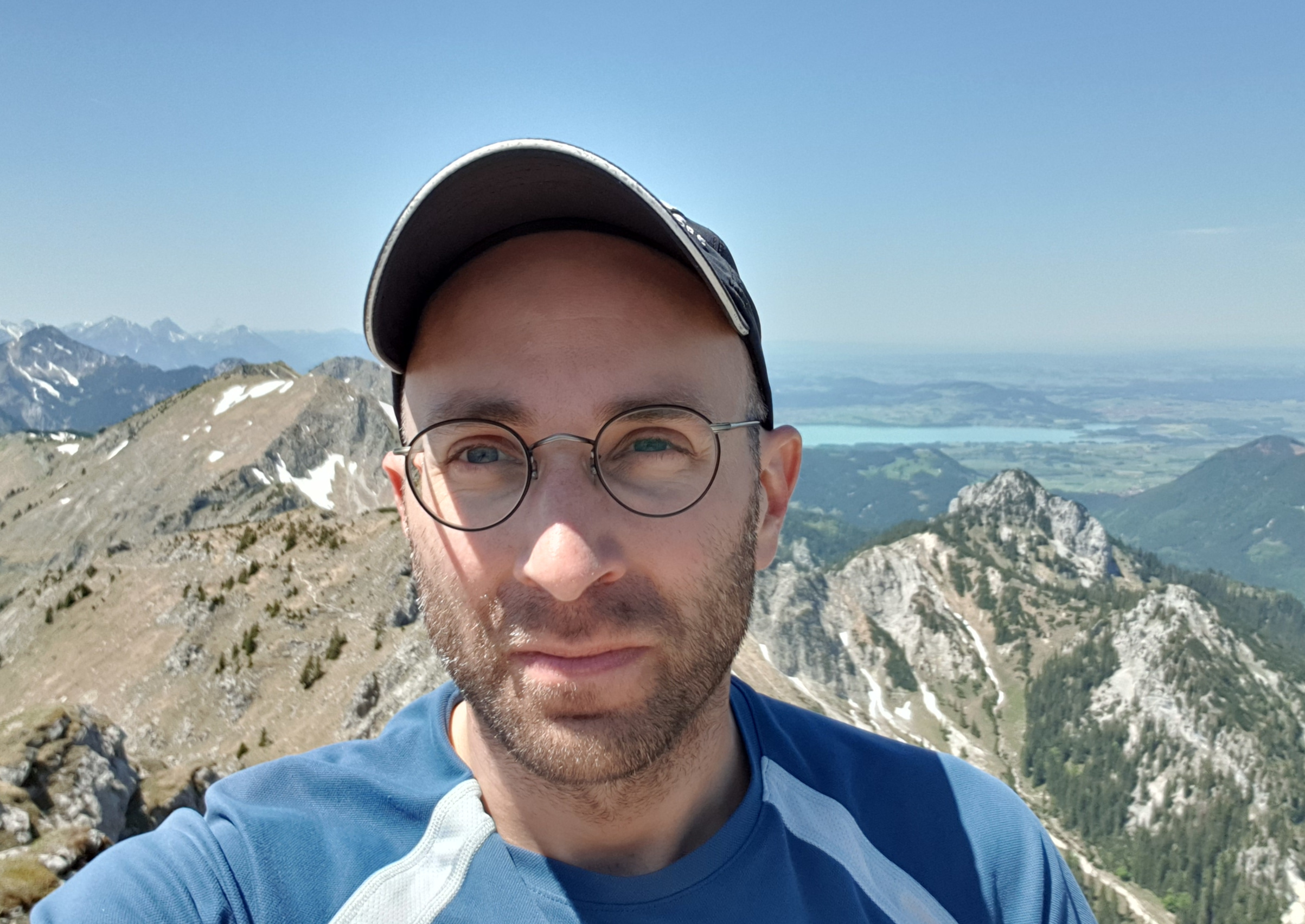
Moritz Kerz is a Professor of Mathematics at the University of Regensburg's Faculty of Mathematics. His research spans arithmetic geometry and algebraic K-theory, with significant contributions to class field theory and cohomological methods. He leads a research group including postdoctoral scholars and doctoral candidates. Research Focus: Kerz's investigations center on: Non-archimedean K-theory and its applications to geometric problems Arithmetic invariants in positive characteristic Higher-dimensional class field theory constructions Monodromy representations and density theorems Publication Trends: Recent work demonstrates a consistent focus on K-theoretic invariants in arithmetic contexts, particularly through: Innovative applications to rigid analytic geometry Interactions between étale cohomology and representation theory Non-commutative generalizations of class field theory Awards: Minkowski Medal (2020) K-theory Prize (2014) Carus Medal (2011) Heinz Maier-Leibnitz Prize (2011) Cultural Prize of Bavaria (2009) Research Group: Current team members include Carolyn Echter, Lukas Krinner, Andrea Panontin, Yanshuai Qin, Yuenian Zhou, and Paul Ziegler, with research spanning arithmetic geometry and K-theory applications.
Dean Baskinمشاهده پروفایل
دانشیار
Dean Baskin is an Associate Professor in the Department of Mathematics at Texas A&M University, affiliated with the College of Arts & Sciences. His research focuses on partial differential equations, mathematical physics, and geometric analysis, with particular emphasis on scattering theory, wave propagation, and spectral analysis. He holds an office in Blocker 614B and can be reached at dbaskin@tamu.edu. His work integrates advanced analytical techniques with geometric insights to study phenomena such as radiation fields, singularities in wave equations, and resonance structures on non-Euclidean spaces. Key research interests include the mathematical theory of scattering resonances, asymptotic behavior of solutions to wave equations on various manifolds (e.g., asymptotically Minkowski spaces), and microlocal analysis. His articles explore topics such as diffraction effects in Dirac-Coulomb systems, quantum ergodicity on Riemann moduli spaces, and the propagation of singularities in hyperbolic PDEs. While no specific awards or grants are listed in the provided materials, his publication record reflects sustained contributions to theoretical aspects of mathematical physics and analysis. No advisees or laboratory affiliations are explicitly mentioned, though his work likely involves collaboration with international research networks in geometric analysis and PDEs.

Nishant Agarwal is an Associate Professor in the Department of Physics & Applied Physics at the University of Massachusetts Lowell (UML). He is affiliated with the Kennedy College of Sciences, contributing to theoretical cosmology and quantum field theory research. His academic background includes a Ph.D. in Astronomy and Space Sciences from Cornell University (2011), and prior degrees from institutions like the Indian Institute of Technology Kanpur and St. Stephen's College, Delhi. Agarwal's research focuses on theoretical cosmology, particularly inflationary models, dark energy, quantum field theory in curved spacetime, and large-scale structure formation. His work explores the interplay between quantum mechanics, gravity, and cosmological observations, with contributions to understanding cosmic microwave background anisotropies and non-Gaussian features in the early universe. His publications span topics ranging from open quantum cosmological systems to constraints on massive gravity theories, reflecting his expertise in both theoretical frameworks and observational implications. Notable contributions include studies on cosmic expansion dynamics and the development of novel methods for analyzing large-scale structure surveys. Education: Ph.D., Astronomy and Space Sciences, Cornell University, 2011 M.S., Astronomy and Space Sciences, Cornell University, 2009 M.S., Physics, Indian Institute of Technology Kanpur, 2006 B.S., Physics, St. Stephen's College, Delhi University, 2004 Agarwal has received several honors, including the Institute for Gravitation and the Cosmos Postdoctoral Fellowship (2014) and a Gravity Research Foundation essay award (2013). His research is supported by grants such as the Templeton Foundation-funded 'CosmoArchaeology: Digging for the Initial State' (2012), emphasizing interdisciplinary exploration of cosmic origins. His work bridges fundamental physics and cosmological observations, with ongoing projects addressing quantum gravitational effects, early universe dynamics, and observational tests of gravity theories. Agarwal collaborates widely, contributing to initiatives like the Sloan Digital Sky Survey III and advancing theoretical methods in cosmology.

- Nuclear Physics
- Lattice Quantum Chromodynamics (QCD)
- Quantum Computing Applications in Nuclear Physics
- +۳ مورد دیگر
Martin Savage is a Professor of Physics at the University of Washington, affiliated with the Institute for Nuclear Theory (INT) within the College of Arts and Sciences. His primary role involves advancing theoretical nuclear physics through computational and quantum methods. He holds a PhD from the California Institute of Technology (1990), and earlier degrees from the University of Auckland (B.Sc. 1983, M.Sc. 1984). Research: Savage focuses on applying quantum computing and quantum information theory to solve Grand Challenge problems in nuclear physics, such as finite-density systems and non-equilibrium dynamics. As a founding member of the NPLQCD collaboration (2004), he pioneered lattice QCD techniques for light nuclei and few-baryon systems. His current work addresses computational limitations posed by classical exascale challenges, exploring quantum algorithms for field theories and collaborations with technology firms. Teaching: He has taught advanced courses including Quantum Field Theory, Nuclear Physics, Quantum Mechanics, and Electrodynamics at both undergraduate and graduate levels. Over seven PhD theses have been supervised, with additional students in progress. Collaborations & Affiliations: Savage collaborates with national laboratories (e.g., DOE, NSF), technology companies, and international research groups. Key affiliations include the Hyak computing cluster, SciDAC, and Teragrid initiatives. His research emphasizes interdisciplinary efforts to bridge quantum computing and fundamental physics. Labs & Teams: Central to his work is the Institute for Nuclear Theory (INT), a hub for collaborative research in nuclear and particle physics. His team actively engages in developing quantum algorithms for Minkowski space calculations and finite-density systems.
Bo Guan is a Professor in the Department of Mathematics at The Ohio State University, affiliated with the College of Arts and Sciences. He holds a PhD from the University of Massachusetts (1992). His research focuses on Partial Differential Equations and Geometric Analysis, with particular expertise in nonlinear elliptic equations, geometric flows, and problems on Riemannian and Hermitian manifolds. His work often bridges differential geometry and PDEs, addressing topics such as curvature equations, Monge-Ampère systems, and geometric boundary value problems. Key contributions include studies on convex hypersurfaces in hyperbolic spaces, Dirichlet problems for complex Monge-Ampère equations, and second-order estimates for fully nonlinear elliptic equations. His research also explores applications in conformal geometry, spacelike hypersurfaces in Minkowski space, and the asymptotic Plateau problem. Guan has published extensively in top-tier journals like Duke Math. J., Adv. Math., and the Journal of Differential Geometry. His teaching responsibilities include courses such as Math 2177 and Math 4512. His office is located at MW518, with contact details available via email and phone.
Lect. dr. Alina Cristiana Gavriluţ is a faculty member at the Faculty of Mathematics, Al. I. Cuza University of Iaşi, Romania. Her research focuses on advanced topics in mathematical analysis, including set multifunctions, non-additive measures, fuzzy integrals, and their applications in physics and complex systems. She has authored/co-authored multiple books and over 30 peer-reviewed papers in journals like Fuzzy Sets and Systems , Entropy , and Reports on Mathematical Physics . Her work explores regularity properties of set multifunctions, integrability in non-additive settings, and interdisciplinary applications in areas like fractal information, quantum mechanics, and neurosciences. She has also contributed to theoretical frameworks connecting mathematical physics with complex systems, including studies on non-differentiable entropy and spacetime manifolds. Dr. Gavriluţ collaborates extensively with researchers in mathematics and physics, notably Maricel Agop and Anca Croitoru. Her research has implications for diverse fields, from image processing to neuronal network modeling. She actively participates in international conferences, presenting findings on set-valued integration, fractal systems, and transdisciplinary approaches to complex phenomena. Education: PhD in Mathematics from Al. I. Cuza University (year not specified). Key Areas: Mathematical analysis, measure theory, fuzzy set theory, complex systems, non-differentiable dynamics. Grants/Awards: Not explicitly listed in the provided texts, but her prolific publication record indicates sustained academic engagement. Labs/Teams: Affiliated with the Mathematics department at Al. I. Cuza University, contributing to research groups in functional analysis and mathematical physics.
Simon RAULOTمشاهده پروفایل
دانشیار
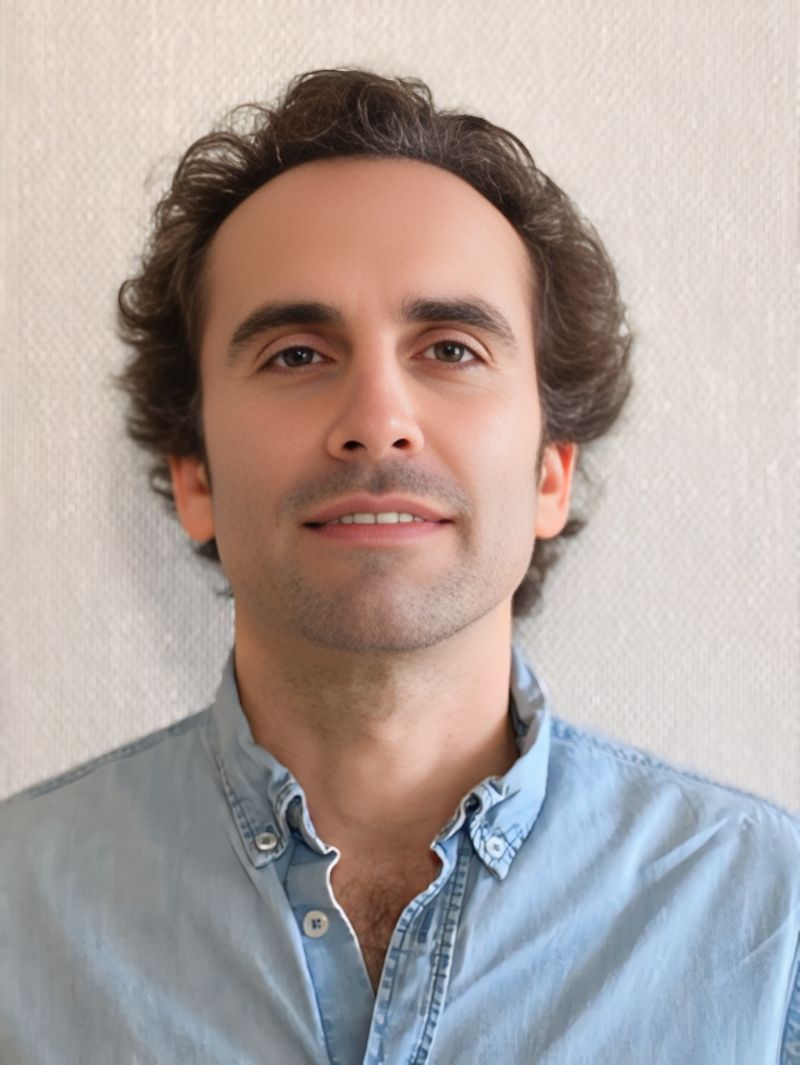
Simon Raulot is an Associate Professor of Mathematics at the University of Rouen Normandy, affiliated with the Laboratoire de Mathématiques Raphaël Salem (LMRS). He received his PhD in 2006 from the University of Lorraine under the supervision of Oussama Hijazi and Emmanuel Humbert, and completed his habilitation in 2023 at the University of Rouen Normandy. Department: Mathematics Email: simon.raulot@univ-rouen.fr His research focuses on spin geometry, conformal geometry, and geometric analysis, particularly on Dirac operators, eigenvalue estimates, and geometric invariants. Key themes include applications of spinor techniques to problems in general relativity, such as mass positivity and rigidity theorems, and the study of boundary value problems for differential operators. Recent publications explore topics like the ADM mass of area-normalized capacitors, conformal compactifications of Poincaré-Einstein manifolds, and rigidity results for geometric structures in hyperbolic and Minkowski spacetime. His work often bridges differential geometry with mathematical physics and spectral theory. Simon Raulot is part of the Laboratoire de Mathématiques Raphaël Salem, contributing to its active research in geometry and analysis. He has collaborated extensively with researchers including Oussama Hijazi, Sebastián Montiel, and Alessandro Savo.
Jiakun Liuمشاهده پروفایل
دانشیار
Dr. Jiakun Liu is an Associate Professor at the School of Mathematics and Applied Statistics, Faculty of Engineering and Information Sciences, University of Wollongong, Australia. He has held this position since January 2022 and maintains an active research program in nonlinear partial differential equations with applications in geometry and optimal transportation. His work has been published in top mathematical journals including Annals of Mathematics, Inventiones Mathematicae, and Communications on Pure and Applied Mathematics. Dr. Liu received his PhD from The Australian National University, Australia. His academic journey includes prestigious fellowships such as the Simons Postdoctoral Fellowship and the Australian Research Council's Discovery Early Career Researcher Award (DECRA). Dr. Liu's primary research focuses on nonlinear elliptic and parabolic partial differential equations, with special emphasis on the regularity theory of Monge-Ampère equations, Hessian equations, and other variational problems. His work extends to related areas of geometry and physics, including the geometry of convex bodies, minimal surfaces, surfaces of prescribed curvatures, and geometric flows. His research has significant applications in optimal transportation theory, which connects mathematical analysis with practical problems in economics, physics, and computer science. Analysis of Dr. Liu's recent publications reveals a strong focus on regularity theory for Monge-Ampère equations and optimal transportation problems. His work spans pure mathematical theory (regularity of solutions, singular sets, free boundaries) while maintaining connections to geometric applications and practical problems. A notable trend is the increasing interdisciplinary nature of his research, with recent work connecting optimal transport to statistical methods and computer science applications. Dr. Liu has received several prestigious awards and fellowships: UIC International Links Scheme (University of Wollongong, 2015) Discovery Early Career Researcher Award (DECRA) from Australian Research Council Discovery Project (DP170100929) from Australian Research Council Shiing-Shen Chern Mathematical Scholarship from Zhejiang University Simons Foundation Simons Postdoctoral Fellowship Dr. Liu is actively involved in mentoring the next generation of mathematicians, having supervised numerous PhD students including Siyuan Li, Jihang Zhang, Phung Trong Thuc, Yating Wu, and Meng Ji. He has also guided honours students such as Matthew Hughes, Luke McDonald, and Brad Rice. His research is supported by multiple grants, including "Singularity and regularity for Monge-Ampere type equations" (2023-2026), "Monge-Ampere type equations and their applications" (2023-2027), and "Monge-Ampere equations and applications" (2020-2024), demonstrating sustained funding for his research program. Dr. Liu is an active participant in the mathematical community, organizing conferences such as the International Conference on Nonlinear Partial Differential Equations (honoring Professor Neil Trudinger's 80th birthday) and the 4th Australia-China Joint Conference on Geometric Analysis. He maintains collaborative relationships with researchers across Australia, China, and internationally, contributing to a vibrant research environment in geometric analysis and PDEs.

Georgios Moschidisمشاهده پروفایل
استادیار
Georgios Moschidis is a Tenure Track Assistant Professor at École Polytechnique Fédérale de Lausanne (EPFL), affiliated with the Chair of Mathematical General Relativity (CMGR) and the Mathematics Section of the School of Basic Sciences (SB-SMA). He holds dual positions within the Department of Mathematics (MATH) and the SMA-ENS unit, focusing on advanced mathematical physics and geometric analysis. His research interests center on mathematical general relativity, differential geometry, and partial differential equations, with a strong emphasis on spacetime stability problems, trapped surface formation, and geometric analysis in curved spacetimes. He teaches advanced courses such as Differential Geometry IV (General Relativity) and Analysis IV, reflecting his expertise in theoretical physics and advanced mathematics. Moschidis' work includes groundbreaking studies on the instability of anti-de Sitter (AdS) spacetime, ergosphere instabilities, and scalar wave dynamics in black hole geometries. His publications span topics from Vlasov systems to geometric inequalities in Gauss spaces, demonstrating interdisciplinary rigor. He advises doctoral student Abraham Gabriel Dorsaz and maintains active research through the CMGR lab (https://www.epfl.ch/labs/cmgr/). His research is supported by EPFL's academic framework, and he contributes to both teaching and doctoral supervision within the School of Basic Sciences.
- Applied and computational mathematics
- Industrial modelling and optimization
- Financial engineering
- +۴ مورد دیگر
Professor Yong Wu holds the position of John Curtin Distinguished Professor at Curtin University's School of Electrical Engineering, Computing and Mathematical Sciences (EECMS), within the Faculty of Science and Engineering. He obtained his PhD from the University of Wollongong (1990) and has been a faculty member at Curtin since 1993, progressing through roles including Lecturer, Senior Lecturer, and Professor. His research focuses on applied and computational mathematics, industrial optimization, and financial engineering with applications in traffic flow control, asset-liability management, and insurance strategy optimization. Education: PhD (Mathematics) from University of Wollongong (1990), followed by postdoctoral research at the same institution before joining Curtin University in 1993. Research Interests: Applied Mathematics: Fractional differential equations, nonlinear systems, and PDEs Industrial Modeling: Optimization algorithms and traffic flow dynamics Financial Engineering: Blockchain-based investment systems and risk management Key Contributions: Over 300 peer-reviewed articles in journals like Journal of Differential Equations and Nonlinear Analysis Recipient of 13 competitive grants including ARC and NSFC funding Listed as Clarivate Analytics Web of Science Highly Cited Researcher Labs/Teams: Active in interdisciplinary research groups focusing on computational mathematics, financial engineering, and industrial systems optimization at Curtin University.
Afrooz Jalilzadehمشاهده پروفایل
استادیار
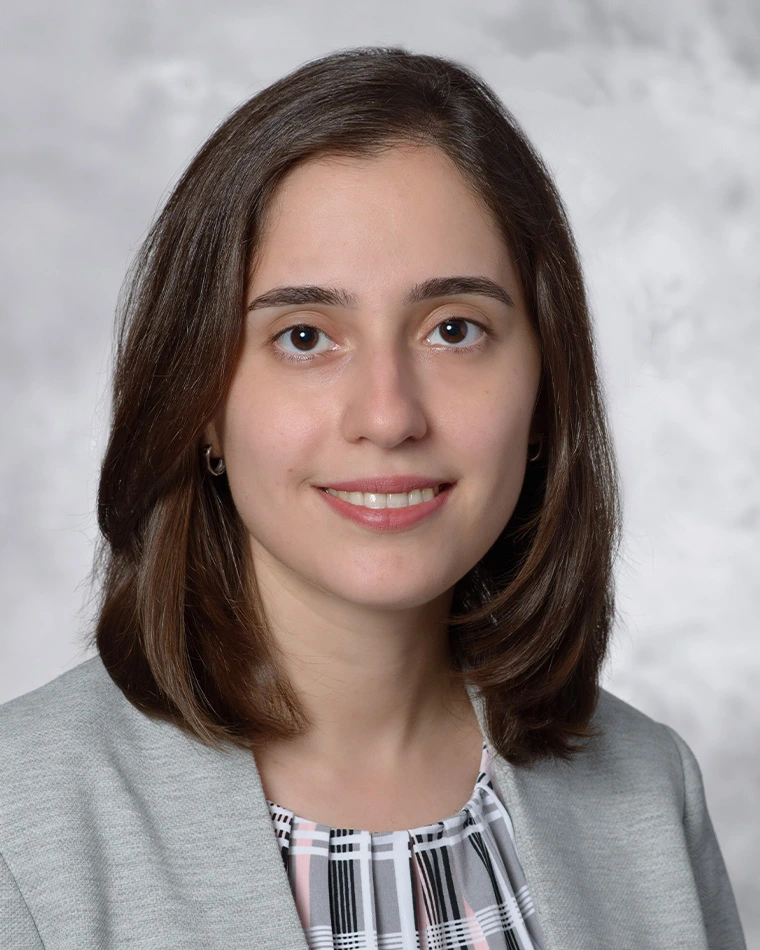
Afrooz Jalilzadeh is an Assistant Professor in the Department of Systems and Industrial Engineering at the University of Arizona, part of the College of Engineering. She is also a member of the Applied Mathematics and Statistics Graduate Interdisciplinary Programs (GIDP), highlighting her strong cross-disciplinary research profile. She leads the Optimization and Mathematical Analysis (OPTIMA) Lab, which focuses on algorithmic innovation for stochastic optimization and variational problems. PhD in Industrial Engineering and Operations Research, The Pennsylvania State University BS in Mathematics, University of Tehran, Iran Her research lies at the intersection of stochastic optimization , variational inequalities , and machine learning , with applications in game theory, healthcare, and power systems. She develops and analyzes algorithms such as stochastic approximation, primal-dual methods, and variance-reduced schemes to solve complex minimax and equilibrium problems. Her work emphasizes theoretical convergence guarantees and computational efficiency. The recent publications show a strong trend in nonconvex-concave saddle-point problems , stochastic Nash games , and projection-free optimization . These are central to modern machine learning and adversarial training. Keywords across her work include stochastic approximation, accelerated methods, risk aversion, and distributed computing, indicating a deep engagement with both theoretical and applied aspects of optimization. Her scientific recognition includes: Teacher of the Year, College of Engineering, University of Arizona (Spring 2022) Gerald J. Swanson Prize for Teaching Excellence NSF Grant: Generalized Stochastic Nash Equilibrium Framework James E. Marley Graduate Fellowship Max and Joan Schlienger Graduate Scholarship Third Place in INFORMS Poster Competition (2018) University Graduate Fellowship, Penn State (2015) H. Marcus Dean’s Chair Scholarship, Penn State (2015) She actively advises students and researchers in her OPTIMA Lab, with multiple publications co-authored with graduate students. She has secured competitive grants, including an NSF award, supporting her research group. Her lab seeks students with strong mathematical and coding skills (MATLAB/Python) for PhD-level research in optimization and mathematical analysis. The OPTIMA Lab conducts cutting-edge research in algorithm design for stochastic variational inequalities , Nash equilibrium computation , and minimax optimization . The lab emphasizes theoretical rigor and practical implementation, with applications spanning machine learning, healthcare, and energy systems. It has published in top venues such as NeurIPS, ACM TOMACS, and Mathematical Programming.
Luis Jose Alias Linares is a Professor in the Department of Mathematics at the University of Murcia, affiliated with the Faculty of Mathematics. His research focuses on differential geometry, global analysis, and relativity, with a particular emphasis on geometric analysis of hypersurfaces and spacetime structures. He holds a doctoral degree from the University of Murcia (1994), supervised by Dr. Ángel Ferrández Izquierdo and Dr. Pascual Lucas Saorín. His research interests include the study of spacelike hypersurfaces in Lorentzian manifolds, maximal surfaces, mean curvature flow solitons, and geometric maximum principles. Notable contributions include work on uniqueness theorems for hypersurfaces in generalized Robertson-Walker spacetimes and the application of differential geometric techniques to problems in relativity. Alias Linares has published extensively in top-tier journals such as Journal of Differential Geometry , Proceedings of the American Mathematical Society , and The Journal of Geometric Analysis . His work often bridges differential geometry with partial differential equations, addressing topics like curvature estimates, rigidity phenomena, and geometric flows. He has collaborated with numerous researchers, including Marco Rigoli, Marcos Dajczer, and Bennett Palmer, and has authored over 130 publications. His research has been cited nearly 2,000 times, reflecting significant influence in geometric analysis and relativity.
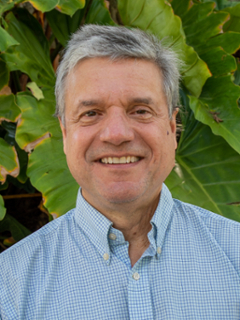
Victor J. Milenkovic is a Professor and Department Chair in the Department of Computer Science at the University of Miami's College of Arts and Sciences. His research focuses on computational geometry, geometric algorithms, and their applications in robotics, computer-aided design (CAD), and high-performance computing. He specializes in developing robust algorithms for handling degenerate cases in geometric computations, free space construction for robotic motion planning, and efficient implementations of geometric operations using modern hardware like GPUs. Key contributions include: Advanced techniques for detecting degenerate predicates in computational geometry GPU-accelerated Minkowski sum computations Robust free space construction for polyhedra Geometric rounding methods for preserving mesh topology His work emphasizes practical implementations with provable correctness and efficiency, validated through applications in CAD, robotics, and HPC environments. No academic awards are explicitly listed in the provided materials. Advising and grants: No student advisees or grant details are provided in the profile. His research has been applied to problems in algorithmic robustness, geometric modeling, and parallel computing. Labs/Teams: No specific lab or team affiliations are mentioned beyond his departmental role.

- Lie groups
- Discrete subgroups
- Homogeneous spaces
- +۳ مورد دیگر
Dmitry Kleinbock is a Professor in the Department of Mathematics at Brandeis University. His research focuses on Lie groups, discrete subgroups, homogeneous spaces, ergodic theory, dynamical systems, and metric Diophantine approximation. He has supervised several graduate students including Jiajie Zheng, Mishel Skenderi, Anurag Rao, and Shahriar Mirzadeh. His recent publications explore homogeneous dynamics, Diophantine approximation, and ergodic theory, with particular focus on metrical properties, dimension theories, and inhomogeneous approximations. These works demonstrate consistent innovation in connecting geometric methods with number-theoretic problems. Dr. Kleinbock has received significant recognition including the Simons Foundation Research Fellowship and Alfred P. Sloan Research Fellowship. He serves on editorial boards for several mathematics journals and has organized multiple conferences in dynamics and number theory.