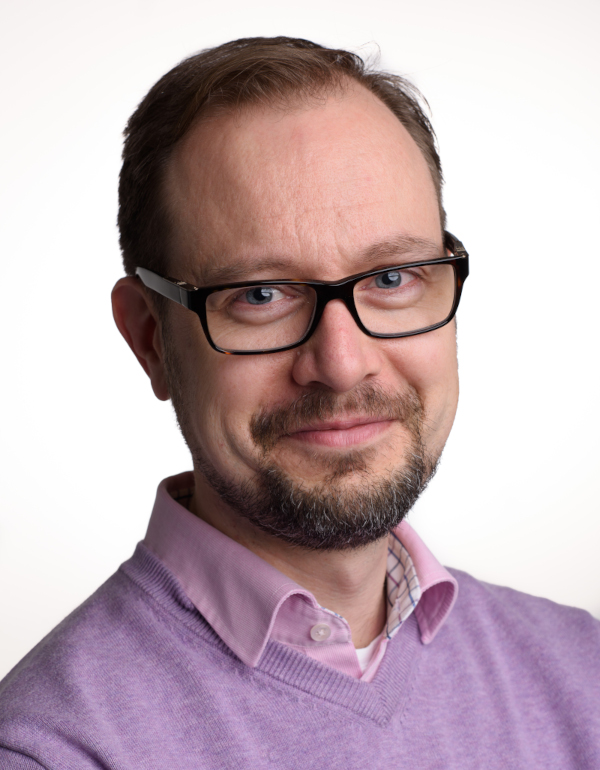
Fabian Fagerholm is an Assistant Professor in the Department of Computer Science at Aalto University. His work bridges software engineering, human-computer interaction, and empirical research methodologies. He actively participates in research groups such as Software and Service Engineering (SSE) and Human-Computer Interaction and Design (HCID). Fagerholm's research explores: Continuous experimentation in software development Developer cognition and mental models Agile methodologies and team dynamics Low-code platforms and end-user programming Software engineering education and pedagogy His publications reflect a strong empirical focus, with recurring themes of human factors in technical systems and educational innovation. He has received notable awards including: Journal of Systems and Software Best Paper Award (2018) EUROMICRO SEAA Distinguished Paper Award (2017) Teacher of the Year (2013) Nokia Foundation Scholarship (2013) Fagerholm contributes to software engineering infrastructure through tools for experimentation and boundary artifacts, enhancing collaboration in distributed teams.
Chandra Chekuri is the Paul and Cynthia Saylor Professor in the Department of Computer Science at the University of Illinois Urbana-Champaign, situated within the Grainger College of Engineering. He has been actively contributing to theoretical computer science for over two decades, with significant leadership roles including serving as Editor-in-Chief of the prestigious SIAM Journal on Computing since May 2025. His academic journey began with a B.Tech in Computer Science from the Indian Institute of Technology, Madras in 1993, followed by a Ph.D. in Computer Science from Stanford University in 1998. Prior to joining UIUC, he spent eight years as a Member of Technical Staff at Bell Labs, Lucent Technologies. Chekuri's research focuses on theoretical computer science with particular emphasis on the design and analysis of algorithms, discrete and combinatorial optimization, approximation algorithms, mathematical programming, and graph theory. His work explores fundamental connections between discrete structures and optimization problems, with applications spanning network design, data analysis, and computational complexity. His recent publications demonstrate a continued focus on hypergraph algorithms, submodular function optimization, and graph partitioning problems, showing how theoretical insights can yield practical algorithmic improvements. His approach often combines continuous relaxations with discrete rounding techniques to develop approximation algorithms for NP-hard problems. As Editor-in-Chief of SIAM Journal on Computing, Chekuri leads one of theoretical computer science's most respected publications, which covers analysis and design of algorithms, algorithmic game theory, computational complexity, and other mathematical aspects of computer science. His editorial leadership follows previous service as Associate Editor for several major journals including SIAM Journal on Computing, Mathematics of Operations Research, and Mathematical Programming. ACM Fellow (January 2024) Scott Fisher Teaching Award (for year 2022-23) from CS Department Chekuri has advised numerous PhD students to completion, including Kent Quanrud, Vivek Madan, Shalmoli Gupta, and Chao Xu, with several currently in progress such as Tanvi Bajpai, ElFarouk Harb, Rhea Jain, and Weihao Zhu. His teaching portfolio includes graduate courses on Randomized Algorithms, Approximation Algorithms, Algorithms for Big Data, and Combinatorial Optimization. He has served as Director of the Graduate Program in the Department of Computer Science from May 2014 to August 2017, demonstrating significant administrative leadership within the department.
Battista Biggio is a Full Professor at the University of Cagliari, Italy, affiliated with the Department of Electrical and Electronic Engineering under the Faculty of Engineering and Architecture. His research focuses on machine learning security, adversarial attacks, and cybersecurity. He co-founded the cybersecurity firm Pluribus One and has pioneered foundational work in poisoning attacks and adversarial robustness. Education: MSc (2006), PhD (2010). He holds editorial roles as Associate Editor-in-Chief for Elsevier's Pattern Recognition Journal and serves on IEEE TNNLS and IEEE CIM editorial boards. His awards include the 2022 ICML Test of Time Award and the 2021 Pattern Recognition Medal. He chairs IAPR TC1 and organizes conferences like S+SSPR and AISec. Research interests span adversarial machine learning, malware detection, and secure AI systems. He leads initiatives such as the sAIfer Lab and co-develops the SecML-Torch library. Teaching includes courses on Machine Learning Security and Industrial Software Development. Notable contributions include seminal papers like 'Poisoning Attacks against Support Vector Machines' and 'Wild Patterns.' He manages over 10 research projects and advises on AI security for industrial applications. His work bridges academic research with practical cybersecurity solutions.
Doç. Dr. Muhammed Aras is an Associate Professor in the Department of Mechanical Engineering at Baskent University (Başkent Üniversitesi), with a research focus on sustainable machining processes, tool wear monitoring, and surface roughness optimization. His work spans advanced manufacturing technologies, energy storage systems, and biomedical device design. PhD in Manufacturing Engineering (2018), Gazi Üniversitesi MSc in Mechanical Education (2013), Gazi Üniversitesi BSc in Mechanical Engineering (2010), Tabriz Islamic Azad University Research interests include sustainable machining (dry/hard turning, cooling-lubrication strategies), tool wear analysis (CBN, ceramic and coated inserts), and surface integrity optimization using AI-based methods (firefly algorithm, TOPSIS, Grey Relational Analysis). His 15 most recent articles (2017-2024) examine topics like: Surface roughness prediction in dry hard turning Energy storage technology viability assessments Cutting parameter optimization for various steels Acoustic/vibration monitoring in machining He has received scientific awards including the Teşvik Ödülü (Encouragement Award, 2015). His patent on an automatic orthognathic surgery articulator and book chapters on tool monitoring systems demonstrate his multidisciplinary impact.
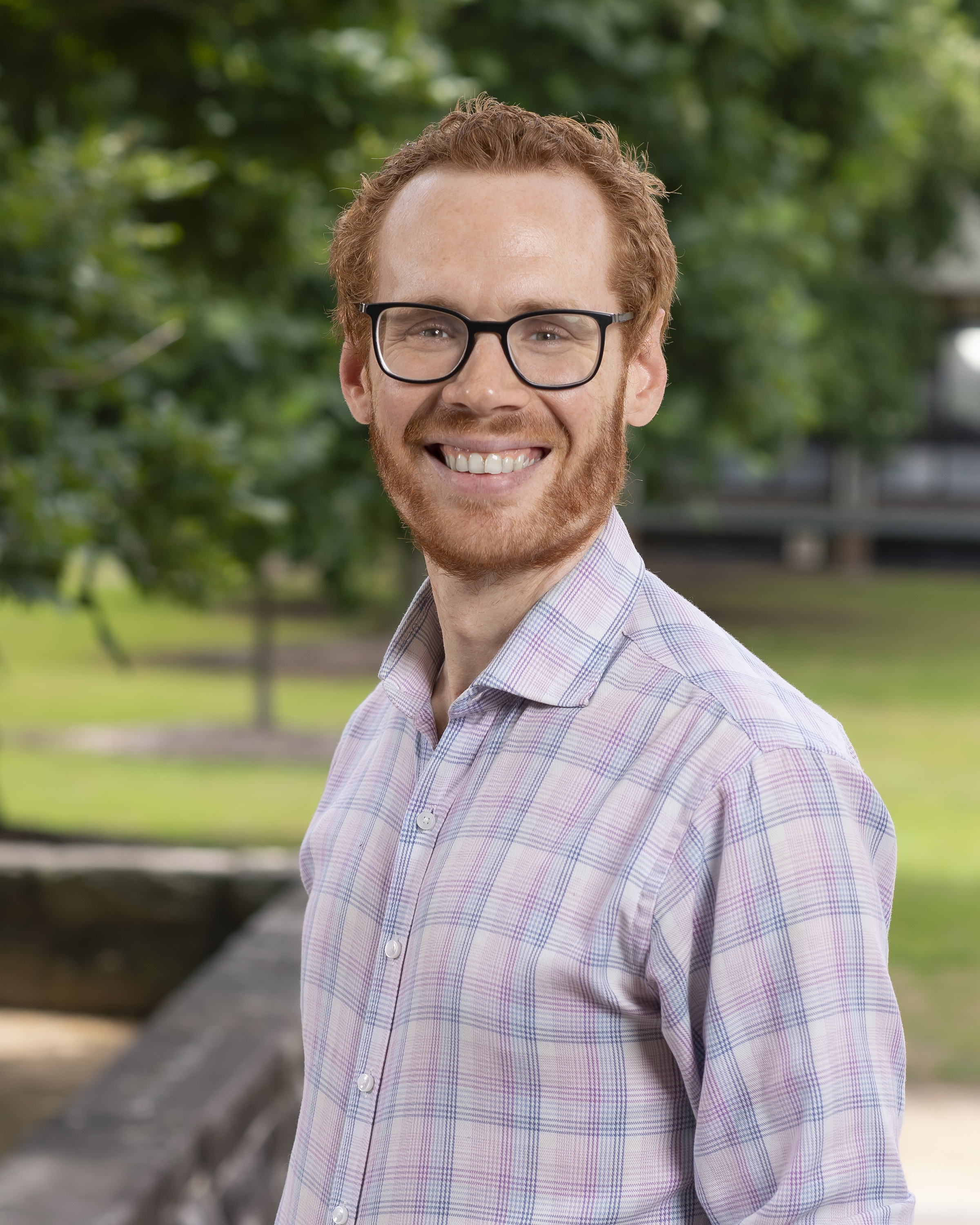
Yang P. Liu is an Assistant Professor in the Computer Science Department at Carnegie Mellon University's School of Computer Science. Previously, he was a Postdoctoral Member at the Institute for Advanced Study and earned his PhD from Stanford University under the supervision of Aaron Sidford. He completed his undergraduate studies at MIT, graduating in May 2018. His educational background includes: PhD in Computer Science, Stanford University (Advisor: Aaron Sidford) Bachelor's degree, Massachusetts Institute of Technology (graduated May 2018) Dr. Liu's research spans the intersection of mathematics and computer science, with particular focus on graph algorithms , optimization , high-dimensional geometry , and additive combinatorics . His work often develops novel algorithmic techniques that bridge theoretical insights with practical applications. He has made significant contributions to areas such as convex optimization, linear programming, and combinatorial problems. His teaching includes courses like "A Principled Approach to Optimization" (CS 15-759), which covers rigorous treatments of convex optimization topics including gradient descent, interior point methods, linear regression, linear programming, and sparsification. His extensive publication record in top-tier conferences (FOCS, STOC, SODA) demonstrates a consistent focus on developing almost-linear time algorithms for fundamental graph problems, optimization techniques, and combinatorial theorems. Recent work shows increasing emphasis on combinatorial lines, corners theorem, and k-CSP approximability, while maintaining strong connections to optimization theory and graph algorithms. Dr. Liu has received notable recognition for his work: National Defense Science and Engineering Graduate (NDSEG) Fellowship (2018-2021) Google PhD Fellowship (2022-2023) Best Paper award at FOCS 2022 for "Maximum Flow and Minimum-Cost Flow in Almost Linear Time" Best Student Paper at STOC 2021 for "Discrepancy Minimization via a Self-Balancing Walk" His research has been supported by prestigious fellowships including the NDSEG Fellowship and Google PhD Fellowship. His work on graph algorithms, optimization, and combinatorics involves collaborations with researchers across theoretical computer science and mathematics. His publications often involve co-authors from multiple institutions, suggesting active research collaborations across the field. Dr. Liu maintains an active research program with a focus on developing efficient algorithms for fundamental computational problems. His recent work continues to push the boundaries of what's computationally feasible in graph algorithms, optimization, and combinatorial mathematics, with particular emphasis on achieving almost-linear time complexity for challenging problems.
Philip Dutré is a full professor at the Department of Computer Science , Faculty of Engineering Science , KU Leuven. He leads the Computer Graphics Research Group and chairs the Human-Computer Interaction division . His teaching portfolio includes courses on algorithms, data structures, and computer graphics fundamentals. Research Focus : Rendering algorithms, photo-realistic and image-based rendering, perceptual-based rendering, material models, and intuitive controls for computer animation. He explores deep learning applications in global illumination and uses quantum field theory for efficient light transport in participating media. Publications : Recent work includes advancements in temporal coherence for light transport (2017–2023), functional integrals for scattering models (2025), and optimization of spatial data structures (2019). Teaching Innovations : Advocate for ungrading (feedback-only assignments), flipped classroom techniques, and interactive learning. His approach emphasizes conceptual understanding over rote memorization, with structured, self-contained lessons and active student engagement. Leadership : Serves on multiple academic councils and committees including the Commission on Research Integrity and Student Services Council .
Daniel M Liberzon is the Richard T. Cheng Professor in the Department of Electrical and Computer Engineering and a Professor at the Coordinated Science Laboratory (director of the Decision and Control group) at the University of Illinois Urbana-Champaign. He also holds an affiliate appointment in the Department of Mathematics. Ph.D. in Mathematics from Brandeis University (1998), advised by Roger W. Brockett (Harvard) Undergraduate studies in Mathematics at Moscow State University (1989-1993) His research interests focus on theoretical and applied aspects of nonlinear, switched, and hybrid systems with limited information. Key areas include: Stability analysis via Lyapunov functions and Lie algebras Finite-data-rate control and topological entropy Robust synchronization and observers Stochastic switched systems Supervisory control for uncertain systems Recent scientific awards include: IFAC Fellow (2016) IEEE Fellow (2013) AACC Donald P. Eckman Award (2007) IFAC Young Author Prize (2002) NSF CAREER Award (2002) He has taught graduate courses such as ECE 517 (Nonlinear and Adaptive Control), ECE 553 (Optimum Control Systems), and ECE 586 DL (Hybrid Systems and Control). Current sponsored projects include NSF grants on switching control and AFOSR MURI on hybrid dynamics.
Alexander Skopalik is an Assistant Professor in the Mathematics of Operations Research department, specializing in Game Theory, Congestion Games, and Algorithmic Game Theory. His work explores Strategic Resource Allocation, Equilibrium Analysis, and Network Games, with significant contributions to multi-agent systems and facility location optimization. Key research areas: Congestion Games Facility Location Nash Equilibrium Strategic Resource Allocation Algorithmic Game Theory His recent publications focus on equilibrium dynamics in facility location, battery charging games, and strategic resource allocation, emphasizing the interplay between theoretical guarantees and practical applications in AI and mobility systems. He actively participates as a committee member in leading conferences such as IJCAI and AAMAS.
Dr. Michael Stevens is a Senior Lecturer at University of New South Wales (UNSW) Canberra , where he focuses on advanced manufacturing and biomedical device control systems . His work bridges digital manufacturing for SMEs with smart artificial heart technologies , emphasizing industry collaboration and translational research. Specializes in physiological control systems for rotary blood pumps Develops unobtrusive fall detection systems for dementia patients Leads international projects on total artificial heart development Education : B.Eng (Medical - First Class Honours), Queensland University of Technology (2010) PhD in Physiological Control for Biventricular Assist Devices, University of Queensland (2014) Research Trends show consistent focus on: Machine learning for biomedical diagnostics (2018–2025) mmWave radar and thermal sensors in patient monitoring (2021–2024) Computational fluid dynamics in artificial heart modeling (2016–2024) Physiological control algorithms for rotary blood pumps (2011–2025) Scientific Awards : UNSW Scientia Education Award (2021) for contextual teaching Heart Foundation Runner-up for "Smart Artificial Hearts" pitch (2021) ARC PGC Supervisor Award (2017) for mentoring Grants & Supervision : Holds over $6 million in competitive funding including MRFF and ARC grants. Currently supervises 4 PhD students while maintaining industry partnerships with VitalCare and BiVACOR. Labs & Facilities : Works across UNSW Engineering labs and Graduate School of Biomedical Engineering platforms, including mock circulation loops and high-performance computing clusters for CFD simulations.
Associate Professor Mathias Baumert is affiliated with the University of Adelaide, where he holds a position in the School of Electrical and Mechanical Engineering under the Faculty of Sciences, Engineering and Technology. He leads the Health Technology research theme in the School of Electrical Electronic Engineering and specializes in biomedical signal processing, focusing on dynamic electrocardiography and sleep-related phenomena. His work integrates clinical applications and technological advancements to address challenges in cardiology and sleep disorders. His research interests include the physiological underpinnings of ventricular repolarization variability and its clinical implications, particularly in post-myocardial infarction patients and those with sleep-disordered breathing. He also develops brain-computer interface (BCI) systems for stroke rehabilitation, leveraging real-time EEG analysis and motor function recovery techniques. Collaborations with clinical partners such as the Women’s and Children’s Hospital, Adelaide Institute of Sleep Health, and the Victor Chang Cardiac Research Institute highlight his translational research focus. His recent articles emphasize signal processing applications for risk stratification in cardiovascular disease, sleep apnea, and diabetes. Key themes include nocturnal hypoxemic burden prediction, REM sleep dynamics, and the development of novel diagnostic markers using ECG and EEG data. His work often bridges engineering and medicine, aiming to translate findings into clinical tools like adaptive servo-ventilation treatment optimization and personalized BCI systems. No scientific awards or fellowships are explicitly listed in the provided texts. He is eligible to supervise Masters and PhD students but current advisee names are not available. His research projects are supported by grants such as ARC DP110102049 (as noted in some articles). He teaches courses including Biomedical Instrumentation and Introduction to Medical Technology . His facilities include ECG equipment, polysomnogram repositories, and a BCI workstation with 64-channel EEG capabilities. He collaborates on lab-based and clinical partner studies to advance cardiac sensing algorithms and sleep-related diagnostic technologies.
Dragan S. Antic is a Professor at the Department of Automation, Faculty of Electronics, University of Niš. He earned his PhD in Automation from the same institution in 1994, following a Master's (1991) and Bachelor's (1987) degree in the same field. His research focuses on control systems, signal processing, and neuro-fuzzy systems, with a strong emphasis on sliding mode control, orthogonal function-based modeling, and adaptive neural networks. He has published 51 papers in journals with impact factors and currently participates in 2 national and 8 international research projects. Key research areas include dynamic system modeling, quasi-orthogonal filters, and finite-time stability analysis of time-delay systems. His work often integrates mathematical techniques with engineering applications, such as anti-lock braking systems and PID control optimization. Contact details include his office at Aleksandra Medvedeva 4, Niš, and the email dragan.antic@elfak.ni.ac.rs. Professional contributions include foundational research in endocrine neural networks and low-pass filter design, with notable publications in journals like Electronics Letters and Journal of the Franklin Institute . His efforts bridge theoretical advancements with practical engineering solutions in automation and control.
Sebastien Nicolas Gros is a Professor at the Department of Engineering Cybernetics, Norwegian University of Science and Technology (NTNU). His research focuses on safe reinforcement learning (RL) and data-driven model predictive control (MPC), with applications in energy systems, biomedical engineering, and autonomous vehicles. Institution: Norwegian University of Science and Technology Department: Engineering Cybernetics His work emphasizes AI-driven optimization for domestic energy storage, battery integration, and smart building management. Collaborations include Equinor, DNV, Kongsberg, Volvo, and CorPower Ocean. Key themes in his publications include: Control theory for renewable energy systems (wave energy converters, buildings) Biomedical applications (artificial pancreas, glucose monitoring) Transportation systems (electric vehicles, autonomous ships) Machine learning integration with physical models He supervises 6 PhD students and co-supervises projects on multi-rotor wind turbines and industrial PhD collaborations. The articles demonstrate a convergence of RL, MPC, and uncertainty quantification across energy, biomedical, and transportation domains.
James B. Orlin is the E. Pennell Brooks (1917) Professor in Management and a Professor of Operations Research at the MIT Sloan School of Management. He specializes in network and combinatorial optimization with applications spanning transportation, computer science, operations, and marketing. BA in Mathematics, University of Pennsylvania MA in Mathematics, California Institute of Technology MMath, University of Waterloo PhD in Operations Research, Stanford University His research focuses on designing efficient algorithms for network optimization problems, including shortest path, max flow, and min cost flow. He has contributed to algorithmic theory in logistics, telecommunications, and inventory management, with work on stochastic demand models and data-driven inventory policies. Recent publications include advancements in directed shortest path algorithms, robust submodular function maximization, and energy storage problem complexity. His seminal textbook Network Flows: Theory, Algorithms, and Applications (1993) remains a foundational reference. Leonard G. Abraham Prize Khachiyan Prize Test of Time Award As a mentor, he has advised numerous researchers through collaborative publications and teaching. His work addresses both theoretical algorithm development and practical implementation across diverse domains including airline scheduling, logistics, and network design.
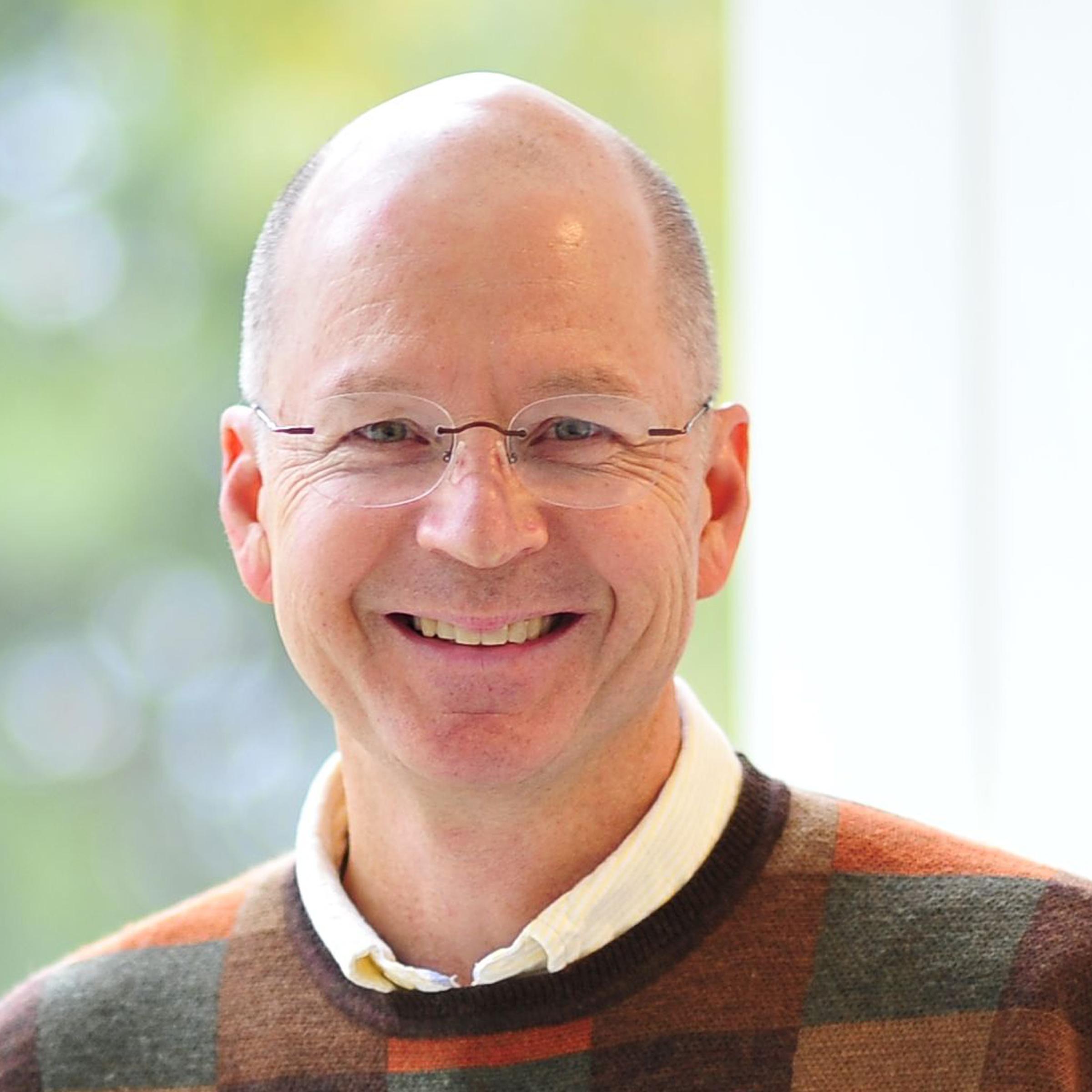
David Mount is a Professor in the Department of Computer Science at the University of Maryland, with an additional appointment at the University of Maryland Institute for Advanced Computer Studies (UMIACS). His primary research focus is Computational Geometry, particularly in designing, analyzing, and implementing data structures and algorithms for geometric problems. Applications of his work span image processing , pattern recognition , information retrieval , and computer graphics . He is a Fellow of the ACM and has received the ACM Recognition of Service Award twice. A member of the Algorithms and Theory Group, Mount has authored over 200 publications, many of which are available on Google Scholar, DBLP, and ArXiV. Research Focus Computational Geometry Algorithm Design and Analysis Geometric Data Structures Nearest Neighbor and Range Searching Clustering Algorithms Recent Publications Mount's recent publications (2023-2025) emphasize non-Euclidean geometry (e.g., Hilbert metric), dynamic geometric structures , and approximation algorithms for polytopes, Voronoi diagrams, and Delaunay triangulations. Collaborative works with students and researchers address challenges in kinetic data compression , label tracking , and geometric software development (e.g., Ipelets for polygonal geometry). Professional Activities Editorial Board Member, TheoretiCS (2021-present) Senior Associate Editor, ACM Trans. on Spatial Algorithms and Systems (2013-2020) Program Committee Member, FOCS , ESA , SODA , and other major conferences Awards ACM Fellow ACM Recognition of Service Award (twice)
Prof. Ovidiu Cârjă is a Professor of Mathematical Analysis at the Faculty of Mathematics, University of Iasi, Romania. He holds a PhD from the same university (1984) and has held academic positions since 1981, progressing from Assistant Professor (1984) to his current role. His research focuses on controllability, viability theory, and Hamilton-Jacobi-Bellman equations, with significant contributions to differential inclusions and nonlinear analysis. Education: B.Sc. Mathematics, University of Iasi (1976) M.Phil. Mathematics, University of Iasi (1977) Ph.D. Mathematics, University of Iasi (1984) Research Interests: Optimal control and time-optimal control problems Viability and invariance for differential inclusions Hamilton-Jacobi-Bellman equations Nonlinear functional analysis and semilinear systems Awards and Fellowships: Romanian Academy 'Simion Stoilow' Award (1991) Fulbright Award (UCLA, 1993–1994) NATO Fellowship (CMAF Lisbon, 1998–2002) Invited Professorships at University of Perpignan and Tor Vergata Rome Professional Activities: Editor of the Applied Analysis and Differential Equations (World Scientific, 2007) Co-author of influential books on nonlinear analysis and viability theory