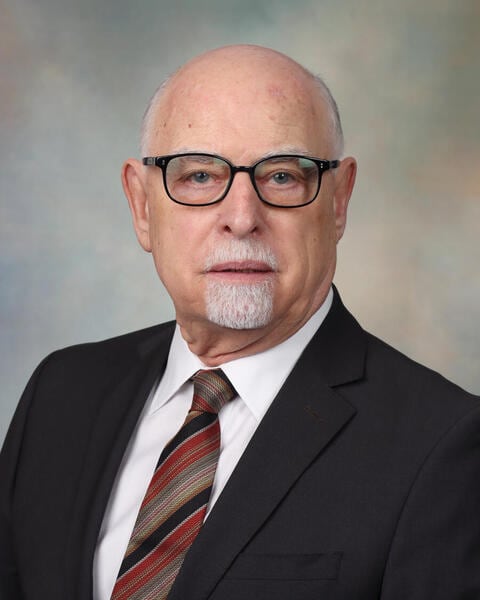
Dr. Richard E. Hayden is a Professor in the Department of Otolaryngology-Head and Neck Surgery at Mayo Clinic College of Medicine and Science, Mayo Clinic, Phoenix, Arizona. He holds leadership roles as Associate Dean at Mayo Clinic School of Health Sciences and Education Director at the Mayo Clinic Center for Regenerative Biotherapeutics. His clinical and academic work centers on head and neck oncology, reconstructive surgery, and regenerative medicine. Dr. Hayden earned his MDCM from McGill University in 1974 and completed fellowships in Head and Neck Surgery-Oncology at M.D. Anderson Hospital and Radiation Oncology at Princess Margaret Hospital. He also holds advanced training in facial plastic surgery. His research spans head and neck cancer, microvascular and reconstructive surgery, transoral laser microsurgery, and regenerative medicine. He has pioneered techniques in flap reconstruction and contributed significantly to understanding postoperative outcomes and surgical innovations. His work emphasizes oncologic safety, functional preservation, and minimally invasive approaches. His recent publications (2018–2024) reflect a strong focus on transoral surgery, flap reconstruction (including submental and free flaps), mucosal-sparing radiation, and regenerative medicine education. Themes include surgical outcomes, reconstructive innovation, and interdisciplinary training in emerging therapies like CAR-T cells and regenerative healthcare. Dean's Award, Mayo Clinic Graduate School of Biomedical Sciences (2022) Distinguished Educator Award, Mayo Clinic Arizona (2016) Distinguished Service Award, American Academy of Otolaryngology - Head and Neck Surgery (2006) Honorary Member, German Society of Laryngology-Head and Neck Surgery (2007) Multiple Visiting Professorships and Keynote Speaker invitations Dr. Hayden has mentored numerous trainees and led major educational initiatives, including regenerative medicine and CAR-T curricula. He has held leadership positions such as Chair of Otolaryngology (2002–2014) and active roles in national societies. His research is supported by institutional affiliations and collaborative grants, particularly in regenerative biotherapeutics. He is involved in multiple labs and teams focused on head and neck reconstruction, surgical innovation, and regenerative medicine translation.