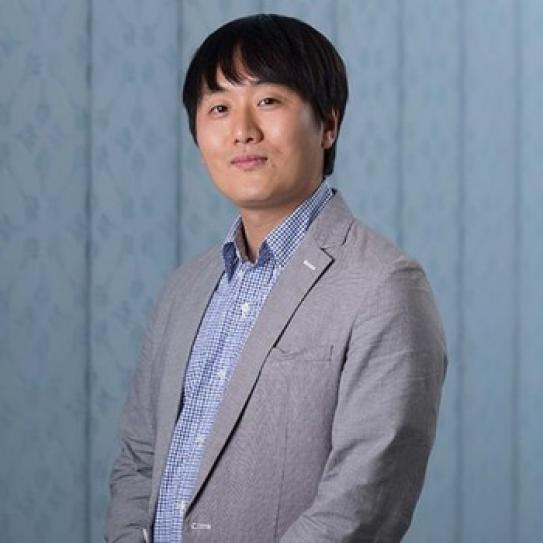
Kaiyuan Yang is an Associate Professor in the Department of Electrical and Computer Engineering at Rice University, leading the Secure and Intelligent Micro-Systems (SIMS) Lab. His research focuses on low-power integrated circuits and bioelectronic implants for applications like the Internet of Everything and medical devices. He holds a B.S. from Tsinghua University (2012) and M.S./Ph.D. degrees from the University of Michigan (2017). Research Interests: Low-power digital/analog/mixed-signal systems Bioelectronics and implantable devices Hardware security and PUF design Mixed-signal computing and emerging materials Recent work emphasizes magnetoelectric-powered implants, secure backscatter communication, and in-memory computing architectures. His publications span top venues like IEEE ISSCC, IEDM, and ACM MobiCom. Awards: 2022 NSF CAREER Award 2022 IEEE Top Picks in Hardware Security 2016 IEEE SSCS Predoctoral Achievement Award Dr. Yang serves on editorial boards for IEEE TVLSI and program committees for ISSCC/CICC. His lab develops miniature, secure, and energy-efficient systems for healthcare and IoT applications.
Michel M. Maharbiz is a Professor in the Department of Electrical Engineering and Computer Science at the University of California, Berkeley. He leads research on miniaturized bioelectronic interfaces, including neural dust implants and cyborg insects. He holds affiliations with the Berkeley Sensor & Actuator Center (BSAC), Center for Neural Engineering & Prostheses (CNEP), and SWARM Lab. His education includes a Ph.D. in EECS from UC Berkeley (2003) and a B.S. in EE from Cornell University (1997). Maharbiz's research integrates MEMS, ultrasonic systems, and synthetic biology to develop wireless neural interfaces, implantable sensors, and biohybrid devices. Key focus areas are neural dust technology for peripheral nerve recording, magnetoelastic strain sensors for medical applications, and electrochemical biosensing using bacterial flagellar motors. His publications emphasize neural interfaces, ultrasonic implants, and biomedical monitoring. Recent articles explore ultrasonic power delivery (2025), radiation detectors for oncology (2025), and fracture-healing smart plates (2019). Trends include miniaturization of wireless implants, closed-loop therapeutic systems, and novel biomaterials. Scientific Awards: McKnight Technological Innovations in Neuroscience Award (2017) Chan-Zuckerberg Biohub Investigator (2017) NSF CAREER Award (2009) MIT TR10 Top Emerging Technology (2009) Bakar Fellows Spark Award (2012) He directs the Maharbiz Lab, advancing neural dust and bioelectronic interfaces. Projects include impedance-based fracture monitoring, carbon fiber neural arrays, and hernia repair sensors. Funding includes NSF and industry partnerships for implantable device development.
Hamed Rahmani is an Assistant Professor of Electrical and Computer Engineering at New York University (NYU Tandon School of Engineering). He is affiliated with NYU WIRELESS and the Center for Advanced Technology in Telecommunications (CATT), leading the Research in Advanced Integrated Systems and Electronics (RAISE) Lab. His research focuses on integrated circuits and systems for biomedical applications, IoT, and 5G/6G communication. Education: Ph.D., Electrical and Computer Engineering, UCLA (2020) M.Sc., Electrical and Computer Engineering, Rice University (2017) B.Sc., Electrical Engineering, Sharif University of Technology (2014) Research Interests: RF/mm-Wave circuits, low-power biomedical sensors, energy-efficient IoT systems, and wireless power transfer. His work emphasizes miniaturized implants, smart healthcare, and sustainable electronics. Awards: Recipient of the NSF CAREER Award (2025), IEEE MTT-S Graduate Fellowship (2019), and the 2023 Best Paper Award in the Journal of Microwave. He serves on technical committees for major conferences like CICC and IMS. Labs & Groups: Directs the RAISE Lab, collaborating with NYU WIRELESS on 6G research and CATT for technology transfer.
Michael McAlpine is a Professor in the Mechanical Engineering department at the University of Minnesota . He also holds affiliations with the Biomedical Engineering and Electrical and Computer Engineering departments. His research focuses on 3D printing functional materials & devices , Nanoscale inks , Biomedical devices , Bioelectronics , and Flexible Microsystems . Research Interests : 3D Printing, Biomedical Engineering, Nanotechnology, Flexible Electronics, Microfluidics Labs : ME 361/363 Contact : mcalpine@umn.edu , (612) 626-3303, ME 117 Recent Research Trends include 3D Printed Biomedical Devices , Flexible Electronics , and Bioprinting Applications . His work spans from Spinal Organoid Formation to Programmable Drug Release Capsules . Scientific Award : Circulation Research 2020 Best Manuscript Award
Burak Ozdoganlar is a Ver Planck Endowed Chair Professor of Mechanical Engineering at Carnegie Mellon University (CMU) and Associate Director of the Engineering Research Accelerator. He holds courtesy faculty positions in Biomedical Engineering and Materials Science and Engineering. Ozdoganlar earned his Ph.D. in Mechanical Engineering from the University of Michigan (1999), M.S. degrees from Ohio State University (1993, 1995), and a B.S. in Aeronautical Engineering from Istanbul Technical University (1991). Ph.D., Mechanical Engineering, University of Michigan (1999) MS, Mechanical Engineering, Ohio State University (1995) MS, Aeronautical and Astronautical Engineering, Ohio State University (1993) BS, Aeronautical Engineering, Istanbul Technical University (1991) Ozdoganlar’s research focuses on multi-scale manufacturing processes (macro/micro/nano), precision engineering , structural dynamics , and modal testing , with applications in biomedical device fabrication , microneedle arrays , soft electronics , and 3D ice printing for vascular networks. His work bridges computational modeling with experimental validation. Recent scientific awards include the 2023 AIMBE College of Fellows induction, ASME Fellow (2019), and NSF CAREER Award (2006). He served as interim CTO of the Advanced Robotics for Manufacturing (ARM) Institute and chaired the ASME-MED Manufacturing Equipment Technical Committee. Ozdoganlar leads projects in scalable manufacturing for implantable medical devices , bioelectric medicine , and wearable robotics . His lab develops 3D ice-printed vascular templates for tissue engineering and liquid metal circuits for soft electronics, funded by institutions like the Manufacturing Futures Institute and ARPA-H.
University of California, Los AngelesUnited States
Aydin Babakhani is a Professor in the Department of Electrical and Computer Engineering at the University of California, Los Angeles (UCLA), affiliated with the College of Life Sciences. He directs the Integrated Sensors Laboratory (ISL), which focuses on the design and implementation of integrated sensors and systems. His research spans high-speed wireless communication, terahertz technology, medical implants, radar systems, and industrial monitoring solutions. Research Interests: Prof. Babakhani's work integrates silicon-based technologies with applications across multiple domains. Key areas include: Silicon mm-Wave/THz transceivers and on-chip antennas for communication and sensing Wirelessly powered medical implants for biopotential monitoring and neural stimulation THz radar systems for micrometer-resolution imaging and vibration detection Energy harvesting solutions for batteryless sensors in industrial and biomedical applications CMOS-based optoelectronic systems and photonic computing accelerators His recent publications (2021-2025) demonstrate a strong emphasis on terahertz systems, wireless power transfer, and miniaturized medical electronics. Over 80% of his latest articles involve silicon-integrated solutions for biomedical implants or THz sensing, with emerging focus on AI-accelerated photonic computing and multi-Gbps wireless links.
Kristofer Pister is a Professor in the Department of Electrical Engineering and Computer Sciences at the University of California, Berkeley. He co-directs the Berkeley Sensor and Actuator Center (BSAC) and the Ubiquitous Swarm Lab. His career spans groundbreaking innovations in Micro/Nano Electro Mechanical Systems (MEMS), Control Systems, and Low-Power Circuits, with a focus on Smart Dust and synthetic insects. Education: Ph.D. and M.S. in EECS from UC Berkeley (1992, 1989); B.A. in Applied Physics from UC San Diego (1986). His research areas include MEMS , Control Systems , Robotics , and Integrated Circuits , with recent work on self-powered micro-sensors, crystal-free radios, and interplanetary swarm networks. Key awards include the ISA Albert F. Sperry Founder Award (2009) , Alexander Schwarzkopf Prize (2006) , and the NSF CAREER Award (1996) . He has authored numerous influential publications in wireless sensor networks and microrobotics. His lab, Ubiquitous Swarm Lab , explores distributed robotics and swarm intelligence. Pister emphasizes open collaboration in research, ethical conduct in academia, and efficient resource utilization for graduate students.
Professor Robert McLaughlin is a faculty member in the School of Biomedicine at the University of Adelaide, affiliated with the Faculty of Health and Medical Sciences. He leads the Bioengineering Imaging Group and serves as Managing Director of the start-up Miniprobes. His research focuses on developing optical imaging technologies, including non-invasive tools for blood flow assessment and miniaturized imaging probes. He has secured over $14M in research grants and holds an h-index of 45 with 98 journal papers, 7 patents, and 2 book chapters. Prof. McLaughlin’s career includes roles at the University of Oxford and Siemens Medical Solutions, followed by academic leadership since 2007. His innovations span optical coherence tomography (OCT), fluorescence imaging, and dual-modality systems for clinical applications. Awards include the 2014 WA Innovator of the Year, 2015 Australian Innovation Challenge, and 2016 South Australian Premier’s Research Fellowship. His research emphasizes practical medical solutions, such as imaging needles for deep-tissue diagnostics and optical devices for real-time surgical monitoring. The Bioengineering Imaging Group collaborates with industry and academia to translate technologies into clinical practice.
California Institute of Technology (Caltech)United States
Azita Emami serves as the Andrew and Peggy Cherng Professor of Electrical Engineering and Medical Engineering at the California Institute of Technology (Caltech), where she concurrently holds leadership roles as Executive Officer for Electrical Engineering and Director of the Center for Sensing to Intelligence. Appointed to Caltech's faculty in 2007, she progressed from Assistant Professor to her current endowed professorship through demonstrated scholarly excellence. Her academic foundation includes: B.S. in Electrical Engineering from Sharif University of Technology (1996) M.S. in Electrical Engineering from Stanford University (1999) Ph.D. in Electrical Engineering from Stanford University (2004) Professor Emami pioneers mixed-mode integrated circuit systems that bridge theoretical innovation with practical applications. Her research emphasizes ultra-low power consumption and high reliability in scalable semiconductor technologies, targeting transformative solutions across multiple domains. Key thrusts include: Biomedical implantables for neural recording/stimulation and gastrointestinal monitoring Photonics-electronics co-design for energy-efficient optical interconnects Machine learning-enhanced signal processing for brain-computer interfaces Miniaturized magnetic sensors with unprecedented noise performance Her work consistently demonstrates how circuit-level innovations enable breakthrough capabilities in medical diagnostics and high-speed computing. Analysis of her 2021-2024 publications reveals a strategic convergence of biomedical sensing and intelligent signal processing . While maintaining strong contributions to optical interconnects (accounting for ~40% of recent output), her lab increasingly focuses on closed-loop medical systems where low-power analog neural networks interpret physiological signals. This evolution reflects growing NIH and industry interest in implantable/wearable health technologies, with her group leading in CMOS-based sensor miniaturization and energy efficiency. Her professional recognition includes: IEEE Solid-State Circuits Society Distinguished Lecturer appointment Mentorship excellence is evidenced by students receiving prestigious awards including the Jakob van Zyl Predoctoral Research Award (Saransh Sharma, Ryoto Sekine) and Charles Wilts Prize (Kuan-Chang Chen). Her research program leverages strategic partnerships with Heritage Medical Research Institute and industry collaborators, supported through center-based funding like the Center for Sensing to Intelligence. Administrative leadership spans departmental governance (as Executive Officer) and conference organization (ISSCC technical committees). She directs Caltech's Mixed-mode Integrated Circuits and Systems Lab (MICS) , which operates as a nexus for cross-disciplinary innovation between electrical engineering and medical applications. The lab's industry-collaborative framework accelerates translation of circuit concepts into real-world biomedical solutions through the Center for Sensing to Intelligence.
Swiss Federal Institute of Technology in LausanneSwitzerland
Stéphanie P. Lacour is a Full Professor at the School of Engineering, École Polytechnique Fédérale de Lausanne (EPFL), where she holds the Foundation Bertarelli Chair in Neuroprosthetic Technology. She leads the Laboratory of Soft Bioelectronic Interfaces (LSBI) and is affiliated with multiple departments including INX-STI, STI-SMT, SV-SSV, and AVP-DLE-EDOC. Since 2025, she has served as EPFL’s Vice-President for Support to Strategic Initiatives, overseeing institutional research strategy. Her research is centered at Campus Biotech in Geneva, where she was the founding director of the Neuro-X Institute. PhD in Electrical Engineering, INSA Lyon, France (1998–2001) Postdoctoral Research, Princeton University and University of Cambridge Joined EPFL in 2011 Her research focuses on soft bioelectronic interfaces that seamlessly integrate with biological tissues. She pioneers the development of stretchable, compliant electronics for implantable and wearable applications, using techniques from MEMS and microelectronics adapted to elastomeric substrates. Her work enables long-term, minimally invasive neural interfacing for applications in neuroprosthetics, rehabilitation, and health monitoring. Key innovations include soft electrocorticography arrays, liquid metal sensors, and encapsulation methods for chronic implants. Her recent publications span high-impact journals such as Nature , Science Robotics , Advanced Materials , and Nature Nanotechnology , covering topics like neural stimulation, soft robotics, wireless implants, and hydrogel-based interfaces . The work demonstrates a strong trend toward multimodal, closed-loop, and translational neurotechnologies with real-world clinical potential. Scientific Awards: No scientific awards explicitly mentioned in the provided text. She advises a large cohort of PhD students and postdoctoral researchers, many of whom have completed their theses under her supervision. Her team has received funding for projects in neural interfacing, bioelectronics, and soft robotics. She is actively involved in teaching courses such as Soft Microsystems Processing and Devices and Neural Interfaces . Lacour leads the Laboratory of Soft Bioelectronic Interfaces (LSBI) , a multidisciplinary research team focused on the fabrication, characterization, and in vivo evaluation of soft bioelectronic systems. The lab collaborates extensively across EPFL and with clinical partners to translate technologies from bench to bedside.
W. Hong Yeo is a Professor in the Woodruff School of Mechanical Engineering and Program Faculty in Bioengineering at the Georgia Institute of Technology, where he also directs the WISH Center. He holds adjunct appointments in the Wallace H. Coulter Department of Biomedical Engineering. Previously, he was an Assistant Professor at Virginia Commonwealth University (2014-2016) and a postdoctoral fellow at the University of Illinois Urbana-Champaign's Beckman Institute. Dr. Yeo's research integrates nanomechanics, soft materials, and nano-microfabrication to develop bio-interfaced systems. Key areas include: Flexible Bioelectronics : Wearable/implantable sensors for health monitoring Human-Machine Interfaces : Neural prosthetics and soft robotics Translational Nanoengineering : Nanoparticle biosensing and diagnostics His publications (2023-2025) demonstrate strong focus on wireless health technologies, including multi-modal wearable systems, implantable sensors for cardiovascular/neurological monitoring, and AI-integrated diagnostics. Trends show increasing emphasis on closed-loop therapeutic systems and scalable manufacturing. Awards & Recognition : BMES Innovation and Career Development Award Virginia Commercialization Award Blavatnik Award Nominee NSF Summer Institute Fellowship Research funding sources include MEDARVA Foundation, NIH, DARPA, and industry partners like CooperVision. He leads the Center for Human-Centric Interfaces & Engineering , developing next-generation bio-interfaced systems.
Adam Khalifa is an Assistant Professor in the Department of Electrical & Computer Engineering at the University of Florida. His research focuses on low-power analog/RF/Mixed-mode ASIC design, miniaturization of biomedical devices, wireless powering solutions, and neural stimulation/recording techniques in animal models. He holds a PhD from Johns Hopkins University and degrees from The Hong Kong University of Science and Technology. His work emphasizes implant packaging, electrode microfabrication, and coil design for medical applications. Key research areas include developing energy-efficient wireless systems for implanted devices, such as magnetoelectric antennas and galvanic body-coupled powering. He has pioneered advancements in miniaturized implantable devices, including the 'Microbead' stimulator. His NIH T32 Fellowship (2019) and Ferdinand H. Fellowship (2018) reflect his impactful contributions. Publications highlight innovations in wireless power transfer, metamaterials for biomedical implants, and injectable microdevice fabrication. His work spans from circuit-level modeling to in vivo validation, emphasizing both technical and biological integration challenges. Collaborative efforts address challenges like implant migration tracking via MRI and energy harvesting for battery-free systems.
Sohmyung Ha is an Associate Professor of Electrical Engineering and Bioengineering at NYU Abu Dhabi and holds a Global Network position at NYU Tandon School of Engineering. He leads the Integrated BioElectronics Laboratory, focusing on advancing silicon integrated technologies for biomedical applications such as implantable devices and wearable sensors. His expertise spans biomedical circuits, neural interfaces, and wireless power systems. Education: MS (2004, KAIST), PhD (2016, UC San Diego) with a Best Thesis Award. Prior industry experience includes analog circuit design at Samsung Electronics (2006-2010). Academic affiliations include NYU Abu Dhabi, NYU Tandon, and global collaborations. Research interests include high-performance biomedical sensors, neural prosthetics, and energy-efficient bioelectronic systems. Notable achievements include a Best Paper Award (ISCAS 2024) and innovations in impedance spectroscopy and neural interface ICs. Current projects emphasize closed-loop neural interfaces, subcutaneous glucose monitoring, and retinal prostheses. His lab develops miniaturized, power-autonomous systems for healthcare applications.
Bertan Bakkaloglu is the On Semiconductor Professor in the School of Electrical, Computer and Energy Engineering at Arizona State University (ASU), where he has been since 2004. Prior to ASU, he worked at Texas Instruments focusing on analog, mixed-signal, and RF SoC development for communication transceivers. His research expertise spans RF and mixed-signal IC design, wireless/wireline communication systems, and broadband communication systems. Education: Ph.D. in Electrical Engineering, Oregon State University (1995) M.S.C. in Electrical Engineering, University of Houston (1992) Research Interests: RF and mixed-signal integrated circuits Power management ICs (including LDO regulators and DC-DC converters) High-efficiency power delivery systems Radiation-hardened electronics for space applications MEMS-based sensor systems Biomedical circuits for implantable devices Grants & Collaborations: Over 40+ funded research projects with institutions like NASA/JPL, BAE Systems, and NSF, focusing on power electronics, space systems, and biomedical applications Key projects include radiation-hardened converters, self-calibrating DACs, and implantable medical device circuits Industry partnerships with Texas Instruments, Space Micro, and FLIR Professional Activities: Technical committee member for IEEE Radio Frequency Integrated Circuits Conference Founding chair of IEEE Solid-State Circuits Society Phoenix Chapter
Dimitrios E. Anagnostou is Associate Professor in the Institute of Sensors, Signals & Systems within Heriot-Watt University’s School of Engineering & Physical Sciences, Edinburgh. He directs an anechoic-chamber & microwave characterisation facility, leads a thriving research group, and is currently recruiting PhD candidates. Education & Career: BSEE, Democritus University of Thrace, Greece (2000) MSEE, University of New Mexico, USA (2002) PhD, University of New Mexico, USA (2005) Post-doc, Georgia Tech (2005-2006) Assistant → tenured Associate Professor, South Dakota School of Mines & Technology (2007-2016) Associate Professor, Heriot-Watt University (2016-present) Research Focus: His work spans compact & reconfigurable antennas, 5G Massive-MIMO arrays, metasurfaces, metamaterials, functional materials (VO 2 ), RF-MEMS, microwave packaging, radar sensing for assisted-living, and AI/deep-learning applications in electromagnetics. He pursues “green” RF electronics printed on paper/organic substrates and hybrid integration of antennas on solar cells. Recent Publication Trends (2022-2025): Output is dominated by metasurface-enabled beam-steering antennas, VO 2 -based reconfigurable devices, radar absorbers/rasorbers, biomedical radar for vital-sign monitoring, and AI-assisted signal processing, with strong emphasis on experimental validation and open-access dissemination. Scientific Awards & Fellowships: IEEE John D. Kraus Antenna Award DARPA Young Faculty Award Marie Skłodowska-Curie Individual Fellowship (H2020) ASEE Campus Star Award Young Alumni Award, University of New Mexico Honored Faculty Award, SDSMT (×4) Distinguished Scientist Living Abroad, Hellenic Ministry of Defense Advising & Grants: He has mentored numerous PhD and MSc researchers; his students have won Best PhD Thesis and faculty-wide Engineering Prizes. He is supported by EU and UK research grants and continuously seeks motivated doctoral applicants. Facilities & Teams: He manages the Microwave Facility (anechoic chamber, mm-wave measurement systems) and collaborates with international academic/industry partners across Europe, North America and beyond.