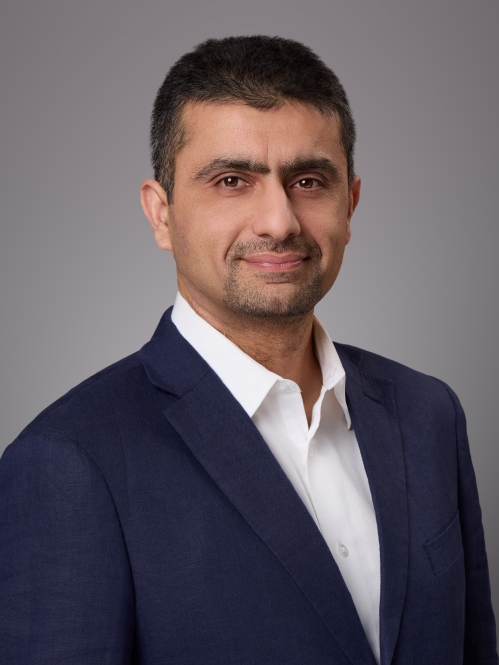
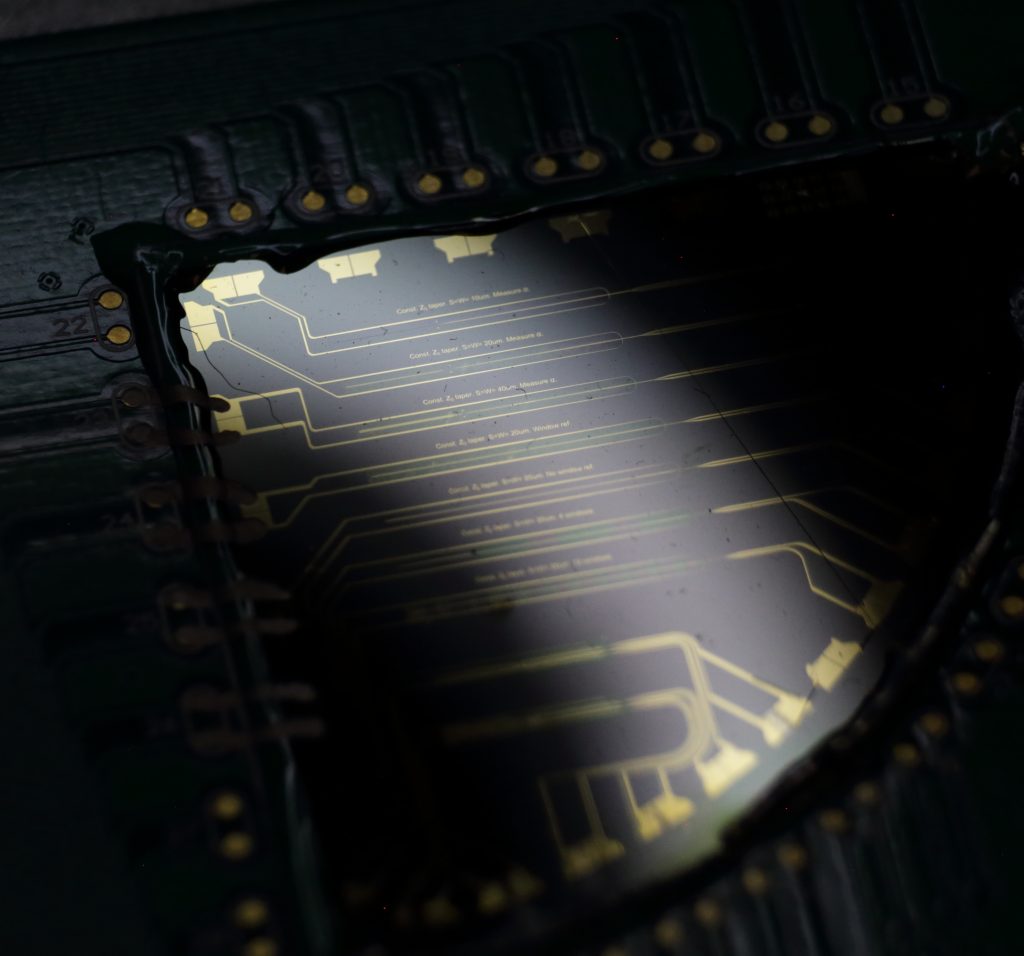
Mehdi Javanmard is a Professor and Paul S. & Mary W. Monroe Endowed Faculty Scholar at Rutgers University's Department of Electrical and Computer Engineering. He leads the NanoBioElectronics Laboratory, focusing on integrating micro/nanotechnologies with biomedical applications to develop low-cost, rapid diagnostic tools. His work emphasizes point-of-care diagnostics, biomarker detection, and microfluidics-based solutions. Education: PhD (Electrical Engineering) from Stanford University (2008), MS (EE) from Stanford (2004), BS (EE) from Georgia Tech (2002 with Highest Honor). Research Interests: Nanobiotechnology and BioMEMS Point-of-care diagnostics Microfluidics and electrokinetic phenomena Applications of nanotechnology in medicine Key Achievements: Recipient of DARPA Young Faculty Award (2020) and NSF CAREER Award (2019) Founded RizLab Health (2018), a startup commercializing lab-on-a-chip technologies Developed wearable biosensors and wireless diagnostic platforms Published over 50 peer-reviewed articles on microfluidics, impedance cytometry, and biosensor integration Lab Focus: The lab's innovations include nanowell-based impedance sensors, smartphone-integrated diagnostics, and wearable health monitoring systems. Current projects include DARPA-funded research on continuous biomarker monitoring and NSF-supported work on environmental sensor integration.
Dr. Marc D. Polanka is a Professor in the Department of Aeronautics and Astronautics at the Air Force Institute of Technology (AFIT), part of the Graduate School of Engineering and Management. He holds a PhD in Mechanical Engineering from the University of Texas at Austin and has a distinguished record of leadership, serving as the Faculty Council President and Faculty Advisor for the AFIT Student Section of AIAA. B.S., Mechanical Engineering, University of Dayton, 1992 M.S., Mechanical Engineering, Stanford University, 1993 Ph.D., Mechanical Engineering, University of Texas-Austin, 1999 Dr. Polanka's research is centered on advancing gas turbine propulsion technology, with a primary focus on combustion, heat transfer, and advanced instrumentation . He leads the Combustion Optimization And Laser (COAL) laboratory, where his team investigates cutting-edge concepts such as Rotating Detonation Engines (RDEs) and Ultra Compact Combustors for applications in APUs, afterburners, and scramjets. His work also encompasses the critical challenge of turbine film cooling under high fuel-air ratio conditions and the enhancement of small engine performance for unmanned aerial systems, including their operation at altitude and conversion to alternative fuels. His expertise extends to the aerodynamics and heat transfer of turbines, including film cooling and unsteady vane-rotor interactions. His recent publications reflect a strong and consistent research trajectory in propulsion and thermal sciences. The articles demonstrate a deep integration of experimental and computational methods to solve complex problems in combustion dynamics , film cooling effectiveness , and small engine optimization . A significant trend is the investigation of pressure gain combustion via RDEs and the development of novel diagnostic techniques for high-temperature environments. Associate Fellow of AIAA Fellow of ASME Faculty Advisor, AFIT Student Section of AIAA Review Chair, ASME IGTI conference Former Chair, ASME K-14 Gas Turbine Heat Transfer Committee Dr. Polanka has advised numerous PhD and MS students, many of whom are co-authors on his extensive publication list. His research has been supported by significant funding from the Air Force and other agencies, enabling advanced experimental facilities like the COAL lab. He has received a remarkable number of awards, including the Air Force Outstanding Science and Engineering Educator Award (2019) , the ASME IGTI Outstanding Service Award (2020) , and multiple first-place awards from AIAA for section leadership and service. Dr. Polanka leads the Combustion Optimization And Laser (COAL) laboratory, a state-of-the-art research facility dedicated to experimental combustion and heat transfer. The lab is the hub for his work on RDEs, ultra-compact combustors, and advanced turbine cooling, fostering a collaborative team of graduate students and researchers who are at the forefront of aerospace propulsion research.
Qiang Hua is a Lecturer in Electrical and Electronic Engineering at the Department of Engineering, School of Computing and Engineering, University of Huddersfield. Their research focuses on antennas, artificial intelligence, sensors, filters, new materials, waveguides, and AI-driven optimization methods for 5G communications. PhD in Advanced Antenna Designs for 5G Communications (University of Liverpool, 2018-2021) Master in Digital Signal Processing (University of Manchester, 2016-2017) Bachelor in Telecommunication Engineering (University of Liverpool, 2012-2014) Bachelor in Telecommunication Engineering (Xi'an Jiaotong-Liverpool University, 2012-2014) Recent research activity includes work on antenna design optimization using Bayesian neural networks, dual-band polarized antennas for 5G, ultra-wideband monopole antennas, and quadruple-band systems for multi-generation networks. Publications span IEEE Transactions on Antennas and Propagation, IEEE Access, and IEEE Transactions on Electromagnetic Compatibility. Qiang Hua is a member of the Institute of Electrical and Electronics Engineers (IEEE) and serves as a reviewer for IEEE Antennas and Wireless Propagation Letters. They are currently accepting PhD students.
Miriam Beneito Cambra is an Associate Professor at the University of Valencia's Faculty of Chemistry , affiliated with the Department of Analytical Chemistry and the CLECEM research group (Liquid Chromatography, Capillary Electrophoresis and Mass Spectrometry). Education: Doctorate from the University of Valencia (2011), thesis: Desarrollo de métodos analíticos para el control de calidad de surfactantes y aditivos en productos de limpieza y de higiene personal , supervised by Dr. Guillermo Ramis Ramos and Dr. José Manuel Herrero-Martínez. Research Interests: Development of analytical methods for surfactants, additives, and contaminants in food/environmental matrices Application of liquid chromatography, capillary electrophoresis, and mass spectrometry Innovation in analytical chemistry education through digital tools and active learning methodologies Green Analytical Chemistry approaches and miniaturized devices Exploration of AI (e.g., ChatGPT) and 3D printing in analytical workflows Article Trends: Recent publications highlight her work on integrating 3D printing for sample preparation devices, AI applications in analytical chemistry education, paper-based microfluidic systems for antibiotic detection, and reticular framework materials for miniaturized analytical formats.
Helen Page is a Senior Lecturer in Forensic Biology at the School of Health and Life Sciences, Teesside University. With a BSc in Biology from the University of York and an MSc in Forensic Science from the University of Strathclyde, she brings extensive experience in diagnostic test design (Pirbright Institute's Bluetongue Virus research) to her academic role. At Teesside, she leads undergraduate modules in cell biology, forensic biology, and DNA analysis while serving on the University Academic Board and International Committee. Education: BSc Biology (University of York), MSc Forensic Science (University of Strathclyde) Research Focus: Biological evidence recovery from unconventional sources like bathwater and digital devices, fiber transfer dynamics, and student engagement strategies in biosciences Collaborations: Forensic Rescue Limited, Fostering Forensics Ltd Helen's scholarly work spans forensic evidence recovery (15+ publications 2007-2024) with recent emphasis on meme-based research methods and digital narratives in education. Her research has secured funding from the Royal Society of Biology and Teesside University's Student as Researcher scheme. Key awards include Senior Fellow of the Higher Education Academy and Fellow of the Royal Society of Biology. Teaching innovations focus on technology-enhanced laboratory learning and developing accredited workforce programs with industry partners. She serves as External Examiner for forensic degree programs at Kingston University and contributes to the Chartered Society of Forensic Sciences' accreditation standards. Current projects include exploring digital evidence preservation and expanding research-informed teaching practices.
Levi Smith is a Professor leading research in Terahertz (THz) Engineering, focusing on bridging millimeter-wave and photonic technologies to address challenges in the THz gap. His work emphasizes transmitter/receiver design using photoconductive switches, transmission mediums for short-distance applications, and spectroscopic sensing for chemical and environmental monitoring. Key collaborations include shared laboratory infrastructure with Prof. Gordon and Prof. Bornemann, featuring advanced equipment such as femtosecond lasers, optical spectrum analyzers, and an anechoic chamber. Research interests span THz spectroscopy for molecular fingerprinting, greenhouse gas emission quantification via novel laser-detection systems, and integrated terahertz biosensors for healthcare applications. Recent work highlights include on-chip glucose sensing using guided waves, spoof surface plasmon polariton filters for 6G communications, and metamaterial-based bandpass filters. His lab explores synergies between nanotechnology and high-frequency systems, with a focus on practical applications in environmental monitoring, medical diagnostics, and next-generation communication technologies.
Christopher Cadou is a Professor and Keystone Professor in the Department of Aerospace Engineering at the University of Maryland. He serves as Director of Undergraduate Studies and leads interdisciplinary research in combustion, micro-fluidics, and compact power systems. His work integrates advanced diagnostics like laser-based techniques and infrared measurements. Education: B.S./B.A. in Mechanical Engineering and History from Cornell University; M.S. and Ph.D. in Mechanical Engineering from UCLA. Background: Joined UMD in 2000 as Assistant Professor, promoted to Associate (2006), and Professor (current). Prior roles include Postdoctoral positions at MIT, Caltech, and UCLA. Research interests focus on micro-scale combustion systems, fluid dynamics in miniature channels, and novel diagnostics for energy applications. His studies address flame stability, heat transfer optimization, and piezo-hydraulic actuator design. Collaborations span academia and industry, contributing to advancements in microturbomachinery and fuel-efficient systems. Grants/Advising: Active in securing NSF, AFOSR, and ARO funding. Advises on projects like microcombustor design and green aircraft engines. Mentors students through initiatives like the Maryland Energy Innovation Institute. Labs/Teams: Leads experimental facilities for combustion diagnostics and microfluidics. Collaborates with the Terrapin Rocket Team and MEI² startups in clean energy.
Imad Agha is an Associate Professor with a joint appointment in the College of Arts and Sciences (Physics) and the School of Engineering (Department of Electro-Optics and Photonics) at the University of Dayton. He is a full-time faculty member actively engaged in cutting-edge research in photonics, quantum optics, and nanomaterials. His research interests include: Photonics and integrated photonic circuits Phase change materials (e.g., GST, Sb2Se3) for optical switching and memory Orbital angular momentum and optical vortex beams Metasurfaces and spatially variant photonic crystals Infrared detection using hyperdoped silicon Ultrafast and real-time spectroscopy GeSn-based optoelectronic devices His recent publications (2023–2025) demonstrate a strong focus on reconfigurable optical devices, tunable mid-infrared filters, quantum photonic transceivers, and advanced spectroscopy techniques. The work leverages machine learning, nanofabrication, and novel materials to enable next-generation photonic systems for communication, imaging, and sensing. Key themes include energy efficiency, ultrafast response, and chip-scale integration. Scientific awards are not listed in the provided text. Dr. Agha advises graduate students and likely leads a research group involved in experimental and theoretical photonics. His work is supported by grants related to materials development, optical device engineering, and quantum technologies, though specific grants are not listed. He collaborates across engineering and physics disciplines, particularly in the development of hybrid photonic systems. His research is conducted within advanced photonics and nanofabrication laboratories at the University of Dayton, focusing on optical characterization, device testing, and materials synthesis.
Stepanov Igor Borisovich is a Doctor of Technical Sciences and Deputy Vice-Rector for Science and Strategic Projects at Tomsk Polytechnic University (TPU). With over 30 years of service, he has held key positions including Professor at the Department of Experimental Physics (2014-2016), Director of the Research School of High-Energy Physics (2017-2018), and Vice-Rector for Research and Innovations (2018-2020). His academic journey includes graduating with honors from TPU's Physics and Engineering Faculty in 1993, earning a PhD in 1999, and a Doctorate in 2011, both specializing in charged particle beam physics. Research Interests: His work spans radiation-matter interactions , condensed matter physics , particle accelerator design , and ion-plasma material modification . He develops technologies for radiation sources, surface engineering, and plasma diagnostics, with applications in materials science and nuclear engineering. Scientific Publications: Recent works focus on advanced betatron designs for high-resolution imaging (2017-2018), plasma-deposited coatings for tribological applications (2016-2017), and innovations in ion beam sources and diagnostics (2014). His publications consistently address precision instrumentation and materials enhancement. Awards and Honors: Honorary Worker of Science and Technology of the Russian Federation (2015) Gold/Silver medals: International Salon of Innovations (x2), High Technologies Exhibition Certificates of Honor: Ministry of Education (2011), Tomsk Region (2017), Tomsk City (2008) Anniversary medals: 400 Years of Tomsk (2004), 100 Years of TPU (2000) Teaching and Mentorship: Supervised postgraduate, bachelor's, and master's students at TPU. Co-authored two textbooks on physics and plasma applications. Laboratory Leadership: Headed the Center for Measuring Material Properties (2002-2011) and contributed to the Nuclear Physics Research Institute , driving advancements in ion-beam processing and non-destructive testing.
Dr. Rebecca Ruby is an Associate Professor in the Department of Veterinary Science at the University of Kentucky's Martin-Gatton College of Agriculture, Food and Environment. She serves as Residency Coordinator at the Veterinary Diagnostic Laboratory and contributes to equine neonatal medicine. Education: DVM (Massey University, 2011), MS (University of California-Davis, 2006), BS (University of California-Davis). Her research focuses on equine neonatology , particularly gastrointestinal pathologies , infectious diseases , and critical care diagnostics . Key areas include sepsis scoring systems, antibiotic toxicity, and abdominal wall defects in mares. Recent publications examine acute hepatitis in foals , congenital skin disorders , and abdominal wall rupture complications in pregnant mares. She also contributes to chapters on equine embryology and digestive system development. Grants include Nocardioform placentitis research and advanced diagnostic training programs for food animal veterinarians.
Dalia Iskander is an Associate Professor in Medical Anthropology at the Department of Anthropology, University College London (UCL). Her work bridges medical anthropology, visual methods, and participatory-action research, with regional expertise in the Philippines, Southeast Asia, and the UK. Education: PhD and MSc in Medical Anthropology (University of Oxford); BSc in Archaeology and Anthropology (University of Oxford). Research Interests include: Structural factors shaping health (land-use, climate change, malaria, nutritional diseases) Creativity and health, particularly miniature craft practices in the UK Visual and sensory ethnography, photovoice, and participatory methods Debt and health poverty traps in climate-vulnerable Cambodia Recent Publications focus on: Debt-health dynamics in Cambodia RSV vaccination policy Visual methods in malaria research Climate adaptation and microfinance Scientific Awards : Winner, UCL Student Choice Award for Sustainable Education (2022) Nominated, UCL Student Choice Award for Inspiring Teaching (2021) Teaching covers: Medical Anthropology Biosocial and Social Anthropology Anthropological Research Methods Visual and Sensory Ethnography Climate Change and Health
Mekhail Anwar, MD, PhD is an Associate Professor at the University of California, San Francisco (UCSF) in the Department of Radiation Oncology. His work bridges bioengineering and integrated circuit design to develop novel solutions for cancer treatment , particularly in precision radiotherapy . Dr. Anwar is a core member of the UC Berkeley and UCSF Bioengineering group , combining expertise from both institutions. Dr. Anwar’s research focuses on miniaturized radiation detection , intraoperative imaging , and label-free biosensing using computer chip technology . His innovations include millimeter-scale dosimeters , chip-scale imagers , and ultrasonic backscatter implants for real-time monitoring in oncology. NIH DP2 New Innovator Award (2020) AACR-Novocure Career Development Award (2019) NIH Trailblazer Award (2019) New Directions in Prostate Cancer Research Award (2018) His lab ( Anwar Lab ) develops implantable sensors , wireless imaging systems , and single-cell characterization tools to enhance cancer diagnostics and treatment precision.
M. Rashed Khan is an Assistant Professor at the University of Nevada, Reno's Institute of Neuroscience, specializing in environmental sensor development and neuroengineering. His research bridges materials science and biomedical applications through innovative liquid metal technologies and computational modeling. Dr. Khan's primary research focuses on Environmental Sensing and Neuroengineering . In environmental work, he pioneers liquid metal thin films and ionogels for real-time PFAS detection in water, with patent-pending technologies enabling on-site monitoring in Northern Nevada. His neuroengineering research develops patient-specific computational models using medical imaging and finite element analysis to optimize drug diffusion in heterogeneous brain tissue, advancing convection-enhanced delivery for neurological therapies. Recent publications (2024-2025) reveal a strategic shift toward field-deployable environmental sensors and clinically translatable brain models. His PFAS detection systems integrate microfluidics and quartz sensors for rapid water testing, while neuroengineering work combines MRI data with in vitro validation to address tissue heterogeneity—demonstrating convergence of environmental health and neurological therapeutics through soft materials innovation. Dr. Khan directs the Khan Lab , which develops soft materials for health and water technologies . Current projects include engineering low-cost PFAS sensors for community water systems and creating 3D synthetic brain platforms to study molecular dispersal. The lab's interdisciplinary approach merges liquid metal fluidics, hydrogel engineering, and computational modeling to solve critical challenges in environmental safety and neurological treatment.
Mustafa Tahsin Guler, born in Ankara in 1984, serves as Associate Professor in the Department of Physics at the Faculty of Engineering and Natural Sciences. He resided in Istanbul until 2000 and holds a Bachelor's degree in Physics from Gazi University (2008) alongside a 2015 PhD specializing in microfluidic biosensors. Education: Bachelor of Science in Physics, Gazi University, 2008 Doctor of Philosophy in Microfluidic Biosensors, 2015 Research Interests: Dr. Guler's work centers on microfluidic systems for biosensing applications, integrating physics principles with biomedical engineering to develop lab-on-a-chip diagnostic devices. His expertise spans the miniaturization of biological assays, sensor surface functionalization, and fluid dynamics optimization for point-of-care medical testing. This research bridges fundamental physical sciences with translational healthcare solutions, emphasizing portable, cost-effective diagnostic platforms for resource-limited settings and personalized medicine initiatives. Scientific Awards: No scientific awards specified in source material Advising and Grants: Available documentation provides no details regarding graduate student supervision, research funding, or grant acquisitions. His biosensor specialization suggests potential involvement in biomedical instrumentation projects, though specific initiatives remain unreported. Labs and Teams: No information about laboratory facilities, research teams, or collaborative networks was included in the provided institutional profile.
Ann Van Eeckhaut is a Professor in the Department of Pharmaceutical and Pharmacological Sciences at the Faculty of Medicine and Pharmacy, Vrije Universiteit Brussel. With an h-index of 25 and over 2681 citations, she leads significant research in neuropharmacological analysis methods, specializing in the development of miniaturized liquid chromatography techniques for neurotransmitter and drug analysis in biological samples. Her research expertise spans: Neurochemical and neuropharmacological analysis requiring sensitive methods for low-concentration compounds Development of miniaturized LC methods coupled to fluorescence, electrochemical, and MS/MS detection Quantification of neuropeptides in microdialysis samples using Nano LC-MS/MS Metabolite profiling for biomarker discovery in drug-resistant epilepsy Enantioselective analysis of neuro- and gliotransmitters Recent publications demonstrate her leadership in advancing analytical techniques for brain metabolomics, with increasing focus on 3D printing for sample preparation devices and natural compounds for neurodegenerative disease treatment. Her work bridges analytical chemistry, neuroscience, and translational pharmacology, with particular emphasis on Parkinson's and Alzheimer's disease therapies. Scientific recognition includes: Project grant from Wetenschappelijk Fonds Willy Gepts (WFWG) in December 2021 for epilepsy biomarker research Dr. Van Eeckhaut actively supervises graduate research with 31 theses completed under her guidance. She leads multiple significant research projects including FWOSB173 (2024-2028) on ADHD medication during pregnancy, FWOAL1076 (2023-2026) on brain metabolomics, and VLIR418 (2022-2027) on levodopa-rich biomass for neurodegenerative diseases. Her research group maintains extensive collaboration networks across neuroscience and analytical chemistry disciplines. Her laboratory specializes in developing cutting-edge analytical methods for neurochemical analysis, with particular focus on volume-limited samples and high-throughput requirements for modern pharmacological research.