Konstantinos Drakos is a Professor at the Department of Accounting and Finance, Athens University of Economics and Business (AUEB). Previously, he served as Assistant Professor at AUEB (2009–2012), Assistant Professor at the University of Patras (2003–2008), and Lecturer at the University of Essex (2001–2002). He holds a PhD in Economics from the University of Essex, preceded by an MSc and undergraduate studies in Economics at the University of Athens. His research focuses on Applied Financial Economics and the Economics of Security, with recent work analyzing hedge fund leverage, geopolitical risk impacts, cryptocurrency markets, and green banking. Teaching responsibilities include Macroeconomic Theory, Finance for Banking, and Risk Management at both undergraduate and postgraduate levels. Drakos' publications span over two decades, addressing topics such as terrorism's economic effects, bank lending behavior, and investment under uncertainty. His recent articles (2022–2025) emphasize cryptocurrency dynamics, geopolitical risk interactions, and financial stability in green banking. Notable themes include market volatility, capital allocation under uncertainty, and policy responses to systemic risks. No scientific awards are listed in the provided materials. His research has explored structural shifts in financial risk, macroeconomic sentiment, and cross-market linkages following major global events like 9/11 and the 2008 crisis. Drakos has advised on policy-related topics related to financial markets and regulatory frameworks, though specific grants or lab affiliations are not detailed here.
Professor Kim Eun-hee is a faculty member in the Department of Defense Systems Engineering at Sejong University, specializing in advanced radar technologies and signal processing. Her work bridges theoretical research and practical applications in defense systems. Ph.D. in Mechanical Engineering (2004), KAIST M.Sc. in Engineering (1996), KAIST B.Sc. in Precision Engineering (1994), KAIST Her research focuses on radar system design, including airborne active phased array radar, automotive radar, broadband noise radar, and over-the-horizon radar. She explores waveform optimization, MIMO architectures, and signal processing algorithms to enhance radar performance in complex environments. Publications highlight her expertise in MIMO radar configurations, Doppler-insensitive waveforms, and machine learning integration for signal analysis. She leads industry-academic collaborations with organizations like Hanwha Systems and LIG Nex1. She contributes to technical committees, including the Sensor and Signal Processing Division of the Korean Society of Military Science and Technology. Her laboratory (Defense Radar Technology Laboratory) focuses on radar design, signal processing, and sensor integration.
Mark Lee is an Adjunct Professor in the People Analytics department at NYU’s Tandon School of Engineering, specializing in Technology Management and Innovation. He holds a Ph.D. in Engineering Psychology from Georgia Institute of Technology (1996). Currently, he serves as Head of Research, Analytics, and Business Development at UL ComplianceWire, focusing on pharmaceutical and medical device manufacturing training. His research leverages large datasets to improve healthcare safety through regulatory compliance and best practices. Courses taught include Human Factors Engineering, Workplace Design, and Predictive Analytics. Education: Ph.D. in Engineering Psychology, Georgia Tech (1996) Key Roles: Adjunct Professor, Head of Research at UL ComplianceWire Research Focus: Human Factors, Training Systems Design, Healthcare Compliance His work spans auditory display systems for aviation (e.g., 3D audio cockpit interfaces) and ergonomic design for industrial products. Recent projects emphasize data-driven solutions for regulatory challenges in life sciences. Publications highlight studies on visual search strategies, age-related cognitive performance, and application of signal detection theory in decision-making. He actively collaborates with industry and government entities, exemplified by the FDA-UL Cooperative Research Agreement.
Prof. Dr. Mirko Hornung is a Professor of Aircraft Design at the TUM School of Engineering and Design, Technische Universität München. His research focuses on conceptual aircraft design, integration of propulsion systems, and evaluation of aviation technologies in operational contexts. Education and Career: PhD in Aeronautical Engineering from the University of the Bundeswehr (2003), awarded a research prize for work on reusable space transport systems. 2003–2009: Worked at Airbus Group (EADS) on military air systems, propulsion integration, and program management. Executive Director of Research & Technology at Bauhaus Luftfahrt, a think tank for long-term aviation developments. Research Interests: Aircraft design optimization, including hybrid energy systems, electric propulsion, and UAV technologies. Environmental sustainability in aviation, such as hydrogen-powered aircraft and lifecycle assessment. Aerodynamic and structural analysis, including flutter suppression and composite materials. Key Publications Highlight Trends: Focus on hybrid-electric and hydrogen propulsion for reducing environmental impact. Advancements in UAV design, including morphing wings and autonomous systems. Integration of AI-driven tools for propulsion optimization and lifecycle analysis. Scientific Awards: EADS Promotion Award (1995) Research Prize for Thesis on Reusable Space Transport Systems (2003) Advising & Grants: Directs research at Bauhaus Luftfahrt, collaborating on future aviation concepts. Engaged in interdisciplinary projects like FLEXOP UAV demonstrator and Ce-Liner eMobility studies. Labs/Teams: Active in the Aircraft Design Professorship at TUM and leadership roles at Bauhaus Luftfahrt, focusing on next-generation aviation technologies.
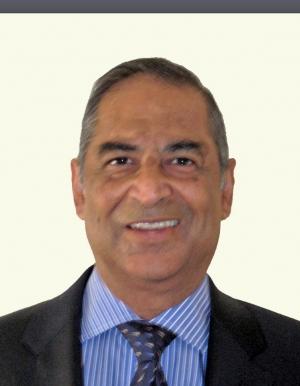
Sridhar R. Tayur is the Ford Distinguished Research Chair and University Professor of Operations Management at Carnegie Mellon University’s Tepper School of Business. He holds a Ph.D. in Operations Research from Cornell University and a B.Tech. in Mechanical Engineering from IIT Madras. His research focuses on quantum computing applications in operations research, healthcare systems optimization, and supply chain management. He has held visiting roles at MIT, Stanford, and Cornell, and founded companies like SmartOps and OrganJet. His recent work spans quantum-inspired optimization algorithms, healthcare decision support systems, and fair resource allocation policies. He has contributed to over 110 publications, including high-impact papers in Management Science , Operations Research , and IEEE Transactions . Awards include INFORMS Fellow and NAE membership. He teaches courses in quantum integer programming, healthcare operations, and service management at the Tepper School. Education: Ph.D. (Cornell), B.Tech. (IIT Madras) Research Labs: Quantum Technology Group, OrganJet Key Awards: INFORMS Fellow, NAE Member, MSOM Distinguished Fellow Teaching: MBA Operations Management, PhD Quantum Optimization, Healthcare Systems His interdisciplinary work bridges quantum computing, healthcare policy, and logistics, supported by collaborations with industry and government institutions.
Eli Ben-Michael is an Assistant Professor jointly appointed in the Heinz College of Information Systems and Public Policy and the Department of Statistics & Data Science at Carnegie Mellon University. He is affiliated with the CMU-NIST AI Measurement Science & Engineering Cooperative Research Center (AIMSEC), contributing to cutting-edge research at the intersection of statistics, policy analysis, and artificial intelligence. His educational background includes a PhD in Statistics from U.C. Berkeley and undergraduate studies at Columbia University where he earned a dual degree in Computer Science and Statistics. Prior to his current position, he completed a postdoctoral fellowship at Harvard University's Institute for Quantitative Social Science and Department of Statistics. Ben-Michael's research focuses on developing innovative statistical and computational methods for causal inference and policy evaluation, with particular emphasis on integrating machine learning techniques to address complex problems in public policy and social science. His work bridges theoretical statistics with practical applications in healthcare, criminal justice, education, and social policy. Current research directions include safe policy learning, sensitivity analysis for clustered data, and methodological innovations for the synthetic control method. His publication record shows a strong trajectory in top-tier journals including Journal of the American Statistical Association, Journal of the Royal Statistical Society, and Proceedings of ICML. Recent work demonstrates increasing focus on policy-relevant applications including abortion legislation impacts, pre-trial risk assessment, and healthcare disparities, while maintaining methodological rigor in causal inference frameworks. Ben-Michael has developed open-source software tools including augsynth and multical R packages, which implement his methodological contributions for synthetic controls and multilevel calibration weighting. These packages have been adopted by researchers in multiple disciplines for causal inference applications.
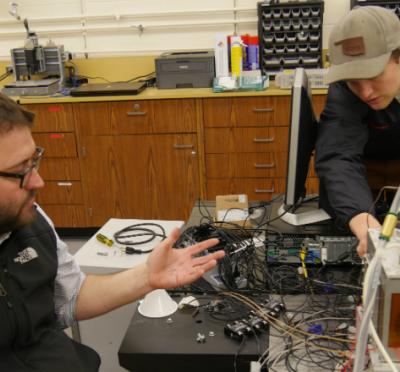
Joshua Gess is an Associate Professor in the Mechanical, Industrial, and Manufacturing Engineering department at Oregon State University's College of Engineering. He joined Oregon State in 2015 and serves as a co-principal investigator at the Enhanced Heat Transfer Laboratory, where he leads research in thermal management solutions for high-performance microelectronics. His educational background includes: PhD, Mechanical Engineering, Auburn University, 2015 MS, Mechanical Engineering, Auburn University, 2012 B.E., Mechanical Engineering, Vanderbilt University, 2005 Before academia, he worked as a mechanical engineer at SSOE Group (including consulting for Johns Manville) and Northrop Grumman where he focused on military communication equipment. Professor Gess specializes in advancing thermal management solutions for high-performance microelectronic equipment. His research spans multiple scales, examining single and two-phase heat transfer on the macro-scale with passive and active liquid immersion techniques, as well as on the micro and nano scale for complex embedded thermal management solutions. He combines fundamental heat transfer knowledge with novel experimental methods such as two-phase PIV and high-speed image capture to develop reliable and energy-efficient cooling solutions for demanding electronics systems. His publication record demonstrates a clear trajectory toward increasingly sophisticated thermal management solutions, with recent work focusing on additive manufacturing applications for cooling systems, semiconductor thermal management, and nuclear reactor cooling systems. His research has significant implications for data center energy efficiency, where even small improvements in cooling efficiency could save enormous amounts of energy that could be returned to the grid. Gess is deeply committed to mentoring graduate students, emphasizing the practical applications of engineering principles. He attributes his interest in engineering to childhood influences like the movie RoboCop and the TV series MacGyver, and finds the reality of engineering work just as gratifying as he'd imagined. He particularly values the moments when his graduate students "get it" and watching them grow with each new accomplishment. As a person with a disability himself, Gess is passionate about establishing more robust support systems for people with disabilities at Oregon State. He is working with the School of Public Health to start an adaptive sports program, with the goal of building infrastructure that allows anyone to feel welcome and pursue advanced degrees at the university.
Umakishore Ramachandran is a Professor in the School of Computer Science within the College of Computing at Georgia Institute of Technology. His research spans edge computing, distributed systems, and real-time video analytics, with significant contributions to fog computing infrastructure, mobile systems, and sensor networks. Over a prolific 38-year career, he has authored 142 publications with major contributions in 2022-2025. His research interests focus on bridging the gap between cloud and edge computing, with pioneering work in video analytics systems like EVA and MicroEdge. He investigates resource optimization for latency-sensitive applications, developing novel approaches for load shedding, data management, and container runtime efficiency at the network edge. His work addresses fundamental challenges in distributed camera networks, autonomous vehicle systems, and real-time stream processing. Ramachandran's recent publications reveal a strong emphasis on practical edge computing solutions, with 75% of his 2021-2025 work focusing on video analytics and infrastructure optimization. His research shows increasing collaboration with industry partners while maintaining academic rigor, with publications appearing in top venues like SIGMOD, Middleware, and DEBS. The work consistently addresses real-world constraints of resource-constrained edge environments. Ramachandran has mentored numerous researchers who have become principal investigators on edge computing projects, with notable collaborators including Harshit Gupta, Enrique Saurez, and Zhuangdi Xu appearing as first authors on multiple papers. His work has received significant grant support for projects related to mobile fog computing and distributed video analytics. He leads research in the Edge Computing Laboratory at Georgia Tech, focusing on the development of practical frameworks for real-world deployment of edge infrastructure. Current projects include eCAV for connected autonomous vehicles and MicroEdge for multi-tenant camera processing systems.
Gajanan S. Bhat is a Professor and Department Head at the University of Georgia within the College of Family and Consumer Sciences . He earned his PhD in Textile and Polymer Engineering from Georgia Tech in 1990. Education : PhD (Georgia Tech, 1990) Professional Journey : Joining the University of Tennessee, Knoxville (UTK) in 1990, became Director of UTNRL , researching nanofibers, sustainable materials, and high-performance fibers. Recently transitioned to UGA as department head. Dr. Bhat's research focuses on nonwovens (meltblown, spunmelt), sustainable materials (cotton-based composites, biodegradable polymers), and high-performance fibers (carbon fibers, ballistic materials). His work bridges nanotechnology and industrial applications , addressing challenges in filtration , protective fabrics , and recycling . Recent publications highlight advancements in thermal conductivity modeling , flexible sensors , and ecological composites . His research has expanded into flushable nonwovens , PLA-based filters , and stretchable cotton textiles . Scientific Recognition : Outstanding Young Engineering Alumni, Georgia Tech (1996) Distinguished Achievement Award, The Fiber Society (1999) Technical Achievement Award, TAPPI (2014) He serves on editorial boards of journals like International Journal of Textile Engineering and Processes and Journal of Nanomaterials and Molecular Nanotechnology . Active in professional societies including The Fiber Society , INDA , and Textile Institute .
Ki-Woong Park is a tenure-track full Professor in the Department of Computer and Information Security at Sejong University. He leads the System Security and Computer Engineering Research (SysCore) Lab, which focuses on system security research with numerous ongoing projects funded by major Korean research institutions including IITP, NRF, and KRIT. Sejong University, Department of Computer and Information Security System Security and Computer Engineering Research (SysCore) Lab Leader Member of IEEE, IEEE Computer Society, and ACM Education: Ph.D. in Electrical Engineering & Computer Science, KAIST (Advisor: Prof. Kyu-Ho Park) M.S. in Electrical Engineering & Computer Science, KAIST (Advisor: Prof. Kyu-Ho Park) B.S. in Computer Science, Yonsei University (Summa Cum Laude) Exchange Student at University of California, Los Angeles (UCLA) Professor Park's research focuses on designing, building, and analyzing secure systems, particularly for cloud computing, networked systems, and embedded systems. His work often involves reevaluating existing security mechanisms and actual system implementations with subsequent evaluation in real computing environments. He has made significant contributions to areas including cloud security, IoT security, ransomware detection, moving target defense, and metaverse security. His research approach emphasizes both theoretical foundations and practical implementation, with numerous publications in top-tier security and systems venues. His recent publications (2023-2024) demonstrate a strong focus on emerging security challenges in modern computing environments, particularly in metaverse platforms, UAV systems, and edge computing. These works span both theoretical security frameworks and practical implementations, with an emphasis on visualization techniques, hardware-based security mechanisms, and AI-enhanced security analysis. His research shows a clear progression from traditional cloud and network security toward next-generation security challenges in immersive virtual environments and cyber-physical systems. Scientific Awards: Microsoft Research Fellowship (2009-2010) Best Poster Gold Award at WISA 2020 Best Paper Award at MobiSec'18 Professor Park actively mentors numerous graduate and undergraduate students through the SysCore Lab, with current members including Ph.D. students, MS students, and undergraduate researchers. His research is supported by multiple significant grants, including the NRF Outstanding Researcher-Mid-career Researcher project, IITP Information Security Core Source Technology Development, and Defense Technology Advancement Research Institute projects. These grants total tens of billions of Korean won and address critical national security challenges in cyber defense, cloud security, and metaverse technologies. The SysCore Lab, under Professor Park's leadership, maintains a strong industry and government collaboration network, with part-time researchers from organizations including Hyundai Duty Free, Astron Security, Korea University, and various military cyber commands. This unique structure enables the lab to address both theoretical security challenges and practical implementation issues in real-world systems.
Edward Ashworth is a Postdoctoral Research Associate at the Sydney School of Health Sciences, University of Sydney. He is affiliated with the Thermal Ergonomics Laboratory and the Heat and Health Research Incubator. His research focuses on human adaptations to extreme environments, including heat, altitude, hyperbaric conditions, and space-related stressors. Key projects include improving sleep quality in hot environments and enhancing physical work capacity for outdoor workers. Edward's research interests span environmental physiology, with a focus on thermal tolerance, radiation injury mitigation, and the physiological effects of extreme conditions. He has contributed to studies involving nitrogen kinetics tracking using PET imaging, hyperbaric oxygen therapy, and robotic surgery applications. Awards: Young Investigator Award (2023), Art of Science Contest 1st Prize (2024), Australia Space Biology Summit 1st Place (2022), and Sporting Blue (Auckland University of Technology). Associations: The Physiological Society and American Physiological Society. His work integrates clinical trials, statistical research design, and translational approaches to address challenges in environmental health, cardiovascular disease, and healthy ageing. Current projects aim to optimize thermal tolerance strategies for military and occupational settings.
Patrick Flynn is the Matthew and Soogi Hong Fellow and Assistant Professor of Management at North Carolina State University's Poole College of Management, Department of Management, Innovation & Entrepreneurship. He holds a Ph.D. in Organizational Behavior and Human Resources from the University of South Carolina and a B.S. in Supply Chain Management from the University of Maryland. His research focuses on dynamic individual and group processes, including event-based adaptation, team citizenship behaviors, and resilience. He teaches courses in people analytics, management consulting practicum, and leadership consulting. Dr. Flynn’s work has been published in top journals such as Journal of Management , Journal of Applied Psychology , and Annual Review of Organizational Psychology . He serves on the editorial board of Group & Organization Management . His research explores transitions, sustainability, and organizational change, with media features in CNBC, MSN, and the Raleigh News & Observer . His academic contributions emphasize practical applications of organizational behavior theories, particularly in post-pandemic workplace dynamics, remote work adaptations, and employee well-being strategies. His recent work addresses collective turnover, trust dynamics, and proactive sustainability approaches in volatile environments.
Professor Dawn A. Lott holds the position of Professor of Applied Mathematics at Delaware State University. She obtained her Ph.D. in Engineering Sciences & Applied Mathematics from Northwestern University (1994), M.Sc. from Michigan State University (1989), and B.Sc. from Bucknell University (1987). Her postdoctoral training was at the University of Maryland (1997). Her research focuses on numerical and analytical studies of nonlinear partial differential equations modeling solid/fluid mechanics, biomechanics, and physiology. She also investigates decision-making processes using operations research and machine learning techniques. Key areas of expertise include computational methods, artificial intelligence, and algorithm design. Recent work emphasizes decision-making under uncertainty in IoT-enabled battlefield scenarios. Her publications explore MATLAB/Java comparisons for decision algorithms, graph-based reasoning systems, and SAGE-inspired optimization frameworks. Collaborations with researchers like Raglin and Metu highlight interdisciplinary approaches to military and operational challenges. No specific grants, awards, or student advisories are noted in the provided materials. Her contributions bridge applied mathematics with real-world applications in defense, healthcare, and computational systems.
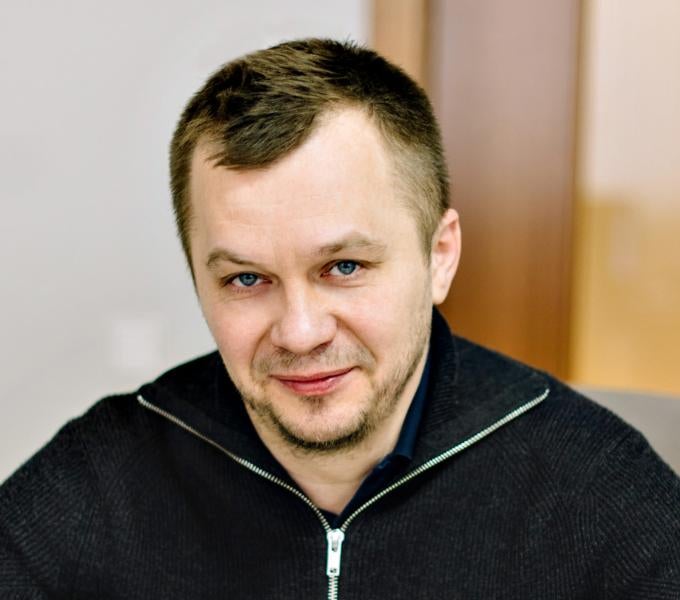
Tymofiy Mylovanov is an Associate Professor of Microeconomics at the University of Pittsburgh. His research focuses on political economy, macroeconomic policy design, blockchain applications in governance, and post-conflict reconstruction strategies with a particular emphasis on Ukraine and Eastern Europe. His work bridges theoretical economics with practical policy analysis, addressing issues such as public procurement reforms, sanctions impact on businesses, and the design of fiscal frameworks for war-torn economies. Mylovanov has extensively studied the economic consequences of geopolitical conflicts, including the Russia-Ukraine war, and advocates for institutional reforms to ensure democratic stability and economic resilience. Key research themes include: Optimal mechanisms for foreign aid allocation Blockchain's role in public sector transparency Anti-corruption frameworks in post-authoritarian states Economic policy responses to hybrid warfare Mylovanov's recent publications analyze Ukraine's macroeconomic challenges, the effectiveness of international sanctions, and innovative governance models leveraging technology. His work frequently appears in high-impact policy journals and is cited in global policy discussions about Eastern European development.
Lakshmi N Sankar serves as Regents Professor and Sikorsky Professor in the Guggenheim School of Aerospace Engineering at Georgia Institute of Technology, where he directs the Computational Fluid Dynamics Laboratory and teaches aerodynamics, helicopter theory, and wind energy courses. His research program spans unsteady viscous flow modeling for aircraft, helicopters, and wind turbines since joining the faculty in 1982 after industry experience at Lockheed Martin. Education: Ph.D., Aerospace Engineering, Georgia Institute of Technology, 1977 MSAE, Aerospace Engineering, Georgia Institute of Technology, 1975 B. Tech., Aeronautical Engineering, Indian Institute of Technology, Madras, India, 1973 Research Focus: Professor Sankar's work centers on Computational Fluid Dynamics for rotorcraft aerodynamics and wind energy systems , with significant contributions to icing phenomena and unsteady flow modeling . His recent publications reveal intensifying focus on adverse weather effects (rain/icing), eVTOL conversion challenges, and high-fidelity hybrid modeling techniques for rotorcraft performance prediction. Publication Trends: Analysis of his 2022-2025 publications shows dominant themes in rotorcraft icing (35%), weather impact studies (25%), and advanced CFD methodologies (20%), with growing interest in drone applications and mathematical aspects of fluid dynamics. His work consistently bridges theoretical mathematics with practical aerospace engineering challenges. Scientific Recognition: AIAA Fellow and AHS Technical Fellow NASA Group Achievement Award (2007) and Space Act Software Release Award (2003) Multiple Sigma Gamma Tau Teaching Awards (2005-2015) Dean George C. Griffin Faculty of the Year (2014-2015) Sikorsky Professorship (2018-Present) Mentorship and Collaboration: As recipient of Georgia Tech's Graduate Research Assistant Development Award, he has cultivated extensive student mentorship. His research integrates with the Vertical Lift Research Center of Excellence and Center for 21st Century Universities, securing major industry and NASA funding for rotorcraft innovation. Current projects include physics-based modeling of ice accretion and eVTOL retrofit feasibility studies. Research Infrastructure: The Computational Fluid Dynamics Laboratory serves as his primary research hub, complemented by collaborations through the Vertical Lift Research Center of Excellence where his team develops next-generation modeling tools for military and civilian rotorcraft applications under federal funding programs.