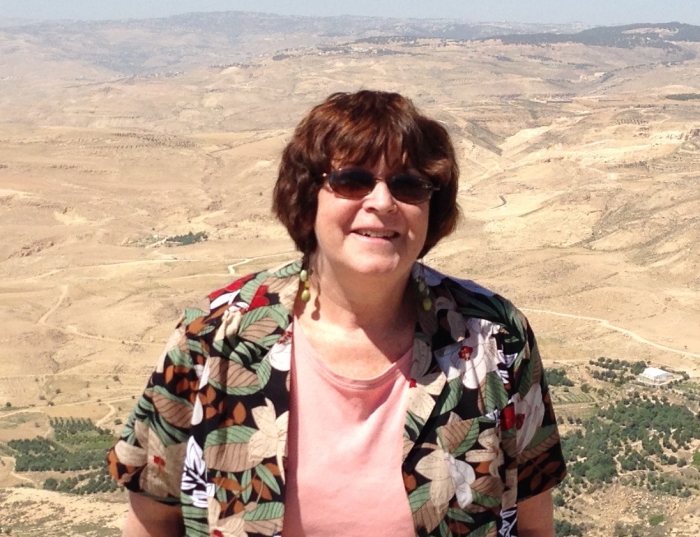
Margaret Judd is an Associate Professor and Chair of Anthropology at the University of Pittsburgh, Dietrich School of Arts and Sciences. She received her PhD from the University of Alberta (2000), an MSc from the University of Bradford (1994), and a BA from Wilfrid Laurier University (1993). Prior to joining Pittsburgh in 2004, she served as Special Collections Curator in the Department of Ancient Egypt & Sudan at The British Museum. Her research focuses on bioarchaeology, with emphasis on how sociocultural and resource stress affects the human body. She specializes in forensic anthropology and paleopathology, with extensive fieldwork in Jordan, northern Sudan, Russia, Egypt, Italy, and Canada. Current projects investigate multi-resource subsistence among ancient Jordanian pastoralists using bioarchaeological evidence. Dr. Judd teaches courses including Forensic Anthropology and Paleopathology. She has advised graduate students such as Alysha Lieurance and Gretchen Zoeller but is no longer accepting new advisees.
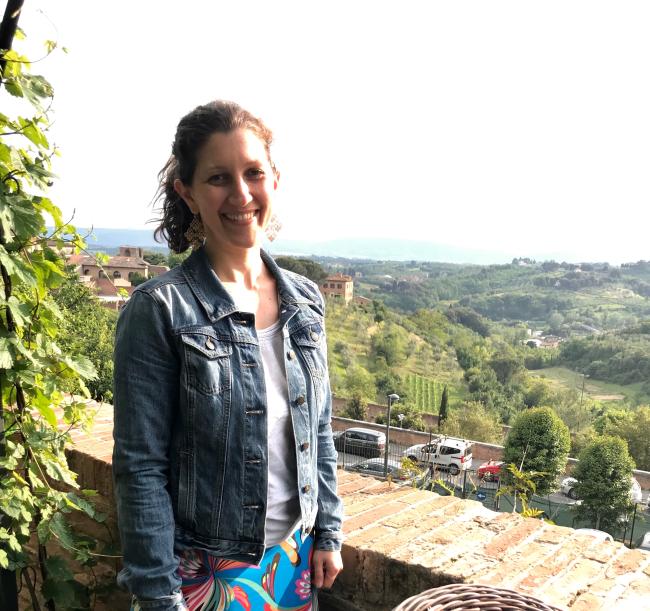
Dr. Jami Fisher serves as Senior Lecturer and Director of the American Sign Language (ASL) Program at the University of Pennsylvania's Department of Linguistics. Affiliated with the College of Arts & Sciences, their work focuses on documenting Philadelphia-area ASL variation, global deaf community collaborations (especially with Italian communities), and integrating sign language studies into broader linguistic curricula. Education includes an Ed.D. in Higher Education from UPenn (2014), M.S.Ed. (2002) and B.A. in Linguistics (1997). Their pedagogical innovations emphasize Academically Based Community Service (ABCS) partnerships with local organizations like the Pennsylvania School for the Deaf and Deaf-Hearing Communication Centre. Research interests bridge sociolinguistics and community engagement, analyzing the linguistic landscape's visual representation of sign languages and exploring how signed languages reflect cultural values. They co-lead the ASL/Deaf Studies minor program, integrating interdisciplinary coursework with field-based capstone projects. Program leadership includes developing UPenn's longest-running Ivy League ASL program, offering advanced courses in Deaf History, Culture, and Linguistics. Collaborative projects emphasize mutually beneficial partnerships with Deaf communities to ensure culturally responsive research and education.
Professor Andreas Chai is a faculty member in the Department of Accounting, Finance and Economics at Griffith University, where he holds the rank of Professor. He serves as Director of the Academy of Financial Crime Investigation and Compliance and is affiliated with the Griffith Asia Institute and the Centre for Work, Organisation and Wellbeing. His research focuses on applied microeconomics, particularly household behavior, the shadow economy, and global financial transaction modeling. He has contributed to projects for organizations like APEC, the United Nations, and the Queensland government. His work spans topics such as environmental economics, development economics, and the impact of technology on financial inclusion. Prof. Chai has extensive experience in economic policy, having previously worked at the Commonwealth Treasury and the Productivity Commission. His funded research includes consultancy projects with institutions like the Commonwealth Bank of Australia and Hong Kong University of Science and Technology. He is currently supervising doctoral students exploring anti-money laundering regulations, financial sector reforms in Pakistan, and environmental financial crime in banking. His research interests also include consumer behavior evolution, poverty measurement using novel methodologies, and the application of big data in economics. He has published in prestigious journals such as the Journal of Economic Perspectives and Journal of Economic Behavior & Organization .
Patrick T. Hurley is an Assistant Professor in the Environmental Studies Program at Ursinus College , where he investigates intersections of political ecology, environmental conservation, and land-use change. His work bridges First World political ecology with global resource conflict dynamics, focusing on urban-rural gradients and exurban development. Expertise in mining opposition and amenity migration Research on urban foraging and social-ecological resilience Recipient of Ursinus Mellon Summer Research Grant Recent publications analyze urban forests as provisioning ecosystems, exploring foraging practices among Russian-speaking immigrants in NYC (2022), social-ecological memory in Philadelphia (2024), and urban greenspace governance (2020). His scholarship links local land struggles to global neoliberalism patterns, particularly in Turkey’s Kaz Dağları region (2018). Hurley’s work integrates ethnobotany, environmental justice, and critical urban studies. He examines how marginalized communities navigate resource access, with projects like the Ursinus Food Forest (2022) demonstrating practical applications of cultural-ecological reconnections.
Ki-Eun Jang is an Assistant Professor of Bible in Global Cultures at Fordham University, specializing in Hebrew Bible and Ancient Middle Eastern Studies. Her work bridges ancient textual analysis with modern discourses on race, ethnicity, migration, and postcolonial criticism. Education: Ph.D. and M.Phil. in Hebrew Bible and Ancient Near East Studies from New York University, M.A. from Hebrew University of Jerusalem, B.A. from Korea University. Her research focuses on literary-historical approaches to the Hebrew Bible, exploring identity politics through terms like 'Gentilics' and examining how ancient classifications intersect with modern racial and ethnic theories. She also investigates the role of religious and 'scientific' ideas in shaping early modern Korean intellectual projects. Recent publications highlight her expertise in Ugaritic and Babylonian mythological parallels, scribal culture, and the ethical implications of biblical migration debates. Her work has been supported by grants from the Catholic Biblical Association of America, Louisville Institute, and Wabash Center for Teaching and Learning in Theology and Religion. Scientific Awards: Catholic Biblical Association of America, Louisville Institute, Wabash Center, Tantur Ecumenical Institute, PANAAWTM.
Sarah D. Wald is an Associate Professor in the Department of Environmental Studies & English at the University of Oregon's College of Arts and Sciences. She also serves as Director of Graduate Admissions for the English program. Her research focuses on environmental justice, Latinx and Asian American cultural studies, and food systems, with a particular emphasis on farmworker rights and migration narratives. She holds a Ph.D., M.A., and B.A. in American Studies from Brown University and Reed College respectively. Wald's academic work bridges environmental humanities with critical race theory, examining issues like decolonial frameworks in outdoor spaces, food justice, and the intersection of labor and citizenship. She has published extensively, including co-editing volumes such as Latinx Environmentalisms and authoring The Nature of California . Her research collaborations include the Tierra Viva Collaborative and the Northwest Forest Plan Just Futures initiative. Her teaching focuses on inclusive pedagogy and community-based learning, including developing the UO Common Reading Program's Under the Feet of Jesus guide. She actively engages in public scholarship through symposia like the Race, Environmental Justice and Public Lands Symposium and digital humanities projects like Racial Ecologies of Mt. Hood National Forest . Wald's scholarly contributions span peer-reviewed articles, edited collections, and interdisciplinary projects addressing environmental equity, transmedia narratives, and racialized access to natural spaces. Her work consistently integrates activism, literature, and policy analysis to advance justice-centered environmental scholarship.
Meg Crofoot is a Professor at the University of Konstanz and Director of the Department for the Ecology of Animal Societies at the Max Planck Institute of Animal Behavior. She previously held roles as a Professor at the University of California, Davis, a lecturer at Princeton University, and a research fellow at the Smithsonian Tropical Research Institute. Her research focuses on the evolution of social complexity in animal societies, leveraging GPS technology and remote sensing to study group dynamics in primates and other species. Key projects include investigating baboon movement decisions in Kenya and capuchin tool use in Panama. Crofoot has received prestigious awards like the Packard Fellowship and Alexander von Humboldt Professorship. She advocates for diversity in science and collaborates globally to advance understanding of animal sociality.
Associate Professor Stuart Rosewarne is affiliated with the Faculty of Arts and Social Sciences at The University of Sydney. His research focuses on environmental and ecological economics, critical socialist ecology, and the political economy of gender. He holds a BCom from Melbourne University, followed by an MA and PhD in Economics. Education: Bachelor of Commerce (Melbourne) Master of Arts (Melbourne) Doctor of Philosophy (Melbourne) His work critically examines issues such as climate policy failures, temporary labour migration dynamics, and the political economy of global energy systems. Notable contributions include co-editing the Journal of Australian Political Economy and authoring books like Climate Action Upsurge (2014) and Beyond the Coal Rush (2020). Recent publications analyze topics like migrant worker precarity, global food systems' financialization, and Australia's structural economic vulnerabilities. His research consistently critiques neoliberal frameworks and advocates for equitable alternatives in climate and labour policies. Rosewarne has secured significant grants, including Australian Research Council funding for projects on decarbonising energy systems and coal reliance. He collaborates globally on migration governance and climate justice initiatives. His advisory work includes contributions to UNRISD and the International Trade Union Confederation, focusing on rights-based approaches to temporary labour migration. He is also affiliated with interdisciplinary teams exploring social transformation and migration.
Dr. David Boocock is a Senior Research Fellow and Group Leader of the Biological Mass Spectrometry and Clinical Proteomics group at the John van Geest Cancer Research Centre, Nottingham Trent University. He joined NTU in 2007 as a Research Fellow and became Senior Research Fellow in 2009, establishing the quantitative LC-MS facility for biological research. His work spans biomarker discovery, cancer research (prostate, breast, melanoma, ovarian, and LAM), Alzheimer's disease, diabetes, and COPD, utilizing advanced proteomics and metabolomics techniques. Senior Research Fellow, Biological Mass Spectrometry and Clinical Proteomics Group John van Geest Cancer Research Centre, Nottingham Trent University Established quantitative mass spectrometry facility in 2013/14 His research focuses on proteomics and biomarker discovery across multiple disease contexts, with particular emphasis on cancer progression and therapeutic response. He employs SWATH Acquisition, LC-MS/MS, and multiomics approaches to analyze protein expression patterns. Collaborations include SCIEX, Ludwig-Maximilians-Universität München, and University of Debrecen. Recent publications highlight his work on chronic kidney disease biomarkers (2025), prostate cancer metastasis mechanisms (2024), and transglutaminase biology in neurodegenerative and metabolic diseases. He supervises PhD students and contributes to undergraduate teaching in cancer and proteomics topics.
David Aitken is a Professor of Organic Chemistry at the Institute of Molecular Chemistry and Materials of Orsay (ICMMO - UMR 8182) , University of Paris-Saclay. His research focuses on synthetic methodology , photochemistry , and the preparation of bioactive molecular scaffolds . He studied Chemistry at the University of Strathclyde (BSc 1983, PhD 1986), followed by a CNRS Researcher position at the University of Paris 5 before becoming a Professor at the University of Clermont-Ferrand 2 in 1998. Since 2006, he has led his research group at Orsay and currently serves as Director of ICMMO . Education : BSc and PhD in Chemistry (University of Strathclyde, Scotland) Research Interests : Synthetic methodology, photochemical transformations, hydrogen bonding in peptides, conformational control, and biologically relevant molecules Methodologies : Photochemistry, organocatalysis, tandem reactions, stereoselective synthesis, and computational modeling Structural Analysis : Hydrogen bonding, helical folding, and non-covalent interactions using spectroscopy and molecular modeling Current Role : Director of ICMMO research institute His recent publications highlight innovations in peptide helical folding , cyclobutane and cyclopropane synthesis , and enantioselective catalytic reactions . His work bridges organic synthesis with biological applications, particularly in protein interaction inhibitors and insulin-sensitizing molecules .
Dr. Suzanne Beech serves as Senior Lecturer in Human (Economic) Geography at Ulster University's Faculty Of Life & Health Sciences, School of Geography & Environmental Sciences. With Senior Fellow status from the Higher Education Academy (2024), she leads Geography programs as Course Director while pioneering blended learning approaches that predated pandemic requirements. PhD from Queen's University Belfast (2013) Bachelor's from Queen's University Belfast (2009) Her research operates at the intersection of human geography, sociology, and education with focus on: international student mobility , migration studies , Brexit border impacts , and transnational youth identities . Current work with AHRC grant (£372,287) examines post-Brexit citizenship for 16-24 year-olds along the Irish border using participatory filmmaking methods. Recent publications appear in: Transactions of the Institute of British Geographers Urban Studies Journal of Ethnic and Migration Studies Scientific Recognition: Senior Fellow, Higher Education Academy (2024) Top Cited Article in Area (2023) ESRC Peer Review College membership (2024) As Active Learning Champion, she supervises: Betty Healy (First Supervisor) Odhran Fox (First Supervisor) Nicola Watson (First Supervisor)
Lev Michael is a Professor of Linguistics at the University of California, Berkeley, in the Department of Linguistics within the College of Letters and Science. His research focuses on anthropological linguistics, typology, and the documentation and description of Amazonian languages, particularly in Peru. He is actively engaged in fieldwork, language revitalization, and the study of South American historical and contact linguistics. Research Interests: Lev Michael's work spans a wide range of topics in linguistic anthropology and descriptive linguistics. He specializes in the documentation of endangered Amazonian languages such as Iquito and Nanti, examining grammatical phenomena like evidentiality, negation, and subject-verb agreement. His research integrates fieldwork with computational methods, particularly in phylogenetic classification of language families like Tupí-Guaraní and Arawakan. He is deeply committed to language revitalization and community-based lexicography, contributing to school dictionaries and literacy materials. Recent Research Trends: His recent publications (2017–2022) reflect a strong emphasis on lexicography, computational phylogenetics, and the sociocultural dimensions of language use. Articles span from dictionary compilation to Bayesian modeling of language evolution, demonstrating a unique blend of traditional fieldwork and cutting-edge quantitative analysis. There is a consistent focus on Arawakan and Tukanoan languages, evidentiality, poetic structure in oral traditions, and the historical relationships among South American language families. Scientific Contributions: Co-developer of lexicographic resources for Iquito and other endangered languages Pioneer in applying computational phylogenetics to South American language classification Contributor to the understanding of evidentiality and reported speech in Amazonian languages Advocate for language revalorization and community-led documentation Advising and Grants: While specific students and funded grants are not listed in the provided text, Lev Michael frequently collaborates with students and community members on documentation projects. His extensive co-authorship with scholars like Christine Beier and Jaime Pacaya Inuma suggests a collaborative, team-based research model involving students, local speakers, and interdisciplinary partners. His work likely involves external funding given the scale of fieldwork and publication output, though specific grants are not mentioned. Labs and Research Teams: Lev Michael is associated with the Fieldwork and Language Documentation group and the Language and Social Context faculty at UC Berkeley. His collaborative projects involve multidisciplinary teams including linguists, anthropologists, and native speaker consultants, particularly from Peruvian Amazonian communities. He contributes to digital language archiving and lexicography using tools like FLEx (FieldWorks Language Explorer), indicating involvement in computational language documentation initiatives.
Patrick Miller is a Professor in the School of Biology at University of St Andrews , with affiliations to the Scottish Oceans Institute , Sea Mammal Research Unit , and Institute of Behavioural and Neural Sciences . He leads research on the communication and behavioral ecology of marine mammals , focusing on how anthropogenic activities like naval sonar impact cetacean behavior and physiology. His work utilizes advanced tools such as hydrophone arrays and animal-attached tags to study species including sperm whales , northern bottlenose whales , and humpback whales . Research Interests include: Behavioral Ecology of marine mammals Bioacoustics and echolocation studies Impact of Underwater Noise on cetaceans Physiological Adaptation to marine environments Conservation Biology of endangered species Marine Technology development Article Trends show expertise in acoustic disturbance , foraging strategies , and whale vocalizations , with recent studies on sonar effects, dive capabilities, and behavioral responses to environmental stressors. Scientific Awards include the Kobe Award (2013) . Advisory Roles involve collaborations with institutions like the University of Tokyo (visiting professor) and European Commission (Marie Curie Fellowship). Projects include 3S3 Behavioral Response Studies (2015–2016) and Off-Range Beaked Whale Studies (ORBS) (2016–2017). Media Contributions highlight his work on whale conservation and naval sonar impacts .
Aditya Sarkar is Associate Professor of South Asian History at the University of Warwick, Faculty of Arts, Department of History. He previously held a postdoctoral position at the University of Göttingen and earned his PhD from SOAS, University of London. His academic career spans over a decade of research and teaching in modern South Asian history. PhD in History, SOAS, University of London (2005–2009) M.Phil in History, Jawaharlal Nehru University, Delhi (2004–2005) M.A. in Modern History, Jawaharlal Nehru University, Delhi (2002–2004) B.A. in History, Delhi University (1999–2002) His research centers on labour history, industrial struggles, the social history of the bubonic plague in colonial India, intellectual history, and the politics of the left and right in contemporary India . He examines how colonial law shaped industrial relations, how pandemics redefined labor regimes, and how ideological currents influence political mobilization. His work bridges historical inquiry with urgent contemporary debates on inequality, democracy, and justice. The 15 most recent publications reflect a consistent engagement with labor, disease, colonial governance, and political ideology . His articles trace the evolution of urban-industrial labor in India, analyze the intersection of plague and worker resistance in Bombay, and critique authoritarian populism. He frequently draws historical parallels, such as between the bubonic plague and the COVID-19 pandemic, to illuminate enduring patterns of state power and social struggle. Pandemics, Labor Relations And Political Regimes: The Bubonic Plague And COVID-19 Crises in India (2023) Roundtable: The politics of class, past and present (2022) Pandemic and Labour Relations: Then And Now (2020) The Emergence of a "Modern" Urban-Industrial Workforce in India, 1860-1914 (2021) Labour History And The Case Against Colonialism (2019) Aditya Sarkar has received no explicitly mentioned scientific awards or fellowships in the provided text. His scholarly contributions are recognized through publications in respected journals and a monograph with Oxford University Press. He teaches a range of undergraduate and postgraduate modules including Gandhi and Indian Nationalism , Twentieth Century India , Historiography , and India and the Problem of Postcolonial Democracy . He has not publicly listed any PhD or master’s students he advises. His public intellectual work includes opinion pieces on anti-corruption movements, JNU protests, and nuclear policy, demonstrating a commitment to public history and political critique. He is actively engaged in public discourse through talks and online publications, including a notable talk on pandemic and labor relations. His collaborations include scholars such as Pepijn Brandon and Kavita Krishnan. There is no mention of a formal research lab or team, but his work is deeply collaborative and interdisciplinary.
Niko Rainer Johansson is a Postdoctoral Researcher and Grant-funded researcher at the Botany and Mycology Unit of the Finnish Museum of Natural History, University of Helsinki. His work centers on biodiversity mechanisms and organismal dispersal, with institutional affiliation under Finland's national natural history infrastructure. His research expertise spans: Biodiversity conservation frameworks Evolutionary ecology of cryptogams Lichen symbiosis systems Algal and fungal biogeography Avian-mediated dispersal processes Environmental DNA methodology Current publication trends reveal intensive focus on molecular analysis of bird-transported propagules, particularly examining how avian migration vectors shape fungal, algal, and bryophyte distributions. His work integrates DNA metabarcoding with microscopy to address biogeographical patterns in cryptogamic organisms under changing migration dynamics. Scientific awards: No awards documented in source materials. Research funding includes: Principal Investigator role in "Evolutionary innovations of Fungi in modern and fossil resins" (2021-2025) Ministry-funded DNA barcoding projects for algae classification (2024-2025) EU-supported research on pathogen dispersal resilience (2025-2028) Collaborations extend across Finnish institutions and international networks in mycology and phycology. Active community engagement includes conference presentations at the International Botanical Congress (2024), International Mycological Congress (2024), and specialized workshops on lichen photobionts, demonstrating leadership in contemporary biodiversity research forums.