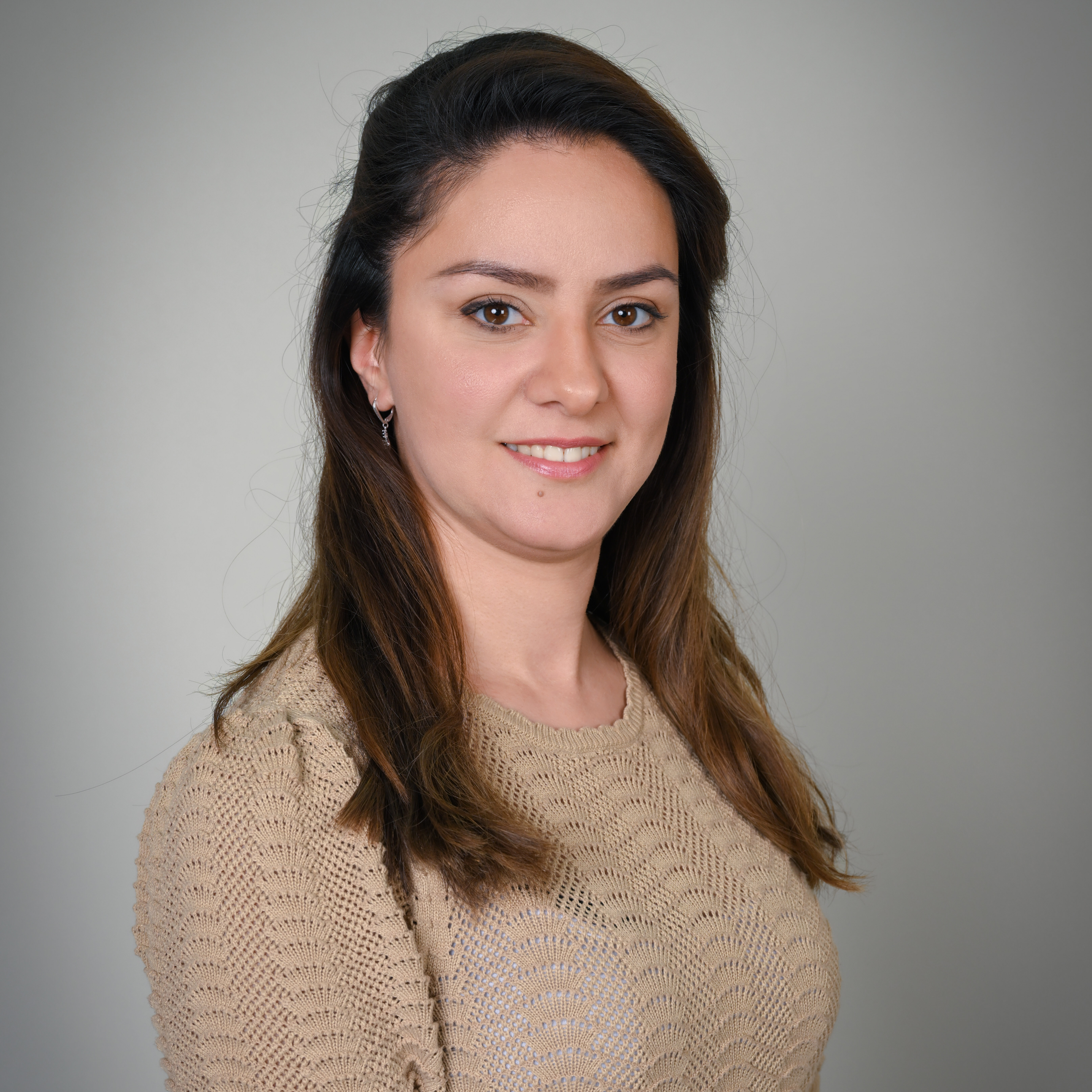
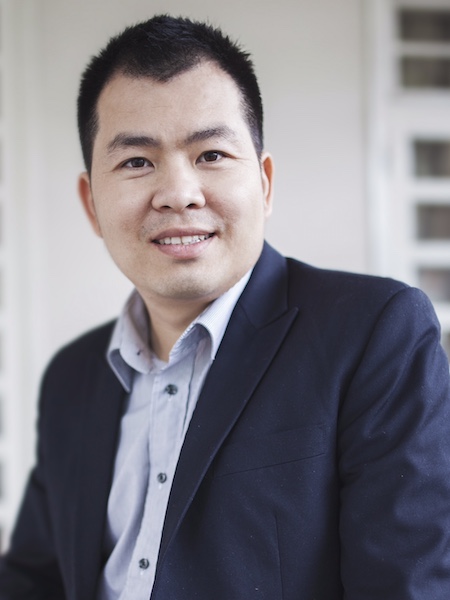
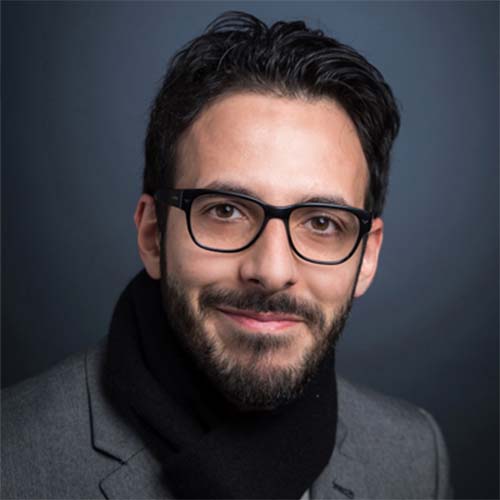
Shiva Jahangiri is an Assistant Professor in the Department of Computer Science and Engineering at Santa Clara University's School of Engineering. His research focuses on Big Data Management Systems, Databases for AI/ML, and Query Optimization. He leads the DBIS Lab, which explores database internals, vectorized data processing, and open-source projects like Apache AsterixDB. Education: Ph.D. in Computer Science from the University of California, Irvine; M.S. in Computer Science (Data Science) from the University of Southern California. Current courses taught include Advanced Programming, Advanced Database Systems, and Introduction to Database Systems. He advises Ph.D. and Master’s students on topics like Vector Databases, Query Scheduling, and Resource Management. Recent research trends involve optimizing group-by/aggregation operators, schema inference for semi-structured data, and memory management in complex join queries. His work bridges theoretical advancements with practical implementations in open-source systems. DBIS Lab activities include student participation in senior design projects, directed research, and volunteer roles. The lab emphasizes industry collaboration for hands-on experience in database systems development.
David Lefevre is a Professor of Practice at the Department of Management and Entrepreneurship, Imperial College Business School. His research focuses on AI applications in education, digital innovation in higher education, and tech-transfer. He co-founded the Edtech Lab in 2004, which pioneered Imperial’s online courses and Global Online MBA. The Lab has won awards including a Gold at IMS Learning Impact (2010) and Silver at QS Reimagine (2018). He also co-founded educational tech companies Epigeum (now part of Oxford University Press) and Insendi (now Study Group). He is Special Advisor on Digital Innovation at Study Group and a British Council Trustee, focusing on digital transformation. Lefevre’s work emphasizes strategic adoption of AI, online education quality, and bridging cultural barriers in learning. Education & Background: While formal education details are not provided, his career reflects deep expertise in education technology and entrepreneurship. His roles include: Professor of Practice, Imperial College Business School Co-founder & former leader of the Edtech Lab Co-founder of Epigeum and Insendi Expert in Residence, Imperial Enterprise Lab Research Interests: Lefevre’s work spans AI in education, online learning infrastructure, and cross-cultural e-learning. He advocates for data-driven strategies to improve online course design and learner engagement. His recent focus includes AI-driven feedback systems and holographic teaching methods. Key Achievements: Launched Imperial’s first online MBA program in 2015 Developed an LMS alternative using middleware Promoted adaptive learning environments for diverse learners Awards & Recognition: Gold award at IMS Learning Impact awards 2010 Silver award for Business Education at QS Reimagine Education 2018 Advisory & Grants: Advises Study Group and the British Council on digital innovation. His ventures have secured significant investments, though specific grant details are not disclosed. Labs & Collaborations: Leads the Edtech Lab and collaborates with Imperial Enterprise Lab. Active in global education networks such as QS Reimagine and the British Council.
Danh Le Phuoc is a Principal Computer Scientist at Technical University of Berlin, leading research at the PICOM.AI lab where his team develops autonomous information systems for robotics, autonomous vehicles, and IoT systems through pervasive intelligence in complex networks. With over 70 publications and significant academic impact (6811 citations, H-index 31), he has established himself as a notable researcher in semantic technologies. His educational background isn't explicitly detailed in the provided text, but his research expertise spans multiple domains requiring advanced technical knowledge. Le Phuoc's research focuses on bridging theoretical concepts with practical system implementation, particularly in RDF Stream Processing, Semantic Web technologies, and IoT middleware. His work emphasizes building real-world systems that process linked streams and data in real-time, enabling applications in intelligent transportation systems and connected vehicles. His research trajectory shows consistent innovation from foundational work on semantic mashups (2009) through to advanced stream processing frameworks (2017). His publications reveal strong trends toward processing real-time semantic data streams, with increasing focus on scalability, performance optimization, and integration of IoT systems with knowledge graphs. The progression shows movement from basic semantic web pipes to complex, elastic cloud-based stream processing systems. 22 Awards, Honours, Fellowships and Grants 10+ awards for innovative Semantic Web applications Multiple honors for IoT applications As an obsessive builder, Le Phuoc has developed numerous influential systems including The Graph of Things, CQELS (Continuous Query Evaluation over Linked Streams), Semantic Web Pipes, and Linked Sensor/Stream Middleware. His current focus is on ASAP (Autonomous Semantic Stream Processing), a platform for connected vehicles and intelligent transportation systems. His lab appears to maintain active GitHub repositories for several of these systems, suggesting ongoing development and community engagement.
Matt J. Rutherford is an Associate Professor in the Department of Computer Science at the University of Denver, with a joint appointment in the Department of Electrical and Computer Engineering. He is Deputy Director of the Unmanned Systems Research Institute and a faculty fellow of Project X-ITE. His research focuses on autonomous systems, embedded systems, and software engineering, with extensive contributions to UAV navigation, control systems, and robotics. Rutherford holds a Ph.D. in Computer Science from the University of Colorado Boulder (2006), an MS (2001), and a BS in Civil Engineering from Princeton University (1996). His work emphasizes practical applications of software engineering principles in distributed and embedded systems. Notable projects include radar-based collision avoidance for UAVs, self-leveling landing platforms, and studies on electric vehicle charging impacts on power grids. Rutherford's research bridges theoretical computer science with real-world engineering challenges, particularly in unmanned systems and robotic autonomy. Key publications explore UAV flight control using neural networks, ground/ceiling effects in rotorcraft, and GPU-based real-time pose estimation. His contributions to model-driven systems and distributed testbed automation highlight long-term engagement with software reliability and scalable experimentation frameworks. Rutherford collaborates widely, including with institutions like the University of South Carolina and Politecnico di Torino. His interdisciplinary approach integrates robotics, aerospace engineering, and software engineering to advance autonomous system capabilities.
Stefan Kowalewski serves as Professor of Embedded Software at RWTH Aachen University, leading the Chair of Embedded Software (Informatik 11) within the Department of Computer Science. His research spans critical domains including medical cyber-physical systems, automotive software, and industrial automation, with over 150 publications demonstrating sustained scholarly impact. Professor Kowalewski's work focuses on three interconnected research pillars: Embedded Systems Verification: Pioneering model checking techniques for PLC code, particularly addressing state space challenges in GRAFCET-based specifications Medical Cyber-Physical Systems: Developing safety-critical software for mechanical ventilation, extracorporeal membrane oxygenation, and ARDS diagnosis systems with strong clinical collaborations Automotive Software: Creating verification frameworks and safety architectures for automated vehicles through projects like UNICARagil Recent publications reveal an increasing integration of AI techniques with traditional verification methods, particularly for medical applications involving neonatal care and critical respiratory support. His 2024-2025 work shows particular emphasis on timing isolation in vehicle communication systems, middleware performance evaluation, and robust AI models for medical diagnosis. Professor Kowalewski maintains active collaborations with RWTH Aachen University Hospital's medical departments and automotive industry partners. His laboratory operates specialized facilities including the Cyber-Physical Mobility Lab for vehicle research and in-vivo testing setups for medical device validation. He has supervised numerous doctoral candidates, with recent students focusing on topics like ARDS classification algorithms, GRAFCET verification techniques, and safety architectures for software-defined vehicles. His educational contributions include developing remote teaching platforms for cyber-physical systems education.
Dr. Silvia Bonomi serves as an Associate Professor in the Department of Computer, Control and Management Engineering at Sapienza University of Rome, where she has held academic positions since 2006. Her career progression includes Research Fellow (2010-2011), Tenure Track Assistant Professor (2016-2019), and current Associate Professor appointment since 2019. She maintains her office in Room B114 and is actively engaged in research and teaching within the university's engineering faculty. Her educational background includes: PhD in Computer Engineering, Sapienza University of Rome and Institut de Formation Supérieure en Informatique et Communication (IFSIC/IRISA), Rennes, France (completed under advisors Prof. Roberto Baldoni and Prof. Michel Raynal) Dr. Bonomi's research critically examines dynamic distributed systems where entities autonomously join and leave networks, with applications spanning VANETs, airborne networks, social networks, and distributed cloud services. She pioneers work in Byzantine fault tolerance for mobile environments, blockchain security with emphasis on smart contract vulnerability analysis, and resilient cybersecurity frameworks integrating human factors. Her investigations into publish-subscribe systems focus on quality-of-service enhancements, while her peer-to-peer systems research addresses fundamental connectivity challenges in large-scale decentralized environments. This interdisciplinary approach bridges theoretical distributed computing with practical cybersecurity applications. Analysis of her 15 most recent publications (2021-2024) reveals dominant trends in blockchain security (particularly smart contract vulnerability taxonomies and analysis tool efficacy) and fault-tolerant distributed systems (reliable communication under Byzantine faults in dynamic networks). Her work increasingly integrates human factors into cybersecurity models and develops visual analytics for business-centric risk assessment. Publications span top venues including IEEE CSR, OPODIS, SAFECOMP, and journals like Computers & Security, demonstrating consistent contributions to both theoretical foundations and practical cybersecurity implementations.
Professor Matt Garratt is a faculty member at the University of New South Wales (UNSW Canberra), School of Engineering and IT, serving as AI theme lead for the Defence Trailblazer Universities initiative with over $200 million in funding. His primary research focuses on sensing, guidance, and control for autonomous systems within robotics and unmanned aerial vehicles. Garratt's research spans robotics, swarm intelligence, and autonomous systems with emphasis on bio-inspired navigation techniques and adaptive flight control. His work addresses critical challenges including terrain following using vision systems, landing UAVs on moving platforms, and developing self-organizing swarms. He integrates artificial intelligence, computer vision, and machine learning to advance unmanned systems capabilities in complex environments. Analysis of his recent publications reveals strong trends in bio-inspired UAV navigation (particularly honeybee behavior modeling) and swarm robotics applications. His work increasingly incorporates deep learning for perception tasks while addressing real-world challenges like gas plume detection and adversarial robustness in 3D vision systems. The research demonstrates consistent progression toward practical implementation of autonomous systems in dynamic environments. Professor Garratt has secured over $7.7 million in external research funding as Chief Investigator on 33 grants. He actively mentors graduate students with scholarships available for Masters and PhD research in robotics and AI, focusing on: UAV path planning and adaptive control systems Swarm robotics collective motion optimization Bio-inspired autonomous navigation techniques Computer vision for robotic perception He co-founded the UNSW Canberra AIR (AI and Robotics) Group (AIR Lab), which drives research in trusted autonomy, swarm intelligence, and AI integration for defense applications. The lab develops practical solutions for autonomous systems operating in complex, real-world environments while maintaining ethical AI frameworks.
Shivam Saxena is an Assistant Professor in the Department of Electrical and Computer Engineering at the University of New Brunswick, located in Head Hall D65, Fredericton. His research focuses on smart grid technologies, including distributed energy resource integration, blockchain applications for energy trading, electric vehicle-grid interactions, and resilient microgrid design. This work addresses decarbonization challenges through technological and market innovations. Publications demonstrate a strong emphasis on real-world implementation, with field-tested solutions for V2X integration, blockchain-based transactive energy, and distributed control systems. Recent work explores novel applications in agricultural energy management and trust mechanisms for decentralized systems.
Mathias Fischer is Professor for Computer Networks at the University of Hamburg since December 2021, affiliated with the MIN Department of Informatics. He previously served as an assistant professor at Universität Hamburg (2016-2021), University Münster (2015-16), and held postdoctoral positions at the International Computer Science Institute/UC Berkeley (2014-15) and the Center for Advanced Security Research Darmstadt/TU Darmstadt (2012-14). His educational background includes a PhD in Computer Science from TU Ilmenau (2012) and a diploma in Computer Science from the same institution (2008). He also served as Head of Data Literacy Education in IT Support at the University of Hamburg's ISA Center. Professor Fischer's research spans critical areas of modern network infrastructure, with particular emphasis on IT and network security , resilient distributed systems , and network monitoring . His work addresses fundamental challenges in cybersecurity including botnet monitoring, intrusion detection, and critical infrastructure protection. His research group actively investigates P2P networks and develops innovative approaches to network security that balance functionality with privacy preservation. Analysis of his recent publications reveals a strong focus on privacy-enhancing technologies, network security protocols, and resilient distributed systems. His research trajectory shows increasing attention to practical implementations of security solutions for edge computing environments, digital twin networks, and time-sensitive networking applications. The work demonstrates sophisticated integration of cryptographic techniques with network architecture design to address emerging security challenges in distributed systems. Among his notable recognitions are the Claussen-Simon Competition for Universities (2019), the University Prize of the Claussen-Simon Foundation (2019), and an Outstanding Paper Award at ACSAC (2018). Claussen-Simon Competition for Universities (2019) University Prize of the Claussen-Simon Foundation 2019 Outstanding Paper Award at ACSAC (2018) Professor Fischer leads multiple significant research projects including SOVEREIGN (Technologically sovereign security monitoring), RESISTANT (Resilient zero-trust platform for aircraft), and Dynamic situational awareness for rescue teams. His research group comprises numerous doctoral and master's students working on cutting-edge network security challenges. Current projects focus on developing resilient data and AI platforms for crisis situations, security monitoring for critical infrastructures, and innovative home network security solutions. The Computer Networks research group at the University of Hamburg, led by Professor Fischer, maintains active collaborations with industry and academic partners. The group operates specialized laboratories focused on network security testing, intrusion detection systems, and resilient network architectures. Current research directions include QUIC protocol security, federated learning security, and privacy-preserving network analytics, with strong emphasis on practical implementations that address real-world security challenges.
Yongfeng Zhang is an Associate Professor in the Department of Computer Science at Rutgers University. He is also the Director of the AIOS Foundation . His research focuses on Machine Learning, Data Mining, Recommender Systems, and Explainable AI , with notable contributions to fair and personalized AI, AI for science, and social good. Education and Experience: PhD in CS (2011–2016) from Tsinghua University Postdoc at UMass Amherst (2016–2017) Joined Rutgers as Assistant Professor (2018), promoted to Tenured Associate Professor (2024) Research Interests: Machine Learning, Data Mining, Information Retrieval, Recommender Systems, Natural Language Processing, ML Systems, AI Agents, Explainable AI, Fairness, and AI for Science. Recent Achievements: Received the 2024 ACM SIGIR Test of Time Award, 2024 Presidential Teaching Excellence Award, and multiple NSF grants. He has advised over 15 PhD students and led projects on trustworthy AI, generative recommendation, and causal inference. Awards: 2024 ACM SIGIR Test of Time Award 2021 NSF CAREER Award 2015 Microsoft PhD Fellowship Grants & Labs: Led NSF grants on explainable AI, conversational recommendation, and neural-symbolic AI. Active in the AIOS platform development and multiple research labs.
Pedro M. B. Silva Girão is a Full Professor in the Department of Electrical Engineering at Instituto Superior Técnico (IST), University of Lisbon (UL), and a Senior Researcher at Instituto de Telecomunicações where he heads the Instrumentation and Measurements Group and coordinates the Basic Sciences and Enabling Technologies area. His dual institutional roles position him at the forefront of academic research and technological innovation in Portugal. His research program focuses on instrumentation, transducers, and measurement techniques with specialized applications in biomedical and environmental domains. Key interests include wireless sensor networks for health monitoring, metrology standards, and digital data processing methodologies. This work bridges engineering principles with real-world healthcare and ecological challenges, emphasizing practical implementations in diagnostic systems and environmental sensing. Analysis of his 2019-2024 publications reveals a strong thematic trajectory in IoT-enabled healthcare solutions and precision environmental monitoring. Recurring motifs include gait rehabilitation through mixed reality systems, advanced dosimetry for liver cancer radioembolization, microvascular reactivity assessment, and water quality sensor networks. His output demonstrates consistent interdisciplinary collaboration between engineering, medical, and environmental science communities. Dr. Girão's scientific recognition includes: IEEE Senior Member status IEEE IMS Distinguished Lecturer appointment Honorary Chairmanship of IMEKO TC19—Environmental Measurements As leader of the Instrumentation and Measurements Group at Instituto de Telecomunicações, he directs a multidisciplinary team developing next-generation measurement systems. Current initiatives integrate microwave Doppler radar, wearable biopotential sensors, and wireless networks for unobtrusive health monitoring and environmental assessment, with active partnerships across medical institutions and ecological agencies.
Binoy Ravindran is a Professor at Virginia Tech’s College of Engineering, Department of Electrical and Computer Engineering, leading the Systems Software Research Group (SSRG). His research focuses on computer systems, emphasizing security, performance, concurrency, distributed systems, and real-time computing, with recent work in software verification and heterogeneous-ISA platforms. Key projects: Low-level Reasoning Machine (LLRM), Popcorn Linux, LibrettOS, Hyflow, HermiTux, SlimGuard, HydraVM, KairosVM. He has co-authored 15+ papers from 2025 to 2022, spanning venues like ASPLOS, POPL, PLDI, VEE, PPoPP, and MIDDLEWARE, with awards including ACM Distinguished Scientist and eight Best Paper Awards. Service roles: Editorial Boards (IEEE Transactions on Cloud Computing, ACM TECS), Program Co-Chair (ACM Systor 2025), Committee memberships across ASPLOS, PLDI, and more.
Roman Franz Froschauer is a Professor of Production Informatics at the Upper Austria University of Applied Sciences, Research Center Wels. Since 2018, he has served as Director of Studies for the Master's program in Robotic Systems Engineering and leads the Smart Automation & Robotics research group. His career spans academic and industrial roles, including senior software development and project management at AlpinaTec Technical Products GmbH (2010-2016). Education: Ph.D. in Computer Science (2010) from Johannes Kepler University Linz; Master's in Industrial Informatics (2005) from Upper Austria University of Applied Sciences. Research Areas: Software engineering for intelligent automation systems, human-robot interaction (HRI), control systems, and applications of IEC 61499 standards. His work focuses on proactive collaboration, trajectory planning, and user-centered design for assistive robots in office and industrial settings. Scientific Activities: Active in peer-review, conference organization, and technology development. Projects include VRoboCoop (human-robot trust), MARIE (office robotics), and Autility (automated utility vehicles). Key Contributions: Frameworks for modular manufacturing (PlugBot), skill-based engineering, and intralogistics automation (ATLAS).
Prof. Norbert Ritter is the Dean of the Faculty of Mathematics, Computer Science and Natural Sciences (MIN) at the University of Hamburg since August 2022. He holds a full professorship in the Department of Informatics, leading the Databases and Information Systems group. Previously, he served as an associate professor (2002–2005) and assistant professor (1998–2002) at the Technical University of Kaiserslautern and the University of Hamburg. His research focuses on advanced database technologies, including NoSQL systems, scalable cloud data management, big data analytics, and information integration. Key areas include service-oriented computing, federated database systems, and transaction management. He has authored over 149 publications, with recent work emphasizing polyglot data stores, spatio-temporal data processing, and web performance optimization. Education: M.Sc. (1991), Ph.D. (1997) in Computer Science from the University of Kaiserslautern Professional Activities: Dean of MIN Faculty (since 2022), former head of DBIS group Labs/Teams: Leads the Databases and Information Systems research group His advising record includes over 274 student theses, spanning PhD and master's projects in database design, data integration, and web performance engineering. Collaborative projects include Beaconnect (continuous web A/B testing) and Compaz (shared dictionary compression).
Pouyan Ahmadi is an Associate Professor in the Department of Information Sciences and Technology at George Mason University. His research focuses on wireless networks, IoT security, machine learning, and education technology. He holds a PhD in Electrical and Computer Engineering (George Mason University), MS in Architecture of Computer Systems (Iran University of Science and Technology), and BS in Computer Engineering (Azad University). Research interests include cooperative communications, cross-layer network design, relay deployment strategies, and applying machine learning to network security and educational analytics. Notable areas of expertise involve IoT intrusion detection, supply chain RFID implementations, and analyzing student performance through LMS data. His publications span cybersecurity, machine learning applications in education, and wireless network optimization. Recent work emphasizes predictive modeling for student outcomes and improving intrusion detection systems using advanced algorithms. He has contributed to both theoretical frameworks and practical implementations in MANETs and emergency response networks. Labs/Teams: No specific lab/team affiliations explicitly mentioned in the provided information.