Professor Ali Yapar is a faculty member at Istanbul Technical University in the Electronics and Communication Engineering department. His research focuses on Electromagnetics , Microwave Engineering , and Antenna Technologies , with a particular emphasis on inverse scattering problems and microwave imaging for biomedical applications. He has supervised numerous graduate students and led projects related to breast cancer treatment and rough surface imaging. PhD in Electronics and Communication Engineering from Istanbul Technical University (1997) MSc in Electronics and Communication Engineering (1995) His recent publications analyze advanced techniques for microwave hyperthermia systems, reverse time migration methods, and Newton-based solutions for electromagnetic inverse scattering. Key projects include TUBITAK-funded initiatives on microwave tomography and brain stroke imaging. He serves as a project investigator and executive for electromagnetic research programs. Research areas span Electromagnetic Wave Propagation , Green's Function Applications , and Dielectric Material Analysis . Collaborations include IEEE members and international researchers in computational electromagnetics.
Martin Norgren is a Professor at KTH Royal Institute of Technology, leading the Department of Electromagnetic Fusion Physics. His research focuses on electromagnetic inverse problems, including material characterization, biomedical imaging (e.g., brain current sources), environmental monitoring (e.g., snow and avalanche prediction), and smart grid technologies. He specializes in reconstructing object properties using electromagnetic measurements and has contributed to applications in healthcare, energy systems, and environmental science. His work involves advanced analytical and numerical methods such as mode-matching techniques, perturbation theory, and convex optimization. Notable projects include noncontact current measurement in power grids and transformer diagnostics using microwave radiation. Norgren teaches courses in electromagnetic field theory and electrical engineering design, emphasizing practical applications and interdisciplinary collaboration. Recent research trends highlight advancements in glide/twist symmetry-based metamaterial design, waveguide analysis, and inverse scattering techniques. His studies bridge fundamental physics with applied engineering, addressing challenges in energy infrastructure and medical diagnostics. As a department head, he oversees educational and research programs at KTH, fostering innovation in electromagnetism and fusion physics. His contributions to curriculum development include project-based courses integrating theory and hands-on design.
Kristen Donnell is an Associate Professor in the Department of Electrical and Computer Engineering at Missouri University of Science and Technology (Missouri S&T) . She also serves as the Interim Director of the Center for Infrastructure Engineering Studies (CIES) and Director of the Microwave Sensing (mSense) Laboratory . She is recognized as the Woodard Associate Professor of Excellence . Education: Ph.D. in Electrical Engineering, Missouri University of Science and Technology (2010) M.S.E.E., University of Missouri-Rolla (2003) B.S.E.E., Colorado State University (2001) Research Interests: Dr. Donnell's research lies at the intersection of microwave engineering and nondestructive evaluation. Her work focuses on microwave and millimeter-wave nondestructive testing , active microwave thermography , frequency selective surfaces (FSS) , and materials characterization . She has developed novel techniques for structural health monitoring of infrastructure, particularly in carbon fiber reinforced composites and cement-based materials . Her lab explores embedded sensing , 3D-printed microwave structures , and real-time defect detection using advanced microwave imaging. Scientific Awards & Honors: Woodard Associate Professor of Excellence Senior Member of IEEE Member, IEEE Instrumentation and Measurement Society Administrative Committee Laboratory & Leadership: She leads the Microwave Sensing (mSense) Laboratory at Missouri S&T, which focuses on cutting-edge research in microwave sensing and imaging. Under her leadership, the lab has contributed significantly to nondestructive evaluation techniques using microwave and millimeter-wave technologies. She also oversees the Center for Infrastructure Engineering Studies (CIES) as interim director, guiding interdisciplinary research in infrastructure health monitoring. Professional Affiliations: IEEE Instrumentation and Measurement Society – Administrative Committee member since 2007 IEEE – Senior Member
Daniel Rönnow is a Professor of Electronics at the University of Gävle since 2011. Previously, he held roles such as lecturer at the University of Gävle (2004–2006), researcher at Acreo (1998–2000), and postdoc at the Max Planck Institute (1996–1998). He earned his MSc and PhD in Engineering Physics from Uppsala University (1991–1996). His research focuses on RF/microwave components, including phase noise characterization, nonlinear system linearization, metamaterials, and measurement technology. Key areas include MIMO systems, thin-film optics, and seismic sensors. Recent work emphasizes ultrawideband radar for nondestructive testing and antenna design for industrial applications. Rönnow has authored/co-authored over 50 publications, with notable contributions in IEEE Transactions and other journals. His work bridges theoretical models (e.g., behavioral amplifiers) with practical applications like sensor development and radar systems.
Alessandro Fedeli is an Associate Professor in the Department of Naval, Electrical, Electronic and Telecommunications Engineering (DITEN) at the University of Genoa, Italy. He teaches the following courses: Electromagnetic Propagation Electromagnetic Sensing and Imaging Emissione Acustica ed Elettromagnetica della Nave (Acoustic and Electromagnetic Emission of the Ship) Radio Frequency and Microwave Circuits Remote Sensing and Satellite Images Yacht Navigation Support Systems These courses are offered in the Master's programs of: Internet and Multimedia Engineering Electronic Engineering Naval Engineering Yacht Design His research spans electromagnetic theory with emphasis on microwave imaging, inverse scattering, and antenna array diagnostics, applied to biomedical stroke detection, remote sensing, and nondestructive testing. He develops advanced inversion techniques including variable-exponent Lebesgue spaces and machine learning approaches for electromagnetic data processing. Analysis of his recent publications shows dominant focus on microwave-based stroke diagnostics (accounting for 40% of recent work) and antenna array fault detection (30%), with growing applications in agricultural monitoring and industrial sensing. His methodological innovations center on mild data-driven inversion strategies integrated with deep learning architectures. No scientific awards were mentioned in the available information. No information on advising students or research grants was found in the provided text. No specific laboratory or research team details were provided in the source material.
Scott DeWolf is a Research Associate Professor in the Department of Environmental Engineering and Earth Sciences at Clemson University, specializing in optical fiber sensor systems for geophysical applications. With over $6M in funding, his work includes permanent subsurface strain monitoring for CO 2 injection and reservoir characterization. Education: Ph.D. in Oceanography (Applied Ocean Science) from UC San Diego (2014), M.S. in Earth Sciences (Geophysics) from UC San Diego (2009), and dual B.S. degrees in Physics and Mathematics from University of Wisconsin River Falls (2007). His research focuses on: High-resolution borehole strain measurements using ruggedized optical fiber CO 2 subsurface storage monitoring Shallow-deep reservoir correlation through strain tensor analysis Subsidence mapping in deltaic environments Nonlinear wave spectroscopy for wellbore damage detection Geophysical instrument development for field deployments Recent publications highlight advancements in: Bayesian inversion of strain tensor data Shallow geologic carbon storage Coherence microwave photonic interferometry Subsidence dynamics in Bangladesh Scientific Awards: Best Poster (2013, European Workshop on Optical Fibre Sensors) Ronald E. McNair Scholar (2005) Sigma Pi Sigma Honor Society (2005) Scott contributes to the HydroMechanics research group and has developed electromagnetic and fiber optic instruments for subsurface monitoring since joining Clemson in 2014.
Claudio Estatico is a Full Professor at the Department of Mathematics (DIMA) at the University of Genoa, Italy. His academic activities include teaching courses such as Mathematical Analysis 1B for Electrical Engineering and Numerical Analysis for graduate programs in Mathematics. His research focuses on inverse problems, numerical analysis, and microwave imaging applications. Recent publications highlight advancements in: Microwave inversion for medical diagnostics (stroke detection) Data-driven approaches for plant diagnostics Regularization techniques in Banach spaces Subsoil electromagnetic data inversion He actively collaborates with researchers like Alessandro Fedeli, Andrea Randazzo, and Giuseppe Rodriguez, with recent outputs spanning both theoretical and applied domains of computational mathematics.
Professor Haiying Huang is a faculty member in the Department of Mechanical and Aerospace Engineering at The University of Texas at Arlington (UTA), serving as the Director of Engineering Education within the College of Engineering. She holds a Ph.D. in Aerospace Engineering from Georgia Institute of Technology and has extensive experience in academia and industry, including roles at Bell Laboratories and Purdue University. Her research focuses on Structural Health Monitoring (SHM) , ultrasonic sensors , wireless sensor networks , and fracture mechanics . Key projects include developing passive wireless sensors for aerospace structures and fatigue analysis of materials. Education: Ph.D. in Aerospace Engineering, Georgia Institute of Technology, 1998 M.S. in Electrical Engineering, Georgia Institute of Technology, 1997 B.E. in Aircraft Propulsion, Beijing University of Aeronautics and Astronautics, 1987 Research Interests: Wireless microwave and ultrasound sensors Structural health monitoring of aerospace structures Fatigue and sensitization corrosion analysis Engineering education innovation Prosthetic and biomedical sensor integration Notable Achievements: Recipient of 2008 NSF CAREER Award Fellowships: ORISE (2018), Air Force Summer Faculty (2007) Over 150 journal/conference publications and 8 patents Principal Investigator on federal grants totaling $10M+ from NSF, ONR, and DoD Lab: Advanced Sensor Technology Laboratory (ASTL) focuses on developing novel sensor technologies for SHM and interdisciplinary student training. Recent lab advancements include ultrasound waveguide networks and fatigue crack prediction algorithms.
Dr. Lalita Udpa is a University Distinguished Professor in Electrical and Computer Engineering (ECE) at Michigan State University (MSU), with a joint appointment in the College of Natural Science's Physics-Astronomy department. Her research focuses on Nondestructive Evaluation (NDE), signal processing, and advanced sensor technologies for structural health monitoring. She leads the Nondestructive Evaluation Laboratory (NDEL), pioneering innovations in electromagnetic and microwave-based inspection methods for aerospace, energy, and biomedical applications. Education : Ph.D. Electrical Engineering, Colorado State University (1986) M.S. Electrical Engineering, Colorado State University (1981) M.Sc. Physics, University of Poona, India (1974) B.S. Physics, University of Poona, India (1972) Research Interests : Dr. Udpa develops computational models for NDE, including finite-element simulations for electromagnetic methods, neural networks for automated defect analysis, and microwave tomography for biomedical imaging. Her work addresses challenges in inspecting complex geometries like aircraft structures, nuclear steam generator tubes, and composite materials. Recent projects include magneto-resistive array sensors for multi-layer inspection and wireless sensor networks for real-time structural health monitoring. Awards : FAA Better Way Award (2005) IEEE Fellow (2007) Ralph H. Smuckler Award for International Studies (2019) Society of Women Engineers Outstanding Achievement Award (1987) Advising & Grants : Dr. Udpa has advised over 50 graduate and undergraduate students. Her research is supported by grants from NSF, DOE, and industry partners like NASA and General Electric. Projects include AI-driven robotic NDE for power plant boilers and microwave imaging systems for forestry applications. Labs & Teams : The NDEL collaborates globally, hosting events like the International Electromagnetic NDE Workshop. Key facilities include advanced microwave imaging systems and a robotic NDE platform for industrial applications.
Frank Melandsø is a Professor at the Department of Physics and Technology, UiT The Arctic University of Norway. His research focuses on ultrasound, microwaves, and optics, particularly in nondestructive testing and acoustic imaging technologies. Key research interests include: Development of advanced ultrasound and acoustic microscopy techniques Finite element modeling for wave propagation and transducer design Image processing algorithms for noise reduction and defect visualization Applications in materials science, marine biology, and biomedical imaging Recent publications highlight trends in deep learning applications, tilt compensation methods, and 3D imaging of complex materials. His collaborative work spans institutions and disciplines, with extensive contributions to sensors, imaging systems, and computational analysis. Professor Melandsø is actively involved in the Ultrasound, Microwaves and Optics research group and the VirtualStain project, based at Teknologibygget Tromsø 2.053.
Tzuyang Yu is a Full Professor in the Department of Civil and Environmental Engineering at the University of Massachusetts Lowell's Francis College of Engineering. He serves as Director of the NDT/SHM Lab and Electromagnetic Remote Sensing Lab, and leads the Structural Engineering Research Group (SERG) and the Institutional Lead for the Transportation Infrastructure Durability Center (TIDC) at UML. His academic leadership includes serving as Associate Chair for Doctoral Studies. His educational background includes: Ph.D. in Civil and Environmental Engineering (2008), Massachusetts Institute of Technology M.Eng. in Civil and Environmental Engineering (2002), Massachusetts Institute of Technology M.S. in Civil Engineering (1998), National Central University, Taiwan B.S. in Construction Engineering (1996), National Yunlin University of Science and Technology, Taiwan Professor Yu's research focuses on electromagnetic properties of construction materials, structural health monitoring of bridges and buildings, theoretical modeling of dielectric properties, structural dynamics and stability, and concrete materials. His work bridges applied mathematics, physics, and civil engineering to develop novel nondestructive testing methodologies. He has pioneered techniques using synthetic aperture radar (SAR) for subsurface sensing in concrete structures, moisture detection, and chloride content characterization. His recent publications demonstrate strong trends in remote sensing technologies for infrastructure assessment, particularly using SAR imaging for concrete moisture detection, crack characterization, and material property evaluation. The research shows increasing integration of smart textiles and distributed sensing systems for long-term structural health monitoring applications. His scientific achievements have been recognized with numerous awards: Acorn Innovation Award (2022) ASNT Faculty Award (2021) Donald Leitch Award for outstanding research performance (2017) Japan Society for the Promotion of Science (JPS) Fellowship (2010) ASNT Fellowship Award (2008) Professor Yu has secured over $8 million in research funding from prestigious organizations including NIST, AFRL, NSF, DOE, and U.S. DOT. His current projects include advanced sensing technologies for UAV-based condition assessment, development of distributed sensing techniques for concrete bridges, and electromagnetic detection of concrete cracking. He has advised numerous students through programs like the Integrated University Program and ASNT Undergraduate Fellowship. His laboratory work focuses on the NDT/SHM Lab and Electromagnetic Remote Sensing Lab, where his team develops cutting-edge radar imaging techniques for infrastructure assessment.
Reinhold Ludwig is a Professor and Associate Head in the Department of Electrical & Computer Engineering at Worcester Polytechnic Institute (WPI). He holds a Dipl.-Ing. (MS) from the University of Wuppertal (1983) and a PhD from Colorado State University (1986). His research focuses on electromagnetic and acoustic nondestructive evaluation (NDE), MRI RF coil design, and biomedical imaging systems. As director of the Center for Imaging and Sensing (CIS), he leads projects in energy/media interaction analysis and advanced MRI technology development. Key contributions include anatomically shaped RF coils for MRI systems up to 7T, including full-body, head, and extremity imaging applications. His team has developed NDE sensing technologies and electronic circuits for clinical and pre-clinical MR scanners. Recent work explores ultra-low-power neuromorphic circuits for autonomous vehicles and AI-driven optical defect detection systems. Professional memberships include IEEE, Eta Kappa Nu, and Sigma Xi. Notable grants include a $3M NIH award (2016) for robot-assisted brain cancer treatment research. His lab also works on microwave imaging innovations, ceramic material testing, and embedded computing systems. Current projects emphasize compact neural networks for real-time NDE, non-contact electromagnetic stimulation devices for pain management, and high-resolution MRI coil optimization. Patents include multi-modal RF coils and moisture analysis systems for industrial materials.
Dr. Paul S. Nowak is a Professor of Civil Engineering and Associate Dean of the School of Engineering and Applied Science at Gonzaga University. He holds a Ph.D. in Applied Mechanics from the California Institute of Technology and is a registered Professional Engineer in Washington State. Ph.D., Applied Mechanics, California Institute of Technology, 1989 M.S., Civil Engineering, University of Illinois at Urbana-Champaign, 1981 B.S., Civil Engineering, State University of New York at Buffalo, 1980 Dr. Nowak's research focuses on structural engineering with emphasis on seismic design, nondestructive testing of concrete and masonry using microwaves, and the structural design of inflatable habitats for lunar environments. His work bridges civil infrastructure and space engineering applications. He has developed innovative microwave-based techniques for assessing concrete strength, curing state, chloride content, and grout distribution in masonry, contributing significantly to the field of nondestructive evaluation in civil engineering. The most recent 15 publications reveal a strong trend in applying microwave technology to civil materials, particularly for real-time, non-invasive assessment of concrete properties and structural integrity. His earlier works include significant contributions to seismic analysis of arch dams and the design of steel and masonry structures. The interdisciplinary nature of his research spans civil, aerospace, and electrical engineering, with applications in both terrestrial and extraterrestrial construction. Dr. Nowak has been recognized with the Chi Epsilon Outstanding Teacher Award and holds a patent for "Strength Related Testing of Concrete Using Microwave Signals." Chi Epsilon Outstanding Teacher Award, Colorado State University, 1993 Patent: Strength Related Testing of Concrete Using Microwave Signals He has secured over $1,000,000 in research funding and has advised numerous student projects as the long-time faculty advisor for the American Society of Civil Engineers (ASCE) student chapter. His teaching portfolio includes core courses in statics, mechanics of materials, steel and masonry design, structural analysis, and advanced topics in structural dynamics and earthquake engineering at both undergraduate and graduate levels. Dr. Nowak has collaborated extensively with researchers such as Reza Zoughi and W.Z. Sadeh, particularly in microwave-based materials testing and lunar habitat design. These collaborations have led to significant publications and federally funded research projects, including work supported by the National Science Foundation and the Electric Power Research Institute.
Andrea Randazzo is a Full Professor in the Department of Naval, Electrical, Electronic and Telecommunications Engineering (DITEN) at the University of Genoa, Italy. Specializing in Electromagnetic Fields (IINF-02/A), he teaches multiple courses including Antennas, Electromagnetic Fields, and Electromagnetic Monitoring Techniques across various engineering programs such as Internet and Multimedia Engineering, Electronic Engineering, and Engineering for Natural Risk Management. Professor Randazzo's research spans several interconnected domains within electromagnetic theory and applications: Antenna Systems : Specializing in antenna array diagnosis, fault detection, and advanced antenna engineering Medical Applications : Developing microwave-based techniques for stroke detection and monitoring, particularly for pediatric patients Remote Sensing : Applying FMCW radar technology for sea wave dynamics, coastal monitoring, and hydrological sensing Nondestructive Testing : Creating microwave imaging methods for plant diagnostics and structural monitoring Mathematical Methods : Innovating in inverse scattering problems using Lebesgue-space approaches and data-driven inversion techniques His publication record demonstrates a clear trajectory toward increasingly sophisticated data-driven approaches to electromagnetic imaging, with recent work emphasizing machine learning integration, particularly CNNs for antenna array diagnosis. A significant portion of his research focuses on medical applications, especially stroke detection using microwave technologies, showing consistent development from theoretical approaches to practical implementations and numerical assessments. His work bridges theoretical electromagnetic theory with practical applications across healthcare, environmental monitoring, and industrial processes. Professor Randazzo has supervised numerous academic projects reflected in his extensive teaching portfolio across multiple engineering programs. His research likely involves collaboration with medical institutions given the healthcare-focused applications of his work, though specific grant information is not provided in the available materials. His laboratory work appears to focus on electromagnetic sensing and imaging systems, with particular emphasis on developing practical implementations of theoretical approaches, as evidenced by projects involving low-cost FMCW radar sensors and microwave moisture content sensors for food industry applications.
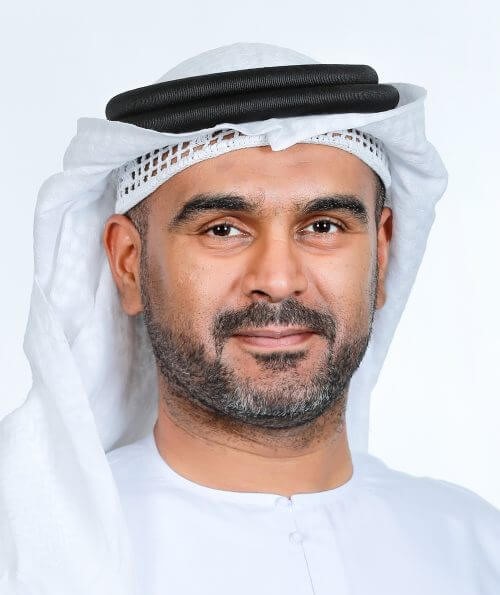
Dr. Hamad Karki is an Associate Professor in the Department of Mechanical & Nuclear Engineering at Khalifa University. With educational qualifications from Tokyo University of Technology, including a Ph.D. in Robotics Engineering, he has been a dedicated faculty member since 2008, contributing to research, teaching, and institutional committees. B.Sc. in Mechatronics Engineering (2003) M.Sc. in System Electronics Engineering (2005) Ph.D. in Robotics Engineering (2008) His research focuses on Robotics , Autonomous Vehicles , and Field Robots , particularly in sensing systems for energy, aerospace, defense, and healthcare. He leads the Smart Sensing Systems lab, which develops cutting-edge autonomous robotic platforms and microwave imaging technologies. The lab’s work includes subsurface sensing , structural health monitoring , and nonmetallic inspection , supported by multimillion-dollar external funding and collaborations with UAE industries. Dr. Karki also initiated programs to enhance freshman student productivity and curriculum development during his leadership roles.