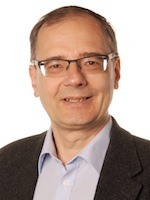
Victor Torres Company is an Assistant Professor at Chalmers University of Technology, leading the Ultrafast Photonics group in the Department of Microtechnology and Nanoscience. His research focuses on photonic integration, nonlinear physics, and laser frequency combs for next-generation fiber optic communication systems. European Research Council Consolidator Grant (2018) VR Consolidator Grant (2020) Marie Curie Fellowship His recent work includes wafer-scale manufacturing of photonic molecule microcombs, ultralow-loss waveguide development, and noise reduction techniques in parametric oscillators. He also co-founded Iloomina AB (2021) to commercialize chip-scale frequency comb technology.
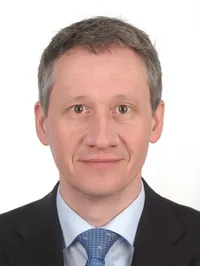
Prof. Dr.-Ing. John Heppe is a Professor in the Faculty of Engineering at Saarland University of Applied Sciences (htw saar), appointed from the Summer Semester 2023. His research and teaching focus on physical sensor technology, mechatronics, and biomechatronic applications. He has extensive industry experience in medical device development and holds multiple patents in moisture detection systems for vascular access monitoring. Aktuelle Lehrveranstaltungen: Actuators, Atomic and Solid-State Physics, Representation Methods and Statics, Dimensioning and Strength, Precision Engineering and Microtechnology, Mechatronics Project in English, Laser Measurement Technology and Design Methodology, Technical Mechanics in Production Environments, Non-Technical Aspects in Engineering Research Areas: Physical sensors, mechatronics, design methodology, product development, plant engineering, and component design Contact: john.heppe@htwsaar.de , +49 (0)681-5867-287, Room 9105, Goebenstraße 40, 66117 Saarbrücken
Dr. Sheng-Jian Ji is a Tenured Associate Professor at the School of Life Sciences, Department of Neuroscience at Southern University of Science and Technology (SUSTech) in Shenzhen, China. He also serves as the Academic Vice President of Shude Academy and was previously the first Deputy Director of Research and Graduate Affairs in the Department of Biology at SUSTech (2016-2018). As a leading neuroscientist specializing in RNA modification and neural development, Dr. Ji has established an internationally recognized research program. Dr. Ji's educational background includes: 2003-2007: Postdoctoral Fellow, Johns Hopkins University School of Medicine, Neurobiology 1998-2003: PhD in Biochemistry and Molecular Biology, Peking University School of Life Sciences 1994-1998: Bachelor's Degree in Biochemistry, Yantai University Department of Biochemistry Dr. Ji's research primarily focuses on developmental neurobiology, with particular emphasis on post-transcriptional regulation mechanisms including RNA modification and local translation of mRNA in axons. His laboratory is recognized as one of the leading international groups studying how mRNA modification (particularly m6A and m5C) regulates neural development and function. Through innovative approaches combining molecular biology, cell biology, and microfluidic technologies, his team has revealed important insights into axon growth, dendrite maintenance, cortical neurogenesis, and retinal development. His publication record shows a clear trajectory from fundamental mechanisms of RNA modification to applications in understanding neurological disorders and aging. Recent work has expanded into aging-related neural decline, cognitive functions, and potential therapeutic targets for neurological conditions. Dr. Ji has received numerous prestigious awards: 2020, 2016: SUSTech Excellent College Mentor 2020: SUSTech Biology Department Outstanding Service Award 2019: Guangdong Province Talent Youyue Card A 2017: Guangdong Provincial Professor of Neurobiology 2013: Jiangsu Distinguished Professor (Nanjing University) 2011: National Natural Science Award Second Prize (third contributor) As an educator, Dr. Ji teaches undergraduate Neurobiology and graduate Cellular and Molecular Neurobiology courses. He actively mentors students, with recent master's graduates including Yuan Jiaxin and Zhang Pingrui. His laboratory recruits postdoctoral fellows (with salaries of 335,000+ RMB annually), research assistants, and graduate students, providing comprehensive training in molecular techniques, neuronal cell culture, microfluidics, and omics approaches. Dr. Ji leads a vibrant research team that collaborates both within SUSTech and internationally. His work continues to advance understanding of RNA modification in neural development, function, and aging, with recent progress highlighted in June 2025.
Prof. Dr. Gerald Urban is a distinguished Professor at the Institute for Microsystems Technology (IMTEK) within the Faculty of Engineering at the University of Freiburg, Germany. With over three decades of academic and research experience, he has established himself as a leading expert in biomedical microtechnology and sensor systems. His career spans prestigious institutions including the Vienna University of Technology and collaborations with major research centers worldwide. His educational journey includes: 1973: Graduated from Sigmund Freud Gymnasium in Vienna 1979: Completed studies in Technical Physics at Vienna University of Technology 1985: Earned Doctorate (Dr.-Ing.) with distinction (Summa cum Laude) from Vienna University of Technology 1994: Completed habilitation in Sensorics Prof. Urban's research focuses on the development and application of miniaturized integrated sensors for clinical and industrial applications. His work bridges the gap between fundamental materials science and practical medical devices, with particular emphasis on biomedical microtechnology , electrochemical biosensors , and organ-on-chip systems . His team has pioneered innovations in point-of-care diagnostics, therapeutic drug monitoring, and micro energy harvesting technologies. The research group maintains strong collaborations with clinical partners to ensure translational impact of their technological developments. Analysis of Prof. Urban's recent publications reveals a clear trajectory toward increasingly sophisticated multiplexed sensing platforms that integrate CRISPR-based diagnostics with electrochemical detection systems. His work demonstrates growing emphasis on point-of-care applications, with particular focus on making complex diagnostic capabilities accessible outside traditional laboratory settings. The integration of additive manufacturing techniques with sensor technology represents another significant trend in his recent work, enabling customized microreactor and organ-on-chip platforms. Among his notable scientific achievements: Stefan Schuy Prize for Biomedical Engineering (1990) AVL-List Prize (1993) Best Poster at Eurosensors (1993) Hoechst-Price (1994) Corresponding member of the Austrian Academy of Sciences (2010) EAMBES-Fellow (2018) Prof. Urban has successfully secured substantial research funding throughout his career, with accumulated third-party funding reaching approximately 5 million euros between 1986-1995. He has established multiple spin-off companies including Otto Sensorenfabrikationsgesellschaft (1985), Biosensor GnbR (1994), and Jobst Technologies GmbH (2002), demonstrating his commitment to translating research into practical applications. His leadership extends to major research initiatives including the excellence initiative "µMAT" and the graduate school "PolyMIC". At the University of Freiburg, Prof. Urban leads a vibrant research group within the Institute for Microsystems Technology, which forms part of the larger BrainLinks-BrainTools and BIOSS research clusters. His laboratory maintains state-of-the-art facilities for microsensor fabrication, including cleanroom access through the WebFab service center. The research environment benefits from strong connections with the Freiburg Material Research Center (FMF) and the Freiburg Institute for Advanced Studies (FRIAS), where he served as an Internal Fellow (2008-2010).
Elliot Hui, Ph.D., is an Associate Professor in the Department of Biomedical Engineering at the University of California, Irvine (UCI), within the Samueli School of Engineering. His research focuses on biological microtechnology, including spatial cell biology, microscale tissue engineering, global health diagnostics, and microfluidic computing. He leads the Hui Lab, which develops tools for automating biochemical reactions, controlling cellular organization, and understanding tissue development dynamics. Key achievements include pioneering microfluidic logic systems for autonomous laboratory automation and creating novel cell culture platforms to study intercellular communication in tissues. His work bridges engineering and biology, addressing challenges in diagnostics and regenerative medicine. Notable contributions include the development of a programmable finite state machine for microfluidic control and a SLAS Fellowship awarded to his student Erik. Research Interests: Microfluidic devices, cell-cell interaction modeling, tissue engineering, and lab-on-a-chip systems. Labs/Teams: Hui Lab at UCI, specializing in microscale biological systems and automation. Publications span topics such as microfluidic computing architectures, tissue dissociation devices, and Bayesian experimental design. His work emphasizes applications in global health diagnostics and mechanistic studies of cellular processes.
Dr. Jang Ah Kim is a Lecturer at the Hamlyn Centre, Department of Mechanical Engineering, Imperial College London. She leads the Micro-Nano Innovation Lab and focuses on developing micro/nanostructured biomedical sensors and robotic strategies for diagnostics and minimally invasive therapies. Her work integrates light-matter interaction principles to innovate in areas like localized drug delivery and cellular surgery. Education: BSc (2011) and PhD (2017) in Mechanical Engineering/Nano Engineering from Sungkyunkwan University, South Korea. Prior roles include Research Associate positions at Imperial College London's Department of Computing and Department of Materials, where she specialized in fiber-optic biosensors and SERS-based diagnostics. Research Interests: Biomedical sensing, nanophotonics, medical robotics, diagnostics (biosensors), and nanomaterial applications. Key projects include plasmonic sensors for infection screening, bacterial swarming manipulation, and advanced fabrication techniques like two-photon polymerization. Lab Affiliations: Hamlyn Centre, Institute of Global Health Innovation. Her work bridges engineering and medicine to address unmet clinical needs in precision diagnostics and surgical robotics.
Jie Sun is a Guest Researcher at the Quantum Component Physics department of Chalmers University of Technology, focusing on graphene integration and micro-LED display technologies. Active in semiconductor processing and nanomaterials for optoelectronic applications Specializes in transfer-free graphene synthesis and bump-fabrication methodologies Research Trends: Recent work emphasizes micro-LED fabrication (Au-Au micro-bumps, indium bumps), graphene transparent electrodes , and plasmon-enhanced light extraction . Collaborative projects address quantum dot color conversion and localized surface plasmon resonance in nanorod structures. Projects: Involvement in grants from Formas , ÅForsk , and Carl Tryggers Stiftelse for sustainable wastewater treatment, graphene-based microbial fuel enhancement, and 2D material transfer methods.
Prof. Dr. Tim C. Lueth is Director of MIMED (Chair of Microtechnology and Medical Device Technology) at the Technical University of Munich (TUM). He holds a Dipl.-Ing. in Electrical Engineering (TU Darmstadt, 1989), Dr. rer.nat. in Robotics (University of Karlsruhe, 1993), and Dr.-Ing. habil in Computer Science (University of Karlsruhe, 1997). Appointed professor in 1997, he has held positions at Charité Berlin, Fraunhofer IPK, and TUM, serving as Dean of Mechanical Engineering (2013–2016) and Vice-Dean (2012, 2017). His research spans four key areas : Robotics and distributed control (since 1989) Surgical robots/navigation systems (since 1997) Additive manufacturing/automated design (since 2005) Physical assistance for elderly care (since 2005) Current projects include robotic exoskeletons, patient-specific heart valve replicas, endoscopic manipulators, and the SG-Lib MATLAB toolbox for automated mechanism design. He teaches courses in mathematical software tools (MATLAB/Simulink), mechatronic device development, and medical automation technology. Leads 12+ researchers at MIMED in projects funded by BMBF, DFG, and industry partners.
Holly Golecki is a Professor in the Department of Bioengineering at the University of Illinois at Urbana-Champaign (UIUC), affiliated with the Grainger College of Engineering. Her research focuses on the interface of humans and materials in medical devices and engineering education, emphasizing biomaterials in robotic systems, medical device design, and experiential learning. She leads initiatives such as the SIIP & Share Podcast , aimed at disseminating education innovations in engineering, and mentors programs like the UIUC First Gen Scholars Research Program. Her educational background includes contributions to bioengineering curriculum development, including courses on soft robotics and neural organoid biofabrication. She has secured funding through NSF grants, including the SCI-LSAMP project and the Jump Arches Program for wheelchair seat cushion development. Her work bridges research and practice, with a focus on increasing STEM participation through outreach and inclusive pedagogy. Golecki’s research group explores topics such as neural organoid engineering, soft robotics for medical applications, and adaptive scaffolding in capstone design. Collaborations include partnerships with institutions like Harvard Biodesign Lab and Sandia National Labs. Her lab activities include projects on biofabrication, tissue engineering, and robotics-enabled solutions for healthcare challenges. Notable contributions include over 20 peer-reviewed articles, conference presentations, and educational modules. She actively mentors students, supporting their transition to graduate programs and fostering interdisciplinary teamwork. Her efforts in grant acquisition and program leadership highlight her commitment to advancing both academic and practical contributions to biomedical engineering.
Jan Stake is a Professor of Terahertz Electronics and head of the Terahertz and Millimeter-Wave Laboratory at Chalmers University of Technology. He holds a MSc (1994) and PhD (1999) in electrical engineering and microwave electronics from Chalmers. His research focuses on terahertz technology for space missions, climate science, and industrial applications. Key projects include developing THz components for the Jupiter Icy Moons Explorer (Juice) and MetOp satellites, and creating sensors for pharmaceutical manufacturing. He has authored 388+ publications, served as Editor-in-Chief of IEEE Transactions on Terahertz Science and Technology , and is an IRMMW-THz board member. Current work emphasizes integrated THz components for space science and wireless communication. Awards include visiting research fellowships at the UK’s National Physical Laboratory (2023). Teaching includes semiconductor physics and microwave engineering, with a weekly journal club for PhD students. Research Interests: Terahertz fundamental science and applications Space instrumentation (e.g., SWI instrument for Juice mission) Climate monitoring via atmospheric THz measurements Graphene-based THz detectors and amplifiers THz radar systems for industrial process monitoring Recent Work Trends: Recent articles (2023–2025) emphasize high-precision quantum-cascade lasers , antenna alignment optimization , industrial THz sensing systems , and space-borne receiver reliability . Key themes include improving THz component integration, enhancing spectral resolution for molecular analysis, and advancing THz applications in manufacturing and environmental science. Awards & Roles: Editor-in-Chief, IEEE Transactions on Terahertz Science and Technology (2016–2018) Chair, IEEE THz Best Paper Award Committee (2019–2021) Elected IRMMW-THz Board Member (2017–2024) Visiting Research Fellow, UK National Physical Laboratory (2023) Grants & Collaborations: Active in EU and industry partnerships for space instrumentation (e.g., Juice mission) and pharmaceutical sensing. Lab develops THz components with companies in aerospace and medical sectors. Labs/Teams: Leads the Terahertz and Millimeter-Wave Laboratory, collaborating with National Physical Laboratory (UK) and ESA on space instrument development.
Paul Yager is a Professor in the Department of Bioengineering at the University of Washington, with adjunct appointments in Chemistry, Global Health, and Oral Biology. He leads pioneering research in microfluidics and biosensors, focusing on point-of-care diagnostics for global health. His work emphasizes low-cost, portable systems for resource-limited settings. Education: A.B. in Biochemistry from Princeton University (1975), Ph.D. in Chemistry from the University of Oregon (1980). Early career included roles as a Research Chemist at the Naval Research Laboratory (1982–1987) and Resident Research Associate (1980–1982). Research Interests: Development of microfluidic devices, paper-based assays, and novel biosensors for rapid disease detection. Key areas include influenza diagnostics, malaria biomarker detection, and nucleic acid amplification technologies. His innovations aim to democratize healthcare through accessible diagnostic tools. Recent Article Trends: Focus on paper-based systems, portable energy solutions (e.g., hydrogen fuel cells), and automation of multistep assays. Research bridges bioengineering, nanotechnology, and global health equity. Awards: Fellow of National Academy of Inventors (2018), Seattle Magazine’s Top Doctors (2012), UW Research Award (2015). Grants/Patents: Over 40 patents (e.g., microfluidic devices, lipid-based sensors) and extensive NIH/NSF funding. Key patents include microband electrode arrays and diffusion-based chemical sensors. Labs/Teams: Yager Research Laboratory, Center for Applied Microtechnology, and collaborations with global health institutions.
Julius Ambros is a researcher at the Chair of Microtechnology and Medical Device Technology at the Technical University of Munich (TUM). He holds advanced degrees in Mechatronics and Robotics, Medical Engineering and Assistive Systems, and Engineering from TUM. His work focuses on medical robotics, surgical devices, and additive manufacturing technologies, with current projects including iMEDCAP (intelligent military capabilities for medical monitoring) and the development of robotic systems for disaster scenarios. Supervised Courses: Automation Technology in Medicine (AIM), Approval of Medical Devices (ZUL), Seminar - Development of Mechatronic Devices (SMG) Current Student Projects: Bachelor's: Modular Rail Systems for Robotic Arms, Novel Mechanisms for Hospital Beds, Robotic End Effectors for Hemorrhage Control Master's: 3D Sensor Systems for Patient Detection Research Focus: Julius Ambros specializes in medical robotics, with expertise in surgical automation, real-time imaging, and wearable technologies. His team explores additive manufacturing for customized medical devices and mechanisms, particularly in disaster response and patient care contexts. Contact: Room 1110, Phone: +49 89 289 15171
Professor Hakan Ürey has been a faculty member at Koç University since 2001 and currently serves as Vice President for Research and Innovation. He holds a PhD in Electrical and Computer Engineering from Georgia Institute of Technology and leads the Optical Microsystems Laboratory (OML). Education: PhD (1997), Georgia Institute of Technology MSc (1996), Georgia Institute of Technology BS (1992), Middle East Technical University Research Interests: His work spans optical microsystems, MEMS technology, augmented reality displays, and biomedical systems including ophthalmology and neuroscience. Recent projects focus on holographic displays for vision simulation and implantable sensors. Scientific Awards: TÜBA-GEBİP Award TÜBİTAK-Encouragement Award Sedat Simavi Science Award Elginkan Technology Award Outstanding Faculty Award En Başarılı Koçlular Award (multiple times) Labs and Teams: Director of the Optical Microsystems Laboratory (OML), which has produced 60+ licensed patents and five spinoff companies. Collaborated with KUTTAM, KUAR, and N2STAR research centers.
Sergey Kubatkin is a Full Professor at the Quantum Device Physics department within the Department of Microtechnology and Nanoscience (MC2) at Chalmers University of Technology , Sweden. His research focuses on quantum devices , graphene-based electronics , and 2D material heterostructures , with applications in quantum computing and metrology . He leads projects under the Graphene Flagship and collaborates with institutions like the European Commission and Knut and Alice Wallenberg Foundation . Key Research Areas: Quantum transport in graphene and 2D materials Decoherence mechanisms in superconducting circuits Van der Waals heterostructures for electronic devices Near-field scanning microwave microscopy Quantum Hall effect for metrology Recent Publications highlight advancements in epigraphene stability , ultranarrow semiconductor transistors , and spin-echo suppression in quantum circuits . His work addresses challenges in quantum noise reduction and low-power electronic devices , often leveraging collaborations with teams like the European Research Council and Swedish Foundation for Strategic Research . Scientific Contributions include foundational studies on graphene quantum Hall resistance standards and single-molecule electronics . Current projects, such as Quantum geometry and flat bands (2025–2030), aim to explore room-temperature superconductivity through 2D material engineering. His lab develops scalable graphene bolometers and high-precision microwave detectors for quantum technologies.
Prof. Dr. Oliver G. Schmidt is the Scientific Director at the Research Center for Materials, Architectures and Integration of Nanomembranes (MAIN) and Professor for Material Systems of Nanoelectronics at Chemnitz University of Technology. His groundbreaking research focuses on fundamental physical and chemical properties of flexible nanostructured membranes and their engineering applications. Professor Schmidt has received prestigious awards including the Gottfried Wilhelm Leibniz Prize (2018) and ERC Advanced Grant (2019). His research group has developed innovative technologies such as magnetic springs, microelectronic catheters, and the world's smallest battery. He serves on the Senate Committee and Grants Committee of the German Research Foundation (DFG).