Stefano Del Giovane is a Doctoral Assistant and PhD student in the Doctoral Program in Microsystems and Microelectronics at EPFL. He is affiliated with the Bionanophotonic Systems Laboratory (BIOS), part of the School of Engineering (STI). His research focuses on advanced microsystems engineering, photonics, and nanotechnology, with specific applications in bionanophotonic systems. Located at BM 4125 (Bâtiment BM), Station 17, 1015 Lausanne, he contributes to interdisciplinary projects at the intersection of engineering and life sciences.
Nava Setter is a Professor at École polytechnique fédérale de Lausanne (EPFL), affiliated with the School of Engineering and the Institute of Materials (PH-STI unit). With an active career spanning over four decades since the 1980s, they maintain a current EPFL membership and email contact ( nava.setter@epfl.ch ). Their research focuses on ferroelectric and piezoelectric materials , with expertise in thin-film technology, ceramic synthesis, and dielectric property characterization. Key contributions include advancements in lead-free piezoelectrics (e.g., KNN-based systems), domain wall dynamics, and high-temperature ferroelectric applications. Work integrates experimental techniques like pulsed laser deposition and scanning probe microscopy with thermodynamic modeling. Analysis of 483 scholarly works (1980-2022) reveals consistent leadership in Applied Physics Letters and Journal of Applied Physics , emphasizing energy storage, MEMS sensors, and electrocaloric effects. Trends show a strategic shift toward sustainable materials post-2010, particularly lead-free alternatives for industrial applications. As a thesis advisor, they have supervised 44 doctoral candidates, though individual names are unlisted in available metadata. Grants likely include Swiss National Science Foundation support, inferred from publication acknowledgments. Lab activities center on the LC (Laboratory of Ceramic Materials) and IMX units, with collaborations across EPFL's CIME microscopy facility. Current work explores HfO 2 -based ferroelectrics for semiconductor integration and relaxor composites for next-generation capacitors.
Dr. Cameron Forbrigger is a Researcher in the Department of Medical Microsystems at ETH Zürich's Institute of Translational Medicine (ITM). His work focuses on advancing biomedical engineering and medical device technologies, contributing to the development of innovative microsystems for clinical applications. As part of the Medical Microsystems group, his research likely intersects with translational medicine, emphasizing practical applications of microelectromechanical systems (MEMS) in healthcare settings. Contact information includes his email at cameron.forbrigger@hest.ethz.ch and office location at GLC H 39.1, Gloriastrasse 37/39, 8092 Zürich, Switzerland. While specific research projects or publications are not detailed in the provided text, his affiliation suggests expertise in cutting-edge medical technologies and interdisciplinary collaborations within the ITM.
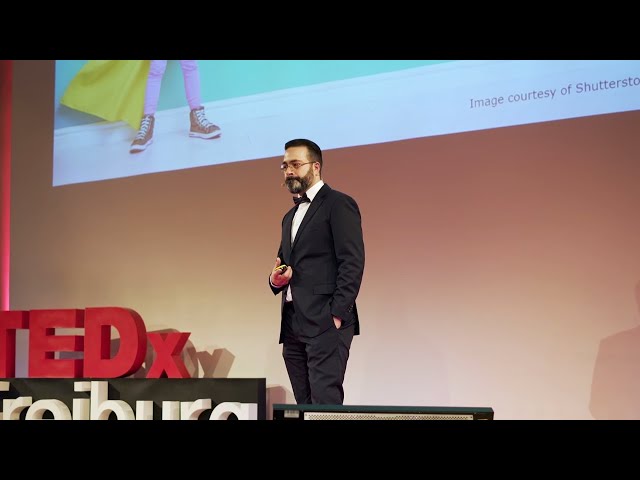
Dr. Maurizio Gullo is the leader of the 3D Bioprinting Group at the FHNW University of Applied Sciences and Arts Northwestern Switzerland, within the School of Life Sciences and the Institute for Medical Engineering and Medical Informatics. His research focuses on developing biohybrid systems for organs-on-chips, personalized therapies, and medical implants. Key areas include 3D bioprinting of vascularized tissues, cell-based micro-robotics, and bioengineered neuromuscular junctions. Journal Reviewer: Nanotechnology , Advanced Biosystems , Sensors and Actuators Conference Roles: IEEE NEMS TCP Member, Co-Chair of EURAXESS EU researcher meeting in Tokyo Notable awards include the FP7 Marie-Curie IOF Award, supervision of the EPFL Best Material Science Master Thesis, and TEDxFreiburg Fellow recognition. His work bridges biomedical engineering, materials science, and regenerative medicine to advance preventive healthcare solutions.
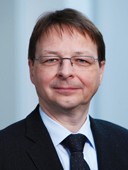
Pavel Kejik is a part-time Lecturer at the Swiss Federal Institute of Technology Lausanne (EPFL), affiliated with the School of Engineering. He joined EPFL's Institute of Microelectronics and Microsystems in 1999 and concurrently works at Monolithic Power Systems (formerly Sensima Technology SA) since 2014. His dual industry-academia role focuses on magnetic sensor industrialization. Education: Diploma degree, Czech Technical University in Prague (1994) PhD, Czech Technical University in Prague (1999) Research Interests: Dr. Kejik specializes in integrated magnetic sensor systems, including Hall effect and fluxgate magnetometry. His work emphasizes low-noise circuit design, offset cancellation techniques, CMOS integration, and applications in contactless current measurement, angular sensing, and non-destructive testing (NDT). Key innovations involve micro-Hall probes, orthogonal fluxgate structures, and noise-reduction methodologies for industrial applications. Publication Trends: His recent articles (2007-2014) demonstrate a consistent focus on CMOS-integrated magnetic sensors, particularly Hall effect devices and fluxgate systems. Research themes include miniaturization, power efficiency optimization, angular position detection, and novel compensation architectures for industrial sensing applications. Advising: Supervised one PhD student: Özge Zorlu. No grants or awards mentioned. Industry Collaboration: Active in sensor industrialization through Monolithic Power Systems and contributes to the Europractice course 'Smart Sensor Systems'. Patents cover innovations in Hall arrays, fluxgate structures, and magnetic anomaly detection.
Mehdi Ali Gadiri is a Researcher and Doctoral Assistant at the École Polytechnique Fédérale de Lausanne (EPFL) , affiliated with the MicroBioRobotic Systems Laboratory within the Institute of Microtechnology (IGM) under the School of Engineering (STI). He also serves as the PhD Student Representative for the Doctoral Program in Microsystems and Microelectronics (EDMI). His research focuses on biomedical robotics, medical device innovation, and microtechnology applications in healthcare. Gadiri holds a doctoral position in Microsystems and Microelectronics, contributing to interdisciplinary projects at the intersection of engineering and medicine. His work includes developing advanced medical instruments, AI-driven clinical tools, and diagnostic technologies such as SARS-CoV-2 antigen testing and NT-proBNP detection systems. Gadiri’s contributions span from microactuator design to clinical decision-making frameworks, reflecting a strong emphasis on translating engineering solutions into practical medical applications. He is based at the MED 3 2815 office in Lausanne, Switzerland.
Stijn Ossevoort is a Lecturer at the Lucerne School of Design, Film and Art (HSLU DFK), specializing in Design Management and Sustainability. He holds an MSc from Delft University of Technology and an MA from the Royal College of Art. His research explores design's impact on worldview, integrating theoretical biology and environmental psychology. He advises clients like Prada, Nike, and Philips on future-focused design strategies and collaborates on projects like the OPEN FACTORY initiative. His work includes exhibitions, peer-reviewed articles, and reports on topics ranging from agile production processes to participatory art installations. Research interests include sustainability, system thinking, and the philosophical implications of technology. Key projects involve rethinking material innovation, cross-disciplinary collaboration in manufacturing, and the ethical dimensions of durable product design. His doctoral thesis examines design's role in shaping human perception of the environment through a multidisciplinary lens. Publications span interactive art, wearable technology, and sustainable design methodologies. Notable works include contributions to Mixed and Augmented Reality and Pervasive Computing , alongside exhibitions addressing materialization in innovation processes. Teaching focuses on design management, creative problem-solving, and the integration of sustainability into design practices.
Christofer Hierold is a Full Professor at the Department of Mechanical and Process Engineering, ETH Zurich, where he holds the Chair in Micro and Nanosystems. His work focuses on advanced microsystem technologies and nanoscale innovations. Institution: ETH Zurich Role: Full Professor Research Focus: Micro and Nanosystems His teaching includes courses such as: Embedded MEMS Lab (151-0620-00L) Microsystems I: Process Technology and Integration (151-0621-00L) Seminar on Micro and Nanosystems (151-0642-00L)
Jérôme Charmet is an Associate Professor at the University of Applied Sciences Arc (HES-SO) and holds adjunct positions at the University of Bern (School of Biomedical and Precision Engineering) and the University of Warwick (Warwick Medical School). His research focuses on biomedical engineering , microfluidics , and advanced manufacturing for medical devices. BSc in Microtechniques, Haute Ecole Arc MSc in Biomedical Engineering, University of Bern Current research projects include: Bacterial Suicide (HES-SO funded): Treating biomaterial-associated infections on 3D-printed implants HYPERCELL (SNSF funded): Developing single-cell T cell therapy efficacy assays ELUSIVE (HES-SO funded): Creating mechanically enhanced biodegradable PCBs Public Mask (HES-SO funded): Biodegradable electrospun mask filters His >50 publications and >1200 citations reflect expertise in biodegradable polymers , organic bioelectronics , and point-of-care diagnostics . Key technologies include microheater fabrication , immunoaffinity liquid biopsies , and contamination-free OFET manufacturing .
Carlotta Guiducci is an Associate Professor at École Polytechnique Fédérale de Lausanne (EPFL), affiliated with the School of Engineering (STI) and the Laboratory of Life Sciences Electronics (CLSE). She also holds teaching roles in Life Sciences Engineering, Electrical and Electronics Engineering, and contributes to the Doctoral Program in Biotechnology and Biomedical Engineering. Roles: Swiss-up Engineering Chair, PhD Program Committee Member Labs: CLSE (Life Sciences Electronics), IBI-STI (Institute of Bioengineering) Her research focuses on microfluidic systems , electronic biosensors , and lab-on-a-chip technologies for cell analysis , DNA detection , and point-of-care diagnostics . She has pioneered methods like dielectrophoretic sorting, electrokinetic microdevices, and 3D electrode integration in biomedical applications. Key trends in her publications include miniaturized diagnostic systems , label-free biomolecular detection , and active microfluidic control . Her work spans from fundamental studies on capacitive DNA sensing to applied devices for therapeutic drug monitoring and cell trapping arrays . Academic Contributions Current PhD Student: Cristofori Micaela Siria Past PhD Students: 12 individuals (Accastelli, Bojescu, Cappi, Ferretti, Keim, Kilchenmann, Porro, Rollo, Ryser, Temiz, Thiriet, Tomar) Teaching: Advanced courses in electrical systems, biosensors, and electronic biochips
Junrui Chen is a Researcher and Doctoral Assistant at the Integrated Systems Laboratory (LSI1) within the School of Engineering (STI) at EPFL. He is affiliated with the Bio/CMOS Interfaces Laboratory and the SCI-STI-SC group. His research focuses on biomedical engineering, microfluidics, and biosensor technologies, particularly in in-memory sensing using bio/nano technologies under the supervision of Prof. Sandro Carrara. Education: BSc in Mechanical and Automation Engineering from Beihang University (2017), MSc in Mechatronics and Information Technology from Karlsruhe Institute of Technology (2021). His master's work involved microfluidic channel design for biosensors and ECG/PLT signal detection using MATLAB and LabVIEW. Research interests include microsystem design, biomedical signal processing, and microfabrication techniques. He contributes to projects like in-memory sensing and has developed skills in image processing and biosignal analysis, as evidenced by his GitLab repositories. Labs/Affiliations: EPFL's Integrated Systems Laboratory (LSI1) and Bio/CMOS Interfaces Lab (https://www.epfl.ch/labs/bci/). Office location: MC A3 197, Neuchâtel.
Federico Visentin is a Scientific Assistant at the Laboratory for Biomedical Microfluidics (LBMM) at École polytechnique fédérale de Lausanne (EPFL), affiliated with the School of Engineering and the Institute of Bioengineering. He is concurrently a doctoral student in the Doctoral Program in Biotechnology and Bioengineering (EDBB), reflecting his dual role in research and academic training. His research interests center on biomedical microfluidics, with a focus on developing microsystems for biological applications such as organ-on-a-chip and point-of-care diagnostics. His work integrates principles from bioengineering, microfabrication, and cell mechanics to innovate in diagnostic and therapeutic technologies. Federico is actively contributing to research at EPFL's Laboratory for Biomedical Microfluidics, where he supports advanced projects in microfluidic device development. Though no publications or awards are listed in the provided text, his position indicates active engagement in cutting-edge scientific inquiry. He advises no students at this time, and there is no mention of external grants or funding roles. His work is deeply embedded in the interdisciplinary environment of EPFL’s bioengineering initiatives, collaborating within a dynamic research team focused on translational microtechnologies.
Felix Peters is a Doctoral Assistant at the Laboratory for Biomedical Microfluidics (LBMM) within the Institute of Bioengineering at École Polytechnique Fédérale de Lausanne (EPFL), School of Engineering. He is concurrently a student in the Doctoral Program in Biotechnology and Bioengineering (EDBB) under the EDOC doctoral school. His academic work is based at the MED building on EPFL's Station 9 campus in Lausanne, Switzerland. His research focuses on biomedical microfluidics, a field integrating microscale fluid handling with biological applications. This includes technologies such as lab-on-a-chip systems, microphysiological systems, and diagnostic microdevices. His work likely spans engineering design, fabrication, and biological validation of microfluidic platforms for healthcare applications. Felix Peters is actively involved in academic service as Vice-President of the Association des doctorants en sciences de la vie (ADSV), representing life sciences doctoral students at EPFL. This role highlights his engagement in the academic community beyond research. While no publications or awards are listed in the current data, his position as a Doctoral Assistant indicates active contribution to research projects within LBMM. Doctoral Assistant, Laboratory for Biomedical Microfluidics (LBMM), EPFL Student, Doctoral Program in Biotechnology and Bioengineering (EDBB), EPFL Vice-President of Association, Association des doctorants en sciences de la vie (ADSV) He advises no students at this stage and there is no public information available on grants or funding he may be involved with. He is part of the LBMM research team, which specializes in developing microfluidic technologies for biomedical applications, including organ-on-chip and personalized medicine platforms.
Desirée Maulà is a Researcher affiliated with the Laboratory for Soft Bioelectronic Interfaces at the École Polytechnique Fédérale de Lausanne (EPFL) , under the School of Engineering . She is also a doctoral student in the Doctoral Program in Microsystems and Microelectronics . Primary Affiliation : Chaire Fondation Bertarelli de technologie neuroprosthétique Department : Laboratory for Soft Bioelectronic Interfaces (LSBI) Academic Status : Doctoral student in Microsystems and Microelectronics Her research focuses on neuroprosthetic technologies, integrating principles from bioengineering, soft bioelectronics, neural interfaces, and microsystems engineering. This work aligns with the development of advanced medical devices and neurotechnologies to address clinical challenges.
Eloi Collette is a Researcher at the Laboratory of Electronics and Nanoscale Structures (LANES) within the Institute of Materials at the School of Engineering , École Polytechnique Fédérale de Lausanne (EPFL). He is also a doctoral student in the Doctoral Program in Microsystems and Microelectronics and serves as a Doctoral Student Representative for this program. Research Focus: His work revolves around nanoscale electronics, semiconductor materials, and microsystem technologies. The interdisciplinary nature of his research aligns with advanced materials science and applied physics in engineering contexts. Roles and Affiliations: Doctoral Assistant at EPFL STI IEM LANES Doctoral Student, Microsystems and Microelectronics (EDMI) Member of the STI Faculty Council Student Representative in the Microsystems and Microelectronics Program Contact: Located in BM 2143, EPFL, Lausanne, Switzerland. Phone: +41 21 693 34 34.