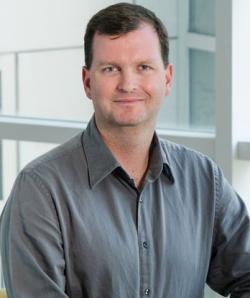
Cecilio Angulo Bahón is a full Professor at the Polytechnic University of Catalonia (UPC), affiliated with the Barcelona School of Industrial Engineering (ETSEIB) and the Department of Systems, Automatics and Industrial Informatics Engineering . He leads research in Artificial Intelligence and Robotics , with significant contributions to healthcare data analytics, digital twins, and human-robot collaboration. His research spans machine learning for medical data harmonization, generative adversarial networks in health informatics, and evolutionary algorithms for control systems. Recent publications focus on synthetic healthcare data generation, climate-resilient agriculture , and UMAP-based data analysis . His work bridges AI theory with practical applications in industrial and healthcare domains. Scientific awards include the Sant Jordi 2023 Digital Polytechnic Initiative Award . He has supervised doctoral candidates like Carlos Flores-Vázquez and N. Raya, with key collaborations at the IDEAI-UPC Intelligent Data Science and AI Research Group and the Institute of Robotics and Industrial Informatics (CSIC-UPC).
Bing Han is a Professor of Finance and the TMX Chair in Capital Markets at the Joseph L. Rotman School of Management, University of Toronto. He holds a PhD in Finance from UCLA and a PhD in Mathematics from the University of Chicago. Research Interests : Behavioral Finance, Asset Pricing, Investment Strategies, Risk Management, and Real Estate Finance. His work bridges mathematical rigor with empirical finance, focusing on market anomalies, investor sentiment, and liquidity dynamics. Publication Trends : His recent work explores option pricing discrepancies, social transmission of consumption beliefs, and cross-border information flows. Articles highlight applications of behavioral biases, volatility modeling, and macroeconomic forecasting using financial instruments. Scientific Awards & Honors : Lifetime Achievement Award (2021) Outstanding Paper Award (2018) Best Paper Award (2016) Outstanding Paper in Asset Pricing Research (2013) CBA Foundation Research Excellence Award (2010) Advising & Grants : Available for Masters/PhD supervision and industry projects. Secured sponsored research funding on Sentiment Risk and Hedge Fund Returns (2016-2017). Previously taught at University of Chicago, Ohio State, and University of Texas at Austin.
Prof Arun Arjunan is a Professor in Research at the University of Wolverhampton , affiliated with the Faculty of Science and Engineering and the School of Engineering . He serves as the Director of the Centre for Engineering Innovation and Research (CEIR) and leads the Additive Manufacturing of Functional Materials (AMFM) research group. His roles span academic leadership, research, and teaching in advanced manufacturing and materials science. PhD in Structural Mechanics and Vibro-Acoustics (University of Wolverhampton, 2014) PgCert in Higher Education (2014) Senior Fellow of the Higher Education Academy (SFHEA, 2015) His research focuses on additive manufacturing of metamaterials , including auxetic structures, meta-biomaterials for tissue regeneration, infection-resistant implants, and acoustic metamaterials for noise control. He has pioneered the development of Herschel Quincke-Arjunan waveguides for passive noise cancellation. His work integrates numerical modeling, mechanical testing, and advanced fabrication techniques. His recent publications span biomedical engineering , sustainable materials , environmental technology , and energy systems , with a strong emphasis on 3D printing applications. Themes include personalized implants, water purification using natural coagulants, and sustainable manufacturing. His work demonstrates a multidisciplinary approach bridging engineering, biology, and environmental science. Vice Chancellor’s Award for Outstanding Contribution to Research (2020) UK Engineering Innovation Award (2021) THE ENGINEER UK Collaborate to Innovate Finalist (2021) Nominated for Blavatnik Awards (2019, 2020) GKN Award (2011) Senior Fellow, Higher Education Academy (2015) Arun actively supervises PhD students and has secured research grants from the UK Department of Transport (DfT) , Innovate UK , European Union (ERASMUS+) , and industrial partners. He previously served as Course Leader for Mechanical Engineering (BEng/MEng) and led TEF and NSS enhancements in the School of Engineering. He teaches advanced modules such as Advanced FEA and Applied Stress Analysis . He leads the AMFM Research Group and CEIR , fostering interdisciplinary collaboration with post-docs, research technicians, and PhD students. He is also a member of the BSI AMT/8 Additive Manufacturing standards committee and has served as an external examiner for the University of Greenwich.
Professor Anthony Neuberger is a faculty member at Bayes Business School, City, University of London, where he has served as Professor of Finance since 2013. Previously, he held academic positions at Warwick Business School (as Chair and Head of the Finance Group) and London Business School (as Associate Professor and Academic Director of the full-time Masters in Finance programme). His career also includes policy work at the UK Department of Energy and consulting for government departments, banks, and stock exchanges. PhD, London Business School MBA (Distinction), London Business School BA, University of Cambridge Neuberger's research focuses on financial economics , particularly option pricing , market microstructure , and pension policy . His work explores volatility risk premia in currency markets, skewness in equity markets, and robust hedging strategies under model uncertainty. He has published extensively in top journals like the Journal of Finance , Review of Financial Studies , and Finance and Stochastics . His recent articles highlight trends in currency volatility premia , equity market skewness , and liquidity risk . These works span disciplines like quantitative finance, mathematical finance, and risk management, with subfields including forward start options, stochastic volatility, and portfolio insurance. Neuberger is a prolific author with over 20 journal articles and book chapters. His collaborations include researchers like David Hobson and Roman Kozhan, and his consulting work bridges academia and industry.
Isnaldi R. Souza Filho is a Junior Professor (Chair of Sustainable Metallurgy) at the French National Centre for Scientific Research (CNRS) , affiliated with the Institut Jean Lamour (UMR 7198), Université de Lorraine . He also serves as Group Leader for Sustainable Synthesis of Materials at the Max Planck Institute for Sustainable Materials since 2021. Education: PhD, MSc, and BSc in Materials Engineering from the University of São Paulo (2016-2019, 2013-2015, 2008-2013). Research Interests: Focus on sustainable metallurgy , particularly hydrogen plasma-based reduction of iron ores and microstructural characterization of Mn-containing steels . His work addresses decarbonization in steel production, scrap-compatible alloy design , and waste valorization (e.g., red mud conversion to green steel). Publication Trends: Recent studies emphasize hydrogen plasma smelting reduction of iron ores, kinetic modeling of reduction processes, and microstructure engineering for enhanced mechanical properties. Collaborative work spans CO2-neutral steelmaking , elemental partitioning , and high-entropy alloy synthesis . Scientific Awards: CAPES Thesis 2020 for Best National Doctoral Thesis in Engineerings II (Brazil) Multiple undergraduate awards (CREA-SP, ABM, Engineering Institute) for top academic performance in 2013 Grants and Affiliations: Affiliated with the Dierk Raabe Lab at the Max Planck Institute and leads the Sustainable Synthesis of Materials group. Research funded by institutions supporting climate-neutral metallurgy and recycling strategies .
Dr. Spencer Jeffs is an Associate Professor in Aerospace Engineering at Swansea University's School of Aerospace, Civil, Electrical and Mechanical Engineering. Based in the Institute of Structural Materials, his research focuses on advanced high-temperature materials including ceramic matrix composites (CMCs), titanium alloys, and nickel superalloys, with applications in gas turbines and nuclear reactors. He is a Chartered Engineer (CEng) and Fellow of the Higher Education Academy (FHEA), teaching across foundation, aerospace, mechanical, and materials engineering modules. Current roles: Admissions Tutor (2017-present), Honorary Editor for the Engineering Integrity Society (2020-present) Research aligns with SDGs 7 (Affordable Clean Energy) and 9 (Industry Innovation) His work employs experimental and computational techniques like mechanical testing, electron microscopy, and X-ray CT, often in collaboration with industrial partners. Recent publications emphasize small punch testing for additive manufacturing, process optimization, and structural integrity of advanced materials. Supervision includes PhD projects on CMCs, corrosion-fatigue interactions, and hybrid composite driveshafts.
Jonas Rubenson is a Professor of Kinesiology in the Department of Kinesiology, College of Health and Human Development, at The Pennsylvania State University. His research focuses on the mechanics and energetics of locomotion, in vivo skeletal muscle function, and musculoskeletal structure-function relationships. Ph.D., 2005, Biomechanics, The University of Western Australia B.Sc. (Hon), 1998, Exercise Physiology, The University of Western Australia B.Sc., 1996, Biology and Human Kinetics, University of British Columbia His research integrates experimental and modeling approaches to study gait and skeletal muscle function during locomotion in both health and disease/impairment. Key areas include the relationship between joint and muscle mechanics and metabolic energetics, as well as mechanisms underlying locomotor adaptation and optimization. Recent publications emphasize locomotor plasticity, tendon stress in hopping kangaroos, and musculoskeletal modeling in birds and bipedal models. Rubenson collaborates with research centers such as the Integrative and Biomedical Physiology and the Center for Movement Science and Technology . His work often involves interdisciplinary approaches, combining biomechanics, physiology, and robotics. Current research projects investigate principles of muscle function during movement, with applications in understanding locomotion in extinct theropod dinosaurs and developing legged robots. His team also explores developmental plasticity of locomotor economy and swing-phase mechanics in avian models.
Pablo D. Zavattieri is the Jerry M. and Lynda T. Engelhardt Professor in Civil Engineering at the Lyles School of Civil Engineering, College of Engineering, Purdue University. His research focuses on solid mechanics applied to the multiscale modeling of advanced and innovative engineering materials, with emphasis on bridging between atomistics to continuum-based models and combining computational tools with experimental validation. Education: B.S./M.S., Instituto Balseiro, Argentina, 1995 Ph.D., Purdue University, 2000 Professor Zavattieri's research spans solid mechanics applied to multiscale analysis and design of advanced architectured materials, interfaces, and complex structures. His work lies at the intersection of Solid Mechanics and Materials Engineering, focusing on developing novel materials with exceptional properties inspired by natural systems. His contributions include micromechanical models for polycrystalline materials, new fracture models for thin-walled structures, and pioneering work on biomimetic materials using 3D printing technology. Current projects investigate the multiscale modeling of heterogeneous and hierarchical materials, micro and nanomechanics of biological materials, bioinspired materials, architectured materials, micropatterned interfaces, and smart materials. His publication record demonstrates a strong focus on understanding natural materials like chiton radular teeth, nacre, and mantis shrimp structures, translating these biological designs into engineered solutions. His recent work spans biological materials characterization, phase-transforming cellular materials, cellulose nanocrystal composites, and 3D printing of cementitious materials, consistently combining computational modeling with experimental validation across multiple length scales. Scientific Awards and Recognitions: NSF CAREER award (2013) Roy E. & Myrna G. Wansik Research Award (2013) Purdue University Faculty Scholar (2015-2020) Kavli Frontier of Science Fellow of the National Academy of Science (2015) National Academy of Engineering US Frontier of Engineering Symposium attendee (2014) Engineering Fracture Mechanics Journal Most Cited Articles award (2005-2009 period) Second Most Cited Journal of the Mechanics and Physics of Solids Article (2007-2012) Cover page of Cellulose journal (2013) Cover page of Advanced Functional Materials journal (2014) Professor Zavattieri has mentored numerous graduate students who have received prestigious awards including William and Mary Goetz Graduate Scholarships, William L. Dolch Graduate Scholarships, Purdue Doctoral Fellowships, and SURF Research Symposium awards. His research has been supported by NSF, AFOSR, INDOT/JTRP, Forest Product Laboratory, General Motors, Velcro, and the Purdue Research Foundation. Notable projects include a $7.5M DoD/MURI award for 'Convergent Evolution to Engineering: Multiscale Structures and Mechanics in Damage Tolerant Functional Bio-Composite and Biomimetic Materials' and multiple NSF grants focusing on biomimetic materials and 3D printing of civil infrastructure. He directs the Multi-Scale Mechanics and Materials by Design Lab at Purdue University, which maintains a strong collaborative network with institutions including UC Riverside (David Kisailus' group), UC San Diego, Northwestern University, and UC Berkeley. The lab has produced significant research on biological materials like chiton radular teeth, mantis shrimp structures, and nacre, translating these natural designs into engineered solutions for applications in infrastructure, lightweight structural materials, and energy absorption systems.
Aumber Abbas is a researcher at Newcastle University specializing in advanced materials for sustainable energy and environmental applications. His work spans nanotechnology, catalysis, and biomass conversion, with significant contributions to carbon-based nanomaterials and electrochemical systems development. His research focuses on synthesizing graphene quantum dots from biomass waste for environmental sensing and remediation applications, developing catalytic processes for CO 2 utilization and cyclic carbonate production, and engineering electrochemical systems including vanadium redox flow batteries. Recent work emphasizes waste-derived functional materials for optical security, anti-counterfeiting, and wastewater treatment through nanoporous catalyst design and plasma-based tar removal technologies. Analysis of recent publications (2024-2025) reveals a dominant trend in sustainable nanomaterial engineering, particularly biomass-waste-derived carbon structures with tailored optical and catalytic properties. His work integrates experimental validation with simulation approaches to address energy storage, environmental remediation, and security applications, demonstrating strong interdisciplinary collaboration within Newcastle's engineering research community.
Prof. Dr. Francesca Biagini is a full Professor at the Department of Mathematics, University of Munich (LMU Munich) , leading the Stochastics and Financial Mathematics working group. She serves as Vice President for International Affairs and Diversity at LMU Munich since October 1, 2019, and as President of the Bachelier Finance Society (2022–2023). She is also a Correspondent of the Deutsche Aktuarvereinigung (DAV) and a member of the Executive Board of the Munich Risk and Insurance Center (MRIC) since 2017. Her research focuses on stochastic processes in financial markets , particularly asset price bubbles , default risk modeling , and robust hedging under model uncertainty. Recent work includes deep learning applications to bubble detection and non-linear affine processes for market dynamics. She actively contributes to academic leadership through teaching and publications, including 15+ recent articles on topics like liquidity-induced bubbles, machine learning calibration, and systemic risk transfer equilibrium. Her workgroup collaborates on quantLab initiatives and DAV certificate programs .
Eileen Murphy is a Professor in the School of Natural and Built Environment at Queen's University Belfast, where she is a leading figure in bioarchaeology and community archaeology. She is actively involved in research, teaching, and public engagement, with a focus on human remains, burial practices, and the archaeology of childhood and the Irish diaspora. She is Co-Director of the Centre for Community Archaeology and Chair of the University's Scholarships and Awards Group. Education: PhD in Archaeology (specific institution and year not provided in text) Additional degrees inferred through academic rank and research output, though not explicitly stated Her research interests center on bioarchaeology , particularly the biocultural analysis of Irish and Eurasian populations, deviant and minority burial practices, children's burial grounds (cillini), and the archaeology of childhood and the Irish diaspora. She is deeply committed to community archaeology , exemplified by her leadership in the Community Archaeology Programme Northern Ireland (CAPNI). Her work bridges scientific analysis and public engagement, contributing to sustainable development goals related to inclusive heritage and education. The 15 most recent publications reflect a consistent trajectory in osteoarchaeology , palaeopathology , and ethical archaeology , with increasing interdisciplinary work in medical geology and biomechanics. Themes include disability in the past, environmental health impacts, and the social dimensions of burial. Her outputs span scholarly journals, books, and public-facing media, demonstrating a strong commitment to knowledge dissemination. Scientific Awards and Recognitions: QUB Staff Excellence Award for Community Impact (2020) British Archaeological Award for Best Scholarly Book (2008) County Heritage Award (2021) Listowel Writer’s Week Nilsson Local Heritage Writing Award (2023) QUB Students' Union Most Involved Teaching Staff Member (2017) Fellow of the Society of Antiquaries of London Vice-President, Ulster Archaeological Society Chair, EAA Belfast 2023 Scientific Committee Elected Member, Royal Irish Academy (2025) Eileen Murphy has supervised numerous PhD students, both currently and in the past, covering diverse topics from Neolithic mortuary rites to medical geology. She has secured significant research output and public engagement through projects like the Ballyhanna and Ranelagh excavations. Her administrative roles include co-directing research centers and leading university committees, reflecting her leadership in both research and institutional service. She is actively involved in public outreach, including podcasts, media interviews, and science festivals, particularly through CAPNI. Her work with the Belfast Mummy (Takabuti) and the Forgotten Cemetery project highlights her ability to connect academic research with public interest. She leads major collaborative efforts across Ireland and internationally, fostering networks in archaeological research and education.
Jenn-Ming Yang is a Distinguished Professor in the Department of Materials Science and Engineering at the University of California, Los Angeles (UCLA), holding the Collins Aerospace Term Chair for Excellence. His work focuses on advanced composite materials for aerospace and transportation applications, with significant contributions to high-temperature material systems. Professor Yang's research centers on fundamental problems in processing, microstructure development, and mechanical behavior of high-temperature composites. His investigations target critical applications in aerospace structural systems and ground transportation, with emphasis on material durability, failure mechanisms, and performance under extreme conditions. This work bridges materials science, mechanical engineering, and aerospace engineering through experimental and analytical approaches. His recent publications (2007-2008) reveal a concentrated focus on composite material systems, including titanium-based laminates, carbon nanotube reinforcements, ultra-incompressible transition metal diborides, and ceramic composites. Key research themes involve mechanical property characterization, failure analysis, and microstructure-property relationships, with direct applications to aircraft structures, propulsion systems, and energy storage technologies. Professor Yang's scientific achievements have been recognized through numerous prestigious awards: Scholars Award from National Engineering Research Center for Composite Manufacturing Science & Engineering (1987) Faculty Career Development Award (1989) Presidential Young Investigator Award from the National Science Foundation (1990-1995) Alcoa Foundation Award (1992) Ford Foundation Award (1993) Best Paper Award from the Japan Society of Mechanical Engineers (2007) His research program addresses critical challenges in advanced material systems for next-generation aerospace and transportation applications, with ongoing investigations into novel composite architectures and high-temperature material solutions.
Yulia Arinicheva Skåtun serves as an Associate Professor in the Department of Mechanical and Marine Engineering at Western Norway University of Applied Sciences (HVL), Campus Bergen. She teaches advanced courses including Hydrogen Technology, Electrochemistry for Batteries/Fuel Cells/Electrolysers, Thermodynamics, and Applied Fluid Dynamics, with scheduled instruction for MAS354 (Bachelor Thesis), MAS534 (Electrochemistry Systems), MAS550 (Guided Self-Study), and MAS595 (Master Thesis) through 2026. Her research spans ceramics for energy applications , all-solid-state batteries , and hydrogen technologies , with specialized focus on solid electrolytes like LLZO garnets. Current work investigates grain boundary effects in battery materials and hydration mechanisms in lithium-conducting ceramics, bridging fundamental materials science with practical energy storage solutions. She coordinates the EU Erasmus+ H2CoVE project building hydrogen competency and collaborates with FME HyValue, Norway's hydrogen research center. As leader of the HVL Hydrogen Team, she integrates experimental electrochemistry with thermodynamic modeling for next-generation energy systems. Her doctoral training at Forschungszentrum Jülich/RWTH Aachen focused on ceramic matrices for nuclear waste immobilization, followed by postdoctoral research on solid-state batteries. International research stays include UC Davis, ESRF, ICSM Marcoule, JRC-ITU, HZDR, and University of Bergen.
Monica Morales-Masis is Associate Professor at the University of Twente, Netherlands, leading the M3 Lab within the MESA+ Institute for Nanotechnology. She joined the university in 2018 after serving as team leader of the transparent conductive oxide group at EPFL's Photovoltaics Laboratory from 2013-2018, following her 2012 Physics PhD from Leiden University. Her research pioneers novel thin-film materials with tailored optoelectronic properties, focusing on three interconnected domains: vapor-deposited halide perovskites for solar cells using solvent-free pulsed laser techniques, transparent conducting oxides that overcome the transparency-conductivity trade-off, and p-type transparent conductor discovery to address the critical scarcity of hole-conducting transparent materials. This work directly enables next-generation solar cells, LEDs, and transparent electronics. Recent publications (2020-2023) reveal strong thematic continuity in perovskite deposition science, TCO microstructure-property relationships, and sulfur-doped copper iodide systems. Key trends include solvent-free processing advancements, damage mitigation during electrode deposition, and valence band engineering for p-type materials—collectively advancing efficiency and stability in optoelectronic devices. Her scientific recognition includes: ERC Starting Grant (2019) for CREATE project NWO Start-Up Grant (2019) for BRIDGE project She actively mentors five PhD candidates and two master students while securing diverse funding including ERC, NWO, SOLAR ERA NET, and CETPartnership grants. Her leadership extends to the Young Academy of Europe and extensive outreach promoting STEM diversity in Latin America, including TEDx presentations and student mentorship initiatives. The M3 Lab operates at the materials-device interface within UT's Inorganic Materials Science group, maintaining strong industry ties (e.g., Coherent Inc. collaborations) and international partnerships. Current projects emphasize scalable manufacturing techniques and novel material compositions to bridge fundamental science with commercial photovoltaic applications.
Dr. Chris A. Flask is a Professor at the Case Western Reserve University School of Medicine, with joint appointments in Radiology, Pediatrics, and Biomedical Engineering. He serves as Co-Director of the Imaging Research Core and Associate Director of the Medical Scientist Training Program, while also contributing to the Cancer Imaging Program at the Case Comprehensive Cancer Center. Research Focus Quantitative Magnetic Resonance Imaging (MRI) MRI Physics and Pulse Sequence Design Lung Imaging in Cystic Fibrosis Kidney Imaging in Polycystic Kidney Disease, Sickle Cell Disease, and Diabetic Nephropathy Liver Imaging for Inflammation and Fibrosis Scientific Recognition Distinguished Investigator Award 2023 from The Academy for Radiology and Biomedical Imaging Research Reviewer with Distinction for Magnetic Resonance in Medicine Semi-Finalist for ISMRM Young Investigator Award 2013 His recent publications focus on pH-responsive imaging agents, MR fingerprinting techniques, and applications in pediatric and adult diseases. Dr. Flask's work bridges technical MRI innovation with clinical translation across multiple organ systems.