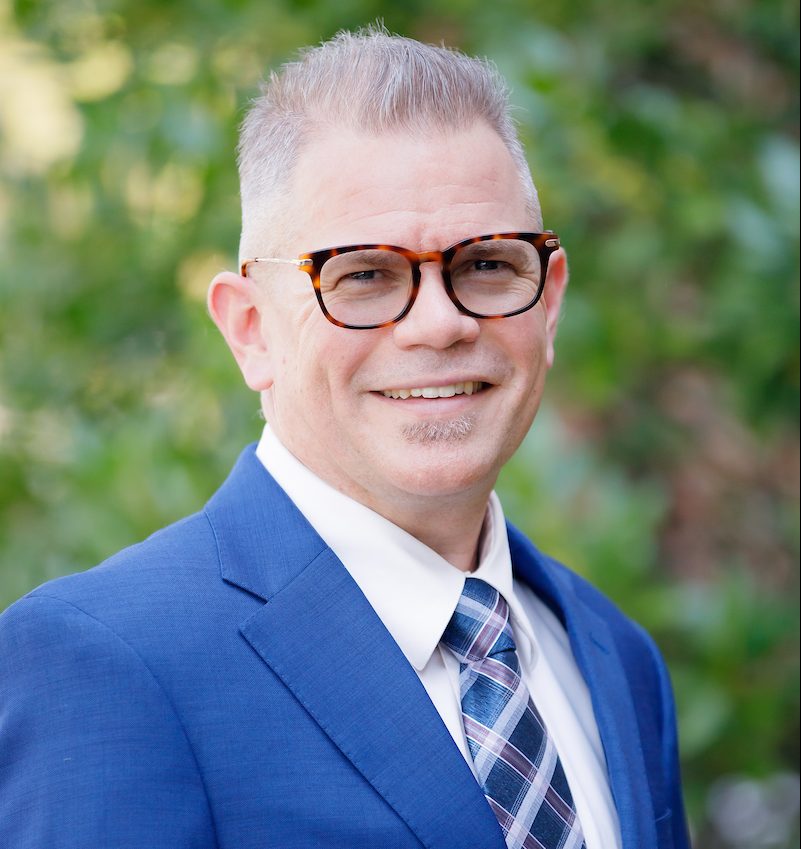
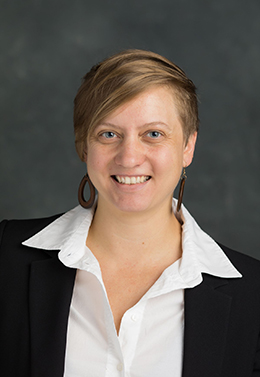
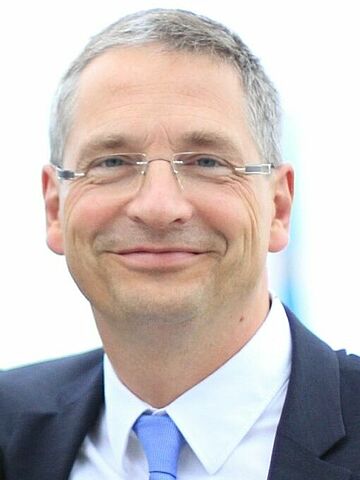
Jaafar El-Awady is a Professor in the Department of Mechanical Engineering at the Whiting School of Engineering, Johns Hopkins University (JHU). He serves as Chair of JHU’s Engineering for Professionals’ Mechanical Engineering Graduate Program, founder/director of the Computational and Experimental Materials Engineering Laboratory (CEMEL), and associate director of the Center on Artificial Intelligence for Materials in Extreme Environments (CAIMEE) and the Center for Integrated Structure-Materials Modeling and Simulations (CISMMS). His secondary appointment in the Department of Materials Science and Engineering underscores his interdisciplinary focus.
Cecilio Angulo Bahón is a full Professor at the Polytechnic University of Catalonia (UPC), affiliated with the Barcelona School of Industrial Engineering (ETSEIB) and the Department of Systems, Automatics and Industrial Informatics Engineering . He leads research in Artificial Intelligence and Robotics , with significant contributions to healthcare data analytics, digital twins, and human-robot collaboration. His research spans machine learning for medical data harmonization, generative adversarial networks in health informatics, and evolutionary algorithms for control systems. Recent publications focus on synthetic healthcare data generation, climate-resilient agriculture , and UMAP-based data analysis . His work bridges AI theory with practical applications in industrial and healthcare domains. Scientific awards include the Sant Jordi 2023 Digital Polytechnic Initiative Award . He has supervised doctoral candidates like Carlos Flores-Vázquez and N. Raya, with key collaborations at the IDEAI-UPC Intelligent Data Science and AI Research Group and the Institute of Robotics and Industrial Informatics (CSIC-UPC).
Hengky Chandrahalim is an Associate Professor of Electrical and Computer Engineering at the U.S. Air Force Institute of Technology (AFIT) , where he also serves as Faculty Director of the AFIT Nanofabrication & Characterization Facility . He is affiliated with the Graduate School of Engineering & Management and leads the Microsystems Laboratory. Education: Ph.D., Electrical and Computer Engineering, Cornell University M.Sc., Electrical and Computer Engineering, Cornell University M.Eng., Electrical and Computer Engineering, Cornell University B.Sc., Electrical and Computer Engineering, The Ohio State University His research interests span optics and photonics, MEMS, RF/microwave systems, optical sensing, and micro/nanosystems . He specializes in integrating microscale sensors with optical fibers, radiation-hardened MEMS, and optofluidic systems. His work combines advanced fabrication techniques like two-photon nanomachining with applications in aerospace, defense, and biomedical sensing. The trends in his recent publications emphasize optical fiber tip sensors, nonlinear damping in flow sensing, and radiation effects on MEMS resonators . His research demonstrates a strong focus on miniaturization, robustness under extreme environments, and novel transduction mechanisms in photonic and mechanical systems. Scientific Awards: Fellow, Institute of Physics (IOP) (2024) Fellow, Institution of Engineering & Technology (IET) (2023) IEEE Dayton Section Harrell V. Noble Award (2025) AFIT Civilian of the Year (2024) Arthur S. Flemming Award, Applied Science & Engineering (2024) SASE Professional Achievement Award (2022) Dean’s Distinguished Teaching Professor Award (2020–2021) He advises multiple graduate and undergraduate researchers , including Jeremiah C. Williams and David D. Lynes, and has secured significant recognition for both research and teaching. He has served as a mentor for national fellowship programs and student competitions. His lab, the Microsystems Laboratory , fosters innovation in sensor design, microfabrication, and photonics integration, contributing to both military and civilian technological advancement.
Dr. Marina B. Ruggles-Wrenn is a Professor in the Department of Aeronautics and Astronautics at the Air Force Institute of Technology (AFIT), where she teaches graduate courses and directs research in mechanics of materials and structures. She is a leading expert in experimental mechanics of advanced materials under extreme environments, particularly high-temperature ceramic matrix composites. University: Air Force Institute of Technology School: Department of Aeronautics and Astronautics Academic Rank: Professor Education: PhD in Mechanical Engineering, Rensselaer Polytechnic Institute, 1987 MS in Mechanics, Rensselaer Polytechnic Institute, 1983 BS in Mechanical Engineering, Polytechnic Institute of New York, 1981 Dr. Ruggles-Wrenn's research focuses on the mechanical behavior of composite materials at elevated temperatures, especially under creep, fatigue, and oxidative environments. Her work has major implications for aerospace propulsion systems, thermal protection, and hypersonic vehicle design. She investigates material degradation in steam and air environments, interlaminar shear, environmental barrier coatings, and self-healing matrices in SiC and oxide-oxide composites. Her research integrates experimental mechanics with modeling of viscoplastic and time-dependent deformation. The 15 most recent publications reveal a sustained focus on high-temperature materials, particularly ceramic matrix composites (CMCs), with recurring themes in environmental degradation (especially steam), creep, fatigue, oxidation, and microstructural evolution. The subfields span subcritical crack growth, environmental barrier coatings, self-healing matrices, and the effects of fiber architecture and matrix composition on performance under extreme conditions. Scientific Awards and Honors: Distinguished Professor Award, 2023 Fellow, International Association for Advanced Materials, 2022 Dean’s Distinguished Teaching Professor Award, 2019 Plenary Lecture, HT-CMC10, 2019 ASME Dedicated Service Award, 2016 ASME Board of Governors Award, 2016 Stinson Trophy, National Aeronautic Association, 2014 Best Paper Award – ASME Turbo Expo, 2012 Col. Gage H. Crocker Outstanding Professor Award, 2007 Multiple Oak Ridge National Laboratory Technical Achievement Awards (1990, 1993, 2003) Dr. Ruggles-Wrenn has advised numerous graduate students in aerospace engineering and materials science, directing research in experimental mechanics and high-temperature materials. Her work has been supported by extensive research grants from the U.S. Air Force, Department of Defense, and national laboratories. She has published over 200 peer-reviewed articles and book chapters. Her leadership in the field is further reflected in her status as a Fellow of ASME and the International Association for Advanced Materials. She is actively involved in collaborative research with institutions such as Oak Ridge National Laboratory and contributes to national efforts in advancing durable materials for aerospace applications. Her laboratory focuses on high-temperature mechanical testing, environmental exposure studies, and microstructural characterization of advanced ceramics and composites.
Jack Skinner is a Professor and Department Head of Mechanical Engineering at Montana Technological University's Lance College of Mines & Engineering. He is also Interim Dean of the college and a licensed professional engineer (WY/14963). Education: B.S. in General Engineering (Montana Tech, 2000), M.S. in Mechanical Engineering (Washington State University, 2002), Ph.D. in Mechanical Engineering (UC Davis, 2007) Professional Roles: Interim Dean, Department Head, Principal Member of Technical Staff at Sandia National Labs (2003-2012) His research focuses on nanotechnology and MEMS , with expertise in nanoscale devices, materials, and fabrication techniques. Key areas include: Nanofabrication and microfabrication Electrospinning methods for biomedical and energy applications Plasmonics in polymer composites Advanced materials for energy systems and environmental remediation Device characterization and integration He has taught courses such as: Introduction to Micro/Nanoelectromechanical Systems Heating, Ventilating, and Air Conditioning Engineering Mechanics - Dynamics
Edward Sander is a Professor in the Department of Biomedical Engineering at the University of Iowa's College of Engineering, where he has been a faculty member since 2011. He also holds researcher positions at the Iowa Institute for Biomedical Imaging and the Iowa Technology Institute, contributing to interdisciplinary research in biomedical engineering and imaging sciences. Education: PhD in Biomedical Engineering, Tulane University, 2006 MS in Biomedical Engineering, Tulane University, 2004 BSE in Chemical Engineering, The University of Texas at Austin, 2000 His research focuses on multiscale mechanics and modeling of biological tissues, with particular emphasis on wound healing, skin tissue engineering, microvessel formation, and the biomechanics of connective, vascular, and ocular tissues. He employs advanced microscopy and image-based computational modeling techniques to study tissue damage and mechanical behavior across scales. His work integrates biomaterials, tissue engineering, and mechanobiology to develop engineered tissue systems and understand native tissue function. Dr. Sander is a member of the Biomedical Engineering Society and leads the Sander 3MT Lab, which focuses on mechanistic, microstructural, and multiphysics modeling of biological materials. While specific publications are not listed in the provided text, his research output is tracked through Google Scholar, indicating an active publication record in his fields of expertise. Scientific Awards and Honors: Robert and Virginia Wheeler Faculty Fellow in Engineering Dr. Sander advises graduate students and likely participates in externally funded research projects, though specific grants and advisees are not detailed. His affiliations with major research institutes at the University of Iowa underscore his role in advancing translational biomedical research and engineering innovation. Research Affiliations: Iowa Institute for Biomedical Imaging Iowa Technology Institute
Luke N. Brewer is a Professor in the Department of Metallurgical and Materials Engineering at The University of Alabama, with an adjunct appointment in Mechanical Engineering. He serves as Associate Department Head for Graduate Studies and Director of the Center for Advanced Manufacturing and Materials Design Integration within the College of Engineering. His research focuses on advanced manufacturing technologies, particularly cold spray additive manufacturing and repair of metallic structures. His educational background includes a Ph.D. in Materials Science and Engineering from Northwestern University (2001), and dual B.S.E. degrees in Materials Science and Engineering and Applied Mathematics, also from Northwestern University (1996). Dr. Brewer's research interests center on processing-microstructure-mechanical property relationships in metallic alloys and ceramics. He actively investigates cold spray deposition, atomization of metallic powders, rapid solidification, friction stir welding, resistance welding, and materials characterization technique development. His work has significant applications in aerospace, automotive, and defense sectors. He has been involved in high-impact research initiatives, including a $3.8 million Department of Energy grant focused on jet biofuel solutions and research on 3D printing technologies for military applications. His leadership is recognized through roles in major research centers and contributions to the Capstone engineering program. Scientific Awards and Recognition: Featured in Alabama Innovation Fund award (2015) supporting advanced research at The University of Alabama Advising and Grants: Dr. Brewer advises graduate students in materials science and engineering, including Ph.D. graduate Dr. Pallavi Pant. He leads research funded by federal agencies such as the U.S. Department of Energy and collaborates on projects with military applications. His team receives support through institutional and state-level innovation funding. Labs and Research Teams: He leads research activities at the Center for Advanced Manufacturing and Materials Design Integration. His group conducts experimental work on cold spray deposition, welding technologies, and materials characterization. The team hosts regular group events, including an annual potluck, and provides student research opportunities in advanced manufacturing.
Lars BEEX is a Senior Research Scientist at the University of Luxembourg's Faculty of Science, Technology and Medicine, Department of Engineering. He holds the right to supervise PhD students and has directed five to completion. His research focuses on computational mechanics of solids, including Bayesian inference, multiscale methods, and quasicontinuum approaches, with applications to materials like textiles, foams, and medical devices. His academic journey includes a PhD from Eindhoven University of Technology (2008-2012), supervised by Marc Geers and Ron Peerlings, as well as MSc and BSc degrees from the same institution. **Research Interests:** - Computational mechanics of solids - Bayesian inference and uncertainty quantification - Multiscale modeling (quasicontinuum method) - Mechanical modeling of fibrous and discrete materials - Phase-field damage models - Contact mechanics and elastoplasticity **Awards:** - Biezeno Solid Mechanics Award 2013 (Best PhD thesis in solid mechanics, Netherlands) - Cum laude distinction for both MSc and BSc degrees **Industrial Collaborations:** - SISTO Armaturen - IEE - Kiswire International **Teaching:** - Numerical methods for continuous optimization - Courses for Computer Science, Mathematical Modelling, and Engineering students **Lab/Affiliations:** - Legato Team (part of the University of Luxembourg's engineering research cluster)
Anna Herring is an Assistant Professor in the Department of Civil and Environmental Engineering at the University of Tennessee, Knoxville, part of the College of Engineering. She joined the faculty in August 2022 after conducting postdoctoral research and holding an Australian Research Council Discovery Early Career Researcher Award (DECRA) at the Australian National University. Education: PhD in Environmental Engineering, Oregon State University, 2015 MS in Environmental Engineering, Oregon State University, 2012 BS in Environmental Engineering, University of Colorado, 2010 Her research centers on experimental investigation of fluid flow in porous media, particularly in the context of climate change mitigation. She specializes in carbon capture, utilization, and storage (CCUS), including geologic carbon storage and mineral carbonation. Using advanced 3D X-ray microtomography, she visualizes and analyzes multiphase fluid flows and reactive transport processes at the microscale, linking topology and structure to macro-scale engineering behavior. Her work integrates physics, chemistry, and engineering to optimize subsurface fluid management. The analysis of her recent publications reveals a consistent focus on pore-scale dynamics, fluid topology, wettability, and trapping mechanisms in porous media. Her studies employ micro-CT imaging, topological data analysis, and digital rock physics to understand multiphase flow, with direct applications to CO2 sequestration and reservoir engineering. The interdisciplinary nature of her work spans environmental engineering, materials science, fluid mechanics, and applied mathematics. Scientific Awards and Recognitions: Australian Research Council (ARC) Discovery Early Career Research Award (DECRA), 2018–2021 Editor’s Citation for Excellence in Refereeing, Water Resources Research , 2021 Anna Herring actively contributes to professional service, including serving on the Diversity, Equity, and Inclusion Committee of the International Society for Porous Media (InterPore) since 2022, and as a member of the American Geophysical Union. While specific grant details are not provided, her DECRA fellowship indicates competitive research funding. She has advised or collaborated with numerous researchers, though formal advisees are not listed. Her research is conducted in experimental and computational labs focused on digital rock physics and reactive transport.
Prof. Dr.-Ing. Ingo A. Müller is a full-time Professor in the Department of Electrical Engineering and Computer Science at Wismar University of Applied Sciences , where he also serves as Dean of the Faculty of Engineering. His academic work spans teaching modules such as Bauelemente und Schaltungen , Mikrocontrollertechnik , and Schaltkreisentwurf , alongside extensive research in optical fiber sensors , MIMO systems , and sensor technology . Research Focus : Development of miniature all-glass fiber optic sensors for biomedical and industrial applications Optical sensor systems for high-temperature environments (e.g., geothermal wells, exhaust gas flows) Innovations in EFPI-FBG hybrid sensors for simultaneous pressure-temperature measurement Applications of digital light processing in optical communication Key Publications : His work from 2009–2021 reveals trends in fiber optic sensing for harsh environments, MIMO transmission systems , and feedback control mechanisms for sensor stabilization, with a focus on practical implementations in biomedical and industrial contexts. Scientific Achievements : Recipient of the Best Paper Award at EWOFS 2010 Contributor to patents in fiber optic pressure sensing (2010, 1990) Active in international collaborations (Tokyo University of Science, 2006) Laboratory Infrastructure : He oversees labs in Electronic Components and Circuits , Microcontroller Technology , and Circuit Design , supporting both educational and research activities.
O. Remus Tutunea-Fatan is a Professor in the Department of Mechanical & Materials Engineering at Western University, with cross appointments in Biomedical Engineering and Electrical and Computer Engineering. His work focuses on laser polishing, CNC machining, and surface structuring for drag reduction and biomedical applications. Ph.D. in Mechanical Engineering, The University of Western Ontario M.E.Sc. and B.E.Sc. in Mechanical Engineering, Transilvania University, Romania Research interests include: Advanced CAD/CAM frameworks Laser remelting process optimization Biomedical device design Composite manufacturing techniques Surface topography analysis Artificial intelligence in process control Recent publications indicate expertise in: Laser polishing of metallic surfaces Riblet microstructures for drag reduction AI-driven process monitoring 5-axis machining error compensation Scientific recognition includes: Edward G. Pleva Award for Excellence in Teaching (Western University, 2023) Dr. Terry Base Memorial Teaching Award (2022 co-winner, 2021, 2019) R. Mohan Mathur Award (Faculty of Engineering, 2020) University Students' Council Teaching Honour Roll (2011-2012) Prof. Tutunea-Fatan serves as Associate Chair for Graduate Research Programs (2025-2027) Acting Associate Dean for Undergraduate Studies (2023-2024) Acting Chair, Department of Mechanical and Materials Engineering (2021-2022) He supervises over 40 graduate students and collaborates with industry partners including DuPont Safety and Construction, General Motors, and Active Industrial Solutions Inc.
Daniel G Georgiev is a Professor in the Department of Electrical Engineering and Computer Science at the University of Toledo's College of Engineering. He has been on faculty since Fall 2006, following prior roles as a research faculty member at Wayne State University's Center for Smart Sensors and Integrated Microsystems (SSIM). Education : M.S. in Engineering Physics (Quantum Electronics and Laser Equipment) from Sofia University (1994), Ph.D. in Electrical Engineering (Electronic Materials and Devices) from the University of Cincinnati (2003). Research Interests : Dr. Georgiev's work focuses on laser modification and micro-structuring of materials, thin films of semiconducting oxides/nitrides (e.g., NiO, Zn3N2), glassy materials, metal whiskers (Sn, Cu), wide bandgap semiconductors (GaN, Zn3N2), photovoltaics, and biomedical device applications. His expertise spans device fabrication, material characterization, and radiation effects. Article Trends : Recent publications emphasize GaN-based power electronics, hybrid edge termination structures, threshold switching in nanocircuitries, and material innovations via reactive sputtering. Subfields include laser microstructuring, whisker suppression in Sn films, and doping strategies for nitride semiconductors. Collaborations : Co-authorship with researchers across institutions, including contributions to biomedical implants, II-VI nanocrystals, and chalcogenide glasses.
Thomas Brunet is a researcher at the University of Bordeaux, specializing in physical acoustics and functional materials for acoustics. His work spans ultrasound physics, material characterization, and advanced modeling/simulation techniques. Key collaborations with research groups: APY (Physical Acoustics) , Functional Materials for Acoustics , and GCE (Civil and Environmental Engineering) . Focus areas: acoustic metamaterials , Anderson localization , contactless micromanipulation , and viscoelastic wave propagation . His publications (over 30 in the last decade) demonstrate expertise in ultrasonic imaging, nanophononics, and multiphysics problems involving mechanical, thermal, and fluid interactions. Collaborative projects include DuMAS (Sustainability of Materials) , IMC (Mechanical Engineering) , and MPI (Materials-Procedes-Interactions) initiatives. No formal awards or student advising details are publicly available in the provided data.
Naureen Ghafoor is an Associate Professor (Docent) at Linköping University, affiliated with the Department of Physics, Chemistry and Biology (IFM) and the Thin Film Physics Division. Her research focuses on advanced materials for neutron and X-ray optics, particularly multilayer structures and thin film physics. Dr. Ghafoor's research interests span thin film physics , nanomaterials science , and neutron optics . She specializes in the development and characterization of multilayer materials, particularly those involving iron-silicon structures with boron carbide interlayers for neutron optical applications. Her work combines advanced deposition techniques like magnetron sputtering with detailed materials characterization to optimize performance in neutron optics and related fields. A key innovation in her research involves the strategic use of isotope-enriched boron carbide (11B4C) to create atomically flat interfaces that enhance the optical properties of multilayer structures. Her recent publications demonstrate a strong focus on enhancing the performance of neutron optical components through innovative materials engineering. Key themes include the use of isotope-enriched boron carbide (11B4C) to improve interface quality in multilayer structures, the development of stress-free diaphragms for medical applications like inner ear implants, and the creation of superstructured materials with exceptional mechanical properties that combine metal-like ductility with high hardness. These advancements have significant implications for both scientific instrumentation and medical device technology. Postdoctoral scholarship in Thin Film Physics granted by Carl Tryggers Stiftelse (600,000 SEK) for studying "Stress-free Diaphragms for Long-lasting Inner Ear Implants" Dr. Ghafoor is actively involved in research commercialization and technology transfer. She is a co-founder of Quantum Beam Optics (QBO), a startup company that aims to bring advanced multilayer neutron optics technology to the international market. Her laboratory work is centered in the Thin Film Physics Division at IFM, where she leads research on nanomaterials science with applications spanning from fundamental neutron optics to practical medical devices. Her research group collaborates extensively with international partners and contributes significantly to advancing the field of neutron optical components.
Prof. Dr. rer. nat. Anna Mechler is a faculty member at RWTH Aachen University , specifically affiliated with the Aachen Process Engineering school under the Teaching and Research Area Electrochemical Reaction Engineering . Her research focuses on electrochemical reaction engineering, particularly in the development of advanced catalysts for energy conversion systems. Research Interests: Oxygen evolution reaction (OER) optimization, electrochemical catalyst synthesis, plasma-assisted electrode fabrication, and sustainable energy technologies like fuel cells and water electrolysis. Publications: Recent work highlights the development of Ni-Co-O anodes, mechanochemical activation of catalysts, and innovative methods for improving electrolyzer efficiency and reproducibility. Labs/Teams: Active in the NGP² group at Aachen Process Engineering, contributing to industrial-scale electrochemical process development.