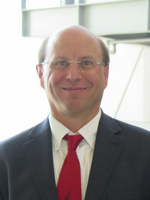
Bernd Rieger (born 1973) is a Professor at the Faculty of Applied Sciences of Delft University of Technology (TU Delft), Netherlands. He leads the Computational Imaging group within the Department of Imaging Physics (ImPhys). Appointed as Antoni van Leeuwenhoek full professor in 2017, he has established himself as a leading researcher in advanced microscopy techniques. His educational background includes an M.Sc. in physics from Technische Universität München (1999) and a Ph.D. in image processing and analysis from Delft University of Technology (2004). After completing his doctoral studies, he conducted postdoctoral research at the Max Planck Institute for Biophysical Chemistry in Göttingen, Germany. Rieger's research focuses on Computational Microscopy , which combines imaging physics and image processing specifically for light and electron microscopy applications in life sciences at the biomolecular level. His work spans optical nanoscopy, image processing algorithms, and electron microscopy techniques, with particular emphasis on improving resolution and developing novel imaging methodologies. The research has significant implications for understanding cellular structures and molecular interactions. Analysis of his recent publications reveals a strong focus on improving microscopy resolution techniques, developing image processing algorithms for microscopy data, and advancing super-resolution imaging methods. His work combines theoretical foundations with practical applications in biological imaging, particularly in the areas of structured illumination microscopy, DNA-PAINT, and Fourier analysis techniques for resolution assessment. ERC Consolidator Grant (2015) to investigate ways to further improve the resolution towards 1 nm in the field of optical nanoscopy Professor Rieger has successfully secured significant research funding, including the prestigious ERC Consolidator Grant. His research group collaborates extensively with other institutions and researchers across Europe. The group maintains strong connections with industry partners, particularly in the microscopy equipment sector, building on Rieger's earlier experience at FEI Electron Optics. The Rieger group operates advanced microscopy facilities at TU Delft, focusing on computational approaches to enhance imaging capabilities. The lab integrates physics-based modeling with sophisticated image processing techniques to push the boundaries of what's possible in optical and electron microscopy. Current research directions include 3D structured illumination microscopy, single-molecule localization techniques, and novel approaches to quantitative image analysis in biological contexts.