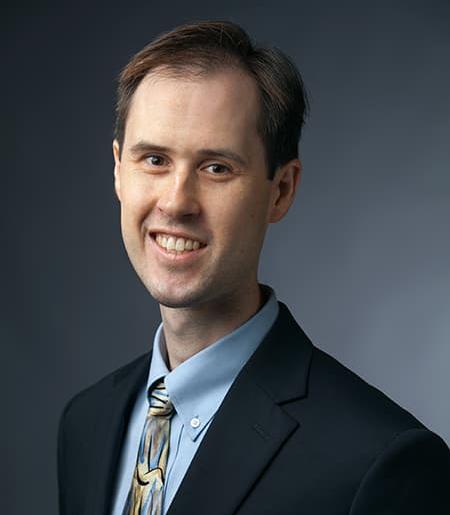
Carla Annink is a researcher affiliated with the Applied Stem Cell Technologies department at the University of Twente. Her work focuses on mineral-fluid interactions, wettability modification, and nano-engineered colloidal systems. Research interests span petroleum engineering , geochemistry , and nanotechnology , with applications in oil recovery, biosensor development, and surface engineering. Recent publications emphasize carbonate diagenesis and temperature-dependent material modifications. Key collaborations include researchers from the SPE Improved Oil Recovery Conference and interdisciplinary teams at the TechMed Centre. Her studies employ microscopic analysis and reservoir mimetic fluids to explore surface reconstruction and organic interactions.
Ludwik Gąsiorowski is a researcher at the University of Warsaw's Department of Comparative Invertebrate Zoology. His work focuses on evolutionary biology, invertebrate morphology, and developmental genetics. He leads projects such as 'Evolutionary perspective on irradiation resistance of stem cells' (SONATA NCN grant) and 'Elucidating ecological and developmental causes of asexual reproduction and colony formation in flatworms' (Polish Returns NAWA grant). His research interests include the evolution of animal body plans, Evo-Devo studies, and biodiversity of microscopic invertebrates. Notable projects explore flatworm regeneration mechanisms, Hox gene evolution in Spiralia, and the phylogenetic relationships of lophophorate groups like phoronids. Key publications span topics such as sensory organ evolution in flatworms, molecular analyses of nemertean brains, and comparative studies of excretory organs. His work combines experimental and morphological approaches to address fundamental questions in evolutionary biology. Grants: SONATA NCN (2024/55/D/NZ3/00555), NAWA (BPN/PPO/2023/1/00002) Advising: No formal advisees listed Labs/Teams: Active in the Comparative Invertebrate Zoology research group
Max Johnson Dugan is a Kenyon College Visiting Professor in Religious Studies, with a PhD from the University of Pennsylvania (2024). His work bridges Islamic material culture , affect theory , and digital humanities praxis. His research explores: Embodiment in Islamic traditions Urban halal consumption networks Religion-sport intersections Postcolonial affective dynamics Digital archival ethics Recent publications analyze Material Religion aesthetics, sporting infrastructure as communal discourse, and Cambridge University Press monographs. He co-authored the ISCC Oral History Project , documenting mosque development through ethnographic photography and community narratives.
Matthew Jorgenson, Ph.D., is an Assistant Professor in the Department of Microbiology and Immunology at the University of Arkansas for Medical Sciences (UAMS). His research focuses on bacterial surface glycans and their role in pathogenesis, particularly targeting undecaprenyl phosphate (Und-P) metabolism for novel antibacterial strategies. He earned his Ph.D. from The University of Iowa and completed postdoctoral training at UAMS. Education: Ph.D.: The University of Iowa Postdoctoral Fellowship: University of Arkansas for Medical Sciences Research Interests: Dr. Jorgenson's lab investigates bacterial cell surface structures, including glycans and peptidoglycan cell walls. Key projects include: Understanding Und-P distribution and metabolism Exploiting Und-P pathways for antibacterial therapy development Characterizing cell morphogenesis pathways critical for maintaining cell wall integrity His work combines genetic, biochemical, and microscopic approaches in Escherichia coli . Lab & Contact: Located in Biomed I, Room 511, the lab currently includes Emily Robbs (Ph.D. Student). Dr. Jorgenson is actively recruiting new students. Contact via email MAJorgenson@uams.edu .
Dr Justyna Miszkiewicz is an ARC Future Fellow at the University of Queensland's School of Social Science. Her research focuses on bioarchaeology, osteology, and dental histology, particularly examining skeletal microstructure to understand health, behavior, and social dynamics in past populations. She has conducted extensive studies on medieval English populations, island-dwelling vertebrates, and historical communities like the Otago Goldfields miners. Her work bridges biological anthropology and historical analysis, emphasizing interdisciplinary approaches. Key research interests include bone remodeling processes, paleopathological conditions, and the social determinants of skeletal health. She explores topics such as vitamin D deficiency in historical contexts, the impact of mobility on bone morphology, and the application of advanced imaging techniques in bioarchaeological studies. Miszkiewicz also investigates evolutionary adaptations in island species, using histological methods to analyze dwarf and giant mammals. Dr Miszkiewicz has published widely on bone microstructure variations, including studies on Neanderthal growth patterns, thalassemia in Southeast Asia, and medullary bone formation in birds. Her research methodologies emphasize open-access software and address challenges like taphonomic changes and diagenesis in bone preservation. Scientific Awards: ARC Future Fellow (2025) Her advisory role involves guiding Higher Degree by Research (HDR) students, with a focus on bioarchaeological and osteological research. She contributes to collaborative projects such as the SocioHealthLab and the UQ Bioarchaeology and Osteology Network (BONE), fostering interdisciplinary dialogue on health in historical and archaeological contexts. Miszkiewicz actively engages in lab-based research, including analyses at the Capricorn Caves and Grande Abrigo de Santana do Riacho. She also explores innovative educational approaches, such as online bioarchaeology modules for international adult learners, and has presented findings in venues like the Royal Society of Queensland proceedings.
Dr. Michael Nold is a researcher at ETH Zürich working within the Professorship for Transport Systems at the Institute for Transport Planning and Systems, Department of Civil, Environmental and Geomatic Engineering. He is also associated with the Center for Sustainable Future Mobility and maintains an active research profile with numerous publications and patents. His research focuses on critical areas of railway engineering and transportation systems: Technology assessment and future scenarios for transportation systems Automatic Train Operation (ATO), signaling, and capacity calibration Energy optimization for both supply and consumer aspects Vehicle-based simulations covering vehicle kinematics, operations, components, and energy Flying coupling techniques for dynamic train unit coupling and decoupling Safety systems for both rail and road transportation Dr. Nold has extensive professional experience in the rail industry across management, project leadership, innovation management, and engineering of multiple railway systems including brake systems, alignment, signaling, traction, and vehicle control technology. His work bridges theoretical research with practical applications through numerous granted patents and active involvement in major research projects. His publication record shows a strong emphasis on improving railway efficiency and sustainability. Key research trends include energy-efficient train control modeling, microscopic railway capacity assessment, train separation techniques at cruising speed, and power systems for future railways. His work often explores how detailed modeling of energy losses and vehicle dynamics can lead to significant energy savings in railway operations. Dr. Nold is actively involved in several significant research initiatives: eco 4.0: Traction based energy oriented real-time schedule optimization Flügeln 4.x: Dynamic train unit coupling and decoupling at cruising speed Rail 2050: Technological development of the railway system toward 2050 RailPower: Power and energy solutions for future railways Verkehr'45: Rail and road expansion projects review and prioritization
Associate Professor David Thomson is affiliated with the School of Dentistry at The University of Queensland, where he serves as Integrity Officer and Discipline Lead (Prosthodontics). His academic career spans over four decades, with a focus on dental biomaterials, dentin structure, and prosthodontic techniques. He holds a Master's degree in Dentistry from The University of Queensland (1976). His research interests revolve around the structural and material properties of dentin, dental casting alloys, and biomaterials for clinical applications. Recent studies investigate age-related changes in dentin matrix architecture and the effects of anatomical location on resin adaptation. Earlier work explored non-precious alloys for porcelain veneers and dental implant salvage techniques. Thomson’s publications reflect a strong interdisciplinary approach, combining materials science with clinical dentistry. His work has been featured in journals like Journal of Structural Biology , Archives of Oral Biology , and European Journal of Oral Sciences . He contributes to the Centre for Orofacial Regeneration, Reconstruction and Rehabilitation (COR3), advancing translational research in dentistry. Though no formal awards are listed, his sustained academic output underscores his expertise in dental biomaterials and prosthodontics.
Frank U Alber is a Professor in the Department of Microbiology, Immunology, and Molecular Genetics (MIMG) at the UCLA School of Medicine, where he leads a research program focused on spatial genome organization and its functional implications. His work bridges molecular biology, imaging technology, and computational analysis to understand fundamental cellular processes. Education: PhD from ETH Zürich, Zürich, Switzerland Postdoctoral training at Rockefeller University, New York Postdoctoral training at UCSF, San Francisco Dr. Alber's research investigates how spatial organization of the genome governs gene expression, DNA replication, and cell differentiation. His laboratory integrates genomics and advanced microscopy data to understand chromosome folding principles and the allocation of genomic regions relative to nuclear bodies. A significant portion of his work focuses on developing novel techniques for mapping proteome spatial distributions at the molecular level within cell cytoplasm, enabling detailed examination of subcellular compartment architecture and dynamic changes during cellular regulation. Scientific Recognition: PEW Biomedical Research Scholar (2009-2012) Sloan Research Fellowship (2009-2011) Beckman Young Investigator Award (2012-2016) NSF Career Development Award (2012-2017) Dr. Alber maintains an active research program with substantial external funding and extensive collaborations across UCLA and with institutions including UCSF. His laboratory has established significant expertise in electron microscope tomography and computational modeling of chromosome structures. Through his mentorship, he has trained numerous researchers in interdisciplinary approaches that combine wet-lab techniques with computational analysis. The research environment in Dr. Alber's laboratory emphasizes innovation in imaging technology and data integration. His team works at the intersection of multiple disciplines, developing methods to visualize and analyze the three-dimensional architecture of the nucleus and cytoplasm at unprecedented resolution, contributing to our understanding of how spatial organization influences fundamental biological processes.
Youn Jue (Eunice) Bae is an Assistant Professor in the Department of Chemistry and Chemical Biology at Cornell University's College of Arts and Sciences. Her research group develops advanced spectroscopic tools combining optical and microwave techniques to investigate spin dynamics with high temporal and spatial resolution. Her primary research investigates 2D magnetic materials with projects on: creating quantum transducers based on magnetic semiconductors; exploring spin-phonon/magnon/exciton interactions to drive magnetic phase transitions; utilizing symmetry breaking for spatial/temporal magnetic switching control. This work probes microscopic spin interactions (exchange, dipolar, spin-orbit) through phonons, magnons, and excitons, with emphasis on chemical bonding/antibonding characteristics influencing spin interactions. Publications focus on exciton-magnon coupling in layered semiconductors, magnetoelastic effects, and nonlinear optomagnetic phenomena. Recent advancements demonstrate tunable hybrid magnon-exciton systems, coherent control mechanisms, and materials design principles for quantum applications. Her educational background includes postdoctoral training at Columbia University, PhD from Northwestern University, and BS from University of California, Berkeley.
Gregory Fuchs is an Associate Professor of Applied and Engineering Physics at Cornell University's College of Engineering. He leads the Fuchs Group focusing on quantum information science and spintronics, studying spin and optical degrees of freedom in solid-state materials. His research spans quantum-enhanced sensors, quantum networks, and hybrid quantum systems combining superconducting circuits with magnetic materials. Research interests include quantum control of defect centers in diamond and wide band-gap materials, magnon-photon interactions in ferrimagnetic structures, and developing advanced magnetic microscopy techniques. His work bridges condensed matter physics, quantum optics, and nanotechnology. Recent publications demonstrate advances in quantum sensing, magnonic systems, and low-loss quantum devices, with applications spanning quantum computing, nanoscale imaging, and quantum materials characterization. His research consistently explores novel quantum phenomena at the intersection of photonics, mechanics, and spin physics. Awards and honors: Cornell Engineering Research Excellence Award (2020) Presidential Early Career Award for Scientists and Engineers (2013) Early Faculty Career Award from NSF (2013) Early Career Award from DOE (2014) Rebecca Q. and James C. Morgan Sesquicentennial Faculty Fellow (2012) The Fuchs Lab develops unique instrumentation including a time-resolved magneto-thermal microscope and scanning NV center microscope for nanoscale magnetic imaging. Current projects investigate quantum control of spins in novel materials systems and hybrid quantum architectures for information processing.
Gazala Ameen is an Assistant Professor of Plant-Pathogen Interactions in the Department of Agronomy, Horticulture and Plant Science at South Dakota State University (SDSU). She holds a Ph.D. and M.S. in Plant Pathology from North Dakota State University, with a dissertation focusing on resistance genes against barley spot blotch. Her research emphasizes understanding plant-pathogen interactions, particularly fungal and bacterial diseases affecting crops like wheat, barley, and sugar beet. Key areas include genetic resistance mechanisms, programmed cell death, and fungicide resistance dynamics. Education: Ph.D. in Plant Pathology, North Dakota State University (2019) M.S. in Plant Pathology, North Dakota State University (2014) Research Interests: Dr. Ameen investigates host-pathogen interactions, focusing on identifying resistance genes (e.g., rcs5), studying necrotrophic fungal pathogens, and developing strategies to combat diseases like Fusarium head blight, stem rust, and Cercospora leaf spot. She employs advanced techniques like RNAscope FISH for spatial gene expression analysis and collaborates on initiatives such as the Plant Cell Atlas. Her work bridges basic research and applied agriculture, targeting sustainable disease management through genetics, microbiome utilization, and precision agriculture. Grants & Funding: Principal Investigator: South Dakota Wheat Commission grants ($50,000–$104,824) for wheat disease resilience and FHB screening. Co-PI: NSF Building Research Capacity in Biology grant ($494,829) for wall-associated kinase immunity studies. Lead on South Dakota Soybean Council projects addressing white mold and foliar diseases. Awards & Recognition: Early Career Researchers Award (NSF, 2020) Bayer Diversity Initiative Scholar (2020) Featured on Dakota Farm Talk and South Dakota Public Broadcasting (2022–2024) Teaching & Mentoring: Teaches courses like Principles of Plant Pathology and Advanced Plant Pathology, advises undergraduate research, and mentors capstone projects. She balances academic instruction with hands-on lab experiences and honors credit programs. Labs & Collaborations: Leads research on barley immunity, soil microbiome impacts on crop health, and robotics for disease surveillance. Collaborates with institutions like Washington State University and SDSU’s Plant Science teams.
Thomas Waigh is a Senior Lecturer in the Biological Physics Group at The University of Manchester, affiliated with the Photon Science Institute. His research integrates experimental and computational methods to study material dynamics, biofilm behavior, and complex fluid systems. He collaborates on interdisciplinary projects, such as analyzing surfactant gels and developing imaging techniques for in-line processing. Waigh has been a Co-Investigator on multiple research initiatives, including those focused on nanocrystalline materials and biomedical applications. His work emphasizes understanding surface interactions and structural changes in materials at microscopic levels. He utilizes advanced equipment, including ultra-fast microscopes and synchrotron-based instruments, to investigate phenomena like viscoelasticity and microrheology. Waigh’s contributions also extend to developing novel methods for characterizing opaque fluids and bacterial biofilms, with applications in medicine and engineering. Waigh has no listed scientific awards but maintains active roles in academic and research communities, contributing to projects and equipment development. His advising and grants involve collaborations across departments and institutions, as seen in his Co-Investigator roles in funded initiatives. Key research platforms include the Biological Physics Group and the Photon Science Institute, where he helps drive cutting-edge instrumentation and experimental approaches.
Dr. Erika Marin-Spiotta is a Professor in the Department of Geography at the University of Wisconsin–Madison. Her research focuses on biogeochemical processes in ecosystems, particularly how human and climate-driven disturbances impact carbon and nutrient dynamics across spatial and temporal scales. She leads the Marin-Spiotta BiogeoLab, investigating interactions between biodiversity and ecosystem function using field and laboratory geochemical techniques. Her work spans from microscopic mineral-organic matter interactions to regional soil carbon inventories. Dr. Marin-Spiotta has a Ph.D. from UC Berkeley and a B.S. from Stanford University. Her teaching includes courses like GEOG 120 (Earth System Science), GEOG 526 (Human Transformations of Earth Surface Processes), and GEOG 338 (Environmental Biogeography). She emphasizes inclusive mentorship and has developed training programs for safe, diverse fieldwork environments. Recent research highlights include soil carbon dynamics in buried paleosols, impacts of fire on Arctic tundra, and advancing equity in geoscience education through critical pedagogy. Her lab’s research is supported by grants addressing anthropogenic influences on the Earth system, including projects on soil hydrology in loess tablelands and microbial responses to root inputs. She actively promotes DEI initiatives in academia, such as the ADVANCEGeo Partnership’s bystander intervention training.
Stephen Robert Euston is a Professor at Heriot-Watt University, affiliated with the School of Engineering & Physical Sciences and the Institute of Biological Chemistry, Biophysics and Bioengineering. His research focuses on food proteins' functional properties, combining computational modeling with experimental approaches. He holds a BSc and PhD from the University of Leeds and has held positions at institutions including the New Zealand Dairy Research Institute and Copenhagen University. Research interests span protein adsorption at fluid interfaces, denaturation, aggregation, and gelation. Current projects include molecular basis of fat replacement, bile salt surface chemistry, and functional properties of date seed proteins. His work aligns with UN Sustainable Development Goals related to sustainable food systems. Recent publications explore flavonoid-protein interactions, rapeseed protein emulsifiers, and vegan cheese fat replacement. He manages advanced equipment like the Bohlin Rheometer and Confocal Microscope. Euston contributes to editorial boards of journals like EFB Bioeconomy and Frontiers in Sustainable Food Systems .
Daniel Jacob Tward serves as an Assistant Professor in both the Department of Computational Medicine and Department of Neurology at the David Geffen School of Medicine, University of California Los Angeles . His research bridges computational mathematics with neuroscience and medical imaging, focusing on developing advanced algorithms for brain mapping and disease analysis. His primary research interests include computational anatomy , neuroimaging , and medical image analysis , with specific expertise in diffeomorphic mapping techniques. Tward's work enables precise alignment of brain structures across different imaging modalities and scales, from microscopic histology to whole-brain MRI. His methodologies are particularly applied to Alzheimer's disease research , where he analyzes neurodegeneration patterns and tau pathology distribution. Analysis of his recent publications reveals a clear progression toward multiscale integration - connecting molecular, cellular, and tissue-level data through computational frameworks. His 2023-2025 work shows increasing emphasis on spatial transcriptomics integration with imaging data, deep learning applications for image registration, and population-level analyses of neurodegenerative diseases. The BRAIN Initiative Cell Census Network collaboration represents his commitment to open neuroscience infrastructure. Tward actively contributes to major research consortia including the Alzheimer's Disease Neuroimaging Initiative (ADNI) and the BRAIN Initiative Cell Census Network . His technical developments in diffeomorphic mapping form the foundation for several computational anatomy tools used in both basic neuroscience and clinical research contexts. His laboratory focuses on developing the Computational Anatomy Gateway - a framework for processing neuroimaging data across multiple scales. Current projects involve integrating spatial transcriptomics with histology, creating 3D digital brain atlases , and developing predictive models for neurodegenerative disease progression using longitudinal imaging data.



 Bae_2.png)