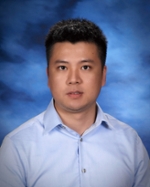
Dr. Alex Bigazzi is an Associate Professor and Associate Head (Undergraduate Program) in the Department of Civil Engineering at the University of British Columbia (UBC), with a joint appointment in the School of Community and Regional Planning. He leads the REACT Lab, focusing on active transportation, micromobility, and sustainable infrastructure design. His research emphasizes the intersection of physics, physiology, and behavior in active travel, particularly for pedestrians and cyclists, and addresses emissions reduction and equitable urban mobility. Bigazzi holds a B.M. in Jazz Saxophone from the University of Miami and a Ph.D. in Civil Engineering from Portland State University. His career includes academic and practical contributions, such as founding the REACT Lab and leading projects on e-bike incentives, air pollution exposure, and infrastructure design. His work has earned awards like the 2024 Wall Legacy Award for inclusive transport design and the 2023 Climate Action Award. He teaches courses on pedestrian/bicycle facility design and capstone projects, mentoring students through UBC’s Civil Engineering programs.
Shauna Brail is Professor and Director at the Institute for Management & Innovation, University of Toronto Mississauga, with cross-appointments at the Munk School of Global Affairs & Public Policy. As an economic geographer and urban planner, her research examines urban transformation through economic, social, and technological change, particularly focusing on platform economy impacts, mobility innovation, and governance shifts in 21st-century cities. Education: PhD in Geography (University of Toronto), MA in Urban Planning (University of British Columbia), BA in Urban Studies/Geography (University of Toronto). Leadership Roles: Former Associate Director of Mobility Network, Director of Urban Studies Program, Associate Director of Partnerships & Outreach at School of Cities, and Interim Director of Master of Urban Innovation. Her work appears in top journals across geography, urban planning, and urban studies . Recent publications analyze pandemic impacts on cities, platform economy regulation, public housing finance models, and autonomous vehicle governance. She advises governments and civic organizations on housing, transportation, and digital platform policy while serving on editorial boards for Applied Geography , Progress in Economic Geography , and Canadian Geographies . Academic partnerships include collaborations with researchers like Tara Vinodrai, Ben Donald, and international scholars. Her current projects examine post-pandemic urban recovery, mobility-as-a-service business models, and equitable transportation technology implementation across Canadian cities.
Kevin Manaugh is an Associate Professor at McGill University, specializing in Urban Planning with a focus on sustainable transportation and spatial justice. His research examines how decision-making processes in urban development balance environmental, economic, and social equity goals, particularly through transport systems. He holds a PhD in Urban Planning from McGill University (2013). His key research interests include integrating social equity into land use policies, analyzing accessibility impacts on socioeconomically diverse populations, and studying behavior change related to sustainable transportation. Current projects explore equitable transit accessibility, responses to local mobility policies, and health/well-being effects of sustainable transport choices. Manaugh has published extensively on transportation equity, urban form analysis, and GIS applications. His work bridges theoretical frameworks with practical policy implementation, emphasizing participatory approaches to urban planning. Notable contributions include studies on pandemic street reallocation equity and cycling infrastructure prioritization strategies. His research has been supported by interdisciplinary collaborations and applied to Canadian urban contexts. Despite prolific output, Manaugh maintains an active engagement with public discourse on urban mobility challenges and equitable urban futures.
Laverne Jacobs, PhD, is a Full Professor at the University of Windsor's Faculty of Law where she holds the Research Chair in Disability Equality & Administrative Justice. She serves as the founder and Director of the Law, Disability & Social Change Project, a research and public policy center dedicated to fostering inclusive communities. Notably, Professor Jacobs was elected to the United Nations Committee on the Rights of Persons with Disabilities in 2022, becoming the first Canadian to serve on this UN Human Rights Treaty Body. She also serves as Co-Director of the Disability Rights Working Group at Berkeley Law's Center for Comparative Equality & Anti-Discrimination Law and previously held the position of Associate Dean (Research & Graduate Studies) for the Faculty of Law from 2018-2021. B.A. (Honours), McGill University, 1994 LL.B., McGill University, 1999 B.C.L., McGill University, 1999 Ph.D., Osgoode Hall Law School, York University, 2009 Professor Jacobs' research sits at the intersection of disability equality law and administrative law and justice, characterized by an interest in the everyday work of the administrative justice system and the lived experiences of people who use it, particularly persons with disabilities. Her work spans disability rights, administrative justice, human rights law, socio-legal theory, and empirical research methodologies. She has made significant contributions to understanding accessibility legislation, transportation inequality, post-secondary education access for students with disabilities, and the implementation of disability equality principles in administrative decision-making. Her scholarship bridges theoretical legal frameworks with practical applications, emphasizing citizen participation in policy development and the importance of inclusive design in legal systems. Analysis of Professor Jacobs' recent publications reveals a consistent focus on how administrative law can better serve persons with disabilities through inclusive design and accessible processes. Her work demonstrates growing attention to intersectional issues, particularly how women with disabilities experience administrative systems, and increasingly examines the implementation challenges of accessibility legislation across Canadian jurisdictions. She frequently employs empirical research methods to ground her legal analysis in real-world experiences of marginalized communities. Scientific Awards and Honors: Canadian Bar Association Touchstone Award (2021) Canadian Association of Law Teachers (CALT) Academic Excellence Award (2022) Hummingbird Award from the Disabled Women's Network of Canada (DaWN), 2022 Election to the United Nations Committee on the Rights of Persons with Disabilities (2022) Professor Jacobs has held significant leadership roles including service on the Board of Directors of the Income Security Advocacy Centre and the Canadian Institute for the Administration of Justice. Through her role as Director of the Law, Disability & Social Change Project, she has secured research funding to support policy-relevant scholarship on disability rights and administrative justice. Her work has influenced accessibility legislation development across Canada, particularly through her annotated version of the Accessible Canada Act. She provides expert consultation to government bodies and international organizations on disability rights implementation. The Law, Disability & Social Change Project serves as Professor Jacobs' primary research hub, bringing together interdisciplinary scholars, disability advocates, and policy makers to develop practical solutions for creating more inclusive legal and administrative systems. The project has produced numerous research reports, policy briefs, and public resources that translate academic research into actionable recommendations for improving accessibility and disability equality in Canadian society.
Dr. Li Wan is an Associate Professor in Urban Planning and Development at the Department of Land Economy, University of Cambridge, and a Fellow of Gonville and Caius College. He serves as Director for the MPhil in Planning, Growth and Regeneration and is a co-investigator of the Centre for Smart Infrastructure and Construction. Dr. Wan is also a Trustee of the IJURR Foundation and leads a research group focused on understanding urban land and transport development through applied modeling and data analytics. Dr. Wan holds a BArch, MPhil, and PhD from the University of Cambridge. Prior to joining Land Economy, he worked in Architecture and Engineering Departments, giving him a highly interdisciplinary perspective. His research focuses on spatial economic modeling of urban land use and transport systems, with recent interests including strategic planning at city/regional levels, impact studies of flexible working, micromobility, and electric vehicles. Dr. Wan's research group has produced significant work in city digital twins, as evidenced by his 2023 book Digital Twins for Smart Cities: Conceptualisation, challenges and practices . His publications span urban analytics, transport emissions, spatial equilibrium modeling, and economic geography, demonstrating the interdisciplinary nature of his work. Recent research trends show increasing focus on post-pandemic urban dynamics, digital governance, and sustainable mobility solutions. His research group has secured funding from initiatives like AI@Cam for projects examining how local authorities use AI for urban decision-making. Dr. Wan actively supervises PhD and MPhil students, with his group comprising researchers working on diverse urban topics from land-use efficiency to micromobility impacts. As an educator, Dr. Wan teaches courses including Tripos Paper 10 - The Built Environment, PGR01 - Urban and Environmental Planning, PGR02 - Urban and Housing Policy, PGR05 - Place-based Policy, and RM03 – Spatial Analysis and Modelling. His group has presented at major international conferences including CUPUM and ICML, reflecting his active engagement in the academic community.
Niels van Oort is an Associate Professor of Public Transport at Delft University of Technology (TU Delft), co-director of the Smart Public Transport Lab, and affiliated with the Department of Transport & Planning within the Faculty of Civil Engineering and Geosciences. His work focuses on public transport planning, data-driven design, and societal impacts including inclusiveness, land-use, and sustainability. He holds a dual role as a part-time consultant via his company Van Oort Mobility Consultancy since 2020. Education: MSc in Public Transport from TU Delft (2003), PhD in Service Reliability in Public Transport (2011). Professional experience includes roles at HTM (public transport operator), MIT (2009), and Goudappel Coffeng consultants (2007–2012). Transitioned to academia as a part-time assistant professor at TU Delft in 2012, becoming full-time in 2018. Research emphasizes network optimization, timetable reliability, micromobility, and first/last mile solutions. Key areas include pandemic impacts on transport behavior, digital inequality in mobility access, and sustainable transport policies. Supervises PhD students on integrated networks and passenger behavior. Teaching includes courses on public transport operations, advanced modelling, and transport networks. Active in academic publishing and conferences, with over 20 peer-reviewed articles since 2010. Engaged in interdisciplinary labs like SUM Lab (Smart Urban Mobility) and contributes to public discourse through media and consultancy. Labs/Teams: Smart Public Transport Lab (co-director), SUM Lab, and Delft Transport Modelling Group. Grants and projects focus on data-driven solutions for public transport efficiency and equity.
Anna Grigolon is an Assistant Professor at the University of Twente , Netherlands, affiliated with the Transport Engineering and Management Research Group . Her research focuses on sustainable urban mobility , user-centric transport solutions , and travel behavior analysis using tools like discrete choice modeling , spatial analysis , and social psychology theories . Research Interests : Sustainable Urban Mobility Accessibility Modeling Travel Behavior Discrete Choice and Latent Class Modeling Spatial Analysis and GIS Shared Micromobility and Mobility Hubs Equity in Transport Planning Article Trends : Anna’s recent work (2025–2024) emphasizes mobility justice , 15-minute city transitions, and equity in transport access , particularly for marginalized communities like São Paulo favelas. She integrates digital tools (e.g., serious games, kiosks) and space-time metrics to evaluate mobility solutions. Projects : She currently leads the SmartHubs project and contributes to DREAMS and R-map , focusing on smart, equitable mobility systems in Europe and Saudi Arabia.
Agnieszka Leszczynski is an Associate Professor in the Department of Geography and Environment at Western University. Her research focuses on digital geographies, platform urbanism, and the intersections of technology with urban development. She leads a SSHRC-funded project examining the visual aesthetics of urban platformization across Canada, Poland, and South Africa. Additional projects include studying digital experimentation in small Canadian cities and analyzing spatial relationships between urban platforms and gentrification. She teaches courses on GIScience, digital technology, and spatial research methods. Leszczynski actively supervises graduate students exploring topics like smart cities, platform urbanism, and spatial equity. Her work bridges theoretical and applied GIScience with critical urban studies. Education details are not explicitly listed in the provided text, but her academic contributions include over two decades of research output, including co-editing Digital Geographies (SAGE, 2019) and publishing widely in leading journals. She collaborates internationally on projects like the Esri Canada GIS Centre of Excellence and engages with equity, diversity, and decolonization initiatives in academia. Her research methodologies emphasize digital-visual approaches, glitch studies, and critical analyses of spatial technologies. Recent work explores how cities use digital aesthetics to achieve 'world-class' status, while other projects assess micromobility equity and conservation mapping in Patagonia. Leszczynski’s teaching portfolio includes graduate supervision on topics such as dockless micromobility systems and smart home analysis. Key funding sources include SSHRC grants supporting comparative urban studies and technology experimentation. She mentors students through Western’s Geography People’s Society and collaborates with interdisciplinary teams on spatial equity and platform urbanism challenges.
Suining He is an Assistant Professor at the University of Connecticut (UConn)'s School of Computing, leading the Ubiquitous and Urban Computing Lab since 2019. Previously, he was a postdoctoral research fellow at the University of Michigan's Real-Time Computing Lab (2016–2019). He holds a Ph.D. in Computer Science from the Hong Kong University of Science and Technology (2016) and a B.Eng. in Mechanical Design from Huazhong University of Science and Technology (2012). His research focuses on Cyber-Physical Systems (CPS), Smart & Connected Communities, Human-Centered Computing, and Urban Computing Cyberinfrastructure, with emphasis on mobility, equity, and AI-driven solutions. He has received prestigious awards including the NSF CAREER Award (2023), Google Research Scholar Program Award (2021), and recognition as a Stanford Top 2% Scientist (2020–2024). His work spans interdisciplinary grants from NSF, USDA, Google, NVIDIA, and industry partners. Recent publications explore autonomous driving simulation, equity-aware mobility prediction, and urban crowd activity modeling. Teaching excellence is reflected in his 2020 UConn Provost Award. He advises on reinforcement learning, CPS, and mobile computing, with openings for 2025/2026 PhD students. His lab collaborates on socially-conscious AI, privacy-preserving learning, and location-based services with industrial impact.
Prof. Karst Geurs is a Full Professor of Transport Planning at the Department of Civil Engineering and Management, Faculty of Engineering Technology, University of Twente. He chairs the examination board of Civil Engineering and Management and serves as department portfolioholder for education. His research focuses on accessibility analysis, land-use-transport interactions, sustainable mobility, and transport policy evaluation. Geurs holds a PhD (cum laude) from Utrecht University (2006) and has led major projects like the SmartHubs initiative. He is currently vice-chair of NECTAR (Network of European Communications and Transport Activities Research), previously chair from 2014–2024, and served as Editor-in-Chief of the European Transport Research Review (2017–2023). His work addresses cycling safety, mobility hubs, and urban resilience. Key contributions include studies on shared mobility, 15-minute city concepts, and post-pandemic transport trends. He has published over 200 articles and datasets, including work on accessibility equity in São Paulo favelas. Awards include the Gouden RAI Wiel (2015). Geurs actively engages in policy dialogues, media appearances (e.g., Radio 1 interviews), and international conferences. Research interests span transport innovation, spatial equity, and smart infrastructure. Recent projects explore digital mobility skills, teleworking impacts, and cycling safety metrics. His work integrates interdisciplinary approaches to address urban challenges, emphasizing sustainable and equitable mobility solutions.
Janille Smith-Colin is the J. Lindsay Embrey Trustee Assistant Professor of Civil & Environmental Engineering at Southern Methodist University (SMU), where she leads the Smith-Colin Research Group. As a licensed Professional Engineer (P.E.) and Jr. Editor for the ASCE Journal of Infrastructure Systems, her work bridges infrastructure management with social equity. She serves on the Transportation Research Board Standing Committee on Transportation Planning Analysis and Application (AEP15). Her educational background includes: Ph.D. in Civil and Environmental Engineering from Georgia Institute of Technology Master of Science in Civil and Environmental Engineering from University of Wisconsin-Madison Bachelor of Arts in Engineering Studies from Lafayette College Smith-Colin's research centers on sociotechnical systems modeling to advance equity, sustainability, and resilience in transportation infrastructure. She employs system dynamics and spatial analysis to examine transportation as a social determinant of health, with emphasis on underserved communities. Her engineering education work integrates community-based participatory research and design thinking to develop inclusive pedagogical approaches. Recent publications reveal a strong trend toward data-driven equity assessment, utilizing social media mining, mobile trajectory data, and spatial analytics to investigate infrastructure deserts, micromobility access, and health impacts. She pioneers social return on investment (SROI) frameworks for transportation solutions, connecting civil engineering with public health and disaster resilience through interdisciplinary methodologies. Scientific recognition includes: Best Poster Award, International Conference on Transportation & Development (2023) Golden Mustang Teaching Award, SMU (2023) National Academies Gulf Coast Research Program Early Career Fellowship (2021) ASCE ExCEED Teaching Fellow (2019) Her research is funded by the National Academies of Sciences, Engineering and Medicine, with grants supporting equity-focused transportation projects. While student advisees aren't explicitly listed, her community-based research approach indicates active mentorship in solving civil engineering challenges for marginalized groups. She also contributes to transportation policy through regional collaborations. The Smith-Colin Research Group develops evidence-based tools for infrastructure equity, conducting spatial analysis of transportation systems and health outcomes. Current projects involve system dynamics modeling for social sustainability, Twitter-based crisis response monitoring, and partnerships with Dallas-area agencies to map infrastructure deficiencies and mobility barriers.
John E. Taylor is the Frederick Law Olmsted Professor and Associate Chair for Faculty Development and Research Innovation at the Georgia Institute of Technology's School of Civil and Environmental Engineering within the College of Engineering. His research focuses on the intersection of human and engineered networks, with particular emphasis on creating resilient infrastructure systems that serve society's needs while creating more livable communities. Taylor's research interests span multiple domains including Smart City Digital Twins , Urban Infrastructure Resilience , Network Dynamics , and Building-Occupant Interaction . His work examines how human behavior, infrastructure systems, and environmental factors interact during normal operations and extreme events. He has developed innovative approaches to understanding urban systems through the lens of network theory and computational modeling. His publication record demonstrates consistent contributions to the fields of urban analytics and infrastructure resilience, with a recent focus on digital twin technologies for urban systems. Taylor's work shows a clear trajectory toward increasingly sophisticated integration of AI, network science, and civil infrastructure engineering to address complex urban challenges. His research has particular relevance for cities facing climate change impacts and seeking to build more equitable and resilient communities. Taylor leads the Network Dynamics Lab at Georgia Tech, where he mentors PhD students and postdoctoral researchers. His lab has produced significant work on human-infrastructure interaction, particularly during disasters and extreme events. The lab's research combines computational modeling, data analytics, and field studies to understand and improve urban systems. His work has been applied to real-world challenges including river emergency response systems, urban heat exposure forecasting, and disaster response optimization. Taylor has collaborated with city officials and agencies to implement systems that have demonstrable community benefits, such as the AI-enabled camera system for drowning prevention on the Chattahoochee River and crime reduction systems using mobile cameras guided by AI algorithms.
Prof. Dr. Katja Rösler is a Professor of Automotive Engineering at the Institute of Mechanical Engineering, Ruhr West University of Applied Sciences since March 2012. Her career spans academic research and industrial development with key positions at TU Braunschweig, Volkswagen AG, and Fraunhofer Institute. Education: Industrial Mathematics degree completed under standard period Doctorate: Engineering (Driver Modeling) from TU Braunschweig, 2008 Her research focuses on automotive engineering with special emphasis on modeling/simulation, vehicle dynamics, driver assistance systems, accident research, alternative drives, and mobility concepts. She actively combines simulation with experimental verification and has significant involvement in Formula Student projects. Recent publications highlight her work in intelligent mobility systems (2018-2020), with particular attention to electromobility, accessibility solutions for elderly/disabled populations, and micromobility analysis. Earlier works established her expertise in driver modeling, vehicle measurement technology, and simulation-experiment correlation. Labs: Automotive Engineering Lab Teaching: Mechanics (Statics, Strength of Materials, Dynamics), Vehicle Dynamics, Driver Assistance Systems
Guimu Guo is an Assistant Professor in the Department of Computer Science at Rowan University's College of Science & Mathematics. His research focuses on parallel and distributed computing techniques for large-scale graph mining problems, with applications in bioinformatics and transportation engineering. Ph.D. in Computer Science from University of Alabama at Birmingham M.Sc. in Computer Science from Tongji University Dr. Guo has published extensively in top-tier venues like VLDB, ICDE, and IEEE BigData. His work spans graph mining algorithms, parallel computing, and interdisciplinary applications in transportation and genomics. He actively mentors PhD and Master's students, offering fully funded positions. Key research trends include: Advancing GPU-accelerated graph decomposition techniques Developing distributed frameworks for subgraph querying and task concurrency Exploring parallel algorithms for frequent pattern mining and clique-like subgraphs Scientific Recognition: NSF CRII Award UAB Outstanding PhD Student Award Alabama GRSP Awards (Rounds 15 & 16) Teaching spans from foundational object-oriented programming to advanced graduate courses in parallel programming. His lab group has produced significant contributions to subgraph mining, transportation simulation, and genome assembly systems.
Dr. Ioannis Kaparias is an Associate Professor in Transport Engineering at the University of Southampton, affiliated with the Transportation Research Group (TRG). He holds a Master of Engineering from Imperial College London and a PhD from the same institution. His academic career includes roles at City, University of London, and postdoctoral research at Imperial College. He is a Fellow of Advance HE, a member of the Chartered Institute of Highways and Transportation (CIHT), and serves as Deputy Editor-in-Chief of the IET Intelligent Transport Systems journal. Education: MEng in Civil Engineering, Imperial College London (2004) PhD in Transport Engineering, Imperial College London (2008) Postdoctoral Researcher, Imperial College London (2008–2012) Research Interests: Efficient, safe, and sustainable land transport systems Highway and traffic management, including real-time routing and network reliability Active travel modes (cycling/pedestrian infrastructure) Public transport operations and optimization New transport technologies (CAVs, MaaS, EVs) Land use-transport interaction models Teaching: Highway & Traffic Engineering modules at Southampton Doctoral Programme Director (Training) in the School of Engineering Past roles include teaching at Imperial College London, City University London, and the University of East London External Roles: Member of US Transportation Research Board committees (Pedestrians/ACH10 and Human Factors/ACH40) Independent expert for the European Commission Speaker at international conferences (e.g., 'To share or not to share space? A very British tale', 2023)








.jpeg?h=700&iar=0&w=700&hash=ECBB86D790E7934E1AF1CA57FF156948)