
Mostafa Ardakani serves as an Associate Professor in the Department of Electrical and Computer Engineering at the University of Utah's College of Engineering. His academic journey includes an Assistant Professor position from 2016-2022 before his promotion to Associate Professor in 2022. Ardakani earned his PhD in Energy Engineering from The Pennsylvania State University in 2013, following MS and BS degrees in Electrical Engineering from the University of Tehran in 2008 and 2006 respectively. His research interests span power system optimization, transmission system operation, electricity markets, energy and environmental economics and policy, and energy transition. Ardakani's work focuses particularly on grid-enhancing technologies and their role in facilitating renewable energy integration and decarbonization. His interdisciplinary approach combines power engineering with operations research, economics, and public policy to address critical energy transition challenges. Ardakani's publication record demonstrates consistent output in high-impact energy journals, with 12 publications between 2022-2025. His work shows a clear trajectory toward market design for grid-enhancing technologies, decarbonization policy analysis, and computational methods for power system optimization. A significant portion of his recent work addresses practical implementation challenges for grid-enhancing technologies within existing regulatory frameworks. His teaching portfolio includes Power Electronics Fundamentals, Thesis Research for PhD students, Special Topics courses, and Undergraduate Research supervision. Ardakani actively mentors graduate students through thesis research while developing specialized knowledge in power systems and energy markets. As a principal investigator, Ardakani manages multiple significant research grants including projects related to rural electrification (ENERGIZING DINETAH), microgrid solutions for Navajo Nation communities (MICROGRID-KAYENTA), deregulated markets for flexible transmission, and power infrastructure resilience. These grants, primarily funded by NSF and ARPA-E, reflect his focus on practical energy solutions with real-world implementation potential.
جستجوی استاد راهنمای دانشگاهی
برای مسیر پژوهشیتان، استاد راهنما، استاد دانشگاه و پژوهشگر مناسب را پیدا کنید و با آنها ارتباط بگیرید.
نمایش ۷۳۶-۷۵۰ از ۱٬۳۲۲ استاد راهنما
اطلاعات پروفایلها از صفحات عمومی دانشگاهها گرفته شده و ممکن است بهروز نباشد.
Haroldo Hattoriمشاهده پروفایل
مدرس ارشد
Dr. Haroldo Hattori is a Senior Lecturer at the School of Engineering and Information Technology, University of New South Wales (UNSW) Canberra campus, located at the Australian Defence Force Academy. His research focuses on advanced photonics technologies with applications in optoelectronics, semiconductor devices, and optical communications. Dr. Hattori's research interests span Micro and Nano-photonics, Semiconductor and fibre lasers, Optical fibres, Opto-electronics, and Optical communications. His work has significantly contributed to the development of novel photodetector technologies, plasmonic devices, and nanophotonic systems. He has published extensively in high-impact journals, with recent work focusing on advanced photodetectors using novel materials like silicon carbide, transition metal carbides, and 2D materials. His recent publications demonstrate a strong trend toward developing advanced photodetector technologies using novel materials systems, including refractory ceramics, transition metal compounds, and 2D materials. His research bridges fundamental nanophotonics with practical applications in sensing, communications, and energy conversion. The work spans multiple subfields including strong light-matter coupling, near-field thermal radiation, and hybrid organic-inorganic optoelectronic devices. Senior Member, The Institute of Electrical and Electronics Engineers (IEEE) Member, Engineers Australia (EA) Senior Member, Optical Society of America (OSA) Member, Phi Kappa Phi Honour Society Member, Eta Kappa Nu Electrical Engineering Honour Society Dr. Hattori has been actively involved in mentoring students and securing research funding for advanced photonics projects. His work on photodetectors, plasmonic nanostructures, and thermal radiation has attracted significant research support. He collaborates with researchers across Australia and internationally, contributing to the advancement of nanophotonics and optoelectronics. While specific lab details aren't provided in the text, Dr. Hattori's research suggests involvement with nanofabrication facilities and optical characterization laboratories at UNSW Canberra. His work with colleagues like Professor Andrey Miroshnichenko indicates participation in research teams focused on advanced photonic materials and devices.
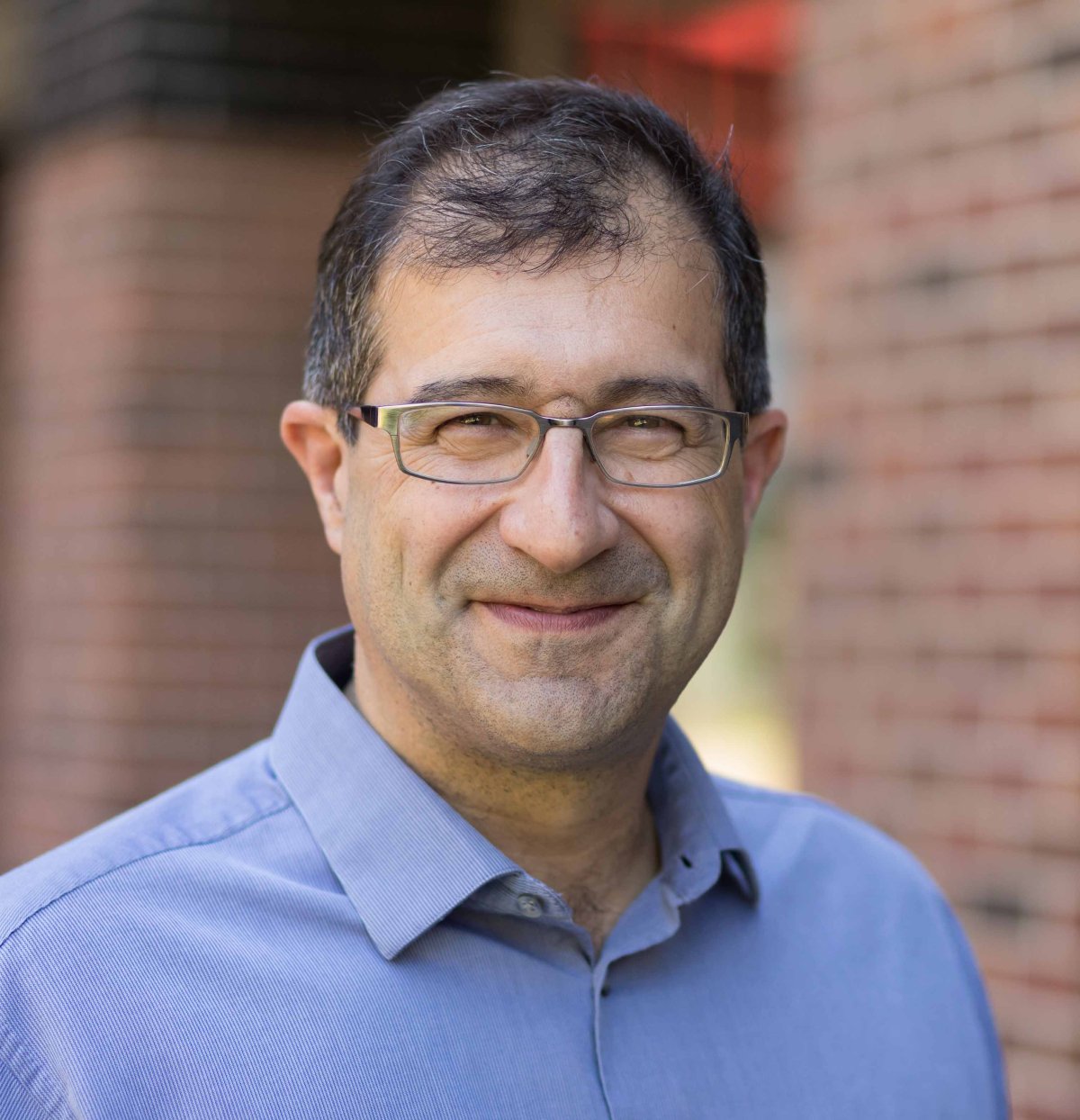
Prodromos Daoutidis is a College of Science and Engineering Distinguished Professor in the Department of Chemical Engineering and Materials Science at the University of Minnesota, where he also serves as Director of Graduate Studies for the MS in Data Science program. His research bridges systems engineering, process control, and sustainability through innovative applications of network science and data-driven methodologies. With over 25 years of academic leadership, he has established himself as a leading figure in process systems engineering with significant contributions to industrial applications. Dr. Daoutidis' research focuses on three interconnected themes: complexity (network approaches to control of complex process networks), data (data-driven control methods and learning approaches), and energy (sustainable production of power, fuels, and chemicals). His group has pioneered network science applications for distributed control of large-scale plants, developed DeCODe software for automatic decomposition of optimization problems, and created RING software for automated reaction network generation in biomass conversion. Current research emphasizes green ammonia systems for sustainable agriculture and energy storage, microgrid optimization, and brain network analysis through process systems engineering principles. His recent publications demonstrate strong trends toward integrating renewable energy systems with chemical processes, particularly through ammonia-based energy storage solutions. The research spans from fundamental control theory to practical implementation in industrial settings, with increasing emphasis on sustainability applications. His work shows a clear trajectory toward solving complex energy-water-food nexus challenges through systems engineering approaches. Computers and Chemical Engineering 2020 Best Paper Award Elected 2nd Vice Chair of CAST Division of AIChE Best Survey Paper in Journal of Process Control (2014-2016) Featured in Yale Environment 360 article on ammonia Research cited in Forbes article on sustainable agriculture Dr. Daoutidis has advised numerous PhD students including Victoria Jones (2024), Hanchu Wang (2023), and Ilias Mitrai (2023), with several alumni now faculty members at institutions like University of Texas and North Carolina State University. His research has been supported by significant grants focusing on sustainable energy systems, process control innovations, and systems engineering applications to biological networks. The Daoutidis Group maintains active collaborations with industry partners, farming communities, fertilizer producers, and utility cooperatives to translate research into practical solutions. The research group operates at the intersection of chemical engineering, control theory, and sustainability science, with facilities supporting both theoretical development and practical implementation of control systems. Current projects involve close collaboration with neuroscientists to apply process systems engineering methods to brain network analysis, demonstrating the cross-disciplinary impact of the group's methodological approaches.
Samir Ouchaniمشاهده پروفایل
پژوهشگر
Dr. Samir Ouchani is a Research Director at CESI Engineering School in Aix-en-Provence, France, with a focus on Cyber-Physical Systems (CPS) , Security , and Artificial Intelligence . He holds a PhD in Computer Science from Concordia University (2013) and an HDR (Habilitation à Diriger des Recherches) from CNAM, Paris (2022). His research emphasizes decentralized AI techniques for securing CPS and formal methods to validate AI-driven approaches. Key areas include Blockchain for smart cities and healthcare IoT Security via PUF protocols Federated Learning in industrial contexts Recent publications highlight 2025: Proceedings of the 6th Summer School on CPS and IoT 2025: Smart Cities Services Review 2024: Federated Learning Client Selection 2024: Blockchain for Healthcare Exchange He co-supervises PhD students in smart security and CPS vulnerability detection , integrating statistical model checking and machine learning frameworks.
Samuel Crossمشاهده پروفایل
پژوهشگر
- Renewable Energy
- Energy Systems
- Bioenergy
- +۳ مورد دیگر
Samuel Cross is a Researcher in the Department of Energy and Mechanical Engineering at Aalto University, serving as an academic Coordinator within the Energy Conversion and Systems research group. His work focuses on sustainable energy systems and policy implementation across European contexts. His research spans Renewable Energy Systems , Energy Storage Economics , and Policy Analysis , with significant contributions to bioenergy development in Nordic regions, battery storage viability in island grids, and natural gas impacts on European electricity markets. His interdisciplinary approach bridges engineering solutions with socioeconomic frameworks for sustainable transitions. Publication analysis (2016-2025) reveals evolving expertise from island power system benchmarking toward cutting-edge solutions like electric truck hydropower and planetary-boundary-conscious renewable deployment. Key trends include economic modeling of residential solar-storage systems, European market integration challenges, and sustainable bioenergy pathways. Awards: Award for Achievements in Teaching (2020) Cross actively contributes to the Energy Conversion and Systems research group, leading projects that address critical gaps in renewable energy implementation through both technological innovation and policy refinement.
Nicholas Barryمشاهده پروفایل
استادیار
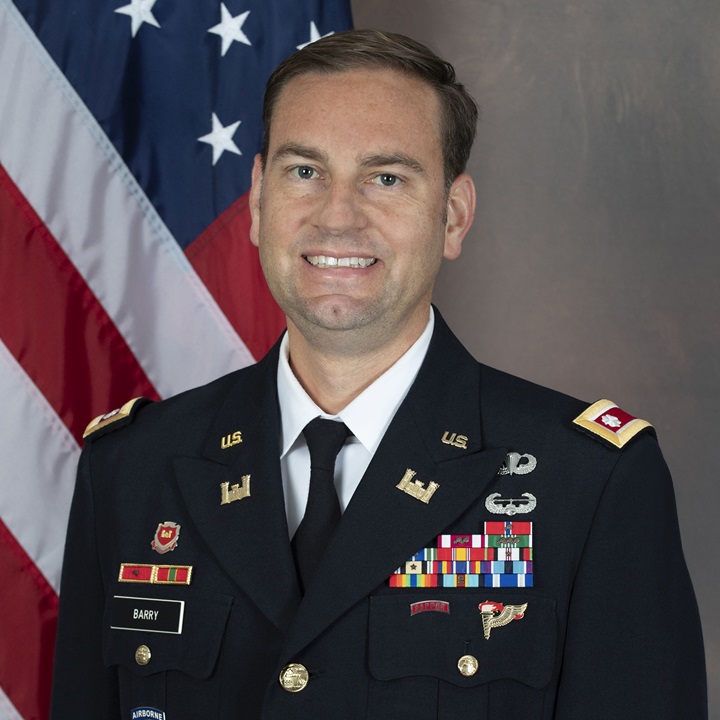
Nicholas Barry is an Assistant Professor in the Department of Electrical Engineering and Computer Science at the United States Military Academy at West Point. A U.S. Army officer (Lieutenant Colonel) and engineer, he has held leadership roles in military operations and academia, focusing on energy systems for over a decade. Education: B.S. in Electrical Engineering (2006, USMA), M.S. in Engineering Management (2011, Missouri University of Science and Technology), M.S. in Electrical Engineering (2015, Rensselaer Polytechnic Institute), and Ph.D. in Electrical Engineering (2023, University of Texas at Austin). His research centers on resilient microgrid design and smart energy systems for military applications, emphasizing renewable integration, power analysis, and storage solutions. As a panelist at the Army Futures Command Vertex Energy Conference (2022), he contributed to discussions on mobile energy systems. His recent publications examine simulation tools, resilience metrics, and operational challenges for isolated nanogrids, reflecting his expertise in military-focused power systems and sustainable energy deployment. Topics include inverter modeling, grid security, and hybrid renewable-diesel configurations.
Tiefu Zhaoمشاهده پروفایل
دانشیار
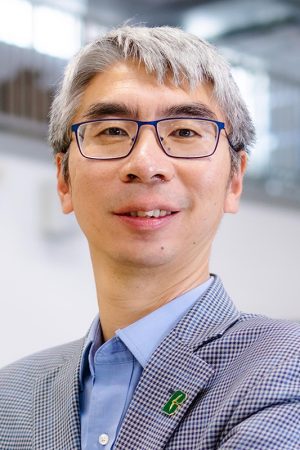
Tiefu Zhao is an Associate Professor at the University of North Carolina at Charlotte’s College of Engineering, affiliated with the Electrical and Computer Engineering Department and the Energy Production and Infrastructure Center (EPIC). He serves as the interim director of the BATT CAVE lab and brings six years of industry R&D experience from Eaton Corporate Research and Technology. Education: Ph.D., North Carolina State University, USA (2010) M.S., Tsinghua University, China (2005) B.S., Tsinghua University, China (2003) with Excellent Graduate Honor Dr. Zhao specializes in power electronics and renewable energy systems, focusing on Grid Edge Power Electronics , Solid State Transformers , DC Distribution , and Wide Bandgap Device Applications . His work addresses reliability, fault protection, and sustainable energy conversion through industry collaborations. His publications highlight advancements in predictive control algorithms , thermal stress management , and arc fault detection using machine learning. Key contributions include innovative solid-state circuit protection and microgrid integration solutions. Scientific Awards: 2015 IEEE Industry Application Society Andrew W. Smith Outstanding Young Member Award 2015 STEM Forward Young Engineer of the Year Award Dr. Zhao leads the Renewable Energy and Power Electronics Advanced Research Lab (RE-PEARL), established in 2016, which develops technologies for safer, more efficient energy conversion and renewable integration.
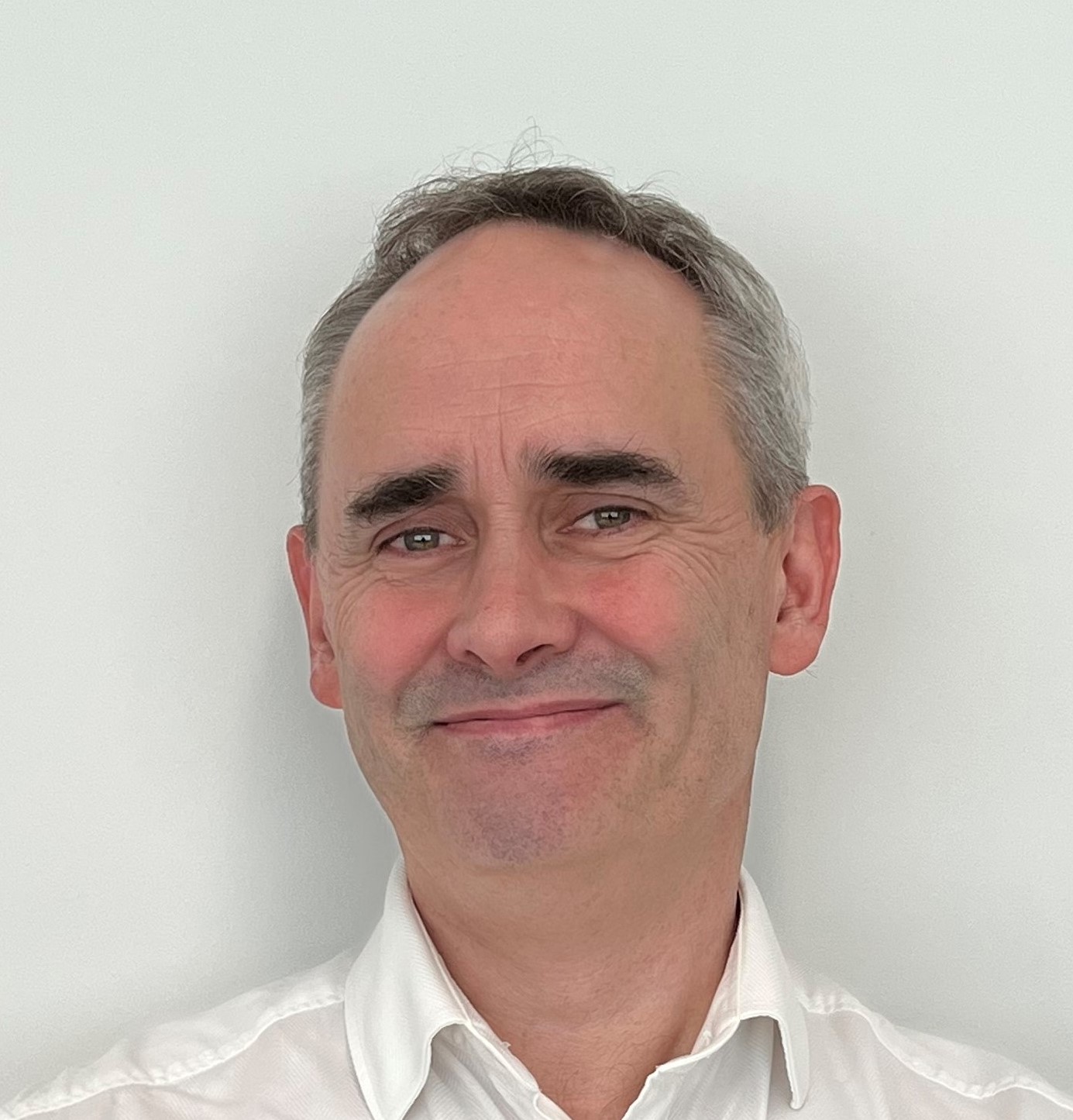
Professor John Fletcher is a world-leading academic in electrical power engineering at the University of New South Wales' School of Electrical Engineering and Telecommunications. He serves as Director of the Digital Grid Futures Institute (appointed May 2022), UNSW's Director of the NSW Government's Electrification and Energy Systems Network, and leads the TRaCE-funded $2M Technology Translation Squad. His research portfolio totals $15 million with $4.7 million awarded since 2022. Fletcher's research focuses on electrical power engineering , with highly-cited works in HVDC and wind generation integration, multi-phase drive systems, and novel electrical machines. His expertise spans renewable energy integration, smart grids, power electronics, and electrical machines. He has made significant contributions to wind turbine technology, photovoltaic integration, and power semiconductors for energy applications. His publication record shows consistent high-impact output with 156 journal articles, demonstrating strength in renewable energy integration, power system stability, and advanced power electronics. His work shows increasing emphasis on practical implementation challenges of renewable energy systems and grid modernization. Fletcher has completed 56 PhD students throughout his career (12 in 2022-2025), making him the top professor in his school for PhD completions during that period. He has secured substantial funding including ARC Discovery Projects, DSTG Next Generation Technology Fund, CRC, CSIRO, ARENA, and CRC-P grants totaling $4.7 million. As an educator, he developed UNSW's first microcredential in Hydrogen engineering and manages a full teaching load with classes exceeding 380 students, receiving outstanding student feedback (myExperience scores 5.5 to 5.63). He also manages two VIP projects (Sunswift and Atomcraft). Fletcher actively engages with industry and government, representing UNSW's stake in electrification to high-level officials including Penny Sharpe, Grant King, Chris Bowen, Mary O'Kane, Paul Fletcher, and Victor Dominello, as well as presenting to the Board of the Climate Change Authority and delegations from AEMO, Pearcey Foundation, and CEFC.
Elahe Doroudchiمشاهده پروفایل
استاد مهمان
Elahe Doroudchi serves as a Visiting Faculty member in the Department of Electrical Engineering and Automation at Aalto University. Her academic journey culminated with a Doctoral degree in Engineering and Technology from Aalto University, awarded on September 27, 2018. Dr. Doroudchi's research spans multiple critical areas in sustainable energy systems, with particular emphasis on microgrid technologies and energy-efficient building solutions. Her fingerprint analysis reveals strong expertise in Microgrid Engineering (100%), DC Microgrid Engineering (81%), Battery Energy Storage (81%), and Energy Systems Engineering (77%). Additional research interests include Residential Building Engineering (66%), Net Zero Energy Building design (60%), Energy Management Systems (48%), and Thermal Energy Storage (45%). Her research trajectory shows consistent contributions to the field of sustainable power systems, with publications spanning from 2015 to 2025. The publication pattern demonstrates her evolving focus from foundational microgrid research toward integrated energy solutions that combine building systems, electric vehicles, and grid management. Her work frequently addresses practical implementation challenges, as evidenced by hardware-in-the-loop testing methodologies and real-world case studies. Dr. Doroudchi has made significant contributions to conference proceedings, including serving as Program Chair for IEEE PES ISGT Europe 2021, and has published in high-impact journals such as Sustainable Cities and Society. Her 2018 article on net zero energy housing through integrated EVs has received substantial academic attention with 73 Scopus citations, indicating meaningful impact in the field.

Fiona McBrideمشاهده پروفایل
پژوهشگر
- Sustainability
- Logistics
- Operations Management
- +۴ مورد دیگر
Fiona McBride is a Doctoral Researcher at the Sheffield University Management School , specializing in electric vehicle charging logistics since 2022. As a Grantham Centre for Sustainable Futures scholar, her work integrates urban logistics, operations management, and electrical microgrids to design sustainable transport solutions. Education MEng in Mechanical Engineering from the University of Sheffield (2022) Fellow of the Higher Education Academy (2025) Research Interests Fiona’s research addresses critical challenges in public transport energy efficiency, air quality, and climate change mitigation. She employs methods like energy use prediction, simulation modeling, and economic viability analysis to develop practical solutions for integrating electric vehicle charging with urban infrastructure. Publications & Research Trends Her 2023 conference papers explore synergies between urban fleet operations and energy recovery from light rail systems. Themes include microgrid optimization, sustainable transport infrastructure, and reducing energy wastage through innovative charging solutions. Scientific Awards Fellow of the Higher Education Academy (2025) Grants & Supervisors Fiona’s PhD is funded by the University of Sheffield Energy Institute, with additional support from the Grantham Centre for Sustainable Futures. She is supervised by Dr. Erica Ballantyne (Senior Lecturer in Operations and Supply Chain Management) and Professor David Stone (Professor in Electrical Engineering), whose expertise spans logistics and energy systems.
Mostafa Kermaniمشاهده پروفایل
مدرس ارشد
- Microgrids
- Smart Grids
- Power Systems
- +۷ مورد دیگر
Mostafa Kermani is a Senior Lecturer in Electrical Engineering at the University of Skövde's School of Engineering Science, where he conducts research and teaches courses in advanced electrical engineering. His office is located in room PA110K, and he serves as an Education Course Coordinator for multiple master's level courses in electrical engineering. University: University of Skövde School: School of Engineering Science Department: Electrical Engineering Position: Senior Lecturer Dr. Kermani's research focuses on modern power systems with emphasis on microgrids, smart grid technologies, and renewable energy integration. His work spans several critical areas including vehicle-to-grid/building technologies, underwater wireless power transfer systems, and energy management in port environments. He has developed innovative approaches for power sharing in energy communities and optimization of microgrid operations under uncertainty. His recent publications demonstrate a clear trend toward practical applications of electrical engineering research, particularly in sustainable energy systems. The research shows strong emphasis on real-world implementation challenges, with numerous studies utilizing the LAMBDA Microgrid testbed. His work bridges theoretical optimization methods with practical engineering solutions for decarbonizing energy systems, particularly in transportation and port infrastructure. Dr. Kermani is actively involved in multiple significant research projects that address contemporary energy challenges: Port Microgrid (Nov 2024 - Nov 2027): Optimizing microgrid design for port environments to improve efficiency and reduce emissions Virtual Engineering Helios Energy Hub (Sept 2024 - Aug 2027): Developing commercial smart energy management systems based on SCADA technology Next Generation Laboratory Environment (Jul 2023 - Jun 2026): Collaborative development of production processes for electric drivetrains His research group appears to focus on practical implementation of energy systems, with strong industry connections evident from publications in IEEE Transactions on Industry Applications and collaborations with port authorities and energy companies. The work demonstrates a consistent approach of combining theoretical modeling with real-world validation through laboratory and field testing.
Stefan Ericsonمشاهده پروفایل
مدرس ارشد
- Robotics
- Precision Agriculture
- Computer Vision
- +۵ مورد دیگر
Stefan Ericson is a Senior Lecturer and Division Head at the School of Engineering Science, University of Skövde. His research focuses on robotics, computer vision, and precision agriculture, particularly in autonomous navigation systems for agricultural robots and industrial applications. Education: Doctoral thesis on Vision-Based Perception for Localization of Autonomous Agricultural Robots (2017). Research Interests: Visual odometry, digital twins, deep learning for manufacturing, and AI in precision agriculture. Projects: Currently involved in Port Microgrid (optimizing port energy systems), Helios Energy Hub (smart energy management), and Next Generation Laboratory Environment (electric drivetrain production). His recent articles emphasize deep learning for welding analysis, digital twins in production lines, and visual odometry for uneven terrain and agricultural environments. He teaches courses at both bachelor's and master's levels, including topics in robotics and engineering.

Dr. Runar Nygaard serves as the Director of the Mewbourne School of Petroleum and Geological Engineering and holds the Eberly Family Chair as Professor of Petroleum Engineering at the University of Oklahoma. Originally from Norway, he earned his doctoral degree in Geomechanics from the University of Oslo in 2004 after completing undergraduate and master's studies in Geology and Geotechnics at the same institution. His career spans industry roles in oil and gas and management consulting at McKinsey & Company before transitioning to academia at the University of Calgary, Missouri University of Science and Technology, and Oklahoma State University. His educational background includes: Ph.D. in Geomechanics, University of Oslo (2004) M.Sc. in Geotechnics, University of Oslo (1996) B.Sc. in Geology, University of Oslo (1995) Dr. Nygaard's research program centers on well construction safety and efficiency across energy applications. His work integrates geomechanics, drilling engineering, and well design to address technical, economic, and environmental challenges in oil and gas, geothermal energy development, and CO2 storage projects. Current research focuses on drilling efficiency in hard rock for geothermal systems, downhole sensor deployment for integrity monitoring, and plug-and-abandonment methodologies for offshore wells. His interdisciplinary approach bridges petroleum engineering fundamentals with emerging energy transition technologies. Analysis of his recent publications reveals a strategic pivot toward sustainable energy applications, particularly the repurposing of hydrocarbon infrastructure for geothermal district heating in Oklahoma. His work demonstrates increasing integration of machine learning for real-time drilling optimization and advanced geomechanical modeling for CO2 storage integrity assurance. The publication portfolio shows strong emphasis on practical field applications with immediate industry relevance across sedimentary basin energy systems. As Director of the Mewbourne School, Dr. Nygaard oversees academic programs, industry partnerships, and research initiatives including the Industry Advisory Board and technical seminar series. His leadership connects students with industry professionals through programs like 'Day in the Life of a Driller' and the MPGE Link Tree digital platform. Current projects address critical energy transition challenges through collaborations with Oklahoma's energy sector on geothermal repurposing and well integrity monitoring.
Stephan Baurمشاهده پروفایل
پژوهشگر
- Sustainable energy systems in developing countries
- Small hydropower plants
- Island energy systems
- +۴ مورد دیگر
Stephan Baur is a researcher at the Chair of Renewable and Sustainable Energy Systems at the Technical University of Munich (TUM), based in room 5414.02.018 at Lichtenbergstr. 4a, 85748 Garching bei München. He offers consultation hours by appointment and maintains an active research profile focused on practical renewable energy solutions for developing contexts, particularly through the Laboratory for Sustainable Energy Systems (SES Lab). Baur completed his physics diploma studies at the University of Augsburg, where he conducted his thesis on "Energy supply in high mountain huts - optimization, dimensioning and maintenance of storage batteries" at the Chair of Experimental Plasma Physics. Prior to his position at TUM, he worked as a teacher at Geretsried Gymnasium teaching Mathematics, Physics and Computer Science, which informs his current educational focus. His primary research interests include sustainable energy systems in developing and emerging countries, island systems, small hydropower plants (micro-hydro), and the cultural, social and economic framework conditions of energy supply in these regions. Baur's work consistently bridges theoretical energy concepts with practical implementation challenges in resource-constrained environments. Analysis of Baur's publication record reveals a clear evolution from early work on battery systems for mountain huts (2006-2007) to Nepal-focused micro-hydro projects (2018-2020), and most recently to educational applications of solar energy systems (2021-2024). His research demonstrates increasing emphasis on making renewable energy concepts accessible through hands-on learning experiences. Baur actively participates in interdisciplinary projects connecting school and university teaching with sustainable energy production in developing countries. His collaborations with researchers including Michael Erhart, Michael Penk, and Anurag Mohapatra demonstrate a team-based approach to addressing energy challenges in diverse contexts. He is a key contributor to the Laboratory for Sustainable Energy Systems (SES Lab), where theoretical concepts are transformed into practical implementations, particularly focusing on contexts where conventional energy infrastructure is limited or unavailable. His work on simple measurement techniques for electricity demand in developing countries represents an important methodological contribution to the field.
Julia Gawlickمشاهده پروفایل
پژوهشگر
Julia Gawlick serves as a Researcher at the Chair of Renewable and Sustainable Energy Systems at the Technical University of Munich (TUM), actively contributing to European and global energy transition research. Her work spans energy policy analysis, renewable integration modeling, and sector coupling technologies. Her research focuses on energy and climate policies in European countries , integration of renewables into energy systems , and sector coupling through Power-to-X technologies . Key projects include the Copernicus Project P2X, nuclear fusion integration studies with the Max Planck Institute for Plasma Physics, and Bavarian energy transition scenarios developed with the Munich Chamber of Industry and Commerce. Analysis of her 10 publications (2020-2024) reveals consistent focus on hydrogen system integration (Texas and European contexts), fusion energy system modeling , and renewable transition pathways . Her work demonstrates strong interdisciplinary approach connecting engineering, policy, and economics. As an educator, she teaches Modeling Energy Systems and Integration of Renewable Energies courses. Her projects involve significant collaboration with industrial partners and research institutions including the Max Planck Society and DECHEMA. Her academic background includes both B.Sc. and M.Sc. in Environmental Engineering with Renewable Energy specialization at TUM, where her Master's thesis investigated sediment impacts on hyporheic exchange in gravel beds.
نمایش نتایج تا ۷۵۰ مورد اول. برای یافتن نتایج دقیقتر، جستجوی خود را با فیلترها محدود کنید.