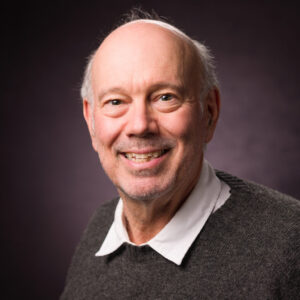
Ertugrul Cam holds the position of Guest Professor at Aalborg University within the Faculty of Engineering and Science , specifically in the Electric Power Systems and Microgrids department. His affiliation is listed under AAU Energy, a key research unit at the university. His research focuses on advanced energy systems, including microgrid design, renewable energy integration, and smart grid technologies. Notable interests include optimizing power distribution networks and enhancing grid stability through innovative storage solutions. While no specific publications or awards are detailed here, his work aligns with current trends in sustainable energy infrastructure. No advising records, grants, or lab affiliations are explicitly mentioned in the provided text.
Pablo Díaz Villar is an Associate Professor at the Department of Teoría de la Señal y Comunicaciones, Universidad Autónoma de Madrid (UAM). He holds a Ph.D. from Universidad Politécnica de Madrid (2003) with a thesis on photovoltaic system reliability for rural electrification. His research focuses on renewable energy systems, microgrid optimization, and energy storage technologies. He leads the TM Tecnologías Mecánicas, Eléctricas y Térmicas research group. Key research interests include photovoltaic system design, evolutionary algorithms for energy optimization, and sustainable rural electrification. His work spans theoretical models and field implementations in Latin America. Recent studies address cooling methods for PV modules, Industry 4.0 energy management, and adaptive scheduling in microgrids. Publications emphasize practical applications of renewable energy in manufacturing, smart grids, and educational tools like PVLearning for photovoltaic education. His work bridges algorithmic innovation with real-world energy challenges.
Nicola Sorrentino is an Assistant Professor at the Department of Mechanical, Energy and Management Engineering of the University of Calabria since 2004. He teaches courses on Electrical Systems Engineering and Electricity Market for Management Engineering programs. A member of the Graduate School 'Archimedes' , he coordinates modules in the University Master in Energy Management and has served on technical committees for energy-related consortia. Education: PhD in Computer and Systems Engineering (1999), University of Calabria. His research focuses on electrical power systems control and management under market dynamics , particularly addressing smart grid technologies , renewable energy integration , and energy communities . Key projects include participation in COFIN, PRIN , and PON initiatives for distributed generation and grid optimization. Recent publications (2024-2025) emphasize renewable energy communities , machine learning for energy forecasting , and nanogrid control strategies . The work explores energy sharing , imbalance cost reduction , and storage optimization in decentralized systems. Scientific Award: 1999 scholarship for 'Integrated control systems for real-time control of the engines' (University of Salerno). As a co-founder of academic spin-off Crete Energie Speciali srl , he promotes renewable energy production in small municipalities through the Laboratorio di Sistemi Elettrici per l'Energia e le Fonti Rinnovabili (LASEER) , which develops power electronics , smart grid prototypes , and active filtering devices .
Prof. Hassine Moungla is a Lecturer at Telecom SudParis, associated with the SAMOVAR research institute and the NeSS group. His research focuses on wireless networks, edge computing, reinforcement learning, IoT systems, vehicular networks, and machine learning applications in network optimization. He has contributed to over 50 publications since 2004, addressing topics such as UAV-assisted networks, intelligent reflecting surfaces (IRS), and blockchain-based network slicing. Education: PhD in Computer Science (focus on network management and policy-based systems). Key Research Themes: Edge computing architectures, reinforcement learning for network optimization, IoT mobility management, and vehicular networks. His work often intersects with industry challenges in 5G/6G, smart cities, and autonomous systems. Notable projects include optimizing UAV deployment using deep learning and developing anomaly detection mechanisms for mobile networks. Grants & Collaborations: Active in EU-funded projects on edge computing and has collaborated with institutions like INRIA and the University of Paris-Saclay.
Célia Maria Santos Cardoso de Jesus is an Assistant Professor affiliated with the University of Lisbon (Instituto Superior Técnico). Her research focuses on network optimization, renewable energy systems, and adjoint network theory applications in power systems. She has contributed to studies on off-grid solar PV site selection, energy equity in Bolivia, and pedagogical approaches to economic dispatch problems. Her technical work includes advancements in power flow analysis using adjoint networks, voltage sensitivity calculations via Tellegen's theorem, and corona dynamics modeling for surge propagation. She has authored numerous papers on distributed generation challenges in low-voltage networks and energy system control methodologies. Although no scientific awards are listed in the provided texts, her prolific publication record demonstrates active engagement in energy systems research. No advisees or grant details were explicitly mentioned in the data provided.
Dr. Ali Bazzi is the Madonna Professor in Power Engineering at the University of Connecticut (UConn), within the Department of Electrical and Computer Engineering. He holds a Ph.D. from the University of Illinois at Urbana-Champaign (UIUC) and B.E./M.E. degrees from the American University of Beirut (AUB). He co-founded Valcon Labs Inc., a deep-tech startup focused on aircraft electrification, and previously worked at Delphi Corp. and Bitrode Corporation. His research focuses on fault-tolerant power electronics, electric motor drives, renewable energy integration (solar/wind), and WBG semiconductor applications. Education: Ph.D., Electrical and Computer Engineering, University of Illinois at Urbana-Champaign M.E., Electrical and Computer Engineering, American University of Beirut B.E., Electrical and Computer Engineering, American University of Beirut Research Interests: Dr. Bazzi's work emphasizes reliability, efficiency, and fault mitigation in power systems, including extraterrestrial microgrids, electric vehicle propulsion, and high-voltage insulation technologies. His contributions span real-time control algorithms, fault diagnosis, and advanced materials for medium-voltage drives. Publications & Patents: With over 120 peer-reviewed publications and 10 U.S. patents, his work includes innovations in active EMI filters, insulation breakdown prediction, and cyber-physical testbeds for space habitats. Recent trends highlight space microgrid reliability, WBG semiconductor applications, and fault-tolerant drive systems. Awards & Grants: Awarded the Madonna Professorship, he has led grants from UTC and industry partners. His patents include methods for fault diagnosis, data-driven anomaly detection, and insulation material optimization. Labs & Teams: Director of the Power Electronics and Drives Advanced Research Laboratory at UConn, he collaborates with industry partners like Valcon Labs on aircraft electrification and propulsion systems.
Professor Graeme Burt is a leading academic in the Department of Electronic and Electrical Engineering at the University of Strathclyde, Faculty of Engineering. He is actively involved in research, supervision, and leadership in power systems, smart grids, and sustainable energy technologies. Research Interests: Decentralised energy and smart grid protection and control Electrification of aerospace and marine propulsion DC and hybrid power distribution Experimental systems testing and validation with power hardware-in-the-loop (PHIL) His recent publications demonstrate a strong focus on power system resilience, control strategies for renewable integration, and advanced protection schemes in DC microgrids. These works span power electronics, control theory, and real-world experimental validation, reflecting a multidisciplinary approach to modern energy challenges. Scientific Awards: No awards mentioned in the provided text. Advising and Grants: Professor Burt is actively supervising research and hosting academic visitors. He is a Principal Investigator and Co-investigator on multiple major research projects funded by the European Commission (Horizon Europe) and industry partners such as Analog Devices. These projects focus on converter-dominated power systems, standardization in waveform uncertainty, and hydrogen production integration with the grid. Labs and Teams: He manages the Dynamic Power Systems Laboratory, a key facility for hardware-in-the-loop testing and validation of power systems. His collaborative network includes researchers across institutions and countries, contributing to a robust research ecosystem in power engineering and sustainable energy.
Junho Hong is an Associate Professor at the University of Michigan–Dearborn's Department of Electrical and Computer Engineering, College of Engineering and Computer Science. He holds a PhD in Electrical Engineering from Washington State University (2014), with prior roles at ABB (2014–2019) and Ford Motor Company (2021 sabbatical). His research spans cybersecurity of energy delivery systems, AI applications in power systems, and cyber-physical systems. Doctor of Philosophy in Electrical Engineering, Washington State University, USA (2014) Master of Science in Electrical Engineering, Myongji University, South Korea (2010) Bachelor of Science in Electrical Engineering, Myongji University, South Korea (2008) Junho's research focuses on securing critical energy infrastructure through machine learning, anomaly detection, and advanced cybersecurity frameworks. His work includes projects on substation automation, HVDC systems, smart grids, and high-power EV chargers. He has secured grants from the U.S. Department of Energy, NSF, Ford, and South Korean institutions. Recent publications highlight his contributions to generative AI for anomaly detection, SDN-based cyber restoration, and physics-informed models for secure grid operations. His students have received notable awards, including the Rackham Predoctoral Fellowship and IEEE Best Paper Session. Senior Member, IEEE (2022–present) Associate Editor, IEEE ACCESS (2022–present) 13 US patents in energy cybersecurity He leads the Cyber-Physical System Lab for Energy Delivery Systems, which focuses on grid resilience, renewable integration, and advanced diagnostics.
Subhankar Ganguly is a Researcher III in Electrical Engineering at the National Renewable Energy Laboratory (NREL), specializing in Power Systems Engineering. His work focuses on enhancing microgrid stability and inverter-based resource integration through advanced simulations and hardware experiments. Research Interests: Power systems stability, microgrid controllers, renewable energy integration, and smart grid technologies. Key Contributions: Development of secondary control architectures, hardware-in-the-loop simulations, and machine learning-assisted PV inverter modeling. Email: Subhankar.Ganguly@nrel.gov Recent research highlights include grid-forming inverter performance analysis, multi-vendor system compatibility studies, and practical frameworks for microgrid flexibility. He actively collaborates on international projects, emphasizing scalable solutions for renewable energy systems.
Joshua Comden serves as a Researcher III at the National Renewable Energy Laboratory (NREL) within the Energy System Control and Optimization group, focusing on Power Systems Engineering and Grid Modernization. His work develops optimal control schemes for distributed energy resources to enhance power grid resilience through real-time decision-making frameworks. His academic credentials include: PhD in Applied Mathematics and Statistics – Operations Research from Stony Brook University Master’s in Applied Mathematics and Statistics – Operations Research from Stony Brook University Bachelor’s in Chemical Engineering from the University of Delaware Comden’s research integrates operations research with power engineering, specializing in online and distributed optimization/control of power systems. His fellowship training in decision support enables effective translation of complex models for grid operators, addressing challenges in voltage regulation, microgrid management, and incentive design under uncertainty. Recent publications reveal accelerating impact in microgrid energy management, distributionally robust optimization, and grid-forming inverter control, with 17 outputs since 2023 demonstrating growing influence in power systems modernization. His recognition includes: Woo Jong Kim Dissertation Award (2020) Comden actively contributes to professional communities through memberships in the IEEE Control Systems Society, IEEE Power and Energy Society, and the Institute for Operations Research and the Management Sciences (INFORMS), fostering cross-sector collaboration in energy systems research. At NREL, he operates within the Energy System Control and Optimization group, advancing control algorithms for distributed energy integration while collaborating with national labs and industry partners on grid resilience initiatives.
Aadil Latif serves as a Researcher IV in Electrical Engineering at the National Renewable Energy Laboratory (NREL), working within the Grid Planning and Analysis Center under Energy Systems Analysis. His research focuses on grid modernization, renewable energy integration, and power system resilience with significant contributions to national energy transition initiatives. His primary research domains include: Renewable Energy systems integration Battery Energy Storage optimization Electric Vehicle grid impacts Power Systems engineering Electric Power Distribution modernization Inverter technology applications Distributed Energy Resources management Recent publications demonstrate expertise in advanced simulation techniques (HELICS co-simulation), neural network modeling for battery systems, and comprehensive grid resilience studies like the PR100 project for Puerto Rico. His work bridges theoretical research with practical grid modernization challenges, emphasizing scalable solutions for renewable integration. No scientific awards were documented in available sources. Student advising and grant funding details remain unspecified. Latif actively contributes to NREL's Grid Planning and Analysis Center, collaborating with multi-institutional teams on critical energy infrastructure projects including the PR100 initiative and advanced storage system analysis.
Richard Bryce is a Senior Researcher & Business Development Lead in the Power Systems Engineering department at the National Renewable Energy Laboratory (NREL). His work focuses on advanced energy storage systems, grid dynamics, and renewable energy integration.
Dr. Kenneth (Mark) Bryden is a Professor in the Department of Mechanical Engineering at Iowa State University and serves as the Program Director for Simulation, Modeling, and Decision Science at the U.S. Department of Energy’s Ames Laboratory. He is the founding director of these programs and has dedicated his career to integrating computational models, data, and information to enhance engineering decision-making for complex systems. Education: PhD in Mechanical Engineering, University of Wisconsin-Madison (1998) MS in Mechanical Engineering, University of Wisconsin-Madison (1993) BS in General Engineering, Idaho State University (1977) Dr. Bryden’s research spans integrated computational environments, energy systems, and sustainability. His work focuses on model federation across engineering, human, and natural systems, with applications in bioenergy, cookstove optimization, and decision science. He has developed open-source frameworks for CAD/analysis software integration and tools for assessing energy interventions in developing regions. His publications include over 180 peer-reviewed articles and the textbook Combustion Engineering . Key research themes include multiscale simulation, thermal modeling of biomass systems, and computational methods for sustainable development. His work has addressed CO₂ sequestration, microgrid energy systems, and environmental impacts of agricultural residue harvesting. Scientific Awards: ASME Melville Medal (2013) R&D 100 Awards (2010, 2009, 2006) Excellence in Technology Transfer Awards (National and Regional) Best Paper Awards (ANNIE, AIAA, ISES) Dr. Bryden’s practical contributions include founding two startups and the nonprofit ETHOS, which mobilizes 150+ researchers to provide clean energy solutions to off-grid communities. His fieldwork in Mali led to scalable household lighting systems using locally adapted technology. He holds three patents and has secured significant grants for energy systems research.
Sebastian Schwarz is a researcher at the Chair of Automation of Complex Power Systems at RWTH Aachen University. He works on energy flexibility management and optimization within multi-energy systems, contributing to the development of advanced power scheduling algorithms and digital twin architectures. Research Focus: Energy Systems Optimization Demand Response and Flexibility Modeling Multi-Energy System Integration Polynomial Chaos Theory Applications Agent-Based Scheduling Frameworks Open-Source Software Development Scientific Contributions: Development of the pycity_scheduling framework (2022) Computational performance studies of ADMM algorithms (2023) Inverse simulation methods under uncertainty (2023) Modular digital twin architectures (2023) Email: sebastian.schwarz@eonerc.rwth-aachen.de
Professor Sondoss El Sawah is a leading academic at UNSW Canberra's School of Systems & Computing, where she serves as Deputy Director of the Capability Systems Center. With over 90 publications including high-impact journal articles recognized by Web of Science, she has established herself as a prominent researcher in systems thinking and modeling. Her research focuses on advancing systems thinking methodologies to address complex socio-environmental-technical challenges. Key application areas include climate change adaptation, defense strategic decision-making, resource management, and the water-food-environment-energy nexus. She has led numerous ARC and industry-funded projects tackling high-stakes policy issues, with significant impact on defense asset management and sustainable resource planning. Professor El Sawah's recent work explores novel intersections between AI, education, and systems thinking, particularly through her ARC Discovery Project on 'Machine-education methodologies and algorithms for designing trusted multi-skilled evolutionary learners.' Her research has pioneered practical tools for promoting systems thinking in Australia's future force design and strategic asset sustainability. International Environmental Modelling and Software Society Research Award (2018) Australian Operations Research Society Rising Star Award (2016) - first female recipient Peter Cullen Trust Fellowship (Outstanding Fellow of the Year, 2014) Editor of the Journal of Environmental Modelling and Software (A*) Vice President of the Modelling and Simulation Society of Australia and New Zealand (2020-) She has significantly influenced policy through commissioned work for Queensland State Government and Department of Defence, developing good modeling practices for decision support. Her educational impact includes revitalizing systems thinking curriculum at UNSW and teaching at the European Summer School on decision making. Professor El Sawah also founded the IEEE Systems Modelling Conference and maintains strong international collaborations, including an honorary Associate Professor affiliation at Australian National University.