Dr. Deanna Kennedy is an Assistant Professor in the Department of Health and Kinesiology at Texas A&M University. She specializes in motor neuroscience, focusing on bimanual coordination, motor learning, and neurorehabilitation. Her research addresses theoretical questions about motor synergies and applied challenges in stroke rehabilitation and aging. She holds a PhD in Kinesiology (Motor Neuroscience) from Texas A&M (2015) and prior degrees from California Polytechnic State University. Her research explores topics such as gravity’s impact on motor control, neural crosstalk, and Parkinson’s disease interventions. Key projects include NASA-funded studies on altered-gravity effects and mathematical modeling of pandemic dynamics. Awards include the AFS Distinguished Graduate Student Award (2016) and the Thomas A. and Joan C. Read Faculty Fellowship (2019–2022). Dr. Kennedy teaches courses like Lifespan Motor Development (KINE307) and Motor Learning & Skill Performance (KINE406). Her work bridges basic science and clinical applications, emphasizing translational research to enhance human movement capabilities across populations.
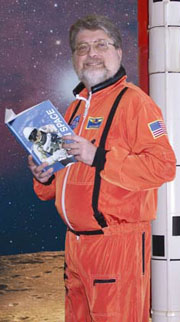
David Fisher is Professor of Astronomy and Physics and Chair of the Department at Lycoming College. He has been a key faculty member since 1984, contributing significantly to both teaching and research in physics and space history. Education: B.S., Pennsylvania State University M.S., University of Delaware Ph.D., University of Delaware Dr. Fisher's research spans condensed matter physics , particularly radiation damage in materials at low temperatures, and space flight history , with deep expertise in American and international space programs. He has developed innovative courses such as Invisible Universe , where students build radio instruments to study cosmic phenomena. His scholarly work bridges science and humanities, including major editorial contributions to Salem Press reference works on USA in Space and Solar System . His publications reflect a strong interdisciplinary trend, combining astrophysics, historical documentation, nuclear history, and science communication . He has led archival projects with NASA, including correction of Apollo 11 transcripts and development of digital mission databases. His recent work explores the Gemini, Mir, and Space Shuttle programs, and he is modernizing laboratory infrastructure through an Alden Foundation grant. Scientific Contributions and Recognition: Co-editor, Third Edition of USA in Space (2005) Co-editor, Second Edition of Solar System (2008–2009) Participant in NASA Johnson Space Center History Office projects Contributor to Apollo 11 air-to-ground transcript accuracy Developer of student-built radio telescopes and radiometers Participant in Chautauqua-Smithsonian atomic bomb history program Dr. Fisher advises students through hands-on research and instrumentation projects. He has secured external funding for laboratory upgrades and continues to integrate new technology into the curriculum. He is actively involved in departmental leadership and curriculum development, ensuring alignment with modern scientific standards. He has also published poetry, reflecting a unique blend of scientific rigor and humanistic expression. Dr. Fisher leads initiatives involving laboratory modernization and historical space program analysis. His work with the Alden Foundation has enabled the integration of advanced instrumentation, enhancing student research opportunities. He collaborates with colleagues like Dr. Richard R. Erickson on interdisciplinary editorial and educational projects.
Eric Paljug serves as Clinical Associate Professor of Business Administration at the University of Pittsburgh's Joseph M. Katz Graduate School of Business, where he joined the faculty in 2015. He holds dual leadership roles as Associate Director of the Center for Supply Chain Management and member of the Business Analytics and Operations Faculty, while also serving on the Board of Directors for FOCUS North America and the Traffic Club of Pittsburgh. His academic credentials include: PhD in Systems Engineering from the University of Pennsylvania MS in Electrical Engineering from the University of Pittsburgh BS in Electrical Engineering from the University of Pittsburgh Professor Paljug's research integrates engineering precision with business strategy, focusing on Supply Chain Management, Business Analytics, and Operations across aerospace, healthcare, and technology sectors. His interdisciplinary approach stems from early robotics work at NASA's Jet Propulsion Lab where he co-developed teleoperation systems for robotic surgery, earning a patent in the process. Current investigations examine biomanufacturing in microgravity environments and post-pandemic educational delivery models. His publication portfolio reveals a distinctive trajectory from engineering foundations to contemporary business applications. The 2023 study on student demand for remote learning options demonstrates his analysis of educational technology adoption, while the 2021 biomanufacturing research pioneers space-based regenerative medicine applications—showcasing his capacity to bridge technical innovation with commercial strategy. With over 25 years of strategic consulting experience including McKinsey & Company and independent practice, he has guided Fortune 500 firms through organizational transformations, post-merger integrations, and market opportunity assessments. His current projects include characterizing commercial potential for low-earth-orbit biomanufacturing and developing sales-operations planning frameworks for aerospace manufacturers. Professor Paljug teaches and mentors students in Business Analytics, Consulting, and Supply Chain Management courses, leveraging real-world case studies from his consulting engagements. His industry immersion ensures curriculum relevance while providing students with actionable frameworks for operational challenges. He actively shapes academic discourse through the Center for Supply Chain Management and the Traffic Club of Pittsburgh, focusing on transportation logistics and sustainable supply chain innovation. These platforms facilitate industry-academia knowledge exchange, particularly in aerospace logistics and healthcare supply chain resilience. Outside professional commitments, Professor Paljug pursues sailing, aviation, and music while prioritizing family time—reflecting his holistic approach to work-life integration.
Christian Betzel is a full Professor (C3) of Biochemistry and Structural Biology at the University of Hamburg , heading the Research Group Betzel in the Institute of Biochemistry and Molecular Biology. Since 2004 he has been appointed as C3-Professor at the University of Hamburg, and since 2015 he also serves as Professor Visitante Internacional at the University of São Paulo, Brazil. Education & Academic Career 1982 – Study of Physics, University of Göttingen 1986 – Dr. rer. nat., Freie Universität Berlin, Institute of Crystallography (with Prof. W. Saenger) 1993 – Habilitation, Freie Universität Berlin, Department of Chemistry 2000 – §17 Professor, University of Hamburg 2002 – Doctor of Science, Bulgarian Academy of Sciences, Sofia 2004 – present – C3-Professor, University of Hamburg Research Focus Professor Betzel’s work integrates structural infection biology , crystallogenesis , structure and dynamics of nucleic acids , plant lectins , and venom proteomics . His group develops cutting-edge serial femtosecond crystallography at X-ray free-electron lasers (XFEL) and synchrotrons, studies protein phase-separation phenomena, and translates structural insights into anti-infective drug candidates. A major thrust is understanding antibiotic resistance mechanisms through high-resolution structural enzymology. Research Trends in Recent Publications The 2022-2024 articles reveal an intensive focus on SARS-CoV-2 (main protease, PLpro, and cellular targets), antibiotic resistance determinants (β-lactamases, penicillin-binding proteins), protein phase separation (Tau, α-synuclein), and nanomaterial–biomacromolecule interactions (silver/selenium nanoparticles). Methodologically, the work exploits time-resolved crystallography, serial synchrotron/XFEL crystallography, dynamic light scattering, and cryo-EM to capture fast structural dynamics and transient interactions. Scientific Awards & Memberships Member, Biophysical Society (USA) Member, American Society for Biochemistry and Molecular Biology Member, European Low Gravity Research Association Member, American Crystallographic Association Member, Deutsche Gesellschaft für Kristallographie Advisory Board, Center for Molecular Medicine & Drug Research, University of Karachi Board member, International Organization for Biological Crystallization (IOBCr) Spokesperson, SFX User Consortium at European XFEL Board member, XFEL Biology Infrastructure (XBI) User Consortium Funding & Collaborative Networks Since 2009 Professor Betzel has been PI or Co-I on >20 major grants (>€9 million) from BMBF, DFG, Helmholtz, DAAD, EU, and industry. Highlights include: BMBF “BioXFEL” and “Hochdurchsatz Serielle-Femtosekunden-Kristallographie” projects (>€2 million) Helmholtz “Advanced Imaging of Matter” and ERC Synergy grants Landesforschungsförderung Hamburg graduate schools (SIMOS, DELIGRAH) International collaborations with Universities of São Paulo, Havana, Lübeck, Tübingen, AIIMS New Delhi, JNU, Karachi, and companies such as NOXXON GmbH Laboratories & Teams Professor Betzel leads the AG Betzel research group (≈15-20 members) located at the University of Hamburg and maintains an outstation laboratory at DESY (PETRA III / European XFEL). The group operates state-of-the-art crystallization facilities, dynamic light-scattering instruments, and high-throughput sample-preparation robots integrated with synchrotron/XFEL beamlines.
Frederick Scharmen serves as Interim Chairperson/Program Director and Associate Professor of Architecture at Morgan State University's School of Architecture and Planning. A LEED AP credential holder, he co-founded The Working Group on Adaptive Systems and Brick Moon space habitat consultancy, blending academic practice with real-world design innovation. His educational foundation includes: B.S. in Architecture from University of Maryland-College Park M.Arch from Yale University Scharmen's research critically examines space architecture and future habitats through lenses of social inclusion , cultural representation , and technological speculation . His work interrogates who gets invited into imagined futures, merging architectural theory with space science and urban design to challenge conventional settlement paradigms. This manifests in both scholarly publications and tangible installations exploring modernism's legacy in contemporary contexts. His publication trajectory reveals consistent thematic evolution from terrestrial urban studies toward cosmic-scale design thinking, with increasing focus on robotic systems, interstellar topology, and climate-adaptive off-world habitats. The recurring integration of science fiction tropes with rigorous architectural analysis creates a distinctive interdisciplinary signature. Notable recognitions include: Dual Graham Foundation Grants (2021, 2018) AIA Baltimore President's Awards for Architectural Journalism (2016) and Civic Engagement (2011) Baker Award Finalist (2018) and Sondheim Prize Semifinalist (2014) National Park installation featured in City Paper Top Ten Art Shows (2012) Scharmen mentors students through core architecture curriculum including Environmental Design, Urban Design studios, and Environmental Controls while securing research funding through competitive grants. His academic leadership extends to editorial roles at The Architect's Newspaper and community engagement with Baltimore Heritage. Through The Working Group on Adaptive Systems and Brick Moon, he maintains active design laboratories exploring speculative futures, while The Baltimore Modernism Project anchors his commitment to local architectural heritage preservation and reinterpretation.
Jeannette Bohg is a Professor of Robotics and Computer Science at Stanford University, directing the Interactive Perception and Robot Learning Lab. Her work focuses on perception, learning, and real-time methods for autonomous robotic manipulation and grasping, emphasizing cross-embodiment learning. She previously led the Autonomous Motion Department at MPI for Intelligent Systems (2012–2017) and completed her PhD at KTH in Stockholm, with earlier studies at Chalmers and TU Dresden. Notable awards include the 2019 IEEE Early Career Award and the 2020 Robotics: Science and Systems Early Career Award. Education: PhD in Robotics, Perception and Learning (RPL), KTH Royal Institute of Technology, Stockholm (2012) Masters in Art and Technology, Chalmers University, Gothenburg Diploma in Computer Science, TU Dresden Research interests span robotic grasping, equivariant policies, and scalable data-driven approaches. Key projects include the DROID dataset for cross-embodiment learning and development of the Tidybot mobile manipulator platform. Her lab explores principles of human sensorimotor coordination to enhance robotic autonomy, integrating machine learning and computer vision. Recent work emphasizes leveraging human demonstrations and vision-language models for generalizable manipulation skills, alongside tactile sensing and sim-to-real transfer techniques.
Arunkumar RATHINAM is a Postdoctoral researcher at the University of Luxembourg's Interdisciplinary Centre for Security, Reliability and Trust (SnT), specifically within the CVI2 department. His research focuses on autonomous systems, spacecraft navigation, and machine learning applications in space exploration. He has contributed to the development of datasets like SPARK and Zero-G Lab, which advance space operations emulation and computer vision techniques. Affiliations: SnT-CVI2, University of Luxembourg Key Research Areas: spacecraft pose estimation, thermal anomaly detection, autonomous navigation, and robotics for space missions His work bridges machine learning with practical space systems, addressing challenges in thermal monitoring (e.g., Li-ion battery cells) and vision-based navigation for spacecraft proximity operations. He has pioneered experimental facilities like the Zero-G Lab to simulate microgravity environments and test space robotics systems. Notable contributions include datasets such as SPARK and AKM, which provide critical data for training models in spacecraft trajectory estimation and textureless target detection. His publications emphasize real-world applications of AI in space systems, including RGB-T pedestrian detection and hybrid attention mechanisms for robust vision systems.
Craig Goergen is a Professor of Biomedical Engineering and Courtesy Professor of Mechanical Engineering at Purdue University's Weldon School of Biomedical Engineering. His research focuses on cardiovascular biomechanics, medical imaging technologies, and wearable health monitoring systems. Key areas include strain analysis in cardiomyopathy, 4D ultrasound applications, and translational medical device development. He leads interdisciplinary projects combining engineering and clinical insights, with a strong emphasis on advancing diagnostics for muscular dystrophy and heart failure. Research interests span biomedical engineering, cardiac mechanics, and wearable sensor technologies. Recent work explores novel 3D-printed microrobots for drug delivery, personalized digital biomarkers using wearable data, and computational models for blood flow dynamics. His team develops innovative imaging techniques like 4D strain tracking and photoacoustic tomography to study cardiovascular pathologies. Publications highlight advancements in cardiac strain mapping, murine models of heart disease, and medical device prototyping. He collaborates with clinical partners to translate engineering solutions into clinical practice, particularly in areas like hypertrophic cardiomyopathy and Duchenne muscular dystrophy-associated cardiomyopathy.
Michael Jenkin is a Professor of Computer Science and Engineering at York University's Lassonde School of Engineering, affiliated with the Centre for Vision Research. His research focuses on visually guided robotics, immersive displays, and human-machine interaction. He has contributed over 150 publications and co-authored seminal works in mobile robotics and human/machine vision. Current projects include the amphibious AQUA robot collaboration with Dalhousie/McGill, crime scene investigation tools, and microgravity perception studies. His work bridges robotics, computer vision, and neuroscience with applications in healthcare robotics, virtual reality therapy, and environmental monitoring. Research emphasizes multimodal sensing (visual-tactile integration), autonomous navigation systems, and energy-efficient communication networks. He leads development of haptic interfaces for medical training, robotic teleoperation systems, and perception models for challenging environments like underwater/microgravity conditions. Notable contributions include the Ansel photobot, visuotactile sensor frameworks, and reinforcement learning approaches for network optimization. His lab explores both theoretical advancements and practical implementations across robotics, VR/AR, and biomedical engineering domains.
Hossein Haj-Hariri is the Dean of the Molinaroli College of Engineering and Computing at the University of South Carolina (since 2016) and holds the title of USC Educational Foundation Distinguished Professor. Previously, he spent 27 years at the University of Virginia, serving as Chair of Mechanical and Aerospace Engineering (2005–2015) and co-Director of the K-12 Engineering Design Laboratory. He earned his Ph.D., S.M., and S.B. in Mechanical and Civil Engineering from MIT. His research focuses on computational and theoretical applied mechanics, including fluid mechanics of swimming, thermal management systems, and interfacial phenomena. He has secured over $30M in research funding, published over 100 papers, and holds patents in thermal management and carbon-fiber composites. Key areas of expertise include aero-acoustics, hydrodynamic stability, and fluid-structure interactions. Education: S.B. in Civil Engineering, MIT S.M. and Ph.D. in Mechanical Engineering (Applied Mechanics), MIT His work bridges fundamental science and applied engineering, with recent emphasis on biomimetic robotics (e.g., manta ray-inspired designs) and high-heat-flux thermal systems. He has mentored over 35 researchers and 50+ undergraduates. Awards: USC Educational Foundation Distinguished Professor Grants and leadership: Spearheaded strategic initiatives to advance engineering education and research at USC. His lab collaborations include projects on microfluidics, flow control, and sustainable energy systems. Current initiatives focus on transforming healthcare through engineering innovation, advanced manufacturing, and smart infrastructure.
Mariagrazia Dotoli is a Full Professor in Systems and Control Engineering at the Polytechnic University of Bari, Department of Electrical and Information Engineering, where she has been serving since 1999. She previously held the position of Vice Rector for Research (2011-2013) and served as a member elect of the Academic Senate (2012-2015). Currently, she coordinates the interuniversity PhD course in Industry 4.0 between the Polytechnic University of Bari and the University of Bari Aldo Moro. Her research interests span across multiple domains of systems engineering, with particular focus on discrete event industrial systems, Petri nets, manufacturing systems, supply chains, logistics and transportation systems, traffic networks, and energy systems. Her work bridges theoretical control systems with practical industrial applications, especially in the context of Industry 4.0 and smart manufacturing. Her extensive publication record demonstrates consistent contributions to automation science and engineering, with recent work focusing on warehouse optimization, collaborative robotics, supply chain management, and smart energy systems. Her research shows a clear trend toward integrating classical control theory with modern computational approaches, including machine learning and optimization algorithms for industrial applications. Prof. Dotoli maintains significant editorial responsibilities as Senior Editor of the IEEE Transactions on Automation Science and Engineering and Associate Editor for multiple IEEE journals. She has organized and chaired numerous international conferences including CASE2024, MED2021, and CODIT2020, demonstrating leadership in the automation community. Her academic career shows continuous progression from Assistant Professor (1999) to Full Professor, with additional leadership roles in university administration and international professional organizations. She remains actively engaged in both theoretical research and practical industrial applications of control systems engineering.
Amrutur V. Anilkumar is a Professor of the Practice in Mechanical and Aerospace Engineering at Vanderbilt University's School of Engineering. He directs the Vanderbilt Aerospace Design Laboratory (VADL), founded in 2007, which focuses on rocket-based flight systems, energy conversion, and microgravity materials processing. His research spans aero-propulsion, fluid dynamics, and structural health monitoring for reusable launch vehicles. He holds a Ph.D. from the California Institute of Technology (Caltech). Education: Ph.D. (Mechanical Engineering and Aeronautics) from Caltech, M.S. and B.Tech. in Mechanical Engineering from Caltech and IIT Madras, respectively. Research Interests: Microgravity fluid physics, rocket payload design, energy conversion systems, and space exploration technologies. Current projects include reusable launch vehicle development, lubrication health monitoring, and renewable energy initiatives at Love Hill. Awards: Multiple NASA Student Launch Awards, AIAA Educator Awards, and the Chancellors Cup. VADL alumni work at SpaceX, Blue Origin, and other aerospace firms. Labs/Teams: VADL leads NASA competitions with projects like extraterrestrial landers and autonomous UAV systems. Recent work includes structural health monitoring using fiber Bragg grating sensors and RF command imaging systems.
Dr. Leigh Gabel is an Assistant Professor in the Faculty of Kinesiology at the University of Calgary, with affiliations at the McCaig Institute for Bone and Joint Health and the Alberta Children's Hospital Research Institute. Her research focuses on musculoskeletal health, particularly how physical activity and exercise influence bone development and prevention of bone loss during critical life stages like menopause and adolescence. She employs advanced imaging techniques (HR-pQCT, pQCT, DXA) to study bone microarchitecture and its relationship with movement patterns. Dr. Gabel holds a PhD in Experimental Medicine from the University of British Columbia (2017), an MSc in Kinesiology from McMaster University (2011), and a BSc in Honours Kinesiology from Western University (2008). Her research spans pediatric bone development, wearable technology applications for activity tracking, and interventions to mitigate bone loss in postmenopausal and spaceflight-exposed populations. Research Interests: Role of physical activity in bone accrual and preservation Bone loss mechanisms during menopause and microgravity environments Accelerometry-based monitoring of bone-loading activities Impact of chronic conditions (e.g., diabetes, cerebral palsy) on skeletal health Key Projects: Strength Training for Osteoporosis Prevention in Early Menopause (STOP-EM) Canadian Bone Strength Development in Children with Type 1 Diabetes Study (CanBSDS) Awards: CIHR Fellowship (2021) T. Chen Fong Postdoctoral Fellowship (2017) Endeavour Fellowship (2014) Advising & Grants: Dr. Gabel supervises students in kinesiology and related fields, with active grants supporting her work on osteoporosis prevention and spaceflight-induced bone changes. Her lab collaborates internationally on pediatric and space medicine initiatives. Lab Activities: Research occurs in the McCaig Institute labs and through partnerships with Alberta Children's Hospital. Her team uses cutting-edge imaging and wearable technology to advance understanding of bone health across the lifespan.
Robert Boily is a multidisciplinary researcher and founder of Inforex (1996), affiliated with the University of Montreal (UdeM). He holds a MA (1996) and PhD (2002) in Psychopedagogy from UdeM, complemented by studies in physics, engineering, and optics at institutions like Polytechnique Montréal and the Teccart Institute. His career spans over 1,000 research projects with organizations such as NASA, the Canadian Space Agency, and major corporations. Education: Bachelor’s in Education (UQAM) Master’s and PhD in Psychopedagogy (UdeM) Research Focus: Medical imaging, aerospace, nanotechnology, robotics, and educational psychology Emphasis on interdisciplinary approaches bridging natural and social sciences Awards: Royal Society of Canada membership National and international honors including the McGovern Medal and Ordre national du Québec Key Projects: Canadian clean energy priorities (2015) Canadian Space Agency microgravity projects (2003-2012) Leadership: Elected President of the Canadian Academy of Sciences (202X–present) Boily advocates for open-mindedness in young scientists, emphasizing networking, perseverance, and embracing challenges as growth opportunities.
Dennis Michaelson is an Assistant Professor in the Department of Electrical and Computer Engineering at Western University. He holds a Ph.D. in Power Systems Engineering (2017) and a B.A.Sc. in Automation Engineering (1993) from Simon Fraser University. Prior to his current role, he served as a Postdoctoral Associate and Research Engineer at Western University and held leadership positions in industry, including Vice-President of Engineering at EK3 Technologies. Education: Ph.D. (Western University, 2017), B.A.Sc. (Simon Fraser University, 1993) Leadership: Chair of IEEE London Section and IEEE Power and Energy Society London Chapter Research Interests: Renewable energy microgrids and energy storage Small modular nuclear reactors for sustainable energy Embedded real-time systems for power management Mobile robotics and complex systems engineering Advocacy for Indigenous engineering education Publication Trends: Dennis's research focuses on integrating renewable energy with nuclear systems, optimizing microgrid stability, and advancing embedded control strategies. His work spans theoretical modeling (e.g., droop control, adaptive virtual impedances) and applied engineering (e.g., vehicular PV systems, fault detection patents). Professional Contributions: He serves on the Canadian Indigenous Advisory Council to the American Indian Science and Engineering Society and holds two U.S. patents related to embedded systems and media content display technologies.