Hani Henein is a Professor in the Department of Chemical and Materials Engineering at the University of Alberta's Faculty of Engineering. He obtained his MEng from McGill University (1975) and PhD from UBC (1981), later joining Carnegie-Mellon University before moving to the University of Alberta in 1989. His research integrates ICME, machine learning, and physical modeling to study additive manufacturing, rapid solidification, pipeline steels, and thermophysical properties. Research Focus: Dr. Henein leads projects on ultrasonic atomization, Al-Ce/Al-Sc alloy solidification, hybrid investment casting, and in-situ composite formation for wear-resistant applications. His work emphasizes microstructure control in high-temperature processes and industrial collaborations with Syncrude, EVRAZ, and space agencies (ESA/DLR). Awards & Leadership: Killam Research Fellowship and 5 best paper awards Fellow of 5 major societies (CIM, ASM, CAE, TMS, IOM3) 2019 President of AIME and 2014 President of TMS Education Initiatives: Founded international work-abroad programs (80+ students placed since 2002) and a Dual Degree Program with Université de Lorraine. Currently advises 6 PhD and 7 MSc students on projects spanning rapid solidification, pipeline welding, and lattice composites.
Satish C. Boregowda is a Senior Lecturer at the School of Mechanical Engineering, Purdue University in West Lafayette, Indiana. His work focuses on thermodynamics-based analysis of human physiological systems, energy systems engineering, and renewable energy integration. He is affiliated with Purdue's Mechanical Engineering department and maintains an office in POTR 322A. Education & Professional Background : While specific educational details are not provided, his long-term research contributions since 1992 indicate advanced expertise in thermodynamics, biomedical engineering, and energy systems. His career spans over three decades with continuous publication activity. Research Interests : Dr. Boregowda’s core research combines thermodynamics with human physiology, developing metrics like the Objective Stress Index (OSI) to quantify stress responses. His work also addresses energy security through renewable integration, entropy analysis in biological systems, and thermal comfort modeling. He applies constructal theory, fractional calculus, and finite element methods to model human thermal regulation and environmental interactions. Publications Trends : His articles (1992–2025) show sustained focus on: 1) Thermodynamic modeling of human stress and thermal comfort, 2) Renewable energy grid integration strategies, and 3) Advanced computational methods for physiological systems. Recent works emphasize decarbonization pathways and energy policy implications. Grants & Advising : No specific grants or advisees are listed in the provided data. His research likely involves collaborations with aerospace and environmental engineering groups given his work on thermal systems in microgravity and HVAC applications. Labs & Teams : While no specific lab affiliations are mentioned, his research aligns with Purdue’s mechanical engineering initiatives in renewable energy, biomedical engineering, and thermal systems design.
Robert S. Allison is a Professor in the Department of Electrical Engineering & Computer Science at York University's Lassonde School of Engineering. His research focuses on human perceptual responses in virtual environments, stereoscopic vision, and eye movement analysis. He is affiliated with the York Centre for Vision Research, Sensorium (Digital Arts & Technology), and the Centre for Innovation in Computing at Lassonde. His research interests include depth perception in natural and virtual environments, human-computer interface design for VR, machine vision applications, and the measurement of human motion. He has supervised multiple graduate students and contributed to over 260 publications. His work spans topics like cybersickness mitigation, display lag effects, and perceptual adaptation in VR. Key grants include NSERC-funded projects on perception in virtual environments and collaborations with institutions like the Australian Research Council. His teaching includes courses on human perception in human-computer interaction and digital logic design. Recent articles highlight advancements in understanding motion perception, VR-induced sickness, and multisensory integration. He collaborates widely, with affiliations including the VISTA program and York's Connected Minds initiative.
Jacob Leachman is a Professor in the School of Mechanical and Materials Engineering at Washington State University (WSU) . He established the HYdrogen Properties for Energy Research (HYPER) laboratory in 2010, the first and only US academic lab focused on cryogenic hydrogen research. With a PhD in Mechanical Engineering (2010, University of Wisconsin-Madison), M.S. in Mechanical Engineering (2007, University of Idaho), and B.S. in Mechanical Engineering (2005, University of Idaho), his work bridges quantum mechanics and macro-scale energy applications. Academic Journey: University of Idaho (BS/MS), University of Wisconsin-Madison (PhD) Lab Leadership: HYPER Lab (2010–present), first cryogenic hydrogen lab in US academia Technical Contributions: NIST hydrogen standards, SAE J2601 fueling protocol, 3D-printed hydrogen tanks Research Interests center on leveraging hydrogen's quantum properties at cryogenic temperatures for energy systems. Key areas include: Cryogenic hydrogen thermophysical modeling and measurement Hydrogen fueling for aerospace and heavy-duty vehicles Para-orthohydrogen conversion for energy storage Leidenfrost dusting technology for space exploration Scientific Awards include: 2023 WSU Technology with an Impactful Contribution to Society Award 2023 R.B. Scott Award (Cryogenic Engineering Conference) 2021 NASA Artemis Award 2018 Roger W. Boom Award (Cryogenics Society of America) 2008 Western Association of Graduate Schools Distinguished Thesis Award Advising and Intellectual Contributions show his commitment to developing engineers through innovative pedagogy and mentoring. His lab has produced three National Science, Technology, Graduate Research Opportunities (NSTGRO) winners and trained students like Konstantin Matveev, Arezoo Zare, and Satyajit Mojumder. He co-authored Thermodynamic Properties of Cryogenic Fluids (Springer, 2017) and is completing Cool Fuel (Oxford, 2024). HYPER Lab Innovations include: Heisenberg Vortex technology for hydrogen dynamics H2-Flo thermal compression refueling station Cryogenic origami bellows for space applications World’s first 3D-printed liquid hydrogen tank
Keenan Albee is a Robotics Technologist at NASA’s Jet Propulsion Laboratory and an incoming Assistant Professor at the University of Southern California (starting Fall 2025). His research focuses on autonomous robotics for extreme environments including lunar missions, microgravity, and underwater operations. Education: Ph.D. in Aeronautics and Astronautics (Autonomous Systems), MIT (2022) S.M. in Aeronautics and Astronautics, MIT (2019) B.S. in Mechanical Engineering, Columbia University (2017) Albee’s work integrates optimal control , reinforcement learning , and motion planning to develop autonomy for mobile robotic systems operating under uncertainty. His expertise spans space robotics , microgravity systems , and underwater robotics , with a focus on environment-aware algorithm design. Recent research includes parametric information-aware motion planning (RATTLE algorithm), distributed multi-agent exploration, and robust control for uncooperative targets. His publications highlight on-orbit validation of autonomy algorithms via NASA’s Astrobee platform and upcoming lunar missions. Scientific Awards: NASA Space Technology Research Fellowship (2022) Albee actively develops open-source autonomy frameworks and will establish the Laboratory for Autonomous Systems in Exploration and Robotics (LASER) at USC. His work bridges theoretical control methods with real-world deployment, including first-of-its-kind achievements in space robotics.
Megan Laura McCain is a Professor of Biomedical Engineering at the University of Southern California (USC), with a secondary appointment in the Department of Stem Cell Biology and Regenerative Medicine at the Keck School of Medicine. She leads the McCain Lab, focused on developing microphysiological systems, particularly heart- and muscle-on-a-chip models, to study disease mechanisms and therapeutic responses. McCain holds affiliations with the Biomedical Engineering Society, American Society for Cell Biology, and American Heart Association. Her education includes a B.S. in Biomedical Engineering from Washington University in St. Louis (2006), a Ph.D. in Engineering and Applied Sciences from Harvard University (2012), and postdoctoral research at Harvard’s Wyss Institute. Notable awards include the American Heart Association Pre-doctoral Fellowship and Harvard’s Derek Bok Certificate of Distinction in Teaching. McCain’s research integrates tissue engineering, stem cell biology, and microfluidics to model complex biological systems. Her work emphasizes understanding how microenvironments influence cellular behavior in diseases like cardiovascular disorders and muscular dystrophy. Recent studies explore paracrine interactions in engineered tissues, sex-based proteomic differences in vascular cells, and hypoxia-induced signaling in cardiac fibroblasts. Her scientific contributions include advancements in 3D bioprinting, microfluidic platforms for disease modeling, and synthetic biology tools for cellular control. McCain’s lab collaborates widely to translate findings into clinical applications, such as personalized medicine and regenerative therapies.
Mark McQuilling is an Associate Professor of Aerospace and Mechanical Engineering at Saint Louis University's School of Science and Engineering. He holds a Ph.D. in Engineering from Wright State University, alongside M.S. and B.S. degrees in Mechanical Engineering from the University of Kentucky. His research focuses on experimental fluid mechanics, low Reynolds number flows, laminar-to-turbulent transition, airfoil design, unsteady aerodynamics (turbomachinery and airdrop systems), bio-fluid flows, and flow control. His work integrates advanced fluid dynamics techniques with practical applications in aerospace and biomedical engineering. Dr. McQuilling oversees the Fluid Systems Laboratory, which includes subsonic and supersonic wind tunnels, a water tunnel, and thermal system facilities. These labs support undergraduate and graduate research, with capabilities such as Laser Doppler Velocimetry, DPIV systems, and strain gauge balances. His thermal research spans micro-scale fluid phenomena to planetary atmospheric modeling, including studies on Uranus/Neptune vortex dynamics and airdrop parachute aerodynamics. Highlighted research areas include low-pressure turbine blade aerodynamics, parachute drag prediction, and bio-fluid studies like pharyngeal airflow analysis in sleep apnea patients. His peer-reviewed publications (over 20 entries) address topics ranging from micro-air vehicle wing design to thermal management in turbine blades. McQuilling is active in professional organizations like AIAA, ASME, and ASEE, and previously worked at the Air Force Research Laboratory. His email is mark.mcquilling@slu.edu.
Joo Heung Yoon, MD is an Assistant Professor of Medicine in the Division of Pulmonary, Allergy, Critical Care, and Sleep Medicine at the University of Pittsburgh School of Medicine. His research develops machine learning models for predicting hemodynamic instability in critical care settings, with applications extending to space medicine environments. His educational background includes: MD from Catholic University of Korea, Seoul, South Korea (2002) Internal Medicine Internship at Maimonides Medical Center - SUNY Downstate (2007) Internal Medicine Residency at New York Medical College (2009) Research Fellowship at Massachusetts General Hospital / Harvard Medical School (2011) Research Fellowship at Beth Israel Deaconess Medical Center / Harvard Medical School (2014) Fellowship in Pulmonary and Critical Care Medicine at University of Pittsburgh School of Medicine (2017) Dr. Yoon specializes in identifying hidden pathologic patterns through machine learning, developing prediction models for shock, hemorrhage, and tachycardia using large-scale clinical data. His work bridges critical care medicine with AI, focusing on real-world ICU implementation through alert systems and user interfaces. He actively explores microgravity applications, aiming to create feasible prediction algorithms for resource-constrained space missions where timely high-stake decisions are critical. His publication trend (2018-2020) reveals consistent advancement in hemodynamic prediction models, transitioning from theoretical frameworks to practical implementation strategies. These works integrate supervised ML and deep neural networks to address circulatory shock, hemorrhage identification, and instability surrogates, demonstrating strong interdisciplinary collaboration between clinical medicine and engineering. Notable awards include: SCCM Gold Snapshot Award (2019) ATS Abstract Award (2018) Excellence in Clinical Service Award (2010) Partners in Excellence Award (2009) Richard D. Levere Teaching Award (2008) As Principal Investigator for NIH K23 grant GM138984 (2020-2025), Dr. Yoon leads research on machine learning-driven shock prediction models. He mentors medical students and house staff daily in the ICU, specializing in cardiopulmonary physiology teaching. His grant portfolio focuses on therapeutic strategies for circulatory shock in critically-ill patients, with strong industry-academic partnerships. Based at UPMC Montefiore, Dr. Yoon collaborates with Carnegie Mellon University's Machine Learning School and Pitt Engineering to develop clinical decision support systems. His team is designing graphic user interfaces for spaceflight applications where resource limitations demand highly efficient predictive analytics for hemodynamic crises.
Felix Schweizer is Professor of Neurobiology at the David Geffen School of Medicine, University of California, Los Angeles, and concurrently serves as Interim Director of the Brain Research Institute and Chair of the Graduate Interdepartmental Program for Neuroscience, reflecting his leadership in both research and graduate training. Education Ph.D. in Biochemistry (summa cum laude), University of Basel, 1989 Research Interests Schweizer’s laboratory focuses on the molecular mechanisms of synaptic transmission and neuronal communication. Using electrophysiology, optical imaging, and quantitative proteomics, his group investigates how protein ubiquitination dynamically regulates neurotransmitter release and neuronal excitability. Recent projects explore microbial metabolite sensing by vagal afferents, the synaptic impact of environmental toxicants linked to Parkinson’s disease, and how gravitational load alters vestibular synaptic architecture. Collaborations with Drs. James Wohlschlegel (multiplexed SILAC proteomics), David Krantz (pesticide neurotoxicology), and Larry Hoffman (vestibular biology in altered gravity) extend the lab’s reach from molecular mechanisms to systems-level neuroscience. Scientific Awards No specific awards are listed in the provided text. Advising & Grants As Chair of the Graduate Interdepartmental Program for Neuroscience, Schweizer oversees interdisciplinary Ph.D. training across UCLA. The laboratory continuously hosts post-doctoral fellows and graduate students, and recent funding supports work on ubiquitin-mediated synaptic modulation, pesticide-induced neurodegeneration, and spaceflight-induced synaptic plasticity in the vestibular system. Labs & Teams The Schweizer laboratory, located in the Center for Health Sciences at UCLA, integrates electrophysiology, advanced imaging (serial EM and EM tomography), and biochemical approaches to dissect synaptic function across rodent, Drosophila, and human tissue models.
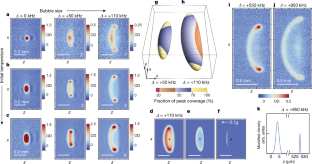
Smitha Vishveshwara is a Professor in the Department of Physics at the University of Illinois at Urbana-Champaign. She holds affiliations with the university’s Materials Research Laboratory and Beckman Institute. Her interdisciplinary work bridges quantum condensed matter theory, biophysics, and artistic expression. PhD in Theoretical Physics (University of California, Santa Barbara, 2002) Postdoctoral Researcher (2002–2005) in the Department of Physics at UIUC Her research focuses on quantum systems, including: Strongly correlated systems in low dimensions (Luttinger liquids, induced superconductivity in nanotubes) Topological order and Majorana fermions in superconductors Quench dynamics in spin chains and optical lattices Microgravity Bose-Einstein condensates and quantum bubbles Biophysics applications (protein networks via percolation theory) Gravitational parallels in quantum Hall systems Recent publications reveal trends in quantum Hall interferometry, Majorana detection schemes, and microgravity condensate dynamics. Awards include the NSF CAREER Award, Simons Fellowship, and APS Fellowship. She teaches courses like “Where the Arts Meets Physics” and has co-created art-science projects such as Quantum Voyages and Quantum Rhapsodies .
Prof. Dr. sc. techn. ETH Oliver Staadt is Full Professor of Computer Science and Chair of Visual Computing at the University of Rostock , Germany. Since 2023 he also serves as Director of the Institute for Visual and Analytic Computing within the Faculty of Computer Science and Electrical Engineering . Previously he was Dean (2016–2018) and Vice Dean (2010–2016) of the same faculty. Education Ph.D. in Computer Science, ETH Zürich (2001) M.Sc. in Computer Science, TU Darmstadt (1994) Research Interests Prof. Staadt’s research spans virtual and augmented reality , computer graphics , visualization , telepresence , immersive analytics , and human–computer interaction . A particular focus lies on real-time rendering and display technologies for large high-resolution display systems, depth-image enhancement for RGB-D sensors, and interaction techniques that leverage spatial cognition and eye-tracking. His work is frequently applied to collaborative settings and microgravity environments, including experiments aboard parabolic flights and the International Space Station. Recent Publication Trends Between 2019 and 2021 his output centers on foveated rendering , AR viewpoint guidance , collaborative analytics on wall-sized displays , and embodied interaction metaphors . Earlier work addressed bandwidth-efficient telepresence, depth-image filtering, and physically-based animation. The corpus reveals a steady evolution from fundamental graphics algorithms toward applied immersive systems. Scientific Awards & Honors Fellow of the Eurographics Association Associate Editor, IEEE Transactions on Visualization and Computer Graphics (past) Associate Editor, Computers & Graphics (past) Associate Editor, Computer Animation and Virtual Worlds (past) Associate Editor, Frontiers in Virtual Reality (current) Chair, Expert Group on Virtual & Augmented Reality, German Informatics Society (2013–2020) Advising & Funding He has successfully supervised more than ten PhD graduates whose dissertations range from collision detection and physically-based animation to 3D interaction in microgravity and predictive user modeling. Current PhD researchers include Bipul Mohanto, Mana Takhsha, and Sven Kluge. His projects are supported by national and EU programs such as EVOCATION, SMOOTH, ARGuide, 3DPick, DIVA, and Telepresence. Labs & Teams Prof. Staadt leads the Visual Computing Group at Rostock, operating state-of-the-art facilities including large tiled display walls, VR/AR laboratories, and motion-capture systems. The institute hosts interdisciplinary collaborations with partners in visualization, computer vision, psychology, and aerospace engineering.
Lorena REBECCHI is a Full Professor in the Department of Life Sciences at the University of Modena and Reggio Emilia. Her research focuses on tardigrade biology, particularly their survival mechanisms under extreme conditions such as desiccation, temperature extremes, and radiation. She explores phylogenetic relationships, symbiotic microbiota, and evolutionary adaptations of these organisms. REBECCHI's work integrates morphological, molecular, and physiological approaches, contributing to understanding anhydrobiosis, stress responses, and tardigrade ecology. Key research areas include tardigrade phylogeny (e.g., resolving their position within Panarthropoda), environmental adaptations (e.g., thermal tolerance and acid resistance), and astrobiology applications (e.g., space flight experiments). She has described multiple new species and revised taxonomic classifications within Tardigrada. REBECCHI collaborates internationally, evidenced by conferences like the 2024 IADCI meeting hosted at her institution. Publications emphasize comparative transcriptomics, symbiont evolution, and the structural basis of tardigrade feeding mechanisms. Her lab's work on Antarctic tardigrades highlights climate change impacts and genetic diversity. REBECCHI's research has practical applications in biotechnology (e.g., space food systems) and environmental monitoring.
Deok-Ho Kim, PhD, is a Professor in the Department of Biomedical Engineering at Johns Hopkins University. His research focuses on integrating nanotechnology, biomaterials, and mechanobiology to advance tissue engineering, regenerative medicine, and disease modeling. Key areas include stem cell engineering, organs-on-chips, and bio-inspired materials for drug screening and cell-based therapies. Education: PhD in Biomedical Engineering from Johns Hopkins University (2010), MS in Mechanical Engineering from Seoul National University (2000), and BS in Mechanical Engineering from POSTECH (1998). Research emphasizes understanding how mechanical and biochemical signals regulate cell behavior in health and disease. Notable work includes microphysiological systems (MPS) for precision medicine, spaceflight effects on cardiac function, and engineered heart tissue models. Recent studies highlighted the impact of microgravity on heart cells and the role of LOXL2 in hypertension. Laboratory: Kim Lab develops cutting-edge tools like nanopatterned electrodes and biomimetic substrates. Collaborations span academia and industry, with media features in Scientific American and coverage of heart-on-a-chip studies in space. Grants and Funding: Active in securing federal and foundation grants for tissue engineering and biomaterials research. Advising: No formal student list provided, but mentors trainees in multidisciplinary approaches.
Jose D'Incao is an Associate Research Professor at the University of Colorado Boulder and an Associate Fellow at JILA, a joint institute of the National Institute of Standards and Technology (NIST) and the University of Colorado. His research focuses on ultracold atomic systems, particularly the study of few-body correlations in atomic systems at ultracold temperatures, including Efimov physics and quantum dynamics in Bose-Einstein condensates. His work addresses fundamental challenges in atomic, molecular, and nuclear physics, with applications to quantum control and novel phases of matter. His research interests include the theoretical analysis of three-body recombination processes, universal few-body physics in spinor condensates, and the interplay between coherence and dissipation in ultracold gases. He has contributed to understanding the generalized Efimov effect in one and two dimensions and explored dynamics in systems such as hybrid ion-atom mixtures and optical lattices. Key projects include studies of Efimov states via Feshbach resonances, light-assisted collisions in optical tweezers, and precision measurements of many-body interactions in microgravity. His work often involves collaboration with experimental groups to bridge theoretical predictions with advancements in cold atom technologies. Jose D'Incao has received funding from the National Science Foundation (NSF) and the Binational Science Foundation (BSF) for projects exploring universality in few-body systems and coherent control of Efimov physics. His research has implications for precision metrology, quantum simulation, and the development of novel quantum technologies.
Dr. Onur G. Apul is an Associate Professor of Civil and Environmental Engineering at the University of Maine and an incoming faculty member at Penn State. He holds a Ph.D. from Clemson University (2014) and bachelor's/master's degrees from Middle East Technical University (Turkey). His research focuses on nanotechnology-driven solutions for water treatment challenges, particularly PFAS and microplastics pollution. He leads the Apul Research Group, which explores advanced oxidation processes, nanomaterials, and nanobubble technologies. Key achievements include developing predictive models for PFAS adsorption, thermal regeneration of activated carbon, and microwave-enhanced remediation. Education: Ph.D. in Environmental Engineering and Science, Clemson University (2014) M.S. in Environmental Engineering, Middle East Technical University (2009) B.S. in Environmental Engineering, Middle East Technical University (2006) Research Interests: Nanomaterials for water treatment (graphene, CNTs) PFAS remediation and thermal regeneration of adsorbents Microplastic pollution dynamics and mitigation Nanobubble-enhanced oxygen transfer in aquaculture Sustainable engineering solutions for emerging contaminants Awards: 2023 Early Career Research Recognition, Maine College of Engineering and Computing Lab & Team: The Apul Research Group includes postdocs, graduate students, and undergraduates working on projects like PFAS lifecycle analysis, nanobubble applications, and space-based water treatment. Notable collaborations include Yale University, Arizona State University, and Penn State.