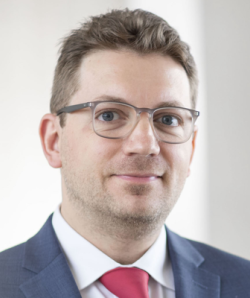
Asmund Kjellegaard Ottesen is a Doctoral Assistant at the Laboratory of Nanoscale Electronics and Structures (LANES) within the School of Engineering at École Polytechnique Fédérale de Lausanne (EPFL). He is enrolled in the Doctoral Program in Photonics through the Doctoral School (EDOC) at EPFL. His research focuses on nanoscale electronics and photonics, with affiliations to the Institute of Microengineering (IEM). Contact: asmund.ottesen@epfl.ch , Office BM 2133, Lausanne. Research interests include advancing nanostructured materials and quantum phenomena in electronic and photonic systems. His work bridges fundamental physics and applied engineering in nanotechnology.
Yegor Piskarev is a Postdoctoral Researcher at EPFL’s Laboratory of Intelligent Systems (LIS), part of the School of Engineering (STI) and Institute of Microengineering (IGM). His work focuses on transitioning medical device concepts into commercial products, particularly an ENT medical device currently undergoing preclinical validation at CHUV Hospital. He holds a Ph.D. (2024) and M.Sc. (2019) in Mechanical Engineering from EPFL, with prior research at North Carolina State University (2018) and a B.Eng. from Bauman Moscow State Technical University (2016). Education B.Eng. in Robotics, Bauman Moscow State Technical University (2012–2016) M.Sc. in Mechanical Engineering, EPFL (2016–2019) Ph.D. in Mechanical Engineering, EPFL (2019–2024) Exchange Master Thesis at North Carolina State University (2018–2019) Research Interests Medical Device Development: Specializing in Class III devices (e.g., cardiac ablation catheters) and ENT devices, ensuring compliance with FDA/MDR standards and ISO 13485/14971. Soft Robotics: Innovating variable stiffness technologies, granular jamming, and electroadhesion for medical applications. Regulatory Expertise: Leading patent applications (2 PCT) and navigating FDA/MDR approval processes. Simulation & Prototyping: Utilizing SolidWorks, Ansys, and 3D printing for device design and validation. Collaborations & Leadership Yegor manages interdisciplinary teams and collaborates with institutions like ETH Zurich and University of Electro-Communications (Tokyo). He secures Swiss national/local grants and oversees quality management systems (QMS) for medical device commercialization. Labs & Teams Based at LIS/EPFL, he contributes to projects like soft actuators and biodegradable electrohydraulic systems, reflecting his focus on advancing medical robotics through both academic and industrial partnerships.
Bertrand Lacour is a Lecturer at the School of Engineering (STI) at EPFL, holding positions in the PAT-GE, SMT-ENS, and SGM-ENS units. He specializes in Mechanical Engineering education, focusing on design, technical communication, and CAD software (CATIA V5). His roles include teaching core courses such as Mechanical Construction I/II and Introduction to Mechanical Design for both Mechanical Engineering (ME) and Microengineering (MT) students. Education: Master of Mechanical Engineering (Dynamique de la Locomotion) from INSA-Lyon (1993-1998). Research interests align with his teaching, emphasizing practical applications of mechanical design and technical communication standards in engineering education. His courses integrate theoretical foundations with hands-on projects to develop students' technical skills.
Sandy Ingram is a Lecturer at EPFL affiliated with the School of Engineering and Department of Microengineering. They teach courses in software architecture focusing on modern practices like agile project management, design patterns, robust code development, and DevOps automation. Previously advised PhD student Rania Islambouli. Their role is listed as 'Hôte' (host) within the EPFL STI-SMT-SMT-ENS organizational structure. Teaching responsibilities include advancing industrial software architecture education through critical application development methodologies. Courses emphasize specifications, testing automation, and continuous integration/deployment processes.
Christian Köchli is a Lecturer and Scientific Collaborator at EPFL's School of Engineering (STI), affiliated with the Integrated Actuators Laboratory (LAI) and the SMT-ENS teaching unit. He holds roles in both research and education, focusing on electromechanical systems and control engineering. Roles: Scientific Collaborator, LAI (STI/IEM) Lecturer, SMT-ENS (Teaching Unit) Engineer, SMT-GE (General Engineering) Research & Teaching: Specializes in electromagnetic actuators, motor control systems, and embedded systems. Teaches courses such as 'Electromagnetic Actuators and Systems I/II' and 'On-board Motor Control.' Supervision: Advisor to doctoral students including Mael Dagon and others listed. Coordinates thesis supervision for advanced engineering topics. Labs: Leads research in LAI, focusing on actuator design and system integration.
Abdeljalil Sayah is a Lecturer and Scientific Collaborator at EPFL's School of Engineering (STI), holding roles across multiple departments including Microengineering (SMT) and Materials & Bioengineering (DLL-STI-MATB). He is affiliated with EPFL STI DLL-STI division and maintains offices at MED 3 1022, Station 9, 1015 Lausanne. His responsibilities span teaching, research collaboration, and departmental management. Primary roles: Lecturer in Microengineering, Scientific Collaborator in Materials/Bioengineering Departments: SMT-ENS (Teaching), SMT-GE (Management), DLL-STI-MATB (Materials), DLL-STI-GE (Management) Research interests focus on microtechnology applications, advanced materials, and bioengineering systems. He coordinates practical training in microfabrication and contributes to interdisciplinary projects at EPFL's engineering divisions. No specific scientific awards mentioned. Active in teaching and lab coordination without detailed grants documented here.
Sergey Shevchik is a Lecturer (Chargé de cours) at the École Polytechnique Fédérale de Lausanne (EPFL), affiliated with the School of Engineering (STI) and the Microengineering Department (STI-SMT). He contributes to teaching and doctoral programs, supervising doctoral students in Microengineering. His teaching includes courses like 'Materials processing with intelligent systems,' reflecting research interests in advanced manufacturing, automation, and materials science. Research focuses on integrating intelligent systems into materials processing, leveraging interdisciplinary approaches in engineering. While specific articles are not listed here, his work likely bridges theoretical and applied aspects of microengineering and smart manufacturing technologies. Awards and grants are not explicitly mentioned in available records. He advises doctoral student Golnoosh Abdollahinejad and is part of the SMT-ENS team within the STI-SMT department. No specific lab affiliations or future works are detailed in the provided information.
Overview Prof. Olivier Martin is a Full Professor of Nanophotonics and Optical Signal Processing at École Polytechnique Fédérale de Lausanne (EPFL), leading the Laboratory of Nanophotonics and Metrology. He holds academic roles in multiple departments including STI's Microengineering and Electrical & Electronics Engineering programs, and oversees doctoral training in Photonics and related fields. His research focuses on plasmonics, nonlinear optics, and metamaterials, with applications in biosensing, optical forces, and nano-manufacturing. Education PhD in Physical Sciences (EPFL, 1994) Engineering Degree (EPFL, 1989) Research Interests Dr. Martin’s work combines numerical simulations, advanced nanofabrication, and experimental techniques to study plasmonic nanostructures. Key areas include metasurface design, nonlinear optical effects, optical trapping, and heterogeneous catalysis. His lab has pioneered studies on anisotropic second-harmonic generation, tunable optical forces, and plasmonic-based security technologies. Publications & Awards With over 300 peer-reviewed articles and patents, his 2016 ERC Advanced Grant supported research into optical-force-driven nanofabrication. He is a Fellow of Optica and serves on editorial boards of Advanced Photonics and Frontiers in Physics . Advising & Leadership Directed 25+ PhD theses at EPFL Directed EPFL’s Doctoral Program in Photonics (2005–2017) Reformed Microtechnology curriculum, launching the Robotics Master’s program Labs & Groups He heads the Laboratory of Nanophotonics and Metrology, focusing on cutting-edge research in nanoscale optical systems and their practical implementations.
Gino Putrino is an Associate Professor and Adjunct Associate Professor at the School of Engineering, Department of Electrical, Electronic and Computer Engineering at The University of Western Australia. He specializes in Microelectromechanical Systems (MEMS), photonics, and advanced sensor technologies with applications in infrared spectroscopy, environmental monitoring, and deep learning-based systems. His research addresses challenges in MEMS actuation, optical filtering, and energy-efficient sensor networks. External roles include serving as Chair of the WA Joint Chapter of IEEE's Electron Devices Society, Solid State Circuits Society, and Photonics Society since 2018. His work aligns with UN Sustainable Development Goals, particularly in advancing sustainable technologies and environmental stewardship. Research interests span MEMS-based photonic switches, silicon-air-silicon DBRs, and beehive monitoring systems using deep learning. Recent publications focus on large imaging arrays, tunable infrared filters, and low-power data acquisition systems for precision agriculture. His work bridges fundamental material science (e.g., thin films, Ge/BaF2 coatings) with applied engineering solutions. Key grants include projects on MEMS-based hydrogen sensing, silicon photonic integrated circuit actuation, and remote beehive health monitoring. Collaborations emphasize defense, environmental, and biomedical applications. His lab develops innovative MEMS fabrication techniques, such as pattern transferring of sacrificial layers and sidewall profile control in polyimide etching. Awards and honors are not explicitly listed but his h-index of 36 and 1,000+ citations reflect impactful contributions. Supervision includes 6 documented advisees, though specific names were not provided. Ongoing projects include multispectral imaging systems and MEMS-driven terahertz absorbers.
Umut Gurkan is the Wilbert J. Austin Professor of Engineering in the Department of Mechanical and Aerospace Engineering at Case Western Reserve University, with a secondary appointment in Biomedical Engineering. As leader of the CASE Biomanufacturing and Microfabrication Laboratory, his research focuses on microcirculation, vascular biology, and point-of-care diagnostics for blood disorders and infectious diseases. Key research areas: Microfluidic systems for sickle cell disease diagnosis Red blood cell adhesion mechanisms Global healthcare accessibility through portable diagnostics He co-founded Hemex Health Inc. and BioChip Labs Inc., commercializing technologies like the Gazelle Hb Variant test. Awards include the NSF CAREER Award, MIT Innovator under 35, and Wiederhielm Award (2023).
Dr. Panos S. Shiakolas is a tenured Associate Professor in the Department of Mechanical and Aerospace Engineering at The University of Texas at Arlington . He earned a PhD in Mechanical Engineering (1992) and BS/MS at The University of Texas at Austin (1986/1988). His career spans robotics, additive manufacturing, medical diagnostics, and control systems, with a focus on micro-devices for medical applications and human-robot interaction . He has mentored numerous students in competitive design contests and developed educational testbeds for robotics and control systems. Research Emphasis : 1) Micro-scale biomedical devices for diagnostics/prognostics in confined anatomical spaces; 2) Additive manufacturing process monitoring; 3) Human-robot interaction for assistive prosthetics; 4) Engineering education pedagogy. His publications cover robotic calibration, laser micromachining, medical device design, and finite element analysis. Awards include multiple Research Excellence Awards at UTA, best paper recognitions, and industry-sponsored design competition wins. He holds memberships in ASME and the National Academy of Inventors .
Hao Zeng is an Associate Professor (tenure track) at Tampere University, specializing in Materials Science and Environmental Engineering . He holds a PhD in Photonics from the University of Florence, focusing on tunable photonics and light-driven soft robotics. Research Focus: Light-responsive soft materials, liquid crystal elastomers, actuation engineering, and programmable robotics Key Collaborators: Arri Priimagi, Hongguang Guo, Quan Yang Scientific Trends: His work bridges photonics, soft robotics, and smart materials, with recent publications on underwater actuation, shape memory polymers, and self-oscillatory systems. Articles highlight applications in micro/nano-scale actuation, adaptive optics, and biomimetic designs. Awards: Academy Research Fellow
Kristina Bespalova is a Researcher at Aalto University's Department of Electrical Engineering and Automation. Her work focuses on piezoelectric microelectromechanical systems (MEMS) and aluminum nitride (AlN) thin film technologies, bridging materials science and electrical engineering to advance MEMS fabrication and performance. Master's Degree in Engineering and Technology, LUT University (2018) Doctoral Thesis: Development of piezoelectric MEMS for multiaxial motion and sensing (Aalto University, 2024) Her research explores the application of AlN in MEMS, particularly on vertical surfaces, enabling innovations in inertial sensing, actuator design, and thin film deposition techniques like atomic layer deposition (ALD) and chemical vapor deposition (CVD). She emphasizes enhancing thin film quality for microtechnology applications. Her publications highlight trends in MEMS fabrication, AlN material science, and sidewall processing. Notable works include studies on high-quality AlN deposition methods and their impact on sensor development and microtechnology advancements. Scientific Award: JVST A Best ALD Paper Award (2021) Bespalova collaborates internationally and contributes to the Electronics Integration and Reliability group at Aalto University, advancing MEMS and thin film research through interdisciplinary partnerships.
Boegli Alexis is an Associate Professor at Haute Ecole Arc - Ingénierie (HES-SO) since 2018, with a PhD in Science from the University of Neuchâtel. Specializing in embedded systems, RF technologies, and energy-efficient electronics, he focuses on applications requiring high constraints such as energy autonomy and compactness. His research spans BLE-based localization, dielectric elastomer actuators, and energy harvesting for biomedical devices. His educational background includes a BSC in Computer Science and Communication Systems from HES-SO and advanced studies in Microengineering at EPFL. He teaches courses like Electrotechnics I and co-supervises doctoral students in interdisciplinary projects. Key research areas include: RF Localization Systems (BLE AoA/AoD) High-Voltage Electronics for Capacitive Actuators Zero-Power Wearable Energy Harvesting Smart Sensor Networks Recent work demonstrates sub-meter accuracy in IoT localization systems using BLE and developed ultra-high-voltage (7kV) converters for dielectric elastomer actuators. His 2025 research explores inverted actuation cycles for facial prosthetics, reducing energy consumption by 1.5%. Patents include a BLE-based access control system combining RF positioning and video analysis (2022) and a real-time regulatory compliance method for wireless transmitters (2013). Collaboration with EPFL and CSEM drives technology transfer in industrial and biomedical applications. His projects often involve Innosuisse, SNSF, and industry partners.
Hannes Bleuler is a Professor at École Polytechnique Fédérale de Lausanne (EPFL), affiliated with the School of Engineering and the Laboratory of Robotics Systems (LSRO). His primary email contact is hannes.bleuler@epfl.ch, confirming his active status as a current EPFL member. His research spans multiple disciplines including Robotics, Haptic Interfaces, Mobile Robotics, Field Robotics, Microengineering, and Electrochemistry. Professor Bleuler's work demonstrates strong interdisciplinary connections between mechanical engineering, electrical systems, and human-computer interaction, with particular emphasis on practical applications in medical, industrial, and virtual environments. Analysis of his publication trends shows consistent research activity over two decades, with 206 scholarly works including 32 doctoral theses (suggesting significant student supervision), 45 research articles, and 76 conference papers. His recent work (2020-2023) focuses on advanced haptic feedback systems, energy efficiency in mobile robotics, and novel actuation methods for miniature robotic systems, reflecting ongoing innovation in his field. Professor Bleuler has collaborated extensively with researchers including Rolf Wüthrich, Roger Gassert, Mohamed Bouri, and Francesco Mondada, indicating strong institutional connections within EPFL's robotics community. His research has been published in prestigious venues including Electrochimica Acta, Journal of Micromechanics and Microengineering, and Emerging Trends in Mobile Robotics, demonstrating both theoretical rigor and practical application of his work.