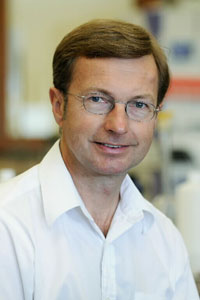
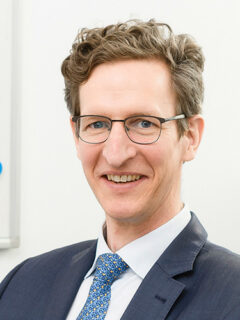
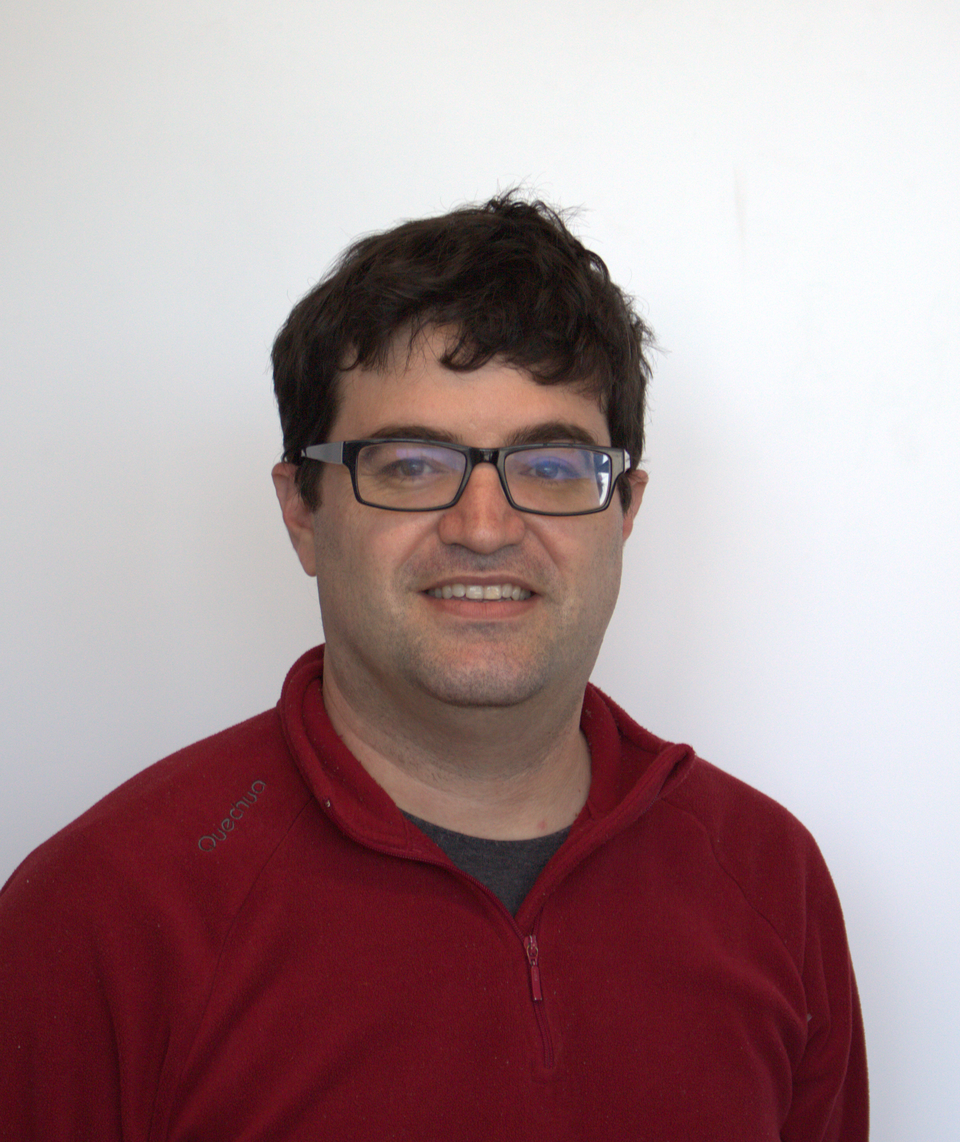
Lasse Cordes is a Researcher at the Ruhr University Bochum within the Faculty of Electrical Engineering and Information Technology, Department of Integrated Systems. His work focuses on advanced sensor design and semiconductor technologies. Research interests include: High-frequency sensor systems BiCMOS integrated circuit applications Medical technology integration Semiconductor device optimization Recent publications demonstrate expertise in microwave engineering and power detection technologies. He is based at the Integrated Systems department, collaborating on projects like KI-ROJAL and PluTO+.
Prof. Hans Dieter Schotten is a leading academic in mobile and industrial communications, serving as Professor of Radio Communication and Navigation at Rheinland-Pfälzische Technische Universität Kaiserslautern-Landau and Scientific Director/Head of the Intelligent Networks department at the German Research Center for Artificial Intelligence (DFKI) since 2007. He coordinates Germany's 6G Platform and leads the Open6GHub research hub. Education: Electrical Engineering (RWTH Aachen University, 1984–1990) Doctorate: Doctor of Engineering (RWTH Aachen University, 1997) His research focuses on: Next-generation 5G/6G network design Security in Industry 4.0 systems Wireless automation for automotive/railway applications AI-driven network trustworthiness (e.g., IGEL-AI project) Real-time 6G healthcare solutions (e.g., 6G-Health project) Asset Administration Shells for industrial interoperability Recent publications emphasize cell-free massive MIMO optimization and impatient queuing strategies in 6G contexts. He advises international companies, courts, and organizations on technical standards and serves on advisory boards for institutions like IHP - Leibniz Institute for Innovative Microelectronics.
Dr. Uwe Pelz is a Researcher at the Chair of Microsystem Construction within the Department of Microsystems Engineering (IMTEK) at the University of Freiburg. He serves as a Responsible Investigator for projects in the livMatS (Living, Adaptive and Energy-autonomous Materials Systems) cluster, focusing on thermoelectric energy harvesting and microsystem technologies. His work includes developing advanced materials for energy systems and microfabrication processes using printed circuit board (PCB) technologies. Key research areas include thermoelectric materials, 3D printing of phase change materials, and micro-thermoelectric generator (μTEG) fabrication. Pelz has contributed to projects like ThermoMetaS (thermoelectric metamaterial surfaces) and ThermoBatS (thermoelectric battery systems), funded by the DFG (German Research Foundation). His publications span topics such as paraffin-based photoresins for additive manufacturing, PCB-integrated micro-TEGs, and nano-scale material dispersions for energy harvesting. Pelz is actively involved in academic activities through livMatS, including organizing colloquia and contributing to outreach programs like IDEASfactory@FIT. His interdisciplinary approach bridges materials science, microengineering, and sustainable energy solutions.
Houpeng Chen is a Research Professor at the Chinese Academy of Sciences, specifically affiliated with the School of Microsystem and Information Technology in the Department of Microelectronics. With over two decades of research experience since the early 2000s, Chen has established himself as a leading expert in memory systems and circuit design, particularly in the areas of Phase Change Memory and neuromorphic computing. Chen's research primarily focuses on advanced memory technologies, with particular emphasis on Phase Change Memory (PCM) systems, neuromorphic computing architectures, and analog circuit design for memory applications. His work spans from fundamental circuit design for memory systems to advanced computing architectures that leverage novel memory technologies. A significant portion of his recent work explores in-memory computing paradigms and brain-inspired computing systems, demonstrating a strategic shift toward next-generation computing architectures that address the limitations of traditional von Neumann systems. Analysis of Chen's publication record shows a clear evolution from traditional circuit design toward more innovative memory-based computing architectures. His recent work demonstrates strong expertise in 3D cross-point memory systems, in-memory computing, and neuromorphic hardware implementations. The research shows consistent quality with publications in top-tier IEEE journals and conferences, indicating strong recognition within the semiconductor and memory research community. As evidenced by the authorship patterns in his publications, Chen has successfully mentored numerous graduate students and junior researchers who have gone on to become first authors on significant publications. His collaborative network includes extensive work with Zhitang Song, Qian Wang, and Xi Li, suggesting a well-established research group with strong internal collaboration.
Prof. Dr.-Ing. Pascal Witte is a Professor at the University of Applied Sciences and Arts Hanover, affiliated with the Department of Integrated Circuits and Embedded Systems (EIT-IES). His research focuses on analog and integrated circuit design, particularly in delta-sigma modulators, DAC linearization, and embedded systems. Research interests: Integrated Circuits, Embedded Systems, Analog Circuit Design Key memberships: VDE, IEEE Senior Member Committee roles: Faculty Council member, Deputy Head of the Institute for Sensor Technology and Automation His work emphasizes low-power and high-efficiency circuit design, with notable publications in IEEE journals and conferences like ISSCC and ISCAS. He contributes to academic governance as a deputy member of the Research Commission and Senate Commission for Continuing Education. Contact: pascal.witte@hs-hannover.de
Dr. Hongrong Hu is a Research Fellow at the Institute of Nanotechnology, Karlsruhe Institute of Technology (KIT), Germany, affiliated with the Electronic Devices and Systems research unit. Her work focuses on advancing printed memristive technologies for next-generation memory applications. Her research expertise spans: Memristive Devices and Resistive Random-Access Memory (ReRAM) Printed Electronics Fabrication (Inkjet/Laser Printing) Non-Volatile Memory Systems Metal-Oxide Semiconductor Materials High-Entropy Compounds for Memory Neuromorphic Computing Hardware Analysis of her 2021-2025 publications reveals a strategic progression from fundamental device characterization (e.g., noise properties in printed transistors) toward sophisticated material engineering (high-entropy Prussian Blue analogs, metal-organic frameworks) and neuromorphic applications. Her work consistently bridges materials science, electrical engineering, and nanofabrication to solve scalability challenges in printed memory devices. Scientific recognition: No awards or fellowships documented in available sources Dr. Hu's academic mentoring and grant activities are not publicly detailed, though her collaborative publications suggest active participation in KIT's research ecosystem. She contributes to the Electronic Devices and Systems unit's mission of developing innovative electronic solutions through printed and flexible technologies for real-world applications.
Pengcheng Xu is a Researcher at the Technical University of Munich's Chair of Circuit Design under Prof. Ralf Brederlow, specializing in analog and mixed-signal circuit design. His work spans energy harvesting systems, neuromorphic hardware, and wireless sensor technologies, with strong industry connections including prior roles at Huawei and Fraunhofer EMFT. Education: Bachelor of Physics, Shanghai Normal University (2013) Master of Integrated Circuit Engineering, Tongji University (2016) Ph.D. in Electrical Engineering, Université catholique de Louvain (2021) Exchange Student, University of Erlangen-Nuremberg (2015) Xu's research focuses on practical applications of circuit design including RF energy harvesting for battery-less IoT sensors, neuromorphic accelerators for edge computing, and precision analog systems for electrochemical/ mechanical stress sensing. His work bridges theoretical circuit innovation with real-world implementation in semiconductor processes from 28nm FDSOI to emerging memory technologies. His publications demonstrate consistent high-impact contributions to IEEE journals and conferences including JSSC, ISSCC, and ESSCIRC, with particular expertise in impedance-aware rectifier design and low-power circuit architectures. Xu holds a pending European/US patent for RF energy harvesting systems. Awards and Recognition: Shanghai Outstanding Graduate Award (2013, 2016) Chinese Government Award for Outstanding Self-Funded Students Abroad (2020) Chinese National Scholarship (2012, 2014, 2015) Meritorious Winner, Mathematical Contest in Modeling (2013) Xu actively contributes to the academic community as IEEE Young Professionals Germany Chair (2023-2024), IEEE Design Automation Conference TPC member (2022-2024), and reviewer for multiple IEEE journals. He supervises student theses in analog circuit design and neuromorphic hardware through TUM's Chair of Circuit Design, which maintains strong industry partnerships with semiconductor companies.
Prof. Matthias Militzer holds the Dofasco Chair in Advanced Steel Processing at the Department of Materials Engineering, Faculty of Applied Science, The University of British Columbia. He specializes in multi-scale modeling of microstructure evolution and physical metallurgy of advanced low-carbon steels, with interdisciplinary research in Cu interconnects for microelectronics. Research Interests: Multi-scale modeling of microstructure evolution during phase transformations Physical metallurgy of advanced high-strength steels (e.g., dual-phase steels, linepipe steels) Recrystallization and grain growth in electrodeposited Cu thin films Collaborations: McMaster University, ArcelorMittal Dofasco, Evraz, Dan Bizzotto (UBC), Ilya Elfimov (UBC) Recent Publications: Focus on phase transformations in Fe-Mn alloys, intercritical annealing, solute-interface interactions, and multi-scale models linking atomistic simulations to macroscopic process optimization in steels. Scientific Awards: Runner’s-up certificate as 'highly commended' in the James Clerk Maxwell Young Writers Prize (2013)
Prof. Roland A. Fischer is a Full Professor at the Technical University of Munich (TUM) since 2016, leading the Chair for Inorganic and Metallorganic Chemistry within the TUM School of Natural Sciences. His research focuses on the synthesis and applications of supramolecular materials, particularly metal-organic frameworks (MOFs) and intermetalloid clusters, with applications in energy storage, catalysis, photonics, and microelectronics. He holds a PhD from TUM (1989) and habilitation (1995), with prior professorships at the University of Heidelberg (1996–1997) and Ruhr University Bochum (1997–2015). He served as Vice President of the German Research Foundation (DFG, 2016–2021) and Academic Director of the Central Institute for Catalysis Research since 2018. His career includes roles as Dean of the Faculty of Chemistry & Biochemistry at RUB (2005–2008) and coordination of EU-funded projects like SURMOF (EU STREP, 2006–2009) and DEFNET (Horizon 2020, 2015–2018). He has published over 680 papers (h-index 101), with contributions to MOF-based catalysis, energy materials, and stimuli-responsive systems. Awards include the Heinz Maier-Leibnitz Prize (1993), Alfried Krupp Award (1996), and an honorary doctorate from Ruhr-University (2018). Research interests include MOF design for CO₂ capture, photocatalytic fuel production, and functional hybrid materials. Notable contributions include developing MOF-based electrocatalysts and understanding cluster growth dynamics. His work bridges fundamental chemistry with applications in sustainable energy and environmental technologies. He is an editorial board member of Angewandte Chemie and Chemical Vapour Deposition . His labs focus on synthesis, characterization, and device integration of advanced materials. Collaborative projects span academia and industry, emphasizing translation from lab to real-world applications.
Peter Hommelhoff is a Professor in the Chair of Laser Physics at Friedrich-Alexander University Erlangen-Nürnberg (FAU) . His research focuses on dielectric laser acceleration , nanostructured electron sources , and quantum nanophotonics . Key Research Areas: Quantum-coherent control of free electrons Attosecond electron pulse generation Ultrafast dynamics in 2D materials (graphene, hexagonal systems) On-chip photonic particle acceleration Light-driven electron emission from nanotips Quantum interference in electron-photon interactions Recent Publications highlight advancements in dielectric laser accelerators (Nature, 2023), auto-ponderomotive beam control (Phys. Rev. Lett., 2024), and non-classical electron emission (Nature Physics, 2024). His work also explores graphene valley control and Bloch electron interferometry for material band-structure analysis. Laboratory Context: The Chair of Laser Physics at FAU investigates nanostructured electron sources , photonic control of charged particles , and quantum applications in electron microscopy and sensing. Collaborations span quantum nanophotonics , attosecond science , and integrated photonic circuits .
Zhangming Zhu is a Professor at Xidian University in the School of Microelectronics . He specializes in Microelectronics and Circuit Design , with a focus on Analog-to-Digital Converters (ADCs) , CMOS Technology , and Low-Power Electronics . His work addresses challenges in high-speed, high-precision, and energy-efficient circuit design. Research Interests: His publications highlight expertise in ADCs, PLLs, energy harvesting, biomedical sensors, and RF systems. Recent Publications: 2025 papers include a 12-bit 1.5-GS/s ADC , a 5-18-GHz Quadrature Receiver , and 20-bit SAR ADC with thermal error suppression. Collaborations: Frequently co-authors with Shubin Liu, Yi Shen, Ruixue Ding, and others. Applications: Work spans consumer electronics, IoT, biomedical devices, and energy-efficient systems.
Prof. Dr.-Ing. Guillermo Payá Vayá leads the Chair for Chip Design for Embedded Computing at Technical University of Braunschweig's Faculty of Electrical Engineering, Information Technology, and Physics. His research focuses on processor architecture design, FPGA/ASIC implementations, and optimization techniques for embedded systems, particularly in high-performance, low-power, and radiation-hardened computing domains. Primary research interests include: Application-Specific Instruction Set Processors (ASIPs) and compiler co-design Radiation effects characterization and fault-tolerant hardware Ultra-low-power processor architectures for embedded AI Hardware acceleration of neural networks and computer vision algorithms Memory subsystem optimization and parallel computing techniques Recent publications demonstrate strong emphasis on radiation-hardened electronics (35% of recent works), AI accelerator design (27%), and ultra-low-power systems (20%), with growing interest in biomedical applications. Experimental validation through FPGA prototyping and semiconductor testing is a consistent methodology across research domains. Leads research team investigating: Radiation-tolerant FPGA architectures (Trumann, Weide-Zaage) Vector processor optimization (Gesper, Thieu) Nano-scale controller design (Weißbrich) AI-hardware co-design (Kautz, Beyer)
Dr. Yaroslav Gerasimenko serves as Group Leader of the Lightwave-STM research group within the Huber group at the University of Regensburg, Germany, where he directs the ERC-funded Orbital Cinema project. His position represents an independent faculty-level research role focused on ultrafast quantum material dynamics. His academic training includes a PhD in Condensed-Matter Physics (2008-2014) from the P. N. Lebedev Physical Institute of the Russian Academy of Sciences and undergraduate studies in Physics and Microelectronics (2002-2008) at the Moscow Institute of Electronic Technology, Russia. Postdoctoral experience spans the University of Regensburg (2020-2022), Jozef Stefan Institute in Slovenia (2016-2020), and P. N. Lebedev Institute (2015). Gerasimenko pioneers lightwave-controlled scanning tunneling microscopy to achieve simultaneous atomic spatial and subcycle temporal resolution. His research centers on quantum materials including transition metal dichalcogenides (e.g., 1T-TaS 2 ) and metal halide perovskites, with emphasis on charge density waves , Mott physics , and non-equilibrium phase transitions . Key innovations involve terahertz plasmonics in graphene and quantum jamming transitions, often leveraging light-induced metastable states. Recent publications (2023-2025) demonstrate breakthrough capabilities in atomic-scale ultrafast imaging , including Nature cover stories on subcycle microscopy and Nature Photonics cover stories on atomic-scale spectroscopy. The work establishes new paradigms for visualizing electron dynamics at fundamental spatiotemporal limits, with applications spanning quantum computing components and next-generation photovoltaics. Scientific recognition includes: ERC Starting Grant for Orbital Cinema project (2023) As principal investigator of the ERC project, Gerasimenko leads instrumentation development for lightwave-STM systems. His research program involves collaborations with the Jozef Stefan Institute (Slovenia), P. N. Lebedev Institute (Russia), and international quantum material consortia. Current efforts focus on extending ultrafast nanoscopy to topological materials and quantum annealers. The Lightwave-STM laboratory at University of Regensburg houses custom cryogenic scanning probe microscopes integrated with multi-terahertz laser systems, enabling experiments at 0.1-atom spatial and 1-femtosecond temporal resolutions under extreme conditions.
Markus Kuhn is a researcher at the University of Cambridge with a diverse academic career spanning over two decades, evidenced by publications from 2003 to 2023. His work bridges educational technology, computer science, and autonomous systems, demonstrating significant interdisciplinary reach across multiple domains. Dr. Kuhn's research has evolved through distinct phases. Initially focused on educational technology (2003-2007), he published extensively on classroom scenarios, collaborative learning, and media integration. His work then broadened to include physics computation (2008) and process support for inquiry learning (2010). More recently (2016-2023), his research has shifted toward autonomous systems, with publications on self-localization technologies and map generation for autonomous vehicles. This publication trajectory reveals a researcher who has successfully adapted his expertise from educational applications to more technical domains while maintaining connections to his foundational work in learning systems. His research demonstrates consistent innovation in applying computational approaches to solve practical problems across different contexts. Dr. Kuhn has maintained long-term collaborations with researchers including Heinz Ulrich Hoppe, Andreas Harrer, and Andreas Lingnau, indicating strong interdisciplinary networks. His work has been published in diverse venues ranging from IEEE Access and Microelectronics Reliability to Research and Practice in Technology Enhanced Learning and International Conferences on Computer-Supported Collaborative Learning.
Dr. Yolita Eggeler is an Assistant Professor in the Department of Physics at the Karlsruhe Institute of Technology (KIT), leading the LEM (Laboratory for Experimental Materials) research group. Her work focuses on advanced materials science, nanotechnology, and additive manufacturing, with a particular emphasis on laser-based fabrication techniques, thermoelectric materials, and micro/nanostructural characterization. She is affiliated with the KIT Physics Department and collaborates on projects involving energy harvesting, semiconductor devices, and high-temperature alloy behavior. Research interests include: Laser microprinting of semiconductors and metals Thermoelectric generator design and optimization Nanoparticle synthesis and applications High-temperature material degradation and creep mechanisms Recent publications highlight innovations in photothermal laser printing of crystalline materials, novel thermoelectric modules, and core-shell nanocrystal engineering. Her work bridges fundamental materials science with applied technologies like flexible electronics and energy conversion systems. Key collaborations involve advanced TEM analysis for microstructural studies and correlative microscopy techniques. She is actively developing new methodologies for in-situ pyrolysis of 3D-printed materials and exploring AI-driven materials discovery through concept graph analysis. Laboratory facilities include state-of-the-art laser printing systems, electron microscopy setups, and thermal characterization equipment. Her team focuses on translating lab-scale innovations into scalable manufacturing processes for next-generation electronic and energy systems.