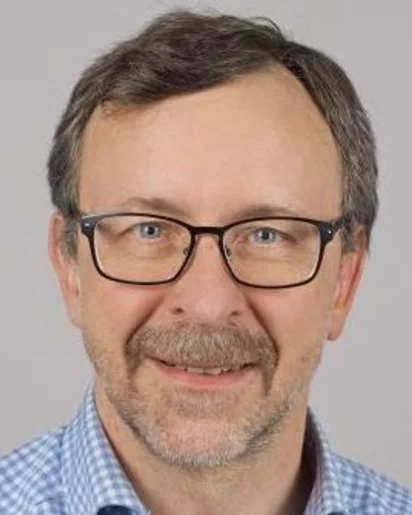
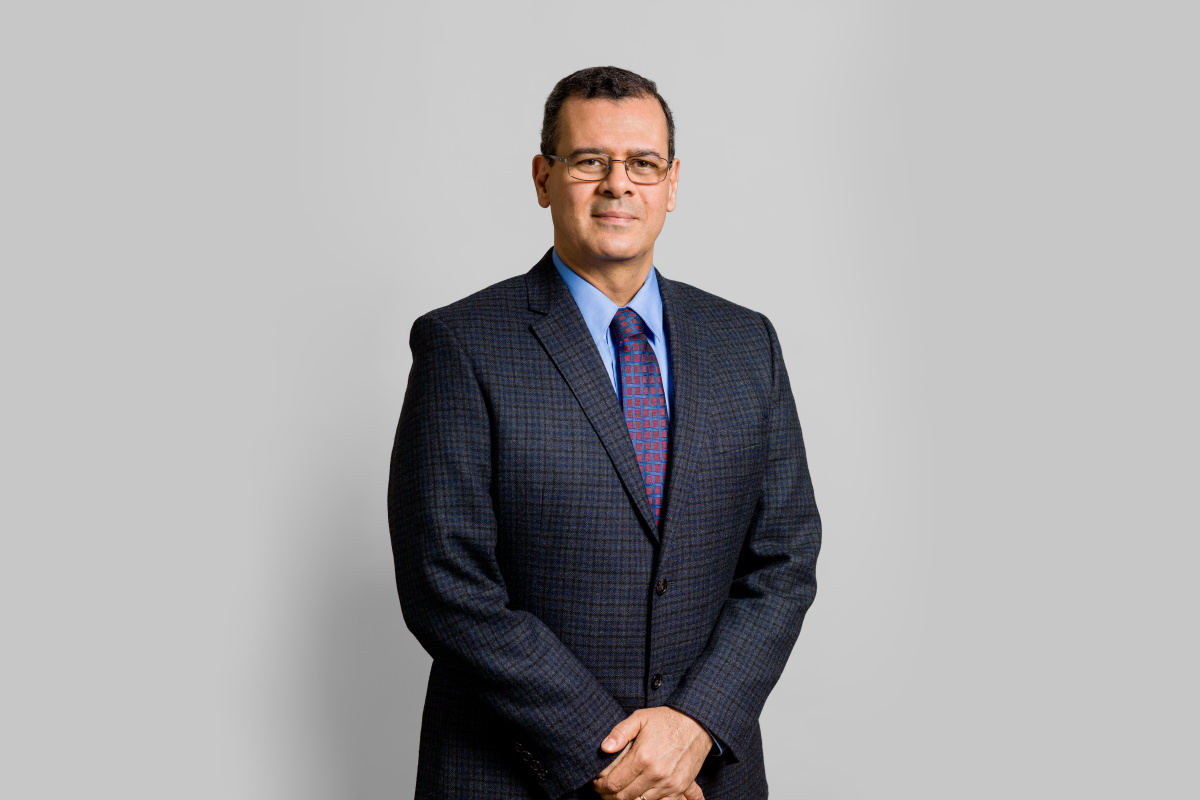
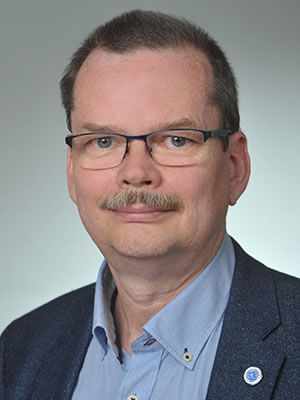
Marc Seefeldt is a Professor at the Faculty of Engineering Sciences , affiliated with the Department of Materials Science at KU Leuven. He is a member of the Leuven Institute for Additive Manufacturing (Leuven.AM) and holds leadership roles in academic governance, including membership in the Faculty Council of Engineering Sciences and the Departmental Council for Materials Science . Focuses on materials behavior under extreme conditions , including fatigue crack initiation in nuclear environments (lead-bismuth eutectic), additive manufacturing of titanium alloys, and microstructural simulation frameworks. Key projects include TITREX (tailored thermal expansion in titanium alloys), PROCSIMA (additive manufacturing simulation), and Multi-SCOPE (multi-scale characterization). His research integrates experimental techniques (synchrotron X-ray diffraction, hybrid bonding analysis) with computational modeling (phase-field, crystal plasticity). He supervises students on topics spanning liquid metal embrittlement , Cu bulge-out mechanisms , and texture evolution in titanium . Teaching responsibilities include courses in continuum modeling , physical foundations of materials engineering , and project-based materials education .
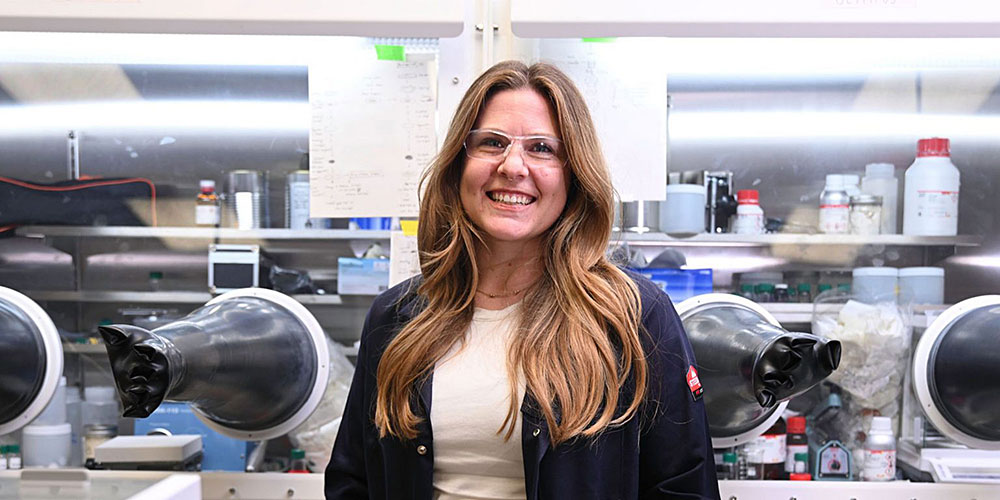
Chris Anderson is an Assistant Professor at the University of Illinois at Urbana-Champaign, with affiliations in Materials Science and Engineering, Physics, Electrical and Computer Engineering, the Holonyak Micro and Nanotechnology Lab, and the Materials Research Laboratory. He is a member of the Illinois Quantum Information Science and Technology Center and Senior Personnel in Hybrid Quantum Networks and Architectures. Ph.D. in Physics from the University of Chicago (NDSEG fellowship) B.S. in Physics and Chemistry from the University of Michigan His research focuses on enabling quantum technologies through materials science, specifically targeting silicon carbide spin qubits, electro-optic materials near quantum phase transitions, and heterogeneous integration of quantum systems. He has pioneered methods to enhance spin coherence, narrow optical linewidths via charge depletion, and develop quantum modems for scalable photonic networks. His recent publications span quantum coherence engineering, electro-optic nonlinearities, and photonic device integration, reflecting his lab's emphasis on scalable solutions for quantum computing, sensing, and communication. Collaborations include leading institutions and initiatives like the Chicago Quantum Exchange and NSF Quantum Leap Challenge Institute. Quantum Creators Prize (2022) Google Academic Research Award (2024) AFOSR Young Investigator Award (2025) NSF CAREER Award (2025) NAE Frontiers of Engineering (2025) As a mentor, he won UChicago’s inaugural mentorship award and co-founded the Open Quantum Initiative to promote DEI in quantum science. His lab provides state-of-the-art facilities within the context of UIUC’s robust quantum ecosystem, including the Illinois Quantum and Microelectronics Park and DARPA Quantum Proving Grounds.
Dr. Helmut Schift is an academic Lecturer at the Paul Scherrer Institute (PSI) and the University of Applied Sciences and Arts Nordwestschweiz (FHNW). He leads the Advanced Nanomanufacturing (ANaM) Group within PSI's Laboratory for Nano and Quantum Technologies, focusing on nanoimprint lithography (NIL) and polymer nanotechnology. His career spans over 30 years, with key contributions to 3D surface patterning, microfluidics, and printed electronics. His research interests center on nanoimprint lithography , 3D lithography , and polymer surface modification for applications in micro-optics , quantum chips , and printed electronics . His work bridges academic research and industrial implementation through initiatives like the INKA-PSI joint venture and the ANAXAM center. Recent publications highlight innovations in room-temperature glass imprinting , low-cost nanofabrication , and ultrasmooth surface techniques . His research trends emphasize additive manufacturing , hybrid structuring , and scaling of NIL processes for commercial viability. Scientific recognition includes: Swiss Technology Award (2005) Nanoimprint Pioneer Award (2016) EIPBN Best Journal Paper Award (2022) AVS Journal Most Valuable Reviewer (2016) At PSI, he oversees the Park Innovaare Cleanrooms (PICO) and drives technology transfer via start-ups XRnanotech and INVEEL. He also completed MAS studies in Applied Ethics at the University of Zürich (2021) and serves as a Consultant on Research Integrity (30% FTE).
Agin Vyas is a researcher at Chalmers University of Technology specializing in microsupercapacitors, energy harvesting technologies, and on-chip power solutions for self-powered sensor networks. He completed his Doctoral thesis in 2022 titled 'On-chip electrochemical capacitors and piezoelectric energy harvesters for self-powering sensor nodes' following his Licentiate thesis in 2019. Dr. Vyas's research focuses on developing CMOS-compatible microsupercapacitors, vertical graphene-based energy storage devices, and integrated energy harvesting solutions. His work addresses critical challenges in electrode design, materials science, and device integration for on-chip power applications. He has made significant contributions to understanding the impact of electrode geometry, surface roughening techniques, and novel materials like reduced graphene oxide on microsupercapacitor performance. His research spans fundamental materials investigations to practical device implementation, with a strong emphasis on manufacturability and integration with existing semiconductor processes. Analysis of Dr. Vyas's publication record from 2016-2024 reveals a consistent research trajectory with increasing complexity and impact. His work has evolved from foundational studies on individual components to integrated systems combining energy harvesting and storage. The research spans materials science, device physics, and practical engineering considerations, demonstrating both theoretical depth and practical applicability. His publications appear in reputable journals across materials science, microelectronics, and energy storage domains. Dr. Vyas currently leads the European Commission-funded 'GreEnergy' project (2021-2024) on wideband optical antennae for energy harvesting applications, demonstrating his capability to secure competitive research funding and lead significant research initiatives. His work bridges fundamental materials science with practical engineering solutions for next-generation energy systems, with applications in IoT, wearable technology, and autonomous sensor networks.
Nikhil Tiwale is a Staff Scientist at Brookhaven National Laboratory's Center for Functional Nanomaterials, specializing in micro/nanofabrication techniques like electron beam lithography and vapor-phase infiltration. His research focuses on hybrid nanomaterials for semiconductor applications, with a Ph.D. in Solid-State Electronics from the University of Cambridge and dual degrees in Metallurgical Engineering from IIT Bombay. Education: Ph.D., University of Cambridge (2017) - Solid-State Electronics and Nanoscale Science B.Tech. + M.Tech., IIT Bombay (2012) - Metallurgical Engineering and Materials Science Tiwale's research bridges scalable nanofabrication methods for microelectronics, optoelectronics, and photonic computing. His work on hybrid photoresists and DNA-programmable frameworks has led to patents and industry collaborations, including with Intel and Samsung. He explores quantum electronics and 2D materials for next-generation semiconductor architectures. His recent publications highlight trends in EUV lithography, DNA-guided nanofabrication, and metal oxide hybrid materials. Tiwale has received multiple awards, including Brookhaven's Top 10 Discoveries (2024), SPIE's C. Grant Willson Best Paper Award (2021), and the National Talent Search Exam Scholarship (2004). Scientific Awards: Brookhaven's Top 10 Discoveries (2024) SPIE C. Grant Willson Best Paper Award (2021) NSLS-II/CFN Users' Meeting Poster Winner (2019) NTSE Scholarship (2004) Tiwale collaborates with global institutions, including University of Wisconsin–Madison and Indian research groups. He trains users in nanofabrication techniques and contributes to DOE-funded projects like LuSEE-Night, which aims to deploy a lunar radio telescope.
Dr. Simon Binder is a Postdoctoral Researcher at the Institute of Nanotechnology (INT) at Karlsruhe Institute of Technology (KIT), Germany. His work focuses on Electronic Devices and Systems , with physical presence in both the main institute building (Room 0-432) and the Innovation Lab. Contact: simon.binder@kit.edu | Phone: +49 721 608-28493 Institutional Affiliation : Institute of Nanotechnology (KIT) Research Focus : Electronics, nanoscale systems, semiconductor devices Location : Hermann-von-Helmholtz-Platz 1, 76344 Eggenstein-Leopoldshafen, Germany
Professor Andrew Webb is affiliated with Delft University of Technology's Faculty of Electrical Engineering, Mathematics and Computer Science, Department of Microelectronics. His research focuses on medical imaging technologies, particularly low-field MRI systems using Halbach arrays. Developed innovative MRI system designs to reduce eddy currents Investigated gradient field effects on image quality Created affordable portable MRI devices for developing regions Applied deep learning techniques to improve image resolution In 2023, he received the Huibregtsen Prize for his work on affordable MRI scanners alongside Johnes Obungoloch. His research output demonstrates significant contributions to both engineering design and biomedical applications, with international collaborations evident through publications in leading journals.
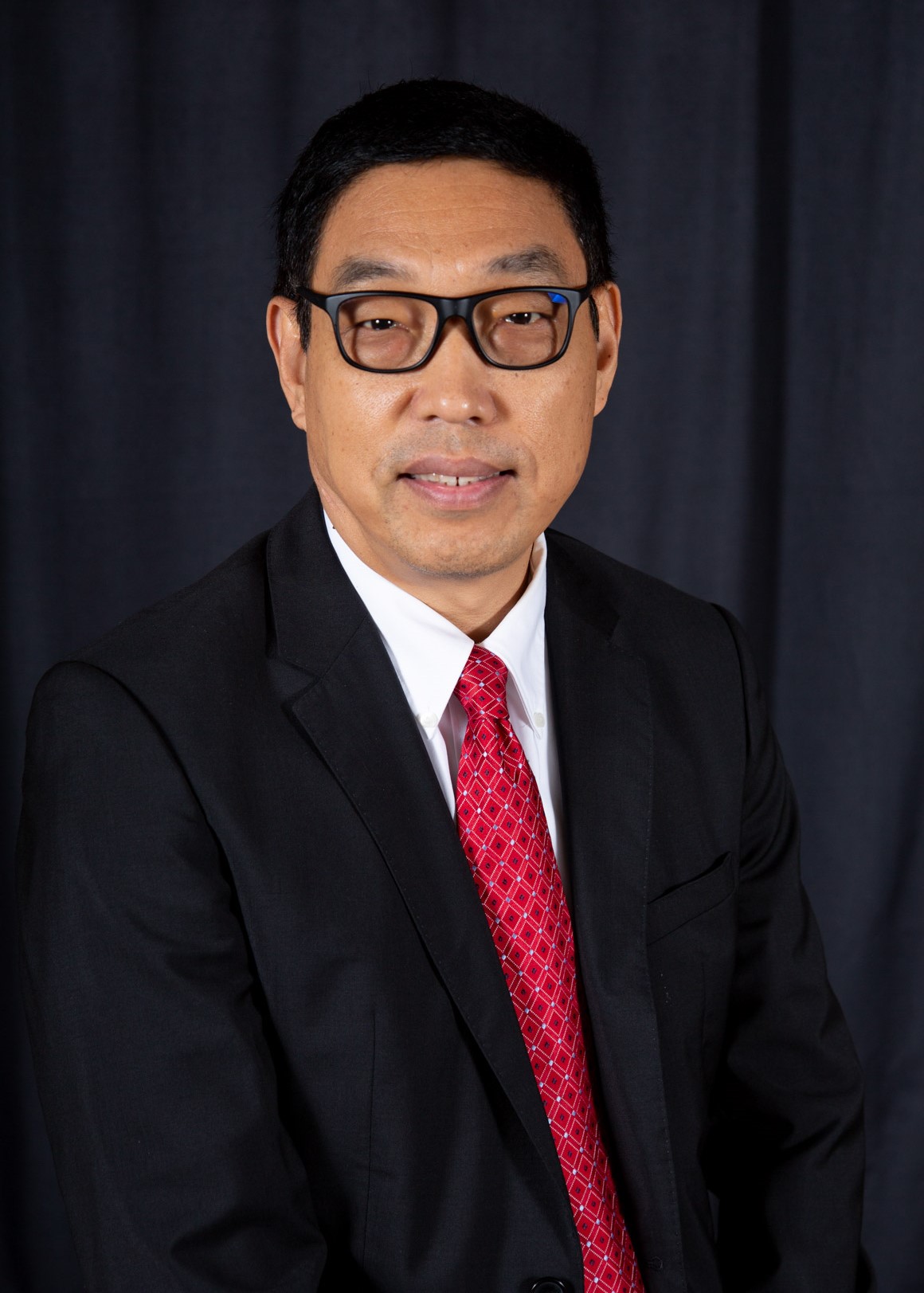
Dr. Xuejun Fan is a Regents' Professor and Mary Ann and Lawrence E. Faust Endowed Professor in the Department of Mechanical Engineering at Lamar University. His career spans academia and industry, with expertise in microelectronics packaging reliability, material characterization, and thermal management. He earned his Ph.D. in Solid Mechanics from Tsinghua University (1989) and held roles at Taiyuan University of Technology, University of Tokyo, and Intel Corporation before joining Lamar University in 2007, where he was promoted to full professor in 2013. Education: Ph.D. (Solid Mechanics, Tsinghua University), M.S. & B.S. (Applied Mechanics, Tianjin University) Dr. Fan's research focuses on multi-physics modeling of electronic packaging, moisture-induced reliability in IC devices, electromigration analysis in interconnects, and thermal management for LEDs and power electronics. His work includes nanoscale material characterization and warpage-free packaging design . Publications highlight applications in heterogeneous integration and corrosion-resistant nanomaterials . His 15 most recent articles emphasize chiplet packaging , electromigration modeling , and AI-driven reliability optimization . Key trends include thermal-mechanical stress analysis in SiC modules and moisture diffusion in nanocopper pastes. Scientific Awards: IEEE Fellow, EuroSimE Achievement Award, Top 2% Scientist (2024), Distinguished Faculty Research Fellow Dr. Fan mentors graduate students in finite element analysis , electromigration , and material testing using equipment like DMA/TMA/TGA analyzers and Labsphere Illumia Pro . He serves as Associate Editor for IEEE Transactions and Microelectronics Reliability, and contributes to industry standards via IEEE EPS.
Nicolas Constantin is a Professor in the Department of Electrical Engineering at École de technologie supérieure (ÉTS), Université du Québec, where he teaches courses including Electrical Circuits (ELE105) and Analog Microelectronics (SYS811). His research focuses on analog and RF microelectronics, microwave circuits, and wireless communications, with specific expertise in RF transmitters and receivers, test methods for analog and RF circuits, and power integrity in high-speed switching systems. His educational background includes: B.Eng. from École de technologie supérieure (ÉTS) M.Sc.A. from Polytechnique Montréal Ph.D. from McGill University Dr. Constantin's research spans multiple domains within electrical engineering, with a consistent focus on improving the linearity and efficiency of RF power amplifiers through innovative techniques like positive envelope feedback. His work bridges fundamental circuit design with practical applications in wireless communications, aerospace systems, and power electronics. Recent research has expanded into GHz-range power integrity modeling for switch-mode converters, millimeter-wave identification systems, and integrated solutions for avionic applications, demonstrating both depth and evolution in his technical contributions. Analyzing his publication record from 1995 to 2025 reveals a clear progression from fundamental device characterization to sophisticated integrated system solutions. Early work focused on GaAs FET behavior and nonlinear analysis of power amplifiers, while more recent publications address system-level challenges in power integrity, millimeter-wave identification, and aerospace electronics. A consistent thread throughout his career has been the development of envelope feedback techniques for RF power amplifiers, which has resulted in multiple patents and continues to drive innovation in wireless communication systems. Dr. Constantin has actively supervised numerous graduate students through doctoral and Master's research projects. His students have explored topics including positive envelope feedback techniques, power integrity in SiP implementations, millimeter-wave antenna systems, and integrated control circuits for aerospace applications. His supervision spans both theoretical analysis and practical implementation, preparing students for careers in both industry and academia. As a key member of the LACIME (Communications and Microelectronic Integration Laboratory) at ÉTS, Dr. Constantin contributes to a research environment that spans from functional materials to communication protocols. The laboratory's multidisciplinary approach enables innovative solutions in micro- and nanofabrication, integrated circuit design, and photonic systems, with strong industry partnerships that facilitate technology transfer and real-world application of research findings.
Christian Éthier is an Associate Professor in the Department of Psychiatry and Neuroscience at the Faculty of Medicine, Université Laval. His research focuses on understanding and leveraging neuronal plasticity to repair neural circuits after injury or stroke, particularly through neuroprosthetics and brain-computer interfaces. Current position: Associate Professor, Université Laval Research focus: Neuronal plasticity, motor recovery, neuroelectronic interfaces Lab affiliation: Ethier Lab Dr. Éthier investigates how electrochemical neuronal activity modulates neural connections, aiming to develop neuroprostheses that restore motor function in paralyzed patients. His work bridges engineering and neuroscience, emphasizing cortical and spinal motor network reorganization. Recent publications highlight collaborations in wireless electro-optic platforms for optogenetics, corticospinal excitability studies, and neurostimulation applications for stroke rehabilitation. His lab at Université Laval, part of the CERVO Brain Research Centre, specializes in neuroprosthetic devices tested in primate and rodent models. Dr. Éthier’s team explores methods to guide neural reorganization using electrical/optical stimulation, targeting impairments from spinal cord injuries. While no specific scientific awards are mentioned in the provided text, his interdisciplinary approach is reflected in publications spanning neuroscience, engineering, and rehabilitation journals.
Dr. Frank Hannig is a Professor at the Department of Computer Science, Friedrich Alexander University Erlangen-Nuremberg (FAU), Germany. He serves as the Head of the Architecture and Compiler Design Group within the Hardware-Software-Co-Design department (Department 12). With a career spanning over two decades at FAU since 2003, he has established himself as a leading researcher in hardware-software co-design, compiler design, and embedded systems. Dr. Hannig received his Diploma degree in Electrical Engineering/Computer Science from the University of Paderborn in 2000, followed by his Dr.-Ing. degree in Computer Science from FAU in 2009 with a thesis on "Scheduling Techniques for High-Throughput Loop Accelerators." He completed his habilitation (Dr.-Ing. habil.) in 2018 with a thesis titled "Domain-specific and Resource-aware Computing," which qualifies him for a full professorship in the German academic system. His research focuses on hardware-software co-design, compiler design for embedded systems, reconfigurable computing, parallel systems, and machine learning acceleration. Dr. Hannig has made significant contributions to domain-specific and resource-aware computing, with applications in image processing, automotive systems, and edge AI. His work bridges the gap between high-level programming models and efficient hardware implementations, particularly for resource-constrained environments. Dr. Hannig's recent publications reveal a strong trend toward efficient machine learning deployment on embedded devices and microcontrollers, with particular emphasis on memory optimization, hardware acceleration, and low-precision computing. His research spans multiple domains including computer architecture, machine learning, and embedded systems, with a focus on practical implementations for real-world applications. Dr. Hannig serves as an Associate Editor for IEEE Embedded Systems Letters and the Journal of Real-Time Image Processing. He has organized numerous prestigious conferences including SLOHA 2021, ARC 2021, and Euro-Par 2021, demonstrating his leadership in the academic community. As an educator, Dr. Hannig teaches courses on Domain-Specific and Resource-Aware Computing on Multicore Architectures, Parallel Systems, and Embedded Systems. He has supervised numerous students through lectures, exercises, and seminars covering electronic system level design and multi-core architectures. Dr. Hannig leads several significant research projects including InvasIC (DFG Transregional Collaborative Research Centre), ExaStencils (Advanced Stencil-Code Engineering), and HBS (DFG Research Training Group on Heterogeneous Image Systems). His work with the HIPAcc open-source project has contributed to domain-specific language and compiler development for image processing applications.
Michel Kinsy is an Associate Professor at Arizona State University's School of Computing and Augmented Intelligence and Director of the Secure, Trusted, and Assured Microelectronics (STAM) Center. His work bridges hardware security, cryptographic systems, and efficient computing architectures. Education: PhD in Computer Science from Massachusetts Institute of Technology His research focuses on hardware security , including secure architectures, trusted execution environments, quantum-proof cryptography, polymorphous architectures, and zero-trust computing systems. Recent projects explore privacy-preserving machine learning, zero-knowledge proofs, and homomorphic encryption acceleration. Key publication trends include: Hardware security for post-quantum cryptography (2020-2025) Secure distributed systems (2021-2025) Privacy-preserving machine learning implementations (2018-2025) Root-of-trust mechanisms in edge devices (2019-2023) Cryptographic protocol acceleration (2020-2024) Scientific Recognition: MIT Presidential Fellow CRA-WP Inaugural Skip Ellis Career Award He teaches graduate-level courses in computer architecture, research methodology, and thesis/dissertation advising, with recent offerings including CSE 792 Research , EEE 599 Thesis , and CEN 799 Dissertation . As STAM Center director, Kinsy leads initiatives in secure microelectronics and collaborates with hardware/software co-design teams. His research website provides detailed project information: https://stamcenter.asu.edu
Prof. Dr.-Ing. habil. Mathias Nowottnick is Full Professor and Chair of Reliability and Security of Electronic Systems at the University of Rostock , Germany. He is concurrently Director of the Institute of Device Systems and Circuit Technology (IGS) , Scientific Director of the annual symposium “Electronic Assemblies and Printed Circuit Boards – EBL”, Head of the Steinbeis Transfer Center for Assembly and Connection Technology, Deputy Chairman of the DIN Standards Committee “Soldering”, and Deputy Chairman of the DVS Soldering Society. Education : While specific degrees are not listed in the source text, the designation “Dr.-Ing. habil.” indicates that he holds a German doctoral degree in engineering and has completed the post-doctoral habilitation, the traditional qualification for a full professorship in Germany. Research Interests Reliability testing and corrosion protection in electronics Packaging and connection technology for high-temperature electronics Thermal management of electronic assemblies using phase-change materials Advanced soldering processes (induction, diffusion, infrared) Failure mechanisms under harsh environments and high-voltage loads Machine-learning–based quality inspection of solder joints His work bridges fundamental materials science and practical manufacturing engineering, aiming to extend lifetime and robustness of electronic systems in automotive, renewable-energy, and industrial applications. Selected Trends in Publications Across more than 50 peer-reviewed papers since 2010, Prof. Nowottnick’s research exhibits three dominant trajectories: (1) development of novel solder alloys and interconnection technologies for operation above 200 °C, (2) integration of phase-change materials and advanced coatings for thermal buffering and peak-temperature limitation, and (3) application of machine-learning techniques to real-time quality control and lifetime prediction in surface-mount technology. Scientific & Professional Service Deputy Chairman, DIN Standards Committee “Soldering” Deputy Chairman, DVS Soldering Society Member: VDE/GMM, SMTA, FED, IMAPS Teaching & Labs He teaches undergraduate and graduate courses including Materials Science and Mechanics , Basics of Electronics I , Device Technology , Computer-Aided Assembly Design , and High-Temperature Electronics – Design and Manufacturing . The institute operates state-of-the-art laboratories for reliability testing, thermal characterization, and advanced soldering experimentation, serving both academic education and industrial contract research.
Professor Muhammad Ashraful Alam is the Jai N. Gupta Distinguished Professor at Purdue University's Elmore Family School of Electrical and Computer Engineering. He holds a BSEE from Bangladesh University of Engineering and Technology (1988), an MS from Clarkson University (1991), and a PhD from Purdue University (1995). His research focuses on microelectronics, nanotechnology, and their applications in renewable energy, healthcare, and computing. Key areas include transistor reliability, biosensors, and solar cell innovation. He leads the Laboratory for Classical and Emerging Electronic Devices (CEED Group), collaborating with industry and academia on projects like the NSF-funded UPWARDS program for memory-centric research. Recent work includes advancements in microneedle-based wearable sensors for diabetes and Parkinson’s monitoring, solar farm optimization, and quantum computing implications. He advises students such as Marco Fratus (best poster awards) and Ajanta Saha. His contributions span over 150 peer-reviewed articles, with notable publications in Nature Nanotechnology , Science , and Proceedings of the National Academy of Sciences . He frequently delivers plenary/keynote talks at global conferences and holds editorial roles in top journals. Grants include NSF support for semiconductor research and international collaborations. His lab’s innovations bridge physics, engineering, and data science for sustainable energy and health solutions. Notable achievements include developing the first solar farm software (PV-MAPS) and co-authoring a seminal textbook on solar cell principles.
Ali Shakouri is a Professor of Electrical and Computer Engineering and the Associate Dean for Research and Innovation at Purdue University's Elmore Family School of Electrical and Computer Engineering. He holds an MS (1990) and PhD (1995) from the California Institute of Technology. His research focuses on quantum electronics, nano/microscale heat and current transport in semiconductor devices, thermoelectric energy conversion, and optoelectronic integrated circuits. Shakouri leads the QUEST (Quantum Engineering and Science) research group, advancing innovations in nanotechnology, energy systems, and sensor technologies. His work bridges fundamental physics with practical applications in manufacturing, environmental monitoring, and aerospace health systems. Research Interests: Quantum sensing and imaging Thermoelectric materials and energy harvesting Micro/nano-scale thermal and electrical characterization Smart sensors for environmental and industrial monitoring Advanced semiconductor device reliability Key contributions include developing low-cost electrochemical sensors for water quality monitoring, quantum-based thermal imaging systems, and woven thermoelectric materials for energy harvesting. His interdisciplinary approach addresses global challenges in sustainable energy, precision manufacturing, and space exploration. Shakouri has pioneered FA (Failure Analysis) techniques using submicron thermal imaging and collaborated on projects like chipless wireless sensors for subsoil health and adaptive machine learning for sensor calibration. His research has been applied in industrial testing of 3D integrated circuits and real-time agricultural monitoring systems. Labs and Groups: The QUEST Group at Purdue University's Birck Nanotechnology Center.