Nico de Jong is a researcher at Erasmus MC in the field of cardiology. His work focuses on advanced ultrasound technologies and contrast agents for cardiovascular diagnostics. Key research areas include microbubble dynamics, beamforming techniques, and high-speed 3D imaging systems. Institution: Erasmus MC Department: Cardiology Academic Role: Researcher Recent publications highlight innovations in: Capacitive Micromachined Ultrasound Transducer (CMUT) arrays for ultrafast 3D imaging Subharmonic contrast imaging for blood pressure monitoring Microbubble stabilization mechanisms and acoustic behavior
Professor Peter Jarvis is a faculty member at Cranfield University, affiliated with the Cranfield Water Science Institute. He holds the academic rank of Professor of Water Science & Technology. His research focuses on advanced water treatment technologies, contaminant removal, and sustainable water management. He earned his BSc in Marine Biology from the University of Liverpool (1995-1998), followed by an MSc in Water and Wastewater Engineering (2001) and a PhD in Water Treatment (2004), both from Cranfield University. Prior to his academic role, he worked at Anglian Water (2004-2005). Current research interests include natural organic matter removal, lead in drinking water, photocatalysis for organic compound removal, and sustainable treatment processes. He collaborates with organizations like the Drinking Water Inspectorate, EPSRC, and various water utilities. His work emphasizes innovative technologies for robust and energy-efficient water treatment systems. Professor Jarvis leads a team of research students exploring topics like microbial water quality, nanobubble applications, and pesticide degradation. His research has produced numerous peer-reviewed articles, focusing on advanced oxidation, coagulation, and microbial monitoring. He has advised on projects addressing regulatory compliance and public health risks, such as lead contamination and microplastics in drinking water. His contributions align with global sustainability goals, particularly in water quality and resource management.
Dr. Irene Carra is a Senior Lecturer in Chemical Processes at Cranfield University's Cranfield Water Science Institute , specializing in advanced water treatment technologies. Her research focuses on removing pollutants from water sources using methods like Advanced Oxidation Processes (AOPs) and ion exchange. She holds a PhD in Advanced Oxidation Processes from the University of Almería (Spain) and has collaborated with industry partners such as Anglian Water, Thames Water, and Atkins. Her work includes developing resilient water treatment systems and investigating emerging technologies like microbubble ozonation and piezocatalytic reduction. Research Interests: Advanced Oxidation Processes for micropollutant removal Fate and by-products of organic micropollutants Future water treatment technologies Ion exchange for organic matter removal Resilient and sustainable water treatment systems Key Collaborations: Anglian Water (Innovation Discovery team) Thames Water Typhon Treatment Systems Drinking Water Inspectorate Publications: Dr. Carra has authored over 30 peer-reviewed articles, including studies on ozone mass transfer enhancement via microbubbles, charge carrier behavior in photocatalysts, and coagulation-based removal of PFAS compounds. Her work bridges fundamental science and practical water treatment solutions. Students: She supervises PhD researchers including Lucie Bertolaso, Ananthu Mohan, Samuel Yeboah Nyarko, and Priya Dharwadkar, focusing on topics like photocatalytic systems and ion exchange mechanisms. Labs/Teams: Active in Cranfield's Water theme, contributing to global research on sustainable water management and advanced treatment technologies.
Fiona O'Brien is a Senior Lecturer at the School of Pharmacy, Royal College of Surgeons in Ireland (RCSI). She specializes in Neonatal and Paediatric Pharmaceutics, with a focus on drug delivery systems, parenteral formulations, and patient safety in neonatal care. Her research involves collaborations with institutions like the Rotunda Maternity Hospital, Alder Hey Children’s Hospital, and Pfizer UK. She leads the Parenteral Formulations work stream for the European Paediatric Formulation Initiative (EuPFI). Education: PhD (Trinity College Dublin), MSc (Newcastle University), BSc (University College Dublin). Postdoctoral training at Trinity College Dublin. Certifications in Health Professions Education and Leadership. Research focuses on neonatal medication safety, parenteral nutrition compatibility, and co-designed drug information resources for parents. Key projects include the PADDINGToN feasibility study (NIHR/RCSI-funded) and compatibility studies of IV medications with TPN solutions. Teaching includes Immunology and Molecular Medicine modules. Grants include €1.2M from Pfizer and NIHR for formulation studies. Over 22 peer-reviewed publications since 2005, covering neonatal drug delivery, siRNA delivery systems, and pandemic education adaptations.
Outi Supponen is an Assistant Professor of Multiphase Fluid Dynamics at ETH Zurich's Department of Mechanical and Process Engineering, leading the Institute of Fluid Dynamics since 2020. She holds a MEng in Aeronautical Engineering from Imperial College London (2013) and a DSc in Mechanics from EPFL (2017). Prior to ETH, she was a Postdoctoral Fellow at the University of Colorado (2018–2019) and an Assistant Professor at McGill University (2019). Education: MEng, Aeronautical Engineering, Imperial College London (2013) DSc, Mechanics, Ecole Polytechnique Fédérale de Lausanne (2017) Her research focuses on experimental investigations of high-speed multiphase fluid phenomena, with applications in biomedical engineering , material science , and hydraulic machinery . Key areas include cavitation bubble dynamics, ultrasound-driven microbubble behavior, and fluid-structure interactions in medical and industrial contexts. Her work bridges fundamental fluid dynamics with practical applications, such as targeted drug delivery via microbubble jetting and kidney stone fragmentation mechanisms. She collaborates extensively with biomedical and engineering communities, leveraging advanced imaging techniques like X-ray phase-contrast and high-speed visualization. Grants & Advising: Supervises research on multiphase systems and collaborates on EU-funded projects on medical fluid dynamics. Labs/Teams: Leads the Fluid Dynamics Group at ETH, specializing in advanced experimental setups for high-speed fluid phenomena.
Professor Chong Meng Nan is a leading academic at Monash University Malaysia, serving as Director of the Centre for Net-Zero Technology. With over 18 years of experience in academia and research, he holds a Ph.D. from the University of Adelaide and has held roles at CSIRO. His research focuses on renewable energy, particularly solar fuels and photoelectrochemical systems, addressing technical challenges like low conversion efficiency and electrode stability. Chong has secured over RM 20 million in research funding and is recognized internationally, including the Royal Society Newton Fellowship and inclusion in Stanford's Top 2% Scientists list. He teaches courses in chemical engineering, including material balances, thermodynamics, and sustainable development. His work contributes to UN SDGs targeting clean energy and climate action. Key projects include green hydrogen production via photoelectrochemical water splitting and AI-driven microalgae CO2 fixation. Collaborations span Malaysia, Australia, and global institutions. Awards include the Green Talents Award and Top Research Scientist Malaysia. Chong actively advises on grants and mentors researchers, with a focus on advancing sustainable technologies. His lab explores nanostructured materials and advanced characterization using synchrotron facilities. Education: Ph.D. in Chemical Engineering (University of Adelaide), B.Eng. in Chemical Engineering Grants: Over RM 20M secured as PI/CI for projects on solar fuels, CO2 reduction, and urban water systems Labs/Teams: Leads the Centre for Net-Zero Technology and collaborates with industry partners like Microsoft
Dr. Tsang-Wei Tu is an Associate Professor in the Department of Radiology at Howard University College of Medicine. He is a key faculty member of the Molecular Imaging Laboratory and the Howard University Imaging Core, where he leads research in advanced neuroimaging techniques. His educational background includes a Ph.D. in Mechanical Engineering and Materials Science from Washington University in St. Louis (2011) and postdoctoral training in Radiology and Imaging Sciences at the National Institutes of Health (2016). Dr. Tu's research focuses on molecular and functional imaging to understand traumatic brain injury and other neurological disorders. His work emphasizes bridging radiological findings with underlying brain pathophysiology. Key areas include neuroimaging, diffusion tensor imaging (DTI), chemical exchange saturation transfer (CEST) MRI, blood-brain barrier disruption, and spinal cord injury . He teaches courses such as Medical Imaging Technology (MPHS 502) and Topics in Anatomy & Physiology (BIOL 501). The recent publications show a strong trend in using multimodal imaging (MRI, PET, MRS) in preclinical models to study brain injury, neuroinflammation, and regenerative therapies. His work frequently involves pulsed focused ultrasound, microbubbles, and stem cell delivery, with a focus on safety, efficacy, and mechanistic insights. Dr. Tu has not been publicly recognized with scientific awards in the provided text. He actively mentors students and researchers in the Molecular Imaging Laboratory, though specific advisees are not listed. His research is supported by extensive collaborations, particularly with scientists at the National Institutes of Health. Ongoing work appears to focus on imaging biomarkers for cerebral metabolic depression, BBB modulation, and regenerative medicine applications. Dr. Tu is affiliated with the Molecular Imaging Laboratory and the Howard University Imaging Core, which provide advanced imaging resources for preclinical and translational research.
Professor Martin Veidt is a distinguished academic at the University of Queensland, serving as a Professor in the School of Mechanical and Mining Engineering. He is also an Affiliate of the Centre for Advanced Materials Processing and Manufacturing (AMPAM). With an extensive career in applied mechanics, Professor Veidt has established himself as a leading expert in composite materials and non-destructive evaluation techniques. Professor Veidt received his educational qualifications from the Swiss Federal Institute of Technology (ETH) in Zurich, earning his Dipl Masch Ing ETH in 1986 and his Dr sc techn in 1991. His academic journey has led him to become a prominent researcher in materials science and engineering, with a focus on the mechanical behavior of composite structures. Professor Veidt's research interests span a wide range of topics within applied mechanics. His work primarily focuses on through-life support of materials and structures, with special emphasis on composites including fibre-reinforced laminates, sandwich structures, and hybrid metal fibre laminates. His expertise encompasses quality assurance and quantitative non-destructive evaluation using conventional, guided wave and non-linear ultrasonics; stress analysis and damage mechanics; and experimental determination of mechanical characteristics of materials and interfaces. More recently, his research has expanded into areas such as non-linear ultrasonics, ultrasonic manipulation of microbubbles for drug delivery, functional composites, hybrid composite laminates, and light weighting technologies. Analysis of Professor Veidt's recent publications (2021-2025) reveals a strong focus on advanced materials characterization and structural health monitoring. His work spans multiple disciplines including biomechanics (gait analysis, foot plantar pressure), geomechanics (rock crack stress thresholds), tribology (wear behavior of polymer composites), and biomedical engineering (ultrasound-mediated drug delivery). A notable trend is the integration of computational methods with experimental approaches, particularly in the application of finite element simulation to composite materials and the use of artificial neural networks for analyzing complex biomechanical data. His research demonstrates a consistent commitment to solving practical engineering problems through innovative application of ultrasonic and non-destructive evaluation techniques. Professor Veidt maintains an active research program with numerous collaborations across disciplines. His work bridges fundamental mechanics with practical applications in aerospace, biomedical, marine, and civil engineering contexts. Based at the University of Queensland, Professor Veidt is affiliated with the Centre for Advanced Materials Processing and Manufacturing (AMPAM), which provides state-of-the-art facilities for materials research and development. His work likely involves collaboration with researchers across multiple disciplines within the School of Mechanical and Mining Engineering and beyond, contributing to the university's strong reputation in materials science and engineering.
Dr. C.F. (Rene) van Nostrum is an Associate Professor at the Department of Pharmaceutics, Faculty of Science, Utrecht University , where he has worked since 1999. His academic career spans roles in teaching physical chemistry to pharmacy students and leading groundbreaking research in advanced drug delivery systems. Active researcher in nanomedicine and biodegradable polymers Co-supervisor for 33 PhD graduates Recipient of prestigious grants and awards Education: PhD in Physical Organic Chemistry (1990-1995), University of Nijmegen MSc in Chemistry (1984-1990), University of Nijmegen Research Focus: Van Nostrum’s work centers on drug delivery systems , with emphasis on nanostructured carriers like polymer micelles, hydrogels, and nanoparticles. His innovations include thermosensitive micelles for targeted release and protein-imprinted nanoparticles as artificial antibodies. The research bridges materials chemistry and biomedical applications, contributing to sustainable development goals in health and well-being. Scientific Achievements: Thomson Reuters Highly Cited Researcher (2014) EJPS Best Paper Award (2004) Theme editor for Advanced Drug Delivery Reviews and International Journal of Pharmaceutics Grants and Leadership: He secured over €1.6 million in grants, including an NWO-CW VIDI grant (€908k) and Utrecht University High Potentials grant (€563k). His projects focus on biodegradable polymers and protein imprinting technologies.
Paul Prentice is a Senior Lecturer in the Department of Systems, Power and Energy within the School of Engineering at the University of Glasgow. His research focuses on acoustic cavitation phenomena driven by ultrasound, employing ultra-fast framing cameras and acoustic detection methods to study bubble dynamics in liquids and tissues. His primary research interests include developing fundamental understanding of cavitation for medical applications (such as drug delivery and blood-brain barrier modulation) and industrial processes (including materials processing, metal recycling, and sustainable manufacturing). Recent work demonstrates significant contributions to ultrasonic recycling of photovoltaic modules, critical metal recovery from e-waste, and nanoparticle-based therapeutic delivery systems. The publication trends reveal a strong emphasis on interdisciplinary applications: 40% of recent articles focus on medical ultrasound applications (blood-brain barrier, drug delivery), 35% on sustainable materials processing (metal recycling, battery electrode delamination), and 25% on fundamental cavitation dynamics (bubble synchronization, shock wave physics). Key collaborations exist with researchers in Chemistry (Abbott, Ryder), Biomedical Engineering (Cochran, Lucas), and Physics (Cammarano). As Deputy Director of the Centre for Medical and Industrial Ultrasonics (C-MIU), Prentice leads strategic research directions. His supervision portfolio includes 4 active PhD students and multiple PDRAs, with graduated students now holding positions at institutions like Queensland Brain Institute and Theraclion. Major grants include Horizon Europe APOLLO (€3.5M), EPSRC Sustainable Manufacturing (£1.2M), and ERC Starting Grant TheraCav (€1.45M). Teaching responsibilities include convening Advanced Imaging and Therapy 5 (ENG5285) and Advanced Ultrasonics (ENG5316), plus mentoring Integrated System Design projects. His work bridges fundamental physics with real-world industrial and medical challenges through the C-MIU center.
Professor Antonius F.W. van der Steen is affiliated with Delft University of Technology (TU Delft) in the Faculty of Applied Sciences , specifically the ImPhys department. His career spans roles at Erasmus MC, including leadership in Biomedical Engineering and Experimental Echocardiography. Education: Master in Applied Physics (1989), PhD in Medical Sciences (1994) from Radboud University Medical Centre Research Interests : Focused on biomedical ultrasound, cardiovascular biomechanics, and advanced imaging technologies. Key areas include: Catheter-based imaging systems High frame rate ultrasound for real-time monitoring Ultrasound contrast agent development Biomechanical assessment of atherosclerosis Photoacoustic and intravascular ultrasound integration 2025 Research Trends : Recent publications emphasize computational imaging techniques, microbubble stability optimization, and multimodal diagnostic tools combining ultrasound with CT or photoacoustic modalities. Collaborations : Active in inter-institutional research networks, particularly with Erasmus MC and Delft University of Technology.
Dr. Yeong Shiong Chiew is a Senior Lecturer at Monash University Malaysia's Malaysia School of Engineering. He holds a PhD in Mechanical Engineering from the University of Canterbury (New Zealand), specializing in model-based mechanical ventilation for respiratory failure patients. His research focuses on biomedical engineering, physiological modeling, and clinical trial design, with a strong emphasis on AI applications in healthcare and mechanical system control. He also serves as an Adjunct Senior Fellow at the University of Canterbury's Mechanical Engineering Department and holds leadership roles in global engineering organizations like the International Federation of Automatic Control (IFAC). Education: PhD in Mechanical Engineering, University of Canterbury (2013) MEng in Mechanical Engineering, Universiti Teknologi Malaysia (2010) BEng in Mechanical-Automotive Engineering, Universiti Teknologi Malaysia (2007) Research Interests: Model-based mechanical ventilation protocols AI-driven healthcare solutions Respiratory mechanics modeling Clinical decision support systems Medical device development Virtual reality in healthcare Recent Projects: Clinical Application of Respiratory Models (CARE Study) – evaluating ventilator-patient interaction AI-enhanced breast cancer risk modeling Real-time palm fruit ripeness detection via UAV High-resolution single-pixel imaging using GANs Awards: RINENG Young Investigator Award (2023) MUPA Supervisor of the Year (2020) PVC Excellence in Education Award (2019 Team) ITEX Gold Medal (2021) Grants & Supervision: Accepting PhD students in mechanical ventilation modeling, AI healthcare, and physiological systems Principal investigator on multiple interdisciplinary grants totaling over MYR 5M Supervised projects in ICU monitoring systems and medical device prototyping Labs & Teams: Leading the Model-Based Clinical Ventilation Research Group at Monash Malaysia Collaborator with the University of Liege's Biomedical Engineering Lab Part of the IFAC Technical Committee on Biological & Medical Systems
Srinivas Tadigadapa is a Professor of Electrical and Computer Engineering and Senior Vice Provost for Institutes, Centers, and Impact Engines at Northeastern University. He leads the Cross-College Magnetics Center and has held prior positions at Pennsylvania State University. With a PhD from the University of Cambridge (1994), his research focuses on MEMS-based sensor systems, including biomedical applications, magnetic technologies for neural interfaces, and nanomaterial integration. Notable honors include IEEE Fellow, NAI Senior Member, and Alexander von Humboldt Fellowship. Educations: PhD, Cambridge University, 1994 His research explores micro/nano-sensor fabrication, thermoelectric materials, and plasmonic light emitters. Key projects include NSF-funded work on mid-IR light emitters, magnetic resonance imaging systems, and biomarker detection via quartz resonators. Over 50+ publications span journals like Nanotechnology and Biosensors and Bioelectronics . Major awards include the 2020 IEEE Sensors Council Meritorious Service Award. He has secured NSF grants for neurodisease treatment via ultrasound and kidney function monitoring. As Founding Editor-in-Chief of IEEE Sensors Letters , he contributes to interdisciplinary research dissemination. Grants/Awards: NSF EAGER Grants ($250K-$110K), COE Collaborative Research Projects, TIER 1 Interdisciplinary Seed Funding Labs/Teams: Cross-College Magnetics Center, Northeastern Sensor Systems Lab
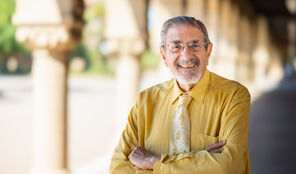
Richard N. Zare, the Marguerite Blake Wilbur Professor in Natural Science and Professor of Chemistry at Stanford University, is a pioneering figure in physical chemistry and nanochemical analysis . His career spans institutions including MIT, University of Colorado, Columbia University, and Stanford since 1977. He has chaired Stanford's Chemistry Department and served on numerous national science policy boards. Education : Ph.D. in Chemical Physics (1964) and B.A. in Chemistry & Physics (1961) from Harvard University Appointments : Professor (1977–Present), Professor of Physics (1992–Present), Howard Hughes Medical Institute Professor (2006–2010) Zare's research focuses on laser-based reaction dynamics , microdroplet chemistry , and interfacial electrochemistry , with applications in green chemistry , chemical analysis , and biomolecular systems . His team has developed techniques like laser-induced fluorescence , cavity ring-down spectroscopy , and Hadamard transform mass spectrometry . Recent publications highlight breakthroughs in metal nanoparticle synthesis , CO2 conversion , and biomolecular condensate electrochemistry . His work bridges physical chemistry , analytical chemistry , and environmental science . Major Awards : National Medal of Science Wolf Prize in Chemistry BBVA Foundation Frontiers of Knowledge Award King Faisal International Prize Presidential Award for Science Mentoring (PAESMEM) 11 Honorary Doctorates Zare teaches Stanford's Chemistry in the Kitchen course and has mentored numerous Ph.D. students and postdocs . He leads the Zarelab, with affiliations to Bio-X , Woods Institute , and Cardiovascular Institute .
Seyedshahabaddin Mirjalili is an Assistant Professor in Fluid Mechanics at the Department of Engineering Mechanics, KTH Royal Institute of Technology, Sweden. He is affiliated with the Swedish e-Science Research Center (SeRC) and Digital Futures at KTH. Education: BS in Mechanical Engineering from Sharif University of Technology, MS and PhD in Mechanical Engineering from Stanford University. Former Positions: Research Associate (2022–2024) and Postdoctoral Fellow (2019–2022) at Stanford University. His research spans fluid mechanics, scientific computing, and machine learning, focusing on computational methods for multi-physics, multi-phase, and multi-scale flows. Applications include propulsion systems, additive manufacturing, biophysical systems, and environmental flows. He develops conservative phase field models, energy-preserving numerical schemes, and physics-informed machine learning frameworks for high-fidelity simulations and reduced-order modeling. Recent work involves inverse asymptotic treatments for discontinuities, microbubble dynamics in breaking waves, and energy-conserving momentum transport in two-phase flows. His methods emphasize boundedness, conservation properties, and reduced spurious currents in numerical simulations. Scientific Awards: Gallery of Fluid Motion Award (2018) from the American Physical Society Division of Fluid Dynamics He contributes to software initiatives under SeRC and collaborates on high-performance computing (HPC) applications. His teaching includes courses like Particle Dynamics (SG1115).