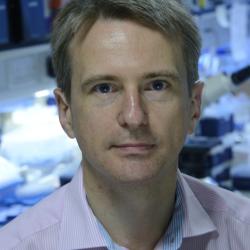
Professor Luke Lairson leads the Lairson Laboratory at The Scripps Research Institute (TSRI), focusing on chemical biology to study cell fate mechanisms in disease. His work spans small molecule discovery targeting cancer stem cells, tumor microenvironment modulation, and myelination enhancement using primary human and rodent cell models. Education: PhD in Chemistry (2007, University of British Columbia), BS in Biochemistry (2002, University of Guelph). Professional roles include Assistant Professor at TSRI (2010–present), Principal Investigator at the Genomics Institute of the Novartis Research Foundation (2010–2011), and Director of High Throughput Discovery at California Institute for Biomedical Research (2016–2017). Research Interests: Chemical approaches to cancer immunotherapy, drug discovery for neurodegenerative diseases, and modulation of immune checkpoint proteins. Key projects include STING agonist development, HSP90 inhibitors, and metabolite-driven oligodendrocyte maturation. Publications: Over 50 peer-reviewed articles, including high-impact work in PNAS , Nature Chemical Biology , and Cancer Research . Recent focus areas include microbiota-derived STING activators and JAK-inhibitor immunotherapy combinations. Awards: Canadian Society for Chemistry Boehringer Ingelheim Thesis Award (2010), Royal Society Short Visit Award (2007), and multiple scholarships for organic chemistry innovation. Lab Activities: Integrates high-content screening, medicinal chemistry, and proteomics to identify mechanism-based therapies. Current initiatives include repurposing drugs for remyelination and developing non-nucleotide STING agonists for systemic cancer immunotherapy.
Maureen Sartor is a Professor in the Department of Computational Medicine and Bioinformatics at the University of Michigan Medical School. Her work bridges computational biology, epigenetics, and cancer research, with recent contributions to understanding environmental toxicant impacts on DNA methylation, HPV-associated head and neck cancers, and neurodegenerative disease mechanisms. Key research themes: Epigenetic regulation, bioinformatics modeling, environmental health Active clinical trial collaborations in immunotherapy rechallenge and neoadjuvant treatment strategies Leadership in cross-species toxicoepigenetic studies and microbiome-immune crosstalk in oral cancer Recent publications highlight her expertise in: Epigenetic age acceleration in ALS and its environmental correlates HPV integration mechanisms in oropharyngeal cancer Chemical oxidation techniques for piRNA discovery Sex-specific epigenetic responses to lead and phthalate exposure Her interdisciplinary approach connects computational methods with experimental validation across multiple disease models.
Sophia Lunt is a Professor in the Department of Biochemistry & Molecular Biology and Chemical Engineering & Materials Science at Michigan State University , where she has been since 2015 (Assistant Professor 2015-2021, Associate Professor 2021-2025, Professor 2025-present). She leads the Lunt Lab , focusing on cancer metabolism , particularly metabolic reprogramming in tumor proliferation, heterogeneity, and metastasis . Her work combines mass spectrometry , genetic cancer models , cell biology , and fluorescent agents to develop targeted cancer therapies . Ph.D. (2010) & B.S. (2005) in Chemistry Postdoctoral Fellow at MIT (2010-2015) NSF CAREER awardee (2019) 20+ peer-reviewed publications since 2007 Research Focus : Cancer metabolism (Warburg effect, PHGDH heterogeneity, TIGAR regulation) Photodynamic therapy (counterion-tuned agents, metal halide nanoclusters) Metabolomics (tumor-immune interactions, microbiome effects) Selected Scientific Awards : 2022 MSU College of Natural Science Teacher-Scholar Award 2022 MSU BMB Teaching Award 2020 MANA Young Investigator Award 2019 NSF CAREER & METAvivor Early Career Investigator Awards Her teaching includes BMB 101: Frontiers in Biochemistry (curriculum overhaul for freshman success) and BMB 461: Advanced Biochemistry I , covering metabolic regulation and pathways.
Dr. Yuuki Obata is an Assistant Professor in the Department of Immunology and Neuroscience at UT Southwestern Medical Center, USA. He holds an Investigator role at the O'Donnell Brain Institute. Previously, he served as a postdoctoral fellow at the Francis Crick Institute (2016-2021) and the University of Tokyo (2015-2016). His research focuses on how environmental signals (microbiota, diet, circadian rhythms) shape intestinal neural circuits and immune networks. He employs advanced techniques including imaging, viral tracing, gnotobiotic systems, and multi-omics approaches. Education: PhD in Immunology from Chiba University (RIKEN Joint Graduate School Program), Japan. Postdoctoral training included JSPS Superlative Postdoctoral Fellowships (Japan) and EMBO/HFSP fellowships (UK). Research interests span microbiota-immune interactions, enteric nervous system development, gut-brain axis communication, and epigenetic regulation of immune responses. His lab investigates mechanisms linking microbial metabolites to host physiology, particularly in metabolic and neural contexts. Key findings include microbiota's role in IgA responses, T cell differentiation, and neuronal programming. Collaborations emphasize inter-organ communication and translational applications in immunology and neuroscience. Laboratory: The Obata Lab at UT Southwestern employs interdisciplinary methods to address how environmental factors reprogram gut neural and immune systems. Future work includes exploring microbiota-based therapies and neuroimmune interactions in disease models.
Julie K. Schwarz, MD, PhD, FASTRO is a tenured Professor of Radiation Oncology at Washington University School of Medicine, where she serves as Vice-Chair of Research and Director of the Cancer Biology Division. She also holds appointments as Professor of Cell Biology and Physiology and is affiliated with the Roy and Diana Vagelos Division of Biology & Biomedical Sciences, specifically within the Cancer Biology and Molecular Cell Biology programs. Dr. Schwarz is a key member of the Siteman Cancer Center and co-leads one of only five centers comprising the NIH's Radiation Oncology-Biology Integration Network (ROBIN). Dr. Schwarz completed her BS in Biology at Duke University (1995) followed by an MD/PhD in Cell and Molecular Biology at Washington University School of Medicine (2004) through the Medical Scientist Training Program. She completed her Internal Medicine internship (2005) and Radiation Oncology residency (2009) at Barnes-Jewish Hospital, becoming board-certified by the American Board of Radiology in Radiation Oncology (2010). Her research program focuses on translational studies of gynecologic cancers, particularly cervical cancer, with emphasis on tumor metabolism, biomarker discovery, and treatment resistance mechanisms. Dr. Schwarz's laboratory maintains one of the largest tumor repositories for cervical cancer, which includes specimens collected before and during chemoradiation treatment. Her work has demonstrated the critical role of pretreatment and post-treatment FDG-PET scanning for cervical cancer patients and has identified alterations in PI3K/Akt pathway genes associated with treatment response. Recent research directions include studying obesity's paradoxical favorable impact on cervical cancer outcomes, glucose and glutamine metabolism as targets for cancer therapy, and the role of tumor immunology in therapy resistance. Analysis of Dr. Schwarz's most recent publications reveals a strong focus on cervical cancer biology, tumor metabolism, and novel therapeutic approaches. Her work integrates clinical data with laboratory research to identify biomarkers and develop improved treatment strategies. Current research emphasizes the interface between tumor metabolism, the microenvironment, and response to therapy, with particular attention to HPV-related cancers, tumor imaging, and metabolic targets for radiosensitization. Fellow of American Society for Radiation Oncology (ASTRO) (2024) Danforth WashU Physician-Scientist Scholar Award (2024) Elected into American Society for Clinical Investigation (2022) Michael Fry Research Award for Outstanding Junior Investigator: Radiation Research Society (2012) Fellow: National Cancer Care Network (2008) RSNA Roentgen Resident/Fellow Research Award (2008) As a dedicated mentor, Dr. Schwarz has guided numerous trainees across all levels including undergraduates, graduate students, medical students, residents, fellows, and postdoctoral researchers. Her Schwarz Lab is highly collaborative and actively recruits students and researchers, with recent successes including Leahan Castillo receiving an Honorable Mention at AACR and Brett Tortelli developing significant research on the vaginal microbiome's relationship to cervical cancer treatment response. Dr. Schwarz is R01-funded and leads multiple research projects, including work on the TARGET Center which focuses on understanding the biologic effects of radiation therapy in cancer treatment. She actively participates in national organizations including the ASTRO/NCI Radiobiology Consensus Workshop, AACR Radiation Oncology Think Tank, and the ASTRO Community of Radiation Oncology Physician Scientists. Dr. Schwarz directs the Schwarz Lab, which is growing and actively recruiting postdocs, staff scientists, and graduate students. The lab employs a multidisciplinary approach combining well-annotated clinical databases, prospectively collected patient tumor banks, and state-of-the-art sequencing technologies. Current research directions include single-cell sequencing approaches to study treatment effects on tumor cells and immune cells within the tumor microenvironment, glucose and glutamine metabolism as targets for cancer therapy, and targeting myeloid-derived cells to improve anti-tumor immunity. The lab is highly collaborative and studies multiple tumor types including cervical, pancreatic, and ovarian cancers.
Liu Hongmei is a Researcher and Master's Supervisor at Southern University of Science and Technology's Department of Biomedical Engineering. Holding a Ph.D. from the Chinese Academy of Sciences, she specializes in micro-nano robotics and tissue engineering for tumor therapy, with over 66 publications and 12 patents. Her work bridges biomedical engineering and nanotechnology for precision cancer treatments. B.S., Biological Sciences, Harbin Normal University (2005) M.S., Botany, Northeast Agricultural University (2008) Ph.D., Biochemical Engineering, Chinese Academy of Sciences (2015) Her research focuses on biomaterials engineering , nanoparticle drug delivery , and microenvironment-responsive hydrogels . Key areas include glioma therapy, traumatic brain injury recovery, and intervertebral disc degeneration treatments. Recent work explores pH/ROS/inflammation-triggered hydrogels and bioengineered bacteria for disease modulation. Article trends show a strong emphasis on nanoparticle design (2014-2025) for glioma, hydrogel development (2017-2025) for tissue repair, and biomimetic material synthesis (2023-2025) inspired by spider silk and meniscus structures. Sub-fields span pyroptosis inhibition, epigenetic reprogramming, and microbiome engineering. Jiangsu Science and Technology Award (2020) Jiangsu Medical Science and Technology Award (2020) Jiangsu Educational Science Research Award (2021) Chinese Medical Doctor Association's Outstanding Young Scientist (2018) Liu has supervised numerous projects including National Natural Science Foundation of China grants, Jiangsu Province Key R&D Program funding, and Shenzhen City General Projects. She holds 12 Chinese invention patents and collaborates with institutions like the UNESCO Centre for Higher Education Innovation.
Professor Arthur Kaser is a leading academic gastroenterologist and Professor of Gastroenterology at the University of Cambridge. He leads the Gastrointestinal Diseases theme of the NIHR Cambridge Biomedical Research Centre, a partnership between Cambridge University Hospitals and the University of Cambridge. Department of Medicine Cambridge Institute of Therapeutic Immunology & Infectious Disease (CITIID) British Society for Immunology Funding Recipient His groundbreaking research focuses on the mechanisms of Inflammatory Bowel Disease (IBD) , including: Dysregulation of enterocyte cell intrinsic processes causing IBD Genetic polymorphisms linked to disease risk Purine nucleoside metabolism and unfolded protein response Mitochondrial metabolism in immune regulation Role of GPR35 and ORMDL proteins in epithelial homeostasis Recent publications highlight his work across genetic models, metabolic pathways, and clinical trials in IBD, with a focus on: AAV8 gene therapy for mitochondrial disorders ER stress and autophagy in intestinal epithelium Anti-IL-23 therapies (mirikizumab, risankizumab) Polyunsaturated fatty acids in Crohn's disease pathogenesis Scientific honors include: Fellow of the Academy of Medical Sciences (FMedSci) Fellow of the Royal Society (FRS) He collaborates with clinicians and researchers including Dr. James Lee, Dr. Nicole Kaneider, Dr. Trevor Lawley , and Professor Gordon Dougan. His work is supported by the Medical Research Council and institutional grants from the NIHR Cambridge Biomedical Research Centre.
Francesca Rappa is a Full Professor in the Department of Human Anatomy and Histology within the School of Medicine and Surgery at the University of Palermo. Her academic position (BIOS-12/A classification) centers on biomedicine, neuroscience, and advanced diagnostics with a focus on molecular mechanisms of disease. Her research spans multiple interconnected domains centered on stress response systems. Key interests include: Molecular chaperone networks (particularly Hsp60, Hsp90, Hsp27) in carcinogenesis Thyroid and colorectal cancer pathophysiology Glioblastoma multiforme molecular characterization Probiotic interventions for gut-liver-muscle axis disorders Nanovesicle-based therapeutics from citrus and tomatoes Diagnostic applications of heat shock proteins in inflammatory diseases Publication analysis reveals consistent focus on chaperone systems across cancer types (thyroid, salivary, colorectal, brain), with recent expansion into nutraceutical mechanisms involving citrus nanovesicles and golden tomatoes. Her 2023-2025 output shows increasing emphasis on multi-organ communication pathways (gut-brain, gut-liver-muscle) and industrial-scale therapeutic applications. Methodologically, she integrates immunohistochemistry, proteomics, and animal disease models. Teaching responsibilities include core anatomy courses for Medicine and Radiology programs: Anatomy I (10 CFU) and II (6 CFU) for Medicine Human Anatomy with Histology elements (6 CFU) for Radiology Integrated Anatomy/Biochemistry/Physiology modules (12 CFU) She actively supervises graduate research, with four theses directed between 2020-2024 covering celiac disease histopathology, stress protein interactions in colorectal cancer, glioblastoma biomarkers, and thyroid stress responses. Her laboratory work focuses on immunomorphological analysis of chaperone systems in tumor tissues and development of probiotic/nanovesicle interventions for metabolic and inflammatory conditions.
Yibin Kang is the Warner-Lambert/Parke-Davis Professor of Molecular Biology at Princeton University, an Associate Director of the Rutgers Cancer Institute of New Jersey, and a founding member of the Ludwig Institute for Cancer Research Princeton Branch. He earned his bachelor's degree from Fudan University (1995), a PhD from Duke University (2000), and completed postdoctoral training at Memorial Sloan-Kettering Cancer Center. His research focuses on breast cancer metastasis mechanisms, including tumor-stromal interactions, cancer stem cells, and therapeutic development. Dr. Kang has authored over 200 publications and received numerous accolades, including the AACR Award, Vilcek Prize, and AAAS Fellowship. Education: Bachelor’s degree, Fudan University (1995) PhD in Molecular Biology, Duke University (2000) Research Interests: Dr. Kang’s work explores molecular mechanisms driving metastasis, immune evasion, and treatment resistance in breast cancer. His lab investigates tumor microenvironment dynamics, cancer stem cell regulation, and drug development targeting metastatic pathways. Recent studies highlight the role of microbiome metabolism, macrophageal niches, and biomolecular condensates in cancer progression. Publications: His recent work emphasizes metabolic reprogramming, EMT plasticity, and therapeutic targeting of MTDH-SND1 complexes. Articles focus on translating molecular insights into clinical strategies, such as PI3K inhibitor efficacy modulation and bone metastasis suppression via niche modulation. Awards: American Cancer Society Research Scholar Award (2005) Department of Defense Era of Hope Scholar Award (2006) 2011 Vilcek Prize for Creative Promise in Biomedical Sciences AACR Award for Outstanding Achievements (2012) Fidler Innovation Award (2014), Fuller Albright Award (2014), AACR Outstanding Investigator Award (2014) AAAS Fellow (2016), American Cancer Society Research Professor (2019) Grants & Teams: As a leader in metastasis research, Dr. Kang chairs key AACR committees and directs interdisciplinary projects at the Ludwig Institute. His lab collaborates on preclinical models of bone metastasis and develops novel therapies targeting tumor-stromal interactions. Labs/Teams: His research group at Princeton integrates molecular biology, pharmacology, and systems biology to address metastasis at the Ludwig Institute and Rutgers Cancer Institute.
Prof. Dunja Bruder is a university professor of infection immunology at the Institute of Medical Microbiology and Hospital Hygiene at Otto von Guericke University (OVGU) and Head of the Immune Regulation Research Group at the Helmholtz Center for Infection Research (HZI). She obtained her PhD in immunology from TU Braunschweig and completed postdoctoral training at Harvard Medical School and Yale University School of Medicine. Her research focuses on immune regulation in respiratory viral infections, chronic inflammatory lung diseases, and mucosal immunity. She leads two research groups and holds leadership roles in the Research Focus on Respiratory Viral Infections (HZI), the CRC 854, and the Otto-von-Guericke Graduate Academy. Her work integrates innate and adaptive immunity, with particular emphasis on T-cell responses, microbiota interactions, and vaccine development. She also contributes to teaching in master's programs and human medicine. Education Bachelor/Master: Biotechnology, Technical University of Braunschweig PhD (1996–1999): Immunodominance and T-cell responses to bacterial toxins, HZI Habilitation (2009): Immunology, Hannover Medical School Research Interests Bruder’s work examines immune responses to respiratory pathogens like influenza and SARS-CoV-2, the role of epithelial-T-cell interactions in asthma, and the modulation of immune defenses by microbiota. She investigates vaccine strategies using defective interfering particles and antigen-targeting approaches. Her studies also address antitumor immune training via viral infections and metabolic control of T-cell function in asthma endotypes. Key Contributions She pioneered the analysis of alveolar macrophage dysfunction in chronic lung diseases and demonstrated the protective role of IL-33 in microbiota-mediated antibacterial defenses. Her team developed predictive models for influenza infection using hematological data and identified CD47 as a critical regulator of antiviral macrophage activity. Labs/Teams Leads the Immune Regulation Group at HZI and collaborates with the Institute of Medical Microbiology at OVGU. Active in the HZI’s Respiratory Viral Infections Research Focus and the CRC 854.
Tyler Bold, MD, PhD serves as Associate Professor in the Division of Infectious Diseases and International Medicine within the Department of Medicine at the University of Minnesota Medical School. He concurrently holds faculty appointments in the Microbiology, Immunology and Cancer Biology (MICaB) Ph.D. Graduate Program and the Department of Medicine, establishing a multidisciplinary research presence spanning infectious disease pathogenesis, immunology, and host-pathogen interactions. His research program integrates clinical infectious disease expertise with fundamental immunological investigation, focusing on tuberculosis host-directed immunotherapy, SARS-CoV-2 pathogenesis mechanisms, and macrophage biology in atherosclerosis. Key interests include T cell costimulation in granulomatous diseases, viral-microbiome interactions during respiratory infections, and diagnostic innovations for resource-limited settings. His work bridges basic science discovery with translational clinical applications, particularly in immunocompromised populations and complex infectious syndromes. Analysis of his 15 most recent publications reveals dominant research trajectories in tuberculosis immunology (40% of articles), SARS-CoV-2 pathogenesis and therapeutics (35%), and atherosclerosis immunometabolism (15%), with emerging work on fungal infections in hematologic malignancies. The publications demonstrate consistent use of advanced techniques including single-cell resolution analysis, structural biology, and randomized clinical trials, reflecting both mechanistic depth and clinical relevance across infectious disease subspecialties.
Chun-Jun (CJ) Guo is an Associate Professor at Weill Cornell Medicine's Jill Roberts Institute for Research in Inflammatory Bowel Disease, Department of Medicine. His research focuses on developing genetic tools for human microbiota and investigating molecular mechanisms of host-microbe interactions related to IBD and metabolic diseases. Education: B.Sc. in Pharmacy, Fudan University (2009) Ph.D. in Pharmacy, University of Southern California (2015) Research Interests: Dr. Guo's lab integrates bioinformatics, microbial genetics, metabolomics, and chemical biology to study how microbiota-derived molecules influence host immunity and disease. Key areas include CRISPR-based microbiota engineering, bile acid metabolism, and therapeutic reprogramming of host-microbe interactions. Publications: Recent work highlights microbiota-driven bile acid modifications in cancer, probiotic cross-feeding strategies for metabolic diseases, and serotonin's role in neonatal immune tolerance. His tools for genetic manipulation of nonmodel gut microbes enable mechanistic studies in vivo. Scientific Awards: 2023 Scialog Award 2022 Kenneth Rainin Foundation Innovator Award 2020 Noster & Science Microbiome Runner-Up Prize 2020 AGA-Allergan Pilot Award in IBD 2019 NIH New Innovator Award Labs & Teams: The Guo Group develops CRISPR-Cas9 systems for Clostridiales and other gut bacteria, investigates microbiota metabolites in preclinical mouse models, and collaborates on translational studies linking microbial genetics to immune/metabolic diseases.
Caetano Antunes is an Assistant Professor in the Department of Molecular Biosciences at the University of Kansas, where he joined in January 2023 after transitioning from Fundação Oswaldo Cruz in Rio de Janeiro, Brazil. His research program focuses on host-microbe interactions with particular emphasis on small molecules in the gut metabolome and their effects on bacterial pathogen behavior. Dr. Antunes earned his B.Sc. and M.Sc. in Microbiology from Universidade Federal do Rio de Janeiro (2000, 2002), completed his Ph.D. at the University of Iowa (2007), and conducted post-doctoral research at the University of British Columbia (2008-2012). His work bridges microbiology, metabolomics, and molecular biology to understand how microbial metabolites influence pathogen virulence and host responses. His recent publications reveal a consistent focus on gut microbiome-derived small molecules and their regulatory effects on bacterial pathogens like Salmonella and Vibrio cholerae. His research spans from basic molecular mechanisms to potential therapeutic applications targeting pathogen virulence without directly killing bacteria, representing a promising antivirulence approach to combat antibiotic resistance. Dr. Antunes teaches courses including Introduction to Honors Research, Immunology Laboratory, Rigor and Reproducibility in Research, and Advanced Molecular Genetics, demonstrating his commitment to training the next generation of scientists in both foundational and advanced molecular techniques.
Eric Mosher Young is an Associate Professor in the Department of Chemical Engineering at Worcester Polytechnic Institute (WPI), affiliated with Biomedical Engineering and Bioinformatics & Computational Biology. He holds the Leonard P. Kinnicutt Assistant Professorship and received the 2020 NSF CAREER Award. His education includes a B.S. in Chemical Engineering and Biological Engineering (summa cum laude) from the University of Maine, a Ph.D. in Chemical Engineering from the University of Texas at Austin, and a postdoctoral fellowship in Biological Engineering at MIT. His research focuses on synthetic biology, metabolic engineering, and protein engineering, leveraging chemical engineering principles to reprogram microbial metabolism for biofuel, biomaterial, and biosensor applications. Key strengths include systems biology, genetic circuit design, and collaboration across academia and industry. He emphasizes interdisciplinary education, integrating technical proficiency with social impact analysis and entrepreneurship through WPI’s project-based learning model. Notable achievements include patents on yeast genome engineering, leadership in the Synthetic Biology Knowledge System project, and featured publications in Nature Communications and ACS Synthetic Biology . His work aligns with UN Sustainable Development Goals 3 (Health), 4 (Education), 7 (Energy), 8 (Economic Growth), 9 (Industry), and 11 (Sustainable Cities). Young’s lab at WPI’s Life Sciences & Bioengineering Center actively collaborates on projects like transparent cellulose materials and probiotic yeast development. He advises student projects via Digital WPI, emphasizing hands-on problem-solving in biotechnology.
Prof. Dr. Simone Spuler is a leading researcher in muscle stem cell biology and gene therapy at the Experimental and Clinical Research Center (ECRC) in Berlin, jointly affiliated with Charité - Universitätsmedizin Berlin and the Max Delbrück Center for Molecular Medicine. She serves as Director of the University Outpatient Clinic for Muscle Diseases, focusing on translational approaches for genetic and age-related muscle disorders. Develops CRISPR/Cas9 and base editing therapies for muscular dystrophies (LGMD2A, Dysferlinopathy) Translates stem cell research into clinical trials like MuST and BASKet Validates GMP-compliant manufacturing of primary human satellite cells (PHSats) for ATMP applications Her research interests center on muscle stem cell heterogeneity, regenerative medicine, and epigenetic mechanisms in critical illness myopathy. Recent work explores: CRISPR editing of patient-derived stem cells Humanized mouse models for dystrophy validation Epigenetic reprogramming in ICU-acquired weakness Decellularization protocols for diaphragm repair She leads a multidisciplinary team working on: Genome editing of CAPN3, LMNA, and Dysferlin mutations Stem cell expansion using bacterial nanocellulose Development of regenerative therapies for urinary incontinence Scientific awards include: Science4Life Venture Cup 2019 (Pharma Category) NLSInvest Award 2022 Einstein Visiting Fellowship (2019-2022) Her clinical and entrepreneurial efforts involve founding the startup MyoPax , which develops stem cell therapies for incurable muscle diseases, supported by grants from the German Federal Ministry of Education and Research (BMBF) and Else Kröner-Fresenius Foundation (EKFS). The MuST clinical trial for epispadias patients is funded with €4.3M. Her team collaborates with patient organizations like Coalition to Cure Calpain 3 and Deutsche Gesellschaft für Muskelkranke .