Anton Liaimer is an Associate Professor in the Department of Arctic and Marine Biology at UiT The Arctic University of Norway. His research focuses on cyanobacterial symbiosis, secondary metabolite production, and environmental microbiology. Current affiliation: UiT The Arctic University of Norway Research group: Microorganisms and Plants Location: Biologibygget 2.036, Tromso Dr. Liaimer's work examines: Symbiotic relationships between cyanobacteria and host plants Molecular mechanisms of cellular differentiation Secondary metabolite characterization and biosynthesis Environmental resilience of microbial communities Genomic adaptations in symbiotic cyanobacteria Bioremediation applications using algae His publications reveal expertise in: Microbial ecology Natural product chemistry Genomic analysis Environmental biotechnology Plant-microbe interactions Marine microbiology Dr. Liaimer collaborates with researchers across Europe on: Arctic microbiology Bioactive compound discovery Symbiotic evolution Marine ecosystem restoration
Semra Kocabıyık is a Professor in the Department of Biological Sciences at Middle East Technical University (METU). Her research focuses on molecular mechanisms of protein stability, molecular chaperones (e.g., small heat-shock proteins), proteasome function, and stress responses in thermoacidophilic archaea, particularly Thermoplasma volcanium. She has contributed to improving enzyme stability and recovery under stress conditions using molecular chaperones. Education: B.Sc. in Agriculture, Ankara University (1972–1977) M.Sc. in Biological Sciences, METU (1980–1982) Ph.D. in Biology, METU (1982–1986) Postdoc, Department of Biology, University of Louisville, USA (1990–1992) Research Interests: Her work integrates biochemistry, molecular biology, and structural biology to study protein stability, stress adaptation in archaea, and enzyme engineering. Key areas include small heat-shock proteins, proteasome regulation, and applications of molecular chaperones in biotechnology. Publications: Recent articles highlight advancements in protein engineering, archaeal stress responses, and structural dynamics of chaperones, reflecting her expertise in extremophile biology and protein function. Achievements: With 95 publications, 139 WoS citations, and 44 thesis advisories, her contributions span academia and biotech applications. Labs & Collaborations: Her lab focuses on archaeal molecular machines and employs techniques like microarray analysis, surface-enhanced Raman spectroscopy (SERS), and molecular cloning.
Michel Geovanni Santiago-Martinez serves as an Assistant Professor in the Department of Molecular and Cell Biology and Microbiology at the University of Connecticut, where he leads research on archaeal ecophysiology and microbiome interactions. His academic credentials include a Ph.D. in Microbiology from Universidad Nacional Autónoma de México (UNAM) and postdoctoral training in Microbiology and Biochemistry at Pennsylvania State University. The Microbial Ecophysiology Lab under Dr. Santiago-Martinez employs integrated omics approaches with functional protein characterization to investigate archaeal cellular regulation. Research emphasizes: Methanogenic and non-methanogenic archaea in free-living environments Host-associated microbiomes in animals and plants Stress response mechanisms and survival strategies Protein-cofactor-metabolite interactions in extreme conditions Recent publications demonstrate consistent focus on Methanosarcina acetivorans metabolism, revealing carbon flow regulation, glycogen dynamics, and structural adaptations. The work bridges molecular microbiology with ecological applications through biochemical and omics methodologies. Contact: geo_santiagom@uconn.edu | Torrey Life Sciences 284/286 | 860-486-8960
Kevin G. Hicks is an Assistant Professor in the Department of Nutrition & Integrative Physiology at the University of Utah College of Health, holding an adjunct appointment in Biochemistry. His research focuses on metabolic regulation via protein-metabolite interactions, developed through the MIDAS platform. He completed his PhD in Microbiology at the University of Washington (2015) and postdoctoral training in Biochemistry at the University of Utah before joining the faculty in 2024. His work bridges biochemistry, metabolomics, and interactomics to uncover mechanisms of metabolic regulation in health and disease. Education: B.S. Biology (Biochemistry emphasis), University of Oregon, 2007 Ph.D. Microbiology, University of Washington, 2015 Postdoctoral Research, Department of Biochemistry, University of Utah, 2015–2020 Research Interests: The Hicks lab investigates how metabolites regulate enzyme function and metabolic pathways, with a focus on developing novel interactome discovery technologies. Key areas include: Systematic identification of protein-metabolite interactions Allosteric regulation of metabolic enzymes Therapeutic applications of interactomics Metabolic dysregulation in disease Grants & Awards: Recent funding includes grants from the NIH, Chan Zuckerberg Initiative, and Calico Life Sciences (totaling over $20M). He received the Innovation Impact Award (2023) for contributions to interactome discovery. Lab Activities: The lab includes postdoctoral researchers (e.g., Marissa Trujillo), graduate students (e.g., Lindsay Mortensen), and technicians. Research spans molecular biology, mass spectrometry, and computational analyses. Current projects expand MIDAS applications to membrane proteins and RNA-metabolite interactions.
Arvind Gopinath is an Assistant Professor in the Department of Mechanical Engineering at the University of California, Merced. His research focuses on the interplay between mechanics, fluid dynamics, and biological systems, with particular emphasis on active matter, cell motility, and soft materials. He holds a Ph.D. in Chemical Engineering from Cornell University and a B.Tech. in Chemical Engineering from the Indian Institute of Technology, Bombay. Key research interests include bacterial swarms, filament-motor assemblies, and the mechanics of biological interfaces. His work combines computational modeling, experimental techniques, and theoretical analysis to study phenomena such as durotaxis, phase separation in active fluids, and the mechanical properties of hydrogels. Recent studies explore how boundary conditions and substrate stiffness influence cell behavior, as well as the design of pH-responsive biomaterials for biomedical applications. His articles frequently address collective motion in microbial systems and the role of hydrodynamic interactions in emergent patterns. Notable contributions include studies on kinetically arrested clusters in active filaments and the mechanical characterization of polyacrylamide gels. Despite no listed awards, his work has been published in high-impact journals and spans disciplines from biophysics to materials science.
Georgia Seyfried is an Assistant Professor of Belowground Forest Ecology at Oregon State University's College of Forestry, Department of Forest Engineering, Resources & Management. She earned a Ph.D. in Plant Biology from the University of Illinois and a B.S. in Biology from the University of Washington. Her research focuses on soil biogeochemistry, greenhouse gas emissions, and fungal-soil interactions in tropical and temperate ecosystems. She investigates how belowground processes influence ecosystem recovery post-wildfire and under climate change stressors like salinization. Her work combines field studies in diverse environments, including tropical forests and coastal wetlands, to address ecological assumptions. Key projects include studying ectomycorrhizal fungi's role in nutrient cycling and assessing coastal forest resilience to salinization. She advises graduate students and has authored over 10 peer-reviewed articles since 2019. Her lab emphasizes interdisciplinary approaches to inform land management practices. Research highlights include exploring fungal community responses to nitrogen dynamics, the interaction between tree mortality and greenhouse gas emissions, and watershed-scale biogeochemical processes. Seyfried collaborates globally, with fieldwork in Panama, the southeastern U.S., and now the Pacific Northwest. She prioritizes mentoring students from diverse backgrounds, fostering inclusive scientific exploration.
Dr. Madhusudan Choudhary is a Professor in the Department of Biological Sciences at Sam Houston State University. He holds a Ph.D. from McMaster University and completed post-doctoral training at Duke University. His research laboratory focuses on microbial genetics, genomics, and bioinformatics using Rhodobacter sphaeroides as a model organism to study bacterial cell-cycle regulation, metabolic innovations through gene duplication, and the evolution of genomic complexity in prokaryotes. Key investigations include chromosome replication origins, duplicate gene expression patterns, and the functional specialization of multipartite genomes. Dr. Choudhary's research spans diverse areas including bacterial responses to microgravity, CRISPR-Cas systems, heavy metal resistance mechanisms, and nanoparticle interactions. He directs studies on transcriptomics under stress conditions and develops computational methods for genome analysis. His work has significant implications for understanding microbial evolution and environmental adaptation.
Stefan Schroeder is a Senior Lecturer in the Department of Earth and Environmental Sciences at The University of Manchester. His research focuses on carbonate sedimentology, diagenesis, and geodynamic evolution of continental rifts, with a particular interest in Precambrian environmental conditions and Paleoclimatology. He previously held postdoctoral roles at MIT and the University of Johannesburg, and worked in industry at Total SA. His current projects explore the geodynamic context of Atlantic rifts, Archean-Paleoproterozoic environmental transitions, and microbial carbonates for waste remediation. He contributes to UN Sustainable Development Goals related to education and environmental sustainability. PhD Projects: Includes studies on volcanic fluid flow, fluid-rock interaction in rifts, SW Africa continental margin analysis, and climate signals in Roman aqueducts. Research Interests: Combines field, subsurface, and lab data to study depositional systems and paleoclimates. Key areas include continental rift evolution, Precambrian carbonates, and Paleogene climate dynamics. Recent Articles: Focus on Moroccan Atlantic Margin stratigraphy, coral buildups, tufa mound characterization, Jurassic dolomitization, and Cretaceous clastic systems. These studies highlight interdisciplinary approaches using petrophysical and geochemical methods. Grants & Advising: Accepting self-funded PhD students for projects in his research areas. Collaborates internationally on sedimentary and tectonic studies. Labs/Teams: Involved in the 'Basins, Stratigraphy and Sedimentary Processes' project, focusing on North African and global reservoir systems.
Christopher Myers is an Adjunct Professor in the Department of Physics at Cornell University and a Senior Research Associate at the Cornell Center for Advanced Computing. He is also a member of the graduate faculty in Physics, Computational Biology, Applied Mathematics, and Computational Science and Engineering. His research spans multiple disciplines, connecting physics, biology, and computational science. Myers earned his B.A. in History from Yale University in 1984 and his Ph.D. in Physics from Cornell University in 1991. His academic journey includes postdoctoral positions at UC Santa Barbara and the Cornell Theory Center, followed by various research roles at Cornell institutions including the Institute of Biotechnology and arXiv.org (where he served as Scientific Director from 2014-2016). Myers' research focuses on complex systems at the intersection of physics, biology, and computational science. His primary areas include infectious disease dynamics and host-pathogen interactions, theoretical and computational systems biology, biological information processing, dynamics and cascades on networks, and the structure and dynamics of intracellular networks. He has made significant contributions to understanding how complex systems behave across multiple scales, from molecular networks to ecological communities. His work often employs computational approaches to model and analyze biological phenomena. His recent publications (2020-2024) show a strong trend toward interdisciplinary research connecting computational methods with biological and ecological systems. There's a clear focus on network approaches to understanding disease transmission, particularly in plant-pollinator communities, as well as developing new computational methods for analyzing complex systems. His work increasingly integrates machine learning techniques with traditional modeling approaches to address complex biological questions. Myers has been actively involved in teaching and mentoring, having served as an Adjunct Professor since 2010 and teaching courses such as 'Computational Methods for Complex Systems' (Physics 7682). He has also developed and taught workshops on Python for high performance computing, data science, and AI with deep learning through Cornell's various educational programs including CVW and eCornell. His research has been conducted through multiple labs and teams, including the Cornell Center for Advanced Computing (current), the Institute of Biotechnology (2007-2017), and the Cornell Theory Center (1993-1997, 1998-2007). These teams have focused on computational approaches to biological problems, with particular emphasis on systems biology, infectious disease modeling, and software development for scientific computing.
Dr. Diane Srivastava is a Professor in the Department of Zoology at the University of British Columbia's Faculty of Science, and Director of the Canadian Institute of Ecology and Evolution (CIEE). Her research focuses on community ecology, particularly biodiversity's role in ecosystem functioning and responses to environmental changes. Her work addresses how trophic diversity influences ecosystem processes, the regional species pool's impact on local diversity, habitat effects on species richness, and human-driven changes. She leads the Living Data Project, preserving legacy environmental datasets through collaborations with early-career researchers. Key research areas include tropical ecosystem dynamics, climate change impacts, and functional trait-based community assembly. Recent studies highlight cross-ecosystem interactions (e.g., bromeliad microcosms), predator-prey dynamics under climate variability, and urban biodiversity patterns. Her work spans field experiments and collaborative data science initiatives. Dr. Srivastava’s projects emphasize global ecological challenges, including biodiversity loss mitigation and climate resilience strategies. She actively promotes equitable academic practices, such as triple-blind peer review and inclusive working groups. She directs the CIEE, fostering collaborative research across ecology and evolutionary biology. Her work is supported by UBC’s Biodiversity Research Centre and involves international field sites in tropical regions like Costa Rica and Trinidad.
Dr Tom Robinson serves as a Lecturer in Chemical Engineering within the School of Engineering at the University of Edinburgh, specializing in the Bioengineering Research Institute. His interdisciplinary work bridges synthetic biology, membrane biophysics, and microfluidics to engineer biomimetic systems. His core research focuses on: Bottom-up Synthetic Biology : Constructing artificial eukaryotic cells with multi-compartment structures using droplet microfluidics and giant lipid vesicles (GUVs) to enable enzymatic cascades for biofuel production and drug delivery applications. Lipid Membrane Engineering : Developing model membrane systems (GUVs and nano-vesicles) to isolate and study membrane properties like permeability, fusion dynamics, and ligand interactions without cellular interference. Advanced Microfluidics : Designing novel microfluidic platforms for single-cell analysis (cancer cells, magnetotactic bacteria), high-throughput vesicle production, and precision manipulation of biomimetic structures. Analysis of Dr Robinson's 55+ publications reveals dominant trends in biomimetic membrane systems (42%), synthetic cell engineering (31%), and microfluidic device innovation (27%). His work increasingly integrates multi-omics approaches with physical manipulation techniques, particularly evident in recent studies on magnetotactic bacteria navigation and phase-separated synthetic cells. The research demonstrates strong translational potential in drug delivery and environmental microbiology. The Robinson Lab employs cutting-edge microscopy including FLIM, confocal, multiphoton, and high-speed imaging to characterize membrane dynamics and cellular interactions. Current projects focus on ESCRT-III protein-mediated vesicle remodeling, magnetic field effects on bacterial motion, and polymerizable emulsion systems for optical applications. The lab maintains active collaborations across bioengineering, microbiology, and materials science disciplines, with significant contributions to the MaxSynBio consortium for bottom-up cell synthesis.
Ashley Wolf is an Assistant Professor at the University of California, Berkeley, holding a joint appointment in the School of Public Health and the Center for Computational Biology. Her research focuses on understanding gut microbiome composition and its roles in mammalian health, particularly exploring diet, microbial competition, and host factors influencing microbiome structure. Education: PhD in Systems Biology from Harvard University (2010s), AB in Molecular Biology from Princeton University (2000s) Her lab integrates human microbiome data, laboratory models, and computational methods to design microbial therapeutics. Key research areas include microbial metabolism of dietary components, bacterial competition dynamics, and microbiome impacts on host physiology. Selected publications highlight work on microbiome bioremediation, bile acid-glucose metabolism links, and mitochondrial RNA processing in human and model organisms. No awards explicitly listed, though her work aligns with emerging trends in systems biology and public health.
Donald Zak is a Professor at the University of Michigan, affiliated with the School of Natural Resources and Environment (SNRE) and the Department of Ecology and Evolutionary Biology. He holds a PhD in Forest Ecology from Michigan State University (1987), an MS in Forest Soils from the University of Idaho (1983), and a BS in Forest Science from Ohio State University (1981). His research focuses on soil microbial ecology, plant-microbe interactions, and the impacts of environmental changes like nitrogen deposition and climate variability on ecosystem processes. Key areas include soil carbon dynamics, mycorrhizal fungi roles in nutrient cycling, and the effects of atmospheric nitrogen on forest ecosystems. Dr. Zak leads the Soils Lab, emphasizing field and lab studies to understand biogeochemical cycles and ecosystem resilience. His work spans both temperate forests and agricultural systems, with contributions to global change research frameworks like the Aspen FACE experiment. Recent findings highlight nitrogen deposition's dual role in altering soil carbon storage and fungal community composition, with implications for climate mitigation strategies. Research interests integrate microbial biodiversity, decomposition processes, and ecosystem responses to anthropogenic pressures. Dr. Zak collaborates widely, contributing to interdisciplinary projects on invasive species (e.g., Phragmites australis) and sustainable farming practices. His lab's long-term experiments inform policy and land management, emphasizing proactive ecological approaches for the Anthropocene. Despite no listed awards, his prolific publications and leadership roles underscore his significant contributions to environmental science.
James Boedicker is an Associate Professor of Physics and Biological Sciences at the University of Southern California (USC), leading the Boedicker Lab. He holds a Ph.D. in Physical Chemistry from the University of Chicago (2010) and a B.S. in Chemical Engineering from MIT (2004). Postdoctoral training was conducted in Applied Physics at Caltech (2010–2013). His research focuses on understanding and engineering microbial communities, leveraging biophysical and synthetic biology tools to study gene regulation, quorum sensing, and collective behavior. The lab investigates microbial networks, vesicle-mediated gene transfer, biogenic nanomaterial synthesis, and pattern formation in bacterial populations. Key funding sources include the Office of Naval Research, Army Research Office, DARPA, and NSF. Current research themes include designing synthetic microbial ecosystems and developing optogenetic tools for biofilm control. The lab collaborates broadly, with projects ranging from nanomaterial engineering to computational modeling of microbial decision-making. Students and postdocs in the lab explore interdisciplinary topics such as CRISPR dynamics, vesicle biology, and microbial community stability. Outreach efforts include educational initiatives like the 'Physics of Life' course, integrating coding and biophysical simulations for undergraduates.
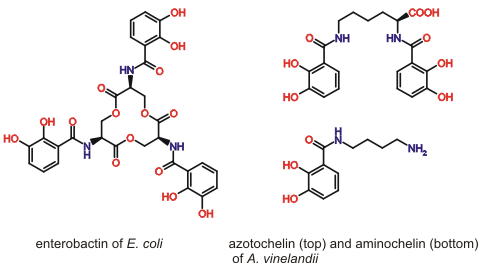
Professor Anne-Kathrin Duhme-Klair holds a Chair in Biological Inorganic Chemistry at the University of York's Department of Chemistry. Her research focuses on bioinorganic and medicinal chemistry, particularly the coordination chemistry of biomimetic metal complexes and iron-chelating siderophores. Her work explores applications in antimicrobial development, artificial metalloenzymes, and photoactivated catalysis. Education: PhD from the University of Oldenburg (Germany), postdoctoral research at King’s College London and EMBL/DESY Hamburg, and habilitation at the University of Münster. Appointed at the University of York since 1998. Research Interests: Siderophore-mediated iron uptake mechanisms Development of redox-switchable artificial metalloenzymes Antimicrobial conjugates exploiting siderophore pathways Biomimetic molybdenum complexes for oxygen atom transfer Collaborations: Prof. K.S. Wilson (protein interactions), Dr. A. Routledge (antimicrobial design), Prof. G.H. Thomas (drug delivery), and Prof. R.N. Perutz (photocatalysis). Grants: Principal investigator on EPSRC-funded projects on artificial metalloenzymes and antimicrobial development. Co-investigator on MAPS (Multiparameter Assay for Profiling Susceptibility). Labs/Teams: Leads a research group focused on bioinorganic chemistry applications in medicine and catalysis, with interdisciplinary collaborations across chemistry and microbiology.