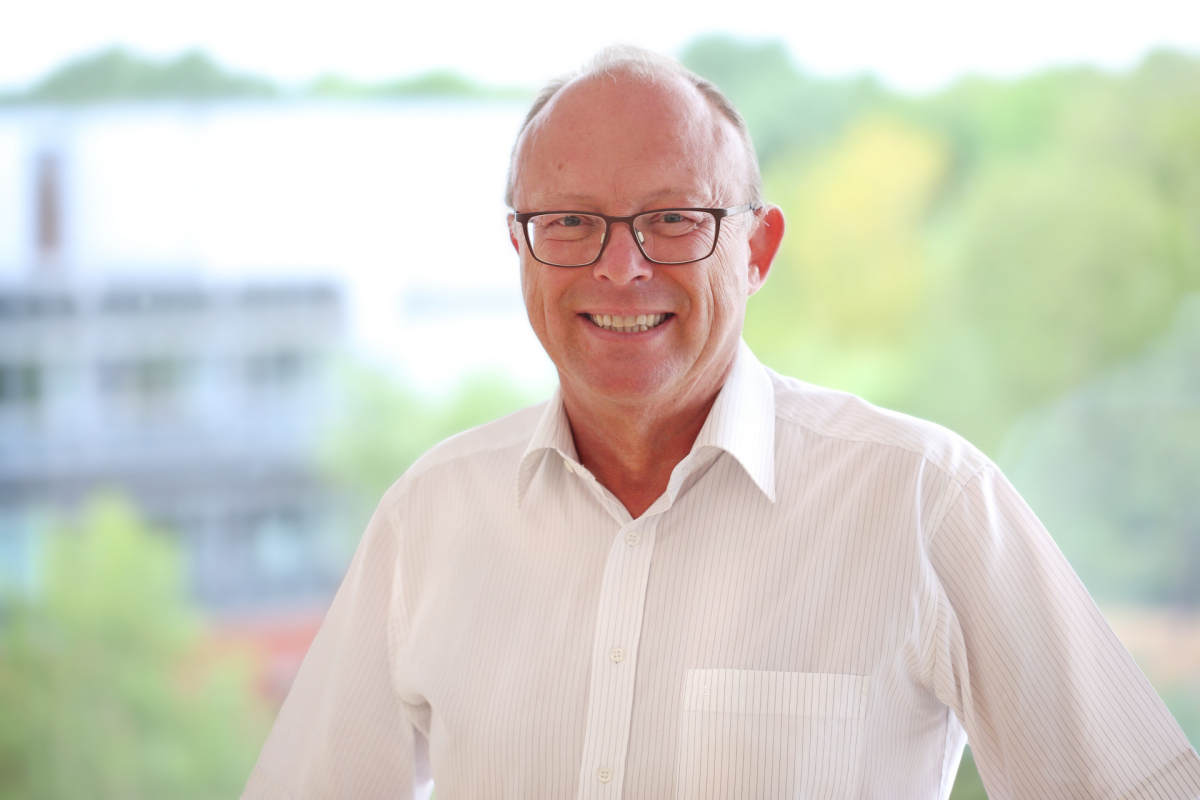
Hauke Smidt is a Personal Professor at Wageningen University & Research, affiliated with the Molecular Ecology group within the Faculty of Veterinary Medicine and Animal Sciences. His research focuses on microbial ecology, particularly gut microbiota dynamics, antibiotic resistance, environmental microbiology, and the One Health framework. Smidt has supervised over 50 PhD students and contributed to 519 publications, including studies on microbiome resilience, fermented food impacts, and bioremediation strategies. Education and affiliations include leadership roles in projects addressing antimicrobial resistance, pig health, and drinking water microbiology. His work spans collaborations across Europe and Asia, with notable contributions to understanding microbial community responses to environmental stressors and dietary interventions. Smidt is actively involved in public outreach, as seen in media contributions discussing microbiome research and health benefits. Key projects include aquifer treatment for drinking water, microbiome simulation models, and combating plant pathogens. His awards and recognition are not explicitly listed, but his extensive publication record and project leadership highlight significant academic impact.
C. Perry Chou is a full professor in the Chemical Engineering Department at the University of Waterloo, with a cross-appointment in Biology. He holds a BSc and MSc from National Taiwan University and a PhD from Rice University, all in Chemical Engineering. His research focuses on integrating biochemical, genetic, and metabolic engineering strategies to enhance biomanufacturing using microbial cell factories. Key areas include recombinant protein production, microbial biotechnology, and biofuel development. Education: PhD in Chemical Engineering, Rice University (1995) MSc in Chemical Engineering, National Taiwan University (1987) BSc in Chemical Engineering, National Taiwan University (1984) Research Interests: Dr. Chou’s work spans biochemical engineering, bioprocessing, and metabolic engineering. He develops strategies for microbial strain construction, fermentation optimization, and bioproduct purification. His research bridges fundamental biological sciences with applied engineering to advance biomanufacturing. Publications: His 90+ peer-reviewed articles highlight contributions to strain engineering, CRISPR-Cas9 tools, and microbial production of chemicals like 5-aminolevulinic acid and propionate. Recent trends emphasize nanomaterial applications (e.g., graphene oxide) and sustainable biofuel pathways. Awards: Canada Research Chair (Canada) 1000-talent Award (China) Advising & Grants: Dr. Chou actively mentors graduate students and contributes to editorial roles at journals like Biotechnology Advances and Scientific Reports . He teaches courses such as CHE 161 (Engineering Biology) and CHE 562 (Advanced Bioprocess Engineering). Labs/Teams: Collaborates with interdisciplinary teams to advance bioprocess development, though specific lab names are not explicitly mentioned in the text.
Staffan Kjelleberg is a Distinguished University Professor at Nanyang Technological University (NTU), Singapore, and Director of the Singapore National Biofilm Consortium (SNBC) and Singapore Centre for Environmental Life Sciences Engineering (SCELSE). He holds previous positions as Scientia Professor at the University of New South Wales (UNSW), Australia, and has led major research initiatives globally. His academic career spans over four decades, with roles including Head of School at UNSW and Professorships at the University of Gothenburg, Sweden. Education: BSc (Chemistry and Biology, 1975), PhD (Microbiology, 1981), and Docent (Microbiology, 1983) from the University of Gothenburg. He has authored over 384 journal papers with significant citations, reflecting his leadership in microbial biofilm research. Research focuses on microbial biofilms and microbiomes, addressing environmental sustainability, public health, and industrial applications. He employs an interdisciplinary approach to study biofilm community dynamics, matrix properties, and translational technologies for biofilm control. Key contributions include discoveries on quorum sensing inhibitors, biofilm dispersal mechanisms, and eDNA roles in biofilm structure. Honours include Fellowships from the Australian and American Academies of Microbiology, Web of Science Highly Cited Researcher status, and Editor roles for 15 international journals. He leads major programs like the Marine Climate Change Science initiative and has co-directed global research centers such as the Centre for Marine Bio-Innovation. Advising and grants: While specific student names are not listed, his extensive leadership in research programs indicates mentorship of numerous scholars. His work bridges fundamental and applied microbiology, impacting environmental and biomedical fields. Labs/Teams: Directs SCELSE and SNBC, co-founded the Centre for Marine Bio-Innovation, and collaborates internationally on biofilm and microbiome research.
Mark van Loosdrecht is a Full Professor in Environmental Biotechnology at Delft University of Technology (TU Delft), leading the Mark van Loosdrecht Group within the Faculty of Applied Sciences. His research focuses on microbial ecology and innovative wastewater treatment technologies, including biofilm processes, nitrogen/phosphate conversion, and microbial polymer production. He is renowned for developing the Anammox and Nereda technologies, which revolutionize nutrient removal and sludge management in wastewater systems. **Awards & Recognition**: Van Loosdrecht has received prestigious awards such as the Spinoza Award (2014), Stockholm Water Prize (2018), and Lee Kuan Yew Prize (2012). He is a member of the Royal Netherlands Academy of Arts and Sciences and the Dutch and U.S. National Academies of Sciences. **Research Interests**: His work emphasizes sustainable water treatment, resource recovery, and microbial process engineering. Key topics include anaerobic digestion, aerobic granular sludge, and bioremediation strategies for industrial and municipal wastewater. **Publications & Impact**: Over 1,400 peer-reviewed publications and contributions to textbooks like Environmental Biotechnology: Principles and Applications . His research bridges fundamental science with practical applications, addressing global challenges in water management and environmental sustainability. **Affiliations**: He chairs the Environmental Biotechnology section at TU Delft and collaborates globally on projects like the ESDIT initiative, exploring ethics in disruptive technologies.
Eduardo Rocha is a Professor and Head of the Microbial Evolutionary Genomics laboratory at the Institut Pasteur, within the Department of Genomes and Genetics. His research integrates bioinformatics, molecular evolution, and genomics to understand bacterial genome organization and dynamics, particularly focusing on mobile genetic elements and their role in adaptation and antibiotic resistance. His research interests include microbial evolutionary genomics, genome organization, horizontal gene transfer, mobile genetic elements (plasmids, phages, integrons), bacterial pathogen evolution, and computational biology. His work lies at the intersection of molecular evolution, population genetics, and molecular epidemiology, with strong translational implications for understanding antimicrobial resistance and infectious disease emergence. The recent publications highlight a consistent focus on mobile genetic elements, genome plasticity, and bacterial adaptation. Key themes include the role of integrons and CRISPR-Cas systems in bacterial immunity, plasmid-mediated spread of antibiotic resistance, phage-plasmid interactions, and the development of bioinformatics tools for microbial genomics. These works frequently appear in high-impact journals such as Science , Nature Microbiology , and PLoS Biology , reflecting significant contributions to the field. Eduardo Rocha leads multiple funded research projects, including ERC-2011-StG EVOMOBILOME, ANR Magisbac, and ANR SHAPE. He has developed and maintains several widely used bioinformatics software tools: IntegronFinder, MacSyFinder, PanACoTA, SatelliteFinder, CapsuleFinder, TXSScan, and others. He mentors a large team of PhD students, postdoctoral researchers, and engineers, and has supervised numerous former students who now hold independent research positions worldwide. Eduardo Rocha has received research funding from major agencies including the European Research Council (ERC) and the French National Research Agency (ANR). His work is central to the LabEx IBEID and the INCEPTION convergence program, where he serves on the steering committee, promoting interdisciplinary research in infectious disease emergence. His laboratory, part of the Genomes and Genetics department, actively contributes to microbial evolutionary genomics through both methodological development and biological discovery. The team participates in networks such as Phages.fr, GDR BIM, and GDR AIEM, reinforcing its collaborative and integrative approach.
Pedro Fardim is a Professor at the KU Leuven , affiliated with the Faculty of Engineering Sciences, Department of Chemical Engineering , and leads the Chemical and Biochemical Reactor Technology and Safety (CREaS) division. He also serves as President of EPNOE (European Polysaccharide Network of Excellence) and is a member of multiple institutes including KU Leuven Brain Institute (LBI) , Institute for Single Cell Omics (LISCO) , and Institute for Micro- and Nano-scale Integration (LIMNI) . PhD in Chemistry, State University of Campinas (UNICAMP), Brazil Habilitation in Chemical Engineering, Åbo Akademi University, Finland Pedro’s research focuses on topochemical engineering —mimicking natural bioassembly processes in trees and microorganisms to create sustainable materials and biofabrication technologies . His work spans drug delivery , regenerative medicine , biopolymer engineering , and green chemistry , with applications in pharmaceuticals , cosmetics , and energy . Recent projects include hydrogels for wearable sensors , biohybrid materials for bone tissue engineering , and lignin valorization using hydrotropic solvents. His scientific awards include Fellowships from the Royal Society of Chemistry and the International Academy of Wood Science , along with membership in the American Chemical Society . He teaches Chemical Engineering for Human Health , Biochemical Process Engineering , and Biopolymer-based Sustainable Technologies .
Dr. Xi Chen is a Professor in the Department of Chemistry at the University of California, Davis, where he has been a faculty member since 2003. His research spans carbohydrate chemistry, glycobiology, and cancer biology, with notable contributions to chemoenzymatic methods for glycoconjugate synthesis. Dr. Chen's work focuses on developing hybrid chemical-enzymatic approaches to synthesize complex carbohydrates and glycoconjugates, characterizing glycosyltransferase mechanisms, and designing enzyme mutants for improved catalysis. He also investigates carbohydrate-based diagnostics and therapeutics, particularly in cancer and inflammatory diseases. His recent publications highlight interdisciplinary studies linking carbohydrate metabolism to p53 tumor suppression pathways and RNA-binding protein regulation in cancer. Awards include AAAS Fellow (2015), ACS Isbell Award (2012), and NSF CAREER Award (2006). He earned his Ph.D. at Wayne State University (2000) and B.S. at Xiamen University (1994). Scientific Awards American Association for the Advancement of Science Fellow (2015) Dean's Team Award for Excellence (2013) Carbohydrate Research Award for Creativity (2013) ACS CARB Horace S. Isbell Award (2012)
Orlando Rojas is a Professor at the University of British Columbia (UBC), holding joint appointments in the Departments of Chemical and Biological Engineering, Chemistry, and Wood Science. He leads the Biobased Colloids and Materials (BiCMat) research group and directs the Bioproducts Institute . His research focuses on sustainable development through renewable materials, including nanopolysaccharides, bacterial nanocellulose, lignins, and multiphase systems. Rojas has advised over 50 PhD students and 40+ MS students, with a h-index of 90 (Google Scholar). Key Roles/Positions : Canada Excellence Research Chair in Renewable Materials Adjunct Professor at NC State University (USA) and Dalian Polytechnic University (China) Director of FinnCERES Flagship (Finland) Research Interests : Development of bio-based materials for energy, healthcare, and environmental applications. Key areas include nanocellulose functionalization, lignin valorization, and bioinspired materials. His work integrates colloidal science, multiphase systems, and sustainable manufacturing. Grants & Awards : ERC Advanced Grant and Horizon H2020 funding 2013 ACS Fellow, 2015 Tappi Nanotechnology Award First Latin-American recipient of the Anselme Payen Award (ACS) Labs & Collaborations : Active partnerships with Aalto University (Finland) and institutions globally. Leads the BiCMat group spanning UBC and FinnCERES, focusing on bio-based materials and sustainable technologies.
Dame Fiona Powrie is a Professor of Musculoskeletal Sciences at the University of Oxford and Director of the Kennedy Institute of Rheumatology . She leads the Mucosal Immunology Research Group and serves as Director of the Oxford Centre for Microbiome Studies (OCMS) and Cluster Lead in the MRC National Mouse Genetics Network Microbiome Cluster . Roles: Director of Kennedy Institute, Professor, Research Group Leader Relevant Affiliations: Wellcome Trust Governor (2018–present), Deputy Chair (2022), Royal Society Fellow (2011) Research Interests : Fiona specializes in the interplay between the intestinal microbiota and the host immune system, focusing on how dysregulation leads to inflammatory bowel disease (IBD) . Her work has elucidated the role of regulatory T cells in maintaining gut homeostasis and identified the IL-23 pathway as critical in chronic intestinal inflammation. Current efforts aim to translate these findings into clinical therapies for IBD patients. Scientific Awards and Fellowships : Ita Askonas Award (European Federation of Immunological Societies) Louis-Jeantet Prize for Medicine (2012) Honorary Lifetime Membership (British Society of Immunology, 2021) Fellow of the Royal Society (2011), EMBO (2013), Academy of Medical Sciences (2014) International Fellow of the National Academy of Sciences (2020) Advising and Leadership : Fiona leads the Mucosal Immunology group at the Kennedy Institute, mentors researchers, and contributes to national and international scientific governance. She has been instrumental in advancing microbiome and immunology research through leadership roles at the Oxford Centre for Microbiome Studies and the MRC National Mouse Genetics Network . Labs and Teams : Fiona's research group at the Kennedy Institute of Rheumatology investigates mucosal immunity and microbiome interactions, combining experimental and clinical approaches to address inflammatory diseases.
Vernita Gordon is an Associate Professor in the Department of Physics at the University of Texas at Austin (since 2018), previously serving as an Assistant Professor there from 2010 to 2018. She holds a Ph.D. in Physics from Harvard University (2003) and a B.Sc. in Physics and Mathematics from Vanderbilt University (1997). Her research focuses on understanding how physical characteristics like mechanics and spatial structure influence bacterial biofilms, particularly their interactions with the immune system and resistance to antibiotics. She has pioneered techniques such as laser trapping to manipulate biofilm structures and studies radiation effects on bacteria like Deinococcus radiodurans . Education: Ph.D. in Physics, Harvard University (2003) B.Sc. in Physics and Mathematics, Vanderbilt University (1997) Research Interests: Dr. Gordon’s work integrates biophysics, microbiology, and materials science to explore biofilm mechanics, bacterial mechanosensing, and radiation biology. Key areas include: How biofilm mechanics resist immune clearance and antibiotic treatment Role of surface stiffness and shear stress in biofilm initiation Radiation resistance mechanisms in Deinococcus radiodurans Development of tools like laser trapping to study biofilm structure Key Achievements: Recipient of the Elizabeth B. Gleeson Professorship (2023) and Texas Mindset Initiative Fellowship (2023) Provost’s Teaching Fellow (2020–2024) and multiple teaching awards Funded by NSF, NIH, and Cystic Fibrosis Foundation Published over 60 peer-reviewed articles, including in Nature , PNAS , and Biophysical Journal Advising & Outreach: She mentors graduate students in Physics, Microbiology, and Biomedical Engineering, emphasizing interdisciplinary training. Her group actively recruits undergraduates and collaborates with industry partners like Solvay and the College of Pharmacy. Outreach includes lesson plans for high school STEM education and community science initiatives. Labs & Collaborations: Her lab uses advanced microscopy, microrheology, and computational modeling. Key collaborations include work with the Contreras Lab (UT Austin Chemical Engineering) on radiation-resistant bacteria and the Raizen Lab (UT Austin Physics) on self-sterilizing surfaces.
Prof. Dr. Rudolf Amann serves as Managing Director at the Max Planck Institute for Marine Microbiology in Bremen, Germany, and leads the Department of Molecular Ecology. His work pioneers molecular methods for studying marine microorganisms, with a focus on fluorescence in situ hybridization (FISH) to identify and quantify microbial cells. Managing Director, Max Planck Institute for Marine Microbiology (since 2018) Department Head, Molecular Ecology Research Center, Bremen, Germany Research Interests: Marine microbial diversity and ecology Carbon cycle dynamics in coastal and deep-sea environments Phytoplankton-bacterioplankton interactions Microbial taxonomy and phylogenetics Single-cell identification techniques (FISH, CARD-FISH) Integration of metagenomics and proteomics Publication Trends: Recent work focuses on microbial interactions in extreme environments (hydrothermal vents, Arctic waters), carbohydrate cycling in oceanic systems, and ecological differentiation of bacterial populations through advanced imaging and omics technologies. Contact: ramann@mpi-bremen.de
Anne Berit C. Samuelsen serves as Associate Professor at the Department of Pharmacy, University of Oslo, where she also holds the position of Head of Education. Her academic foundation includes a Cand.pharm. degree and Dr.scient. doctorate, establishing her expertise in pharmaceutical sciences. Her research centers on polysaccharides from natural sources—particularly higher plants, cereals, and fungi (Basidiomycota)—with specialized focus on β-glucans. Key interests include carbohydrate chemistry, pharmacognosy, and the development of biopolymer-based pharmaceutical applications. Her work bridges fundamental structural characterization with practical drug delivery solutions, notably through liposome coating technologies and immunomodulatory compound development. Recent publications reveal a strong trajectory in fungal polysaccharide research, particularly with Pleurotus eryngii and Albatrellus ovinus species. Her team employs advanced techniques like diffusion-ordered NMR spectroscopy to analyze polysaccharide structures while investigating biological activities related to immune receptor binding (Dectin-1, Toll-like receptors) and therapeutic applications. This work demonstrates consistent output in high-impact journals including Carbohydrate Polymers and ACS Applied Bio Materials . She actively contributes to academic instruction through courses such as FARM1150 (Pharmaceutically Oriented Biochemistry), FARM3100 (Pharmacognosy), and FARM5200 (Use of Biopolymers in Pharmaceuticals). Her leadership extends to the Bioactive Natural Substances and Health Effects (BioNatH) research group and the Glyconor Consortium, where she investigates natural product applications for health improvement.
Shaul Pollak is an Assistant Professor at the Division of Microbial Ecology within the Centre for Microbiology and Environmental Systems Science at the University of Vienna. His research focuses on bacterial interactions in ecosystems, particularly their roles in plant pathogen protection and carbon cycling across soil and marine environments. He leads a research group investigating how microbial processes scale from genetic mechanisms to planetary biogeochemical cycles. His primary research interests include microbial community assembly, bacterial metabolism of complex biopolymers, and evolutionary genomics of marine cyanobacteria. Current projects leverage genomic dark matter to predict soil carbon fluxes, examine plant-bacteria interactions under environmental change, and explore the diversity of Prochlorococcus marinus. His interdisciplinary approach integrates genomics, high-throughput experiments, and machine learning to bridge ecological and evolutionary theory. Analysis of his 2022-2025 publications reveals consistent themes in microbial community dynamics, with emphasis on polysaccharide degradation mechanisms, phage-bacteria interactions, and genomic predictors of bacterial metabolic functions. His work demonstrates how bacterial trade-offs and cross-feeding structures shape ecosystem processes from ocean biogeochemistry to human gut microbiome organization. Dr. Pollak actively recruits PhD students and postdoctoral researchers through university stipend programs, with current group members including Thomas Gaehtgens, Gerhard Gruber, Jyothsna Pujar, Qi Qi, Lior Shachar, Marco Sing, and Joana Valèrio. His laboratory maintains active collaborations across soil and marine microbial ecology projects, with research infrastructure supported by University of Vienna resources and external funding.
Prof. Annemiek ter Heijne is a Full Professor of Environmental Technology at Wageningen University & Research, affiliated with the Agrotechnology & Food Sciences faculty and leading the Environmental Technology group. She focuses on circular economy solutions, microbial electrochemistry, and sustainable resource recovery from waste streams. Her research integrates biological, chemical, and physical processes to develop technologies like bioelectrochemical systems for methane production and nutrient recovery. Education: MSc in Environmental Sciences (Wageningen University), PhD in Environmental Technology (Wageningen University & Wetsus). She has held a 0.8 FTE position since her PhD, balancing work with family and hobbies. Her leadership emphasizes collaboration, work-life balance, and the ethical use of AI in science. Research Interests: Bioelectrochemical systems, microbial fuel cells, carbon capture via electrochemical processes, and sustainable wastewater treatment. She explores how bacteria can clean wastewater while generating energy, emphasizing circularity and global sustainability. Key Projects: Scaling up methane-producing bioelectrochemical systems, CO₂-to-methane conversion, and optimizing bioanodes for ammonium recovery. Collaborates with industry to translate lab innovations into real-world applications. Awards: NWO Vidi Grant (2019) Advising: Supervises 18 PhD candidates including D. Metz (Circular Nutrients), Y. Chang (Sulfur Recovery), and J. Steller (Power-to-Methane) Grants: Multiple EU and industry funded projects on electrochemical technologies Labs/Teams: Leads the Environmental Technology group and chairs the Wageningen Energy Alliance, fostering cross-disciplinary energy research.
Prof. Dr. Laura Nyström is a Full Professor of Food Biochemistry at ETH Zurich's Department of Health Sciences and Technology (D-HEST), part of the Institute of Food, Nutrition and Health (IFNH). She leads a research group focused on sustainable food systems, dietary fiber mechanisms, and plant-based material utilization. Her career includes tenure as Assistant Professor (2009–2016) and Associate Professor (2016–2021) before her promotion to Full Professor in 2022. She also chairs the D-HEST department since 2022. Education: MSc (2002) and DSc (2008) in Food Sciences from the University of Helsinki, Finland. Postdoctoral research (2008–2009) in Cereal Technology at the same institution. Research Interests: Healthy and sustainable foods via plant-based materials Health-promoting dietary fiber interactions Genetic diversity of grains and crop utilization Antioxidant extraction from olive mill waste (co-founding Gaia Technologies GmbH) Development of analytical methods for food chemistry Scientific Contributions: Over 70 publications, 3 book chapters, and 2 patents ERC Starting Grant (2015), AOCS Young Scientist Award (2017), and ETH Zurich Leadership Award (2018) Advising & Innovation: Guided interdisciplinary research teams on food chemistry and sustainability Co-developed industrial partnerships for food waste valorization Labs & Initiatives: EPNOE (European Polysaccharide Network) collaborations HealthFerm citizen science project on sourdough fermentation