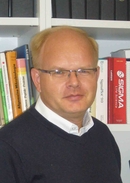
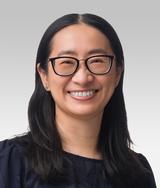
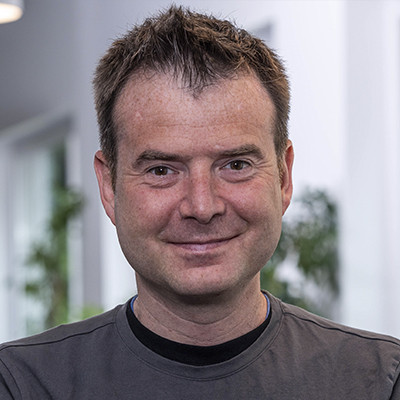
Prof. Dr. Heinrich Jung is a faculty member at the Department of Microbiology, Faculty of Biology, Ludwig Maximilian University of Munich. His research focuses on membrane protein structure-function relationships, particularly sodium-coupled transporters like PutP and CaiT in prokaryotes. Specializes in Microbiology and Membrane Protein Dynamics Utilizes crystallography , EPR spectroscopy , and functional assays Investigates transport mechanisms in pathogens like Helicobacter pylori Research trends in recent publications highlight: Elucidating efflux systems (e.g., ParXY, TtgABC) and their roles in bacterial resistance Structural and functional analysis of solute/sodium symporters and antiporters Exploration of two-component regulatory systems (MxtR/ErdR) in carbon metabolism Biophysical studies on transmembrane domain dynamics using DEER spectroscopy
Wen Lu, PhD is a Research Assistant Professor in the Department of Cell and Developmental Biology at Northwestern University's Feinberg School of Medicine. Her primary research focuses on cytoskeletal regulation and molecular motor coordination in super-large cells including oocytes and neurons, utilizing Drosophila melanogaster as a model organism. She employs high-resolution live microscopy, genetic engineering, optogenetics, and pharmacological manipulations to investigate microtubule and F-actin dynamics in cellular development and regeneration. Her educational background includes a BS from Peking University (2004) and a PhD from The University of Chicago (2010), followed by postdoctoral training at Northwestern University Feinberg School of Medicine. Dr. Lu maintains active affiliations with the American Society for Cell Biology (2019-2024) and the Genetics Society of America (2022-2023), and serves on the FlyBase Community Advisory Group since 2014. Research interests center on cytoskeletal dynamics in cellular polarization, with particular emphasis on oocyte specification, growth mechanisms, and neuronal regeneration after injury. Her work bridges developmental biology and neurobiology through innovative imaging techniques that reveal molecular transport mechanisms in cellular systems. Current investigations explore microtubule movement regulation and the interplay between cytoskeletal elements during critical developmental processes. Publication trends demonstrate strong interdisciplinary focus spanning cell biology, neurobiology, and imaging sciences, with recent work increasingly incorporating translational elements in ophthalmology and oncology. Her articles reveal consistent methodological innovation in live-cell imaging and genetic manipulation techniques applied to fundamental biological questions. Winner 2025 Drosophila Art Contest, The FlyStuff / Genesee Scientific Team Winner of CDB Graphic Design Contest, CDB Special Events Committee (2024) Winner in Category 2, Microscopy Image Competition 2024, ProteinTech Group 2nd Prize in Published Category, Microscopy Today Micrograph Awards (2024) BINA 2022 Image Contest- People's Choice Award, BioImaging North America Dr. Lu serves on the FlyBase Community Advisory Group and maintains industry relationships including ownership in Quantum Music LLC. Her laboratory work integrates advanced microscopy with genetic models to address fundamental questions in cellular organization, with potential implications for understanding developmental disorders and neurodegenerative conditions.
Luigimaria Borruso is a Tenured Professor at the Faculty of Agricultural, Environmental and Food Sciences at the Free University of Bolzano. Their research focuses on soil and molecular ecology, microbial communities in agro-ecosystems, and environmental DNA (eDNA) applications for biodiversity conservation. University: Free University of Bolzano School: Faculty of Agricultural, Environmental and Food Sciences Email: luigimaria.borruso@unibz.it Research Interests: Soil and molecular ecology Plant-fungal/bacterial-soil interactions (Agro)-ecological networks in apple orchards and vineyards Soil quality indicators Agroecology Environmental DNA (eDNA) in soil biodiversity conservation Science education for soil literacy Recent Publications Trends: Recent works explore microplastics in soil systems, biochar-microbe partnerships for crop growth, microbial dynamics in extreme environments (volcanoes, Antarctica), and applications of metabarcoding in conservation biology (lemurs, bats). They also investigate sustainable agricultural practices, including living labs and soil enzyme analysis via machine learning. Courses Taught: General Chemistry and Biochemistry at the bachelor's level, and advanced topics like Soil Ecology, Statistical Methods for Agricultural Research, and Soil Protection in master's programs.
Prof. Dr. Jörg-Peter Schnitzler is the Head of the Research Unit Environmental Simulation at Helmholtz Munich (HMGU) since 2012 and an Adjunct Associate Professor at Albert-Ludwigs-University Freiburg since 2007. His work focuses on the role of volatile organic compounds (VOCs) in plant-microbe interactions, biosphere-atmosphere exchange, and climate-human health linkages. PhD in Plant Physiology (University of Tübingen, 1992) Postdoc at GSF Institute of Biochemical Pathology (now HMGU, 1992-1994) Group Leader at Fraunhofer Institute/KIT IMK-IFU (1994-2011) His research explores VOCs as a 'chemical alphabet' mediating communication between organisms, their impact on atmospheric chemistry, and metabolomic networks under stress. Recent work includes plant genotype-environment-microbe (G x E x M) interactions and phenotyping platforms. Recent publications highlight studies on de novo terpenoid emissions, fungal metabolomic reprogramming, plant chemodiversity evolution, and insect-plant chemical dynamics across 2025 articles in journals like Physiologia Plantarum , Fungal Biology and Biotechnology , and Journal of Chemical Ecology . He collaborates with institutions such as Karlsruhe Institute of Technology (KIT), Technical University of Munich (TUM), and German federal ministries, with funding from DFG and Fachagentur Nachwachsende Rohstoffe e.V.
Dr. Curtis Huttenhower is a Professor of Computational Biology and Bioinformatics at Harvard T.H. Chan School of Public Health , with dual appointments in the Department of Biostatistics and Department of Immunology and Infectious Diseases . His research focuses on computational methods for microbial community analysis, human microbiome public health implications, and machine learning applications in genomics. Education: B.S. (2000) from Rose-Hulman Institute of Tech, M.S. (2003) from Carnegie Mellon, Ph.D. (2008) from Princeton Major grants: NIH R21CA299494 (cancer virome), U24HL175772 (HVP consortium), OT2CA297578 (early-onset colorectal cancer prevention) His work spans functional metagenomics , microbiome diagnostics , and structured biological knowledge in machine learning . Recent studies include strain-level microbiome mapping and microbiome links to depression, diabetes, and cardiovascular disease . He contributes to open-source tools like MaAsLin and WAAFLE , and leads the Human Microbiome Project sub-cohort for inflammatory bowel disease microbiome characterization.
Yuping Li is a Tenure-track Assistant Professor at the Biozentrum, University of Basel, where she leads a research group focused on the genetics and evolution of bacteria-jumbophage interactions. She was appointed in 2024 and received an SNSF Starting Grant the same year. Her research explores the unique biology of jumbophages—phages with large genomes and eukaryote-like properties—and their co-evolution with bacterial hosts, particularly the Pseudomonas phage phiKZ and the bacterial 'jumbophage killer' (Juk) immune systems. Nationality: Chinese Current Position: Tenure-track Assistant Professor, University of Basel, Biozentrum (since 2024) Previous Position: Postdoctoral Researcher, University of California, San Francisco (2019–2024) Visiting Scientist: EMBL, Heidelberg (2022–2023) Her research interests center on molecular microbiology, bacteriophage biology, bacterial immunity, and evolutionary genetics . She investigates how jumbophages form protective 'nuclei' inside bacterial cells to evade host defenses and how bacteria have evolved counter-mechanisms like the Juk system. This work combines genetics, microscopy, biochemistry, and structural biology to understand infection dynamics and evolutionary arms races. The ultimate goal is to harness jumbophages in fighting antibiotic-resistant bacteria. The recent publications show a strong trend in phage-host interactions, anti-CRISPR mechanisms, microbial evolution, and systems-level analysis of adaptation . Her work bridges fundamental virology with applied antimicrobial strategies, often using high-throughput sequencing, proteomics, and mathematical modeling. Articles span top journals like Cell , Nature Communications , and PLoS Biology , reflecting interdisciplinary impact. Scientific Awards: SNSF Starting Grant (2024) Postdoctoral Independent Research Grant, Program for Breakthrough Biomedical Research, UCSF (2021–2022) CEHG Predoctoral Fellowship, Stanford University (2018–2019) Genentech Foundation Predoctoral Fellowship (2016) Outstanding Student Scholarship (2007–2011) Yuping Li advises PhD students and postdoctoral fellows, including Elena Kaube, Dr. Marina Mahler, and Dr. Sam van Beljouw. Her group is supported by competitive grants such as the SNSF Starting Grant. She collaborates with leading scientists like Dr. Joseph Bondy-Denomy (UCSF) and Dr. Nassos Typas (EMBL). Her lab employs cutting-edge techniques in genetics, proteomics, and structural biology to dissect phage infection and bacterial immunity mechanisms. Her research group is part of the Biozentrum at the University of Basel, a leading institution in life sciences, and she is affiliated with the NCCR AntiResist initiative, focusing on antimicrobial resistance solutions.
Dr. Paul Cross is a Senior Lecturer in the Environment and Senior Tutor at the School of Environmental and Natural Sciences, Bangor University, UK. He is actively involved in research, teaching, and public engagement, with a strong focus on environmental science, pollinator conservation, and sustainable agriculture. His work bridges ecology, engineering, and socio-economic modeling, contributing significantly to understanding pollinator health and agricultural sustainability. His research interests include UAV-based tracking of insect pollinators, beekeeping as a tool for poverty alleviation, zoonotic diseases (particularly E. coli O157), bee morphometrics, and socio-economic methodologies for estimating disease and illegal behaviors. He employs advanced technologies such as radar, machine learning, and UAVs to study pollinator behavior and environmental impacts. His recent publications highlight a strong trend in integrating engineering and ecological sciences, particularly through the development of energy-harvesting bee tracking devices and radar-based monitoring systems. His work spans disciplines from entomology and soil science to public health and climate change, reflecting a highly interdisciplinary approach to environmental challenges. Senior Lecturer in the Environment, Bangor University Senior Tutor Course Director for MSc Conservation and Land Management Member of SENRGy Teaching and Ethics Committees Dr. Cross has supervised multiple PhD students on topics ranging from beekeeping in Tanzania to UAV-based bee tracking and neonicotinoid impacts. He has led or contributed to numerous research projects funded by the Welsh Government, RCUK, and the British Academy, focusing on pesticide hazards, greenhouse gas emissions, and food safety. He is actively involved in public outreach, with media appearances on BBC Countryfile and contributions to The Conversation. His work contributes to UN Sustainable Development Goals related to poverty reduction, climate action, and life on land.
Prof. Dr. Jörg Ewald is a Research Professor in the Faculty of Forestry and Agriculture at the Technical University of Applied Sciences Weihenstephan-Triesdorf. He leads the Research Professorship on Diversity and Functions of Mountain Ecosystems and holds key leadership roles as Dean of the Faculty and Scientific Director of the Doctoral Center Sustainable Land Use Systems (SusLand). He is also a member of the steering committee for the BayWISS Joint College Life Sciences and Green Technologies. His research is centered on botany, vegetation science, and mountain ecosystems , with a strong emphasis on the impacts of climate change, land-use dynamics, and conservation in alpine and forest environments. His work spans plant ecology, biodiversity assessment, soil ecology (particularly Tangelhumus), and forest site evaluation. He teaches courses such as General Botany, Systematic Botany, Forest Communities, and Climate Change Management. His recent publications reveal a consistent focus on long-term ecological monitoring, species distribution shifts in response to warming, and the effects of land use on biodiversity across trophic levels. He employs methods like NMDS ordination, cluster analysis, metabarcoding, and GIS-based modeling. His work often involves large collaborative networks across Germany and integrates citizen science data with historical records. Prof. Ewald is actively involved in applied research for sustainable forest management and conservation policy, contributing to projects like StratALP for assessing forest degradation sensitivity. His leadership in doctoral education and interdisciplinary research initiatives underscores his central role in advancing sustainable land use science.
Lauren O'Connell is an Associate Professor in the Department of Biology at Stanford University, where she investigates how genetic and environmental factors contribute to biological diversity and adaptation. Her research focuses on the neural basis of parent-offspring communication, spatial cognition evolution, and toxin sequestration mechanisms in amphibians. She earned her Ph.D. in Cellular and Molecular Biology from the University of Texas at Austin (2011) B.S. in Biological Sciences from Cornell University (2006) A.A. in Natural Sciences from Tarrant County Community College (2004) Research interests span evolutionary neuroscience and physiology, particularly exploring: Neural mechanisms of parent-offspring communication in poison frogs Spatial cognition evolution in amphibians Physiological adaptations for chemical defense acquisition Vertebrate pair bonding mechanisms Her work integrates field studies in Ecuador, Madagascar, and Australia with laboratory experiments on brain function and toxin metabolism. Recent publications highlight innovations in Amphibian electrophysiology methods Microbiome interactions with alkaloids Neural correlates of social behavior Chemical defense ecology Scientific honors include 2023 Camille Dreyfus Teacher-Scholar Award 2018 Frank A. Beach Award 2015 For Women in Science Fellowship 2013 Capranica Prize 2012 Young Investigator Award 2011 Early Career Award She mentors a diverse team across multiple projects, emphasizing inclusivity and equity in science training programs. Her lab supports community college students through NSF-funded initiatives and engages in international collaborations with institutions like Flinders University and Centro Jambatu.
Gerd Gleixner serves as a Research Group Leader at the Max Planck Institute for Biogeochemistry in Jena, Germany, and holds an Associate Professor position at Friedrich Schiller University Jena. His primary affiliation is with the Department of Biogeochemical Processes (BGP), where he leads research on molecular-scale biogeochemical cycles. His research focuses on molecular biogeochemistry , particularly the origin, turnover, and stability of soil organic matter, carbon transport in plant metabolism, and biodiversity's role in biogeochemical cycles. Key projects include the Amazon Tall Tower Observatory (ATTO) and Aqua Diva, examining ecosystem processes across spatial and temporal scales. His work integrates isotopic techniques with molecular analyses to understand carbon cycling in terrestrial ecosystems. Analysis of his 2021-2023 publications reveals strong emphasis on plant-soil-microbe interactions , paleoclimate reconstruction using biomarkers, and dissolved organic matter characterization . Methodologically, his work bridges field observations with advanced analytical techniques including mass spectrometry and isotope ratio measurements. 2022 Top Scientists (Environmental Sciences; #527 worldwide, #36 nationally) 2016 Thuringian Research Prize for Basic Research Gleixner actively mentors through the International Max Planck Research School for Global Biogeochemical Cycles, which he has led as Spokesperson since 2017. His research involves significant international collaborations, particularly in Tibetan Plateau studies and Amazon basin research. Current laboratory work centers on molecular-level analyses of organic matter using state-of-the-art facilities at the Max Planck Institute.
Desalegn Etalo is an Assistant Professor at the Laboratory of Phytopathology at Wageningen University & Research. His research focuses on plant-pathogen interactions, particularly on Striga (a parasitic weed) and its impact on sorghum production in agricultural systems. Dr. Etalo's research interests center on understanding plant-microbe interactions, with emphasis on soil microbiome dynamics and their role in plant defense mechanisms. His work explores how rhizobacteria influence plant growth and resistance to parasitic weeds through metabolomic approaches. Key research areas include Striga suppression mechanisms, sorghum resistance traits, Fusarium diversity in plant-pathogen systems, and molecular detection of weed seedbanks in agricultural soils. His recent publications demonstrate a strong focus on the intersection of plant pathology, microbiome science, and agricultural sustainability. The research trends show increasing integration of metabolomics, molecular biology, and ecological approaches to address challenges in crop protection, particularly in vulnerable agricultural systems. Dr. Etalo actively mentors PhD students, serving as co-promotor on multiple doctoral projects addressing critical plant pathology challenges including Basal Stem Rot in Oil Palm, potato-rhizosphere interactions, tomato immune responses, and Fusarium wilt in banana. His research has garnered significant attention, with publications cited in Scopus, covered by multiple news outlets, and widely shared on social media platforms including X (Twitter) and Bluesky, indicating substantial impact in both academic and broader scientific communities.
Bettina Martin is a Postdoctoral Researcher at the University of Hamburg , affiliated with the Faculty of Mathematics, Computer Science and Natural Sciences and the Department of Biology . She works within the Institute of Marine Ecosystem and Fisheries Sciences under the research focus of Marine ecosystem dynamics and management . Education: Diplom Biologie (1994), Dr. rer. nat. (2008) from the University of Hamburg Research Interests: Her work spans Zooplankton Ecology , Deep-Sea Ecology , and the Ecology of Seamounts and Upwelling Systems . She investigates spatio-temporal dynamics of zooplankton biomass, carbon demand in seamount ecosystems, and interactions between oceanographic features like the Agulhas Leakage and marine microbial communities. Recent Publications (2024–1996): Focuses include Trichodesmium transport pathways , salps and doliolids in Benguela Upwelling , zooplankton variability in seamounts , and historical oceanographic research in the Indian Ocean. Key subfields: Marine Biodiversity , Biogeochemical Cycles , and Deep-Sea Food Webs .
Yoona Rhee, MD is an Assistant Professor in the Department of Internal Medicine at Rush Medical College, Rush University. She serves as the Associate Director of Transplant Infectious Diseases Services, with a clinical focus on infections in solid organ and hematologic cancer transplant recipients. Her work bridges clinical care, infection prevention, and academic research. Research Interests: Dr. Rhee's research centers on hospital epidemiology, antimicrobial resistance (particularly carbapenem-resistant Enterobacteriaceae and MRSA), infection control practices (e.g., chlorhexidine bathing, contact precautions), and infectious complications in immunocompromised hosts. She investigates microbial transmission dynamics using genomic and microbiome analyses, with a focus on intensive care and long-term acute care settings. Her work also addresses vaccination strategies and infection screening in transplant populations. Publication Trends: Her recent publications (2020–2024) reflect a strong focus on the impact of the COVID-19 pandemic on transplant patients, infection control interventions in ICUs, and genomic epidemiology of MRSA and multidrug-resistant organisms. Earlier work (2015–2020) established her expertise in KPC transmission, chlorhexidine efficacy, and CLABSI prevention in non-ICU settings. Scientific Awards: No specific awards are listed in the provided text. Advising and Grants: While specific advisees or grant funding are not mentioned in the text, her extensive collaborative research network—evident from co-authorship with leading figures like Mary K. Hayden and Kyle Popovich—suggests active mentorship and research leadership. Her publications in top-tier journals indicate competitive research activity, likely supported by institutional or external funding. Labs and Teams: Dr. Rhee is affiliated with the Division of Infectious Diseases at Rush University Medical Center. She is a key member of the Transplant Infectious Diseases team and collaborates closely with the hospital epidemiology and infection control group, particularly in multicenter studies on infection prevention practices.
Professor Timothy Barraclough is a leading evolutionary biologist affiliated with the University of Oxford in the Department of Biology . Previously, he spent 23 years at Imperial College London’s Silwood Park campus, where he served as a Royal Society University Research Fellow and later as Professor of Evolutionary Biology. His research focuses on the evolutionary biology of species diversity, integrating theoretical and statistical approaches with molecular, genomic, experimental, and field data across diverse organisms. His work spans questions about speciation, adaptive divergence, and the role of biodiversity in complex ecosystems. Current projects investigate the asexual evolution of bdelloid rotifers, evolutionary time-series of pathogenic fungi, and speciation dynamics in microbial communities. He has received recognition as a Royal Society University Research Fellow. Timothy Barraclough teaches evolutionary biology and ecology at undergraduate and postgraduate levels, including courses on evolutionary modeling and collaborative projects with non-academic partners. His publications cover transposable elements in rotifers, fungal genomics, bacterial adaptation constraints, and theoretical frameworks for understanding species interactions.
Colin Stedmon is a Professor at the National Institute of Aquatic Resources under the Technical University of Denmark (DTU) . His research focuses on chemical oceanography, environmental spectroscopy, and marine biogeochemistry, particularly in Arctic and Greenlandic coastal systems. He leads the DTU Microbes Initiative and contributes to UN Sustainable Development Goals related to climate and marine environments. Research Interests: DOM dynamics, optical oceanography, Arctic carbon cycling, and applications of spectroscopy in marine and water quality studies. Projects: Supervises PhD projects on Arctic surveillance, seawater quality mapping, and microbial community interactions with DOM. Leads initiatives on seabed trawling impacts and laccase discovery. Collaborations: Works with international teams across Greenland, Siberia, and the Baltic Sea, focusing on climate change, ocean acidification, and pollution monitoring.