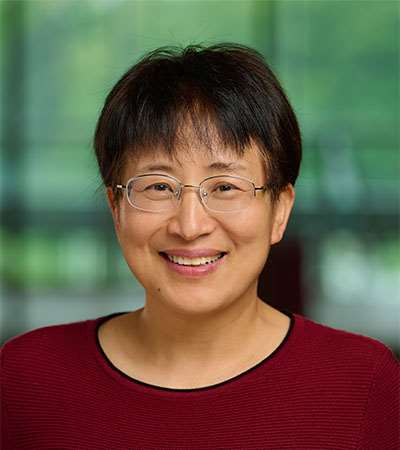
Dr. Aydan Bulut-Karslıoğlu is a Research Group Leader at the Max Planck Institute for Molecular Genetics in Berlin, where she leads the Bulut-Karslıoğlu Lab focused on gene-environment interactions in stem cells and development. Her work has significantly advanced our understanding of embryonic diapause and stem cell state transitions. Dr. Bulut-Karslıoğlu's educational background includes: B.Sc. in Chemical Engineering (major) and Biology (minor) from Middle East Technical University, Ankara, Turkey (2006) M.Sc. in Molecular Biology and Genetics from Bilkent University, Ankara, Turkey (2008) Ph.D. from Max Planck Institute of Immunobiology and Epigenetics, Freiburg, Germany (2013) Her research focuses on mechanisms regulating stem cell state transitions and fate commitment, particularly how cells communicate signals from their surroundings to the gene expression machinery. She has pioneered work on mammalian embryonic diapause - a reversible dormant state that gives embryos extra time to develop. Her lab uses a combination of functional perturbation methods in stem cells and early mouse embryos with omics, imaging, and biochemistry to reveal how genetic networks adjust to the status of the embryo. Analysis of her recent publications reveals a strong focus on the epigenetic and metabolic regulation of embryonic diapause, with particular emphasis on mTOR signaling, lipid metabolism, and DNA methylation dynamics. Her work bridges developmental biology, stem cell research, and metabolism, demonstrating how environmental cues like oxygen levels and nutrient availability influence developmental timing and cell fate decisions. Her notable scientific achievements include: Sofja Kovalevskaja Award (2018) ERC Starting Grant (2023) ERC Proof of Concept Grant (2025) GSCN Young Investigator Award (2025) Dr. Bulut-Karslıoğlu actively mentors the next generation of scientists, currently supervising multiple PhD students including Persia Akbari-Omgba, Anastasios Balaskas, Heleen Mallie, and Gunwant Patil. Her lab has received substantial funding through prestigious grants, including the Sofja Kovalevskaja Award, ERC Starting Grant, and ERC Proof of Concept Grant, enabling her team to pursue innovative research at the intersection of developmental biology and metabolism. The Bulut-Karslıoğlu Lab maintains a vibrant research environment with both computational and experimental scientists working together to unravel the mysteries of embryonic diapause and stem cell regulation. The lab actively participates in the International Max Planck Research School for Biology And Computation (IMPRS-BAC), contributing to the training of doctoral candidates at the interface of molecular life sciences and computational sciences.