Dr. Matthew Brookhouse is a Senior Lecturer at the Fenner School of Environment & Society, part of the Australian National University's Institute for Climate, Energy & Disaster Solutions. With a PhD in Dendroclimatology from ANU, he specializes in using forest structural complexity and tree-ring analysis to understand climate interactions and ecological responses in Australian subalpine environments. Research Focus: Sub-alpine ecology, Dendrochronology, CO2 responsiveness in eucalypt species Teaching: First-year research methods with emphasis on statistical application, advanced modeling and field botany Projects: Leading collaborative snow-gum dieback research and dendrochronological monitoring initiatives His publications span 2006-2025 with recent emphasis on machine learning applications for forest monitoring, tropical tree-ring chronologies for climate change, and climate sensitivity in Australian alpine ecosystems. Key collaborations include institutions like Australian Nuclear Science and Technology Organisation and University of Canberra researchers. Current projects focus on snow-gum woodland dieback mechanisms, high-resolution dendrometric monitoring, and integrating dendrochronology with environmental policy frameworks. He maintains active supervision of research students and contributes to both undergraduate and postgraduate curriculum development.
Professor Brendan Choat is a leading plant physiologist and Professor at the Hawkesbury Institute for the Environment, Western Sydney University. With a distinguished career in plant hydraulics and water relations research, he has established himself as a global expert in understanding how plants respond to drought stress. His work spans both natural ecosystems and agricultural systems, with particular emphasis on Australian native forests and crop species. Choat's research focuses on the intricate relationship between plant water transport systems and environmental stressors, particularly drought. His work examines how the xylem tissue functions as a hydraulic system that must balance water delivery to leaves while avoiding cavitation (embolism) that can lead to plant mortality. His groundbreaking research has demonstrated that many woody plant species operate close to their physiological safety margins with respect to drought, making them vulnerable to future climate changes. His laboratory employs cutting-edge non-invasive imaging techniques, including X-ray Micro Computed Tomography (microCT) and Magnetic Resonance Imaging (MRI), to directly visualize xylem function in living plants. This approach has allowed his team to address fundamental questions about how cavitation forms and spreads through plant vascular systems during drought stress. Analysis of Professor Choat's extensive publication record reveals a consistent focus on plant drought responses, with particular emphasis on Eucalyptus species and mangrove ecosystems. His research has increasingly incorporated large-scale monitoring approaches, remote sensing data, and trait databases to understand vegetation responses to climate extremes across broader spatial scales. Clarivate Highly Cited Researcher (2018-2024) ARC Future Fellowship (2013) Humboldt Fellowship for Experienced Researchers (2010) Thomson Reuters Citation and Innovation Award (2015) Professor Choat leads multiple significant research projects examining tree dieback in Australian forests, particularly focusing on Eucalyptus species. His work with citizen scientists through the 'Dead Tree Detective' project has provided valuable data on drought impacts across diverse forest biomes. He maintains active collaborations with researchers across Australia and internationally, contributing to large-scale initiatives like the AusTraits plant trait database. His research has direct implications for forest management, conservation strategies, and predicting ecosystem responses to climate change.
Teng-Fong Wong is a Research Professor in the Department of Geosciences at Stony Brook University, where he has been a faculty member since 1982. His research focuses on the intersection of rock mechanics, earthquake processes, and environmental applications, making significant contributions to understanding deformation mechanisms in geological materials. Education: Sc.B., Brown University, 1973 M.S., Harvard University, 1976 Ph.D., Massachusetts Institute of Technology, 1981 Research Interests: Professor Wong's research centers on rock mechanics with emphasis on earthquake mechanics, energy resources, and environmental applications. He investigates both phenomenological and micromechanical aspects of rock deformation and fluid flow using an integrated approach combining high-pressure deformation experiments, quantitative microstructure characterization, and theoretical analysis. His work spans brittle-ductile transitions in porous rocks, permeability evolution, strength properties of fault zone materials from SAFOD and TCDP drilling projects, and submarine groundwater discharge systems. Publication Trends: Wong's recent publications (2006-2008) demonstrate a consistent focus on strain localization mechanisms in porous rocks, particularly examining compaction bands and deformation bands in sandstones. His work integrates advanced imaging techniques (X-ray radiography, CT scanning) with mechanical testing to understand the micromechanics of rock failure. A significant thread connects his research on fault zone properties from major drilling projects (SAFOD, TCDP) with fundamental rock deformation processes. Scientific Recognition: U.S. Patent 6,874,371 for Ultrasonic Seepage Meter (2005) U.S. Patent 7,107,859 for Ultrasonic Seepage Meter (2006) Co-author of "Experimental Rock Deformation - The Brittle Field" (2nd Edition, Springer-Verlag, 2005) Professional Activities: Professor Wong maintains an active international research profile with numerous visiting appointments including at Australian National University, MIT, ETH Zurich, and institutions in China and France. His work involves extensive collaboration with USGS and international research teams on major fault zone drilling projects. He has developed specialized equipment like the ultrasonic seepage meter for measuring submarine groundwater discharge. Research Infrastructure: Wong's laboratory utilizes advanced capabilities including high-pressure deformation equipment, 3D visualization through laser scanning confocal microscopy and synchrotron microCT, and integrates these with analytic modeling and numerical simulation techniques (finite element and discrete element methods) to investigate micromechanics of dilatant and compactant failure in geological materials.
Dr. Nicolas Francois is an Associate Professor in the Department of Materials Physics at Australian National University (ANU), specializing in experimental geomaterials physics, soft matter, and fluid hydrodynamics. He leads the X-ray Tomography and Applications Research Group, combining curiosity-driven and applied research in out-of-equilibrium systems. ARC Industry Fellow (2024-2030): Improving Australian iron ore comminution for green steel production ARC DECRA Fellow (2016-2018): Biofilms in two-dimensional turbulent flows His research spans fundamental questions in: Fragmentation of solid materials Autonomous devices powered by chaotic flows Hydrodynamic waves Stochastic thermodynamics Granular matter Polymer rheology and applied areas in: Comminution of geomaterials Mechanics of fractured rocks Wave-energy conversion Environmental fluid mechanics Publications reveal a trajectory focused on X-ray tomography applications, granular dynamics, and turbulence-driven systems. He utilizes advanced imaging techniques to study material failure mechanisms and fluid-structure interactions, contributing to fields ranging from green steel production to biofilm dynamics. Current student projects and grants emphasize sustainable resource processing and fundamental fluid physics.
Luigi Bruno is an Associate Professor of Machine Design at the Department of Mechanical, Energy and Management Engineering (DIMEG), University of Calabria. He has held this position since 2014, following 12 years as an Assistant Professor at the same institution and Visiting Professorships at IIT Gandhinagar (2012), University of Alabama at Birmingham (2013-2017), and Free University of Bozen-Bolzano (2021). 1999 : Master's in Mechanical Engineering, University of Calabria (110/110 cum laude) 2003 : PhD in Mechanical Engineering, University of Pisa His research interests span: Experimental Mechanics : Pioneering speckle interferometry for micro-displacement measurement and residual stress analysis. Materials Science : Elastic characterization of anisotropic materials, biomedical applications of soft substrates, and 3D-printed composites. Biomedical Engineering : Mechanical behavior of biological tissues, ocular biomechanics, and dental implant material testing. Recent research trends focus on: Integrating artificial muscles into rehabilitation devices Advancing full-field optical measurement via microCT/DVC Optimizing 3D printed polymer adhesion for industrial components Exploring neuronal biomechanics on soft surfaces Scientific contributions include: CS2007A00010 patent for dual-focus speckle interferometers Deputy Editor of Optics and Lasers in Engineering (2019-present) Guest Editor for special issues on optical methods in experimental mechanics and nanobiotechnology Academic leadership extends to coordinating Mechanical Engineering committees (2021-present), serving on editorial boards, and organizing international conferences like AIAS National Conference (2018). He has secured multiple MIUR research grants and industry collaborations with Alfagomma, 3DNA, and Ferrovie della Calabria. His laboratory, Mechanics of Materials and Structures , supports both research and teaching activities with advanced optical measurement systems and computational tools for mechanical design.
Dr. Albert J. Sinusas is a Professor of Medicine (Cardiology) , Radiology & Biomedical Imaging , and Biomedical Engineering at Yale University . He serves as Director of the Yale Translational Research Imaging Center (Y-TRIC) and Advanced Cardiovascular Imaging at Yale New Haven Hospital. Education: BS from Rensselaer Polytechnic Institute (1979), MD from University of Vermont (1983), Internal Medicine training at University of Oklahoma (1986), Cardiology/Nuclear Cardiology at University of Virginia (1989) Dr. Sinusas specializes in non-invasive cardiovascular imaging with expertise in PET/CT, SPECT/CT, echocardiography, and MR imaging . His research focuses on molecular imaging of myocardial injury , angiogenesis , post-infarction remodeling , and deep learning applications in cardiac diagnostics. He has pioneered multimodality imaging approaches for cardiovascular pathophysiology assessment. Recent publications highlight his work in AI-driven cardiac imaging , novel PET tracers , and medical robotics . His team's 15 most recent articles (2024-2025) span topics from ARDS diagnostics to cardiovascular risk stratification using CT and PET technologies. Scientific Awards: SNMMI Hermann Blumgart Award (2008) Best Doctor in America (2001-2002, 2005-2015) M.A. Privatim from Yale (2006) Robert Wilkinson Lectureship (2014) Interurban Clinical Club membership (2017) As Principal Investigator on multiple NIH grants, Dr. Sinusas directs the NHLBI-funded T32 training program in multimodality cardiovascular imaging. His lab (Y-TRIC) houses state-of-the-art imaging resources including hybrid SPECT/CT , microCT , and 3D ultrasound systems for translational research from animal models to clinical applications.
W Robert J Funnell serves as Associate Professor at McGill University with dual appointments in the Department of Biomedical Engineering and Department of Otolaryngology – Head and Neck Surgery. His research addresses critical clinical challenges in hearing loss through integrated experimental and computational methodologies, focusing on translational applications for infant diagnostics and surgical interventions. His expertise spans middle-ear mechanics, three-dimensional modeling of biological structures, and development of interactive medical education tools. Core methodologies include finite-element analysis, laser Doppler vibrometry, and haptic-enabled virtual reality systems. Current priorities involve improving newborn hearing screening accuracy, designing middle-ear repair techniques, and creating 3D anatomical models for surgical training – particularly in endoscopy simulation using force feedback technology. Analysis of his 2015-2024 publications reveals persistent innovation in finite-element modeling of auditory systems, with increasing emphasis on newborn ear mechanics and optical coherence tomography applications. His work bridges biomedical engineering, otolaryngology, and medical education, demonstrating consistent progression from fundamental biomechanics toward clinical implementation – notably in Quebec's newborn hearing screening programs and endoscopic sinus surgery training models.
Prof. Stephen J. Ferguson is a Full Professor at ETH Zurich's Department of Health Sciences and Technology and Head of the Institute for Biomechanics. His research focuses on musculoskeletal biomechanics, biomaterials, and implant technologies addressing aging-related health challenges. He holds a Venia Docendi in Musculoskeletal Biomechanics and has led the Biomechanics Division at the University of Bern. Key honors include the ETH Golden Owl (2021) and ESB Clinical Biomechanics Award (2022). Education: Bachelor of Mechanical Engineering, University of Toronto (1991) Master's, Queen's University (1994) PhD, Queen's University (2000) Postdoc, University of Bern (2000-2002) Research Interests: Biomaterials for implants, musculoskeletal disorder mechanisms, computational biomechanics, and translational medical devices. Awards: ESB Clinical Biomechanics Award (2022) ETH Golden Owl (2021) European Spine Journal GRAMMER prize (2009) CTI Medtech Award (2005) Professional Activities: Five patent applications, course leadership in Biomedical Engineering and Spine Research, and director roles at ARTORG Spine Research Center. Labs/Teams: Leads the Institute for Biomechanics at ETH Zurich, focusing on cutting-edge biomechanical research and clinical translation.
Dr Orestis L. Katsamenis is a Lecturer in Biomedical Imaging at the University of Southampton , affiliated with the Faculty of Engineering and Physical Sciences (FEPS) and the Faculty of Medicine (FoM) . He leads the 3D X-ray Histology and Biomedical Imaging Theme at the μ-VIS X-ray Imaging Centre and holds a visiting position at the University Hospital Southampton NHS Foundation Trust in the Biomedical Imaging Unit of Cellular Pathology and Child Health. Education: BSc in Materials Science (University of Patras, 2007), MSc in Materials Science (University of Patras, 2009), PhD in Bioengineering (University of Southampton, 2012). His research focuses on 3D X-ray Histology (XRH) and Microfocus Computed Tomography (μCT) applied to biological and clinical imaging , pharmaceutical technology , and bone nanostructure . He has pioneered μCT protocols for clinical histology and developed advanced 3D imaging tools for applications in drug delivery , tissue engineering , and evolutionary biology . His work spans multidisciplinary collaborations with engineers, medical professionals, and paleontologists. Recent publications highlight his contributions to 3D imaging of bone , microneedle design , 4D-printed polypills , and paleontological studies . He has received awards including the EPSRC Doctoral Prize Award (2012) and multiple scientific presentation honors (2018) . Dr Katsamenis supervises PhD student Ayesha Mohiud Din and collaborates with research groups like the Engineering Materials and Surface Engineering Group and the Institute for Life Sciences . His Google Scholar profile lists over 20 recent articles, showing his prolific and diverse research output.
Kate M. Lesciotto, JD, PhD, D-ABFA is an Assistant Professor at the Center for Anatomical Sciences , affiliated with the College of Biomedical and Translational Sciences at UNT Health in Fort Worth, TX. Her work bridges forensic anthropology, biomechanics, and legal systems, focusing on skeletal analysis, trauma interpretation, and the Daubert standard's impact on forensic science. Education PhD in Anthropology, Pennsylvania State University (2020) MS in Forensic and Biological Anthropology, Mercyhurst University (2015) Juris Doctor (JD), Washington University in St. Louis (2009) BS in Biological Science and Zoology, Colorado State University (2004) Her research centers on forensic anthropology , with three primary areas: (1) sex estimation from skeletal remains using metric/morphological data and statistical models; (2) biomechanics of skeletal trauma via experimental bending models and medical imaging; and (3) the intersection of forensic anthropology and legal systems , particularly Daubert standard admissibility criteria. Recent projects include NSF/National Institute of Justice-funded software development for sex estimation and collaborations on cranial bone development studies. Dr. Lesciotto's publications reflect expertise in forensic identification , methodological validation , and science communication . She has contributed to software tools, biomechanical protocols, and educational outreach initiatives like March Mammal Madness. Her 2021-2025 work demonstrates consistent focus on improving forensic accuracy, legal standards, and developmental imaging techniques. Scientific Awards ABFA Board-Certified Forensic Anthropologist (2023) As a practicing forensic anthropologist, she consults for Texas counties and trains law enforcement. At UNT Health, she directs Graduate Structural Anatomy (PHAN 5301) and teaches gross anatomy to medical, physical therapy, and physician assistant students. Her work integrates biomedical research , legal analysis , and pedagogical innovation , reflecting interdisciplinary expertise in forensic science.
Sophie Rapagna is a Casual Academic and Micro-CT Facility Manager at the College of Science and Engineering, Flinders University . Her research focuses on knee osteoarthritis , microCT imaging , and bone microarchitecture with applications in implant biomechanics and digital volume correlation (DVC) . Active in Flinders Institute for Nanoscale Science and Technology Full Member of the Medical Device Research Institute PhD candidate in biomechanics since 2017 Her publications (17 total) span topics like: Micro-CT-based mechanical analysis of implants Porosity in 3D-printed titanium components Failure mechanisms in dissimilar welds Bone-cartilage interactions in osteoarthritis Time-elapsed imaging of implant degradation High-resolution imaging for biomechanical strain mapping She collaborates with researchers such as Dr. Egon Perilli and Michael Taylor on projects involving digital volume correlation and additive manufacturing .
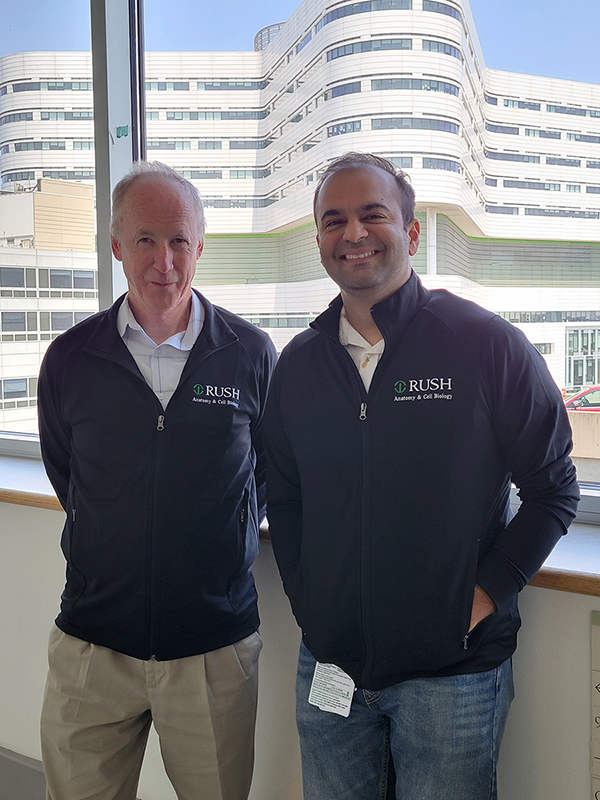
D. Rick Sumner, PhD, serves as Professor and Chair of the Department of Anatomy & Cell Biology at Rush Medical College, Rush University, and directs the Rush MicroCT and Histology Core. With over 30 years of continuous research funding from major institutions including NIH, DoD, NASA, and industry partners, his work has established him as a leading researcher in bone biology and orthopedic biomechanics. His laboratory maintains active collaborations with research groups both within Rush and internationally. Dr. Sumner's research focuses on fundamental aspects of bone biology with direct clinical applications. His primary areas of investigation include bone regeneration mechanisms, orthopedic implant fixation, and the role of bone in osteoarthritis pathogenesis. Specific projects examine the genetics of bone regeneration, effects of premature birth on postnatal bone development, early detection of particle-induced peri-implant osteolysis, and cartilage-bone interactions in osteoarthritis. His lab employs advanced imaging techniques including micro-computed tomography, backscatter scanning electron microscopy, and Fourier transform infrared spectroscopy, complemented by histology, mechanical testing, and biomarker analysis. Analysis of Dr. Sumner's recent publications reveals a strong interdisciplinary approach spanning bone biology, immunology, microbiome research, and circadian rhythms. His work demonstrates how bone health intersects with systemic conditions including inflammatory bowel disease, circadian disruption, and premature birth. The research consistently applies sophisticated imaging and analytical techniques to understand bone-implant interfaces and develop improved diagnostic and therapeutic approaches for orthopedic conditions. Dr. Sumner serves as Principal Investigator or Multiple Principal Investigator on multiple NIH grants including R01AR080118 (bisphosphonates and bone matrix), R01AR079179 (systems genetics of bone regeneration), R21HD102026 (bone health in formerly premature individuals), and P30AR079206 (Chicago Center on Musculoskeletal Pain). He has mentored numerous postdoctoral fellows including Frank Ko, PhD, and Brittany M. Wilson, PhD, who continue research in bone regeneration and implant osteolysis. Dr. Sumner's laboratory operates as the Laboratory of D. Rick Sumner within the Department of Anatomy & Cell Biology at Rush University Medical Center. The lab maintains the Rush MicroCT and Histology Core, providing advanced imaging capabilities for bone and implant research. His team includes bioinformaticians, postdoctoral researchers, and technical staff working collaboratively on multiple projects related to bone regeneration, implant fixation, and osteoarthritis mechanisms.
Dr. Kevin F. Hoffseth is an Assistant Professor in the Department of Biological and Agricultural Engineering at Louisiana State University's College of Engineering. His research focuses on deformation and failure mechanisms in biological materials, bone regeneration quality, and biomedical image processing techniques. Educational background includes a Ph.D. in Mechanical Engineering from UC Santa Barbara. Research interests span biomechanics of bone and biological materials, structural analysis of biomedical systems, and advanced imaging techniques for tissue evaluation. Publications demonstrate expertise in microCT analysis, fracture mechanics of cortical bone, and development of instrumentation for bone quality assessment. Articles reveal consistent focus on orthopedic biomechanics, with significant contributions to understanding bone-material interactions through experimental and computational methods. Research integrates veterinary and human medical applications.
Timothy Wright is a distinguished Professor of Applied Biomechanics in Orthopaedic Surgery at Weill Cornell Medicine and a member of the Cornell University College of Engineering Graduate Field of Biomedical Engineering. His groundbreaking work focuses on enhancing orthopedic implant performance through multidisciplinary approaches integrating biomechanics, radiology, orthopedic surgery, biomaterials , and biomedical engineering . With over 300 peer-reviewed publications, he has pioneered implant systems for knee, hip, and elbow replacements adopted globally. Education : B.S. in Materials Science from Lehigh University (1971), M.S. (1972) and Ph.D. (1976) in Materials Science from Stanford University, followed by a postdoc in Biomechanics at HSS (1977). Dr. Wright’s research spans orthopedic implant design, tribocorrosion in modular connections, bone mechanobiology, post-traumatic arthritis , and additive manufacturing . His recent studies, including 3D-printed implants that enable customized bone fixation, reflect his focus on advanced manufacturing and computational modeling. Articles highlight his expertise in joint kinematics, implant retrieval analysis , and biomaterial wear mechanisms , with applications across hip, knee, and elbow arthroplasty . Key scientific awards include the Alfred R. Shands Jr. MD Award (2013), Director’s Special Citation from the FDA (1997), and the Research Career Development Award (1987-1992) and Whitaker Fellowship (1985). He has served as President of the Orthopaedic Research Society (1992), Coordinating Program Director of the NIH-funded Clinical and Translational Science Center, and co-editor of the Journal of Orthopaedic Research for 18 years. Grants : NIH T32 training program (preceptor), Kellen French Foundation projects (PI/Co-PI), Kirby Foundation’s New Directions in Joint Replacement Design (PI), and NIH UL1 Clinical Translational Science Center (Coordinating Program Director). Laboratories : Department of Biomechanics at HSS, Lab of Molecular Osteoarthritis Research , and Lab of Cartilage and Meniscus Mechanics .
Susan Williams is a Professor of Anatomy and Associate Dean of Faculty at the Ohio University Heritage College of Osteopathic Medicine (OU-HCOM), where she leads the Williams Lab in the Department of Biomedical Sciences. She is also affiliated with the Ohio Center for Ecology and Evolutionary Studies (OCEES) and the Ohio Musculoskeletal and Neurological Institute, and serves as graduate faculty in the College of Arts and Sciences Biological Sciences Graduate Program. PhD, Duke University, 2004 Promoted to Professor, Ohio University, 2012 Active Principal Investigator with continuous funding from NSF and NIH Dr. Williams' research lies at the intersection of anatomy, functional morphology, physiology, and biomechanics, focusing on the motor control and sensorimotor integration underlying mammalian feeding and swallowing. Her lab investigates how complex behaviors like chewing, lapping, and swallowing are coordinated across more than 30 pairs of head and neck muscles, with particular interest in the development of mastication, the dynamics of soft tissues like the tongue, and the evolution of the hyoid apparatus. Her work employs cutting-edge methodologies such as XROMM, electromyography, and microCT imaging to study both evolutionary patterns and clinical implications, including oropharyngeal dysphagia in infants and lingual nerve injury. Her recent publications focus on the biomechanics of feeding, with a highlighted 2024 paper on tongue function in skunks, reflecting her lab's use of diverse animal models to uncover fundamental principles of oral motor control. The research consistently integrates comparative and clinical perspectives to address both evolutionary questions and rehabilitation strategies. Scientific recognition includes: Fellow, American Association for the Advancement of Science (2022) Presidential Research Scholar, Ohio University (2020) Outstanding Graduate Faculty Award (2020) Outstanding Honors Tutorial Thesis Mentor Award (2019, 2020) Dr. Williams is a dedicated mentor and active researcher, serving on the NIH Motor Function, Speech, and Rehabilitation Study Section. Her lab is supported by multiple grants from the National Science Foundation and the National Institutes of Health, including projects on hyoid biomechanics, development of mastication, and the effects of lingual nerve injuries. She has advised numerous students, including PhD candidates like Jacob George and Ani Smith, and has successfully mentored MS theses such as Hannah Baker's. The Williams Lab is a collaborative, interdisciplinary team utilizing XROMM technology and experimental physiology to study feeding across species and developmental stages. The lab collaborates with experts such as Dr. Callum Ross, Dr. Zhe-Xi Luo, Dr. Rachel Olson, and Dr. Donna Scarborough, and maintains strong ties with Miami University and other institutions.