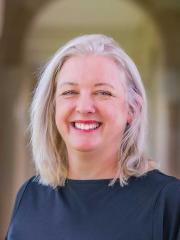
Sunnie Lee Watson is a Professor of Learning Design and Technology at Purdue University’s College of Education and serves as the Assistant Dean for Engagement and Global Initiatives. Her work bridges attitudinal learning, critical systems thinking, and learner-centered pedagogy. Ph.D. in Educational Leadership and Policy Studies, Indiana University (2008) Ph.D. in Instructional Systems Technology, Indiana University (2008) M.Ed. in Instructional Systems Technology, Indiana University (2005) B.A. in Educational Technology, Ewha Woman’s University (2001) Dr. Watson’s research focuses on transforming educational paradigms through attitudinal learning and mindset change in formal and informal settings. She pioneers the integration of innovative educational technologies to foster learner-centered online instruction . Her recent publications emphasize MOOCs as tools for attitudinal change, analyzing self-regulated learning and social presence in digital environments. Themes include instructional design , educational psychology , and technology's role in equity . AERA AECT CIES
Dr Pete Evans is a Senior Lecturer at the Moray House School of Education and Sport, University of Edinburgh, and a member of the Institute for Education, Community & Society (IECS). He joined the university in 2008 and holds a PhD from the University of Edinburgh. His research focuses on digital education, knowledge work, workplace learning, and interdisciplinary methodologies. He leads the European Students Sustainability Auditing project (2016–2019) and previously managed the Lang2Tech project (2011–2013), which developed ePortfolio-based language assessment tools. He is a Fellow of the Higher Education Academy (FHEA) and teaches on MSc programs in Digital Education, Social Justice, and Education. His work bridges theory and practice, emphasizing experiential learning and micro-credential frameworks. Education: BA (Hons) Politics (University of Liverpool), MBA (University of Strathclyde), PhD (University of Edinburgh). Key Projects: European Students Sustainability Auditing (ERASMUS+, 2016–2019) Lang2Tech (European Commission, €365K funding, 2011–2013) PROPOUND (2011–2013, competence-based postgraduate education model) Research Themes: Micro-credentials and digital badging Online pedagogy and the Manifesto for Teaching Online Social responsibility in higher education through experiential learning Awards: Fellow of the Higher Education Academy (FHEA). Advising & Grants: Open to PhD supervision, with extensive experience in grant-funded projects totaling over €500K in funding. Labs/Teams: Leads the Centre for Research in Digital Education, contributing to policy development and academic innovation in digital education.
Judith Krause is the Executive Director of Early Childhood Education Programs and Program Director for the Doctor of Education (Ed.D.) in Early Childhood Education at Pacific Oaks College, affiliated with the School of Education and the Academic Affairs department. She has been a leader in higher education since 1989, pioneering the nation's first Ed.D. program specifically in Early Childhood Education. Her work integrates academic leadership, curriculum innovation, and advocacy for equity in early learning. Ed.D. in Organizational Leadership, University of La Verne M.A. in Elementary Education (Emphasis: Early Childhood), California State University, Long Beach B.A. in Human Development (Specialization: Child Development), California State University, Long Beach Her research and professional focus centers on developmentally and culturally appropriate pedagogy, anti-bias education, and leadership in educational settings. She emphasizes collaboration, connectivism, and inclusive practices. Dr. Krause is a frequent presenter at national, state, and local conferences, delivering interactive workshops on topics such as literacy, play-based learning, and equity in early childhood classrooms. The publications and presentations she has contributed to over the years reflect a strong commitment to social justice, environmental stewardship, parental engagement, and school readiness. Her work spans both academic and public domains, including peer-reviewed conference papers, digital magazine interviews, and video podcasts. The recurring themes include anti-bias education, cultural responsiveness, leadership development, and innovative teaching strategies for young learners. She is actively involved in several professional organizations and advisory boards: California Association for the Education of Young Children (CAAEYC) National Association for the Education of Young Children (NAEYC) Riverside County Consortium for Early Learning Services (Board of Directors) Riverside County Local Child Care and Development Council (2009–2025) Volunteers of America, Los Angeles (Board of Directors, 2019–2024) Child Development Advisory Committees at Cerritos and Saddleback Colleges Dr. Krause has advised on workforce development through the QCC Workforce Pathways Stipend Program and contributed to international micro-credential development in partnership with Indonesian school leaders. While no formal lab or research team is mentioned, her leadership in program design and curriculum development demonstrates a collaborative, team-oriented approach. Her influence extends beyond the classroom into policy, community engagement, and public discourse on early education.
Thomas De Baets is a Professor of Music Education at LUCA School of Arts, KU Leuven, where he leads the Music Education expertise team. He serves as co-editor-in-chief of Music Education Research journal and participates in the Erasmus+ Teacher Education Academy for Music (TEAM) steering committee. His academic credentials include: Master's degree in Music Pedagogy (Lemmens Institute, 2005) Teaching diploma Diploma in Advanced Studies in Music Pedagogy (Lemmens Institute, 2008) PhD in Arts specializing in music education (KU Leuven, 2012) De Baets' research examines music teacher professionalization through practical research frameworks, emphasizing community music participation and improvisational practices. His philosophical approach challenges traditional pedagogical boundaries while exploring flow states in collective improvisation and the artistic researcher identity of virtuoso teachers. This work bridges theoretical discourse with classroom applications across European educational contexts. His publication portfolio reveals consistent focus on practitioner research methodologies, with recurring themes of teacher-student interaction dynamics, European curriculum innovation, and amateur music participation frameworks. The research demonstrates interdisciplinary connections between educational psychology, community arts, and philosophical inquiry in music learning environments. Key recognition includes: Honorary Membership in the European Association for Music in Schools (EAS) As former chair of EAS (2019-2021) and ex-head of LUCA's music program (2018-2024), De Baets has significantly shaped music education policy and teacher training frameworks across Europe. His leadership in TEAM and editorial roles demonstrates sustained commitment to academic mentorship and international collaboration in music education. He directs the Music Education expertise team at LUCA School of Arts, which drives innovation in music pedagogy through European partnerships like the Teacher Academy for Music (TEAM), focusing on future-oriented mobility and networking strategies for music educators.
Léonce Ndikumana serves as Distinguished Professor of Economics at the University of Massachusetts Amherst with concurrent leadership of the African Development Policy program at the Political Economy Research Institute (PERI). His international academic presence extends through honorary professorships at South Africa's University of Stellenbosch (2011-present) and University of Cape Town (2017-present), complementing prior policy roles including Director of Research at the African Development Bank and Chief of Macroeconomic Analysis at the United Nations Economic Commission for Africa. His academic credentials include: Ph.D. in Economics, Washington University, 1996 M.A. in Economics, Washington University, 1992 B.A. in Economics (with Distinction), University of Burundi, 1986 Ndikumana's research establishes him as a leading authority on African economic development, particularly regarding capital flight measurement and its developmental consequences. His scholarship systematically examines how external debt, financial flows, and macroeconomic policy frameworks interact with Africa's growth trajectories, often revealing how global financial structures systematically disadvantage the continent. A significant portion of his work analyzes the political economy of conflict and post-conflict reconstruction, emphasizing institutional rebuilding as foundational to sustainable development. His recent publications demonstrate methodological rigor in assessing development interventions, with consistent emphasis on empirical evidence from micro-level data. Key thematic threads include the effectiveness of foreign aid across health, water, and sanitation sectors; the relationship between natural resource endowments and capital flight; and monetary policy transmission mechanisms in African financial markets. This body of work consistently bridges academic research and actionable policy recommendations. His scholarly contributions have been recognized through: Andrew Carnegie Fellowship (2021) Alumni Association Distinguished Faculty Award (2017) UMass dual honors for research excellence and teaching (2013) Dudley Seers Memorial Prize for seminal work in development economics Ndikumana's advisory work spans international policy bodies including the UN Committee on Development Policy (2013-2018) and the Independent Commission on International Corporate Taxation, while his research funding includes a Fulbright Scholarship supporting collaborative work at the University of Cape Town. His grant portfolio consistently targets policy-relevant questions about financial governance and development finance in Africa. As Director of PERI's African Development Policy program, he oversees a research ecosystem connecting Amherst with African institutions and policymakers. His leadership extends to the African Finance and Economics Association (serving as President 2005-2007) and Village Health Works in Burundi, where he serves on the Board of Directors to integrate economic development with community health initiatives.
Daniel P. Dolan is a Professor at Waseda University's Graduate School of Accountancy , specializing in Business Communication. He holds a Ph.D. from the University of Washington and has over 30 years of experience in skills design and training across the U.S. and Japan. Sub-affiliation: Faculty of Commerce, Graduate School of Commerce, School of International Liberal Studies Research Institutes: Waseda Center for a Carbon Neutral Society (2024-2026), Center for Higher Education Studies (2019-present) Research Interests focus on: Cross-cultural communication and negotiation Corporate governance and fraud prevention AI-supported educational transformation Academic writing pedagogy in economics His 15 most recent publications demonstrate multidisciplinary expertise spanning AI policy, educational innovation, corporate ethics, and cultural communication studies. Notable collaborations include work on digital music ecosystems (2000) and favor-asking communication patterns (2012). Scientific Awards include: Waseda University Presidential Teaching Award (2021) Multiple Waseda Teaching Awards (2018) Tamaki Foundation Fellowship (1988) Pew Teaching Leadership Award (1993)
Phillip Neil Quisenberry is a Professor of Sociology and serves as Chair of the Division of Social Sciences at McKendree University. His academic leadership spans theoretical criminology and empirical research on deviant behavior within contemporary social contexts. His educational credentials include: Ph.D. from the University of Kentucky M.A. from the University of South Florida B.A. from Western Kentucky University Dr. Quisenberry's research centers on hate crimes , juvenile delinquency , deviance , and criminological theory , with particular emphasis on testing the General Theory of Crime across diverse behavioral contexts. His work critically examines how communication styles influence violence and substance abuse, while his environmental criminology studies investigate the physical structure-crime relationship through broken windows theory frameworks. This dual focus bridges micro-level behavioral analysis with macro-level community dynamics. His publication record from 2003-2015 demonstrates consistent theoretical innovation, connecting classical criminological frameworks to modern phenomena like distracted driving and campus substance use. The research portfolio reveals three dominant trajectories: rigorous testing of self-control theory, analysis of speech-violence-substance use intersections, and environmental criminology applications to urban planning. These threads collectively advance understanding of crime causation while maintaining practical relevance for criminal justice policy. Dr. Quisenberry actively supports academic discourse as a member of the American Society of Criminology and Midwest Sociological Society , providing peer review services for the Journal of Contemporary Ethnography , Roxbury Publishing, and Sage Publishing. His institutional commitment extends to advising the Spectrum Alliance student organization and Alpha Kappa Delta sociology honor society, fostering both scholarly development and campus community engagement.
William R. Watson is a Professor and Director of the Purdue Center for Serious Games and Learning in Virtual Environments in the Department of Curriculum and Instruction at Purdue University. His work focuses on leveraging technology to transform education into a personalized learning paradigm. His educational background includes a Ph.D. in Instructional Systems Technology (2007), an M.S. in Information Science (2000), and a B.A. in English (1998), all from Indiana University. Dr. Watson's research centers on serious games, personalized learning, and digital badges as tools for educational transformation. He investigates how technology can shift the educational paradigm from knowledge delivery to learner-centered engagement, emphasizing attitudinal learning and systemic change. His work in video game-based learning and digital credentialing has been widely recognized. His recent publications reveal a consistent focus on attitudinal change, personalized instruction, and the role of technology in systemic educational reform. He has pioneered the use of digital badges for recognizing micro-achievements and has explored the application of serious games in diverse educational contexts. Dr. Watson has received numerous accolades including the Center for Digital Education’s Top 30 Technologists, Transformers, & Trailblazers (2015) and multiple Purdue University teaching fellowships. His awards highlight his innovative contributions to educational technology and instructional design. As the Director of the Purdue Center for Serious Games and Learning in Virtual Environments, he leads a team focused on developing and researching game-based learning environments. He has collaborated on significant projects such as the Passport digital badges platform, which has been featured in major media outlets. His work has influenced both academic research and practical applications in higher education.
Niamh O'Brien is a Lecturer in Education at South East Technological University (SETU), Waterford, with a focus on wellbeing, mental health, and physical activity in educational settings. Her research spans Primary to Higher Education, emphasizing student-centered and inclusive learning environments. Education : PhD in Education (University College Cork, 2020), MEd (SETU, 2015), BEd (Froebel College of Education, 2010) Research Interests : Niamh's work centers on wellbeing and mental health in education, applying action-based mixed-methods interventions to enhance resilience and sustainable careers. Her research integrates educational psychology, behavior theory, and pedagogical innovation to address socio-ecological systems in education. Article Trends : Her publications focus on wellbeing in Irish post-primary education, socio-ecological models, and mental health interventions. Key themes include physical activity's role in education, pandemic impacts on teacher training, and sustainability-focused micro-credentials. Scientific Awards : Éadbhard O’Callaghan Award for Excellence in Youth Mental Health Research (2020) Teaching Hero Award (2021) Advising & Collaboration : Niamh supervises PhD and M.Ed. students and contributes to committees at SETU, including Teaching, Learning, and Assessment, Faculty of Education Research, and Research Ethics. She collaborates internationally on mental health in education and is involved in the EU-CONEXUS initiative for sustainable micro-credentials.
Associate Professor Rachel Fitzgerald serves as Deputy Associate Dean (Academic) in the Faculty of Business, Economics and Law at the University of Queensland. Internationally recognized for her expertise in Technology-Enhanced Learning, she specializes in AI-driven pedagogy, micro-credentials, and the future of higher education. Her qualifications include a PhD from Lancaster University and a Master's in Computer Science from Northampton University. Her research explores digital transformation in organizations, hybrid learning ecosystems, and policy frameworks for contemporary education. Fitzgerald spearheads initiatives on workplace learning, AI integration in curricula, and cross-institutional educational partnerships globally. Her recent publications focus on generative AI in academia, virtual university models, and student-staff co-creation of learning experiences. Thematic analysis reveals strong emphasis on equitable access in distance education, ethical AI implementation, and reimagining institutional structures for digital-age learning. She mentors educators in developing future-focused curricula and has led research on micro-credential portability in post-COVID landscapes. Fitzgerald collaborates with industry partners to bridge academic and professional learning through short courses and credentialing systems.
Christopher Seeds is Associate Professor in the Department of Criminology, Law and Society at the University of California, Irvine, where he bridges sociology and legal scholarship to examine punishment systems. A former death penalty defense attorney, he maintains active engagement with incarcerated populations through advocacy and prison education programs. His educational credentials include: Ph.D. in Sociology from New York University (2018) J.D. from Cornell Law School Seeds' research centers on punishment and social control through historical-sociological analysis of sentencing, confinement, and release mechanisms. His current work pioneers examination of end-of-life care in prison , investigating how medical systems shape aging, dying, and institutional dynamics within correctional facilities. Core specialties include prisons, life sentencing, capital punishment , and the theoretical frameworks governing penal practices. Recent publications demonstrate escalating focus on perpetual confinement's human consequences, with growing attention to international extradition frameworks, historical evolution of life sentences, and emotional dimensions of long-term incarceration. His scholarship consistently links micro-level prisoner experiences to macro-level penal policy shifts. His scientific recognition includes: National Science Foundation Fellowship Mellon/American Council of Learned Societies Fellowship Seeds teaches advanced courses on punishment sociology, legal theory, and US jurisprudence at UCI while directing prison-based education through the LIFTED program at Richard J. Donovan Correctional Facility. His Supreme Court-cited legal scholarship directly informs ongoing advocacy for incarcerated individuals serving life sentences, demonstrating seamless integration of academic research and practical legal reform efforts.
Joe Bradley is a Teaching Assistant Professor at the Carle Illinois College of Medicine within the University of Illinois at Urbana-Champaign system. He also holds a Clinical Assistant Professor position at the Technology Entrepreneur Center and serves as Director of Engineering Education & Entrepreneurship . His academic roles span multiple departments and schools including the Grainger College of Engineering and Gies College of Business . PhD in Systems Engineering from University of Illinois, Urbana MBA from Gies College of Business, University of Illinois, Urbana MS in Mechanical Engineering (minor Electrical Engineering) from Iowa State University, Ames BS in Aerospace Engineering from University of Michigan, Ann Arbor Bradley's research focuses on engineering education and entrepreneurship with specific expertise in innovation management , technology transfer , and socio-technical systems . He has contributed to curricular innovations in biomedical engineering education through publications like "Enhancing Biomedical Engineering Education Through Curricular Innovation: Developing Industry-Ready Engineers" (2025). His work examines complex engineered systems design and interdisciplinary team dynamics in capstone projects. Key awards include being named Entrepreneurial Mindset Fellow by the Academy for Excellence in Engineering Education (AE3) in 2022. Bradley has taught numerous courses across engineering domains including BADM 551 - Managing Intellectual Property and BIOE 570 - Seminar Series . He maintains active collaborations with institutions like Vanderbilt University 's EDEFI Laboratory and participates in professional societies including the BME Council of Chairs and American Society for Engineering Education (ASEE).
Anna Lindström serves as Professor of Language and Social Interaction at Uppsala University's Department of Nordic Languages, where she conducts groundbreaking research at the intersection of linguistics and social dynamics. Her work examines how language structures human interaction across diverse institutional settings including healthcare, public services, and everyday encounters, with particular focus on medical communication and Swedish conversation practices. Her academic credentials include a PhD (Filosofie Doktor) in Nordic Languages, following which she advanced from Associate Professor to her current professorship. Educational background details indicate specialized training in conversation analysis methodology and Nordic linguistic frameworks. Lindström's research interests center on conversation analysis as a tool for decoding social interaction. She investigates how people coordinate actions through talk in medical consultations, public service encounters, and market transactions. Key areas include antimicrobial stewardship communication, epistemic stance marking in Swedish, and the organization of sensitive topics like sex assignment after childbirth. Her work reveals how micro-level linguistic choices construct social order, with significant implications for healthcare communication training and institutional practice improvement. Methodologically, she pioneers naturalistic observation techniques in clinical and care settings. Analysis of her publication trajectory shows consistent focus on medical communication (60% of recent work), particularly doctor-patient interactions regarding antibiotic use, diagnostic testing, and risk management. Secondary themes include Swedish conversational particles (25%) and institutional interaction in public services (15%). Her 2025-2022 publications demonstrate increasing cross-cultural collaboration with English healthcare systems, while maintaining strong Swedish empirical grounding. No scientific awards were documented in the source materials. No details regarding student supervision or research grants were provided in the available documentation, though her extensive publication record suggests significant research activity. Her collaborative patterns indicate frequent interdisciplinary partnerships with medical researchers and social scientists. Lindström operates within Uppsala University's Department of Nordic Languages, contributing to Sweden's leading conversation analysis research community. Her work connects with broader networks through collaborations with institutions like the Swedish Board for Study Support and primary care clinics, forming a research ecosystem focused on real-world interactional challenges.
Madina Tash is an Assistant Professor of Accounting and Finance at the University of Sussex Business School , where she has taught since 2011. She serves as Director of the Bloomberg Financial Markets Laboratory and previously led the Accounting and Finance Placement Program for five years. Her academic background includes a PhD in Corporate Finance from the University of Sussex, focusing on dividend theories, and postgraduate studies at Bayes Business School (City University). She holds a PG Cert in Teaching in Higher Education and is a Fellow of the Higher Education Academy and member of the Chartered Association of Business Schools. Her research spans two domains: corporate finance (dividend policies, M&A, corporate governance) and pedagogical innovation (integrating UN SDGs into curricula). In 2020, she secured funding from the UK & Ireland PRME Chapter for developing SDG-aligned teaching methodologies. She currently champions UN SDG integration across the Business School’s policies and partnerships. Madina’s teaching includes convening undergraduate finance modules, supervising Master’s students, and mentoring early-career researchers via the Junior Research Associate scheme. She has designed courses like Trading Strategies and Financial Institutions and Markets , emphasizing employability and experiential learning. Her certifications include Bloomberg Market Concepts and UN Climate Literacy . She actively engages with industry, managing relationships with companies and serving on Pearson Publishing’s Advisory Board. Her recent work highlights employability equity, curriculum sustainability, and leveraging technology (e.g., Bloomberg Lab) for finance education.
Dr. Julia H Zavala is an Assistant Professor of Psychology at Mercy College's School of Social and Behavioral Sciences. Her research focuses on social media's impact on academic performance, critical thinking development in college students, and epistemic cognition. She holds a PhD in Developmental Psychology from Teachers College, Columbia University. Education: PhD in Developmental Psychology, Teachers College, Columbia University Research & Grants: Co-Activity Director for the Department of Education-funded STEM Mentoring Program and STEM Ready Workplace Academy. These initiatives focus on equity in STEM pathways via internships, micro-credentialing, and mentorship. Teaching: Courses include Experimental Psychology, Statistics, and Introduction to Psychology. She emphasizes directed research and methodological rigor. Awards: None explicitly listed, but grants indicate institutional recognition. Advising & Labs: No named labs mentioned, but actively involves students in grant-funded programs and research collaborations.