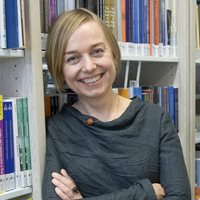
Dr. Ania Plomien is an Associate Professor in Gender and Social Science and Deputy Head of Department (Research) at the London School of Economics and Political Science (LSE). Her work focuses on feminist political economy, examining gender inequality through the lens of social reproduction, care, work, and EU policy frameworks. She holds affiliations with the International Inequalities Institute at LSE and serves on multiple academic and policy groups, including the BSA Care and Social Reproduction Study Group, the Gender Justice and Wellbeing Economy research programme, and the Women’s Budget Group’s Policy Advisory Group. Her research spans transnational labour mobility, post-socialist transformations in Central and Eastern Europe, and the interplay between neoliberal policies and gendered inequalities. She has advised the European Commission and contributed to EU policy analysis, particularly regarding social and gender equality directives. Key expertise includes the impact of EU enlargement, migration patterns, and work-family policy reforms. Plomien’s scholarship bridges macro-level policy analysis with micro-level studies of lived experiences, emphasizing how gendered inequalities are embedded in everyday work and care practices. Her recent work critiques the neoliberalization of welfare systems and explores pathways toward gender-just social reproduction policies.
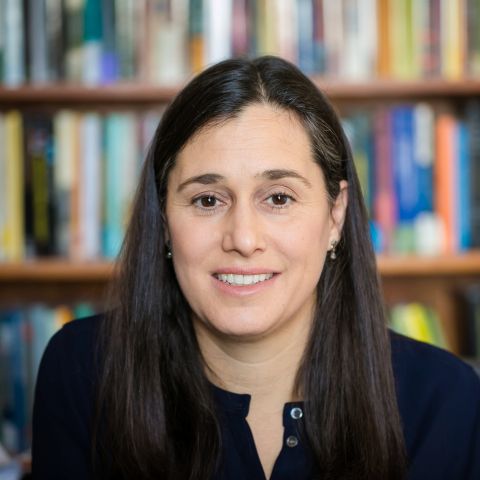
Victoria A. Beard is Professor of City and Regional Planning at Cornell University's College of Architecture, Art, and Planning, where she serves as Director of the Cornell Mui Ho Center for Cities. She is also a Core Faculty member of the Southeast Asia Program and was named a Global Public Voices Fellow (2021-22) for her work on urban poverty and water/sanitation inequality in developing countries. Education: Ph.D. in Community and Regional Planning, University of British Columbia (1999) M.A. in Urban Planning, University of California–Los Angeles (1995) B.A. in Urban Studies and Planning, University of California–San Diego (1992) Beard's research examines how communities in the Global South navigate formal planning systems to address urban poverty through collective action and transnational networks. Her work emphasizes water/sanitation infrastructure as critical sites of inequality, investigating how intermittency and affordability barriers perpetuate urban exclusion. She conducts comparative fieldwork in Southeast Asia (Indonesia, Thailand, Cambodia) and transnational contexts (Oaxaca/Southern California), analyzing how community-based planning can drive city-wide transformation despite institutional constraints. Her recent publications reveal a strategic shift toward infrastructure justice, with increasing focus on municipal service delivery systems and climate resilience. Beard consistently connects micro-level community practices to macro-level policy frameworks, highlighting pathways for inclusive urban development that center marginalized populations' lived experiences. Scientific Awards: Global Public Voices Fellow (2021-22) International Faculty Fellow, Global Cornell (2017) Fulbright Scholar to Indonesia (1993-94) Beard has secured major research funding including CORCL (University of California–Irvine) and Pacific Rim Research Program grants for transnational community planning projects. With 20+ years of practitioner experience, she has designed poverty-alleviation programs for the World Bank, Asian Development Bank, and RAND, specializing in community-based development, monitoring/evaluation systems, and national policy implementation. Her grant portfolio bridges academic research and on-the-ground impact through partnerships with NGOs like Mercy Corps. As Director of the Cornell Mui Ho Center for Cities, Beard leads initiatives focused on climate-resilient urban futures, including symposia on New York City resilience and Kenya's informal housing. She collaborates extensively with Cornell's Southeast Asia Program and Atkinson Center for Sustainable Future, building interdisciplinary teams that integrate planning, public health, and environmental science perspectives.
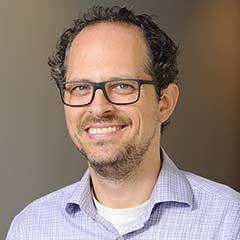
Likoebe Maruping is a Professor of Computer Information Systems and Director of the Ph.D. program at Georgia State University's J. Mack Robinson College of Business. He is a member of the Center for Digital Innovation and serves as a senior editor for MIS Quarterly , having previously held editorial positions at Information Systems Research and the Journal of the Association for Information Systems . Previously, he taught at the University of Arkansas and the University of Louisville. Education: Ph.D. in Information Systems, University of Maryland, Robert H. Smith School of Business B.S. in Information Systems, University of Maryland, Robert H. Smith School of Business B.S. in International Business, University of Maryland, Robert H. Smith School of Business Maruping's research spans digital innovation , open source software development , agile methodologies , and team collaboration in dispersed settings . His work explores how leadership styles, particularly empowering leadership , can mitigate stress and improve performance in software development teams. He examines governance in digital platform ecosystems and investigates the relationship between digital technologies and social justice, as evidenced by his 2024 MIS Quarterly special issue contribution. His research often employs multilevel analysis approaches to connect micro and macro phenomena in information systems. Maruping's recent publications reveal a strategic shift toward examining AI innovation frameworks, platform ecosystem governance, and the social implications of technology. His 2025 work on AI innovation contrasts with traditional IT innovation through patent analysis, while his research on digital skill visibility in open source communities demonstrates practical applications of theoretical frameworks. These publications consistently bridge academic rigor with practical business implications. Editorial Recognition: Senior Editor, MIS Quarterly Former Associate Editor, Information Systems Research Former Associate Editor, MIS Quarterly Former Senior Editor, Journal of the Association for Information Systems As Ph.D. program director and former CIS department Ph.D. coordinator, Maruping has advised numerous doctoral students. His leadership extends to strategic program development, curriculum innovation, and enhancing recruitment of diverse doctoral candidates. He frequently leads workshops on multilevel theorizing, as evidenced by his 2023 workshop at Hong Kong Baptist University. His research has been supported through collaborations with major institutions and has influenced both academic discourse and industry practices in information systems management. Maruping is actively engaged with the Center for Digital Innovation at Robinson College of Business, which serves as his primary research hub. His work often involves cross-institutional collaborations with researchers from leading universities worldwide, reflecting the global nature of contemporary information systems research.
John W. Du Bois is a Professor in the Department of Linguistics at the University of California, Santa Barbara (UCSB), within the College of Letters and Science. His work focuses on the interplay between discourse, grammar, and sociocultural contexts. Specializing in dialogic syntax, he explores how linguistic structures emerge from interactional dynamics, particularly in conversational coherence and stance-taking mechanisms. His research integrates corpus linguistics, computational methods, and ethnographic approaches to study languages like Mayan and Kazakh. Key research areas include: Discourse and grammar integration Dialogic resonance and affective alignment Corpus design and analysis Ritual language and cognitive models Mayan linguistic systems Recent studies emphasize computational tools like Rezonator for dialogue coherence visualization and remote corpus development methodologies. His work bridges theoretical linguistics with applied research in language documentation and education. Du Bois has contributed to foundational texts on discourse transcription standards and maintains active involvement in the Santa Barbara Corpus of Spoken American English project. His publications span over four decades, reflecting sustained engagement with linguistic complexity across multiple levels—from micro-level syntactic interactions to macro-level sociocultural frameworks. Current projects investigate dialogic syntax in autism and the evolutionary niche of language within social interaction.
Dana Minbaeva is Professor of Strategic Human Capital at King's Business School, King’s College London, UK, and holds a part-time appointment at Copenhagen Business School, Denmark. She is a leading scholar in International Human Resource Management and Strategic Human Capital, with extensive contributions to top-tier journals and global academic leadership. Professor, King's Business School, King’s College London Part-time Faculty, Copenhagen Business School Associate Editor, Academy of Management Review Her research centers on strategic HRM, talent management, knowledge transfer, and institutional dynamics in multinational enterprises, particularly in emerging markets. She explores how human capital is leveraged across borders, the role of informal networks, and the impact of crises like COVID-19 on HR practices. Her work integrates micro-foundational perspectives with macro-level institutional contexts. Recent publications highlight evolving themes in HR analytics, diversity and inclusion, and the disruption of traditional HR models through digital transformation and global crises. Her research consistently appears in premier journals such as Academy of Management Review , Journal of International Business Studies , and Human Resource Management . Fellow of the Academy of International Business (AIB) Recipient of the JIBS Decade Award 2013 Dana Minbaeva actively supervises research, leads funded projects such as the ESRC study on diversity management transfer in Pakistan, and contributes to executive education and MBA teaching across Europe. She is also the founder of Nordic Human Capital Advisory ApS, bridging academic insight with practical application. Her work engages with UN Sustainable Development Goals related to decent work and economic growth, and she has led initiatives on diversity, inclusion, and workforce analytics.
John Pfaff is a Professor of Law at Fordham Law School, specializing in Criminal Law and Procedure , Law and Economics , and Law and Social Science . He teaches courses on criminal law, sentencing law, and law and economics. His research focuses on empirical analysis of criminal justice, particularly the role of prosecutorial discretion in driving mass incarceration trends. He has received grants from the John Templeton Foundation and the University of Chicago's Arete Initiative for his work on evidence-based judicial review. Professor Pfaff is a frequent contributor to media and policy discussions, appearing in outlets like MSNBC , The Intercept , and Truthout . His 2017 book Locked In challenges conventional narratives about mass incarceration. His recent publications include analyses of private prisons , state-level criminal justice reform , and geographic disparities in sentencing . He previously held the John M. Olin Fellowship at Northwestern University Law School and clerked for Judge Stephen F. Williams on the DC Circuit.
Nina Bandelj serves as a Professor in the Department of Sociology at the University of California, Irvine, where she is an active affiliate of the Center for Organizational Research (COR). Her research bridges economic sociology and family studies, examining how money, debt, and market logics permeate intimate social relations. She frequently participates in COR initiatives like the Academic Speed-Dating events held in Social Sciences Plaza B, fostering interdisciplinary collaboration among scholars. Bandelj's research centers on three interconnected domains: (1) the economization of family life , analyzing how parenting transforms into human capital investment through debt-financed childcare and education; (2) cross-national inequality , investigating ethnic marginalization in Eastern Europe and gender pay gaps within workplaces; and (3) money's social meaning , exploring emotional economies of modern parenting and the valuation of 'priceless' social domains. Her work consistently challenges the 'hostile worlds' thesis by demonstrating how economic and intimate spheres co-constitute each other. Recent publications reveal intensifying focus on debt-driven middle-class parenting (e.g., mortgage debt tied to childrearing) and commodified childhood (e.g., pricing early education), while maintaining strong comparative analysis of postsocialist economies. This trajectory reflects broader shifts in economic sociology toward studying financialization's penetration into familial spheres. Bandelj actively cultivates scholarly communities through COR events and writing initiatives like 'U See I Write,' emphasizing collaborative knowledge production. Her work demonstrates how micro-level family economies scaffold macro-level policy failures, particularly regarding America's family-hostile welfare state.
Jesper B. Sørensen is the Robert A. and Elizabeth R. Jeffe Professor of Organizational Behavior at Stanford Graduate School of Business (GSB), with a courtesy appointment in Sociology at Stanford’s School of Humanities and Sciences. He holds a PhD in Sociology from Stanford (1996) and an AB from Harvard (1989). His research focuses on organizational dynamics, strategic change, entrepreneurship, and social inequality. Notably, he co-founded Sociological Science , an open-access journal, and leads initiatives like Stanford Seed, advancing economic development in emerging economies. Educations: PhD in Sociology, Stanford University, 1996 AB, Harvard College, 1989 His research interests include how organizational structures and cultures influence performance, innovation, and inequality, with emphasis on entrepreneurship as a mobility process. Recent work examines investor/consumer perceptions of innovative ventures. His articles span strategy, entrepreneurship, and inequality, often linking micro-level career dynamics to macro-level outcomes. For instance, studies on workplace peers and bureaucratic environments reveal their impact on entrepreneurial choices. Key Awards: ASQ Scholarly Contribution Award (2006) MIT Sloan Teacher of the Year (2006) Katherine and David deWilde Faculty Fellow (2015–present) As Faculty Director of Stanford Seed, he oversees programs empowering business leaders in Africa and India. He also co-directs the Global Development and Poverty Initiative, bridging research and practice to alleviate global poverty. Teaching includes strategic leadership and organizational behavior courses, emphasizing rigorous argumentation and strategy formulation.
Professor Christian Biener is a faculty member at the University of St. Gallen, affiliated with the School of Economics and Political Science and the Department of Economics. His research focuses on insurance economics, behavioral economics, and risk management, with particular emphasis on topics like cyber risk, microinsurance, health insurance design, and the societal impacts of emerging technologies such as chatbots and telematics. He holds a prominent role in academic and industry discourse through his extensive publication record and contributions to policy-relevant research. Biener’s work bridges theoretical economic analysis with practical applications, addressing challenges in global insurance markets, pandemic response strategies, and the interplay between technological innovation and human behavior. His research has explored how factors like microbiome composition influence economic decision-making, the ethical implications of contact-tracing apps, and the design of effective reinsurance strategies. He actively engages with industry trends, advising on future skills requirements in reinsurance and the balance between privacy and risk hedging in digital environments. His scholarly output spans over a decade, with recent trends emphasizing behavioral aspects of insurance decisions, the impact of global events on healthcare costs, and the transformational role of technology in insurance products. Biener’s articles consistently analyze both micro-level individual decision-making and macro-level market dynamics, offering insights that inform both academic theory and policy formation. While no formal awards are explicitly mentioned, his prolific publication record and institutional affiliation suggest significant recognition within the field. Biener’s work often incorporates experimental methodologies, such as randomized controlled trials, to empirically validate theoretical models. He collaborates across disciplines, integrating insights from psychology, computer science, and public health into his economic analyses. Biener’s current research agenda includes investigating the insurability of novel risks (e.g., cyber threats), optimizing microinsurance programs in emerging markets, and analyzing non-cognitive skills’ role in post-crisis economic recovery. He leads projects at the Institute for Economics (IVW) at HSG, contributing to both academic and applied research initiatives.
Fabian Bernhard is a Full Professor of Management and Psychology at EDHEC Business School, with campuses in Paris, Lille, Nice, and London. He holds dual PhDs in business studies and psychology, both earned summa cum laude, and serves as a research fellow for family business at the University of Mannheim and for psychology at the University of Frankfurt. His work uniquely bridges emotional dynamics in organizational contexts with family business succession challenges. His academic credentials include: PhD in Business Studies (Dr. rer. pol, summa cum laude) PhD in Psychology (Dr. rer. nat, summa cum laude) Prof. Bernhard's research focuses on emotional dynamics in businesses, preparation of next-generation family business leaders, and psychological attachment to family firms. Drawing from his upbringing in a multigenerational entrepreneurial family, he investigates how emotions like pride, guilt, and moral identity influence succession planning, gender equality initiatives, and organizational decision-making. His work frequently examines the tension between emotional authenticity and professional expectations in family enterprises. Analysis of his recent publications reveals a strong interdisciplinary trend merging psychology, business ethics, and healthcare innovation. His research increasingly explores emotional drivers in digital transformation, sustainable technology adoption, and gender dynamics, often connecting micro-level psychological processes to macro-level organizational outcomes. This cross-pollination between family business studies and emotion research represents a distinctive scholarly signature. Key professional recognitions include: Best Dissertation Honorable Mention from the Family Firm Institute at Harvard University Prof. Bernhard actively shapes his field through editorial leadership on the Family Business Review and Journal of Family Business Strategy boards since 2014, and serves on the Board of Directors of the Family Firm Institute (FFI) in Boston. His pre-academic career in mergers and acquisitions at a New York financial advisory firm provides practical grounding for his theoretical work, particularly in understanding emotional dimensions of high-stakes business transitions.
Stephen Terry is an Associate Professor of Economics at the University of Michigan's College of Literature, Science, and the Arts. He is also a Research Associate at the National Bureau of Economic Research (NBER) and serves as Co-Editor of the Review of Economics and Statistics. His research focuses on macroeconomics, particularly firm investment and the impact of micro-level frictions on long-term growth and business cycles. Dr. Terry received his PhD in Economics from Stanford University in 2015. Prior to joining the University of Michigan, he served as an Assistant Professor at Boston University. Professor Terry's research spans several key areas in macroeconomics, with a particular emphasis on understanding how micro-level frictions affect macroeconomic outcomes. His work investigates firm investment behavior, economic growth dynamics, and business cycle fluctuations. He employs both theoretical models and empirical analysis to examine how factors like uncertainty, immigration, innovation, and financial constraints shape economic performance at the aggregate level. His research often bridges micro and macroeconomic perspectives to provide deeper insights into economic mechanisms, with special attention to how short-term phenomena can have long-term consequences for economic growth. Analysis of Professor Terry's recent publications reveals a consistent focus on macroeconomic dynamics, particularly the relationship between micro-level frictions and macroeconomic outcomes. His work spans topics including economic uncertainty, firm dynamics, innovation, immigration effects, and business cycle analysis. A notable trend is his examination of how short-term phenomena can have long-term economic consequences, as seen in his research on short-termism and its macroeconomic impact. His collaborative work with leading economists across various institutions demonstrates the interdisciplinary nature of his research. Professor Terry has earned significant recognition in his field: Research Associate, National Bureau of Economic Research (NBER) Co-Editor, Review of Economics and Statistics As an academic advisor, Professor Terry has mentored numerous PhD and Master's students in economics. His research has been supported by various grants that have enabled extensive empirical analysis and theoretical modeling. His work on economic uncertainty, firm dynamics, and growth mechanisms has contributed significantly to our understanding of macroeconomic phenomena. Professor Terry actively collaborates with researchers across institutions, fostering interdisciplinary approaches to economic questions, and frequently participates in academic discussions at major conferences including the NBER Summer Institute. Professor Terry is affiliated with several research groups at the University of Michigan, including the Research Seminar in Quantitative Economics (RSQE). His work connects with various subfields within economics, particularly Macroeconomics, and contributes to ongoing research in economic growth, business cycles, and firm dynamics. His position as Co-Editor of the Review of Economics and Statistics places him at the forefront of scholarly communication in economics.
Pamela S. Tolbert is a Professor in the Department of Organizational Behavior at Cornell University's ILR School. Her academic journey began with a Ph.D. in Sociology from UCLA, and she has held leadership roles including Chair of her department (1997-2013, 2019-2022) and ILR Director of Graduate Studies (2015-2019). She has served on editorial boards of top journals such as Administrative Science Quarterly and Organization Science , and her outreach includes advisory roles for ILR's Labor and Employment Law program. Education : Ph.D. in Sociology, University of California, Los Angeles Her research spans organizational change, institutional theory, and social inequality, with a focus on gender dynamics , diversity management , and entrepreneurial institutions . Recent publications analyze institutional logics in art museums and the impact of evaluation consensus on technology investments. Her work bridges macro-structural analysis with micro-level organizational practices. Article Trends reveal sustained engagement with institutional theory's evolution, particularly in cultural organizations, entrepreneurship, and gendered workplace dynamics. Her research often examines how historical patterns and institutional pressures shape contemporary organizational practices and inequalities. Scientific Awards and Honors : Fellow, Academy of Management (2016) Fellow, Judge School of Business, Cambridge University (2010) Lois S. Gray Chaired Professor of Industrial Relations and Social Sciences, Cornell University (2010) Robert N. Stern Graduate Student Mentoring Award, ILR/Cornell (2025) Outstanding Professor, Cornell National Panhellenic Council (2025) Best Published Paper, American Sociological Association (2025) Tolbert teaches organization theory, social inequality, and organizational life cycles across undergraduate, professional Masters, and doctoral levels. Her service includes organizing conferences on diversity management and contributing to editorial leadership in organizational sociology.
Asta Zelenkauskaite is a Professor of Communication and Graduate Faculty Member in the Department of Communication at Drexel University. She is affiliated with the Center for Science, Technology, and Society. Her research focuses on social media dynamics, misinformation, and digital communication practices, employing mixed-methods approaches to analyze emergent online behaviors. She holds a PhD in Mass Communication from Indiana University (2012). Education: PhD in Mass Communication, Indiana University, 2012 Research Interests: Social media research and user-generated content analysis Emergent online practices and ideological influence Disinformation, inauthentic behaviors, and post-truth challenges Macro- and micro-level studies of digital media landscapes Recent Work Trends: Dr. Zelenkauskaite’s recent publications emphasize AI’s role in content analysis, disinformation mitigation strategies, and cross-cultural climate change narratives. Her work bridges social science, information science, and linguistics to address societal challenges like vaccine hesitancy and digital misinformation. Awards/Grants: No specific awards listed, but her research has been supported by interdisciplinary grants focusing on AI ethics and digital media governance. Labs/Teams: Active in Drexel’s Center for Science, Technology, and Society, collaborating on projects addressing technology’s societal impacts. Her work often involves international partnerships, particularly in Eastern European contexts like Lithuania.
Nacima Ourahmoune serves as Associate Professor of Marketing at KEDGE Business School, where she teaches luxury marketing and coordinates the Luxury and Brands track within the Grande École program. With over a decade of strategy and marketing consultancy experience, she bridges academic rigor with industry practice in consumer culture research. PhD from ESSEC/IAE Aix-en-Provence Master's in Marketing Research (Paris 1 Sorbonne) MBA in Luxury Branding Grande École Diploma (HEC Paris) Sciences Po Aix degree Her research interrogates consumer culture through branding and behavior lenses, with persistent focus on power dynamics, gender equity, social justice, and bodily experiences. She examines these themes across established and emerging markets, particularly investigating how luxury consumption intersects with feminist theory and decolonial frameworks. Her work challenges conventional marketing paradigms through transformative consumer research methodologies. Analysis of her 15 most recent publications reveals three dominant trajectories: (1) Inclusive and sustainable luxury innovation (25% of output), (2) Gender justice frameworks applied to marketing contexts (40%), and (3) Consumer behavior in culturally specific settings like Algerian women's movements and rural culinary spaces (35%). Her scholarship consistently connects micro-level consumer experiences to macro-level social structures, with increasing emphasis on decolonial perspectives since 2020. Nacima actively shapes marketing discourse through advisory roles with GENMAC, IFPASA American Research Foundation, Ownyourcash.fr (Paris), and WomWork (Algeria)—all organizations advancing women's entrepreneurship. Her media presence in national and international press amplifies research findings to broader audiences, particularly regarding gender equity in luxury markets and post-Arab Spring consumer culture. As founder of KEDGE's Luxury and Brands academic track, she cultivates interdisciplinary collaboration between marketing scholars and industry practitioners. Her leadership extends to feminist academic networks that challenge systemic sexism through research mobilization and curriculum development, reflecting her commitment to transforming both marketing practice and academic institutions.
Linda Quirke serves as an Associate Professor in the Department of Sociology at Wilfrid Laurier University's Faculty of Arts, maintaining active contact through office DAWB 5-142, email lquirke@wlu.ca, and Teams phone number 1 548-889-5153. Her institutional position demonstrates ongoing engagement with academic duties and research leadership within the university's educational framework. Her research expertise spans several interconnected domains: Sociology of Education with focus on Ontario's private sector Parenting advice literature and historical shifts in childrearing Gendered foodwork and emotion labor in family contexts Children's leisure activities and cognitive development Institutional legitimacy strategies in non-elite schools Market-institutional tensions in educational organizations Quirke's scholarly trajectory reveals consistent thematic threads: evolving parenting narratives (particularly around obesity and food allergies), organizational adaptation in educational markets, and critical analysis of textbook representations. Her work bridges micro-level family practices with macro-level institutional analysis, emphasizing how social class permeates both educational structures and domestic life. Scientific Awards: No specific awards or honors documented in source materials Advising and funding details remain unreported in the provided texts, though her extensive publication history suggests significant research activity. Her teaching portfolio includes sociology courses, but specific pedagogical methods or student mentorship outcomes aren't elaborated. Lab affiliations or collaborative research teams also lack explicit mention in the available information.