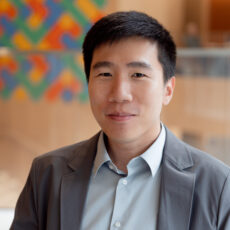
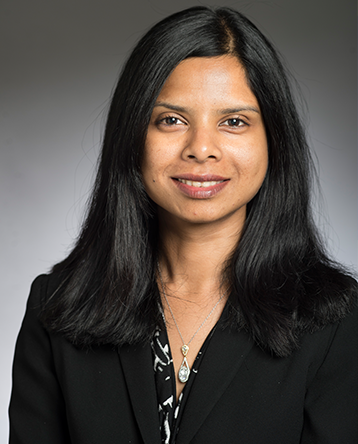
YuFeng Chen is Associate Professor in Electrical Engineering and Computer Science at MIT, with joint affiliation in AI+D. Research focuses on insect-scale aerial robotics, soft actuators, and hybrid locomotion systems. Designs novel micro-robots using dielectric elastomer actuators and triboelectric nanogenerators. Recent work advances energy-efficient aerial manipulation, collision-resilient designs, and swarm coordination. Publications demonstrate innovations in lightweight power systems, soft robotic control strategies, and bio-inspired flight mechanisms for micro-aerial vehicles.
Prof. Karsten Pietsch is a Professor of Mechatronics at Berlin University of Technology's Department VII (Electrical Engineering, Mechatronics, and Optometry). He holds roles including Program Spokesperson for the Master's Mechatronics Program, Head of the Laboratory for Design and CAD Technology, and Member of the Mechatronics Industry Advisory Board. His research focuses on Energy Harvesting and Tolerance Management, with a strong emphasis on mechanical design and mechatronic systems. He teaches courses ranging from foundational Mechanical Design in the BA to advanced topics like Multibody Systems using Robotics in the MA. His work integrates practical industry collaboration, reflected in patents and competitions like the IGUS 'Manus' contest. He advises Master's theses and oversees projects in mechatronic systems development. Contact: pietsch@bht-berlin.de, based at Haus Gauß B, Room B414. Research highlights include innovations in electromagnetic micro-generators, parametric CAD methods (SAXSIM), and tolerance optimization in mechanical systems. He has contributed to industry-relevant technologies such as clutch designs, gearboxes, and lighting systems. His teaching portfolio spans Finite Element Analysis (FEMM), Multibody System Dynamics, and Computer-Aided Engineering (CAE), emphasizing hands-on learning through guided tours and lab projects.
Chengyi Xu is an Assistant Professor at the University of Alabama at Birmingham (UAB). Their research focuses on soft electronics, sensors/actuators, robotic skin, bioinspired engineering, adaptive materials, and digital manufacturing. Dr. Xu holds a B.S. in Chemistry from the University of Science and Technology of China (2012), an M.S. in Polymer Chemistry and Physics (2015), and a Ph.D. in Materials Science and Engineering from the University of California, Irvine (2020). Their work aims to innovate functional materials and systems for human health, robotics, and extreme-environment applications through the X-Lab. Research includes scalable manufacturing, bioinspired engineering, and system integration. Notable contributions span adaptive materials, camouflage systems, and stretchable electronics. Invited talks and patents further highlight their expertise. Education: B.S., Chemistry, University of Science and Technology of China, 2012 M.S., Polymer Chemistry and Physics, University of Science and Technology of China, 2015 Ph.D., Materials Science and Engineering, University of California, Irvine, 2020 Research Interests: Dr. Xu’s vision emphasizes cross-disciplinary innovation in materials science and engineering. Their work bridges bioinspired design with advanced manufacturing to create adaptive systems for healthcare and robotics. Key areas include: - Biomimetic materials (e.g., cephalopod-inspired camouflage) - Soft robotics and e-skin technologies - High-performance stretchable electronics - Sustainable manufacturing processes Grants & Advising: While specific grants are not detailed, Dr. Xu’s publications and patents indicate active research funding. Advising details are currently unavailable. Labs/Teams: The X-Lab serves as the primary research hub, focusing on adaptive materials and bioinspired systems. Collaborations likely extend to interdisciplinary teams at UAB and beyond.
Dr. John See is an Associate Professor at the School of Mathematical and Computer Sciences, Heriot-Watt University (Malaysia Campus). He holds roles as Programme Director for BSc Computing Science and Head of the Multimedia Data Analysis (MuDA) Lab. His research focuses on multimedia signal processing, computer vision, and affective computing, particularly in emotion understanding from visual media, surveillance tasks, and classical image processing algorithms. He has published over 140 articles in top-tier journals/conferences like IEEE T-PAMI and CVPR, and secured MYR 3 million+ in research funding. He serves on editorial boards for journals such as Signal Processing and IEEE Transactions on Multimedia . Education: BSc, MSc, and PhD from Multimedia University, Malaysia. Previously, he was a Senior Lecturer at Multimedia University and a Visiting Research Fellow at Shanghai Jiao Tong University (2017-2019) under the Belt and Road Initiative. His work contributes to UN SDGs through technology-driven solutions. Research interests include facial micro-expression analysis, image aesthetics, activity recognition, and defect inspection. He organizes workshops like the ACM Multimedia Facial Micro-Expression Grand Challenge and chairs technical committees for IEEE.
Ronald S. Fearing is a Professor in the Department of Electrical Engineering and Computer Sciences at the University of California, Berkeley, since January 1988. His research focuses on millirobotics, including flying and crawling microrobots, gecko-inspired adhesion systems, microassembly, and rapid prototyping. He holds a Ph.D. in Electrical Engineering from Stanford University (1988) and S.B./S.M. degrees in EECS from MIT (1983). Key affiliations include the Berkeley Artificial Intelligence Research Lab (BAIR), Biomimetic Millisystems Lab, and Center for Interdisciplinary Biological Inspiration in Education and Research (CiBER). He has pioneered advancements in microrobotics, such as Salto-1P (a 14-g jumping robot) and gecko-inspired adhesives. His work integrates bio-inspired design with mechanical and electrical engineering principles. Notable achievements include the 1991 Presidential Young Investigator Award and the 2023 Bakar Fellows Spark Award. His research teams collaborate on projects like cooperative localization systems and energy-efficient leg mechanisms. He has authored over 127 publications, with a focus on robotics, control systems, and biomimetic engineering.
Prof. Alexander Hübner is a full Professor of Business Administration at the Technical University of Munich (TUM), leading the Chair for Supply and Value Chain Management at TUM Campus Straubing. His research focuses on sustainable supply chain design, decision support systems in retail, healthcare logistics, and operations optimization. He holds a PhD from the Catholic University of Eichstätt-Ingolstadt and has held roles including Associate Professor at MIT's Luxembourg Centre for Logistics and Head of the Institute for Supply Chain Management at the European Business School. He has extensive industry experience, including six years as a project manager at McKinsey & Company. Research & Awards: Hübner’s work spans retail shelf space optimization, inventory management, and hospital logistics. Notable contributions include applying Markov Decision Processes to patient-bed allocation and exploring omnichannel retail fulfillment. He has received the Emerald Literati Award (2019) and ranks among WirtschaftsWoche's Top 50 Economists (2020). He chairs the EURO Working Group on Retail Operations and serves on editorial boards of leading journals. Education & Career: After graduating in Business Administration from Eichstätt-Ingolstadt, he earned his PhD there and became a junior professor. His career includes roles at MIT, European Business School, and McKinsey. He currently advises on logistics for the German Logistics Association (BVL) and leads interdisciplinary research on sustainable supply chain innovation.
Hadas Kress-Gazit is a Professor at Cornell University's Sibley School of Mechanical and Aerospace Engineering. Her research focuses on formal methods for robotics and automation, particularly in creating verifiable controllers for complex tasks. She holds a Ph.D. in Electrical and Systems Engineering from the University of Pennsylvania (2008) and has been at Cornell since 2009. Her work integrates logic, verification, hybrid systems theory, and computational linguistics. Notable awards include the NSF CAREER Award (2010), DARPA Young Faculty Award (2012), and IEEE Fellow (2020). Research interests span Robotics, Motion Planning, Task Planning, Verification, Human-Robot Interaction, and Modular Robotics. She collaborates on projects like ShadowSense, enabling tactile interaction via shadow imaging, and leads work in swarm robotics, formal synthesis, and human-robot collaboration. Her lab develops systems for emergency evacuation, social robotics, and modular manipulators. Awards include teaching excellence recognitions (2013, 2019) and research accolades such as the 2020 Outstanding Research Award. Her contributions bridge theoretical formal methods with practical robotic systems, emphasizing safety, adaptability, and human-centric design.
Neil McBride is a Reader in IT Management at De Montfort University, affiliated with the School of Computer Science and Informatics within the Faculty of Computing, Engineering and Media. He is a core member of the Centre for Computing and Social Responsibility (CCSR), where his work bridges technical systems and ethical considerations in information technology. His research expertise spans IT service management, systems thinking in organizations, and the application of virtue ethics to IT. He explores how ethical frameworks can guide the design and deployment of computing systems, particularly in sensitive domains such as healthcare, AI, and social robotics. His recent publications reflect a strong trend toward ethical and societal implications of emerging technologies, including AI in reproductive medicine, vaccine passports, human-in-the-loop systems, and robotic therapy for autistic children. These works emphasize interdisciplinary inquiry, combining philosophy, systems theory, and computing. Member, Editorial Review Board, Journal of Global Information Management (2002–Present) Member, Editorial Review Board, International Journal of Information Technology and the Systems Approach (2009–Present) Programme Committee, 7th International Conference on the Quality of Information and Communication Technology (2010) Advisor, International Baccalaureate Computer Science Curriculum (2010) Neil McBride has delivered keynote talks and invited presentations at international conferences including Web Science, Ethicomp, and the UK Systems Society. His teaching includes Social Contexts of ICT, Systems Thinking, and IT Service Management. He holds a PhD and BSc in Microbiology, reflecting a unique interdisciplinary foundation.
Mark Colton is a Teaching Professor in the Department of Mechanical Engineering at Brigham Young University (BYU), within the College of Engineering. He has been a faculty member at BYU since 2005, initially as a Visiting Instructor, then as Assistant Professor (2006–2012), and Associate Professor (2012–present), with a current focus on teaching. Education: PhD, University of Utah, 2006 MS, University of Utah, 2001 BS, University of Utah, 1997 His research interests lie at the intersection of robotics, haptics, and dynamic systems, with a strong emphasis on human-robot interaction. He has made significant contributions in assistive robotics for autism therapy , where robots are used to enhance social engagement in children with Autism Spectrum Disorder (ASD). His work also spans haptic interfaces , enabling realistic tactile feedback in virtual environments, and micro air vehicle (MAV) control , particularly in aerial recovery and formation flight. Additional areas include compliant mechanisms, mechatronic system design, and control theory. His recent publications reflect a consistent focus on integrating sensory feedback (haptics, audio) into UAV control, optimizing flapping-wing mechanisms, and developing statically balanced compliant systems. The research combines experimental validation with modeling, often in collaboration with experts in perception, biomechanics, and clinical therapy. Scientific Awards and Professional Activities: Member, ASME (American Society of Mechanical Engineers) Member, IEEE (Institute of Electrical and Electronics Engineers) Member, ASEE (American Society for Engineering Education) Dr. Colton advises students through graduate research and senior design projects, such as ME EN 475/476 (Integrated Product and Process Engineering). He teaches core courses in dynamic systems, control, mechatronics, and scientific computing. His work bridges theoretical modeling and practical implementation, often involving hardware-in-the-loop testing and real-world applications in healthcare and aerospace. While no formal lab name is mentioned, his research is conducted within the broader Mechanical Engineering research ecosystem at BYU, likely involving student teams and interdisciplinary collaborations.
Professor Low Hong Yee serves as Head of the Engineering Product Development Pillar and holds the Kwan Im Thong Hood Cho Temple Chair Professorship in Healthcare Engineering at the Singapore University of Technology and Design (SUTD). She concurrently acts as Co-Advisor for the Dyson-SUTD Innovation Studio and Deputy Director for the Centre for Healthcare Education, Entrepreneurship and Research (CHEERS). Education: PhD in Macromolecular Science, Case Western Reserve University MSc in Macromolecular Science, Case Western Reserve University BSc in Macromolecular Science, Case Western Reserve University Her research pioneers multi-material and multi-textural design/fabrication, polymer nanofabrication for functional surfaces, and micro/nano-surface integration for sustainability and healthcare applications. Recent breakthroughs include digital knitting of electrical/mechanical functional textiles for wearable healthcare devices and advanced carbon capture materials, bridging engineering innovation with real-world medical and environmental solutions. Analysis of her 2022-2025 publications reveals dominant themes in sustainable engineering (carbon capture membranes, CO2 adsorbents) and healthcare technology (smart textiles for motion monitoring, nanostructured medical devices). Her work consistently integrates multi-material fabrication with surface engineering to address climate change mitigation and precision healthcare. Scientific Awards: No major scientific awards listed in source materials. Grants & Entrepreneurship: Secured SGD 19.6M as PI and SGD 3.3M as Co-PI in research funding. Co-founded Enlitho Private Limited (2016-2018, exited 2018) and Carbon1010 Private Limited (2024-present). Co-authored >150 publications and 30 granted patents with 14 pending and 2 licensed to Nanovue Pte. Ltd. Leads interdisciplinary research teams focusing on digital manufacturing for healthcare and sustainability, having directed SUTD's Digital Manufacturing and Design (DManD) Centre (2018-2022). Current work integrates nanoimprinting, textile engineering, and carbon capture technologies through industry-academia partnerships with Dyson and healthcare institutions.
Alex Berdin is a Postdoctoral Research Fellow at Tampere University's Faculty of Engineering and Natural Sciences, specifically in the Department of Materials Science and Environmental Engineering. His research focuses on advanced materials and photonics, particularly liquid crystal elastomers, organic semiconductor lasers, and soft matter systems. His work integrates holographic techniques with photolithographic patterning, exploring applications in surface relief gratings, azobenzene-based materials, and bioinspired systems like dandelion-inspired polymer assemblies. He has pioneered methods for real-time observation of material transformations using digital holographic microscopy. Berdin's publications span 2019–2025, emphasizing innovations in tunable polymer lasers, photovoltaic materials, and light-fueled robotics. His research bridges fundamental material science with applied photonics, aiming to create adaptive, responsive, and sustainable technologies. Notable contributions include developing holographic fabrication methods for micro-nano patterns, enhancing perovskite-inspired photovoltaics, and creating biohybrid hydrogel lasers. His work often intersects environmental engineering through eco-conscious material design.
Chengyu Li is an Associate Professor in the Department of Mechanical and Aerospace Engineering at Case School of Engineering, Case Western Reserve University. His research program focuses on developing computational models to investigate the underlying flow physics and transport phenomena associated with biological and biomedical flows. Dr. Li received his PhD in Mechanical & Aerospace Engineering from the University of Virginia in 2016, following an M.S. from the same institution in 2014. He completed his undergraduate education with a B.S. in Mechanical Engineering from Dalian Jiaotong University, China, in 2010. Prior to joining Case Western, he served as an Assistant Professor at Villanova University from 2018 to 2024 and completed a postdoctoral position at The Ohio State University (2016-2018). Dr. Li's research spans multiple areas of fluid dynamics with applications in both engineering and healthcare. His work integrates computational fluid dynamics, immersed boundary methods, and high-performance computing to address complex problems in biological locomotion and biomedical flows. Specific research foci include: Bio-inspired propulsion mechanisms, studying how biological systems like insects and ctenophores achieve efficient locomotion Human nasal airflow dynamics, with applications to understanding and treating conditions like empty nose syndrome Fluid-structure interaction in flapping flight, examining how wing flexibility affects aerodynamic performance Odor-guided navigation, investigating how insects balance aerodynamic performance with olfactory sensitivity Analysis of Dr. Li's publication record reveals a strong interdisciplinary approach that bridges fundamental fluid dynamics with practical applications. His recent work shows increasing focus on the intersection of fluid dynamics and sensory biology, particularly how insects use airflow information for navigation. He has maintained a consistent research program in biomedical flows, with particular attention to nasal airflow and its clinical implications across multiple conditions including empty nose syndrome, nasal septal perforation, and olfactory sensitivity. Dr. Li has received several prestigious awards recognizing his research excellence: Young Investigator Program (YIP) Award 2024 from AFOSR Lewis F. Moody Award 2022 from ASME Faculty Early Career Development Program (CAREER) Award 2021 from NSF Ralph E. Powe Junior Faculty Enhancement Award 2019 from ORAU Polak Young Investigator Award 2017 from AChemS Dr. Li leads the Flow Simulation & Flow Physics Lab, where he mentors students in computational fluid dynamics research. His work has been supported by multiple grants including AFOSR FA9550-11-1-0058, AFOSR FA9550-12-1-007 monitored by Dr. Douglas Smith, and NSF CEBT-1313217. He collaborates extensively with researchers across disciplines, including Tyson Hedrick (UNC Chapel Hill), Kai Zhao (OSU), and Haibo Dong (UVa). Dr. Li actively contributes to the academic community through service roles including CFDTC Vice Chair (2024-2026) and Secretary (2022-2024) for ASME, and as a member of the Division of Fluid Dynamics at APS since 2011.
Arturo Ayón is a Professor in the Department of Physics and Astronomy at The University of Texas at San Antonio (UTSA), within the College of Sciences. He serves as the Founding Director of the MEMS Research Laboratory, established in 2004, and leads a dynamic research program in micro- and nanotechnology with applications in energy, healthcare, and environmental monitoring. Dr. Ayón earned his Ph.D. and M.S. in Nuclear Science and Engineering from Cornell University and a B.S. in Electronic Engineering from Universidad de Guadalajara, Mexico. His educational background laid the foundation for his interdisciplinary research in advanced materials and device engineering. His research interests include materials science of thin films, metamaterials, photovoltaics, sensors, microdevices, quantum dots, plasmonics, smart fabrics for energy harvesting, microfluidics, and wireless monitoring systems. His work emphasizes innovation in functional materials and the development of real-world devices such as wearable health monitors and environmental sensors. Although specific recent publications are not listed, his lab's continuous output in patents, student projects, and funded research indicates sustained activity in applied physics and engineering, particularly in MEMS/NEMS, energy conversion, and biomedical devices. NASA STTR Phase I Award (2012) NASA STTR Phase II Award (2013) 1st Place, $100K Student Technology Venture Competition (2008) 1st Place, $100K Student Technology Venture Competition (2014) Dr. Ayón has mentored numerous graduate and undergraduate students, many of whom have contributed to patented technologies and competition-winning innovations. His lab has received funding from agencies including the NSF, ARO, AFOSR, ARL, and AFRL, and collaborates with institutions across the U.S. and Mexico. He also facilitated a major equipment donation from Sony Semiconductor, enhancing student training in micro/nanofabrication. The MEMS Research Laboratory under his leadership focuses on translating research into prototypes, including the Wireless Baby Vitals Monitor, Self-Contained CPAP Mask, Chemical Sensor on a Robotic Platform, and real-time roof load sensors. The lab emphasizes intellectual property generation, student entrepreneurship, and hands-on experience in cleanroom fabrication and device testing.
B. Reeja Jayan is an Associate Professor in the Department of Mechanical Engineering at Carnegie Mellon University's College of Engineering, with courtesy appointments in Electrical and Computer Engineering, Materials Science & Engineering, and Chemical Engineering. She serves as director of the Center for Faculty Success and is a Dean's Early Career Fellow and Faculty Fellow at the Wilton E. Scott Institute for Energy Innovation. Her educational background includes a Ph.D. in Materials Science and Engineering from The University of Texas at Austin (2012), an MS in Electrical Engineering from the same institution (2008), and a B.Tech in Electronics and Telecommunication Engineering from the University of Kerala (2002). Dr. Jayan's research focuses on electromagnetic field applications for materials synthesis, particularly in battery technology and sustainable manufacturing. Her lab explores how electromagnetic fields can control materials synthesis and energy storage behavior, with key themes including electromagnetic synthesis of ceramics, lithium-ion battery interface engineering, AI-guided materials discovery, and circular manufacturing. Her work bridges fundamental science with practical applications, as evidenced by her founding of SeaLion Energy Inc., a CMU spinout advancing polymer coatings that extend battery life. Her publication record demonstrates consistent contributions to materials science, with recent work focusing on energy-efficient synthesis methods, battery interface engineering, and AI applications in materials discovery. Her research shows a clear trajectory toward sustainable energy solutions and advanced manufacturing techniques that reduce energy consumption. NSF CAREER Award Army Research Office (ARO) Young Investigator Award Air Force Office of Scientific Research (AFOSR) Young Investigator Award DOE Clean Energy Education & Empowerment (C3E) Award Finalist (2024) Teaching Innovation Award, CMU College of Engineering (2024) Elected Board Member, International Microwave Power Institute (2023) Dr. Jayan has mentored over 50 researchers and taught more than 1,000 students. She leads a research portfolio exceeding $22 million and serves as associate editor of Science Advances. Her Far-from-Equilibrium Materials Laboratory (J-Lab) combines experimental approaches with computational modeling to explore field-matter interactions. Current initiatives include developing robotic platforms for precise materials engineering and creating sustainable manufacturing processes that avoid high-temperature, polluting steps.
Alan Chauvin is a Lecturer at the University of Grenoble Alpes, affiliated with the Faculty of Psychology and the Laboratoire de Psychologie et NeuroCognition (LPNC). His office is located in the Michel Dubois Building, room E105. As a permanent member of LPNC, he contributes to the Body & Space research team and actively participates in various research initiatives at the university. Dr. Chauvin's research spans multiple areas of cognitive neuroscience with a particular focus on visual perception mechanisms. His work integrates eye movement analysis, transcranial magnetic stimulation (TMS), and electroencephalography (EEG) to investigate how humans process visual information. He has made significant contributions to understanding spatial frequency processing in scene perception, face recognition mechanisms, and the neural basis of eye movement programming. His research also extends to clinical applications, particularly in studying cognitive changes in Alzheimer's disease using eye-tracking methodologies. Analysis of his recent publications reveals a strong emphasis on developing and applying advanced neuroimaging techniques, particularly robotized TMS-EEG systems. His work bridges basic cognitive neuroscience with clinical applications, spanning domains from fundamental visual processing to sports performance and neurological disorders. The consistent Q1/Q2 journal publications demonstrate the high impact of his research in the neuroscience community. Dr. Chauvin has supervised PhD students, including B. Passera, and has been involved in multiple research grants as co-director. His grant portfolio includes significant ANR-funded projects like Vision-3E (2022-2026) with a LPNC budget of 148k€, NeuroCog (2018-2021), and Oculo Nimbus (2015-2018). He has also contributed to methodological advancements, notably through the CortExTool software for TMS data processing. Within the LPNC laboratory, Dr. Chauvin is actively involved in the Body & Space research team and has contributed to the development of experimental protocols for transcranial magnetic stimulation. He has organized academic events including the Workshop on Models and Analysis of Eye Movements (2018) and participated in GDR Vision activities since 2007. His professional affiliations include the Vision Science Society (since 2005) and previous membership in GDR-Psycho Ergo (2007-2010).