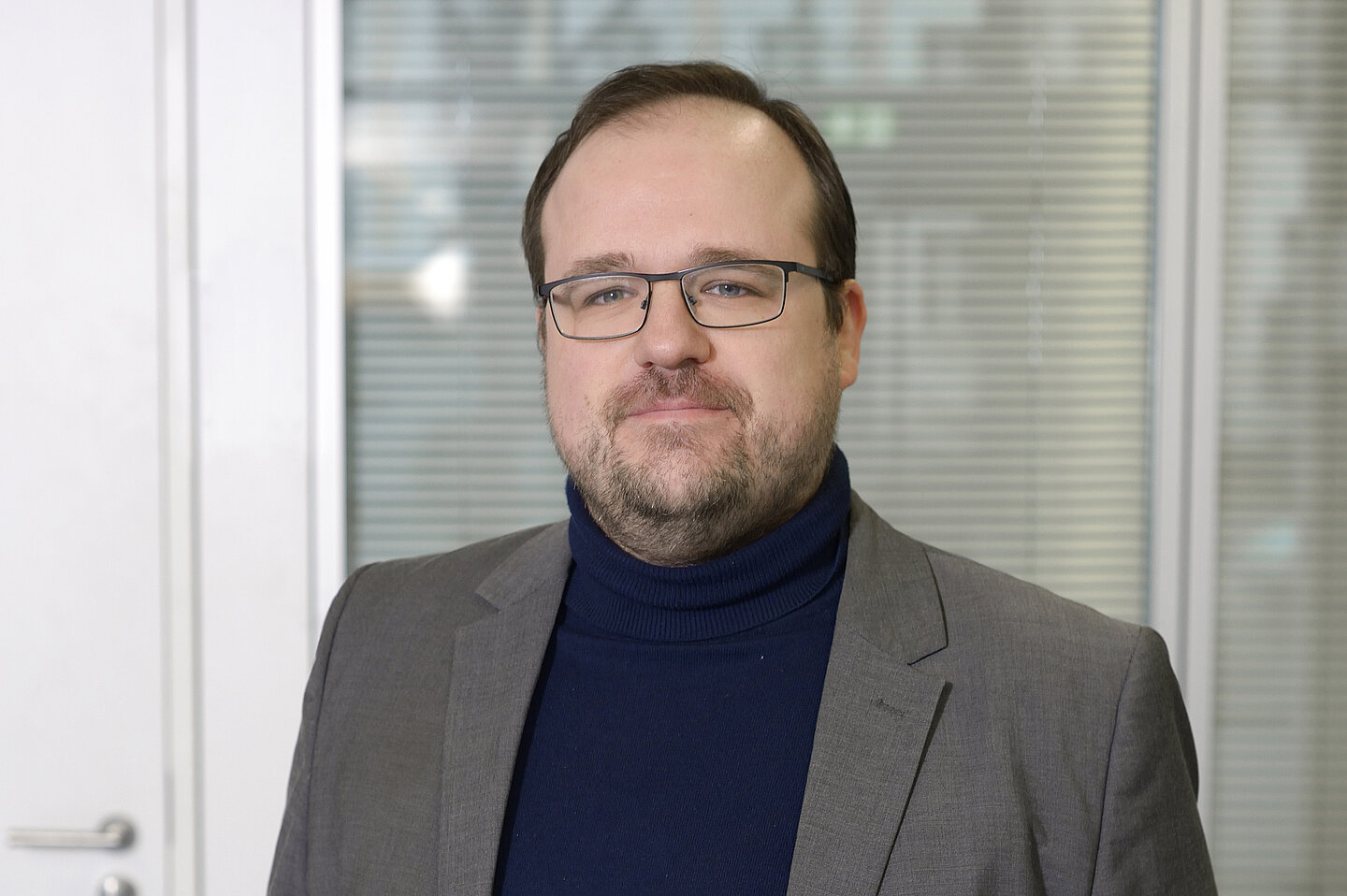
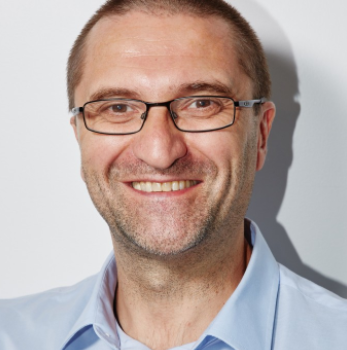
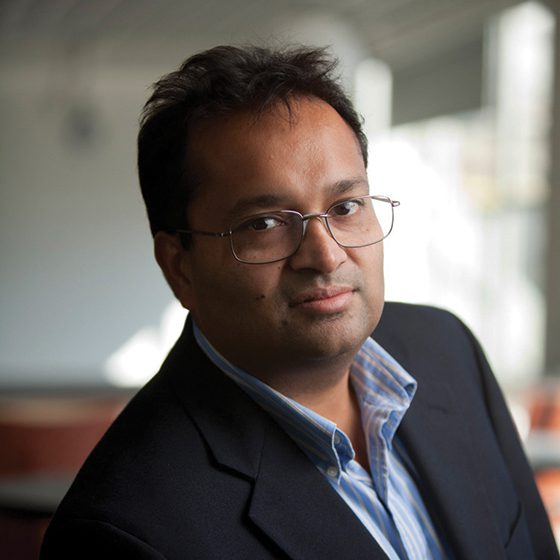
Selman Sakar is an Associate Professor at the École Polytechnique Fédérale de Lausanne (EPFL), affiliated with the School of Engineering and the MicroBioRobotics Laboratory (MICROBS). He also holds teaching roles in the School of Management (SGM-ENS), School of Management and Technology (SMT-ENS), and the Institute of Bioengineering (IBI-STI-GE). Teaches courses in Topics in Autonomous Robotics , Dynamical Systems , Micro/Nano Robotics , and Robotics Practicals . Supervises PhD students including Gadiri Mehdi Ali, Hwang Junsun, Inan Elif Ezgi, and Javaheri Houman. Active in doctoral program commissions for Biotechnology & Biological Engineering (EDBB-GE) and Robotics, Control & Intelligent Systems (EDRS-GE). His research focuses on robotics, bioengineering, and micro/nano-scale systems, with applications in autonomous systems and mechanical design. He is based at the MED Building (Room 2916), Station 9, Lausanne, Switzerland.
Wan Shou is an Assistant Professor in the Department of Mechanical Engineering at the University of Arkansas. His research focuses on multiscale manufacturing, advanced materials, and functional devices, with applications in wearables, robotics, and sustainable technologies. Ph.D., Mechanical Engineering, Missouri University of Science and Technology M.S., Mechanical Engineering, University of Louisiana at Lafayette B.E., Textile Engineering, Tianjin Polytechnic University, China Dr. Shou’s research spans laser-based manufacturing , nanomanufacturing , machine learning-assisted processes , and bioresorbable electronics . He explores 3D printing of polymer and metal composites, energy materials , and functional textiles for wearable sensors and environmental applications. Recent publications highlight his work in additive manufacturing , computational design of composites, and self-powered sensing systems . His team integrates machine learning with materials discovery to optimize performance. Editor’s pick of Science Magazine US Patent 11,752,700: Data-driven material formulation US Patent 11,993,850: Laser-assisted nanoparticle printing Dr. Shou’s patents and publications reflect a commitment to innovative manufacturing and environmentally conscious design . His work bridges materials science , robotics , and smart systems , advancing energy and water technologies.
Steven Swanson is a Professor in the Department of Computer Science and Engineering at the University of California, San Diego, within the Jacobs School of Engineering. He is the Director of the Non-Volatile Systems Laboratory (NVSL), where he leads cutting-edge research in non-volatile memory, storage systems, and hardware-software co-design. His work bridges computer architecture, systems, and software to develop efficient, reliable, and secure computing platforms. Ph.D., University of Washington, 2006 B.S., University of Puget Sound, 1999 Dr. Swanson's research centers on non-volatile and persistent memory systems , exploring how next-generation storage technologies can transform computing. His lab develops full-stack solutions including file systems like NOVA and Orion , programming models such as NV-Heaps , and hardware prototypes like Moneta and Onyx . The team also works on low-power co-processors (e.g., GreenDroid ) and tools for debugging and verifying persistent memory programs. Research spans system reliability, security, energy efficiency, and performance optimization. His recent publications reveal a strong focus on persistent memory safety , zero-copy I/O , RDMA-based distributed file systems , and real-world characterization of Intel Optane . These works appear in top venues including ASPLOS, FAST, MICRO, and USENIX ATC, demonstrating sustained innovation in storage and systems research. Scientific honors include: NSF CAREER Award Google Faculty Award Facebook Faculty Award NetApp Faculty Fellow Dr. Swanson has advised 15 PhD students and 4 postdocs , many now faculty or senior engineers at Google, Microsoft, Intel, and other leading tech firms. He has secured significant research funding and leads major community initiatives such as the annual Non-Volatile Memories Workshop and Persistent Programming In Real Life (PIRL) . His educational efforts include innovative courses on robotic system design, quadcopter building, and modern storage systems, emphasizing hands-on learning and real-world implementation. The Non-Volatile Systems Laboratory (NVSL) under his leadership fosters a collaborative, international research environment, hosting visitors and postdocs from around the world. The lab is recognized globally as a pioneer in storage systems research and a key contributor to the adoption of persistent memory technologies in industry.
Prof. Jürgen Rühe is a Full Professor of Chemistry and Physics of Interfaces at the Institute of Microsystems Technology, Albert Ludwigs University of Freiburg, within the Faculty of Engineering. He serves as Deputy Coordinator of Research Area C and Principal Investigator for Research Areas A, B, C, and D. His expertise spans polymers at interfaces, metamaterials, biomedical surfaces, and self-healing materials. He leads the Cluster of Excellence liv MatS, focusing on adaptive and energy-autonomous materials systems. Education: Not explicitly stated in text. His research emphasizes programmable materials, 4D printing, and bioinspired design, with projects funded by the German Research Foundation (DFG). Notable contributions include anti-fog coatings, magnetic microactuators for cell stimulation, and hygromorphic materials for adaptive architecture. He supervises doctoral and postdoctoral researchers, advancing fields like tribology and surface functionalization. Key scientific achievements include developing C,H-insertion cross-linking (CHic) for durable polymer networks and exploring smart materials for biomedical and environmental applications. His work bridges fundamental polymer chemistry with practical applications in energy, healthcare, and sustainable architecture. He advises over ten doctoral students and collaborates with industry partners. His lab, part of the Institute of Microsystems Technology, focuses on micro- and nanostructuring, with projects funded by the Cluster of Excellence.
Florent Cosandier serves as a Lecturer in the Section of Microtechnology and Research Associate at the Micromechanical and Horological Design Laboratory (INSTANT-LAB) within the School of Engineering at Swiss Federal Institute of Technology Lausanne (EPFL). His dual roles bridge precision engineering education and advanced research in mechanical systems design. His research centers on compliant and flexure mechanisms with applications spanning horology, space instrumentation, and micro-technology. Key focus areas include parasitic error minimization in translation stages, dynamic balancing for mechanical oscillators, and additive manufacturing of complex compliant systems. Recent work demonstrates experimental validation of zero-force mechanisms and novel pivot designs for high-precision positioning. Analysis of his 15 most recent publications reveals a dominant trend in rectilinear stage development (6 articles), horological applications (4 articles), and space telescope assembly systems (3 articles). His work consistently emphasizes experimental validation, large-range motion capabilities, and parasitic shift elimination through innovative parallel mechanism configurations. Cosandier has advised at least one PhD student at EPFL: Kruis Johannes Richard Cornelis Geerit. He contributes to teaching through courses like "Advanced mechanisms for extreme environments" within the SMT-ENS unit. As a core member of INSTANT-LAB, he collaborates on projects involving metallic additive manufacturing for damping systems, micro-vibration suppression platforms, and silicon-based flexure mechanisms. His current research trajectory shows increasing focus on space applications and bi-material additive manufacturing techniques.
David Blaauw is the Kensall D. Wise Collegiate Professor of Electrical Engineering and Computer Science (EECS) at the University of Michigan. His research focuses on ultra-low-power analog/mixed-signal circuits, mm-scale sensors, neural networks, and biomedical applications. He leads the Blaauw Lab, which has pioneered innovations like the Michigan Micro Mote (M^3) and neural recording probes. His work emphasizes real-world deployability, with applications in environmental monitoring (e.g., monarch butterflies), medical devices, and robotics. Education: B.S. in Physics and Computer Science, Duke University (1986) Ph.D. in Computer Science, University of Illinois Urbana-Champaign (1991) Research Interests: Blaauw’s lab explores ultra-low-power computing, mm-scale systems, RF communication, in-memory computing, and genomics acceleration. Key projects include: Millimeter-scale computers (e.g., 0.04mm³ temperature sensors) Wireless neural interfaces for brain-machine communication Energy-efficient accelerators for edge AI and genomics Micro-robotics with sensing/actuation/computation Awards: IEEE Fellow 2016 SIA-SRC Faculty Award Motorola Innovation Award Best Paper Awards at ISSCC, ISCA, and RFIC Advising & Impact: Over 600 publications, 65 patents, and 4 startup companies spun from his lab. Current research includes genome sequencing accelerators (GenAx) and neural recording dust for brain mapping. He directs the Michigan Integrated Circuits Lab and chairs major conferences like ISSCC and DAC. Labs/Teams: Blaauw Lab (University of Michigan) Michigan Integrated Circuits Lab (MICAL)
Ye (Sarah) Sun is an Associate Professor in the Department of Mechanical Engineering at the University of Virginia (UVA), part of the School of Engineering and Applied Science. She joined UVA in 2021 after serving as an Associate Professor at Michigan Technological University. Her work focuses on wearable sensors, robotics, smart health systems, and cyber-physical systems. She leads the WEARLab research group. Education: Ph.D. in Electrical Engineering from Case Western Reserve University (2021), B.S. in Instrumentation Engineering from Tianjin University (not specified). Research interests include wearable electronics, health monitoring, and human-technology interaction. Her interdisciplinary approach integrates engineering innovations with healthcare applications. Notable projects involve self-powered triboelectric sensors and optical fiber-based health monitoring systems. Recent publications highlight advancements in photodiode technologies for high-frequency applications, including millimeter-wave generation and photonic integrated circuits. Awards include the NSF CAREER Award (2018) and NSF BRITE Award (2022). She has organized major conferences and holds editorial roles in health technology journals. Grants include NSF funding for cyber-physical systems and smart health initiatives. Her lab collaborates on projects involving wearable robotics and connected health solutions, with a focus on real-world applications in healthcare and IoT.
Taylor Ware is an Associate Professor in Biomedical Engineering and Materials Science & Engineering at Texas A&M University's College of Engineering, holding the Cain Faculty Fellowship. Her research focuses on designing structured biomaterials and medical devices using stimuli-responsive polymers for clinical applications. Education: Ph.D. in Materials Science and Engineering, The University of Texas at Dallas, 2013 Research Interests: Dr. Ware pioneers the development of liquid crystal elastomers as artificial muscles and implantable electronics substrates, engineered living materials for infection treatment, and directed self-assembly of hydrogels. Her lab specializes in polymer formulation, thermomechanical testing, and microfabrication. Key research thrusts include: Smart elastomers, hydrogels, and composites for dynamic medical devices Programming liquid crystalline polymers for shape-morphing applications Engineered living materials that respond to biomolecular cues in urinary tract environments Publication Trends: Recent work (2023-2025) demonstrates convergence of materials science, microbiology, and medical device engineering. Her group advances liquid crystal elastomers for soft robotics and implantable electronics, develops engineered living materials for UTI treatment using microbial competition, and creates novel hemostats and urethral support devices. Publications emphasize translational applications in urology, wound healing, and neural interfaces. Scientific Awards: Invited Participant, NAE Japan-USA Frontiers of Engineering Bilateral (2023) Senior Member, National Academy of Inventors (2022) NSF CAREER Award (2018) Air Force Young Investigator Award (2017) NSF Graduate Research Fellowship (2011) Fellow of AIMBE (American Institute for Medical and Biological Engineering) Advising and Grants: Dr. Ware leads the Ware Lab with significant funding including an NIH R01 grant (with UT Dallas and Case Western collaborators) and the NSF CAREER award. Her lab mentors postdoctoral fellows like Mustafa (winner of a prestigious postdoctoral fellowship) and graduate students. Current projects are supported by the NSF Engineering Research Center HAND, focusing on advanced materials for healthcare applications. Laboratory and Teams: The Ware Lab collaborates globally and is featured in Texas Monthly, Houston Chronicle, and National Geographic for breakthroughs in engineered living materials. As part of the NSF HAND ERC, the lab develops dynamic materials for stress urinary incontinence treatment and collaborates with medical institutions on UTI therapies using engineered E. coli strains.
David Wettergreen is a Research Professor at the Robotics Institute within Carnegie Mellon University's School of Computer Science , where he has been a faculty member since 2000. He directs the PhD Program in Robotics and holds a courtesy appointment in Mechanical Engineering. His research focuses on robotic exploration systems for extreme environments, spanning planetary surfaces, underwater caves, and terrestrial deserts. Key areas include autonomous navigation , science autonomy , multi-modal perception , and resource-cognizant planning . Field validation drives his work, with deployments in the Atacama Desert, Antarctic volcanoes, and lunar analog sites. Co-founder of Mesh Robotics LLC for off-road autonomy Former Research Fellow at Australian National University Former National Research Council Research Associate at NASA Ames Research Center His 15 most recent publications (2023-2025) demonstrate expertise in autonomous path planning , machine learning applications , terrain modeling , and science-driven exploration . Collaborations span planetary science, environmental monitoring, and space systems engineering. He has advised 17 PhD and 33 MS students , many of whom now work in space exploration or field robotics, and teaches courses in Robotics Systems Engineering . Current projects include the MoonRanger lunar micro-rover and technologies for autonomous resource mapping .
George T. C. Chiu is a Professor in the School of Mechanical Engineering at Purdue University, with courtesy appointments in Electrical and Computer Engineering and Psychological Sciences. He holds a 50% appointment as Assistant Dean for Global Engineering Programs and Partnerships. His research focuses on mechatronics, dynamic systems and control, functional printing, and human-machine interaction, with applications in biomedical engineering, robotics, and advanced manufacturing. Education: PhD (1994), MS (1990) University of California, Berkeley; BS (1985) National Taiwan University. Research interests emphasize application-driven solutions for printing technologies, motion control, and embedded systems. Notable projects include developing inkjet printing for biomedical materials and sensor systems. Awards include ASME Fellowship (2013) and the 2024 ASME Rabins Leadership Award. Publications span topics like inkjet drop dynamics, control systems, and biofabrication. He has led initiatives such as the Purdue FIRST Programs, fostering K-12 STEM education through robotics mentorship. Editorial roles include Editor-in-Chief of IEEE/ASME Transactions on Mechatronics (2017-2019).
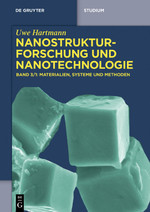
Prof. Dr. Uwe Hartmann is a faculty member and Chair Holder at Saarland University, affiliated with the Institute of Experimental Physics within the Faculty of Natural Sciences and Technology. His research group specializes in nanostructure research and nanotechnology, with a strong focus on instrumentation, nanofabrication, and quantum systems. He is based in Building C6.3, Saarbrücken, Germany. His research interests lie at the intersection of physics and engineering, particularly in nanotechnology , scanning probe microscopy , quantum device characterization , and nanofabrication . His work spans fundamental investigations of nanostructures to applied developments in microsystem technology and industrial nanomanufacturing. He has contributed significantly to cleanroom technologies, surface physics, and the transition from micro- to nanoscale systems. The recent publications highlight a strong thematic focus on enabling technologies for nanoscale science, including instrumentation (e.g., atomic force microscopy), fabrication methods, and analysis of quantum and metallic nanostructures. The research demonstrates a consistent trajectory toward understanding and manipulating matter at the nanoscale for both scientific and industrial applications. Scientific Awards: No awards explicitly mentioned in the provided text. Prof. Hartmann actively supervises doctoral and diploma students, indicating a strong commitment to academic mentoring. His group includes PhD students and scientific staff, suggesting ongoing research projects and potential grant funding, although specific grants are not listed. He has led a long-standing research group with technical staff supporting experimental work, indicating a well-established laboratory infrastructure focused on experimental physics and nanotechnology development. Laboratory and Team: The working group includes scientific staff (e.g., Dr. Haibin Gao), PhD and diploma students, and technical staff (electronics engineers, mechanics, workshop heads), forming a multidisciplinary team capable of both theoretical and hands-on experimental research in nanotechnology. The presence of a dedicated workshop and technical personnel underscores the practical, device-oriented nature of the research.
Prof. Dr. Oliver Crönertz serves as Dean and Professor of Business Administration and IT-Supported Business Processes at the Faculty of Digital Transformation , HTWK Leipzig. His work bridges digital transformation with business management, focusing on interdisciplinary project management, digital business models, and sustainability. Current roles: Dean, supervising professor for HTWK Robots/nao Team Research areas: Digital Transformation, Business Analytics, Industry 4.0, Stoffstrommanagement Research Trends : Recent publications emphasize digital solutions for environmental management, business process optimization, and smart urban logistics. His work connects Industry 4.0 with financial sustainability and societal impacts of digitalization. Projects : Leads Mittelstand-Digital Zentrum Leipzig-Halle, involved in EXIST-Potentiale, Future Parking, and FAssMII (Feedback-based E-Assessment in STEM).
Calin Belta is a Professor in the College of Engineering at Boston University , with joint appointments in Mechanical Engineering, Systems Engineering, and Electrical and Computer Engineering. His research bridges control theory and formal methods, focusing on controller synthesis and automatic verification of hybrid systems with applications in robotics and systems biology . Education: Ph.D. in Control Theory, University of Pennsylvania His work emphasizes temporal logic specifications for ensuring safety and correctness in autonomous systems, particularly through control barrier functions (CBFs) , reinforcement learning , and model predictive control . Applications span from microrobotics to autonomous driving and biomolecular modeling . His recent articles (2025–2024) highlight advancements in safe control algorithms for autonomous vehicles, adaptive CBFs , temporal logic-guided learning , and microrobotics for cell manipulation. Common themes include formal verification , robustness , and human-in-the-loop safety . Scientific Awards: AFOSR Young Investigator Award (2008) NSF CAREER Award (2005) He also contributes to academia as a Senior Member of IEEE and Associate Editor for journals like SIAM Journal on Control and Optimization and IEEE Transactions on Automatic Control . His lab develops computational tools for safety-critical control in complex environments.
Amit Lal is a Professor in the School of Electrical and Computer Engineering at Cornell University, with affiliations in Biomedical Engineering, Applied Engineering Physics, and Mechanical and Aerospace Engineering. He is a member of key research centers including Cornell CCMR, NBTC, and KAUST-CU. Education: B.S. in Electrical Engineering, California Institute of Technology, 1990 Ph.D. in Electrical Engineering, University of California, Berkeley, 1996 Prof. Lal's research focuses on the development of integrated microsystems using micro- and nanoscale fabrication. His work spans ultrasonic MEMS, low-power IoT sensors, atomic microsystems, and bio-robotics. He directs the SonicMEMS Laboratory, advancing technologies in GHz ultrasonics, inertial sensing, and chip-scale manipulation of particles. His interdisciplinary interests include biomedical imaging, solid-state devices, nanotechnology, and plasma science. His recent publications highlight innovation in energy harvesting, MEMS gyroscopes, and biologically integrated systems. The works reflect strong trends in autonomous sensing, miniaturized power sources, and hybrid bio-electromechanical systems, particularly for medical and navigation applications. Scientific Awards and Honors: NSF CAREER Award Whitaker Foundation Award Department of Defense Exceptional Service Award Best Program Manager Award, DARPA IEEE Ultrasonics and Frequency Control Symposium Best Paper Award IEEE NEMS Best Paper Award Robert M. Scharf 1977 Professor, Cornell Engineering HHMI Visiting Scientist, Janelia Farms Intel Fellowship (awarded to advisee) Prof. Lal has advised numerous students who have gone on to win awards and publish impactful research. He has secured significant research funding through DARPA and other agencies, managing and initiating multiple high-impact programs. His leadership extends to service on technical committees for IEEE conferences and journals, including Transducers and the IEEE Sensors Council. He has also contributed to academic recruiting within ECE. He leads the SonicMEMS Laboratory , a multidisciplinary research group focused on transforming sensing, communication, and computation at the microscale. The lab fosters collaboration across engineering and life sciences, pushing the boundaries of what integrated microsystems can achieve.
Prof. Dr. Metin Sitti is a leading academic and researcher currently serving as Director at the Max Planck Institute for Intelligent Systems and affiliated faculty at Carnegie Mellon University's Robotics Institute and Koç University's Schools of Medicine and Engineering. His interdisciplinary work bridges robotics, materials science, and biomedicine. His research interests center on medical microrobotics , bio-inspired robotics , and physical intelligence , exploring how intelligent behaviors can emerge from material properties and system design. He leads the Physical Intelligence Research Group , pioneering novel approaches in soft and micro-robotic systems. The scientific publications attributed to Prof. Sitti span diverse areas including micro-robotic locomotion, stimuli-responsive materials, and collective behavior in synthetic systems. Though specific titles are not listed, his body of work consistently contributes to robotics, nanotechnology, and biomedical engineering. Rahmi M. Koç Science Award ERC Advanced Grant IEEE Fellow National Science Foundation CAREER Award SPIE Nanoengineering Pioneer Award IEEE/ASME Best Mechatronics Paper Award Robotics: Science and Systems Conference Best Paper Award IEEE/RSJ Intelligent Robot Systems Conference Best Paper and Video Awards IEEE Robotics and Automation Conference Best Paper and Video Awards IEEE Robotics and Biomimetics Conference Best Paper and Video Awards Prof. Sitti has secured major grants including the ERC Advanced Grant and NSF CAREER Award, supporting high-impact research in intelligent materials and robotic systems. He has mentored numerous researchers and students across institutions, though specific advisees are not listed. His entrepreneurial initiative led to the founding of nanoGriptech Inc. in 2009, commercializing gecko-inspired microfiber adhesives. He leads the Physical Intelligence Department at the Max Planck Institute, where his team develops novel robotic materials and microsystems that exhibit intelligence through physical design rather than computation alone.