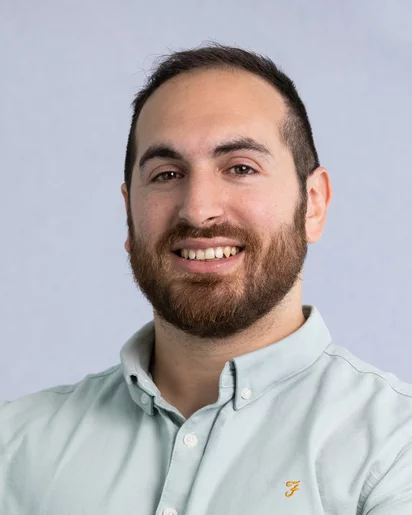
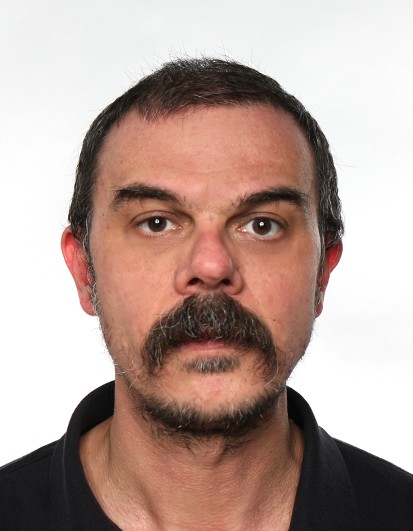
Dr. Simone Iadanza is a Researcher at the Paul Scherrer Institute (PSI) within the Laboratory for Nano and Quantum Technologies, part of the PSI Center for Photon Science. His work focuses on advancing integrated photonics, quantum technologies, and nanoscale sensing systems. He specializes in photonic crystal devices, hybrid lasers, and materials science for optical applications. Recent research includes developing ultra-sensitive refractive index sensors, cryogenic photodetectors for quantum networks, and metasurface-based mid-infrared sensing platforms. Key projects involve integrating III-V semiconductor devices with silicon photonics using micro-transfer printing, optimizing photonic crystal cavities for low-temperature operation, and enhancing AFM-IR imaging techniques for heterogeneous materials. His contributions span both experimental and computational studies, addressing challenges in optical material characterization and sensor miniaturization. Dr. Iadanza collaborates on multi-disciplinary projects involving quantum photonics, thermo-optical effects in nanomaterials, and the design of compact optical sensors for industrial and biomedical applications. His lab emphasizes CMOS-compatible fabrication processes to enable scalable photonic integration.
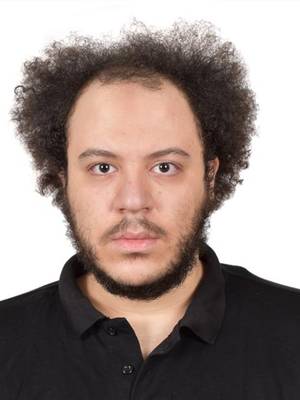
Dimitrios Kazazis is a tenured scientist at the Paul Scherrer Institute (PSI) in Switzerland, affiliated with the Laboratory for X-ray Nanoscience and Technologies (LXN) since 2024. Previously, he served as a researcher and project coordinator at PSI's Laboratory for Micro- and Nanotechnology (LMN) from 2016 to 2024. He is a key member of the Advanced Lithography and Metrology group, coordinating transnational access for the NFFA-Europe Pilot project and leading EUV lithography initiatives. His educational background includes: Electrical and Computer Engineering diploma (2001) from the National Technical University of Athens (NTUA) Sc.M. (2005) and Ph.D. (2009) from Brown University under Prof. Alex Zaslavsky Summer internships at IBM T.J. Watson Research Center (2006-2007) Postdoctoral research at the Laboratory for Photonics and Nanostructures in Paris (2009-2014) Kazazis specializes in nanoscience and nanotechnology, with a focus on advancing electron beam lithography (EBL) and extreme UV interference lithography (EUV-IL) to fabricate 2D/3D structures for plasmonics, microfluidics, nanoelectronics, and X-ray optics. His work targets single-digit nanometer resolution for semiconductor manufacturing and quantum device applications, emphasizing metrological standards and sustainable photoresist development through the EU Resin Green consortium. His 2023-2025 publications demonstrate concentrated expertise in EUV lithography, achieving 5nm resolution via mirror-based interference techniques, developing resistless silicon patterning methods, and optimizing molecular resists for high-NA systems. Key trends include overcoming photoresist limitations through novel chemistry, enabling large-scale quantum device fabrication, and applying nanofluidics to multiplexed medical diagnostics. Scientific awards: No awards or fellowships explicitly listed in the source materials He has supervised undergraduate and graduate students throughout his career, notably during his part-time lecturer role at Paris 7 University (2013-2016). Project leadership spans MOS transistor characterization, GeOI FETs, epitaxial growth on high-κ oxides, suspended 2DEGs for MEMS, quantum Hall effect metrology, graphene-based resistance standards, THz circuits, and achromatic Talbot lithography. Current grants include NFFA-Europe Pilot coordination and the EU Resin Green project's pattern metrology work package. As PSI's nanofabrication expert, he coordinates advanced micro/nanofabrication activities and supervises the design of a new EUV-IL endstation for the XIL-II beamline (commissioning in 2025), which will enable single nanometer digit resolution and support hyper-NA EUV resist development for next-generation semiconductor technology nodes.
Daniil Riabov is a Doctoral Assistant at the Bionanophotonic Systems Laboratory (BIOS) within the School of Engineering at École Polytechnique Fédérale de Lausanne (EPFL) . He is currently affiliated with the Institute of Bioengineering (IBI-STI) and serves as a student in EPFL's Doctoral Program in Photonics . Active Researcher in Nanophotonics and Optical Engineering Focus on Bound States in the Continuum (BIC), Raman Scattering, and Metasurfaces Expertise in Silicon Nanostructures and Photothermal Effects His recent publications highlight advancements in nonlinear optical effects, light-to-heat conversion, and hybrid optoelectronic materials. While no scientific awards are listed, his work bridges nanophotonics, quantum optics, and materials science. He also contributes to the Doctoral Program in Photonics as a student.
Dr. Flavia Timpu is a Researcher affiliated with the Experimental Quantum Information Professorship at ETH Zürich's Institute of Quantum Electronics. Her work focuses on quantum optics, nonlinear optics, and advanced photonics materials such as lithium niobate and barium titanate. She explores applications in quantum photonics, including trapped ion qubit systems and metasurface-based optical devices. Her research bridges nanotechnology and materials science to advance optical technologies. Key research areas include: Quantum information systems and photonics integration Nonlinear optical materials and resonant phenomena Ferroelectric and semiconductor nanostructures Optical microscopy techniques for material characterization Recent work emphasizes broadband photon pair generation, parametric down-conversion in microcubes, and enhanced electro-optic modulation using metasurfaces. Her studies contribute to foundational understanding of Mie resonances and phase-matching mechanisms in nanoscale systems. Flavia Timpu's research is supported by the Institute for Quantum Electronics, part of ETH Zürich's renowned physics and engineering programs. She collaborates on projects involving ultraviolet photonics and hybrid nanostructure design.
Dr. Zhan-Hong Lin is a Researcher at ETH Zürich's Institute for Chemical and Bioengineering (ICB), affiliated with the Department of Chemistry and Applied Biosciences. His role is part of the Professorship for Chemical Engineering, focusing on advanced materials and optical technologies. He holds a Ph.D. and has contributed to cutting-edge research in nanotechnology, plasmonics, and metamaterials. Research interests include nanopatterning, metasurface design, chiroptical sensing, and optically active polymer microspheres. His work bridges nanofabrication techniques with applications in lasers, sensors, and quantum plasmonics. He has developed pneumatically tunable microlasers and innovative methods for chiral detection using plasmonic structures. Publications highlight contributions to optical chirality, plasmonic logic gates, and self-assembled microsphere systems. His research emphasizes interdisciplinary approaches combining chemistry, physics, and engineering to solve complex optical and material challenges. Labs and teams: Active in the ICB's nanotechnology and photonics groups, collaborating on projects involving advanced optical devices and materials characterization.
Dr. Adeel Afridi is affiliated with ETH Zürich as part of the Professur für Nanophotonik (Chair of Nanophotonics), housed under the Department of Information Technology and Electrical Engineering (D-ITET). His research focuses on advanced optical systems, including metasurfaces, optomechanical devices, and plasmonic nanostructures. He explores topics like tunable metalenses, reconfigurable antennas, and nano-optical phenomena, with applications in communication, sensing, and photonics. Research Interests: Adeel’s work spans nanophotonics , optomechanical systems , plasmonics , and metamaterials . He designs ultra-thin optical components and reconfigurable devices for next-generation applications. His studies often integrate experimental and theoretical approaches to optimize light-matter interactions at the nanoscale. Publications: His recent work highlights innovations in metaoptics (2025), optomechanical metasurfaces (2023), and tunable optical systems since 2013. These contributions emphasize practical applications in wireless communication, wearable technology, and silicon photonics. Awards: No scientific awards explicitly mentioned in the provided texts. Labs/Teams: His research is conducted within the Nanophotonics group at ETH Zürich, leveraging advanced fabrication and characterization facilities.
Mikhail Masharin is a Postdoctoral Researcher in the BioNanoPhotonic Systems Lab (BIOS) at the École Polytechnique Fédérale de Lausanne (EPFL), part of the School of Engineering. He holds a PhD in Physics from ITMO University (2023) and a Master's in Nanophotonics and Metamaterials (2020), also from ITMO. His Bachelor's in Solid State Physics was completed at Novosibirsk State University (2018). Prior to EPFL, he was an Invited Researcher at UNAM Bilkent University (2022–2023). His research focuses on nanophotonics, optical metasurfaces, and experimental optics, with a particular emphasis on halide perovskites, exciton-polaritons, and micro/nano-fabrication. His work addresses applications in optical biosensors, nonlinear optics, and quantum phenomena in advanced materials. Key research trends include the development of polariton-based devices, nonlinear optical effects in perovskites, and bio-compatible photonic materials. His studies bridge fundamental research with applied technologies, such as gas sensing via perovskite nanowires and stable perovskite nanocrystals for biomedical imaging. Masharin's lab, BIOS, specializes in bio-nano-photonic systems, integrating optics with biosensors and advanced material fabrication. His research contributes to both foundational science and translational applications in photonics and materials engineering.
Ivan Sinev is a Researcher (Post-Doctorant) at the École Polytechnique Fédérale de Lausanne (EPFL), affiliated with the Laboratoire de systèmes bionanophotoniques within the Department of Bionanophotonics (BIOS) in the School of Engineering (STI). His research focuses on advanced nanophotonics, metamaterials, and optoelectronic systems. Key areas include metasurface engineering, plasmonic biosensors, and phase-change materials integration. He explores topics such as high-harmonic generation, topological states in waveguides, and laser-induced nanostructuring. His work bridges fundamental physics with applications in sensing, nonlinear optics, and reconfigurable photonics. Recent studies involve gradient dielectric metasurfaces, thermo-optical bistability, and coherent control of optical states. Affiliations: EPFL STI IBI-STI BIOS Laboratory (Bâtiment BM 4128) Member of the BIOS research group Research Highlights: Development of tunable metasurfaces for biosensing and high-harmonic generation Investigation of quasi-BIC states with phase-change materials Engineering topological states in integrated photonic systems
Prof. Ralph Spolenak is a Full Professor at ETH Zurich, leading the Laboratory for Nanometallurgy since 2004. He serves as Coordinator of the FIRST cleanroom facility and Chairman of the MaP Center of Competence. His research focuses on nanoscale material properties, in situ testing methods, additive manufacturing, and synthesis of nanometer-scale structures. Key interests include mechanical and functional properties of materials, with emphasis on novel fabrication techniques and material design. His work spans nanometallurgy, metamaterials, and microfabrication, addressing challenges in structural and functional material innovation. Collaborations with industry and academic partners drive advancements in materials for energy, electronics, and sensing applications. No scientific awards are explicitly listed, but his extensive publications reflect significant contributions to materials science. Advising and grants details are not specified in available texts, though his roles imply active research leadership. The MaP Center and FIRST lab are central to his research infrastructure.
Henrik Rasmus Thomsen is a Researcher at the Institute of Geophysics, ETH Zürich, affiliated with the Exploration and Environmental Geophysics (EEG) group. He holds a doctoral degree from ETH Zürich (2021) and previously served as a Postdoctoral Researcher at the Chair of Structural Mechanics and Monitoring. His research focuses on metamaterials, elastic wave propagation, and non-destructive testing (NDT) using advanced techniques like ultrasound computed tomography and full-waveform inversion. He leads the Innosuisse-funded project developing quantitative methods for NDT of composite materials. Key projects include the MATRIX project (machine for time reversal and immersive wave experimentation) and the MetaVEH project (metasurface energy harvesting). His work spans theoretical, experimental, and applied domains, with contributions to metamaterial design, wavefield control, and structural health monitoring. Recent publications explore guided wave-based digital twins, phononic metamaterials for speech classification, and elastic wave control in granular media. Thomsen collaborates with institutions like the Acoustical Society of America and journals including Advanced Functional Materials and Philosophical Transactions of the Royal Society .
Prof. Hua Wang is a Full Professor at ETH Zürich's Department of Information Technology and Electrical Engineering (D-ITET) and Deputy Head of the Integrated Systems Laboratory. He leads the Integrated Devices, Electronics, and Systems (IDEAS) Group and is a faculty member of the ETH Quantum Center. Prior roles include Founding Director of the Georgia Tech Center of Circuits and Systems and Associate/Assistant Professor at Georgia Tech's School of ECE. His research focuses on silicon and beyond-silicon integrated circuits for communication, sensing, and bioelectronics. Notable contributions include energy-efficient power amplifiers, mm-Wave systems, and AI-assisted design methodologies. Education: PhD (2009), MS (2007) - California Institute of Technology; BS (2003) - Tsinghua University. Research interests span: RF/mm-Wave/THz integrated systems AI-driven circuit design Bioelectronic sensors and actuators 6G communication technologies His 2025 publications highlight advancements in phased arrays, power amplifiers, and bioelectronic sensors. Awards include IEEE Fellow (2022), Qualcomm Faculty Awards (2021, 2020), and multiple student paper recognitions. Advising: Over 20 student paper awards across IEEE RFIC/IMS/CICC conferences. Labs: IDEAS Group (ETH), GEMS Lab (Georgia Tech). Courses taught include Radio-Frequency Electronics, CMOS for Biosensing, and Antenna Design.
Karim Achouri is an Assistant Professor at École Polytechnique Fédérale de Lausanne (EPFL), affiliated with the School of Engineering (STI) and the Advanced Electromagnetism and Photonics Laboratory (LEAP) . He also serves in the Teaching Service of STI (SMT-ENS). His research focuses on metasurfaces, electromagnetic modeling, and optical computing. Location: ELG 237, EPFL Contact: karim.achouri@epfl.ch Research Interests: Metasurface design and scattering control Optical forces and torques in nanophotonics Machine learning applications in electromagnetic systems Nonlinear and non-Hermitian metasurfaces Spatial symmetry analysis in photonic structures Phase manipulation for optical computing Teaching: Courses in optical engineering, applied electromagnetics for metamaterial design, and advanced photonics. Publications: Recent work emphasizes metasurface robustness, topological phase control, multipolar expansion methods, and nonlinear optical devices. Articles span electromagnetic theory, nanophotonics, and computational modeling. Doctoral Students: Mentoring Mahmoud Ahmed, Hossein Allahverdizadeh, and Mustafa Yücel.
Olivier JF Martin is a Full Professor at the Swiss Federal Institute of Technology in Lausanne (EPFL), where he heads the Nanophotonics and Metrology Laboratory (NAM) within the School of Engineering (STI). He is also actively involved in teaching and doctoral program leadership across various departments. Education: Physical Engineering degree (1989) and PhD in Nano-Optics (2001) from EPFL Research Focus: Plasmonics, numerical simulations for Maxwell's equations, nanofabrication techniques His research explores optical antennas, metasurfaces, and nanoscale optical forces with applications in biosensing and document security. He has directed the EPFL Doctoral Program in Photonics (2005-2017) and Microtechnology Section (2016-2020), introducing the Master's in Robotics. Notable honors include: European Research Council Advanced Fellowship (2016) Optica Fellow As a mentor, he has supervised over 30 doctoral students at EPFL. His lab specializes in advanced micro/nano-manufacturing and optical engineering.
Wenhong Yang is a Researcher at the École Polytechnique Fédérale de Lausanne (EPFL) , affiliated with the School of Engineering and the BIOS (Bionanophotonics Systems Laboratory) . His research focuses on advanced photonics technologies, including nanophotonics , metamaterials , and plasmonics . He explores applications in optical sensors, holography, and nanostructured devices. Recent work highlights include plasmonic-based spectrometers, meta-holograms, and superhydrophobic nanoparticle assemblies for chemical sensing. Yang’s articles emphasize innovations in smart optical systems , light manipulation , and reconfigurable metamaterials . His contributions bridge fundamental photonics research with practical applications in imaging, security, and biomedical optics. He collaborates closely with EPFL’s BIOS lab, leveraging interdisciplinary approaches to address challenges in nanoscale photonics and optical engineering.
Dr. Vasileios Ntertimanis is a Lecturer at the Department of Civil, Environmental and Geomatic Engineering, ETH Zurich. His research focuses on structural mechanics, monitoring technologies, and uncertainty quantification in engineering systems. Research interests include: Development of computational methods for structural analysis and optimization Vibration control in lightweight structures Machine learning applications in structural health monitoring Railway infrastructure diagnostics Seismic protection systems His recent publications demonstrate extensive work on integrating monitoring data for infrastructure management, optimizing vibration mitigation devices, and advancing uncertainty quantification methods. Research consistently addresses practical applications in transportation infrastructure and seismic engineering. He leads research at the Chair of Structural Mechanics and Monitoring and teaches courses including: Structural Identification and Health Monitoring Uncertainty Quantification and Data Analysis Structural Dynamics