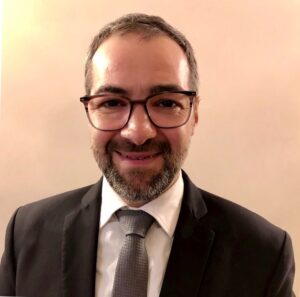
Andreone Antonello is an Associate Professor at the Consiglio Nazionale delle Ricerche (CNR), affiliated with the Department of Physical Sciences and Technologies of Matter and the SPIN Research Unit Naples. His research focuses on terahertz spectroscopy, metamaterials, and advanced materials characterization. He leads experimental studies involving femtosecond laser fabrication, electromagnetic property analysis, and applications in biomedical sensing and particle accelerator technologies. Education details are not explicitly provided in the text, but his extensive publication record indicates advanced training in physics and materials science. His work spans interdisciplinary areas including optics, nanotechnology, and laser engineering. Research interests emphasize terahertz imaging for medical diagnostics, metamaterial design for electromagnetic manipulation, and material property characterization under extreme conditions. Recent studies include THz sensing of biological fluids, development of tunable thin films, and laser-induced surface structuring for secondary electron yield reduction in copper. Publications highlight contributions to THz ellipsometry techniques, FEL oscillator technology, and EMI shielding materials. Collaborations involve institutions like the Superconducting Electron Source BriXSinO and applications in particle accelerator vacuum systems. Labs and teams include the SPIN Naples unit and CNR's Department of Physical Sciences. Ongoing work focuses on coding metasurfaces for diffuse scattering, high-vacuum material testing, and biomedical THz applications.
Tiziano Montini is an Associate Professor in the Department of Chemical and Pharmaceutical Sciences at the University of Trieste, specializing in General and Inorganic Chemistry. He serves as a member of the Department's Board and Boards of Studies, and is actively involved in research as a member of the Nanoparticles in the environment and nanotoxicology Group. His research focuses on supramolecular chemistry and nanotechnologies, particularly in the areas of photocatalysis for energy applications. Montini's work centers on developing advanced nanomaterials for environmental applications and energy conversion systems. Montini is actively engaged in multiple research projects including Photocatalytic valorization of biomasses for H2 production, Refractory plasmonic metasurfaces for solar thermal catalytic CO2 conversion, and Bio-inspired PhotoElectroCatalytic NanoArchitectures for Energy Conversion and Storage, where he serves as Scientific Actor. As a dedicated academic, he contributes to both teaching and research administration within the Chemistry department at the University of Trieste, maintaining an active research profile in sustainable energy technologies and nanomaterial applications.
Dr. Antonio Gliozzi is an Associate Professor at Politecnico di Torino's Department of Applied Science and Technology (DISAT), serving as contact person for first-year engineering spaces/timetables and coordinator of basic engineering subjects. His research focuses on bioinspired materials, elastic wave propagation, metamaterials, nonlinear acoustics, and nondestructive testing. Scientific Branch: PHYS-03/A - Experimental Physics of Matter and Applications ERC Sectors: PE3_2 - Mechanical/acoustical properties of condensed matter SDG Goals: 9 (Industry, Innovation) and 11 (Sustainable Cities) His publications since 2021 demonstrate expertise in designing bioinspired metamaterials for vibration control, acoustic sensors, and railway infrastructure sustainability. Key subfields include gradient-index phononic crystals, topological waveguiding, and rainbow effect applications. Scientific Honors: National Scientific Qualification II Band (02/B1 Experimental Physics of Matter) by MIUR (2013) Editor of Frontiers in Materials (2018-) As active PhD college member (Physics program 2019-2025), he supervises research on elastic smart meta-devices and Bloch surface wave patterning. His projects include EU-funded RAVEN (2024-2028) and BioMetaRail (2021-2022).
Samuele Porro is an Associate Professor at the Department of Applied Science and Technology (DISAT), Politecnico di Torino. His research focuses on thin films and nanotechnology, with specific interests in experimental physics of matter and applications. He leads Physics I courses for Aerospace Engineering students since 2019. Research areas: Thin Films, Nanotechnology, Metal Oxide Engineering, Photovoltaic Materials, Corrosion Resistance Labs: CHILAB Laboratory (Chivasso, DISAT), Institute of Fundamental Physics and Materials for Nanotechnology Recent publications span 2025-2019, emphasizing materials for energy applications, resistive switching mechanisms, and thin film engineering. Key trends include electrochemical CO2 reduction, photovoltaic heterostructures, and corrosion protection technologies. Teaching & Projects: Course Lecturer for Physics I (Aerospace Engineering), Scientific Manager for commercial project on metallic-polymer adhesion (2018-2019). Holds patents in propulsion systems and graphene composites.
Giuseppe Castaldi is an Associate Professor in Electromagnetic Fields (ING-INF/02) at the University of Sannio, affiliated with the Faculty of Engineering and the Department of Engineering (DING). His office is located in the Bosco Lucarelli Palace. He holds a Laurea degree in Electronic Engineering from the University of Naples Federico II (1993, summa cum laude ) and a Ph.D. in Applied Electromagnetics from the University of Salerno (1999). His career includes postdoctoral research at the University of Sannio (1999) and TNO Physics and Electronics Laboratory in the Netherlands (2001). His research focuses on electromagnetic theory, transformation optics, metamaterials, and gravitational wave detection. He collaborates with major projects like LIGO and AURIGA, with work spanning antenna diagnostics, cloaking devices, and γ-ray burst analysis. His publications show strong emphasis on wave manipulation, sensor design, and astrophysical data analysis. He teaches courses including Wireless Applications for Automation and Multiphysics Modeling for Electronics Engineering programs. Office hours are held on Wednesdays from 11:00 to 13:00.
Prof. Valter Mariani Primiani is a Full Professor at the Polytechnic University of Marche within the Department of Information Engineering . His research focuses on electromagnetic fields, with expertise in reverberation chambers, wireless communication systems, and quantum computing applications. He holds office hours Monday to Friday from 9-13 at the Dipartimento di Ingegneria dell'Informazione (via Brecce Bianche, Ancona) and is reachable at v.mariani@univpm.it . His work emphasizes electromagnetic compatibility , 5G technology , and quantum-based simulations . Recent studies include optimizing reconfigurable intelligent surfaces for wireless networks and analyzing 5G signal propagation in controlled environments. He actively contributes to IEEE standards, such as the P2718 Working Group, and collaborates on open-source tools for electromagnetic measurement. His research integrates computational methods (e.g., FDTD simulations) with experimental setups in reverberation chambers, addressing challenges in dosimetry, channel emulation, and high-frequency performance. His work supports advancements in both theoretical and applied electromagnetics, with applications spanning from biomedical dosimetry to smart infrastructure.
Matteo Albani is a Full Professor at the Department of Information Engineering and Mathematical Sciences, University of Siena. His research focuses on antenna engineering, computational electromagnetics, and metamaterials, with particular emphasis on GRIN lens antennas, metasurfaces, and reconfigurable intelligent surfaces (RIS). He teaches courses in Mathematical Methods for Engineering and Microwave Engineering at the Master’s level in Electronics and Communications Engineering. **Research Interests**: Albani’s work spans numerical methods for antenna design, electromagnetic scattering analysis, and optimization of wave propagation phenomena. His recent contributions include advancements in geometrical optics-based lens design, fast sweeping methods for eikonal equations, and ray-based modeling of RIS systems. He has pioneered techniques for wide-angle anomalous refraction using surface field optimization and developed hybrid analytical-numerical approaches for diffraction coefficient calculations. **Publications Trends**: Over 15 recent articles highlight his focus on numerical methods (Lax-Friedrichs sweeping method), smart surface applications (RIS, metasurfaces), and innovative antenna technologies (3D-printed lenses). These studies emphasize practical implementations for millimeter-wave systems and smart radio environments. **Grants & Labs**: While specific grants aren’t detailed, his work aligns with cutting-edge projects in antenna innovation and electromagnetic systems. He collaborates on projects like the Antarctic firn propagation measurements and radar antenna development for industrial applications.
Luigi Alfredo Grieco is a Full Professor in Telecommunications at the Polytechnic University of Bari's Department of Electrical and Information Engineering (DEI), where he has served since December 2018 after progressing from Assistant Professor (2005-2014) to Associate Professor (2014-2018). He holds editorial leadership roles as Founder Editor-in-Chief of Internet Technology Letters (Wiley), Editor-in-Chief of Transactions on Emerging Telecommunications Technologies (Wiley), and Associate Editor for IEEE Transactions on Vehicular Technology. His research spans Internet of Things (IoT) , Information Centric Networking (ICN) , Network Security , Low Power Wide Area Networks , Network Performance Evaluation , and Nanocommunications . Recent publications demonstrate a strong focus on 6G-integrated terrestrial and non-terrestrial networks, drone-based emergency response systems, and UAV-mounted wireless technologies, reflecting evolving trends toward heterogeneous network architectures and IoT scalability. His scholarly impact includes over 150 publications with 6,000+ citations and significant contributions to internet standards as author of RFC 7554 for industrial IoT applications. Awards highlight his influence: Best Impact Contribution runner-up at RESTART Workshop (2024) Multiple Best Paper awards (2010-2024) including IEEE SDS and Computer Networks Top Associate Editor for IEEE Transactions on Vehicular Technology (2012, 2017) IEEE VTS Distinguished Lecturer since 2016 Grieco maintains active research collaborations through visiting positions at INRIA (Sophia Antipolis) and LAAS-CNRS (Toulouse), and contributes to standardization efforts within the Internet Engineering Task Force. His work bridges theoretical innovation with practical implementations in next-generation networking systems.
Salvatore Amoruso is a Full Professor of Experimental Physics of Matter at the Department of Physics 'Ettore Pancini', University of Naples Federico II. He holds a concurrent appointment as Research Associate at the SPIN Institute (CNR) since 2010, focusing on superconductors and innovative materials. His research spans laser-matter interaction, plasma physics, and nanomaterials engineering. Key areas of focus include femtosecond laser ablation for thin film deposition, nanoparticle generation, and surface structuring techniques using advanced optical fields. His work integrates experimental physics with applications in optoelectronics, environmental monitoring via lidar systems, and aerospace technology like CubeSat navigation modules. Amoruso has authored over 160 peer-reviewed articles, with recent contributions emphasizing ultrafast laser fabrication methods and atmospheric aerosol characterization. His publications demonstrate interdisciplinary innovation at the intersection of materials science, optics, and environmental physics. Labs/Teams: Active in the CNR SPIN Institute and University of Naples labs specializing in laser materials processing and atmospheric remote sensing. Collaborates internationally on projects involving superconducting detectors and THz metamaterials.
Simone Zanotto is a Permanent Researcher at the National Nanoscience Institute (CNR-NANO) and a Co-Teacher of the Laboratorio di Fisica della Materia e Nanotecnologie at the University of Pisa. He earned a Physics degree from the University of Pavia (2009), followed by a PhD from Scuola Normale Superiore in Pisa (2014). His research focuses on nanophotonics, quantum light-matter interactions, and tunable photonics using transition metal oxides and responsive polymers. Key contributions include studies on metasurfaces, optomechanical systems, and graphene-based plasmonics. He has co-edited a Springer-Nature special issue on Beamforming Metasurfaces and is affiliated with the Italian Physical Society and OPTICA. His work spans interdisciplinary areas such as GHz mechanical wave manipulation, thermomechanical sensors, and optomechanical modulation. Recent publications highlight advancements in dielectric metasurfaces, phononic crystals, and strain engineering in graphene. Despite no listed students, his collaborations include guest editor roles and institutional memberships emphasizing academic outreach. His technical portfolio reflects a blend of theoretical and experimental research in nanoscale photonics and metamaterials.
Alessandro Pitanti is an Associate Professor at the Università di Pisa. His research focuses on the study of mechanical waves, optomechanical interactions, and beamforming metasurfaces. These studies are conducted in collaboration with the Good Vibes research initiative, emphasizing symmetries and functionality in nanostructured media and metamaterials. He serves as a Guest Editor for the special issue on 'Beamforming Metasurfaces' in the Springer-Nature Discover Materials journal, alongside Giuseppe Lio and Simone Zanotto. This role highlights his engagement with cutting-edge advancements in materials science and nanotechnology. No specific grants, advising records, or lab affiliations are detailed in the provided text. Further details on his research can be found via the Good Vibes website.
Dr. Raouf Barboza is a researcher at the Department of Sciences and Engineering of Matter, Environment and Urbanism (SIMAU) within the College of Engineering at Università Politecnica delle Marche. His work focuses on experimental physics and photonics, particularly in liquid crystal materials and their interactions with light. He is based in Ancona, Italy, and his research spans topics such as ferroelectric nematic systems, quantum walks, and nonlinear optics. Current affiliation: Università Politecnica delle Marche Department: SIMAU (Sciences and Engineering of Matter, Environment and Urbanism) Role: Researcher His research interests include: Experimental physics of liquid crystals Photonic metasurfaces and quantum optics Topological defects and nonlinear light-matter interactions Ferroelectric material dynamics Recent publications demonstrate expertise in light-driven mass transport, polarization control, and quantum simulation via photonic systems. He maintains an active research profile with contributions to both fundamental and applied physics in soft matter systems. Contact: r.barboza@univpm.it
Emanuele Gemo is a fixed-term assistant professor at the Department of Electronics and Telecommunications (DET), Politecnico di Torino, with a focus on memory devices, neuromorphic computing, and photonic integrated circuits. His research intersects electrical engineering, optoelectronics, and metamaterials engineering. Academic Role: Assistant Professor University: Politecnico di Torino Department: Electronics and Telecommunications His research explores unconventional computation paradigms, particularly leveraging phase-change materials for photonic memory and neuromorphic systems. Key areas include tunable metasurfaces, plasmonically-enhanced optical memory, and hybrid dielectric structures for reconfigurable computing. Gemo has contributed to advancements in phase-change photonic in-memory computing across silicon and silicon nitride platforms, with work extending from visible to THz wavelengths. His publications highlight innovations in materials engineering and optical device design. Teaching engagements include roles as Course Lecturer and Collaborator for Electromagnetism and Circuit Theory modules in Computer Engineering programs (2023–2025 academic years). His skills align with ERC sectors like micro/nano-electronics, metamaterials, and simulation engineering. Contact: emanuele.gemo@polito.it
Daniela De Biase is an Associate Professor of Biochemistry at Sapienza University of Rome, affiliated with the Department of Medical-Surgical Sciences and Biotechnologies within the Faculty of Pharmacy and Medicine. She teaches Biochemistry across multiple degree programs including Medicine and Surgery, Dentistry, and Molecular Biology, with courses delivered both in Italian and English. Her institutional roles include serving as Vice-president of the full cycle degree course in Medicina e Chirurgia 'E' (Latina, Polo Pontino) and Coordinator of the interfaculty Monitoring Committee overseeing quality for over 90 degree courses. Her research spans three interconnected domains: Microbiology-Molecular Biology focusing on transcriptional regulation and biochemistry of glutamate and glutamine-dependent acid resistance systems in Escherichia coli and other enteric bacteria; Biochemistry where she is an expert on PLP-dependent enzymes, particularly glutamate decarboxylase (GAD) and GABA-transaminase; and Biotechnology where she engineers GAD for biotech applications and studies acid stress response for food and biotech sector applications. Her work has evolved toward nanotechnology applications for pathogen detection and antimicrobial development, as evidenced by her recent publications. Prof. De Biase serves on the editorial boards of several prestigious journals including Molecular Microbiology and Frontiers in Microbiology. She has organized multiple international conferences, most notably as Chair of the COST Action CA18113 'Understanding and exploiting the impacts of low pH on micro-organisms'. Her research funding includes principal investigator roles for multiple Sapienza research projects and the COST Action grant. Her recent publications reveal a clear trajectory toward interdisciplinary research combining microbiology, biochemistry, and nanotechnology, with increasing emphasis on practical applications for pathogen detection, antimicrobial development, and medical diagnostics. The publications demonstrate a consistent focus on bacterial stress responses while expanding into novel technological applications. 2021: Habilitation to Full Professor BIOS-07/A (Biochemistry) 2010: Visiting Professor at Laboratoire de Biologie et Pharmacologie Appliquée - Ecole Normale Supérieure (ENS) de Cachan-France Member of Editorial Board of Molecular Microbiology (2023-present) Associate Editor for Frontiers in Microbiology (2017-present) Chair of COST Action CA18113 'Understanding and exploiting the impacts of low pH on micro-organisms' (2022-present) Prof. De Biase leads research projects investigating carbon-phosphorus and carbon-sulfur containing amino acids and their derivatives, with applications ranging from antimicrobial development to biocatalysis. She coordinates the Internationalization Commission for the Faculty of Pharmacy and Medicine and serves as Sapienza Referent teacher and Work package Leader for Erasmus+ KA220 project 'DOMINOS'. Her laboratory facilities include the 'Laboratori di Biochimica e Biologia Molecolare delle Cellule Procariotiche e delle Cellule Eucariotiche' and 'Laboratorio Batteriologia'. Her educational background includes a PhD in Biochemistry from the University of Wales (1991), a summa cum laude Degree in Biological Sciences from Sapienza University of Rome (1987), and classical studies from Liceo 'Giulio Cesare' in Rome (1983). She has been progressively building her academic career at Sapienza University since 1991, advancing from Assistant Professor to her current Associate Professor position.
Stefano Maci is a Full Professor in the Department of Information Engineering and Mathematical Sciences at the University of Siena, Italy. He actively teaches graduate-level Antennas and Propagation for Electronics and Communications Engineering and undergraduate High Frequency Circuits Design for Computer and Information Engineering, with documented teaching activities spanning academic years 2020/2021 through 2025/2026. Professor Maci's research centers on advanced electromagnetics with emphasis on metasurfaces, metamaterials, and antenna engineering. His work bridges theoretical analysis with practical applications in 5G/6G communications, satellite systems, and terahertz technologies. Key contributions include fundamental studies on surface wave propagation, parity-time symmetric waveguides, and gradient-index lens antennas. He develops novel analytical methods for electromagnetic problems while focusing on real-world implementations like reconfigurable beam-steering antennas and low-profile communication systems for Wi-Fi and satellite applications. Analysis of his 2024-2025 publications reveals dominant trends in metasurface antenna innovation, particularly in beam control, polarization diversity, and efficiency optimization. His group pioneers techniques for surface wave manipulation, non-locality compensation in dome antennas, and space-to-surface wave conversion. Current work integrates electromagnetic degrees of freedom theory with practical array design to maximize channel capacity in base station systems. Scientific Awards: No specific awards or fellowships were documented in the source materials. While student advising details are unspecified, Professor Maci maintains extensive European collaborations evidenced by co-authorship with Spanish and Italian institutions. His research likely involves significant grant funding given the volume of experimental and numerical work, though specific grants aren't listed. Professional service includes IEEE Antennas and Propagation Society activities, including committee nominations and editorial contributions honoring field pioneers like Arthur Yaghjian. His work suggests leadership in an electromagnetics research group focused on next-generation antenna systems, with current projects targeting reconfigurable intelligent surfaces for 6G networks and terahertz communication hardware. Lab capabilities likely include advanced simulation tools for electromagnetic analysis and antenna measurement facilities supporting Ka-band and terahertz prototyping.