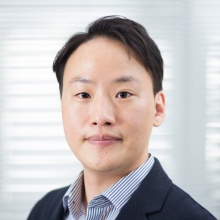
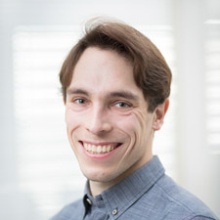
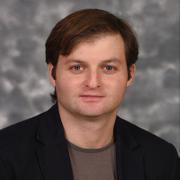
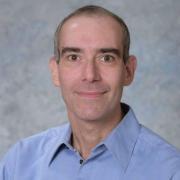
Jon Schlipf is a Researcher at BTU Cottbus-Senftenberg, affiliated with the Experimental Physics and Functional Materials department. He holds an M.Sc. in Electrical Engineering and Information Technology from the University of Stuttgart (2016-2018), with a master's thesis titled "Simulation of Faraday effect enhancement in plasmonic composite structures," and a B.Sc. in the same field from the same university (2012-2016). His research focuses on all-dielectric metasurfaces, plasmonic metal-semiconductor nanostructures, semi-analytical electromagnetic wave simulation methods, and chiral photodetectors. He also contributes to projects involving laser epitaxy of group-IV materials, genetic optimization, and magnetophotonics. Education: B.Sc. Electrical Engineering and Information Technology, Universität Stuttgart (2012-2016) M.Sc. Electrical Engineering and Information Technology, Universität Stuttgart (2016-2018) His teaching responsibilities include supervising tutorials for the lectures "General Physics I" and "General Physics IV." He is part of the Experimental Physics and Functional Materials team, collaborating with senior researchers like Prof. Inga Fischer and Dr. Markus Ratzke.
Yuri Kivshar is a Distinguished Professor in the Department of Materials Physics at The Australian National University (ANU) in Canberra, Australia, where he leads the Nonlinear Physics Centre (NLPC). Recognized as one of the world's leading experts in nonlinear physics and nanophotonics, he has established himself as a pioneer in metamaterials research and all-dielectric metaphotonics. Professor Kivshar's research spans multiple cutting-edge areas in modern photonics, with particular emphasis on nonlinear optical phenomena, bound states in the continuum, topological photonics, and chiral light-matter interactions. His work bridges fundamental physics with practical applications, developing novel optical devices for imaging, sensing, and quantum technologies. The NLPC under his leadership maintains both theoretical and experimental programs that are internationally recognized for their innovation and impact. His research portfolio demonstrates a clear evolution from fundamental nonlinear optics toward advanced nanophotonic structures and metamaterials, with recent work focusing on bound states in the continuum, topological photonics, and nonlinear effects at the nanoscale. This progression reflects both the maturation of the field and Kivshar's ability to identify and develop emerging research directions. Humboldt Research Award (2017) Two consecutive Federation Fellowships from the Australian Research Council Listed as one of the 'Most Cited Scientists in Physics' (ISI: h-index 91 with over 35,000 citations) Author of 5 influential books and over 80 papers in Physical Review Letters and 15 in Nature-family journals Through his leadership and research funding, including ARC Discovery and Linkage grants, Professor Kivshar established world-leading theoretical and experimental capabilities at the NLPC. His team has developed major experimental infrastructure including ultrafast laser systems, scanning near-field optical microscopes with sub-100nm resolution, and specialized facilities for nanofabrication. The NLPC actively collaborates with numerous international research groups and hosts visiting researchers from around the world, fostering a dynamic research environment that bridges theory and experiment. The Nonlinear Physics Centre operates as a comprehensive research hub with strong theoretical foundations complemented by cutting-edge experimental capabilities. The center maintains specialized laboratories for nonlinear optics, nanophotonics, and metamaterials research, featuring state-of-the-art equipment for fabrication, characterization, and theoretical modeling. This integrated approach has enabled groundbreaking discoveries including the first generation of Airy plasmons, observation of vortices in liquid crystals, and development of novel out-of-plane metamaterials.
Professor Thomas Zentgraf is a faculty member in the Department of Physics at Paderborn University, where he leads the Ultrafast Nanophotonics Research Group since 2011. He serves as Chairman of the Center for Optoelectronics & Photonics (CeOPP) and is a founding member of the Institute for Photonic Quantum Systems (PhoQS). M.Sc. in Applied Physics, Technical University of Clausthal (2001-2002) B.Sc. in Physical Engineering, University of Applied Sciences Jena (1996-2001) Ph.D. in Experimental Physics, University of Stuttgart (2006) His research focuses on nano-optical systems and artificially structured materials for optical applications using linear and nonlinear optical spectroscopy. Key areas include metasurfaces, quantum sensors, and light-matter interactions at the nanoscale. Recent publications reveal trends in nonlinear dielectric metasurfaces, quantum sensing interferometry, and vectorial holography. These works emphasize polarization control, bandstructure manipulation, and topological waveguide applications. Fellow of the Max Planck School of Photonics (2021) ERC Consolidator Grant (2016) Feodor Lynen Fellowship (2007) Georg-Simon-Ohm Award (2002) Thomas leads the Ultrafast Nanophotonics Group, oversees projects like TRR 142 and PhoQuant, and has secured grants including ERC and Marie Curie funding. He organizes international conferences and serves on multiple scientific committees. His lab at Paderborn University focuses on ultrafast nanophotonics, with collaborations spanning Australia, Thailand, and the USA.
Peter Nordlander is the Wiess Chair of Natural Sciences and Professor of Physics and Astronomy, Electrical and Computer Engineering, and Materials Science and NanoEngineering at Rice University. He holds a Hans Fischer Senior Fellowship at the Technical University of Munich’s (TUM) Institute for Advanced Study (TUM-IAS). His research focuses on theoretical and computational modeling of plasmonics, nanophotonics, and photocatalysis. Nordlander has pioneered studies on plasmon-induced hot carrier dynamics and their applications in energy and environmental technologies. Education: PhD in Physics (1985, Chalmers University, Sweden). Postdoctoral work at IBM Research, Bell Labs, and Rutgers University. Joined Rice University in 1989. Research interests include plasmonic materials, light-matter interactions, and sustainable photocatalysis. His group develops computational methods (FDTD, FEM, DFT) to model nanoscale optical phenomena. Awards: Eni Energy Transition Award (2020), Hershel M. Rich Invention Award (2016), and multiple fellowships from MRS, OSA, and the American Physical Society. H-index > 100 with over 55,000 citations. Key contributions include plasmonic photocatalysis for CO₂ reduction and methane reforming, and theoretical frameworks for hot carrier generation in nanoparticles. Collaborates with experimental groups globally, advancing applied nanophotonics.
Jihoon Choi is a Professor in the Department of Electrical Engineering at Korea University's College of Engineering. With an extensive publication record spanning over two decades from 2000 to 2025, he has established himself as a leading researcher in wireless communications and signal processing. His work primarily focuses on MIMO systems, space-time coding techniques, and channel estimation methodologies. Choi's research interests center around advanced wireless communication techniques, particularly in next-generation wireless systems. His work spans multiple specialized areas including Space-Time Line Coding, mmWave communications, physical layer security, and intelligent reflecting surface technologies. He has made significant contributions to the development of novel precoding and combining strategies for multiuser MIMO systems, with special emphasis on rate balancing and interference management techniques. Analysis of his recent publications (2021-2025) reveals a strong research trajectory focused on space-time line coding applications across diverse scenarios including UAV systems, SAR imaging, and physical layer security. His work demonstrates a consistent pattern of innovation in wireless communications, with increasing emphasis on practical implementations for 5G/6G systems. The publications show a clear evolution from fundamental signal processing techniques to more complex system-level implementations addressing real-world challenges in wireless communications. Throughout his career, Professor Choi has maintained a highly productive research output with over 70 publications in prestigious IEEE journals and conferences. His work demonstrates strong collaboration patterns, particularly with researchers like Jingon Joung, Wonjun Lee, and Yong Hoon Lee, suggesting active participation in research groups or laboratories focused on wireless communications. His recent publications indicate ongoing research activity with multiple 2025 publications currently in process.
Prof. Chris Eberl is a Full Professor of Micro- and Materials Mechanics at the University of Freiburg's Faculty of Engineering and Deputy Director of the Fraunhofer Institute for Mechanics of Materials (IWM). His research focuses on materials' reliability, fatigue mechanisms, and bio-inspired programmable materials. He leads the 'Longevity' pillar of the Cluster of Excellence livMatS (living Materials Systems) and coordinates the Fraunhofer Cluster of Excellence Programmable Materials. He has pioneered scalable fabrication concepts for adaptive metamaterials and investigates self-healing mechanisms through interdisciplinary approaches. Education: PhD in Materials Science from the University of Stuttgart (2004), postdoctoral work at Johns Hopkins University, and leadership roles including head of the 'Microreliability' junior research group (2007–2012) and 'Meso- and Micromechanics' group at Fraunhofer IWM (2012–2018). Current roles include board membership of the German Association for Materials Research and Testing (DVM). Key projects include MetaGen4Morphing (programmable meta-materials), Solstore II (photosupercapacitors), and Gallisense (passive material sensing). Awards include the Otto Hahn Medal (2006) and University of Stuttgart Doctoral Award (2004). He has supervised numerous PhD and postdoc researchers, advancing fields like microfluidic networks, self-sealing materials, and digital material representation. Labs/Teams: LivMatS Excellence Cluster, Fraunhofer IWM research groups, and the IDEASfactory@FIT innovation hub. His work integrates experimental mechanics, computational modeling, and biomimetic principles to create sustainable, adaptive materials systems.
Dragomir Neshev is a Professor and Queen Elizabeth II Fellow at the Australian National University (ANU), leading the Experimental Photonics group at the Nonlinear Physics Centre. He is Director of the Australian Research Council Centre of Excellence for Transformative Meta-Optical Systems (TMOS). His research spans nonlinear optics, plasmonics, metamaterials, and topological insulator applications in photonics. Affiliations: ANU (since 2002), CUDOS Centre, TMOS Director Roles: Editor for Scientific Reports, International Journal of Optics, and Advances in Applied Physics Research Interests: Focuses on meta-optics, nanoscale manipulation of light-matter interactions (e.g., plasmonic nanostructures), topological photonics, and graphene-based optical systems. Recent work includes emission control in nanoscale environments and topological insulator analogues in photonics. Awards: Queen Elizabeth II Fellowship, ARC Australian Research Fellowship, Marie-Curie Fellowship Advise/Grants: Leads major ARC-funded initiatives. Supervises research in metamaterials and meta-optics through the Experimental Photonics group. Active in international collaborations. Labs/Teams: Director of TMOS, leads Experimental Photonics group at ANU's Nonlinear Physics Centre.
Mojtaba Joodaki is a Professor of Computer Science & Electrical Engineering at Constructor University Bremen, affiliated with the School of Computer Science & Engineering. His research focuses on nanoelectronics, bridging high-frequency engineering with nanoscale devices and materials. His work spans the development of devices for memories , sensors , energy harvesting , and communication systems . Recent publications highlight advancements in metasurfaces , electromagnetic energy harvesting , and waveguide modeling , with applications in microwave engineering and sustainable technologies. The 15 most recent articles reflect trends in metasurface design , electromagnetic compatibility , and memory device optimization . Topics include polarization-insensitive energy harvesters, GSTC modeling, and strain effects in organic solar cells. Collaborations span institutions in Germany, Iran, and beyond, with a focus on experimental validation and analytical frameworks. Prof. Joodaki earned his PhD in Electrical and Electronics Engineering from the University of Kassel (1999–2002), with a dissertation on Quasi-Monolithic Integration Technology for Microwave and mm-Wave Applications . Prior roles include professorship at Ferdowsi University of Mashhad and engineering positions at Qimonda Dresden GmbH, Infineon Technology, and ATMEL Germany GmbH.
Carsten Rockstuhl is a Professor of Theoretical Solid State Physics at the Karlsruhe Institute of Technology (KIT), affiliated with the Department of Physics and leading the Theoretical Photonics group at the Institute for Theoretical Solid State Physics (TFP). His research is centered on controlling light using micro- and nanostructured materials, with applications in renewable energy, quantum technologies, and advanced optical devices. His primary research interests include Plasmonics , Optical Nanoantennas , Metamaterials , Photon Management in Solar Cells , Nonlinear Optics , and Quantum Optics . His group explores how the interaction between light and nanostructures can be tailored to enhance solar cell efficiency, enable novel sensing platforms, and manipulate quantum optical phenomena. A key focus is on the interaction of atomic systems with optical nanostructures to modify emission rates and optical properties. The 15 most recent publications highlight a strong trend in theoretical and computational nanophotonics , with a significant emphasis on inverse design of nanophotonic devices, metasurfaces (including disordered and time-varying ones), and advanced multipole and scattering theories . There is a clear interdisciplinary approach, bridging physics, materials science, and engineering, with applications ranging from solar energy to quantum information. No scientific awards were explicitly mentioned in the provided text. Carsten Rockstuhl leads a research group that fosters close collaboration with both theoretical and experimental groups. While specific grant details are not listed, the volume and quality of publications suggest active funding. The group is involved in developing fundamental theories and computational tools, such as the T-matrix method and frameworks for homogenization, which are crucial for the design and analysis of complex photonic systems. The research group is actively engaged in the theoretical exploration of cutting-edge topics in nanophotonics. Key areas include the development of analytical models for optical nanoantennas, the study of photonic time crystals, and the investigation of quantum optical effects in nanostructured environments. The group's work on photon management in solar cells focuses on using nanostructures like photonic crystals and metallic nanoparticles to enhance light absorption in thin-film and organic solar cells.
Ivan Fernandez-Corbaton is a Project Leader and Staff Scientist at the Institute of Nanotechnology, Karlsruhe Institute of Technology (KIT), where he leads research in the Theoretical Nanooptics unit. His position focuses on fundamental electromagnetic theory with applications in nanophotonics and metamaterials. His research centers on the systematic use of electromagnetic duality symmetry and its conserved quantity, electromagnetic helicity, to treat electromagnetic polarization degrees of freedom. This approach provides insights and design guidelines across diverse areas including zero backscattering, optical activity, metamaterials for transformation optics, and nanophotonic phenomena involving electromagnetic angular momentum. His work bridges theoretical physics with practical applications in chiral sensing, thermal radiation control, and light structuring technologies. Analysis of his recent publications reveals a strong focus on computational methods for electromagnetic problems, particularly the T-matrix formalism extended to polychromatic fields and complex geometries. His research increasingly integrates multi-scale approaches connecting quantum chemical simulations with classical electromagnetic modeling, especially for molecular nanomaterials and chiral structures. The work shows consistent theoretical depth with practical applications in sensing, light manipulation, and thermal radiation control. As a Staff Scientist, Fernandez-Corbaton collaborates extensively within KIT's Carsten Rockstuhl's Lab and with international partners. His research has significant implications for chiral molecule detection, photonic device design, and fundamental electromagnetic theory. He maintains active publication output with numerous preprints available on arXiv and ResearchGate, reflecting his commitment to open scientific communication.
Yohan Lee is an active researcher specializing in nanophotonic metasurfaces and responsive optical materials, contributing to high-impact publications in Nature Communications and Nanophotonics (2022-2023). His work centers on electrically switchable optical systems for next-generation adaptive devices. His research spans: Dynamic hydrogel nanofabrication for multi-channel biomedical applications Conducting polymer-based nanogratings for real-time beam control Electro-active metaobjectives enabling on-demand metalens reconfiguration Recent publications reveal a pronounced trend toward integrating electrical actuation with nanoscale optical structures, particularly using conducting polymers and hydrogels to achieve rapid, reversible control of light. This bridges photonics with soft matter physics, targeting applications in adaptive imaging, optical communications, and biomedical sensing. Dr. Lee maintains strong collaborative ties with Prof. Harald Giessen's research group, consistently appearing as co-author on multi-investigator projects involving M. Sitti, J. Karst, and M. Hentschel. His work demonstrates significant grant support through publication in elite journals, though specific funding sources aren't detailed in the source text.
Florian Mörz is a researcher specializing in advanced photonics and ultrafast laser technologies. His work focuses on developing innovative optical systems for spectroscopy, imaging, and material characterization. Key areas of expertise include mid-infrared plasmonics, tunable laser sources, and nanoscale sensing techniques. He leads a team dedicated to creating robust photonic devices with applications in biomedical imaging, materials science, and quantum optics. Research interests encompass optical parametric amplifiers, metasurface design, and surface-enhanced spectroscopy. His group has pioneered alignment-free mid-IR sources and developed ultrafast laser systems capable of attomolar detection of biomolecules. Recent efforts emphasize low-noise light sources for coherent Raman scattering microscopy and high-repetition-rate lasers for advanced spectroscopic imaging. Publications highlight contributions to plasmonic materials, GeSn heterostructures, and nanoantenna-based sensors. Despite prolific output, no formal awards or grants are explicitly mentioned in the provided texts. The team's work is characterized by interdisciplinary collaboration between photonics, materials science, and biomedical engineering.
Dr. Jens Tomm is a Senior Researcher at the Max Born Institute for Nonlinear Optics and Short Pulse Spectroscopy (MBI), where he has been since 1995. His work focuses on high-power semiconductor lasers, optoelectronic device limitations, and material characterization. He collaborates with industry partners like Osram and Lumentum, studying GaN-based devices and degradation mechanisms. Key projects include analyzing catastrophic optical damage, carrier dynamics in quantum wells, and luminescence properties of materials like ZnSe and MgAl2O4. Education: PhD in Physics (1984, Humboldt University), Diplom (1982). Previous roles include visiting professorships at Georgia Tech (1993–1995) and RIKEN (1999). Author of books on optoelectronic semiconductors and quantum-well laser packaging. His research spans semiconductor materials science, laser physics, and device reliability. Recent work emphasizes UV LEDs, infrared solid-state lasers, and nanoscale heterostructures. Key Projects: Catastrophic optical damage analysis, GaN-based laser reliability, quantum well recombination studies. Collaborations: BMBF projects (e.g., BlauLas), industry partnerships with Osram, Dilas, and Lumentum. Techniques: Photoluminescence, transient spectroscopy, cathodoluminescence, Raman spectroscopy. Publications focus on semiconductor laser physics, material degradation, and optoelectronic device optimization. Over 100+ peer-reviewed articles and two Springer/McGraw-Hill books highlight his contributions to the field.
Prof. Pavel Ginzburg is a faculty member at the School of Electrical Engineering, Tel Aviv University, and leads the Dynamics of Nanostructures Research Laboratory . His work bridges electromagnetic wave interactions with nanostructures across optical, RF, and theoretical domains. Nanophotonics Quantum Mechanics Quantum Optics Metamaterials Radio Physics Antenna Systems The Dynamics of Nanostructures Research laboratory includes four sub-divisions: optical lab (focusing on biophotonics and optical metamaterials), anechoic RF chamber (antenna design, RFID), theoretical/computational group (quantum electrodynamics), and colloidal chemistry lab (fluorescent materials). Recent publications highlight advancements in metamaterials for cloaking, THz generation, drone identification systems, and photonic nanojet arrays, reflecting his interdisciplinary approach. The Dynamics of Nanostructures Research laboratory at Tel Aviv University combines experimental and computational expertise to tackle challenges in electromagnetic wave control. It operates dedicated facilities for optical experiments, radiofrequency testing, computational modeling, and chemical synthesis of nanomaterials.
Prof. Jacob Scheuer is the Bernard L. Schwartz Chair in Nano-Scale Information Technology and a full professor at The Iby and Aladar Fleischman Faculty of Engineering, Tel Aviv University, where he is affiliated with the Department of Electrical Engineering - Physical Engineering. His educational background includes: BSc in Electrical Engineering from Technion—Israel Institute of Technology (1993) BSc in Physics from Technion—Israel Institute of Technology (1993) PhD in Electrical Engineering from Technion—Israel Institute of Technology (2001) Prof. Scheuer's research focuses on cutting-edge areas of nanophotonics and optical engineering. His work explores the fundamental interactions between light and matter at the nanoscale, pushing the boundaries of what's possible in optical device design and application. He leads research in developing novel photonic devices that leverage metamaterials and metasurfaces to control and manipulate light in unprecedented ways. His laboratory investigates applications ranging from renewable energy solutions to secure communications systems, with particular emphasis on creating next-generation optical components for displays, sensing, and information processing. His recent publications demonstrate a strong focus on metasurfaces and their applications, particularly in controlling light reflection and transmission. The work on "Ultra-broadband wide-angle anti-reflection scheme utilizing multi-layer resonant metasurfaces" exemplifies his lab's innovative approach to solving long-standing challenges in optics through nanostructured surfaces, achieving remarkable reflection suppression across wide bandwidths and angles. Professional recognition includes: Fellow of Optica (formerly Optical Society of America) Fellow of the SPIE Prof. Scheuer has held significant leadership roles, including serving as head of the department of Physical Electronics at Tel Aviv University from 2017 to 2021. His professional journey includes industry experience as Chief Designer at Lambda Crossing, a startup specializing in microring resonators, followed by research at Caltech's Center for the Physics of Information. He also spent the 2012-2013 academic year as a visiting Professor at Northwestern University's Department of Electrical Engineering and Computer Science. He leads the Nano-Photonics Laboratory at Tel Aviv University, which focuses on developing new photonic devices and applications utilizing light-matter interactions at the nanoscale. Current research directions include metasurfaces for controlling all aspects of light and electromagnetic waves, and Lead-Halide Perovskite devices for next-generation light sources and solar cells with tunable properties across the visible spectrum.