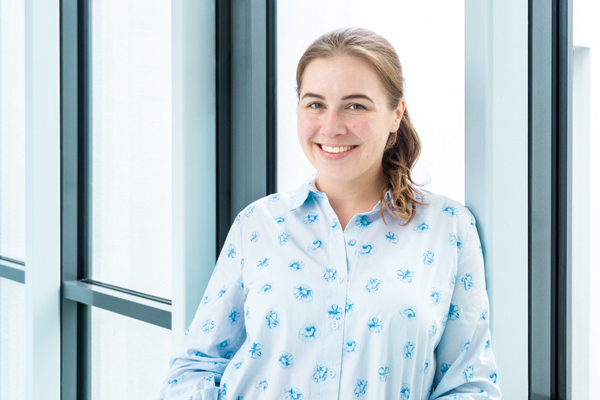
Alison Ledgerwood is a Professor in the Department of Psychology at the University of California, Davis, and Principal Investigator of the Attitudes and Group Identity Lab. Her research examines how social context shapes attitudes and preferences, with a focus on open and inclusive scientific practices. Ph.D., Social Psychology, New York University (2008) M.A., Psychology, New York University (2006) B.A., Psychology, Amherst College (2003) Her research explores psychological distance , framing effects , and system justification theory , while methodologically advancing preregistration , collaborative science , and equity in publishing . She also investigates group identity dynamics and implicit/explicit bias measurement . Recent publications highlight her work on racial bias methodology , open science reform , and contextual framing . Awards include the 2024 Distinguished Service to the Society award, 2021 UC Davis Advising and Mentoring Award, and 2017 SPSP Service to the Field award. 2024 Distinguished Service to the Society, SPSP 2021 UC Davis Graduate Advising and Mentoring Award 2017 Service to the Field, SPSP Hellman Fellowship (2010-2011), UC Davis UC Davis Chancellor's Fellow APS Fellow SESP Fellow Ledgerwood advises on scientific integrity through roles like Chair of the Transparency and Openness Promotion (TOP) II Guidelines Task Force and Anti Colorism and Eurocentrism in Methods and Practices (ACEMAP) Task Force. Her lab fosters contextual evaluation studies and psychological distance frameworks .
Jan G. Voelkel is an Assistant Professor at the Jeb E. Brooks School of Public Policy and the Department of Sociology at Cornell University. His research explores how micro-level preferences for equality and unity translate into macro-level political decisions, focusing on democratic attitudes, partisan dynamics, and moral framing. Ph.D. and M.A. in Sociology, Stanford University M.S. in Social and Behavioral Sciences, Tilburg University B.S. in Social Sciences, University of Cologne Voelkel’s work spans political psychology, metascience, and social policy, with a focus on interventions to reduce anti-democratic attitudes, partisan animosity, and gender bias in political leadership. His recent articles emphasize large-scale collaborations, reproducibility, and cross-partisan empathy. Scientific awards include: New Investigator Award (Behavioral Science & Policy Association) Public Sociology Award (American Sociological Association) Open Science Innovator Award (Stanford) Centennial Teaching Assistant Award (Stanford)
Gavin Schwarz is a Professor and Head of School at the School of Management and Governance within the UNSW Business School . He specializes in organizational change , organizational failure and inertia , and the dynamics of virtual teams , with a focus on how organizations fail during change processes and how to develop applied strategies for change management . His work spans diverse sectors including healthcare, technology, and education, with publications in leading journals such as Academy of Management Learning and Education and Administrative Science Quarterly . Education : PhD in Management (University of Queensland), MPhil (Hons) in Management (University of Auckland), BA in Management and English (University of Auckland). Grants : 2020 Brock University grant for "University communication in times of COVID-19" , 2020 UNSW Medicine grant for "Translation and change: Embedding effective change management in health" , and earlier Australian Research Council and Gordon J. Samuels Fellowship awards. His research explores the development of knowledge in organizational theories , with an emphasis on collective responses to change , HR management during crises , and technology strategy . He has contributed to understanding organizational communication , team innovation , and structural inertia . His 15 most recent publications cover topics from AI’s role in organizational change to pandemic-driven research adaptation, with keywords spanning management science , behavioral economics , and digital transformation . Scientific Awards 2021-2023 : Outstanding Reviewer Awards (Academy of Management Review) 2017-2020 : Best Reviewer Awards (Journal of Organizational Behavior) 2019, 2013, 2011 : Best Paper Finalist/Awardee (Academy of Management divisions) 2007, 2006 : Editorial Board Excellence (Academy of Management Journal) and Gordon J. Samuels Fellowship As an active supervisor in organizational change and HR development , his work supports healthcare innovation and digital transformation. He serves as Editor-in-Chief for the Journal of Applied Behavioral Science and is on the editorial boards of Academy of Management Review , Journal of Management , and Journal of Organizational Behavior . Contact: g.schwarz@unsw.edu.au
Christopher Chambers is Professor of Cognitive Neuroscience at Cardiff University's School of Psychology. His research spans open science reform, cognitive neuroscience, and translational applications in behavior change. He founded numerous initiatives including Registered Reports, the UK Reproducibility Network (UKRN), and the Royal Society Replications initiative, while chairing the Registered Reports Committee at the Center for Open Science. Chambers' research focuses on: 1) Developing and promoting open research practices to enhance scientific reliability; 2) Investigating cognitive control mechanisms using brain stimulation (TMS, TES) and neuroimaging (fMRI, MEG); and 3) Translational applications in obesity and behavior change through response inhibition training paradigms. His work bridges cognitive neuroscience with metascience reform. His publications demonstrate strong trends in open science methodology (Registered Reports, reproducibility frameworks) and cognitive-behavioral interventions, particularly examining how inhibitory control training affects food valuation and eating behaviors. Recent work emphasizes robustness verification and implementation of open science practices across disciplines. Awards include: 2018 British Psychological Society Book Award for 'The Seven Deadly Sins of Psychology' 2018 PROSE Award from Association of American Publishers He leads major grants including a €1.99M ERC Consolidator Grant on cognitive control training and a £188k Arnold Foundation grant on Registered Reports. Chambers founded the Insciout research group (science communication) and UK Evidence Information Service (science-policy interface), and currently advises the Peer Community in Registered Reports.
Kinga Maria Bierwiaczonek is a Junior Professor (Assistant Professor) in Metascience at the University of Oslo's Department of Psychology, Norway. She holds a dual PhD in Psychology from Vrije Universiteit Amsterdam (Netherlands) and ISCTE–University Institute of Lisbon (Portugal). She was a Visiting Scholar at Stanford University's Meta-Research and Innovation Center (2023–2024) and has been a Researcher at the University of Oslo since 2020. Research Interests: Meta-analysis, metascience, conspiracy beliefs, intergroup relations, and acculturation. Her work employs advanced statistical methods to study societal phenomena like conspiracy theories and cross-cultural adaptation. Her research bridges social psychology with methodological rigor, addressing gaps in understanding human behavior across cultures and contexts. Grants & Projects: Principal Investigator (PI) of the Research Council of Norway-funded project Antecedents of cross-cultural adaptation: A meta-analysis 1988–2025 under the Young Research Talent grant scheme. Collaborates with institutions like ZPID (Leibniz Institute for Psychology) through labs such as the Metascience Lab and Psychological Metascience . Labs/Teams: Active in interdisciplinary teams including the Science Reception Lab , Social Influence Lab , and Moral Computing Lab , focusing on metascience, social dynamics, and data-driven psychological research.
Barbara S. Lancho Barrantes is a Senior Lecturer at the University of Brighton's School of Architecture, Technology and Engineering within the Computing and Mathematical Sciences department. She specializes in bibliometrics, scientometrics, and research analytics, with a focus on citation analysis, sustainable development goals, and research integrity. She holds a PhD in Bibliometrics from the University of Extremadura and has received prestigious awards including the Extraordinary PhD Award (2014) and the Responsible Research and Innovation Award (2022). Education includes a Bachelor's in Information Science (First Class Honours, 2006), a Master's in Digital Information Management (2007), and a PhD in Bibliometrics (2012). She is a Fellow of the Higher Education Academy and has held roles at institutions like the University of Leeds and Tecnologico de Monterrey. Research interests span citation dynamics, SDG mappings, and the impact of economic factors on scientific productivity. She leads the LIS Bibliometrics committee and organizes the annual international conference. Recent work includes exploratory factor analysis of SDG indicators and multilingual research dissemination practices. Key Awards: Extraordinary PhD Award, Responsible Research and Innovation Award Professional Affiliations: Chair of LIS Bibliometrics Committee, External Examiner at University of Wolverhampton Supervision Focus: Bibliometric methodologies, data science integration with research metrics Her articles analyze citation flows, SDG contributions, and questionable publishing threats. She advocates for responsible research metrics through workshops and peer-review activities in journals like Scientometrics and Education for Information .
Krist Vaesen is an Associate Professor in the Philosophy of Innovation at Eindhoven University of Technology (TU/e), within the Department of Philosophy & Ethics in the School of Industrial Engineering and Innovation Sciences. He is a founding member of the Eindhoven Meta-Science Center (META/e) and maintains an external position as a Research Fellow at Leiden University's Human Origins Group, Faculty of Archaeology. Dr. Vaesen earned his degrees in Applied Biology (1998) and Philosophy (2003) from the University of Leuven, Belgium, and completed his PhD at TU/e in 2008 with a dissertation on artifacts and norms. His academic career progressed from post-doctoral researcher (2008-2012) in the NWO program 'Things that make us smart' to Assistant Professor (2012), and eventually to his current Associate Professor position. He received a prestigious NWO Vidi grant in 2014 for his research on cultural evolutionary theory. Vaesen's research spans multiple interconnected domains including the philosophy of innovation, meta-science, cultural evolution, and the philosophy of scientific models. His current work focuses extensively on meta-scientific questions examining science funding practices, interdisciplinary research challenges, PhD attrition causes, academic research values, and research integrity. He is preparing a book titled 'Neophilia--why our obsession with innovation leads to bad science' addressing replication crises in science. His publication record shows consistent scholarly output, with 49 research outputs documented through 2025, appearing in high-impact journals across multiple disciplines including Proceedings of the National Academy of Sciences, Behavioral and Brain Sciences, PLoS ONE, and various philosophy and anthropology journals. His work demonstrates a clear trajectory toward increasingly meta-scientific concerns, with recent publications focusing on research values, PhD attrition, and science funding ethics. NWO Vidi Award (2013) for 'The Darwinisation of culture' Excellence grant from TU/e's Executive Board for work on the 'Things that make us smart' program Elected member of the Eindhoven Young Academy of Engineering (2018) Vaesen has supervised multiple graduate students (with 4 supervised works documented) and secured significant research funding, including his Vidi grant for the 'Darwinizing culture' project (2014-2019). He has been actively involved in science policy discussions, particularly regarding research funding reform and interdisciplinary research assessment. His work has generated substantial media attention, with 127 press/media mentions including coverage by Times Higher Education, Volkskrant, and various radio outlets. As co-founder of the Eindhoven Meta-Science Center, Vaesen plays a key role in advancing meta-scientific research at TU/e. His external position at Leiden University's Human Origins Group demonstrates his interdisciplinary reach across philosophy, anthropology, and evolutionary studies. He teaches courses including 'Metascience' (since 2024), 'Philosophy of science and technology,' and 'Research methodology for the innovation sciences,' shaping the next generation of scholars in these critical areas.
Dr Heath Williams is a Lecturer at the School of Philosophy & Theology , University of Notre Dame Australia (Fremantle Campus). He completed his PhD at the University of Western Australia (2018) after undergraduate studies at Murdoch University (2014), with research time at the Centre for Subjectivity Research in Copenhagen. His work bridges Husserlian phenomenology , analytic philosophy of mind , cognitive science , and qualitative psychology . Education: PhD, University of Western Australia (2018) Bachelor’s Degree, Murdoch University (2014) Williams’ research explores the intersection of phenomenology and empirical psychology , focusing on empathy, intersubjectivity, and the personal level of explanation. He critiques the hard problem of consciousness and engages with panpsychism , while advocating for the integration of phenomenology with cognitive science and analytic philosophy . His recent editorial work in Phenomenology and the Cognitive Sciences reevaluates phenomenology’s role in scientific explanation. His publications demonstrate a strong focus on Husserl’s phenomenological framework , mirror-neuron based embodied simulation , and interdisciplinary methodologies . Williams actively participates in international conferences, addressing topics like subject combination challenges , analytic-phenomenological tensions , and the philosophy of explanation . Scientific Awards & Grants: Fundamental Research Funds for the Central Chinese Universities Fritz Thyssen Foundation Grant Australasian Association of Philosophy Travel Grant Australasian Postgraduate Society Travel Grant Australasian Society for Continental Philosophy Travel Grant UWA Best Postgraduate Paper in Humanities (2017) Faculty of Arts Postgraduate Publication Award (2017) Murdoch Colloquium Best Student Paper (2014) Williams supervises research projects in phenomenology, philosophy of mind, and interdisciplinary approaches to cognitive science, while also serving as Convenor of the Indo-Pacific Mind and Metaphysics Research Group and organizing international workshops on phenomenology and explanation.
Roar Bakken Stovner is an Associate Professor at the Department of Primary and Secondary Teacher Education within the Faculty of Education and International Studies at Oslo Metropolitan University (OsloMet), where he also serves as Head of Studies - Area of Responsibility 2. His academic career at OsloMet began as an Assistant Professor (2021-2023) before his promotion to Associate Professor in 2023. Prior to his university position, he worked as a teacher in lower and upper secondary schools in Oslo (2012-2018) and completed his PhD at the University of Oslo (2016-2020). He holds a Master of Science and Technology from NTNU (2007-2012) with a thesis on applied computational topology. Stovner's research spans several interconnected domains within educational science: Developing methodologies for describing and measuring teaching quality across multiple classrooms, with special emphasis on mathematics education Metascience research examining how citation practices distort findings and confer unwarranted authority to claims in educational research Creating programming tools for educational research, including the gptworkr package for text analysis in R using ChatGPT His scholarly work focuses on classroom research, mathematics education, mathematical competencies, metascience, and citation analysis. He actively participates in research groups focused on Classroom Research and Task Design in Mathematics Education, and leads significant involvement in the Teacher Education Panel Study (TEPS), a comprehensive longitudinal study examining teacher education implementation in Norway. Stovner's recent publications demonstrate substantial engagement with contemporary issues in educational research methodology, AI applications in education, and critical examination of scientific practices. His work on the EDUCATE project has produced influential reports on algorithmic thinking in mathematics education across different grade levels and exploratory teaching approaches in upper secondary education. His contributions to educational discourse include conference presentations, book chapters, and practical resources for teacher education, such as "Bedre masterskriving – en bok for lærerstudenter" (Better Master's Writing - A Book for Teacher Students), which supports academic writing development among future educators.
Lydia Emery is an Assistant Professor in the Department of Psychology at the University of Chicago, joining in 2023. She holds a B.A. in Psychology and English from Haverford College and a Ph.D. in Psychology from Northwestern University, followed by postdoctoral training at the Kellogg School of Management. Her research focuses on three interconnected areas: (1) how social class influences relationship dynamics and resilience, (2) the interplay between self-concept clarity and close relationships, and (3) improving diversity in psychological research. She explores how socioeconomic status shapes relationship strengths and challenges, how couple identity formation occurs, and how researchers can adopt more inclusive practices. Her work bridges theoretical contributions (e.g., self-expansion theory, attachment theory) with applied questions about relationship health across diverse populations. Recent studies highlight mechanisms linking attachment avoidance to couple identity clarity and methodological innovations in sampling marginalized groups. Her research has been featured in top-tier journals and addresses both foundational relationship science and metascientific challenges in psychology. She advocates for expanding the scope of psychological research to reflect broader societal diversity.
Rhodri Leng is a Lecturer in Science and Technology Studies at the University of Edinburgh's School of Social and Political Science, where he has been employed since January 2024. His academic journey includes a PhD and MSc(R) in Science and Technology Studies from Edinburgh, an MA in Political and Legal Theory from the University of York, and an MA in Politics from the University of Glasgow. Research Focus: Leng specializes in the sociology of scientific development, examining how scientific knowledge spreads, influences opinion, and evolves within communities. His mixed-method approach combines computational techniques like citation network analysis and text mining to study: Dynamics of scientific literature and citation practices Detection of citation bias and distortion Integration of computational methods in scientific reviews Research integrity and impact assessment His work spans biomedical, astrophysics, and policy domains. Publications: Leng's 13 most recent journal articles (2018-2024) demonstrate consistent focus on scientometrics, genomics, neuroscience, and policy studies. Key themes include citation network analysis (10 papers), scientific controversies (5 papers), and computational methods in humanities (8 papers), with increasing attention to metascience and research evaluation in recent years. Awards & Honors: ESRC Postdoctoral Fellowship (2020-2021) ESRC Advanced Quantitative Methods PhD Studentship (2016-2019) EUSA Teaching Award for 'Best Student Who Tutors' (2019) Supervision & Grants: He welcomes PhD/Master's students interested in science policy, field development, or evidence-use practices. Previously secured ESRC funding for projects on selective citation analysis. Developed online courses in systematic literature review and network analysis for biomedical/social sciences. Professional Background: Before academia, Leng worked in UK politics as parliamentary/policy officer. From 2021-2024, he conducted industry research at Baillie Gifford, focusing on sociotechnical transitions and scientific mapping for investment strategies.
Martin Voracek is a Professor of Psychological Research Methods at the University of Vienna, Faculty of Psychology, where he serves as Deputy Head of the Department of Cognition, Emotion, and Methods in Psychology. He is also Head of School and Speaker for the Vienna Doctoral School CoBeNe, Director of Doctoral Studies for Psychology, Cognition, Behaviour and Neuroscience, and Chair of the University of Vienna Ethics Committee. Professor Voracek specializes in meta-analysis and systematic reviews, focusing on methodology for research synthesis and integration, including publication bias and evidence distortion in empirical research. His work also encompasses individual differences research, particularly biological bases of personality and behavior, and suicide research. His extensive publication record spans topics including psychological methods, mindfulness studies, digit ratio research (2D:4D), and cross-cultural psychological measurement. Voracek's research output demonstrates a clear trend toward large-scale, multinational collaborative studies, particularly in developing measurement-invariant psychological instruments across diverse populations. His recent work has focused on validating scales across 65 nations and 40+ languages, examining constructs like life satisfaction, self-compassion, body appreciation, and nature connectedness. His methodological expertise is evident in numerous meta-analyses and systematic reviews across diverse psychological domains. Among his notable scientific contributions are leadership roles in the Network of Open Science Initiatives at Psychology Departments (NOSI) and serving as Editor-in-Chief of the Journal of Individual Differences. His work has significantly advanced methodological approaches to psychological research, particularly in meta-analysis and research synthesis. Professor Voracek supervises numerous theses and leads doctoral education through the Vienna Doctoral School CoBeNe. His teaching portfolio includes courses on research approaches in cognitive psychology, master's thesis seminars, and specialized research seminars focusing on metascience, meta-analysis, scientific discourse analysis, and language neuroscience.
Aydin Mohseni is an Assistant Professor in the Department of Philosophy at Carnegie Mellon University , where he is also a core member of the Institute for Complex Social Dynamics . His work bridges Philosophy of Science Formal Epistemology Evolutionary Game Theory Bayesian Statistics AI Alignment Research Interests : Mohseni explores the formal, social epistemology of science through computational models, focusing on Epistemic norms and statistical reform Networks and conformity bias in belief polarization Principal-agent problems in AI alignment Inequity emergence in social dynamics Evolutionary models of cooperation and communication His research also intersects with existential risk , global catastrophic risk , and methodological challenges in the human sciences. He previously held postdoctoral positions at the University of Pennsylvania and the University of Pittsburgh , following a doctorate at University of California, Irvine . Scientific Awards : Not listed in available information. Collaborations : He has worked with scholars including Cailin O’Connor , Travis LaCroix , Simon Huttegger , and Kyle Stanford .
Marlene Altenmüller is a Junior Professor (Assistant Professor) in Science Acceptance at the Leibniz Institute for Psychology Information (ZPID), holding a PhD from Ludwig-Maximilians-Universität München (LMU Munich). She previously served as a Research Associate at LMU’s Social Psychology Chair from 2018 to 2024. Her academic journey includes a Master’s and Bachelor’s in Psychology and a Bachelor’s in Art History from Philipps University of Marburg (2012–2018). Her research focuses on Trust in science and science communication Metascience analyzing social processes within academia Psychological aspects of art reception and museum experiences Social justice and fairness perceptions Key projects include the BMBF-funded Trust in Citizen Science (TiCS) and the Templeton Religion Trust-supported Art-BEAT initiative. Her work bridges theoretical insights with practical recommendations, such as optimizing science communication strategies and understanding science-religion dynamics. She leads the Science Reception Lab and contributes to interdisciplinary teams like the Social Influence Lab and Metascience Lab at ZPID. Grants include collaborations with TU Braunschweig and Berlin’s Museum für Naturkunde.
Professor Ami Eidels is a Professor in the School of Psychological Sciences at the University of Newcastle, Australia. She specializes in cognitive psychology with a focus on information processing models, cognitive workload, and human-machine interaction. Her research bridges theoretical cognitive science with applied settings, particularly in defense and industry contexts. Professor Eidels completed her PhD in Cognitive Psychology at Tel Aviv University under the supervision of Professor Daniel Algom. She then pursued post-doctoral training in Mathematical Psychology at Indiana University with Professor James Townsend before joining the faculty at the University of Newcastle. Her research program centers on understanding how humans process and combine information from multiple sources, with particular emphasis on how cognitive workload affects processing efficiency and system capacity. Professor Eidels and her team conduct laboratory experiments, develop cognitive models, and apply systems factorial technology to analyze human performance. A significant portion of her recent work focuses on human-human and human-bot team performance, examining how collaboration and competition affect cognitive efficiency in team settings. Her approach integrates cognitive modeling with machine learning techniques to scale up traditional laboratory findings to more complex, real-world scenarios. Analysis of Professor Eidels' recent publications reveals a strong focus on cognitive workload measurement and human-machine interaction. Her work demonstrates consistent application of systems factorial technology across diverse domains including visual search, numeral recognition, team performance, and interface design. A notable trend is the expansion of cognitive modeling approaches to examine team dynamics, particularly how humans interact with AI systems. Her research increasingly addresses practical applications in areas such as aviation safety, user interface design, and cognitive assessment in neurodevelopmental conditions. Professor Eidels actively supervises students and collaborates with researchers across disciplines. Her work with defense and industry partners indicates applied research with real-world implications for system design and human performance optimization. While specific grant details are not provided in the available information, her extensive publication record and collaborative projects suggest significant research funding support. Her laboratory work encompasses both traditional cognitive experiments and innovative applications of cognitive science to practical problems. The integration of cognitive modeling with real-world applications represents a distinctive feature of her research program, allowing theoretical insights to inform practical solutions for human performance challenges.