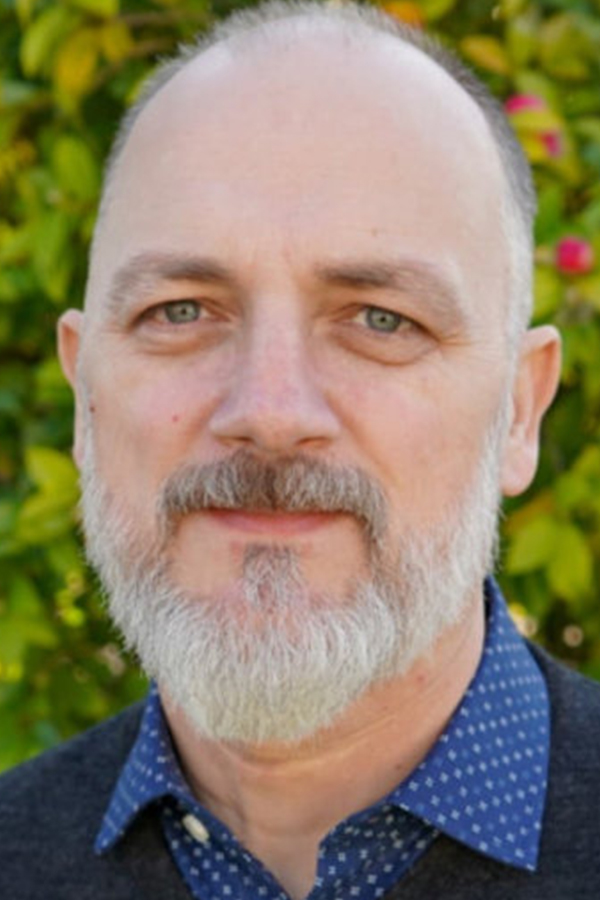
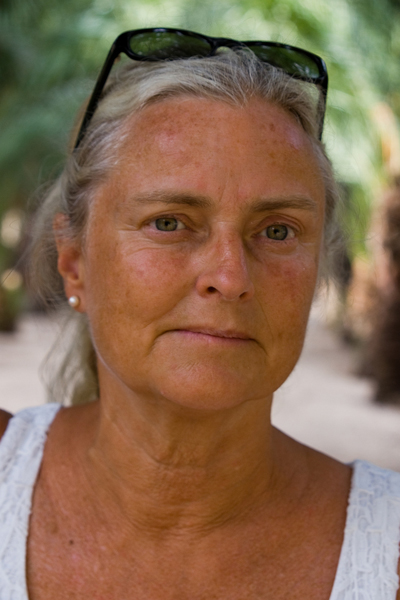
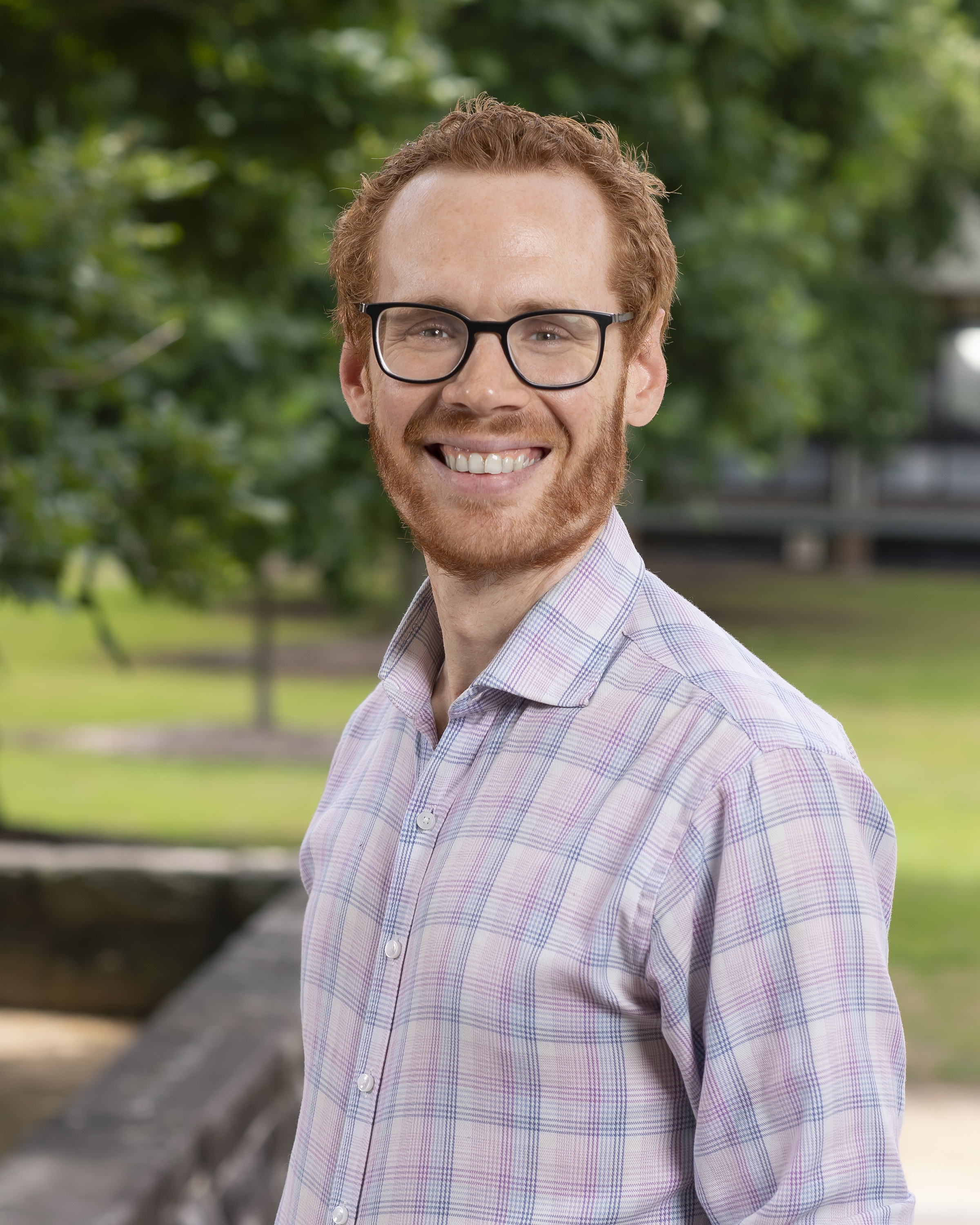
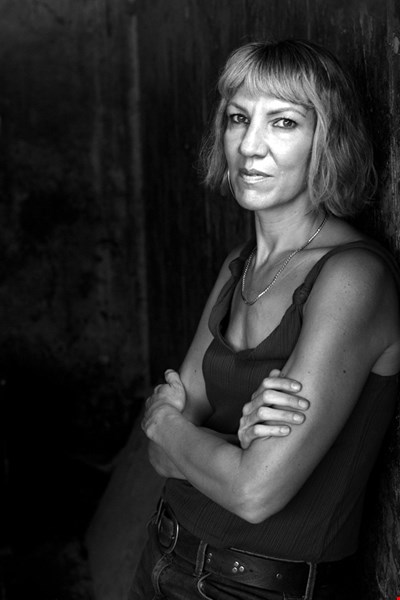
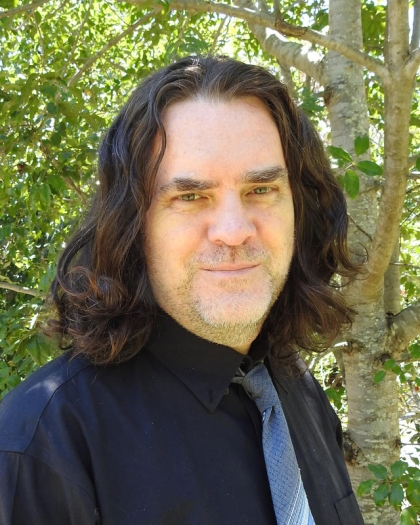
Dorothy Worden-Chambers is an Associate Professor in the Department of English at the University of Alabama, serving as Coordinator of the Applied Linguistics/TESOL Program. Her expertise spans multilingual writing pedagogy, second language teacher cognition, and genre-based instruction. She holds a PhD in Applied Linguistics from Pennsylvania State University (2015) and an MA in Rhetoric and Composition from Washington State University (2008). Her research focuses on L2 writing teacher development, with particular attention to pedagogical content knowledge, curriculum design, and the impact of teacher beliefs on instructional practices. Her work bridges theoretical frameworks in applied linguistics and writing studies, emphasizing practical applications in multilingual education. Recent publications explore themes such as teacher learning through tutoring, conceptual metaphors in curricular knowledge, and the role of genre projects in teacher education. Her contributions span journals like Teacher Development , Composition Forum , and Journal of Second Language Writing . Worden-Chambers actively contributes to professional development through workshops and collaborative initiatives, such as graduate student-led faculty training programs on multilingual writing pedagogy. Her work underscores the interplay between teacher identity, pedagogical practices, and multilingual learner outcomes.
Jamie Collins is a Professor in the Department of Management at Texas Tech University's Rawls College of Business. He holds a PhD in Strategy & Entrepreneurship from Texas A&M University, along with an MBA and BS in Finance. Prior roles include Professor and UC Chair of Strategy at the University of Canterbury (New Zealand) and Director of Sam Houston State University's Center for Entrepreneurship. His research focuses on strategic leadership perceptions, innovation investments, and teaching approaches' impact on student success. He has taught at Clemson, Texas A&M, and Baylor, with visiting roles in Belgium and Italy. Collins teaches strategic management, entrepreneurship, and international management courses. Key research areas include entrepreneurial intuition, venture creation, and the intersection of gender/equality in business programs. His 2020-2024 publications emphasize innovation strategies, educational methodologies, and behavioral skills development. He has collaborated across disciplines from military training to sports performance optimization.
Dr. Yuichi Tsukada is an Associate Professor of English Literature at Waseda University , Japan, with a focus on Shakespearean studies and early modern cultural politics. He holds a PhD from King’s College London , an MA from The University of Tokyo , and a BA in British Area Studies from the same institution. His research interrogates the interplay between Shakespearean drama , Elizabethan nostalgia , and political identity in Jacobean England . His scholarly output spans analyses of Macbeth 's prophecies, Coriolanus ' gendered military allegory, and Antony and Cleopatra 's negotiation of Elizabethan legacy. He has held grants from the Japan Society for the Promotion of Science (JSPS) and the Suntory Foundation , and serves as Director-General of the Kanto Branch of the English Literary Society of Japan. Key publications include the monograph Shakespeare and the Politics of Nostalgia (Arden Shakespeare, 2019), which recontextualizes Shakespeare’s late plays within Jacobean debates about Elizabeth I. His work has been recognized with the University of Tokyo President’s Grand Award and the Young Scholar Award of Special Merit from the English Literary Society of Japan. Scientific Awards: Suntory Foundation Grant for Groundbreaking Young Researchers Fukuhara Award (English and American Literature) Award of Special Merit, English Literary Society of Japan The University of Tokyo President’s Grand Award Ichiko Memorial Award Valedictorian, The University of Tokyo His teaching portfolio includes courses on Shakespeare and Film , Literary Theory , and History of English Literature , reflecting his interdisciplinary approach to pedagogy.
Courtney N. Reed is a Lecturer in Digital Technologies at Loughborough University London, where she joined in November 2023. She maintains a dual role as a visiting research fellow at the Max Planck Institute for Informatics. Her academic journey includes a BMus in Electronic Production and Design from Berklee College of Music (2016), followed by an MSc (2018) and PhD (2023) in Computer Science from Queen Mary University of London. Prior to her current position, she completed postdoctoral research at both the Max Planck Institute for Informatics and King's College London. Bachelor of Music: Electronic Production and Design, Berklee College of Music (2016) Master of Science: Computer Science, Queen Mary University of London (2018) Doctor of Philosophy: Computer Science, Queen Mary University of London (2023) Dr. Reed's research explores the entangled relationships between humans, bodies, instruments, and technology in music interaction, with particular focus on vocal electromyography (VoxEMG) and the vocalist-voice relationship. Her work incorporates feminist and post-human theories to examine sociopolitical contexts within arts technology, aiming to design for creativity while acknowledging individual, messy bodies in artistic practice. She has developed an open-source platform for vocal electromyography to investigate how biosignal feedback changes understanding and perception of the body in vocal performance. Her interdisciplinary approach bridges music technology, human-computer interaction, and embodied interaction studies. Analysis of Dr. Reed's recent publications (2023-2025) reveals a strong thematic focus on embodied interaction in music technology, with particular emphasis on vocal performance, biosignal feedback, and the philosophical underpinnings of digital instrument design. Her work consistently integrates theoretical frameworks like Karen Barad's agential realism with practical applications in digital musical instruments. Key trends include the exploration of ambiguity in data representation, the sociocultural dimensions of timbre in instrument design, and the development of novel methodologies for understanding embodied musical experiences through micro-phenomenology and ethnographic approaches. ACM SIGCHI Outstanding Dissertation Award (2024) for her thesis 'Imagining & Sensing: Understanding and Extending the Vocalist-Voice Relationship Through Biosignal Feedback' Best Newcomer Award at Loughborough University London's Community Awards Celebration (2024) Dr. Reed actively contributes to the academic community through conference organization and leadership roles. She serves as Member-at-Large on the NIME Board, previously chaired papers for NIME 2024, and co-organized the IBM SkillsBuild Sprint at Loughborough London. She has also chaired sessions at the ACM TEI Conference and co-chaired the Student Design Competition. Her collaborative work spans multiple institutions and includes significant contributions to interdisciplinary projects that bridge music, technology, and human experience. She has been instrumental in developing the senSInt research group and the RaveNET wearable network project. Dr. Reed leads the senSInt research group which focuses on sensorimotor interaction in music and performance contexts. The group develops innovative technologies including the VoxEMG platform for vocal electromyography, the Bones anti-corset for vocal performance, and the RaveNET network of wearable biosensing nodes. These projects explore the intersection of biosignals, embodied interaction, and musical expression, creating novel frameworks for understanding how technology mediates human creativity and performance. The group frequently collaborates with musicians, technologists, and theorists to develop and test these systems in real-world performance contexts.
Carita Paradis is a Professor Emerita at Lund University's Centre for Languages and Literature, specializing in English Linguistics. She holds a PhD from Lund University (1997) and has held leadership roles including Chair of the Swedish Research Council's Linguistics panel (2010–2015). She coordinates the Language, Cognition and Discourse@Lund (LCD@L) research group, focusing on discourse meaning, language acquisition, and sociocultural variation. Her research spans cognitive linguistics, discourse analysis, semantics, and sensory language. She has authored/co-authored over 100 refereed publications, 5 books, and edited 10 journal volumes. Awards include membership in Academia Europaea (2016) and leadership roles in Scandinavian linguistic associations. She has supervised 14 PhD students and 8 postdocs, taught at all academic levels, and participated in numerous national/international research projects. Her editorial roles include serving on Cognitive Semantics, Languages, and Human Cognitive Processing series.
Matthew Neill Null is an Associate Professor of English and Creative Writing at Susquehanna University. His work explores the intersection of landscape, history, and politics in shaping private lives, with a focus on marginalized cultural narratives. Education: MFA in Creative Writing (Fiction), University of Iowa (2010) Bachelor of Arts with Honors in English and Poverty Studies, Washington and Lee University (2006), summa cum laude, Phi Beta Kappa His research interests span Creative Writing , American Literature , and Regional Studies , emphasizing formal innovation, rural experiences, and historical empathy. His publications critically engage with authors like Eudora Welty, Maria Beig, and Henry de Montherlant. Scientific Awards O. Henry Award (2010) Michener-Copernicus Fellowship (2012-2013) Emerging Artist Award (2014) Rome Prize Fellowship in Literature (2016) Mary McCarthy Prize (2015) Null’s teaching integrates works-in-translation from Latin America and Europe, and he actively serves on editorial juries for literary competitions. He is currently working on the novel How Much Water Does a Man Need?
Whitney (Whit) Pow is an Assistant Professor of Media, Culture, and Communication at the Steinhardt School of Culture, Education, and Human Development, New York University. Their research focuses on transgender media studies, trans of color critique, queer theory, and the intersection of these fields with electronic art, video game history, and computer history. Pow’s current book project examines how trans programmers and game designers contested computational limitations to critique institutional systems. Their work analyzes how state surveillance and biopolitical processes—mediated through documents like birth certificates and diagnostic manuals—intersect with computational systems like AI and software. Research interests include: Reparative video game history Queer orientations in software interfaces Glitch studies as trans historiography Racialized surveillance in digital systems Recent articles highlight themes like computational metaphors’ entanglement with medical surveillance (Camera Obscura, 2024) and the necessity of software studies for critical game studies (Just Tech, 2024). Earlier work (Feminist Media Histories, 2021) explores glitches as trans resistance in digital art. A 2019 essay in ROMchip advocates for archival recovery of trans game designers like Dani Bunten Berry. No scientific awards listed. Research grants or advising roles are not detailed in available texts. Pow’s lab/team work centers reparative digital historiography and antiracist methodologies in media studies.
Professor Philip Armstrong is a distinguished academic and poet at the University of Canterbury, where he has served in the English Department within the Faculty of Arts since February 1998. His work bridges scholarly research and creative practice, establishing him as a significant voice in contemporary literary studies and poetry. PhD in Critical and Cultural Theory, University of Wales (1992-1995) MA(Hons), University of Auckland (1990-1991) Armstrong's research centers on literary representations of the natural world, with particular expertise in human-animal studies, Shakespearean scholarship, and environmental humanities. His interdisciplinary approach connects literary theory with ecological concerns, examining how cultural narratives shape our relationship with non-human entities. His scholarly publications span from analyses of Shakespeare to contemporary explorations of human-animal relations, including his acclaimed book Sheep (2016) and the forthcoming Disturbing Nature in Narrative Literature (2025). As a creative writer, Armstrong has published two award-winning poetry collections: Sinking Lessons (2020), which won the Kathleen Grattan Award for Poetry, and Touch Screen (2025). His poetry often explores the intersection of human experience with natural and technological environments, demonstrating his consistent thematic concern with boundaries between human and non-human worlds. Kathleen Grattan Award for Poetry (2019) Landfall Essay Prize (2011) Caselberg Trust International Poetry Prize (runner-up) Armstrong actively supervises graduate students in both scholarly and creative writing projects, mentoring the next generation of literary scholars and poets. His teaching encompasses literary studies, with a focus on Shakespeare, and graduate-level creative writing. He has also contributed significantly to public discourse through essays, interviews, and literary criticism published in major journals and media outlets across New Zealand, Australia, the UK, and the USA. His creative and scholarly work frequently appears in prominent literary journals including Landfall , Sport , PN Review , and JAAM , reflecting his standing in the international literary community. Living in Lyttelton, New Zealand, Armstrong's work remains deeply engaged with both local and global literary traditions.
Dr. Michael Stevens is a Senior Lecturer at University of New South Wales (UNSW) Canberra , where he focuses on advanced manufacturing and biomedical device control systems . His work bridges digital manufacturing for SMEs with smart artificial heart technologies , emphasizing industry collaboration and translational research. Specializes in physiological control systems for rotary blood pumps Develops unobtrusive fall detection systems for dementia patients Leads international projects on total artificial heart development Education : B.Eng (Medical - First Class Honours), Queensland University of Technology (2010) PhD in Physiological Control for Biventricular Assist Devices, University of Queensland (2014) Research Trends show consistent focus on: Machine learning for biomedical diagnostics (2018–2025) mmWave radar and thermal sensors in patient monitoring (2021–2024) Computational fluid dynamics in artificial heart modeling (2016–2024) Physiological control algorithms for rotary blood pumps (2011–2025) Scientific Awards : UNSW Scientia Education Award (2021) for contextual teaching Heart Foundation Runner-up for "Smart Artificial Hearts" pitch (2021) ARC PGC Supervisor Award (2017) for mentoring Grants & Supervision : Holds over $6 million in competitive funding including MRFF and ARC grants. Currently supervises 4 PhD students while maintaining industry partnerships with VitalCare and BiVACOR. Labs & Facilities : Works across UNSW Engineering labs and Graduate School of Biomedical Engineering platforms, including mock circulation loops and high-performance computing clusters for CFD simulations.
Ben Seymour is a Lecturer in Fine Art at the Department of Art, Goldsmiths, University of London. His research focuses on the intersections of urban regeneration, gentrification, and culture, alongside critical analyses of contemporary capitalism's ideologies, including precarious labor, creative economy, and financialization of art. He is also a writer and Deputy Editor of Mute Magazine , contributing to debates on digital culture, political economy, and artistic resistance. Position: Lecturer in Fine Art Institution: Goldsmiths, University of London Research Themes: Urban Regeneration, Gentrification, Art and Capitalism, Cultural Politics Email: b.seymour@gold.ac.uk Ben's academic and artistic work critically examines urban development processes, particularly in London's Hackney and other global cities, through films, articles, and visual essays. He has explored the socio-political consequences of regeneration projects, linking them to broader capitalist dynamics such as financialization and the erosion of community spaces. His practice extends to curatorial and editorial projects, including co-programming films on gentrification and organizing reading groups on Marx's Capital in Hackney and Brooklyn. His films have been internationally screened at festivals and galleries in Edinburgh, Leeds, NYC, Amsterdam, and Spain, addressing themes of urban utopianism and capitalist critique.
Zehra Keser Özmantar serves as Associate Professor in the Department of Educational Sciences at Gaziantep University's Faculty of Education, specializing in educational management and administration. Her academic journey spans over 15 years with progressive roles from Research Assistant to current faculty position. Her educational foundation includes: Doctorate in Educational Sciences (2011), Gaziantep University Master's in Educational Sciences (2007), Gaziantep University Licence in Classroom Teaching (2003), Hacettepe University Professor Özmantar's research critically examines educational leadership through multiple lenses including crisis management in earthquake-affected schools, talent management in public education, and ethical decision-making processes among school principals. Her work frequently employs qualitative methodologies to explore systemic challenges in Turkish educational institutions while addressing global themes like refugee teacher integration and 21st-century skill development. Her publication portfolio (2017-2025) reveals a strategic evolution from foundational studies on Turkish education problems toward contemporary crises including emergency remote teaching and earthquake zone management. Key thematic clusters emerge around leadership development, accreditation systems, and neoliberal policy impacts on school choice. Her recognition includes: European Commission European Innovative Teaching Award (2022) YÖK Public Abroad Education Scholarship (2010) She has mentored 11 graduate students through doctoral and master's theses addressing critical issues like female administrators' conflict resolution and problem-solving competencies. Her research leadership extends to three major projects including an EU-funded initiative on inclusive school heritage and TÜBİTAK-supported work on applied school leadership development. Through her role as visiting researcher at University of Nottingham and participation in international conferences, she maintains active cross-border scholarly engagement while contributing to national education policy discussions through workshops like Gaziantep 2023 Education Vision.
Priv.-Doz. Dr. Julia Landmann is an Acting Professor of English Linguistics at the Institute for Anglistik and Amerikanistik, University of Greifswald since 2025. She previously held positions at Heidelberg University (2021-2022), University of Basel (2022-2025), and research/lecturing roles at Heidelberg (2012-2021) and Mannheim/Stuttgart (2012-2014). Her academic journey includes a Habilitation (2022), Doctorate (2006-2011), and studies at Sorbonne Nouvelle (2002-2003), Aberystwyth (2001-2002), and Heidelberg (1999-2005). Research Focus: Cognitive Contact Linguistics, Language of Love/Hate, Migrant Discourse Analysis Publications: Monographs on socio-cognitive lexicon evolution, articles on loanwords from Yiddish/Turkish/Japanese, and cross-cultural discourse studies Projects: Integrates cognitive science with language contact research, examines emotion concept evolution (love/hate), and analyzes migrant identity construction through linguistic strategies. Her work combines Critical Discourse Analysis with Cognitive Science to study contact-induced linguistic changes.
Doron Dorfman is a tenured Professor at Seton Hall University School of Law and an Affiliate at Harvard Medical School's Center for Bioethics. His expertise spans Torts, Health Law, Disability Law, Employment Law, Family Law, and Bioethics, with a focus on empirical legal studies. He holds advanced degrees from the University of Haifa (B.A., LL.B., LL.M.) and Stanford Law School (J.S.M., J.S.D.). His research explores disability rights, healthcare ethics, and legal responses to medical advancements. Notable contributions include analyzing genetic reproductive technologies, workplace accommodations, and pandemic-related legal challenges. His work has been cited by courts and featured in major newspapers like the New York Times. Key awards include the Michael J. Zimmer Memorial Award (2023) for rising scholars in employment law and recognition in Harvard's Junior Faculty Forum. Dorfman actively contributes to legal blogs and leads initiatives like the Disability Legal Studies Collaborative Research Network (CRN). Recent articles highlight themes such as disability metaphors in law, crisis standards of care, and preventive medicine stigma. His work bridges empirical research and legal policy, aiming to advance equity in health and workplace settings.
Professor Hannah Lowe is a faculty member in the Department of English and Creative Writing at Brunel University, affiliated with the College of Business, Arts and Social Sciences. Her academic work bridges creative writing, memory studies, and postcolonial studies, focusing on British multicultural society and its ties to the Caribbean and China. PhD in Creative Writing, Newcastle University (AHRC-funded) MA in Refugee Studies, University of East London BA (hons) in American Literature, University of Sussex PGCE Post-Compulsory Education Hannah's research centers on contemporary poetry, life writing, and narratives of migration and diaspora. She explores postwar Caribbean arrival to Britain, representations of migration in literature, and the creative process in digital contexts. Her work often intertwines personal and historical narratives, particularly examining Chinese settlement in the UK and the Windrush legacy. Hannah's publications include books like The Kids (2021) and journal articles such as "In the Frame: Women Writers and the Windrush Legacy" (2018). These works emphasize themes of cultural identity, historical memory, and diaspora experiences. 2024 Eccles Centre-Hay Festival Writers Award 2021 Costa Poetry Award 2021 Costa Book Award Fellow of the Higher Education Academy Fellow of the Royal Society of Literature Hannah supervises PhD students in creative writing, particularly poetry and life writing. She has received grants like the AHRC funding for her doctoral research and participates in networks such as the Chinese-Caribbean Studies Network.
Jason Nelson is a Professor of Digital Culture in the Department of Linguistic, Literary and Aesthetic Studies at the University of Bergen, Norway. He is a creator of digital poems and fictions, builder of surrealist and politically focused art games and digital creatures. His work is exhibited widely in galleries and journals around the globe at FILE, ACM, LEA, ISEA, SIGGRAPH, ELO and numerous other venues. Nelson serves on organizational boards including the Australia Council Literature Board and the Electronic Literature Organization. Nelson's research focuses on the intersection of digital technology, creative writing, and artistic expression. He explores how AI and machine learning can be harnessed for creative purposes, developing new forms of digital literature and interactive art. His work often involves building expansive visual worlds through collaborative AI processes, creating interactive digital poetry, and developing novel approaches to digital narrative. Nelson's research spans digital humanities, electronic literature, AI-generated art, and interactive media, with particular emphasis on how these technologies transform creative processes and experiences. Over the past decade, Nelson's work has increasingly focused on the creative potential of AI technologies, especially in the areas of text-to-image generation and multimodal authorship. His projects often blend game engines with poetic expression, creating immersive experiences that challenge traditional boundaries between human and machine creativity. Recent works explore themes of multispecies futures, time perception, and the transformation of physical spaces through augmented reality. Nelson has received numerous scientific awards and fellowships including: Fulbright Fellowship at the University of Bergen Moore Fellowship at the National University of Ireland Winner of the Digital Writing Prize, Queensland Literary Awards (15,000 AUD) Winner of the Woollahra Library Digital Poetry Prize (5,000 AUD) Runner-Up Prize at the Videomedeja digital art exhibition Finalist for the Turn-on Literature Prize Finalist for the Queensland Literary Awards, Digital Writing Category Multiple finalist nominations for the New Media Writing Prize Nelson actively participates in academic advising and has secured significant research funding, including a 125,000 AUD grant from the Australia Council of the Arts, Literature Board for his project "Cube Cryptext and Nomencluster," which was recognized as the world's largest interactive art-game. His work "Nine Billion Branches" received multiple awards including the Digital Writing Prize from the Queensland Literary Awards. He has also received a 75,000 NOK grant for the "Flood Mosaic Artwork" project featured in the Floodlines Exhibition at the State Library of Queensland. Nelson is affiliated with the Center for Digital Narrative at the University of Bergen, where he collaborates with researchers like Scott Robert Rettberg and Alinta Krauth. Together they form EphemerLab, exploring new creative processes that move beyond simple "ask and generate" AI methods. Their work involves stitching together hundreds of individual image fragments and components into cohesive visual and narrative concepts, pushing the boundaries of what's possible with current AI technologies.