Prof. Dr.-Ing. Elisabeth Clausen is a Professor and Director of the Chair and Institute for Advanced Mining Technologies at RWTH Aachen University. She holds key roles in the Specialist Group for Raw Materials and Disposal Technology, serves as a rectorate representative, and leads the Commission for EU Research Funding. Her research spans Underground mining automation Acoustic emission diagnostics Sustainable mining systems Space resource extraction Advanced sensor technologies Her recent publications focus on autonomous mining machinery, underground communication systems, and acoustic emission analysis across 15+ studies from 2013–2025, with particular emphasis on Ultra-wideband positioning Thermographic detection Crack monitoring in planetary gearboxes Explosive atmosphere safety Mineral processing diagnostics Digitalization trends Prof. Clausen contributes to mining education reform through initiatives like CDIO™ and has developed innovative learning spaces in underground mines. She coordinates international educational labs and integrates sustainability into mining engineering curricula, with publications on Adaptive ventilation systems Mining education frameworks Future-proof mineral extraction Entrepreneurial mindset in engineering
Prof. Dr.-Ing. Harald Klein holds the Professorship of Plant and Process Engineering at the TUM School of Engineering and Design (Technical University of Munich). His research focuses on process engineering analysis and synthesis, particularly thermal/chemical unit operations applied to power plant technology. Develops thermodynamic substance models & simulation tools Expertise in industrial process design and optimization Collaborates on hydrogen liquefaction and biofuel production Research trends: 2016-2017 publications show emphasis on sustainable energy systems Combines traditional process engineering with modern optimization Key domains: hydrogen technology, chemical reactors, and thermal systems
Michael Prange is Professor of Applied Materials Science at Georg Agricola University of Applied Sciences since 2015 and Head of Research Departments for Fundamental Research at the German Mining Museum Bochum since 2014, leading both the Materials Laboratory and Department of Materials and Conservation Sciences. His institutional affiliations bridge academic materials science with museum-based archaeological research. His core research spans archaeometallurgy, materials science, and conservation science, with specialized focus on ancient metal production techniques, historical mining archaeology, and cultural heritage preservation. He employs analytical methods to study metal artifacts and mining sites across Eurasia and the Americas, connecting material properties to historical technological practices. His work bridges hard science with archaeological interpretation to reconstruct prehistoric and ancient metallurgical processes. Recent publications (2010-2012) reveal concentrated investigation of ancient mining sites: Roman wet-processing technology in Germany, Inca copper mining in Chile, pre-Roman lead/silver extraction on Ibiza, and Caucasus gold metallurgy. These studies demonstrate consistent methodology—integrating materials analysis with archaeological context—to decode technological evolution across diverse civilizations and time periods, with particular emphasis on analytical archaeometallurgy. Prange directs externally funded research including German Archaeological Institute projects on the Pietrele settlement (since 2009) and Ibizan mining (2010-2013), plus Deutsche Forschungsgemeinschaft/Fritz-Thyssen-Stiftung projects (from 2014). As head of the Materials Laboratory, he oversees archaeometallurgical analyses, conservation science initiatives, and the museum's research infrastructure development.
Professor Karl Bernhard Friedrich serves as Universitätsprofessor and Chair of Metallurgical Process Engineering and Metal Recycling at RWTH Aachen University's Faculty of Georesources and Materials Engineering. He leads the Institute for Metallurgical Science and Electrometallurgy (IME), with his office located in Building 1401, Room 108 at Intzestraße 3 in Aachen. His leadership extends to numerous EU-funded research initiatives focused on sustainable metallurgy and circular economy principles. Professor Friedrich's research interests span metallurgical process engineering, metal recycling, extractive metallurgy (pyrometallurgy and hydrometallurgy), battery recycling technologies, lithium recovery processes, and vacuum metallurgy. His work emphasizes resource efficiency and sustainable practices in metal production and recycling, with particular focus on developing environmentally sound processes for electronic waste and battery recycling. The institute under his leadership has pioneered several innovative recycling concepts for lithium-ion batteries and electronic scrap. Analysis of his recent publications reveals a strong focus on battery recycling technologies, particularly lithium recovery from spent batteries through both pyrometallurgical and hydrometallurgical routes. His research group has developed advanced processes for black mass treatment, slag valorization, and metal recovery optimization. The work demonstrates increasing integration of digital technologies and multi-objective modeling in metallurgical process development. Honorary doctorate from Montanuniversität Leoben (2025) recognizing outstanding scientific achievements and commitment to promoting young scientists Long-standing collaboration with Montanuniversität Leoben through the Aachen-Leoben Workshop for non-ferrous metallurgists Professor Friedrich actively supervises numerous doctoral students and has established several collaborative research programs including the DFG priority program 'engineered artificial minerals,' and doctoral programs 'circular electronics' and 'circular e-cars.' His institute maintains strong industry connections, with growing demand for TBRC and VAR trial campaigns. The institute recently commissioned a new large-scale arc furnace and is preparing for leadership transition in early 2027. The IME under Professor Friedrich's leadership operates extensive research facilities focused on vacuum metallurgy, pyrometallurgy, and hydrometallurgy. The institute collaborates with industry partners through the GDMB Zinc & Lead Technical Committee and participates in numerous European research networks. Current research activities focus on developing sustainable processes for battery recycling, electronic waste treatment, and critical metal recovery with emphasis on circular economy principles.
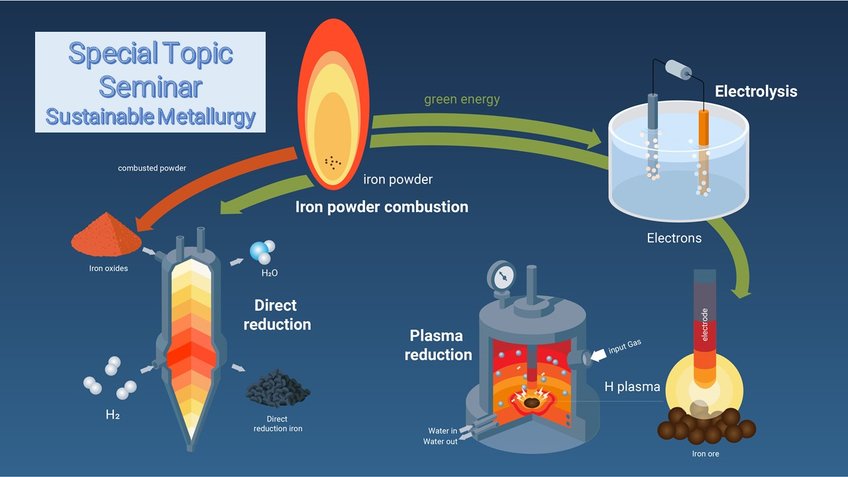
Isnaldi R. Souza Filho is a Junior Professor (Chair of Sustainable Metallurgy) at the French National Centre for Scientific Research (CNRS) , affiliated with the Institut Jean Lamour (UMR 7198), Université de Lorraine . He also serves as Group Leader for Sustainable Synthesis of Materials at the Max Planck Institute for Sustainable Materials since 2021. Education: PhD, MSc, and BSc in Materials Engineering from the University of São Paulo (2016-2019, 2013-2015, 2008-2013). Research Interests: Focus on sustainable metallurgy , particularly hydrogen plasma-based reduction of iron ores and microstructural characterization of Mn-containing steels . His work addresses decarbonization in steel production, scrap-compatible alloy design , and waste valorization (e.g., red mud conversion to green steel). Publication Trends: Recent studies emphasize hydrogen plasma smelting reduction of iron ores, kinetic modeling of reduction processes, and microstructure engineering for enhanced mechanical properties. Collaborative work spans CO2-neutral steelmaking , elemental partitioning , and high-entropy alloy synthesis . Scientific Awards: CAPES Thesis 2020 for Best National Doctoral Thesis in Engineerings II (Brazil) Multiple undergraduate awards (CREA-SP, ABM, Engineering Institute) for top academic performance in 2013 Grants and Affiliations: Affiliated with the Dierk Raabe Lab at the Max Planck Institute and leads the Sustainable Synthesis of Materials group. Research funded by institutions supporting climate-neutral metallurgy and recycling strategies .
Lena Patterer is affiliated with the Lehrstuhl für Nachhaltige Metallurgie von Eisen und Stahl at RWTH Aachen University's Institute of Metallurgy and Materials Science (IEHK). Her research focuses on metallic composite materials, contributing to advancements in metallurgical processes and sustainable materials engineering. She is based at the institute's premises in Aachen, Germany, and can be reached via email at lena.patterer@iehk.rwth-aachen.de. Her work aligns with the institute's broader goals in materials technology and metallurgy, emphasizing innovation in metallic materials and their industrial applications. While no specific grants or awards are noted here, her role at the research-oriented Lehrstuhl underscores her active involvement in academic and applied metallurgical research.
Prof. Wangzhong Mu is a Senior Lecturer (Docent) in the Department of Materials Science and Engineering at KTH Royal Institute of Technology, Stockholm. His research focuses on sustainable metallurgy, microstructure physics, and alloy design. He leads the thermo-physical property analysis section in the Hultgren Lab and is affiliated with Digital Futures at KTH. Educations: PhD in Materials Science, KTH Royal Institute of Technology (2015) MSc/Bachelor's in Materials Science, Northeastern University, China Research Interests: Inclusion engineering and microstructure-property correlations in steels High-entropy alloy design using digital tools (AI/thermodynamic modeling) In-situ characterization via confocal microscopy and multiscale analysis Recycling-oriented steel production and CO2 reduction strategies Grants/Projects (selected): SSF Strategic Mobility Grant (2023-2024): Clean steel for sustainable future VINNOVA Mobility Grant (2022-2024): Hydrogen-based metallurgy STINT Project (2022-2023): Inclusion engineering for green steel EIT RawMaterials (ENDUREIT, 2019-2021): Durable steels at intermediate temperatures Labs/Teams: Hultgren Lab (materials characterization), Digital Futures (AI-driven metallurgy), and international collaborations with Hanyang University (South Korea), IIT Bombay (India), and Tohoku University (Japan).
Dr.-Ing. Alexander Gramlich is a scientific staff member at the Chair of Metal Materials Science and Institute of Ferrous Metallurgy, RWTH Aachen University, Germany. His work focuses on advanced steel development, particularly medium-manganese steels, sustainable manufacturing, and digitalization of metallurgical processes. His research spans multiple critical areas of modern steel metallurgy including: Development of third-generation advanced high-strength steels Phase transformation kinetics in medium-manganese steels Sustainable steel production through recycling and eco-efficient processes Digital material twins and physics-informed machine learning Fatigue and fracture mechanics of automotive and wind energy components Dr. Gramlich's recent publications demonstrate a strong focus on bridging fundamental materials science with industrial applications. His work on medium-manganese steels addresses critical challenges in automotive lightweight design, while his research on wind turbine components contributes to renewable energy infrastructure. The integration of digital technologies, including AI-driven material design and digital twins, represents a cutting-edge approach to modern metallurgy. Based at RWTH Aachen University, one of Europe's leading technical universities, Dr. Gramlich contributes to both fundamental research and technology transfer to industry. His address at Intzestr. 1, 52072 Aachen, places him at the heart of Germany's industrial region, facilitating collaboration with major steel producers and automotive manufacturers.
Dr. Yang Bai is a Project Group Leader at the Max Planck Institute for Sustainable Materials, leading the Computational Energy Storage Materials and Computational Sustainable Metallurgy groups within the Department of Microstructure Physics and Alloy Design. His research focuses on computational modeling of energy materials, solid-state batteries, and sustainable metallurgical processes, emphasizing chemo-mechanical interactions and phase-field simulations. Key projects include analyzing silicon anode degradation in solid-state batteries and hydrogen-based reduction of iron oxides. He contributes to interdisciplinary approaches combining materials science, electrochemistry, and multi-physics modeling to advance sustainable technologies. Publications highlight trends in solid-state battery interfaces, phase-field modeling of material transformations, and porous structure analysis. His work bridges computational methods with experimental validation, addressing challenges in energy storage and metallurgical efficiency. Active collaborations and contributions to ontology-based workflows for steel industries underscore his commitment to industrial application of advanced materials science.
Prof. Dr. rer. nat. Jörg August Becker is the Executive Director at the Institute of Physical Chemistry and Electrochemistry, Leibniz University Hannover, Faculty of Natural Sciences. He holds a C4 Professorship for Physical Chemistry A since 1998 and serves as a BAföG representative for Chemistry Teaching. Research Focus: Reaction and structure formation at solid-state interfaces, quantum chemical calculations of silica interfaces, experimental studies on reactive wetting effects at germanium oxide and silicon dioxide interfaces. Publications: 59+ papers (15 most recent included) covering semiconductor clusters, nanomaterials, perovskites, and interfacial phenomena. Contact: joerg-august.becker@pci.uni-hannover.de | Room 114, Building 2504, Callinstraße 3a, 30167 Hannover, Germany.
Prof. Rüdiger Deike is the Chair holder of the Chair of Metallurgy and Forming Technology at the University of Duisburg-Essen. His research focuses on metallurgical processes, raw material markets, recycling technologies, and sustainability in the foundry and steel industries. He leads the Institute for Metal Technologies (ITM), emphasizing innovation in material flow analysis, energy efficiency, and circular economy applications. Key research areas include analyzing global raw material market dynamics, optimizing waste-to-resource systems for foundries, and advancing metallurgical processes for non-ferrous and ferrous alloys. His work integrates numerical modeling of solidification behaviors and process optimization for industrial applications. Publications highlight trends in commodity markets, recycling strategies for valuable materials, and material recovery from industrial byproducts. His interdisciplinary approach bridges technical challenges with economic and environmental sustainability, influencing policy and industry practices. Laboratory and team activities center around the ITM, where research spans experimental and computational methods to address global metallurgical challenges. No specific grants or awards are listed, but his contributions are evident through extensive publication output and institutional leadership.
Ahmed Aslam serves as a Researcher at the Technical University of Munich (TUM), affiliated with the School of Engineering and Design and the Department of Materials Engineering of Additive Manufacturing within the Chair led by Prof. Dr. Peter Mayr. His work is based at Freisinger Landstraße 52, 85748 Garching bei München, Germany (Room B1.2.07). His research concentrates on advanced additive manufacturing methodologies, with core expertise in materials engineering for 3D printing systems, metallurgical analysis of printed components, and laser-based processing techniques. This work directly supports TUM's initiatives in industrial-scale additive manufacturing innovation through projects like the Fundamentals of Advanced Design Methods for Additive Manufacturing. Dr. Aslam operates within TUM.Additive and TUM.Idea frameworks, contributing to the university's strategic focus on next-generation manufacturing technologies and educational programs in engineering design. His collaborative efforts integrate with Germany's broader high-tech manufacturing ecosystem. Professional correspondence may be directed to ahmed.aslam@tum.de or via telephone at +49 89 289-55330.
Dr. Ümit Güder is a Researcher at the Max Planck Institute for Sustainable Materials, specializing in the Department of Microstructure Physics and Alloy Design. His work focuses on archaeometallurgy, ancient metals production, and historical metallurgical techniques. He has conducted extensive studies on iron, steel, and brass metallurgy in Anatolia and the broader Old World, analyzing archaeological artifacts to reconstruct ancient production methods and technological advancements. Key research areas include early iron production in the Iron Age, high carbon steel metallurgy in medieval Anatolia, and the role of cultural exchange in technological diffusion. His studies often combine material analysis (e.g., XRF, microstructure examination) with archaeological context to understand how materials were produced, used, and traded in antiquity. Notable projects include investigations at sites like Kinet Höyük, Kubadabad, and Didyma, where he has uncovered evidence of advanced metallurgical practices such as crucible steel production and brass alloying. His findings shed light on the technological capabilities of ancient societies and their impact on cultural development.
Hongmin Zhu is a Professor at the Department of Frontier Metallurgical Engineering, Graduate School of Engineering, Tohoku University. His research focuses on sustainable metallurgical processes using molten salt electrolysis for metal extraction and recycling. Research Interests Dr. Zhu specializes in electrochemical approaches for Aluminum scrap upcycling Titanium extraction from ores Intermetallic compound synthesis Rare earth metal recovery His work bridges fundamental electrochemistry with industrial-scale sustainable material processing. Article Trends Recent publications analyze molten salt electrolysis for: High-purity aluminum production Titanium alloy powder synthesis Carbon film morphology control Rare earth chloride formation Stainless steel recycling efficiency These studies emphasize cost reduction and environmental impact through innovative metallurgical engineering.
Prof. Dr. Gerd Witt is a Professor of Manufacturing Processes and Machine Tools at the Gerhard-Mercator-University of Duisburg. He holds a Ph.D. (1982) and postdoctoral qualification (1990) from the University of Karl-Marx-Stadt. Prior to academia, he worked in industry roles including Technical Director at Niles-Simmons industrial facilities GmbH and senior management positions at ABB Service GmbH. He has served on expert committees for the German Federal Ministry of Research and Technology and is affiliated with organizations like the VDI and Wilhelm Heinrich Steinhaus-Stiftung. His research focuses on additive manufacturing (rapid prototyping), process simulation, work safety, and fuel cell production. He leads the production technology division at the Centre for Fuel Cell Technology GmbH (ZBT) and chairs the VDI Committee on Rapid Prototyping. Collaborations include partnerships with Thyssenkrupp, Airbus, and Siemens. Research interests span rapid technologies, simulation of manufacturing/assembly processes, and feasibility studies for economic manufacturing. Key projects include metal laser-sintering for tooling inserts, pallet turning devices, and optimization of manufacturing processes at VAW Aluminium AG. He has authored numerous papers in journals like Rapid Prototyping Journal and CAD-CAM Engineering Magazin REPORT. Professor Witt emphasizes teaching in production engineering, machine tools, welding technology, and rapid manufacturing. His work bridges academic research and industrial applications, emphasizing sustainable materials and process innovation. He actively contributes to conferences like Rapid. Tech 3D, publishing conference proceedings and advancing additive manufacturing standards.