Jinghui Luo is a Research Professor and Principal Investigator at the Paul Scherrer Institute's Laboratory for Multiscale Bioimaging in Switzerland. Her research focuses on neurodegenerative diseases, particularly amyloid protein aggregation mechanisms. Luo's team investigates amyloid oligomers using nanopore engineering, cryo-electron microscopy, and single-molecule techniques to understand their role in Alzheimer's and Parkinson's diseases. Key research areas include α-synuclein phase separation, tau protein dynamics, and metal ion interactions with amyloid proteins. Her recent work demonstrates strong emphasis on protein oligomer characterization, liquid-liquid phase separation phenomena, and developing innovative trapping methods for single-molecule analysis. Publications consistently integrate structural biology with biophysical approaches. Luo has received prestigious awards including the NIH Director's Early Independence Award and Siebel Scholarship. She currently mentors six graduate students and postdoctoral researchers in her laboratory.
Anita L. Zimmerman is a tenured Professor of Molecular Microbiology and Immunology at Brown University’s Warren Alpert Medical School. Since 1987 she has progressed from Assistant to Associate to full Professor, served as Director of the MD/PhD Program (2005–2007), Vice Chair of the Department (2008–2021), and currently directs the Graduate Program in Molecular Pharmacology & Physiology. She also holds the position of Director of Student Welfare in the Therapeutic Sciences Graduate Program. Education PhD, Physiology & Biophysics, University of Miami Miller School of Medicine, 1982 AB, Zoology, University of California, Berkeley, 1978 Research Interests Dr. Zimmerman’s scientific career has centered on the molecular and cellular neurobiology of ion channels . Using patch-clamp electrophysiology, molecular biology, and heterologous expression systems, she has elucidated the mechanisms of cyclic-nucleotide-gated (CNG) channels, TRP channels, and their roles in visual phototransduction , UV-light signaling in melanocytes , and synaptic transmission . Her work has clarified how retinoids modulate CNG channel activity and how mutations in these channels lead to retinal disease. Although she no longer maintains an active wet-lab, she continues to provide critical consultation to ongoing projects at Brown and remains a key mentor in NIH-funded training programs. Scientific Awards & Honors Dean’s Excellence in Teaching Award (multiple years) Graduate School Faculty Award for Advising and Mentoring (2011) Brown Advance Scientific Leadership Award (2009) Salomon Faculty Research Award (1998) Rhode Island Foundation Research Grant (1998) Editorial Board Member, Journal of General Physiology (2006–2017) Council Member, Biophysical Society & Society of General Physiologists Training Grants & Mentorship Dr. Zimmerman co-directs the NIH T32 training grant “Interdisciplinary Training in Pharmacological Sciences” (GM139793, 2021-2026) and previously co-directed its predecessor T32 GM077995. She has mentored numerous MD/PhD and PhD students through the MPP Graduate Program and served as Associate Director and Director of the Brown MD/PhD Program (2000–2007). Laboratory & Team While her independent laboratory is now closed, she collaborates closely with colleagues such as Professor Elena Oancea on NIH-funded projects involving UV phototransduction and ion-channel signaling. She remains an integral part of Brown’s multidisciplinary neuroscience and pharmacology community.
Matilda Backholm is an Assistant Professor in the Department of Applied Physics at Aalto University, specializing in soft matter physics, fluid dynamics, and surface science. Her research focuses on fundamental interactions between liquids and structured surfaces, with applications in materials science and biophysics. Her primary research areas include soft matter mechanics, droplet dynamics on superhydrophobic surfaces, wetting phenomena across multiple scales, and the biophysics of cellular systems. She investigates how surface topography and chemical properties govern liquid behavior at micro/nanoscales, with particular emphasis on friction reduction, droplet mobility, and immune cell mechanics. Her work bridges experimental physics with practical applications in microfluidics, nanomedicine, and advanced materials. Analysis of her recent publications (2017-2025) reveals consistent focus on interfacial phenomena, with major themes including: superhydrophobic surface engineering, ferrofluid manipulation, viscosity effects in confined systems, and mechanical properties of biological aggregates. Her research demonstrates sophisticated experimental techniques combined with theoretical modeling to address fundamental questions in fluid-surface interactions. She has received significant recognition including: Academy of Finland Postdoctoral Grant (2017) Ruth and Nils-Erik Stenbäck Prize for career accomplishments (2017) Finnish Academy of Science and Letters Väisälä Starting Grant (2023) Jane and Aatos Erkko Foundation grant (2023) Research Council of Finland Research Fellowship (2023) ERC Starting Grant (2023) Dr. Backholm leads the “Living, Fluid, & Soft Matter” research group and has secured substantial funding including multiple personal grants from Finnish national bodies and European competitive programs. Her collaborative work spans physics, materials science, and biomedical engineering, with publications in high-impact journals such as Nature Materials, PNAS, and Science Advances. Her laboratory develops advanced experimental platforms for studying liquid-solid interactions at micro/nanoscales, including custom micropipette force sensors and high-precision droplet manipulation systems. Current research directions integrate magnetic field control with soft matter systems and explore biological implications of surface physics.
Mark F Reynolds is an Associate Professor at the Department of Chemistry and Biochemistry, Saint Joseph’s University. He earned a BA in Chemistry from Grinnell College (1993) and a PhD in Inorganic Chemistry from the University of Wisconsin-Madison (1999), followed by postdoctoral work at the University of Minnesota. His research focuses on heme-based gas sensing proteins that regulate biological processes like blood pressure and nitrogen fixation. He pioneered studies on the oxygen-sensing FixL protein in alfalfa and soybean agriculture and discovered the heme-responsive ion channel in human Slo1 BK channels. Collaborations with Dr. Toshi Hoshi’s lab at the University of Pennsylvania advanced understanding of heme signaling. Recent publications highlight bioremediation of industrial dyes via heme protein catalysis (2024), conformational dynamics in FixL oxygen sensing (2024), and structural analysis of Mn(II) enzyme active sites (2005). Scientific awards include the 2022 ACS Excellence in College Teaching Award . He has directed the Office of Fellowships at Saint Joseph’s University, mentoring students to secure Fulbright , Goldwater , and NSF fellowships. His outreach includes urban nutrition education projects and media appearances on NPR and in Science Daily .
Hongquan Zhang serves as an Associate Professor in the Department of Laboratory Medicine & Pathology at the Faculty of Medicine & Dentistry, University of Alberta. His research program develops cutting-edge bioanalytical tools for ultrasensitive and point-of-care detection of biological targets, with a particular focus on infectious disease diagnostics. Education: Ph.D., University of Alberta (2009) M.Sc., Northwest University, Xi'an, China (1999) B.Sc., Northwest University, Xi'an, China (1997) Dr. Zhang's research explores binding-induced DNA assembly to create innovative diagnostic platforms. His laboratory specializes in developing fluorescent nanosensors for real-time detection in cellular environments, constructing target-triggered DNA nanomachines, and engineering novel affinity ligands through manipulation of functional nucleic acids. His work has made significant contributions to CRISPR-based diagnostics, particularly for SARS-CoV-2 detection, where his team has developed multiple point-of-care testing approaches that integrate nucleic acid amplification with CRISPR technology. Analysis of Dr. Zhang's recent publications reveals a strong research trajectory focused on integrating DNA nanotechnology with CRISPR systems to create streamlined diagnostic platforms. His work consistently addresses the challenge of moving complex molecular diagnostics from laboratory settings to point-of-care applications, with particular emphasis on sample preparation, signal amplification, and visual readout systems that eliminate the need for sophisticated equipment. The interdisciplinary nature of his research bridges chemistry, molecular biology, nanotechnology, and clinical medicine. Teaching: LABMP 551: Laboratory Research Methods LABMP 552: NSERC CREATE Course
Professor Thomas Huber is a distinguished academic at the Australian National University's Research School of Chemistry, where he was appointed Professor in 2013 after serving as an ARC Future Fellow (2010-2014). His career spans appointments at ETH-Zurich, ANU Supercomputer Facility, University of Queensland (Mathematics and Molecular Bioscience departments), and the Research School of Chemistry. Education: Diploma of Chemistry, Technical University Munich PhD, ETH-Zurich Huber's research focuses on structural bioinformatics and computational structural biology , developing innovative tools to determine 3D structures of biological macromolecules using sparse experimental data. His work targets understanding molecular interactions fundamental to life processes and pharmaceutical intervention. Key research areas include NMR spectroscopy, protein structure determination, genetically encoded non-canonical amino acids, and paramagnetic probes for distance measurements. Analysis of his recent publications (2022-2025) reveals dominant trends in protein engineering through genetic code expansion, fluorogenic labeling techniques, and advanced NMR methodologies for probing protein dynamics and ligand binding. His work bridges computational modeling with experimental structural biology, emphasizing cost-efficient solutions for macromolecular structure determination. Scientific Awards: ARC Future Fellow (2010-2014) Huber actively supervises research students and leads multiple collaborative projects including "Protein Structure and Dynamics by Electron/Nuclear Paramagnetic Resonance" and "Non-Canonical Amino Acids for Protein Analysis." His research is supported by significant grants from the Australian Research Council, focusing on protein characterization, drug discovery platforms, and advanced spectroscopy instrumentation. He leads the Huber Group within the Research School of Chemistry, collaborating extensively with researchers like Gottfried Otting and Christian Nitsche on protein analysis and therapeutic development.
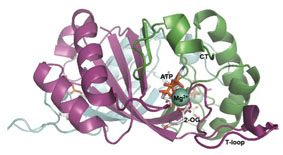
Karl Forchhammer is a full Professor at the University of Tübingen , chairing the Department of Microbiology/Organismic Interactions within the Interfaculty Institute of Microbiology and Infection Medicine Tübingen (IMIT) . He received his education at Ludwig-Maximilians-Universität München, earning a Doctorate in Microbiology with a thesis on selenocysteine biosynthesis in Escherichia coli , for which he received the VAAM Promotionspreis in 1992. His academic career includes a postdoctoral fellowship at the Institut Pasteur and associate professorship at the Justus-Liebig-Universität Giessen (1999-2007). Current Roles: Chair of Microbiology/Organismic Interactions, University of Tübingen Editor for FEBS Journal Scientific Advisory Board member, Max Planck Institute for Terrestrial Microbiology DFG panel member (Microbiology, Virology, Immunology) His research focuses on: PII Signal Transduction Proteins : Molecular mechanisms of 2-oxoglutarate sensing, ATP/ADP binding dynamics, and regulatory roles in carbon-nitrogen balance across bacteria, archaea, and chloroplasts. Nitrogen Starvation Response : Molecular basis of chlorosis in Synechocystis and Synechococcus species, including nblA gene regulation and sodium bioenergetics during dormancy. Metabolic Engineering Applications : Development of FRET sensors for metabolite detection and optimization of polyhydroxybutyrate (PHB) production in cyanobacteria. Carbon Regulation Systems : Structural analysis of SbtB redox-sensitive loops, c-di-AMP signaling in diurnal metabolism, and PirC-mediated phosphoglycerate mutase inhibition. Technological Innovations : Creation of SCAGE method for cyanobacterial transport and development of magnetic bead immunoassays for SARS-CoV-2 detection. Scientific contributions include: Discovery of plant kingdom's first glutamine sensory mechanism through PII evolution Elucidation of PII-NAGK functional conservation over 1.2 billion years Identification of 2-oxoglutarate binding site in PII proteins Demonstration of sodium bioenergetics' critical role in cyanobacterial developmental transitions Development of metabolite FRET sensors for real-time metabolic monitoring Establishment of PHB production platforms without nitrogen starvation His lab has trained 15+ PhD students and 3+ PostDocs, with collaborations spanning microbial biotechnology, structural biology, and environmental systems. Recent publications highlight: 2025 work on natural microbial community-enhanced bioplastic production 2024 structural studies of PII-regulated enzymes 2023-2024 investigations into glycogen metabolism and redox regulation 2022-2023 studies on c-di-AMP signaling and toxin-antitoxin systems
Glenn Daehn is the Mars G. Fontana Professor of Metallurgical Engineering at The Ohio State University , where he has served as faculty since 1988. His work bridges materials science , advanced manufacturing , and STEM education , with leadership roles in initiatives like the Ohio Manufacturing Institute and NSF's HAMMER Center. Ph.D. & M.S., Materials Science & Engineering, Stanford University B.S., Materials Science & Engineering (departmental honors), Northwestern University Professor Daehn specializes in impulse-based manufacturing , focusing on plastic deformation , impact welding , and solid-state joining of dissimilar materials. His research drives innovations in lightweight materials, aerospace manufacturing, and biomedical device fabrication. His publications reveal a strong emphasis on dynamic material processing , robotic manufacturing , and sustainable materials systems . Recent work explores orbital cold welding and AI-enhanced surgical plate bending systems. ASM Marcus A. Grossman Young Author Award (1990) Army Research Office Young Investigator Award (1992) 2022 ASM Gold Medal Award Ranked top 2% of scientists worldwide (2021) Daehn has received multiple Lumley Research Awards and led groundbreaking projects including Metamorphic Manufacturing and Hybrid Autonomous Manufacturing . He maintains active collaborations with industry through initiatives like the Center for Design and Manufacturing Excellence .
Aleksandr Zinoviev is a Senior Research Associate at the School of Engineering and Information Technology (SEIT) at UNSW Canberra, where he has been working since 2022. His research spans multiple institutions across the globe, including previous positions at Siemens Digital Industries Software in Belgium, University of Bremen and AMSIS GmbH in Germany, and Institute of Strength Physics and Materials Science of the Russian Academy of Sciences and Tomsk Polytechnic University in Russia. He has also conducted research stays at the University of Bremen (Germany) and São Paulo State University (Brazil). Dr. Zinoviev's research interests are highly interdisciplinary, focusing on metal additive manufacturing, thermodynamics of materials, computational materials science, solid mechanics, software engineering, and machine learning. He specializes in developing and applying novel knowledge-based approaches to address engineering challenges, particularly in improving materials and parts produced by advanced manufacturing, optimizing production processes, and enhancing data processing. His work bridges the gap between fundamental materials science and practical engineering applications, with a strong emphasis on computational modeling and simulation. Analysis of his recent publications (2021-2025) reveals a consistent focus on additive manufacturing process modeling, microstructure-property relationships in additively manufactured metals, and computational approaches to materials science. His research particularly emphasizes cellular automata modeling, multiscale simulation techniques, and the application of machine learning to materials processing. The publications demonstrate expertise in both experimental characterization and advanced computational methods for predicting mechanical behavior of additively manufactured components. Dr. Zinoviev actively mentors prospective PhD and Research Master's candidates, offering guidance on topics related to thermal modeling of additive manufacturing and process optimization. He has indicated that scholarships of up to $35,000 (AUD) are available for qualified candidates who achieved High Distinction in their undergraduate program and/or have completed a Masters by Research.
Prof. Tobin Sosnick is a Professor and Chair of the Department of Biochemistry and Molecular Biology at the University of Chicago, affiliated with the Pritzker School of Molecular Engineering and the Institute for Biophysical Dynamics. He holds a PhD in Applied Physics from Harvard University (1989) and a B.A. in Physics from UC San Diego. His research focuses on protein folding mechanisms, biophysical dynamics, and membrane protein behavior, employing advanced techniques like SAXS, HDX-MS, and molecular simulations. He leads the Graduate Program in Biophysical Sciences and has pioneered studies on disordered proteins and allosteric regulation. Notable contributions include elucidating the '70% Rule' for folding transition states and developing optogenetic tools for actin imaging. Recognized as a 2024 AAAS Fellow and contributor to the 2023 Lasker Award-winning AlphaFold project, his work bridges physics, chemistry, and biology. Affiliations: Chair, Department of Biochemistry and Molecular Biology; Senior Fellow, Computation Institute; Founding Member, Institute for Biophysical Dynamics. Collaborations span structural biology, computational biophysics, and cellular engineering. Research Highlights: Protein Folding Dynamics: Transition state topology, cooperativity, and downhill folding. Disordered Proteins: Conformational ensembles, solvent effects, and phase separation. Molecular Tools: Optogenetic systems (e.g., LILAC) and HDX-MS for membrane protein analysis. Grants & Awards: 2024 AAAS Fellow, 2023 Lasker Award contributor, multiple NIH grants for protein dynamics research. His lab has produced over 200 peer-reviewed publications. Labs & Teams: The Sosnick Group integrates experimental and computational approaches, with ongoing projects on riboswitches, stress granule formation, and prestin electromotility mechanisms in hearing.
Prof. Kristopher McNeill is a Full Professor at ETH Zurich's Department of Environmental Systems Science, where he heads the Institute of Biogeochemistry and Pollutant Dynamics. Born in 1970 in Tucson, Arizona, he earned his BA in Chemistry from Reed College (1992) and PhD from UC Berkeley (1997), followed by postdoctoral work at MIT. His academic career includes positions as Assistant and Associate Professor at the University of Minnesota and Visiting Professorship at Stanford. McNeill's research focuses on environmentally relevant chemical reactions, particularly catalytic and photocatalytic transformations in aquatic systems. Key areas include environmental fate of emerging contaminants, photochemistry in surface waters, and metal-mediated dehalogenation reactions. His group emphasizes mechanistic studies using modern spectroscopic techniques like NMR and time-resolved laser spectroscopy to understand degradation pathways of contaminants. His publication trends show consistent focus on photochemical processes in environmental systems, with recent work expanding into polymer degradation, DNA photochemistry, and atmospheric chemistry. The research demonstrates increasing interdisciplinary integration of analytical chemistry, materials science, and environmental modeling. McNeill teaches multiple courses including: Introduction to Environmental Organic Chemistry Organic Chemistry Term Paper seminars Human Health, Nutrition and Environment
Susan J. Schroeder, Ph.D., is an Associate Professor in both the Department of Microbiology and Plant Biology and the Department of Chemistry and Biochemistry at The University of Oklahoma. Her research focuses on RNA structure and function, particularly in viral RNA genomes and their implications for therapeutics. She holds offices in the Stephenson Life Sciences Research Center and George Lynn Cross Hall. Education: B.S. (1995) and Ph.D. (2002) from the University of Rochester, followed by a postdoctoral fellowship at Yale University (2002-2005). Research interests revolve around RNA's role in gene regulation, structural prediction challenges, and viral RNA dynamics. Her lab explores STMV RNA, pRNA structures, and RNA thermodynamics to uncover fundamental principles guiding RNA folding. Techniques include NMR, crystallography, chemical probing, and computational modeling. The goal is to improve RNA structure predictions for therapeutic applications targeting viral RNAs like flu, HIV, and hepatitis. Publications highlight advancements in RNA structure prediction, viral RNA analysis, and thermodynamic studies. Her work bridges biophysics, biochemistry, and structural biology to tackle unresolved questions in RNA biology.
Dr. John R. Farver is a Professor in the Department of Earth, Environment and Society at Bowling Green State University (BGSU). He holds a Ph.D. in Geological Sciences from Brown University (1988), an M.S. from the same institution (1984), and a B.S. in Chemistry, Geology, and Geochemistry from SUNY (1982). His research focuses on mineralogy, petrology, and materials science, particularly synthesis/characterization of mineral and ceramic aggregates. Recent grants include NOAA-funded studies on fish stock discrimination via otolith microchemistry and Lake Erie metal transfer analysis. He teaches courses in Earth Materials, Materials Science, and Geology seminars. His work bridges geological processes with advanced analytical techniques like TEM and cellular automata modeling. Research highlights include investigations into silicon diffusion in quartz, forsterite deformation mechanisms, and fluid dynamics in fault zones. Collaborations with colleagues like Dr. Miner and Dr. Yund have produced interdisciplinary studies in metamorphic geology and structural geophysics. His educational contributions include developing volcanic hazard teaching modules using mineral reaction kinetics. Lab facilities at BGSU support his advanced materials characterization work. Key research themes span mineral physics, tectonic processes, and environmental geochemistry, with recent emphasis on applying geological methods to ecological questions like lake pollution and fisheries management. His publications span structural geology, geochemical analysis, and educational pedagogy, demonstrating a commitment to both fundamental science and practical applications.
Mingjiang Zhong is an Associate Professor in the Department of Chemical & Environmental Engineering at Yale University, with additional appointments in Materials Science and Chemistry. His research is centered on the development of advanced synthetic methodologies for functional organic materials and organic-inorganic hybrid systems. Education: B.S., Peking University Ph.D., Carnegie Mellon University His research interests lie at the intersection of polymer chemistry, materials science, and sustainability. He focuses on polymer-derived carbon materials and hierarchical nanostructures for applications in energy conversion, catalysis, and environmental technologies. His group combines sophisticated molecular design with advanced analytical techniques to probe and control complex soft matter behaviors . An analysis of his 15 most recent publications reveals a strong and consistent research trajectory in controlled radical polymerization , particularly in developing novel methods for branching and stereocontrol . His work frequently involves block copolymer self-assembly to create functional nanocomposites and membranes, with a growing emphasis on applications in water treatment (e.g., anti-scaling polymers, desalination membranes) and energy (e.g., electrocatalysts, ion conductors). Scientific Awards and Honors: Camille Dreyfus Teacher-Scholar Award (2022) Wiley Journal of Polymer Science Early Career Investigator (2021) 3M Non-Tenured Faculty Award (2020) National Science Foundation CAREER Award (2019) ACS PMSE Young Investigator (2019) ACS Petroleum Research Fund Doctoral New Investigator (2017) Dr. Zhong leads an active research group, mentoring numerous graduate students and postdoctoral scholars, as evidenced by frequent lab news celebrating student achievements such as passing qualifying exams and successful PhD defenses. His group has secured significant recognition, indicating strong support for research grants. The lab is equipped with state-of-the-art instrumentation for polymer synthesis and characterization, including GPC, GC, and preparative chromatography systems.
Thomas V. O'Halloran is the Morrison Professor of Chemistry at Northwestern University, holding dual appointments in Molecular Biosciences and the Chemistry of Life Processes Institute (CLP). He directs the CLP Institute and serves as Associate Director of Basic Sciences at the Robert H. Lurie Comprehensive Cancer Center. His research integrates bioinorganic chemistry with molecular biology to study transition metal (zinc, copper, iron) regulation in biological systems. Dr. O’Halloran earned his B.S. from the University of Missouri (1979) and Ph.D. from Columbia University (1985). His work focuses on metalloregulatory proteins, metallochaperones, and metallome dysregulation in disease. Notable contributions include discovering zinc sparks during fertilization, developing arsenoplatin anticancer complexes, and pioneering nanobin drug delivery systems. Research interests span metallomics, metal trafficking in cancer, and zinc's role in developmental processes. His lab employs interdisciplinary methods: X-ray crystallography, fluorescence microscopy, ICP-MS metallomics, and nanoparticle engineering. Key projects include targeting ovarian cancer with uPA-receptor nanobins and understanding copper homeostasis in fungal pathogens. Education: B.S. University of Missouri (1979), Ph.D. Columbia University (1985) Affiliations: CLP Institute, Robert H. Lurie Cancer Center Key Techniques: Metal speciation analysis, nanoparticle synthesis, live-cell imaging His 150+ publications span Science , Nature Chemistry , and Angewandte Chemie . Awards include the Royal Society of Chemistry Dalton Award and NIH MERIT award.