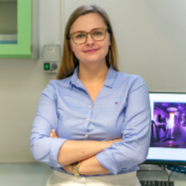
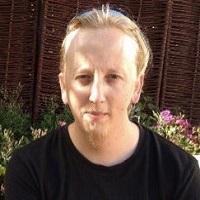
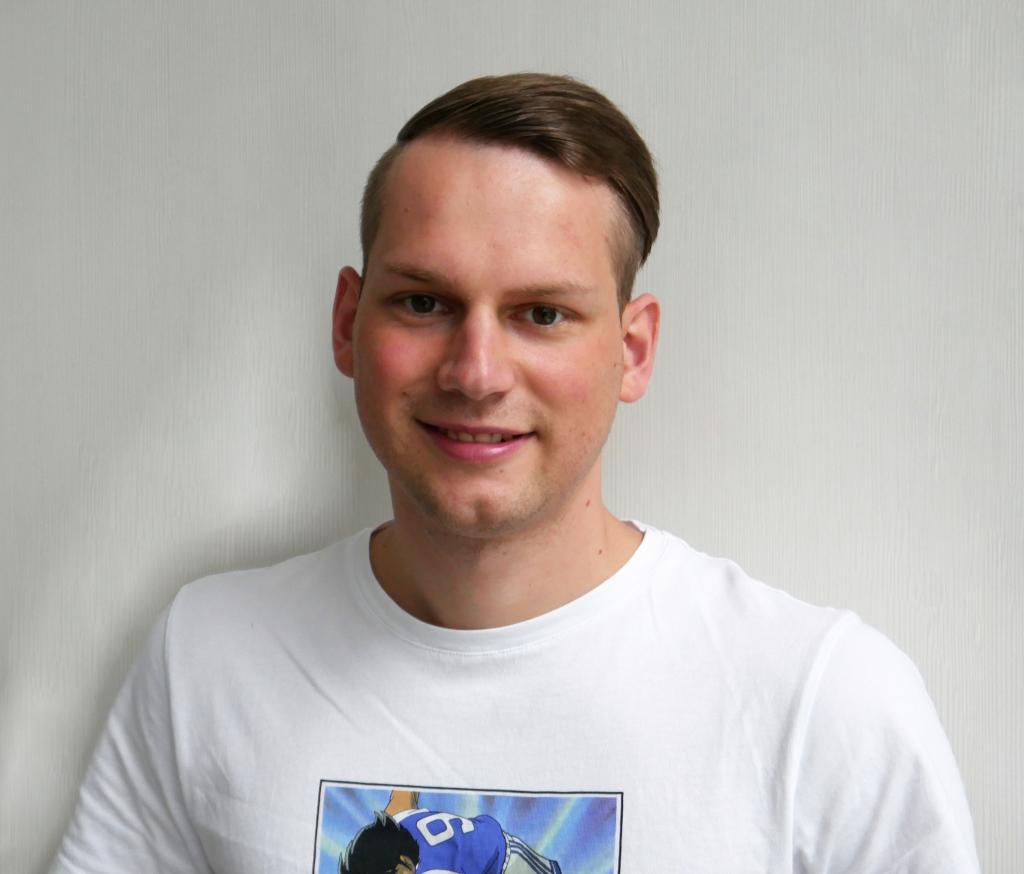
Dr. Marta Prześniak-Welenc is an Assistant Professor at the Institute of Nanotechnology and Materials Engineering within the Faculty of Applied Physics and Mathematics at Gdańsk University of Technology. Her research focuses on advanced materials synthesis (sol-gel, wet-chemical, and hydrothermal methods) and electrochemical applications including batteries, wastewater remediation, and corrosion inhibition. PhD in Physics from Gdańsk University of Technology (2017) Key research areas include: Photocatalysis and environmental remediation Transition metal complexes and vanadates Electrochemical energy storage (Li-ion, K-ion batteries) Surface modification of nanomaterials Thermal analysis of ceramics Recent publications demonstrate expertise in ceramic-carbon composites for wastewater treatment (2025), bisphosphonate-based molecular solid solutions (2025), and nanodiamond functionalization for physiological sensing (2024). Her work combines experimental approaches with computational modeling to solve practical challenges in energy and environmental sectors. Current projects include: MoReLogg : Intelligent monitoring of rainwater retention systems (HYDROSTRATEG program) Różnorodność form : Nanostructure diversity in (NH4)xMyOz compounds (MINIATURA program, 2017–) Previously contributed to: LNO : High-temperature ceramic properties (IUVENTUS PLUS, 2016–2019)
Dr. Hadi Noori is an Assistant Professor of Engineering in the Division of Physical and Computational Sciences at the University of Pittsburgh. His work bridges mechanical design, materials science and advanced manufacturing, with a strong emphasis on additive manufacturing and the mechanics of dissimilar-material interfaces. Education: Ph.D. in Mechanical Engineering, McMaster University M.S. in Materials Engineering, University of Tehran B.S. in Materials Engineering, Ferdowsi University of Mashhad and Sharif University of Technology Research Interests: Dr. Noori’s research centers on additive manufacturing processes (particularly fused-filament fabrication), fracture and delamination mechanics of polymer–metal laminates, and multi-objective optimization using Bayesian techniques. He explores how processing parameters, material composition and structural design interact to enhance mechanical performance, lightweighting and reliability of multifunctional components. Recent scholarly output spans experimental investigations of interlayer adhesion in 3-D printed PLA and PLA-carbon-fiber composites, microwave-assisted toughening of polymer–copper composites, robotic-arm-based additive manufacturing systems, and creep behavior of magnesium-matrix composites. Overall, the work contributes to the growing knowledge base on process-structure-property relationships in advanced manufacturing. Scientific Awards: No awards are listed in the provided text. Funding & Advising: No specific grants or student advisees are mentioned in the supplied information. Laboratory & Teams: Dr. Noori directs activities within the Laboratory for Advanced Manufacturing and Materials Characterization, as indicated by his associated webpage lrcentre.com . Details on team size or collaborators are not provided.
Zheng Zheng is a Professor in the Department of Physics & Astronomy at the University of Utah, with a research focus on cosmology, galaxy formation and evolution, and Lyman-alpha radiative transfer. His work bridges observational data with theoretical models to understand large-scale structure and reionization processes. PhD in Astrophysics (2004), The Ohio State University Postdoctoral Fellow (2004-2011) at Institute for Advanced Study and Yale Center for Astronomy Research Interests: Galaxy formation across cosmic time Cosmological constraints from BAO and RSD Lyα emission applications in astrophysics Intergalactic medium thermal history Exoplanetary system evolution Recent Article Trends: His publications since 2022 emphasize DESI survey analysis, galaxy assembly bias, Lyα emitter environments, and stellar age-metallicity correlations in planetary systems. Key subfields include halo occupation distribution, protocluster gas dynamics, and kinematic modeling of exoplanets. Scientific Awards: Hubble Fellow (2004) John Bahcall Fellow (2008) Prize Fellow at Yale (2009) Outstanding Associate Editor (2022) Grants and Leadership: Currently leads NSF-funded projects on Lyα emission physics and galaxy assembly bias, with past grants for reionization studies and cosmological simulations. Served on DESI and SDSS-IV collaboration boards.
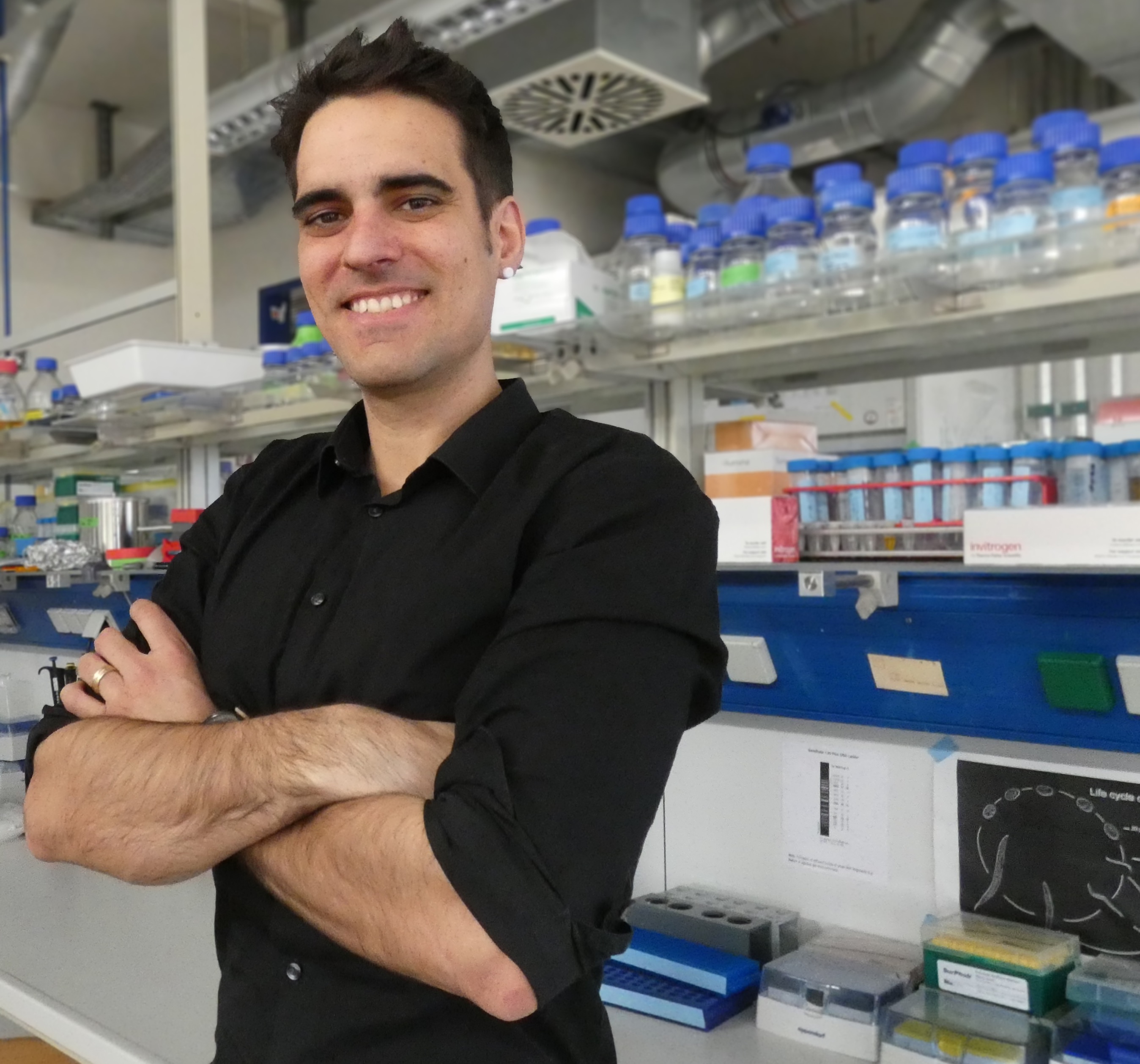
Michael Werner is an Assistant Professor at the University of Utah's Department of Biological Sciences. His research focuses on the molecular mechanisms underlying phenotypic plasticity, particularly how environmental cues translate into developmental, physiological, and morphological changes through epigenetic regulation. He combines molecular biology, evolutionary biology, and environmental science to study these processes in nematodes. Education: B.S. from Stetson University, Ph.D. from University of Chicago Werner's research explores chromatin biology, histone modifications, and gene regulatory networks in nematodes. His work has revealed key epigenetic mechanisms—such as histone acetylation and chromatin-enriched lncRNAs—that enable developmental plasticity and environmental adaptation. His recent publications (2023-2025) emphasize transcriptomic responses to environmental stimuli, evolutionary loss of epigenetic complexes, and hypersaline adaptation in novel nematode species. These studies span developmental biology, molecular genetics, and ecological resilience.
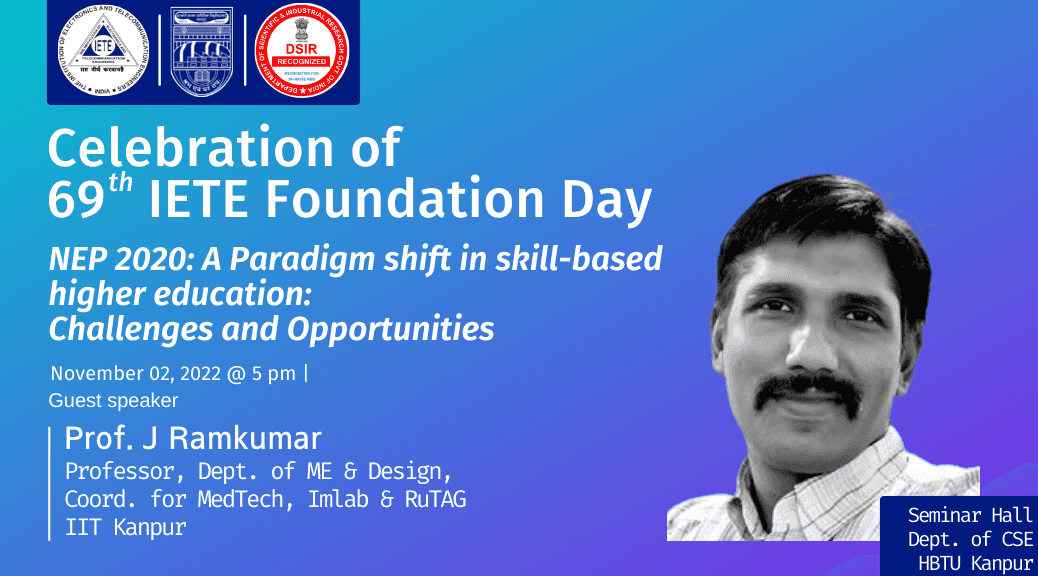
Prof. Janakarajan Ramkumar holds the prestigious Satish Chandra Agarwal Chair Professor position at the Indian Institute of Technology Kanpur, where he has been actively contributing since 2003. He serves as Chairman of the Senate Post-Graduate Committee (SPGC) and Security Advisory & Executive Committee (SAEC), while also coordinating several key initiatives including MedTech Lab, Imagineering Lab, and RuTAG at IIT Kanpur. His leadership extends to chairing the AICTE and IITK Sponsored Winter Internship Program for J&K students. With expertise spanning micro/nano machining, manufacturing engineering, and assistive technologies, Prof. Ramkumar's research focuses on precision machining processes for defense systems including components for Man Portable Anti-Tank Guided Missiles (MPATGM), UAV development, and aerospace applications. His work in frugal innovation has led to impactful solutions for locomotive disabilities, Agritech, and medical devices. During the pandemic, he developed widely adopted innovations including SWASA masks and Sanjeevani (Oxygen Concentrator). Prof. Ramkumar's publications demonstrate a strong focus on advanced manufacturing techniques, with recent work exploring incremental sheet forming, wire-electrochemical machining, composite materials, surface engineering, and the application of AI in manufacturing processes. His research bridges traditional manufacturing with cutting-edge technologies like additive manufacturing, machine learning, and metamaterials. His numerous awards reflect exceptional contributions to the field, including the Late GK Dubey Memorial Lifetime Achievement Award, Fellow of INAE, Satish Chandra Agarwal Chair Professorship, and multiple national awards recognizing his teaching excellence and research impact. His work has been recognized by prestigious institutions including IEEE, IETE, INAE, and various engineering academies. As an educator, Prof. Ramkumar has created eight highly successful MOOCs courses with over 48 lakhs views, and has conducted more than 100 workshops in Design Thinking to promote innovation among students, scholars, and industry professionals. He has established several key facilities at IIT Kanpur including the Imagineering Laboratory, Tinkering Lab Maker's space, MedTech IIT Kanpur, and RuTAG IIT Kanpur, creating an ecosystem that supports innovation across multiple disciplines.
Professor Yi Qin is a faculty member at the University of Strathclyde 's Design, Manufacturing and Engineering Management department. He serves as Director of the Centre for Precision Manufacturing and holds editorial leadership as Editor-in-Chief of Manufacturing Review and Associate Editor of International Journal of Lightweight Materials and Manufacture . His professional roles include Secretary to the UK University Manufacturing Engineering Consortium. Research interests span Materials Forming , Micro/Precision-Manufacturing , Numerical Modelling , and Manufacturing System Technology . Recent projects focus on EU Horizon Europe and H2020 initiatives, with emphasis on Multi-component high-entropy coatings (M2DESCO) Climate adaptive building materials Offshore turbine blade innovation Smart manufacturing systems His publications portfolio includes over 270 technical articles and 3 editions of the textbook Micro-Manufacturing Engineering and Technology . Key awards include the EU 2022 Security Innovation Award and Keynote Speaker Award in 2022.
Heba Abourahma is a Professor of Chemistry in the Department of Chemistry at The College of New Jersey. She holds a Ph.D. in Chemistry from the University of South Florida (2004), an M.Sc. from the University of Ottawa (1999), and a B.Sc. from Saint Mary's University (1997). Her research specializes in Crystal Engineering, Solid State Organic Chemistry, and the development of supramolecular azopolymers for optical applications. Her research focuses on: Designing pharmaceutical cocrystals and polymorphs for improved drug formulations Developing photoresponsive azopolymer materials for dynamic optical microstructures Advancing high-throughput crystallization screening methods Applying crystallographic databases in undergraduate education Her publications demonstrate consistent focus on crystal engineering, photoresponsive materials, and analytical method development, with recent work emphasizing optical microfabrication techniques and educational applications of crystallographic databases. Awards & Honors: SOSA Award (2023) NSERC Scholarships (1995-1997) American Crystallography Association Travel Award (2004) Multiple TCNJ Career Development Grants She has secured significant research funding including a $315,000 NSF grant (2020-2023) for optical microstructure fabrication and instrumental grants exceeding $500,000 for NMR and X-ray equipment. She serves on multiple academic committees including Faculty Senate Executive Board (2018-2021) and Committee on Inclusive Excellence (2024-present).
Seth Brown is a Professor in the Department of Chemistry at the University of Notre Dame's College of Science. His office is located in Stepan Chemistry Hall (Room 269) in Notre Dame, Indiana. His educational background includes: Ph.D. in Inorganic Chemistry from the University of Washington B.S. in Chemistry from Massachusetts Institute of Technology B.S. in Humanities and Science from Massachusetts Institute of Technology Professor Brown's research focuses on homogeneous catalysis, with particular emphasis on developing and elucidating novel reaction mechanisms. His work explores mechanisms that efficiently break or form strong C-H, O-H, or O-O bonds, with applications in solar fuel production through electrochemical or photochemical reactions. A significant portion of his research investigates "nonclassical" redox reactions where bond-making or bond-breaking events occur at metal centers but oxidation or reduction occurs at redox-active ligands. This research has implications for energy conversion and environmentally benign chemical processes. His recent publications demonstrate a strong focus on metal-ligand interactions, particularly with iridium, ruthenium, osmium, and other transition metals. The research spans coordination chemistry, redox chemistry, and catalysis, with particular attention to π bonding, ligand-centered reactivity, and oxidation state changes. Many publications examine iminoxolene and related ligand systems, exploring their electronic structures and reactivity patterns. Professor Brown has received numerous awards and honors for his teaching and research: 2016: ACS Division of Inorganic Chemistry Award for Undergraduate Research Mentor 2011: Fellow, American Chemical Society 2009: Rev. Edmund P. Joyce, C.S.C. Award for Excellence in Undergraduate Teaching 2008: Shilts/Leonard Award for Outstanding Teaching in the College of Science 2003, 2006: John Kaneb Award for Undergraduate Teaching 2005: University of Notre Dame Presidential Award 2004: Thomas P. Madden Award for Outstanding Teaching in the First-Year Program 1998-2002: NSF Career Award 1998-2001: Dupont Young Professor Award 1996: Camille and Henry Dreyfus Foundation New Faculty Award 1995: NIH NRSA Postdoctoral Fellowship Throughout his career at Notre Dame, Professor Brown has been deeply involved in mentoring undergraduate and graduate students, as evidenced by multiple teaching awards. His research has been supported by prestigious grants including the NSF Career Award and Dupont Young Professor Award. His work bridges fundamental inorganic chemistry with practical applications in energy conversion and catalysis. Professor Brown's research group focuses on synthesizing novel inorganic and organometallic complexes to explore unconventional reaction pathways. Their work combines synthetic chemistry with detailed mechanistic studies to understand and develop new catalytic processes for energy applications.
Bodo Leonhard Ziegler is a full Professor and Director of the Department of Astrophysics at the University of Vienna. He leads research in galaxy formation and evolution, with particular focus on extragalactic astrophysics and cosmology. His work involves extensive observational programs using major telescopes including the Very Large Telescope and Hubble Space Telescope, with significant contributions to large surveys like CALIFA, CLASH, and the FORS Deep Field. Professor Ziegler's research interests center on understanding how galaxies form and evolve across cosmic time. His work examines mass assembly, star formation processes, and galaxy interactions in different environments from the field to dense clusters. He investigates how environmental factors like merging, tidal harassment, and hydrodynamic interactions with cluster media affect galaxy evolution. His research employs quantitative spectroscopic observations to measure internal kinematics, stellar populations, and chemical properties of galaxies at various cosmic epochs. Analysis of his recent publications reveals a strong focus on integral field spectroscopy surveys, particularly the CALIFA project, which has enabled detailed 3D mapping of nearby galaxies. His work spans multiple aspects of galaxy evolution including kinematics across the Hubble sequence, stellar population analysis, metallicity gradients, galaxy scaling relations, and environmental effects on galaxy properties. The research demonstrates increasing sophistication in combining multi-wavelength observations with advanced modeling techniques. Professor Ziegler has secured significant research funding, including a 1 million EUR grant from the Austrian ministry for his project 'Observational Astrophysics in the E-ELT era II'. He serves on important committees including as head of the appointment committee for Theoretical Extragalactic Astrophysics at the University of Vienna and as a delegate to the Board of Directors of the Astronomy & Astrophysics Journal by the Austrian Academy of Sciences. He leads an active research group focused on galaxy evolution, with particular expertise in observational techniques and data analysis. His group maintains strong international collaborations through major projects like CALIFA, CLASH, and DAFT/FADA, contributing to our understanding of galaxy formation across cosmic time.
Professor Tom Theuns is a distinguished academic in the Department of Physics and the Institute for Computational Cosmology at Durham University. With a career spanning multiple decades, he has established himself as a leading researcher in cosmology and computational astrophysics, focusing on galaxy formation and evolution through large-scale hydrodynamical simulations. Professor Theuns' research centers on cosmological simulations, particularly the EAGLE (Evolution and Assembly of GaLaxies and their Environments) project, which has become a benchmark in the field. His work spans multiple key areas including the intergalactic medium, dark matter physics, cosmic reionization, and the development of advanced numerical methods for cosmological simulations. He has made significant contributions to understanding galaxy formation through hydrodynamical modeling, Lyman-alpha forest analysis, and the development of radiation hydrodynamics techniques. His recent publications demonstrate a consistent focus on cutting-edge cosmological research, with particular emphasis on galaxy evolution, metal enrichment processes, and the connection between theoretical models and observational data. The EAGLE simulation framework, which he has helped develop and refine, has become instrumental in bridging the gap between theoretical predictions and observational cosmology. Professor Theuns has collaborated extensively with researchers worldwide, contributing to numerous high-impact publications in top astrophysics journals. His work often involves sophisticated computational approaches to model complex astrophysical phenomena, demonstrating both theoretical depth and practical application in advancing our understanding of the universe's structure and evolution.
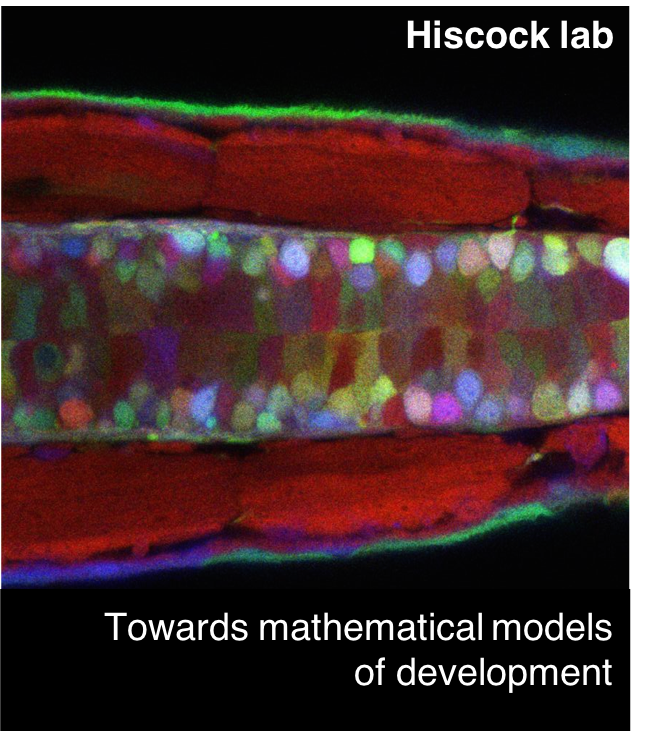
Dr. Thomas Hiscock is a Senior Lecturer in Systems Biology at the Institute of Medical Sciences, University of Aberdeen, within the School of Medicine, Medical Sciences and Nutrition. He leads an active research group focused on understanding developmental processes through mathematical modeling and computational approaches. His work bridges theoretical physics and developmental biology to unravel how embryos self-organize into complex adult forms. University of Cambridge: B.A., M.Sci in Theoretical Physics Harvard Medical School: Ph.D. in Developmental Biology University of Cambridge: Postdoctoral research with John Marioni and Ben Simons Dr. Hiscock's research centers on self-organization in embryonic development, particularly how spatial patterns emerge through reaction-diffusion mechanisms and other self-organizing processes. His lab develops mathematical models (often partial differential equations) to understand pattern formation in developing embryos. The group takes a theory-led approach where mathematical frameworks not only validate biological observations but also generate new hypotheses for experimental testing. Current projects investigate stripe orientation mechanisms, generic properties of Turing-like patterns, limb development, and non-periodic pattern formation, supported by an ERC Starting Grant. His publication record shows a strong trajectory in developmental biology and mathematical modeling, with significant contributions to understanding Turing mechanisms in vivo, particularly in limb development. Key findings include identifying bona fide Turing mechanisms operating in developing limbs and discovering how dynamic morphogen gradients orient cartilage rings in airways. His work demonstrates how theoretical approaches can bridge molecular mechanisms with emergent tissue-level patterns. ERC Starting Grant for research on novel self-organizing mechanisms Dr. Hiscock actively mentors PhD students and postdocs, currently supervising Daniel Muzatko and Paula San Martin Blanco (PhD students) and Bijoy Daga (postdoc). His group collaborates extensively with experimental labs including those of Cliff Tabin at Harvard and Ben Steventon at Cambridge. He welcomes new students interested in applying computational methods to developmental biology problems and supports applications for independent fellowships. The lab culture emphasizes systematic exploration and celebrates the process of discovery, using metal detecting as a metaphor for scientific research. The Hiscock Lab is embedded within Aberdeen's strong developmental biology community, benefiting from proximity to Scotland's natural landscapes which inspire their work on biological pattern formation.
Dr. Adam Jeffrey is a Lecturer in Forensic Geoscience at Keele University's School of Chemistry and Physical Sciences (CPS), appointed in October 2023. His academic journey spans over a decade at Keele, where he completed both his Integrated Masters degree in geoscience (2010) and PhD in petrology and geochemistry (2016), followed by a Masters degree in Learning and Teaching in Higher Education (2021). His educational background includes: Integrated Masters degree in Geoscience (2010) - Keele University PhD in Petrology and Geochemistry (2016) - Keele University Masters degree in Learning and Teaching in Higher Education (2021) Dr. Jeffrey's research spans multiple interdisciplinary domains with significant focus on forensic applications of geoscience. He specializes in using hand-held XRF for rapid, non-destructive analysis of forensically important materials including bone, soil, metal, rock, and water. His extended reality work develops innovative simulation-based learning experiences for laboratory and field education through the Thinglink platform. In inclusive education, he focuses particularly on supporting autistic learners in higher education, currently serving as principal investigator on a funded research project in this area. His petrology and mineralogy research investigates magma origins, evolution, and eruption processes through comprehensive geochemical analysis. His recent publications demonstrate a strong trend toward technology integration in geoscience education and forensic applications. His work bridges traditional geological analysis with cutting-edge educational technology, particularly through virtual laboratory experiences. In forensic geoscience, his research focuses on environmental contamination analysis using portable XRF technology across industrial, criminal, and archaeological contexts. His scientific achievements include: Senior Fellow of the Higher Education Academy (SFHEA) - 2024 Topical Editor for Volcanica journal Founding Editor for the Student Journal of Natural Sciences Dr. Jeffrey serves as principal investigator on a funded research project focused on giving autistic learners in science a voice in their education. He has developed numerous extended reality resources for education, including interactive simulations of X-ray Fluorescence Spectroscopy, petrographic microscopy, and ion chromatography. His work in curriculum development has significantly contributed to Keele's innovative teaching approaches. He has established several digital resources and platforms for education, including multiple Thinglink-based interactive extended reality resources that simulate analytical instruments and laboratory experiences. These tools support accessible and inclusive learning in both field and laboratory settings, reflecting his commitment to educational innovation and his expertise in employing diverse analytical techniques including XRF, SEM-EDX, ICP-OES, ICP-MS, EMPA, FTIR, polarized light microscopy, and drone-based aerial photogrammetry.
Alessandro Scattina is an Associate Professor at the Department of Mechanical and Aerospace Engineering (DIMEAS) at Polytechnic University of Turin. As a member of the CARS@PoliTO Interdepartmental Center , his work focuses on automotive research and sustainable mobility. He holds a position in the Scientific Disciplinary Sector IND-03/A - Mechanical Design and Machine Construction (Area 0009 - Industrial and Information Engineering). Research Interests: Finite Element Method (FEM), Passive Safety, Lightweight Construction, Simulation Engineering, and Sustainable Automotive Systems Skills: ERC PE8_12 (Lightweight Construction), PE8_7 (Mechanical Engineering), PE7_3 (Simulation Modeling) SDG Contributions: Quality Education (Goal 4), Industry Innovation (Goal 9), Climate Action (Goal 13) His recent works demonstrate expertise in composite material crashworthiness , hybrid structure testing , and automotive safety simulations . Articles show a trend toward green composites , finite element analysis , and impact load characterization , with a focus on electric vehicle design and security barrier performance . Students: Supervises PhD candidates in Mechanical Engineering, including Giovanni Lando (40th cycle) and Elena Caselli (39th cycle) Projects: Scientific Director for HESTER (2023-2026) and UD-BEV (2021-2022), and researcher in SmartCorners (2024-2026) Patents: Co-inventor of commercial vehicle parcel systems and bicycle brake innovations
Mohammad Najlah is a Professor of Pharmaceutics and Nanomedicine at Anglia Ruskin University, where he serves as the Lead of the Pharmaceutical Research Group within the Medical Technology Research Centre (MTRC). He has extensive experience in higher education as a teacher, researcher, external examiner, and manager with significant contributions to the development of the SuperLabs Complex including the Pharmaceutical Research Lab. His career spans positions at Damascus University, University of Manchester, University of Central Lancashire, and Al-Baath University in Syria before joining ARU. Education: BPharm (Hons) in Pharmacy and Pharmaceutical Chemistry, Damascus University Postgraduate Diploma (PgDip) in Industrial Pharmacy, Damascus University PhD in Pharmaceutical Nanotechnology, School of Pharmacy, University of Manchester University Certificate in Higher Education, University of Central Lancashire, UK Professor Najlah's research focuses on advanced drug delivery systems with particular emphasis on nanomedicine applications for cancer treatment. His work spans the development of multifunctional nanomedicines that overcome chemoresistance in cancer stem cells, engineering novel nanomaterials and polymeric prodrugs, pulmonary drug delivery systems, and colloidal formulations including liposomes, aerosols, nanoemulsions, and nanodispersions. His research group has made significant contributions to understanding the pharmacological activities of metal-organic complexes and developing scalable manufacturing processes for nutraceutical dosage forms. Analysis of his recent publications reveals a strong focus on repurposing disulfiram (an anti-alcoholism drug) for cancer therapy through advanced nanocarrier systems including PEGylated liposomes and PLGA nanoparticles. His work demonstrates how nanotechnology can overcome the limitations of traditional drug delivery by enhancing solubility, extending circulation time, and specifically targeting cancer stem cells that drive chemoresistance and recurrence. Scientific Awards and Recognition: Fellow of the Royal Society of Chemistry (FRSC) Fellow of the Higher Education Academy Member of Academy of Pharmaceutical Sciences Topic Editor for Molecules Jussara Personelle Award 2019, 56th Brazilian Congress of Plastic Surgery Commendation for Outstanding Science, University of Central Lancashire (UCLan), 2007 Controlled Release Society Outstanding Oral Drug Delivery Award, 2006 Professor Najlah has successfully secured substantial research funding including multiple Knowledge Transfer Partnerships with industry partners and international grants. He has supervised numerous PhD students to completion and maintains active research collaborations with pharmaceutical and nutraceutical industries as well as UK and international universities. His research group, the Pharmaceutical Research Group, operates entirely on externally funded projects and has established strong connections with industry through multiple Knowledge Transfer Partnerships.
Prof. Dr. Ulrich Schwaneberg is Chair for Biotechnology at RWTH Aachen University and director of its Institute of Biotechnology; he is simultaneously co-appointed at the DWI – Leibniz Institute for Interactive Materials. He leads the Schwaneberg research group, globally ranked 3rd in directed-evolution output, and serves on the Scientific Board of the Bioeconomy Science Center and as speaker of the Henkel Innovation Campus for Advanced and Sustainable Technologies (HICAST). Education & career: Diploma & PhD in Chemistry, University of Stuttgart (Prof. R. D. Schmid) Post-doctoral fellow, Caltech, 1999-2001 (Prof. F. H. Arnold, Nobel laureate 2018) Professor, Jacobs University Bremen, 2002-2008 Full Professor & Institute Director, RWTH Aachen, since 2009 Co-director, DWI – Leibniz Institute for Interactive Materials, since 2010 Research interests: The group pioneers protein-engineering platforms (KnowVolution, SeSaM, CompassR) that merge directed evolution with computational design to uncover fundamental design principles of proteins. Major application areas are (i) interactive materials—engineering peptides that form dense, ambient-temperature monolayers on polymers, metals, ceramics, plant leaves or teeth to create antimicrobial, anti-fouling or pesticide-release coatings; (ii) biocatalysis—evolving P450s, laccases, phytases, cellulases and artificial metalloenzymes for selective oxy-functionalization, biomass degradation and green polymerization; and (iii) circular bioeconomy—microgel-based delivery systems that replace microplastics in seed coatings, textiles and foliar fertilizers, thereby reducing pesticide loads and environmental persistence. Recent publication trends (2016-2025): More than 220 peer-reviewed papers demonstrate continuous innovation: early work established nanopore-protein-polymer conjugates and redox-switchable enzyme nanogels; mid-period developed KnowVolution campaigns for ionic-liquid-tolerant lipases, high-molecular-weight hyaluronic-acid synthases and aryl-sulfotransferases; latest phase integrates machine-learning-guided recombination, microgel-enzyme reactors (MicroGelzymes), anchor-peptide functionalization of 3-D-printable materials and whole-cell artificial metalloenzymes for olefin metathesis and C–H activation. Scientific awards & patents: BMBF “Next Generation Biotechnological Processes” award 2016 (€1.7 M), BioRegions Innovation Award 2018 for greenRelease technology, visiting professorships at CAS (2013) and Osaka University (2015); co-inventor on >15 licensed enzyme patents and founder of SeSaM-Biotech GmbH offering directed-evolution services. Grants & collaborative infrastructure: Coordinator of the €multi-million Bio4MatPro competence centre (2022-2026) that transforms materials science through biological peptides, microgels and hybrid catalysts; leads projects EcoGuard, GreenProtect, BioCoat, PleuraPlug, Heart2.0 and KlarTEXt funded by BMBF, EU and industry partners. Team & facilities: >40 members (post-docs, PhD students, science-support staff) housed in modern laboratories at RWTH and DWI equipped with robotic screening, droplet microfluidics, anaerobic spectroscopy, SPR, NMR, MS, AFM and pilot-plant bioreactors for rapid translation from gene to product.