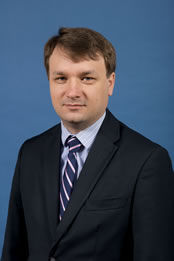
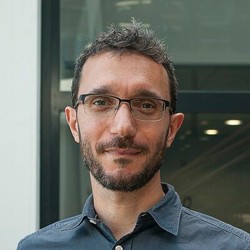
Dr. Michael Gubanov is an Assistant Professor in Computer Science at Florida State University and founder of BigLab!, specializing in scalable data systems for scientific knowledge discovery. Research: Develops hybrid polystore/LLM systems for cancer research (CancerKG.ORG), COVID-19 knowledge graphs (COVIDKG.ORG), and aging studies (AgingGraph.ORG). Focuses on metadata classification, tabular embeddings, and web-scale knowledge extraction. Funding: Secured $1.8M+ from NSF, Florida Department of Health, and AWS for projects bridging data management and AI. Awards: IEEE ICDE Best Paper (2017), ACM SIGMOD Research Highlight (2018), CACM Research Highlight (2020). Elected to Sigma Xi. Education: PhD in Computer Science (University of Washington); Postdoc at MIT CSAIL.
David W. Hogg is Professor of Physics and Data Science in the Center for Cosmology and Particle Physics in the Department of Physics at New York University. He serves as Senior Research Scientist in the Astronomical Data Group in the Center for Computational Astrophysics of the Flatiron Institute and maintains an affiliation with the Max-Planck-Institut für Astronomie in Heidelberg. His primary research focuses on observational cosmology, particularly approaches that use galaxies to infer physical properties of the Universe. He also conducts significant research on stellar kinematics in the Milky Way and the measurement and discovery of exoplanets. Across all domains, Hogg develops engineering systems and statistical methodologies that enable large-scale astrophysical projects for both his research group and the broader community. Recent work demonstrates expertise in robust statistical methods, particularly dimensionality reduction techniques like Robust-HMF. His research bridges theoretical statistics with practical applications in major astronomical surveys including Gaia, SDSS-V, and SPHEREx. He frequently explores connections between Bayesian and frequentist approaches to astronomical data analysis, with recent work on nuisance parameter integration, anomaly detection, and robust matrix factorization. Research supported by NYU, NASA, NSF, Moore Foundation, Sloan Foundation Additional support from Max Planck Society, Humboldt Foundation, ERC, Simons Foundation Hogg is actively involved in major astronomical projects including Astrometry.net, Gaia, and SDSS, with long-term comprehensive goals of analyzing all galaxies, stars, and astronomical images. His work emphasizes open science principles, reproducible research practices, and the development of publicly accessible tools for the astronomical community.
Darshana Sreedhar Mini is an Assistant Professor in the Department of Communication Arts at the University of Wisconsin–Madison, where she teaches and conducts research at the intersection of feminist media, gender & sexuality studies, transnational media, migrant media, and South Asian screen cultures. She is also the Director for Media and Gender Justice at the 4W Initiative and holds affiliations with the Center for Southeast Asian Studies, Gender and Women’s Studies, Center for Visual Cultures, Center for South Asia, and the Havens Wright Center for Social Justice. Ph.D., Division of Cinema and Media Studies, University of Southern California M.Phil., Center for Studies in Social Sciences, Calcutta (CSSSC), India Dr. Mini’s research centers on Global Media Cultures, Transnational Cinemas and Migration, South Asian Cinema, and Feminist Media. Her work critically examines soft-porn cinema in India, media publics, censorship, labor in the entertainment sector, and migrant media practices. Her first book, Rated A: Soft-Porn Cinema and Mediations of Desire in India (UC Press, 2024), is a groundbreaking study that combines archival and ethnographic methods to explore the social and cultural impact of Malayalam soft-porn from the 1970s to the 2000s. Her second book project, Telegeographies of Indian Migration , investigates media flows between South Asia and Southeast Asia, focusing on colonial-era labor migration and its lasting effects on identity and community formation. Her recent publications span a diverse range of topics including South Asian pornographies, digital intimacy, anti-caste activism, #MeToo and intersectional feminism, transnational empathy in cinema, and media infrastructures. These works reflect a strong trend toward interdisciplinary, feminist, and decolonial scholarship that challenges dominant canons in film and media studies. Edward Cameron Dimock, Jr. Prize in the Indian Humanities, AIIS, 2024 Early Career Award, NCA, 2024 Race, Ethnicity and Indigeneity Fellow, IRH, UW-Madison, 2024 Byerly Award for Feminist Political Economy, ICA, 2023 First Book Award, The Center for Humanities, UW-Madison, 2022 SCMS Student Writing Award, 2017 Dr. Mini has been actively involved in academic service and leadership, including directing the Media and Gender Justice initiative, co-organizing seminars on migrant media, and contributing to feminist and anti-caste scholarship. Her research has been supported by prestigious grants from the Social Science Research Council (SSRC), American Institute of Indian Studies (AIIS), National Endowment for the Humanities (NEH), and the University of Wisconsin–Madison. She also leads a significant grant-funded project as Principal Investigator for the 'South Asian Film and Media Collection' at UW-Madison. She is a key member of several collaborative research environments, including the Center for Visual Cultures and Performance Studies (CVCPS), the Wisconsin Center for Film and Theatre Research (WCFTR), and the 4W Initiative, where she directs programming on media and gender justice. These affiliations reflect her commitment to interdisciplinary, socially engaged scholarship and the creation of inclusive academic communities.
Pengfei Wang is an Assistant Professor in the Department of Civil & Environmental Engineering at Old Dominion University (ODU). He holds a Ph.D. in Geotechnical Engineering and an M.S. in Statistics from UCLA, alongside a B.S. in Transportation Engineering from Tongji University. Prior to ODU, he conducted postdoctoral research at UCLA. His expertise focuses on Geotechnical Engineering , Engineering Seismology , and Applied Statistics , with emphasis on regional geo-hazard modeling, multi-hazards risk assessment, and statistical learning applications. Key research interests include seismic site response analysis, liquefaction susceptibility, and probabilistic risk frameworks for infrastructure resilience. Dr. Wang’s work integrates geospatial analysis and statistical methodologies to address challenges in earthquake engineering. He has developed frameworks for regional landslide and liquefaction risk assessments, particularly in vulnerable regions like California’s Sacramento-San Joaquin Delta. His contributions include advancing HVSR (Horizontal-to-Vertical Spectral Ratio) methodologies and ergodic site response modeling. He maintains active collaborations with institutions globally and contributes to open-source databases for seismic data, promoting transparency and reproducibility in geotechnical research. His educational background in transportation engineering enriches interdisciplinary approaches to civil infrastructure resilience.
Dr. Jeffrey Morgan is a Researcher at Cardiff University's School of Social Sciences, specializing in multidisciplinary research at the intersection of computer science, social science, and geography. His work emphasizes human-computer interaction, visualization, and big data analytics. He holds a Research Software Engineer role, combining technical expertise with academic inquiry. Key research interests include AI-driven patent analysis, IoT applications in rural citizen science, and geospatial Twitter demographics. He has contributed to studies on Hadoop infrastructure optimization and social media conflict detection, often collaborating with institutions like Xiamen University and the University of Bremen. His publications span topics like energy-efficient big data processing, digital geography of Welsh identity, and scalable social media analysis frameworks. Notable projects include COSMOS (a cloud-based social media analysis platform) and studies on post-devolution cultural narratives in Wales. Award-winning work includes computational Twitter analysis for detecting online community tensions and geotagging behavior patterns. His research often bridges technical innovation with societal impact, addressing challenges in rural technology deployment and digital sociology.
Dr. Sam Ferguson is a Senior Lecturer at the School of Computer Science, University of Technology Sydney (UTS), with a multidisciplinary background in music performance, cognitive science, and psycho-acoustics. His research explores the intersection of sound, music, and human experience through creative coding, machine learning, and interactive systems. Key Research Areas: Sound and Music Computing, Human-Computer Interaction, Creative Coding, Cognitive Science, Installation Art, and Acoustics. Current Projects: ARC Linkage project on creative coding and multiplicitous media; industry collaborations on IoT-based audiovisual systems. Recent Publications: Focus on spatial audio complexity, gestural interaction with networked sound, music emotion recognition frameworks, and robotic performance through genre-based cultural platforms. Leadership Roles: Director of Teaching & Learning Engagement; former Deputy Head of School (Teaching and Learning); active in ACM Creativity and Cognition Steering Committee. Teaching: Courses like Digital Media Studio , Prototyping Physical Interaction , and Data Processing using R within UTS's interdisciplinary Software Development Studio.
James C. Gee is a Professor of Radiologic Science in Radiology at the University of Pennsylvania's Perelman School of Medicine. He serves as Director of the Penn Image Computing and Science Laboratory and Co-Director of the Translational Biomedical Imaging Center , with affiliations in Bioengineering and Applied Mathematics graduate groups. His research focuses on biomedical image analysis, specialization in segmentation, registration, and morphometry applied to neurodegenerative diseases and multi-organ systems. Education : B.S. in Computer Science/Electrical Engineering (University of Washington, 1987), Ph.D. in Computer and Information Science (University of Pennsylvania, 1996) Research : Quantitative medical imaging methods, brain connectomics, neurodegeneration mapping, and translational imaging technologies Publications : 15+ recent works on AI-driven image analysis for Alzheimer's disease, cardiac amyloidosis, and radiomics applications Leadership : Directs MSE-DS Online Degree Program, co-chairs Radiology DCOAP Committee, and founded RISE (Radiology Initiative to Support Inclusive Excellence) His laboratory develops advanced computational tools like ITK-SNAP for biomedical imaging, with applications in both in vivo clinical imaging and ex vivo histology . The work spans cross-disciplinary collaborations in computer science, neuroscience, and clinical medicine.
Julia Len is an Assistant Professor in the Department of Computer Science at the University of North Carolina at Chapel Hill, where she conducts research in applied cryptography and computer security. She co-leads the Cryptography Group with Saba Eskandarian and is currently recruiting Ph.D. students for Fall 2026. She earned her Ph.D. in Computer Science from Cornell University in 2024 under the supervision of Tom Ristenpart, following a B.S. in Computer Science from UC San Diego in 2018, where she worked with Mihir Bellare. Before joining UNC, she was a METEOR postdoctoral fellow at MIT. Her research focuses on improving the security and privacy of deployed cryptographic protocols, particularly in end-to-end encrypted messaging. Key areas include interoperability, abuse prevention, key transparency, and authenticated encryption. She applies principled approaches ranging from identifying flaws in existing protocols to designing new cryptographic schemes and definitions. Her recent publications span top venues such as USENIX Security, CCS, Eurocrypt, and Crypto, demonstrating a strong and consistent research output in applied cryptography. Trends in her work show increasing focus on real-world protocol design, security analysis of widely used schemes, and privacy-preserving moderation mechanisms for secure communication platforms. METEOR Postdoctoral Fellow at MIT Julia Len has advised and collaborated with numerous researchers; current advisees are being recruited for Fall 2026. She has received research support through collaborations with industry partners including Zoom, Microsoft Research, and Meta. Her work on Partitioning Oracle Attacks has led to updates in Shadowsocks, age, OPAQUE, and HPKE, demonstrating significant real-world impact. She co-leads the Cryptography Group at UNC Chapel Hill, fostering research and education in cryptography. She also serves on the program committees of IEEE S&P 2026, USENIX Security 2025, and CATS 2023, contributing to the broader academic community.
Dr. Gaël Kermarrec is a researcher at the Boundary Layer Meteorology Group , part of the Institute of Meteorology and Climatology within the Faculty of Mathematics and Physics at Leibniz University Hannover . His work focuses on atmospheric turbulence, GNSS applications, and remote sensing for environmental monitoring. Boundary layer meteorology Turbulence theory GNSS signal processing Terrestrial laser scanning Climate change impacts Geodetic time series analysis His research integrates advanced mathematical models like LR B-splines and Matérn covariance with large eddy simulations to study: Atmospheric turbulence effects on optical/GNSS signals Hydrospheric mass loading Deformation analysis of terrain/port infrastructure Climatic sea-level changes Machine learning for remote sensing The 15 most recent articles (2025-2023) demonstrate his focus on: GNSS-based turbulence detection AI-enhanced climate mapping Advanced surface approximation techniques Multi-sensor data fusion Stochastic modeling of geodetic observations Environmental impacts on optical measurements He has developed tools like the Klimascanner QGIS plugin for urban climate resilience and contributes to: Understanding atmospheric scale lengths Improving TLS/GNSS deformation monitoring Analyzing hydrospheric changes Wavefront modeling Ionospheric corrections
Dr. Shawne D. Miksa is a Professor in the Department of Information Science at the University of North Texas (UNT), College of Information. He specializes in information organization, cataloging standards, and metadata. His research focuses on bibliographic control, information behavior, and the history of library and information science. Education: Ph.D., Library and Information Sciences, Florida State University, 2002 M.S., Library and Information Sciences, Florida State University, 1997 B.A., Liberal Arts with Anthropology minor, University of Central Florida, 1995 Research Interests: Dr. Miksa's work addresses cataloging rules (e.g., RDA, AACR2), metadata standards (MARC21), authority control systems, and LIS education. He explores theoretical frameworks like FRBR/LRM and investigates the intersection of bibliographic control with information behavior and scholarly communication. Grants & Professional Activities: Recipient of OCLC/ALISE grants (2004–2005) for cataloging tool utilization studies. Leadership roles in ALA's Core Metadata and Collections Section, ALISE, ASIST, and ISKO. Editor of the Journal of Library Metadata and contributor to key publications on RDA and FRBR. Recent Articles: Recent work analyzes trends in Cataloging & Classification Quarterly (2024), explores linked data in metadata (2021), and examines Elfreda Chatman's theoretical contributions (2021). Dr. Miksa's research bridges cataloging practices with evolving digital environments. Labs/Teams: Active in cross-disciplinary initiatives like the MARC Content Designation Utilization Project and collaborates with global LIS networks.
Jiaoyan Chen is a Senior Lecturer (Associate Professor) in the Department of Computer Science at The University of Manchester. She previously held roles as a Lecturer at Manchester, a Senior Researcher at the University of Oxford, and a Postdoctoral Fellow at Heidelberg University. Education: PhD and Bachelor's in Computer Science and Technology from Zhejiang University (2016 and 2011), with a visiting PhD stint at Zurich University's Department of Informatics. Research Interests: Integrating knowledge graphs and ontologies with machine learning and large language models (LLMs), focusing on semantic embeddings, knowledge curation, and explainable AI systems. Publication Trends show emphasis on ontology embeddings (e.g., OWL2Vec*), LLM evaluation with knowledge graphs, and hybrid neural-symbolic reasoning. Her work bridges structured knowledge and modern AI through projects like OntoEm and ConCur . Current Research Team includes postdoctoral researchers, PhD students, and externally co-supervised associates. She actively recruits PhD candidates in areas like Retrieval-Augmented Generation and LLM Explainability , with projects funded by EPSRC and international consortia. Grants & Leadership: EPSRC New Investigator Award (2023-2026) Manchester-Melbourne-Toronto Research Fund (2024-2026) EPSRC ConCur Project (2021-2025) Professional Service: Associate Editor, Transactions on Graph Data and Knowledge EPSRC Peer Review College member OAEI Track Co-organizer at ISWC
Associate Professor Lizzie Muller serves as Director of Research in the School of Art & Design at the University of New South Wales. An accomplished curator and researcher, she specializes in audience experience and interdisciplinary collaboration, with a particular focus on the future of museums as sites of knowledge production. Her research bridges curatorial practice with theories and methods from participatory design and interaction design, developing audience-centered curatorial methodologies and innovative approaches to audience research. Her work extends to preservation and archiving, particularly experiential documentation and oral histories of media art. Co-author of Curating Lively Objects: Exhibitions Beyond Disciplines (Routledge Museum Studies Series, 2022) Elected Councillor of the Sydney Culture Network Co-founder of the bi-monthly Sydney Culture Data Salon with Keir Winesmith Muller's research output demonstrates a consistent trajectory exploring the intersection of art, science, and technology through major international exhibitions including Human Non Human (Powerhouse Museum, 2018/19) and A Working Model of the World (staged across UNSW Galleries, Parsons School of Design, and University of Dundee). Her recent work focuses on art-science collaborations, deep time history through the ARC Centre for Excellence in Australian Biodiversity and Heritage, and the development of audience-centered curatorial frameworks. Scientific Awards: 2024 ADA Deans Award for Excellence in Higher Degree Supervision Muller leads significant research initiatives as Chief Investigator on multiple ARC-funded projects including the ARC Linkage project Curating Third Space: The Value of ArtScience Collaboration and SSHRC-funded research on The Living Effect and Curating Lively Objects . She has supervised numerous PhD and MFA candidates, with a special focus on curatorial practice-based research, and currently serves as Program Director of the Master of Curating and Cultural Leadership at UNSW Art & Design.
Asunción Gómez Pérez is a Spanish computer scientist and Full Professor at the Technical University of Madrid (UPM) . She currently serves as Vice-Rector for Research, Innovation and Doctoral Studies at UPM and holds a seat at the Real Academia Española . She has authored over 300 publications and accumulated 20,000 citations. Education : PhD in Computer Science (UPM, 1993), MBA (Comillas Pontifical University) Leadership Roles : Director of the Department of Artificial Intelligence (2008–2016), Academic Director of AI Master’s/PhD programs (2009–2016), Executive Director of UPM’s Artificial Intelligence Lab (1995–1998) Her research focuses on Semantic Web and Ontology Engineering , with applications in knowledge representation, machine-machine communication, and multilingual data integration. She pioneered methods for ontology validation, metadata licensing, and AI-driven social inclusion. Key publication trends include: Ontology evaluation frameworks (e.g., OOPS!) Linked Data quality models and validation tools Multilingual and cross-lingual AI applications Interoperability solutions for smart cities and healthcare Machine Learning for social exclusion prediction Ontology-driven library and lexicography systems Scientific Awards Fellow of the European Academy of Sciences Ada Byron Prize She has led projects like the NeOn Methodology for ontology development and contributed to the European framework for linked data rights (LD Terms). Her work bridges theoretical research with practical implementations in AI and Semantic Technologies.
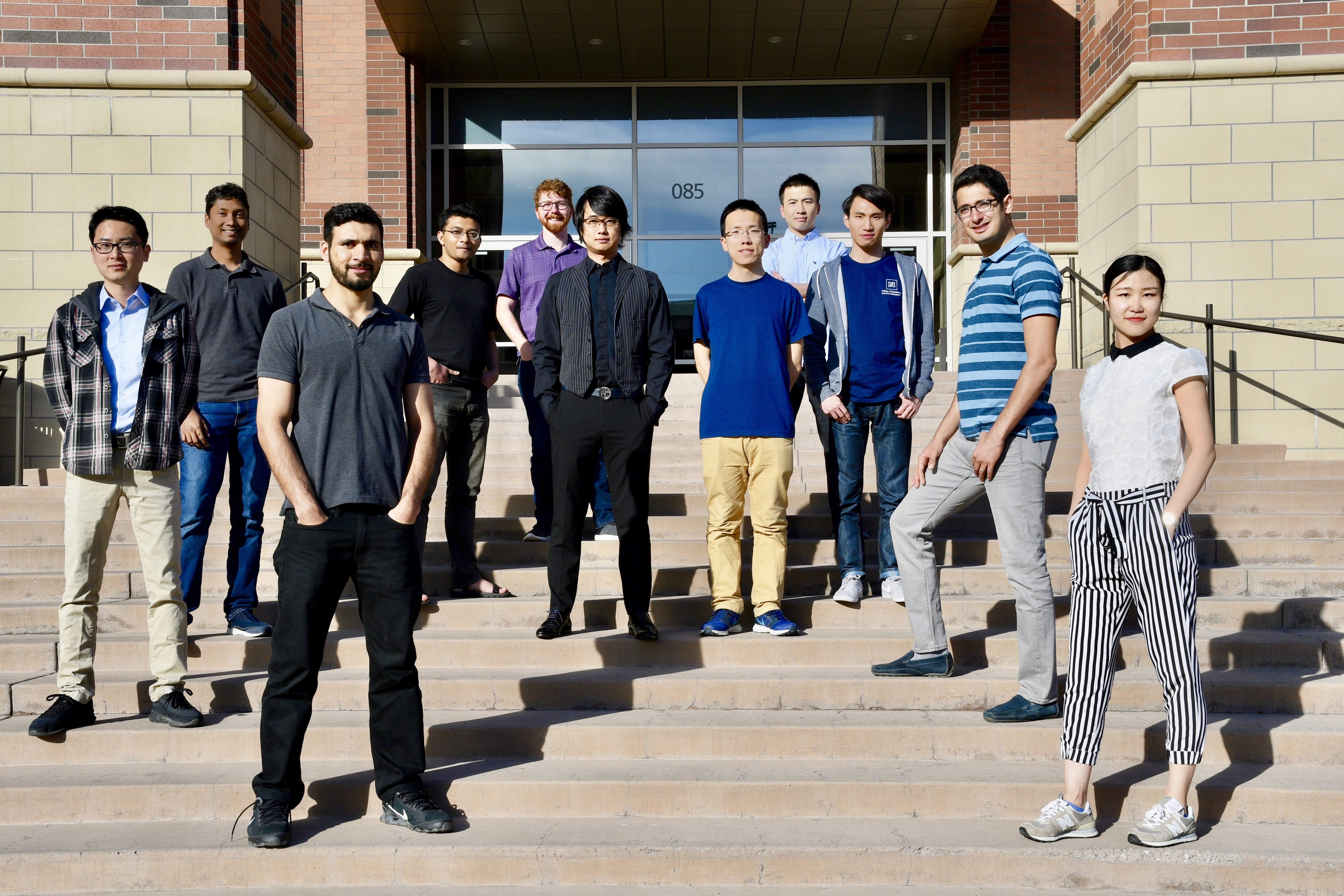
Dr. Feng Yan is an Associate Professor at the University of Houston's Computer Science Department, leading the Intelligent Data and Systems Lab (IDS Lab). He previously held an Associate Professor position at the University of Nevada, Reno. His research focuses on bridging Big Data, Machine Learning, and Systems, with interdisciplinary applications in wildfire science, materials engineering, and civil infrastructure. He has received prestigious awards such as the NSF CAREER Award and the Regents' Rising Researcher Award. Education: Ph.D. (2016) and M.S. (2011) in Computer Science from College of William and Mary; B.S. (2008) in Computer Science from Northeastern University. Research experience includes roles at Microsoft Research and HP Labs. Research Interests: Large Language Models (LLM), Distributed Deep Learning, AutoML, Serverless Computing, Federated Learning, and AI-driven domain sciences. His work emphasizes real-world impact through collaborations with industry and national labs. Publications: Over 60+ papers in top-tier venues like NeurIPS, ICLR, KDD, AAAI, SOSP, SC, and VLDB. Key contributions include ZeRO++ (collective communication optimization), Gradient Compression techniques, and Federated Learning frameworks like TiFL and HDFL. Awards: NSF EPSCoR Award ($20M), NSF CAREER Award, FAA BAKFAA Grant, and multiple best paper awards (IEEE CLOUD 2018, CLOUD 2019). Active in program committees for HPDC, ICAC, ICPE, and AAAI. Advising: Supervised over 30+ graduate/undergraduate students, with placements at Microsoft Research, IBM, Oak Ridge National Lab, Facebook, and MathWorks. Runs a vibrant lab with a focus on interdisciplinary AI/Systems research.
Paolo Papotti is an Associate Professor of Computer Science at EURECOM (France) since 2017, affiliated with the Data Science department. Previously, he was a senior scientist at QCRI (Qatar) and an assistant professor at Arizona State University (USA). He earned his PhD in Computer Science from the University of Roma Tre (Italy) in 2007, following an MEng in Computer Engineering from the same institution in 2003. His research focuses on scalable data management, data integration, data cleaning, and computational fact-checking. Notable contributions include work on knowledge graph rule discovery (Rudik), fact-checking frameworks (Scrutinizer), and data quality systems. His research has been supported by awards such as the 2020 Google Faculty Research Fellowship. Key publications include advancements in table representation learning, LLM-based data querying, and crowdsourced fact-checking validation. His work spans theoretical foundations and practical tools for improving data quality and information trustworthiness.