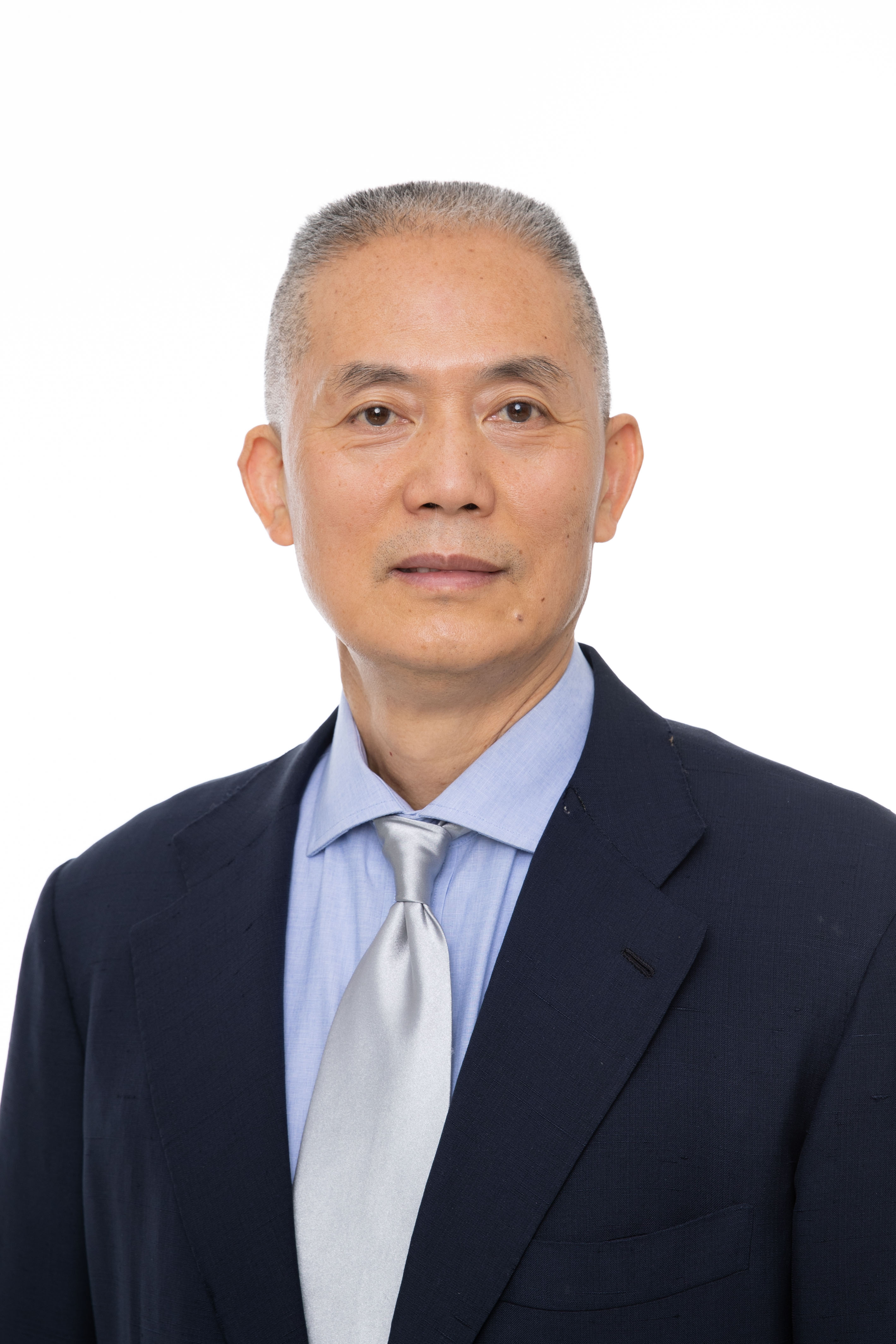
Dr. Li Cao is a Professor of Educational Psychology at the University of West Georgia's Department of Educational Technology and Foundations within the College of Education. He specializes in metacognition and self-regulated learning across traditional and digital learning environments. His teaching responsibilities include undergraduate and graduate courses such as Educational Psychology, Research Methods, and Program Evaluation for teacher education programs. Before joining UWG, Dr. Cao held academic roles including Assistant Professor at St. Mary's University, part-time instructor at McGill University, and lecturer in Chongqing University. His research focuses on maker-centered instruction, game-based learning design, and educational technology applications in diverse settings. Notable contributions include studies on rural teacher professional development and cross-cultural mathematics education. His recent publications emphasize maker education, telepresence robotics in rural education, and metacognitive strategies in online learning. He has also explored teacher perceptions of Chinese mathematics pedagogy and the role of digital games in classroom innovation. Dr. Cao has taught extensively since 2007, with syllabi available for courses like CEPD-4101 (Educational Psychology) and CEPD-6101 (Psychology of Classroom Learning). His work bridges theoretical educational psychology with practical classroom applications, particularly in technology-enhanced learning environments.
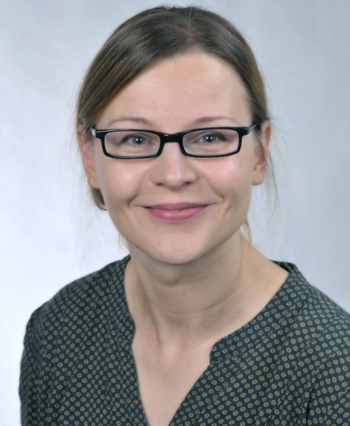
Tanya Chichekian is an Associate Professor at the University of Sherbrooke (since 2024) and an Adjunct Professor at the University of Quebec in Montreal (since 2016). Previously, she held positions as Assistant Professor at University of Sherbrooke (2019-2024) and Adjunct Professor at Queen's University (2016-2019). She holds a PhD in Educational Psychology (McGill University, 2014) and has taught courses on computational thinking, design thinking, and self-regulated learning. Doctor of Philosophy in Educational Psychology (McGill University, 2014) Master of Arts in Educational Psychology (McGill University, 2011) Bachelor of Education (McGill University, 1999) Diploma of Collegial Studies (DEC) (Collège Bois-de-Boulogne, 1995) Her research focuses on computational thinking , educational technologies , passion transmission , and motivational dynamics in higher education. She explores how virtual reality , artificial intelligence , and design thinking reshape pedagogy, with emphasis on knowledge transfer and emotional mediation in learning environments. Her 2025-2031 NSERC-funded project PRL+: Raising PhD Readiness Level for technological innovation and 2024-2029 SSHRC grant The effects of GenAI on students' digital needs and computational thinking highlight her commitment to technological integration in education. Recent publications analyze passion transmission models , procrastination in medical students, and computational thinking profiles in preservice teachers. Her grants include a 2021-2025 SSHRC Insight grant on pedagogical development and a 2022-2025 FRQSC grant on passion transmission in higher education.
Øistein Gjøvik is a Senior Lecturer in Mathematics Didactics at the Department of Teacher Education, Faculty of Social and Educational Sciences, Norwegian University of Science and Technology (NTNU). His work focuses on enhancing mathematics education through digital tools and computational thinking, with a strong emphasis on teacher professional development and student metacognition. Research Interests: Mathematics didactics, digital tools (GeoGebra, Robot Emil), computational thinking, teacher training. Projects: Led the "Learning and Teaching Mathematics with Digital Tools" research group, developing software like WeBabble and Programmering med Emil. Teaching: Courses in mathematics didactics, programming in schools, and digital pedagogy. Dissemination: Frequent conference presenter on topics like digital assessment, algorithmic thinking, and teacher digital competence.
An Nguyen An Nguyen is a Researcher in the Department of Computer Science at the University of Oxford. Their work focuses on advancing AI systems through metacognition principles, reinforcement learning, and robotics applications. Key research themes include human-AI collaboration in robotic teleoperation, decision-making frameworks, and spatiotemporal task coordination. Nguyen's recent studies explore confidence calibration mechanisms in joint human-AI systems and their implications for autonomous decision support. Research interests span: Metacognition AI architectures for self-aware systems Reinforcement learning in dynamic environments Robotic teleoperation interfaces Human-robot trust dynamics Publications from 2020-2025 reflect a progression from transportation modeling to cutting-edge AI-robotics integration. Work combines unsupervised learning techniques with real-world robotics applications, demonstrating expertise in both theoretical and applied computer science domains.
Patrick Müller is a Professor and Dean of Studies at the Stuttgart University of Applied Sciences, specializing in Business Psychology. He holds academic roles as Academic Director and teaches Human Resource Management (HRM), research methods, data analytics & AI, and business psychology fundamentals. His expertise spans People Analytics, AI in HRM, Lie Detection, Technology Acceptance, and Sustainable Development in metropolitan regions. Education: Studied Psychology at the University of Mannheim and the University of Waterloo, Canada. Career highlights include roles as Assistant Professor at Utrecht University (2003-2006), Senior Consultant at SHL (2009-2011), and Head of Internal Recruiting at Hays AG (2011-2012). Research focuses on innovation acceptance, sustainable business practices, and technology adoption. Projects include the Innovation Acceptance Lab (acceptancelab.hft-stuttgart.de), iCity initiatives on smart mobility, and EnSign's climate-neutral campus research. He leads the M4_LAB Innovative University and collaborates on projects like Smart2Charge for rural sustainable mobility. Active in professional organizations including the Academy of Management (AOM), German Society for Psychology (DGPs), and Society for Applied Business Psychology (GWPs). His work bridges academic research with practical applications in organizational psychology and urban development.
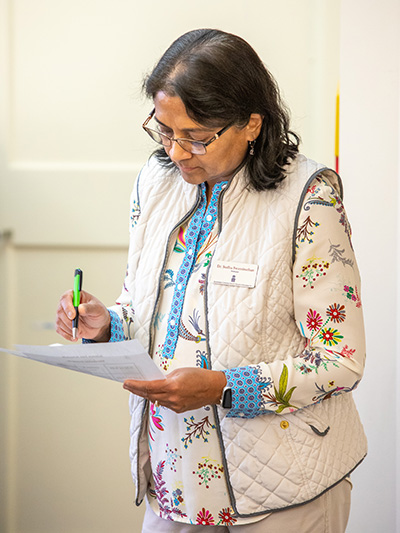
Dr. Sudha Swaminathan is a Professor of Early Childhood Education and Director of the Center for Early Childhood Education at Eastern Connecticut State University. She specializes in early childhood mathematics, educational technology, and teacher education, with a focus on play-based learning and technology integration. Her research explores how coding, robotics, and play-based interactions impact children’s cognitive and mathematical development, particularly among bilingual learners. Dr. Swaminathan holds a PhD and Master’s in Early Childhood Education from SUNY Buffalo. Her teaching emphasizes inquiry-based learning, where students engage with materials and apply knowledge through projects. She is passionate about action research, guiding in-service teachers in designing classroom research projects across disciplines. Her research spans six studies on math talk during play, published in journals like Early Child Development and Care , and has been featured at the American Educational Research Association conferences. She advocates for innovative teaching methods to enhance children’s mathematical reasoning through play and technology. Dr. Swaminathan’s advising philosophy prioritizes student growth, exemplified by her mentorship at conferences where students showcase their research. She believes Eastern’s programs prepare students for diverse careers in education, including roles beyond traditional classroom teaching. She directs the Center for Early Childhood Education, fostering interdisciplinary collaboration in early childhood development. Her work emphasizes the importance of staying connected with alumni and faculty to advance educational practices.
Sonia Mandin is a Postdoctoral researcher in educational sciences specializing in educational technologies at the French Institute of Education (EducTice) at École Normale Supérieure de Lyon. She has been working as a Post-Doc researcher with the Eductice team since October 2015. Her professional background includes positions as a teaching assistant at DILIPEM, Grenoble-3 since 2014, and previous postdoctoral research with the LIRIS - CNRS SILEX team from 2013-2015. Her educational background is impressive and interdisciplinary. She earned her doctorate in educational sciences from LSE, Grenoble 2 in 2009 with 'Very honorable mention with congratulations from the jury.' Prior to this, she completed a DEA in educational sciences (2003), a Master's in Educational Sciences (2002), and a degree in educational sciences (2001), all from SEAD, Lille 3 with honors. Her technical foundation was established with a DUT in computer science engineering from IUT A, Lyon 1 in 1998. Dr. Mandin's research focuses on the complex process of learning from an interdisciplinary perspective, integrating insights from psychology, didactics, and computer science. Her work centers on assisting learners through appropriate digital activities by developing computational models that can be implemented in educational technology tools. A significant portion of her research has focused on summarization skills, exploring how to help students better understand texts through effective summarization techniques. She has developed expertise in Latent Semantic Analysis (LSA) and its application to educational contexts, particularly in the development of the Résum'Web system for improving students' summarization abilities. Analysis of Dr. Mandin's recent publications reveals a strong focus on adaptive learning systems, competency-based education, and the application of natural language processing to educational contexts. Her work demonstrates a consistent trajectory from foundational research on text summarization to broader applications in personalized learning environments. Key themes include learner modeling, knowledge representation through ontologies, and the development of feedback mechanisms that support student learning. Her research bridges cognitive science with practical educational technology applications, particularly in mathematics education and writing instruction. Dr. Mandin has been actively involved in several significant research projects including the e-education project 'OCINAEE' (2015-2016), the 'Cartographie des savoirs' project (2013-2015), the European 'Language Technologies for Lifelong Learning' project (2008-2011), and the ACI Ecole et Sciences Cognitives project (2003-2005). She has also served as a speaker for the Canopé Network (formerly CNDP), the National Agency for the Use of ICT in education. Her work spans multiple research teams and institutions, including collaborations with the Knowledge Media Institute at the Open University of Milton Keynes, and research positions at LIRIS - CNRS and LSE, Grenoble. This diverse institutional engagement has allowed her to develop a rich perspective on educational technology applications across different educational contexts.
Mathias Hegele is a Professor at the Faculty of Psychology and Sports Science, Justus-Liebig Universität Gießen. His research focuses on motor learning, predictive error processing, and the neural mechanisms underlying human agency and sports performance. Project B6: Investigates predictive error perception in natural environments Project C5: Explores animate-inanimate distinctions in action and language perception His work combines neurophysiological methods with behavioral experiments, spanning studies on elite basketball players, schizophrenia patients, and general motor adaptation. Collaborators include Prof. Dr. Hermann Müller and Dr. Lisa Maurer. Recent publications analyze: Mechanisms of outcome prediction in sports Neural correlates of error valuation Agency perception in biological motion tracking Sensory signal integration in motor tasks He advises PhD students Theresa Brand and Lea Junge-Bornholt, with email contact mathias.hegele@sport.uni-giessen.de.
Dr. Helvi Koch is a research associate at the Chair of General Primary School Education, Department of Education and Psychology, Free University of Berlin, where she has been employed since March 2019. She previously served as research assistant at the University of Potsdam from 2009 to 2019 across several chairs, including Primary School Pedagogy/General Education and Psychological Primary School Education. Education 2015 – Dr. phil. (Doctor of Philosophy), University of Potsdam 2011 – Magistra Artium, University of Potsdam 2008 – State Examination in Teaching, University of Potsdam Research Focus Dr. Koch’s research centres on the implementation and evaluation of evidence-based pedagogical-psychological interventions in primary education, with a particular emphasis on fostering reading literacy through reciprocal teaching methods. She investigates the effectiveness of instructional media and learning materials in elementary classrooms and explores the integration of philosophical inquiry with children to enhance critical and creative thinking. Her work contributes to understanding how self-regulated learning strategies can be embedded in daily teaching practice to support diverse learners. Scientific Awards 2015 – 1st Poster Prize, 3rd Conference of the Gesellschaft für Empirische Bildungsforschung (GEBF), Bochum 2013 – 1st Poster Prize, 1st Conference of the Gesellschaft für Empirische Bildungsforschung (GEBF), Kiel 2011 – Comenius-EduMedia-Award for the interactive CD-ROM “Doppel-Klick” (co-author) Teaching & Supervision Dr. Koch offers seminars on general primary school pedagogy, diagnostics, and school development. She supervises bachelor theses on reading competence, creativity, social competence, and stress management among primary pupils, as well as master theses focusing on intervention studies in classrooms and extended education settings and on multi-professional cooperation in schools. Professional Memberships Gesellschaft für Empirische Bildungsforschung (GEBF) Gesellschaft zur Förderung des Philosophierens mit Kindern Gesellschaft für Didaktik des Sachunterrichts (GDSU)
Johannes Steinrücke is an Assistant Professor at the Delft University of Technology's Digital Society Institute, specializing in Cognition, Data and Education. His research bridges educational psychology, AI, and gamification. Education PhD in Digital Game-Based Learning (University of Twente, 2017-2021) Research Focus Steinrücke explores serious games for crisis management training, stress assessment through physiological and gaze metrics , and human-AI interaction in educational contexts. His work integrates reinforcement learning for adaptive learning systems and examines ethical dimensions of AI in pedagogy. Notable Contributions Recent publications include studies on doomscrolling effects in climate change education, robot-mediated feedback in concept mapping, and team-based gamification for learning engagement. His research often involves cross-disciplinary collaboration across Europe. Academic Metrics h-index: 27 (Scopus) Active in 2024-2025 with multiple peer-reviewed articles
Eric Meyers is an Associate Professor at the School of Library, Archival and Information Studies (SLAIS), University of British Columbia. His work bridges information science and learning sciences, focusing on youth's interaction with digital information in educational and social contexts. He previously served as a K-12 teacher, school librarian, and technologist. Meyers leads research on collaborative information use, computational thinking, and design literacies in Maker Camps and library programs. His SSHRC-funded project 'Six Seasons of the Asiniskow Ithiniwak' develops tablet-based narratives to revitalize Indigenous cultural heritage for children. Research Projects: SSHRC Partnership Grant ($2.5M): Multi-touch app development for Indigenous cultural narratives Computational Thinking in Libraries Augmented Reality for Library Literacy Researcher Practitioner Partnerships for Ed Tech Innovation Research Interests: Meyers explores how youth engage with digital systems through collaborative search, social reading, YouTube analyses, and maker activities. His work emphasizes design literacies and computational thinking in informal learning spaces. Recent projects analyze biases in search engines, privacy in virtual environments, and the impact of educational technologies on marginalized groups. Grants & Partnerships: Principal Investigator on SSHRC-funded projects Collaborations with Indigenous communities in northern Manitoba Consultancies for libraries, schools, and tech organizations Advising: Mentors current students including Jane Jun, Vanessa Figueiredo, and Charlie Fokkens. Focuses on preparing scholars for interdisciplinary research in information and learning sciences.
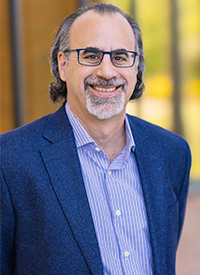
Stephen M. Fiore is a full-time Professor at the University of Central Florida , affiliated with the Department of Philosophy and the Institute for Simulation and Training . As Director of the Cognitive Sciences Laboratory , he leads multidisciplinary research integrating cognitive, social, organizational, and computational sciences. Research Focus: Complex collaborative cognition, human-AI teaming, simulation-based training, team science, and 21st-century skills assessment. Federal Engagement: DARPA ISAT Study Group, National Academies of Sciences consensus studies. International Roles: Visiting scholar at École Normale Supérieure de Lyon (2010), OECD PISA expert panel (2015). Awards: Pegasus Professor (2023), Scroll & Quill Society (2020), Luminary Award (2019), Reach for the Stars Award (2014), multiple Research Incentive Awards. Funding: $35M+ secured as PI/Co-PI, including NSF and Minerva Research Initiative grants. Scientific Contributions: Co-author of 250+ publications across human-human and human-AI team cognition, with key works on accelerating expertise, shared cognition, and adaptive training systems. His lab explores immersive VR, robotic perception scales, and ICE environment team dynamics. Leadership Roles: Co-founder and former President of the International Network for the Science of Team Science Co-founder and former President of the Interdisciplinary Network for Group Research Co-founder of the Global Alliance for Inter- and Transdisciplinary Research Key Collaborations: Santa Fe Institute (2013), Army's Robotics CTA, NSF-funded team science initiatives, and European research networks.
Xiaodong D Lin holds the Cleveland E. Dodge Professorship in Cognitive Studies at Teachers College, Columbia University, where she also serves as Founding Director of the Education for Persistence and Innovation Center (EPIC). Her expertise spans cognitive science in education, motivational learning, and international education. She earned a Ph.D. in Instructional Psychology from Purdue University, an M.A. in Elementary Science Education from Louisiana State University, and a B.A. in Foreign Language Education from Teachers College, HeNan University. Dr. Lin’s research focuses on enhancing student resilience through integrating stories of famous scientists’ struggles into STEM curricula. Her work has been featured in outlets like NPR, BBC, and China’s People Daily. She leads the NSF-funded project on motivational instruction with Carol Dweck and advises the OECD’s Education 2030 Initiative. She also chairs the Advisory Board for China’s National Research Center for Ethnic Minority and Multicultural Education, addressing minority education challenges in both the U.S. and China. Her awards include AERA’s Career Achievement Award, Distinguished Research Award, and Carnegie Scholar distinction. Lin’s research emphasizes culturally responsive pedagogy, teacher education, and cross-cultural collaboration. She advocates for integrating self-enhancement goals into global educational frameworks and has developed curricula to reduce disparities in STEM engagement for minority and low-income students.
Effat Farhana is an Assistant Professor in the Department of Computer Science and Software Engineering at Auburn University's College of Engineering. She holds a Ph.D. in Computer Science from North Carolina State University and a B.S. in Computer Science and Engineering from Bangladesh University of Engineering and Technology. Her research focuses on Machine Learning, Data-Centric AI, and their applications in education and healthcare, alongside empirical software engineering and natural language processing. She explores topics like student learning analytics, AI-driven educational tools, and defect analysis in software projects. Her work bridges cognitive science and AI through projects like theory of mind modeling for humans and AI systems, and developing frameworks for K-12 physics instruction. She also investigates software engineering challenges in infrastructure as code and pandemic-related software systems. Her contributions span both foundational AI research and applied educational technology solutions. Farhana's publications emphasize empirical studies of software defects, cognitive aspects of learning, and AI's role in improving education and healthcare systems. She collaborates on projects involving online learning platforms, science literacy tools, and cognitive-inspired neural architectures.
Maria Falikman is a Teaching Professor of Psychology at HSE University in Moscow, Russia, and former Head of the School of Psychology there. She holds a Ph.D. and Dr. Habil from Lomonosov Moscow State University. Her research focuses on visual attention, cultural evolution, and digital transformations of the human mind, with contributions to cognitive psychology, psycholinguistics, and joint attention mechanisms. Falikman has authored the Psychology of Attention handbook and co-edited multiple Russian psychology readers. She has been a Visiting Scholar at Harvard University and the University of Groningen. Education: B.Sc., M.Sc., Ph.D., Lomonosov Moscow State University (Russia); Dr. Habil Her work bridges cognitive science and cultural-historical theory, exploring topics like meditation's effects on attention, predictive coding principles, and the mind-body problem. She has contributed to popular science via 30+ web lectures for Postnauka/Serious Science and appeared in documentaries on the human brain and cognitive robotics. Falikman is also a PEN International member and award-winning literary translator, having translated works of British and American authors and published poetry collections. Her recent research trends emphasize digital mediation's impact on cognition, cultural evolution, and interdisciplinary dialogues between psychology and neuroarchaeology. Key themes include gaze cueing mechanisms, attention allocation strategies, and the role of cultural tools in cognitive development. Awards: Russian National Psychological Award (2013, 2020); HSE Best Teacher Award (2019–2021) Falikman advises on autism interventions through joint attention studies and explores existential neuropsychology. She leads initiatives in neuroplasticity and acculturation mechanisms, integrating Vygotskian theory with modern digital contexts.