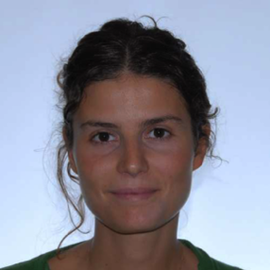
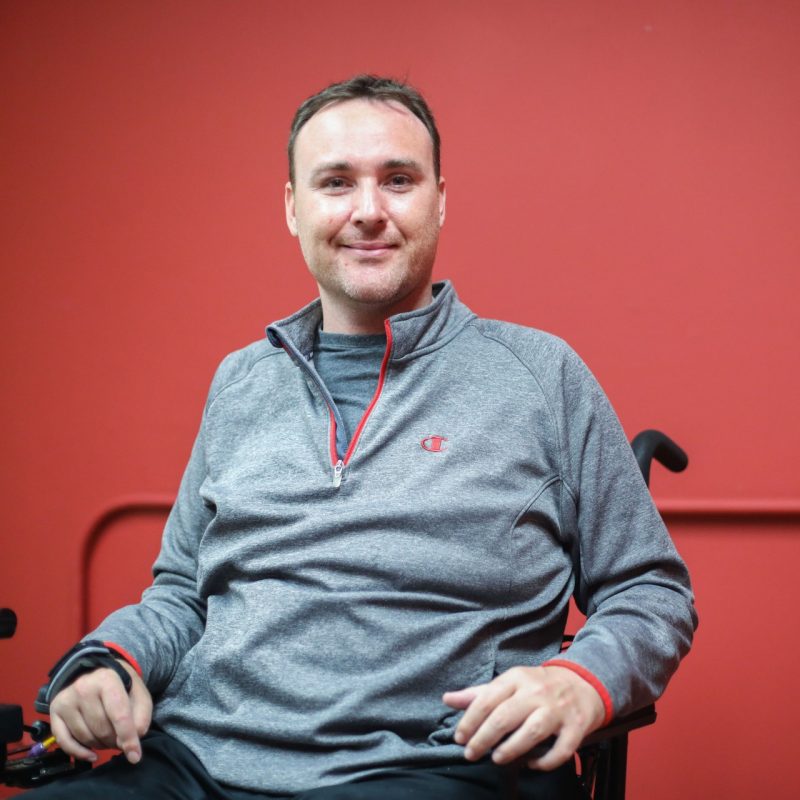
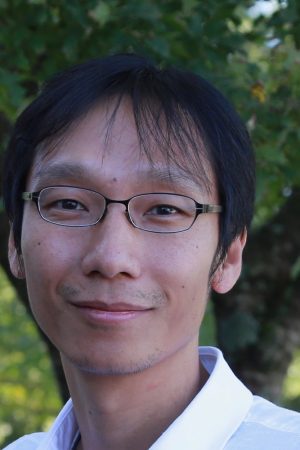
Geert-Jan Geersing is a Full Professor at University Medical Center Utrecht, specializing in Cardiovascular Health in General Practice. He combines clinical work as a general practitioner with high-impact research focused on cardiovascular disease management, prediction analytics, and primary care innovation. Leadership: Strategic Program 'Circulatory Health' Key Research Areas: Thrombo-embolic conditions (VTE, pulmonary embolism), atrial fibrillation (AF), bleeding risk prediction, and chronic care models for frail elderly patients Notable Projects: FRAIL-AF randomized controlled trial, Horizon program for elderly cardiovascular patients His work includes developing diagnostic prediction models using individual patient data meta-analysis and improving stroke/bleeding risk stratification in anticoagulation therapy. He leads research at the intersection of clinical practice and data science. Funding & Recognition : NWO Veni/Vidi grants for thrombo-embolic condition management Future Leaders Program participant (Dutch CardioVascular Alliance) External roles include Vice-chair of the FNT (Federatie Nederlands Trombosediensten) and leadership in scientific committees.
Annika Björn is an Associate Professor at the Theme Environmental Change (TEMAM) within Linköping University . Her research focuses on Biogas Production , Anaerobic Digestion , and Environmental Chemistry to enhance sustainable energy systems through optimized microbial processes. PhD in Environmental Chemistry (2007), Linköping University MSc in Chemistry (1997), Linköping University Major research initiatives include: Coordinating process and technology development at the Biogas Solutions Research Center Leading KNUT project for science education integration Investigating Trace Element Dynamics in biogas reactors Optimizing Hydrolysis Efficiency for complex substrates Key findings from her 15 recent publications (2010-2025) demonstrate: Strategies to enhance biogas yield from lignocellulosic and industrial waste Techniques for rheological control through microbial metabolites Meta-analyses on pretreatment efficacy across diverse substrates Development of educational frameworks for energy sustainability Process improvements in UASB and CSTR reactor systems Characterization of underutilized organic fractions in digestate
Saptarashmi Bandyopadhyay is a Tenure-Track Assistant Professor of Computer Science at the City College of New York and the Graduate Center at the City University of New York (CUNY). Her research focuses on Artificial Intelligence Agents and Autonomous Decision Making, with special emphasis on Multi-Agent Reinforcement Learning, Multi-Agent Imitation Learning, and related paradigms. She has established significant collaborations with leading institutions including Google DeepMind, Carnegie Mellon University, Oxford University, and MIT. Dr. Bandyopadhyay received her PhD from the University of Maryland, College Park, where she was advised by Professor John Dickerson and Professor Tom Goldstein. Prior to that, she graduated from Penn State in 2020 with a thesis on Multimodal Computer Vision in Medical Domain advised by Prof. William Evan Higgins. Her research expertise spans multiple domains of AI including Multi-Agent Systems, Reinforcement Learning, Imitation Learning, and Multimodal Perception. She specializes in developing AI agents for applications in climate conservation, economic systems, and AI safety. Her work integrates techniques from computer vision, natural language processing, and robotics to create more robust and explainable AI systems that can operate effectively in complex, real-world scenarios. Current work includes improving explainable AI, developing Multimodal LLM/VLM/Robotic Agents, and creating libraries to speed up Multi-Agent evolutionary training with JAXMARL. Analysis of Dr. Bandyopadhyay's publication record reveals a clear progression from foundational work in medical imaging and natural language processing toward increasingly sophisticated multi-agent AI systems. Her recent publications demonstrate a strong focus on Multi-Agent Reinforcement Learning frameworks like JAXMARL, with applications spanning from supply chain orchestration to climate conservation. The interdisciplinary nature of her work is evident in publications spanning computer vision, NLP, and multi-agent systems conferences including AAAI, NeurIPS, AAMAS, EMNLP, and ACL. DoGood Fellow (2022) UMD Dean's Summer Fellow (2021) Dr. Bandyopadhyay has been actively involved in securing research funding from major agencies including NSF, NIH, DoD, and ARL. She served as the lead PhD student RA in a DoD project for Multi-Agent Explainable AI to improve AI trustworthiness. Her service to the academic community includes membership on program committees for major conferences including IJCAI 2024, KDD 2024, ACL 2024, and AAMAS 2023-2024. She has also created the AI Agents Seminar Series at UMD in 2022 with over 1,000 participants from six continents. Currently, Dr. Bandyopadhyay leads research on improving explainable AI, developing Multimodal LLM/VLM/Robotic Agents, and creating libraries to speed up Multi-Agent evolutionary training with JAXMARL. Her lab collaborates prominently with researchers from Google DeepMind, Carnegie Mellon University, Oxford University, University of Sheffield, Waymo, Meta AI, and MIT, with special focus on Dr. Jakob Foerster's and Dr. Robert Loftin's groups.
Dr. Mike Ryder is a Lecturer in Marketing at Lancaster University's Management School, specializing in interdisciplinary research bridging literature, philosophy, technology studies, and marketing. He teaches modules such as Digital Marketing, Social Media, and serves as Programme Director for the MSc Digital and Social Media Marketing. His research explores the intersection of new technologies with ethics, biopolitics, and science fiction. He holds a PhD ('Citizen Robots: Biopolitics, the Computer and the Vietnam Period') and is a Senior Fellow of Advance HE. Education: PhD in Literature/Technology, MA English (Distinction), BA (Hons) English with Creative Writing (First Class). Prior to academia, he worked in video games, healthcare ghostwriting, and digital communications. He directs Mental Capacity Ltd, a healthcare training firm. Awards include the Pilkington Award for Teaching. Research interests include AI ethics, digital marketing pedagogy, and science fiction's role in conceptualizing societal futures. He participates in interdisciplinary groups like the Lancaster Intelligent, Robotic and Autonomous Systems Centre and Centre for Consumption Insights. Supervision focuses on digital marketing, AI ethics, and interdisciplinary projects combining philosophy and technology.
Dr. Marina Schoemaker is a Senior Lecturer at the University Medical Center Groningen (UMCG), affiliated with the Faculty of Medical Sciences and the Department of Human Movement Sciences. She holds a PhD in clinical psychology from the University of Groningen (1992) and has conducted research in the UK under an ESF grant. Her expertise focuses on Developmental Coordination Disorder (DCD), motor control, and pediatric rehabilitation. She has organized international DCD conferences and chairs the Dutch steering committee for DCD clinical guidelines. Education includes a Master's in clinical psychology and a PhD on physical therapy interventions for children with DCD. Research interests span assessment tools, intervention efficacy, motor performance variability, and cross-cultural DCD screening. She supervises PhD students on topics like motor control theories and DCD risk factors. Her work contributes to UN SDG 3 (Good Health) through improving DCD diagnosis and intervention. Key projects include the Little DCD-Q screening tool validation and motor variability studies in children with DCD. Teaching includes courses on motor development and rehabilitation theories for medical students. Professional activities include roles on international DCD research groups and organizing consensus meetings. Media engagements address child motor development topics like swimming and play-based interventions.
Mohammad Ali Salahuddin is a Research Assistant Professor at the David R. Cheriton School of Computer Science, University of Waterloo , specializing in networking and machine learning. He holds a Ph.D. in Computer Science from Western Michigan University (2014), with prior academic roles at Université du Québec à Montréal and Concordia University. His research spans 5G network slicing, vehicular networks, and secure content delivery systems. Education: Ph.D. (2014, Western Michigan University); M.S. (2003, Western Michigan University); M.S. (2001, SZABIST); B.S. (1999, FAST-NUCES) Dr. Salahuddin's research focuses on 5G/6G network softwarization , autonomous threat mitigation , and machine learning for network management . His work integrates reinforcement learning and federated learning for scalable solutions in SDN/NFV , IoT , and edge computing . Recent studies address data drift in encrypted traffic classification and DDoS detection using outlier exposure-based federated learning . He has received multiple best paper awards at IEEE/IFIP NOMS (2023, 2022), IEEE CNOM (2021), and Kenneth C. Sevcik Outstanding Student Paper Award (ACM SIGMETRICS, 2021). His NSF-funded projects include vehicular cloud resource management and localization techniques. Dr. Salahuddin actively contributes to academic service as Vice-Chair of IEEE KW Section's Communications Society and TPC member for top conferences.
Prof. Dr. Katja Beesdo-Baum is a Full Professor of Behavioral Epidemiology at the Institute of Clinical Psychology and Psychotherapy, Faculty of Science, Technical University of Dresden. Her research focuses on the epidemiology and clinical aspects of mental disorders, integrating neurobiological, developmental, and environmental factors through large-scale observational and experimental studies. She holds editorial roles at journals like Child Psychiatry & Human Development and contributes to global initiatives such as the WHO’s ICD-11 clinical practice network. Her work spans anxiety disorders, depression, and prevention strategies in youth, with a strong emphasis on translational research and healthcare system integration. Education includes a Diploma in Psychology (2000) and a Dr. rer. nat. (2006), both from TU Dresden, followed by Habilitation in 2010. Professional experience includes postdoctoral training at the National Institute of Mental Health (USA) and leadership roles in clinical and research groups. Awards include the ECNP Fellowship and Dr.-Walter-Seipp Dissertation Award. Her research explores mechanisms linking stress, neuroendocrine systems, and mental disorders, with recent studies focusing on brain structure alterations in anxiety disorders (ENIGMA collaborations) and the efficacy of prevention programs. She investigates digital health tools, stigma reduction, and sociodemographic barriers to mental healthcare access in adolescents and young adults. Key Research Themes: Behavioral epidemiology, developmental psychopathology, neuroimaging, prevention science. Recent Trends: Machine learning in brain-based classification of anxiety disorders, longitudinal studies on stress biomarkers (e.g., cortisol, androgens), and implementation science for pediatric mental health services. Awards highlight her contributions to clinical guidelines (DSM-5 Task Force) and global mental health policy. Her grants and collaborations span European and international funding bodies, emphasizing interdisciplinary approaches to mental health challenges. Labs/Teams: Active in the ENIGMA Anxiety Working Group, BeMIND study (behavioral-mind health cohort), and Dresden-based clinical research networks.
Patryk Perkowski is an Assistant Professor of Strategy and Entrepreneurship at the Sy Syms School of Business, Yeshiva University. He holds a PhD from Columbia Business School and completed a postdoctoral fellowship in Business, AI, and Democracy at Columbia. His research focuses on the intersection of information technology, human resource management, and causal inference, examining how technological advancements like AI reshape talent competition and organizational strategies. He also develops methodological tools for empirical business research. Education: PhD and Postdoctoral Scholar at Columbia Business School. Research interests include AI's impact on workplaces, internal talent markets, labor discrimination trends, and algorithmic hiring. He publishes in top journals such as the Strategic Management Journal and Management Science. His work analyzes modern workforce dynamics, including automation effects, team coordination, and central banking AI applications. Notable studies address gender representation in hiring algorithms and long-term discrimination trajectories through meta-analyses. Advising: No advisee list provided. Grants and funding details not specified. His research bridges theory and practice, offering insights for firms to leverage human capital strategically in tech-driven environments.
Professor Sheleigh Lawler is a health psychology expert and Head of the Faculty of Health, Medicine and Behavioural Sciences at The University of Queensland. Her research focuses on health behaviors, psychosocial factors, and communication strategies in public health contexts. She leads interdisciplinary teams addressing chronic disease prevention, Indigenous health equity, and behavioral interventions. She holds a PhD from The University of Auckland and has extensive experience in program evaluation, including the '10,000 Lives' smoking cessation initiative and cancer screening equity projects. Education: Bachelor of Arts, The University of Auckland Masters (Coursework), The University of Auckland Doctor of Philosophy, The University of Auckland Research Interests: She investigates psychosocial variables influencing health behaviors, blended learning pedagogy in public health, and behavioral interventions for chronic diseases. Her work emphasizes health equity, particularly for Indigenous populations, and integrates mHealth/eHealth solutions. Grants and Funding: Current NHMRC Synergy Grant (2024–2029): Achieving Equity in Cancer Screening for First Nations Peoples Queensland Health Grant (2023): Tobacco Reduction Reforms and Skin Cancer Prevention Past NHMRC Project Grant (2008–2013): Telephone Counselling for Diabetes Advising and Supervision: Supervises PhD and Master's students on topics like cancer survivorship care, mHealth for hypertension management, and AI-driven smoking cessation tools. Current projects include evaluating social inclusion programs and Indigenous cancer screening equity. Labs/Teams: Active in initiatives such as the 'Stepping Stone Clubhouse' mental health program evaluation and the development of the Quin chatbot for smoking cessation. Collaborates with government agencies and industry on public health campaigns.
Prof. Dimitrios Georgakopoulos is a Professor of Computer Science at Swinburne University of Technology's School of Science, Computing and Emerging Technologies. He serves as Director of the ARC Industrial Transformation Research Hub for Future Digital Manufacturing and Swinburne's IoT Lab. Previously, he was Research Director at CSIRO's ICT Centre and a Professor at RMIT University. Affiliations: CSIRO Adjunct Fellow since 2014 Leadership: Directed 7 large cross-disciplinary initiatives with $100M+ funding Research Focus: IoT, Cyber-Physical Systems, Digital Manufacturing, Machine Learning Funding: Secured $77.1M in external grants; $59.7M at Swinburne Research Interests: Digital twins and AI for manufacturing IoT sensor sharing ecosystems 5G-enabled smart cities Autonomic IoT systems Quality assurance in Industry 4.0 Awards: 2023 National iAward (Public Sector), Vice Chancellor’s Innovation Award (2018), and multiple industry and academic recognitions. Grants & Projects: Lead researcher on ARC-funded initiatives in digital manufacturing, cybersecurity, and steel innovation. Collaborates with industry partners like Bega Cheese and FIA on IoT-driven solutions. Labs & Teams: Oversees Swinburne's IoT Lab and the ARC Future Digital Manufacturing Hub, advancing Industry 4.0 applications in manufacturing, healthcare, and smart infrastructure.
Laura Toni is an Associate Professor in the Department of Electronic & Electrical Engineering at University College London (UCL). She serves as Director of the MSc in Telecommunications and Internet Engineering and the MRes in Telecommunications. Additionally, she is a Turing Fellow at the Alan Turing Institute and a member of ELLIS (European Lab for Learning and Intelligent Systems). Her research focuses on coding, streaming technologies, machine learning for immersive communications, decision-making under uncertainty, and large-scale signal processing. She leads the LASP (Learning And Signal Processing) group at UCL. Education: MSc (2005) and PhD (2009) from the University of Bologna, followed by postdoctoral research at UC San Diego and EPFL under Professors L. Milstein, P. Cosman, and P. Frossard. Key roles include Technical Program Chair at ACM MM 2022, Keynote Co-Chair at ACM MMSys 2022, and leadership in organizing workshops on graph-based machine learning and emerging technologies in performing arts. She is a Senior IEEE Member and holds editorial roles in IEEE Multimedia Magazine and EURASIP Journal on Signal Processing. Her work bridges communication systems and machine learning, with contributions to adaptive streaming, network optimization, and graph signal processing. She actively promotes diversity and inclusion in technical conferences, including roles as Diversity Chair at MMSys 2021 and PIMRC 2020.
Adrienne Forsyth is an Associate Professor in Nutrition and Dietetics at the School of Behavioural and Health Sciences, Faculty of Health Sciences. Her research focuses on sports nutrition, clinical nutrition, and public health. Publications address athlete dietary practices, body composition assessment, malnutrition in surgical outcomes, and dietetics education. Key collaborations include researchers in sports science, oncology, and allied health. Recent studies explore ultra-processed sports foods, Mediterranean diet impacts on performance, and injury barriers in women's physical activity. Research Interests span three domains: Sports Nutrition: Athlete dietary knowledge, body composition, and performance optimization. Clinical Nutrition: Skeletal muscle assessment in critical care, malnutrition criteria (GLIM), and preoperative dietary interventions. Public Health: Canteen nutrition, health service access for diabetes patients, and community-based dietary policy. Publications (2025–2024) reveal trends in: Translating nutrient science to food-based guidelines Consumer-driven approaches in arthritis research Ultra-processed foods in athlete populations Body composition and surgical outcomes Dietetics education innovations (e-portfolios, competency frameworks)
Ryan K. Williams is an Assistant Professor in the Bradley Department of Electrical and Computer Engineering at Virginia Tech. His research focuses on real-time systems optimization, multi-agent robotics, and computational frameworks for autonomous systems. He holds an NSF Career Award (2021) and has contributed to advancing algorithms for resilient and efficient multi-robot coordination. His work addresses challenges in distributed systems, including scheduling, fault tolerance, and resource allocation. Key areas include probabilistic security in multi-robot teams, topology control for stable coordination, and anticipatory planning for search and rescue operations. He also explores intersections with education, such as analyzing teacher professional learning impacts on student outcomes in STEM. Awards: NSF Career Award 2021 Grants: AF: Small grants (2024, 2021), CPS: Medium grant (2019) Labs/Teams: Collaborates on multi-robot systems and computational autonomy projects
Dr. Sibel Tatar is an Associate Professor at the Department of Foreign Language Education, Faculty of Education, Boğaziçi University. She has been teaching there since 2003, following her PhD in Language Education from Indiana University (2003) and B.A. in Translation and Interpretation from Hacettepe University (1997). Her research focuses on foreign language teacher cognition, TESOL methodologies, and non-native speaking professionals in education. Her educational background includes a PhD specialization in Language Education from Indiana University, emphasizing teacher development and intercultural communication. Her work spans over two decades, with a strong emphasis on qualitative research in language education contexts. Research interests include teacher identity, pre-service training, and the impact of native speakerism on educational policies. Her recent studies explore transformative learning through virtual exchange programs (COIL projects) and critical reflection techniques for teacher candidates. Dr. Tatar has received multiple awards from Boğaziçi University and grants for projects on teacher feedback mechanisms, technology integration, and EFL hiring practices. She has supervised numerous PhD theses and co-authored over 20 journal articles and book chapters. Her professional service includes roles on the Awards Committee and Financial Aid Interviews Committee at Boğaziçi University, reflecting her commitment to educational equity. She has also contributed to international conferences and editorial work, including the EUROSLA Yearbook.
Minwoo Jake Lee is an Assistant Professor in the Department of Computer Science at the University of North Carolina at Charlotte (UNC Charlotte), affiliated with the College of Computing and Informatics (CCI). His faculty role is active until June 30, 2027. He leads the Video and Image Analysis Lab and maintains research and personal websites. Dr. Lee holds a Ph.D. from Colorado State University. Education: Ph.D. in Computer Science, Colorado State University Research Interests: Dr. Lee focuses on foundational machine learning, particularly reinforcement learning. His work explores robotics, adaptive systems, and human-AI interactions, supported by grants from the NSF and NIH. Key areas include knowledge representation, evidence-based reasoning, sparse learning, and meta learning. Lab & Collaborations: His Video and Image Analysis Lab investigates cutting-edge problems in machine learning and its applications, emphasizing interdisciplinary approaches.