Federica Tomao is an Associate Professor at the Department of Maternal, Child and Urological Sciences within Sapienza University of Rome. She actively teaches and supervises courses in Medicine and Surgery , Nursing , and Midwifery programs across multiple institutions. Current faculty member with academic rank Teaching roles in 6th, 3rd, and 2nd year courses Specialized in gynecologic oncology Research Focus : Her work spans ovarian cancer, breast cancer, and endometrial cancer, emphasizing chemotherapy optimization, precision medicine, and radiomics. Notably, she contributes to understanding PARP inhibitors, immune checkpoint therapies, and fertility preservation techniques in cancer survivors. Recent Publications highlight advancements in sarcopenia analysis, BRCA testing, and radiogenomic nomograms. These studies demonstrate her commitment to bridging imaging and molecular data for improved cancer management. Email : federica.tomao@uniroma1.it
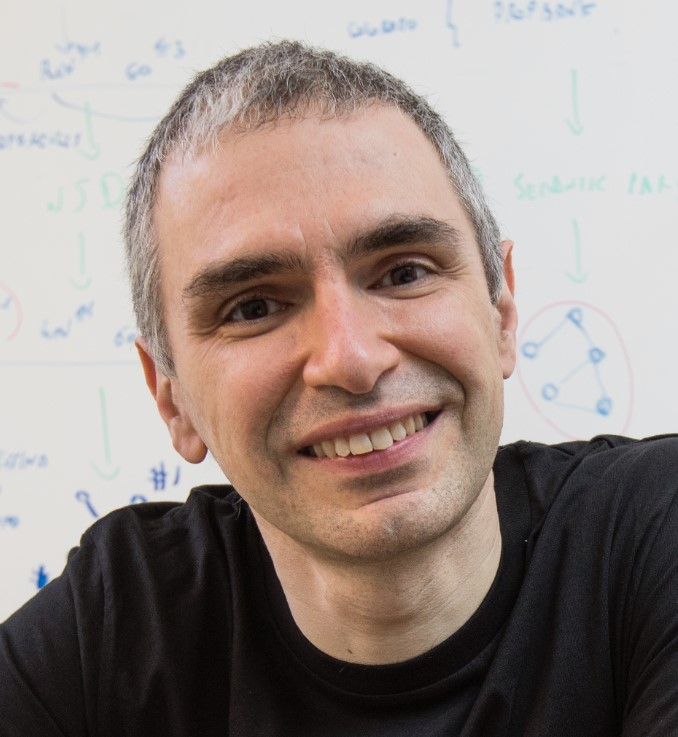
Roberto Navigli is a Full Professor in the Department of Computer, Control and Management Engineering at Sapienza University of Rome, where he leads the Sapienza NLP Group. He has held academic positions at Sapienza since 2007, progressing from Researcher to Associate Professor, and now Full Professor. Navigli is internationally recognized for his groundbreaking work in multilingual natural language processing and computational semantics. His research spans multiple areas within Natural Language Processing, with a particular focus on multilinguality , lexical semantics (Word Sense Disambiguation and induction), sentence-level semantics (Semantic Role Labeling and Semantic Parsing), and Large Language Models . As the leader of the Minerva LLM project, he pioneered the development of the first pretrained LLM in Italian. His creation of BabelNet, the largest multilingual encyclopedic computational dictionary covering 271 languages and about 14 million concepts, represents a landmark achievement in computational linguistics. Professor Navigli's recent publications demonstrate a strong focus on advancing multilingual capabilities of language models, addressing challenges in semantic understanding across languages, and developing robust evaluation frameworks. His work on Italian LLM optimization, lexical ambiguity in machine translation, and cross-lingual safety gaps reflects his commitment to building more accurate and reliable language technologies that work effectively across diverse linguistic contexts. AAAI Fellow (2025) EurAI Fellow (2024) ELLIS Fellow (2024) ACL Fellow (2023) Outstanding Paper Awards at ACL 2024, ACL 2023, and NAACL 2021 Best Resource Paper Award at ACL 2022 Prominent Paper Awards from the Artificial Intelligence Journal (2023, 2017) META Prize 2015 for BabelNet Professor Navigli has successfully secured substantial research funding, including two prestigious ERC Grants (MultiJEDI ERC Starting Grant 2010-2016 and MOUSSE ERC Consolidator Grant 2017-2023, totaling around 3 million euros), PI of PRIN 2017 and PRIN 2020 projects (overall 1.4 million euros), and a Google Focused Research Award (around 300k$). He has mentored over 30 PhD students, many of whom have gone on to successful careers in academia and industry. His leadership extends to major international conferences, serving as General Chair of ACL 2025 and Program Co-Chair of ACL-IJCNLP 2021. As the director of the Sapienza NLP Group and co-leader of the Transversal Project on Large Language/Multimodal Models in the FAIR (Future Artificial Intelligence Research) project, Professor Navigli oversees a vibrant research ecosystem focused on advancing the state-of-the-art in natural language understanding across languages. His spinoff company, Babelscape, translates academic research into practical applications for industry.
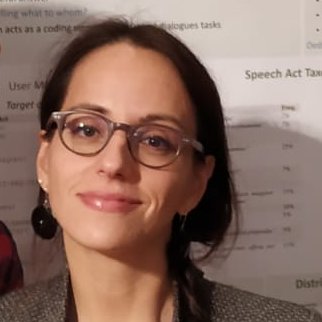
Nicole Novielli, Ph.D., is Associate Professor at the University of Bari “A. Moro” , Italy, where she conducts research on affective computing applied to software engineering and human-computer interaction. She leads the Collaborative Development Group and coordinates national projects investigating emotions in software teams, AI quality and IoT ecosystems. Education: Ph.D. in Computer Science, University of Bari, 2010 – thesis on “Lexical Semantics of Dialogue Acts” M.Sc. in Computer Science (Knowledge & Software Engineering), University of Bari, 2006 – summa cum laude B.Sc. in Computer Science, University of Bari, 2004 – summa cum laude Visiting researcher at USC-ICT, University of Aberdeen, FBK-irst (Trento) Research interests revolve around recognizing and exploiting affective and cognitive states in computer-mediated cooperative work. She studies sentiment and emotion mining in developers’ textual communication, multimodal emotion recognition via low-cost biometric sensors, and natural-language dialogue simulation for intelligent interfaces. Her work couples software engineering with natural language processing , social media analytics and human-computer interaction . Recent articles (2021-2025) reveal a clear trend: integrating deep learning and large language models into software engineering tasks—automated issue labelling, sentiment classification, technical-debt detection—while validating these techniques through rigorous empirical studies and biometric experiments . A parallel stream explores developer experience , measuring how emotions and cognitive load influence productivity, code quality and collaboration. Scientific awards include the 2020 Apex Award for Publication Excellence , multiple Distinguished Reviewer Awards at flagship venues (ESEC/FSE, ICSME, MSR), the Best Paper Award SANER 2019 and the Best Student Paper Award ACII 2009 . She currently teaches “Sentiment Analysis” in the Data-Science MSc and “Computer Networks” in the ITPS programme. She has advised numerous B.Sc., M.Sc. and PhD projects and is PI or Co-PI of four ongoing grants: EmoQuest (SIR), EMPATHY (PRIN), FAIR-Spoke 6 (PnRR), and QualAI (PRIN 2022). Dr. Novielli serves on the editorial boards of Empirical Software Engineering and Journal of Systems and Software , has guest-edited special issues on affect awareness in SE, and has chaired tracks at ICSE, SANER, MSR, ICSME and SSBSE. She co-leads the Collaborative Development Group and actively releases datasets and open-source tools for the community.
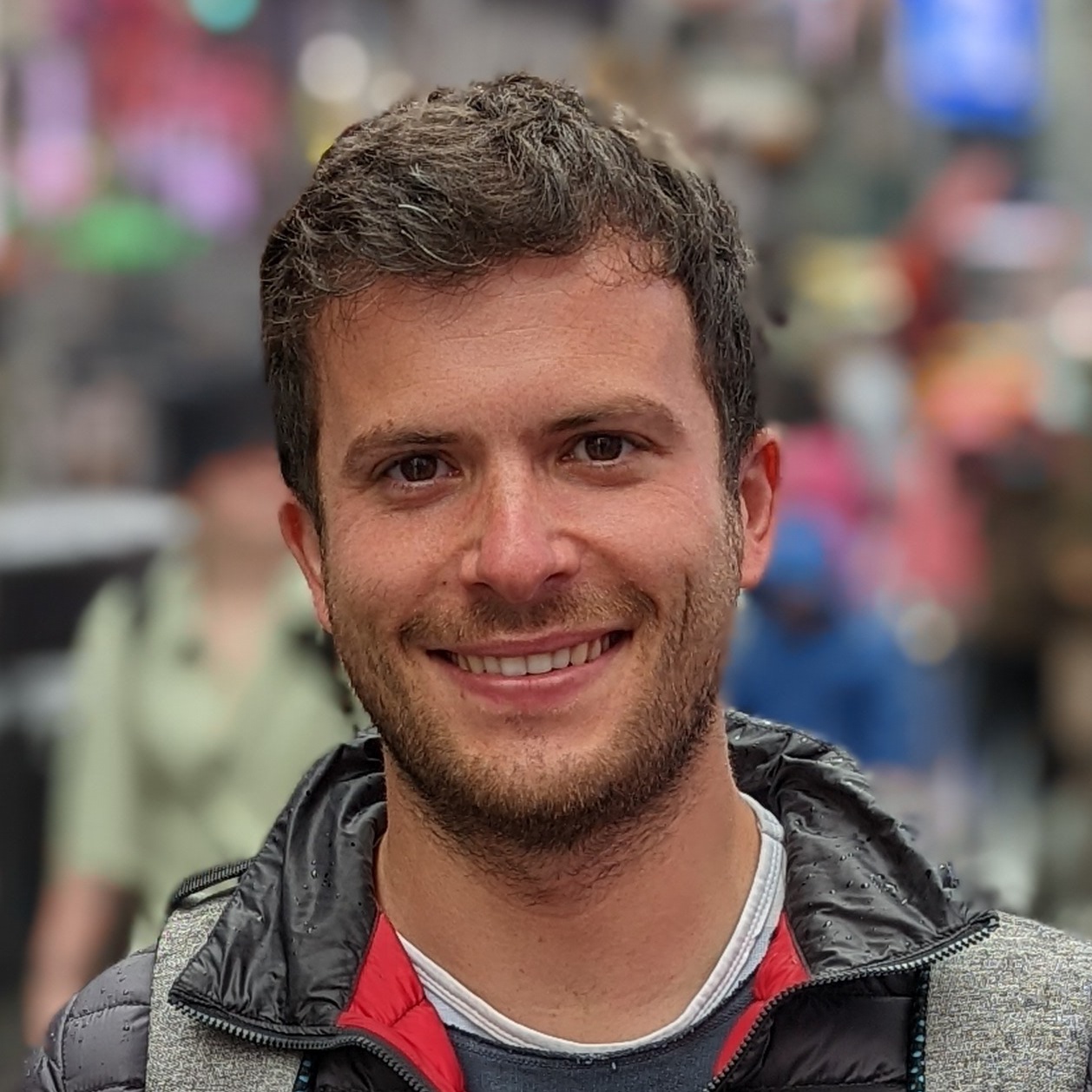
Alberto Monge Roffarello is an Assistant Professor (RTDb) at the Department of Control and Computer Engineering (DAUIN), Politecnico di Torino, where he is a member of the e-Lite Research Group. He teaches courses including Human-AI Interaction, Digital Wellbeing, and Web Applications across multiple degree programs such as Computer Science and Systems Engineering, Computer Engineering, and Film and Media Engineering. His research centers on Human-Computer Interaction, with a strong focus on Digital Wellbeing and End-User Development in the Internet of Things . He investigates how users can personalize smart environments through trigger-action programming and how design patterns in digital interfaces—such as Infinite Scroll and Never-Ending Autoplay—exploit psychological vulnerabilities to capture attention. His work aims to empower users with tools for self-control, meaningful interaction, and habit mitigation. The recent publications highlight a consistent trajectory in digital self-control tools , attention-aware design , and semantic recommendation systems for IoT. His research bridges theoretical analysis with practical tools, including conversational agents (HeyTAP), debugging platforms (EUDebug, My IoT Puzzle), and ontologies (EUPont) to lower the barrier for non-technical users. Scientific contributions include: Systematic review of digital self-control tools (TOCHI 2022) Typology of Attention-Capture Damaging Patterns (CHI 2023) Design frameworks for meaningful interactions (AVI 2022) Behavioral interventions for smartphone habits (TiiS 2021) He actively supervises PhD students—Francesca Russo, Robert Everett Schwartz, and Luca Scibetta—on topics ranging from AI for education to digital wellbeing in high-schools. His work is supported by competitive research projects such as EMPATHY - Empathetic Mobility Platform . He has contributed to multiple national and international collaborations, notably with Santa Clara University (USA). Alberto leads and participates in research initiatives within the e-Lite - Intelligent and Interactive Systems group, focusing on intelligent interfaces, user empowerment, and ethical design. His lab develops tools that translate high-level user intentions into executable IoT rules, promote digital literacy, and support conscious technology use.
Andrea Garzelli is a Full Professor at the University of Siena's Department of Information Engineering and Mathematical Sciences. His research focuses on remote sensing image processing, particularly in optical and SAR sensor technologies, image fusion, and spatial resolution enhancement. He holds teaching roles in 'Fundamentals of Signal Processing and Telecommunications' and 'Statistical Signal Processing.' He earned his Ph.D. in Computer Science and Telecommunication Engineering from the University of Florence. Notably, he was recognized as a World's Top 2% Scientist by Stanford University for 2019–2023 and his career-long contributions. He served as President of the University of Siena's Quality Assurance Committee (2016–2021) and currently coordinates the graduate program in Computer and Information Engineering. Research interests include satellite data analysis (e.g., Sentinel-2, PRISMA), hypersharpening techniques, and environmental monitoring. His work bridges theoretical advancements (e.g., pansharpening algorithms) and practical applications like urban land classification and vegetation index enhancement. Recent articles emphasize reproducibility, meta-analysis, and synthetic data generation through GANs. Awards: World's Top 2% Scientists (2019–2023 & career). Grants/Advising: Supervises remote sensing theses; no specific grants mentioned. Labs/Teams: Leading research in the department's remote sensing and signal processing groups.
Tommaso Feraco is an Assistant Professor at the University of Padova , focusing on the intersection of education , psychology , and behavioral science . His work examines how social, emotional, and behavioral skills (SEBS) influence academic performance, well-being, and developmental outcomes across diverse populations, including adolescents, adults, and individuals with specific learning disabilities. Research trends highlight his contributions to character strengths , self-regulated learning , and adaptability in educational contexts. He has also developed methodological tools to address clustering analysis limitations in data science. His recent publications investigate SEBS applications in career readiness , pro-environmental behavior , and mental health resilience .
Andrea Appolloni is an Associate Professor at the Department of Management and Law, University of Rome Tor Vergata. His academic career focuses on Management with emphasis on Sustainable Supply Chain Management , Digital Transformation , and Circular Economy . His research explores the intersection of technological innovation and sustainability, particularly through topics like AI in Logistics , Green Procurement , and Policy Optimization . Publications span both theoretical frameworks and empirical studies in China, Italy, and Malaysia, with a strong focus on environmental impact and organizational performance. Recent work includes digital twin applications for human-AI collaboration, blockchain integration in sustainable supply chains, and analyzing barriers to circular economy adoption. His 15 most recent articles (2025-2022) demonstrate a trend toward combining Artificial Intelligence , Operations Management , and Environmental Governance .
Giuseppe PAGNONI is an Associate Professor at the Department of Biomedical, Metabolic and Neurosciences of Università di Modena e Reggio Emilia . His research spans neuroscience , computational modeling , meditation , and brain network analysis . He teaches courses such as Neural Systems Modeling for Bioengineering students and Human Physiology and Pathophysiology in Medicine programs, with a focus on predictive coding , default mode network , and emotional valence processing . Pagnoni has contributed to ENIGMA-Meditation , a global initiative exploring meditation's neuroscientific basis, and developed sparse Bayesian models for analyzing brain network individual differences. His work on Alzheimer's disease investigates anosognosia mechanisms through resting-state fMRI, while other studies examine ghrelin's role in obesity-related reward processing and oxytocin's effects on social anxiety . He employs dynamic causal modeling and predictive processing frameworks to study cognitive effort, mind wandering, and neuromorphic learning. His methodological expertise includes functional MRI , independent component analysis , and computational simulations .
Francesca Pazzaglia is a Professor at the University of Padua, specializing in spatial cognition, environmental psychology, and the interplay between spatial abilities and environmental design. Her research focuses on wayfinding, aging-related spatial challenges, biophilic design, and the restorative effects of natural environments. She has extensively studied gender differences in spatial navigation, the impact of technology (e.g., GPS) on environmental knowledge, and dementia-friendly architectural guidelines. Her work bridges cognitive psychology with practical applications in healthcare and urban planning. Key research areas include: Restorative environments and their physiological/psychological benefits Spatial learning in virtual and real-world settings Design of healthcare and residential facilities for aging populations Gender and personality influences on navigation behaviors Recent studies highlight the role of nature exposure in improving cognitive performance, the efficacy of therapeutic gardens for dementia patients, and the psychological impacts of lockdowns during the pandemic. Pazzaglia collaborates internationally, emphasizing interdisciplinary approaches to sustainability in healthcare and urban development. Her research outputs include over 50 peer-reviewed articles, systematic reviews, and contributions to environmental certification criteria for health parks. While no formal awards are listed, her work is widely cited in environmental psychology and spatial cognition fields.
Prof. Maria Laura CARRANZA is a Full Professor at the University of Molise, Department of Biosciences and Territory. Her work focuses on ecology, remote sensing, and environmental conservation, particularly in Mediterranean coastal ecosystems. She leads the Envix Lab, emphasizing vegetation mapping, invasive species dynamics, and climate change impacts. Her research integrates multi-source remote sensing (e.g., Sentinel, UAVs) with field data to assess biodiversity, dune ecosystems, and human-environment interactions. Key projects include monitoring plant invasions (e.g., Acacia saligna), coastal resilience, and citizen science contributions to ecological data collection. Education background and formal qualifications are not explicitly detailed in the provided text. Her research spans over 15 years, with recent emphasis on Mediterranean dunes, urban biodiversity, and global change effects on alpine grasslands. She collaborates internationally, notably in Argentina (Gran Chaco forests) and Pakistan (yak herding dynamics). Research interests include functional traits of plant communities, spectral diversity metrics, and conservation strategies for threatened ecosystems. Her work highlights the role of protected areas in mitigating litter accumulation and preserving cultural services. She has contributed to policy frameworks like Natura 2000 and the EU’s Invasive Species Directive through applied research. Publications emphasize the synergy between remote sensing and field ecology, with over 30 peer-reviewed articles since 2016. Her work on Acacia saligna invasion models and dune eco-geomorphology via UAVs has advanced management practices. She also explores educational innovations, such as online course efficacy for field subjects like bird recognition.
Valeria Minucciani is an Associate Professor in the Department of Architecture and Design (DAD) at the Polytechnic University of Turin, where she has been a faculty member since 2001. She is a member of the Master's and Continuing Education School and serves as the Coordinator of the Level I Master's Program in Interior, Exhibit & Retail Design. Her academic and professional roles include leadership in research, teaching, and institutional governance, such as being an elected member of the Academic Senate and the Council of the Master's School. University: Polytechnic University of Turin School: School of Architecture Department: Department of Architecture and Design Position: Associate Professor Research Focus: Interior Architecture, Exhibition Design, Museography, Well-being in Interiors Her research interests revolve around the interplay between architecture and human experience, particularly in cultural and interior spaces. She investigates how museography can enhance cultural inclusion and how interior design impacts well-being. A significant focus is on the disciplinary contamination between architecture and neuroscience, especially in museum environments, examining emotional responses and spatial cognition. She also explores the musealization of religious and archaeological heritage and accessibility in cultural heritage. The recent publications reflect a strong trend toward integrating neuroscience and technology into architectural and museological practice. There is a clear emphasis on emotional engagement, inclusivity, and accessibility in museum and heritage settings, often using neuroaesthetic and human factors approaches. Her work increasingly employs digital tools like virtual reality and neuropsychological detection to study visitor behavior and design more inclusive spaces. Scientific Awards and Recognition: President of the Scientific Committee, APM National Association of Small Museums Scientific Director, APM (2022–present) European Commission Reviewer for Horizon 2020 and 7th Framework Program Member, Scientific Committee for the new Diocesan Museum of Fossano (2019) Coordinator, Master in Interior, Exhibit & Retail Design (2019–present) She actively mentors PhD students, including Daniel John Mangano and Gianluca D'Agostino, and leads major research projects such as META-MUSEUM and NEURO-MUSEUM, which are funded by competitive EU and national grants. Her collaborative work spans institutions and disciplines, reflecting a strong commitment to interdisciplinary research. She is involved in numerous research agreements with museums and municipalities, demonstrating applied impact. Her leadership in the Interuniversity Research Center on Heterotopia in Architecture (RHeA) underscores her role in fostering academic collaboration. Labs and Research Teams: Lead researcher in projects involving neuroaesthetics and spatial cognition Member of research groups focused on accessibility and inclusion in museums Scientific Director for collaborative agreements with the National Etruscan Museum of Villa Giulia and the Municipality of Chiomonte Coordinator of the RHeA - Centre of Research on Heterotopia and Architecture
Gioacchino Garofalo holds roles as Adjunct Professor in the Department of the Arts and Research Fellow/Teaching Tutor in the Department of Philosophy at the University of Bologna. His research focuses on sensorimotor integration, neurorehabilitation, and embodied cognition. Key interests include the neural mechanisms underlying language processing, motor control in developmental disorders, and the intersection of perception and action. Garofalo employs methods like MEG neuroimaging and behavioral studies to explore topics such as action verb semantics, affordance perception, and color influence on motor representation. Recent work (2022-2025) highlights studies on autism spectrum disorder, cerebral palsy, and the role of color in motor representation. He collaborates on neurorehabilitation interventions involving hand-mouth motor synergies for facial palsy patients. Garofalo's publications reflect a multidisciplinary approach blending linguistics, neuroscience, and clinical applications. His academic contributions span 15+ peer-reviewed articles since 2017, emphasizing experimental paradigms like action observation and virtual perspective-taking. No specific grants or awards are mentioned in the provided materials.
Sabrina Pitzalis is an Associate Professor at the University of Rome 'Foro Italico', Department of Human Motor Sciences and Health. She serves as Delegate for Gender Budget and Head of the SACS (Student Counselling and Help Desk). Her research focuses on cognitive neuroscience, functional neuroimaging, and brain mapping, with specializations in neural mechanisms of perception, sensorimotor functions, and brain plasticity induced by motor activity. She leads projects like the 2019 study on neuromuscular electrical stimulation effects. Her work integrates neuroimaging techniques to explore topics such as anticipatory brain activity and motion perception. Pitzalis teaches courses in sport psychology, neuroscience, and pedagogy, emphasizing the interplay between cognitive and motor systems. Her research highlights neural adaptations to sensory and motor interventions, including multifocal contact lenses and exoskeleton-assisted rehabilitation. Research Themes: Neural basis of perceptual and sensorimotor functions Brain plasticity and motor learning Anticipatory neural processing during action preparation Integration of visual and motor signals in spatial navigation Recent Contributions: Her articles (2022–2025) reveal insights into how brain circuits process self-motion, adapt to sensory interventions, and modulate during complex cognitive-motor tasks. These studies use advanced neuroimaging and electrophysiological methods to map functional brain dynamics. Ongoing work explores neurocognitive trade-offs in dual-task scenarios and the role of parietal cortex in visuomotor integration. Teaching and Leadership: Pitzalis contributes to degree programs in Sports Sciences (L22), Preventive Motor Activities (LM67), and Sports Technology (LM68). She promotes interdisciplinary approaches, combining neuroscience with sport pedagogy. Her leadership roles emphasize institutional quality assurance and student support initiatives. Labs/Teams: Collaborates within university labs specializing in motor neuroscience and neuroimaging, contributing to projects on neural adaptation mechanisms and clinical applications in rehabilitation.
Andrea Celli is an Assistant Professor in the Department of Computing Sciences at Bocconi University. He is affiliated with the ELLIS Society and the Bocconi Institute for Data Science and Analytics. Previously, he was a postdoctoral researcher at Meta (formerly Facebook Research) in London. He holds a Ph.D. in Computer Science from Politecnico di Milano and conducted research at Carnegie Mellon University's Electronic Marketplaces Lab. His research focuses on intersections of computer science, machine learning, and economics, particularly in strategic interactions and online learning environments. Notable achievements include a NeurIPS 2020 Best Paper Award and the 2017 Lesmo Prize for his MSc thesis. His research is supported by grants including an ERC Starting Grant (2024) for the PLA-STEER project and an MUR-PRIN grant (2022). He teaches courses such as Deep Learning and Reinforcement Learning, Machine Learning, and Optimization at the Ph.D. level. His work spans topics like equilibrium finding, online learning under constraints, and mechanism design. Key publications include contributions to ICLR, NeurIPS, EC, and other top venues. Celli advises Master’s students including Annalisa Barbara, Emanuele Coccia, Davide Drago, and Antonio Preiti. He collaborates with postdocs like Riccardo Poiani and Martino Bernasconi. He actively organizes academic events, such as the EC 2025 workshop on Online Learning and Economics. His research emphasizes theoretical foundations while addressing practical challenges in algorithmic game theory and data-driven decision-making.
Delibra Giovanni is an Associate Professor at Sapienza University of Rome, specializing in aerodynamics, aeroacoustics, and renewable energy systems. His research focuses on optimizing turbomachinery performance, including axial fans, wind turbines, and hydrogen storage systems. He employs advanced computational fluid dynamics (CFD) and machine learning techniques to address challenges in renewable energy integration, thermal management, and noise reduction. Key research areas include: Wind energy systems and offshore wind farm design Hydrogen storage and safety in green energy applications Aeroacoustic control in industrial fans and turbines CFD-based optimization of heat exchangers and cooling systems Recent work emphasizes the integration of photovoltaic and biomass systems in renewable energy communities, as well as experimental validation of wave energy turbines. His publications highlight innovations in fan blade design, leakage modeling, and multi-objective optimization frameworks for sustainable energy infrastructure. Collaborations involve both academic institutions and industry partners, focusing on real-world applications such as tunnel ventilation systems and Mediterranean island energy solutions. Giovanni's contributions bridge theoretical modeling with practical engineering challenges in the transition to clean energy.