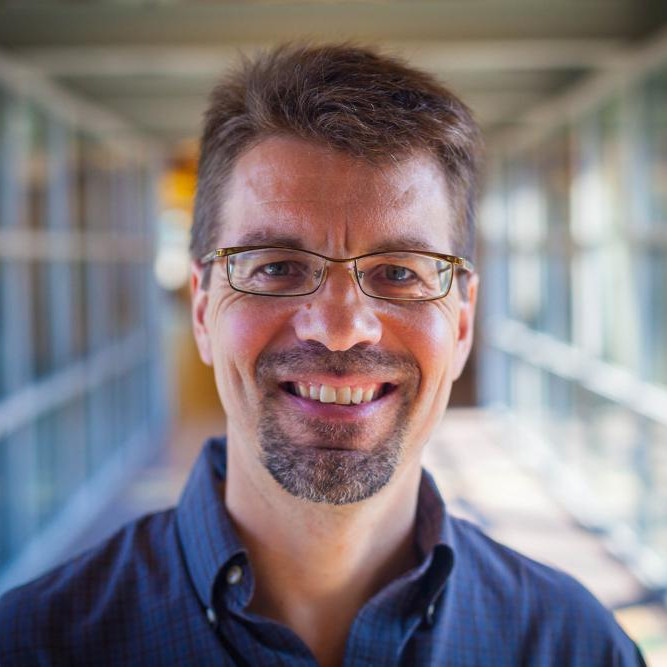
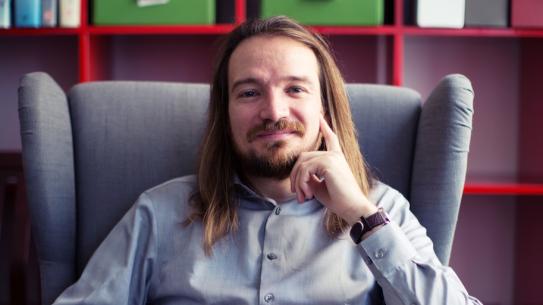
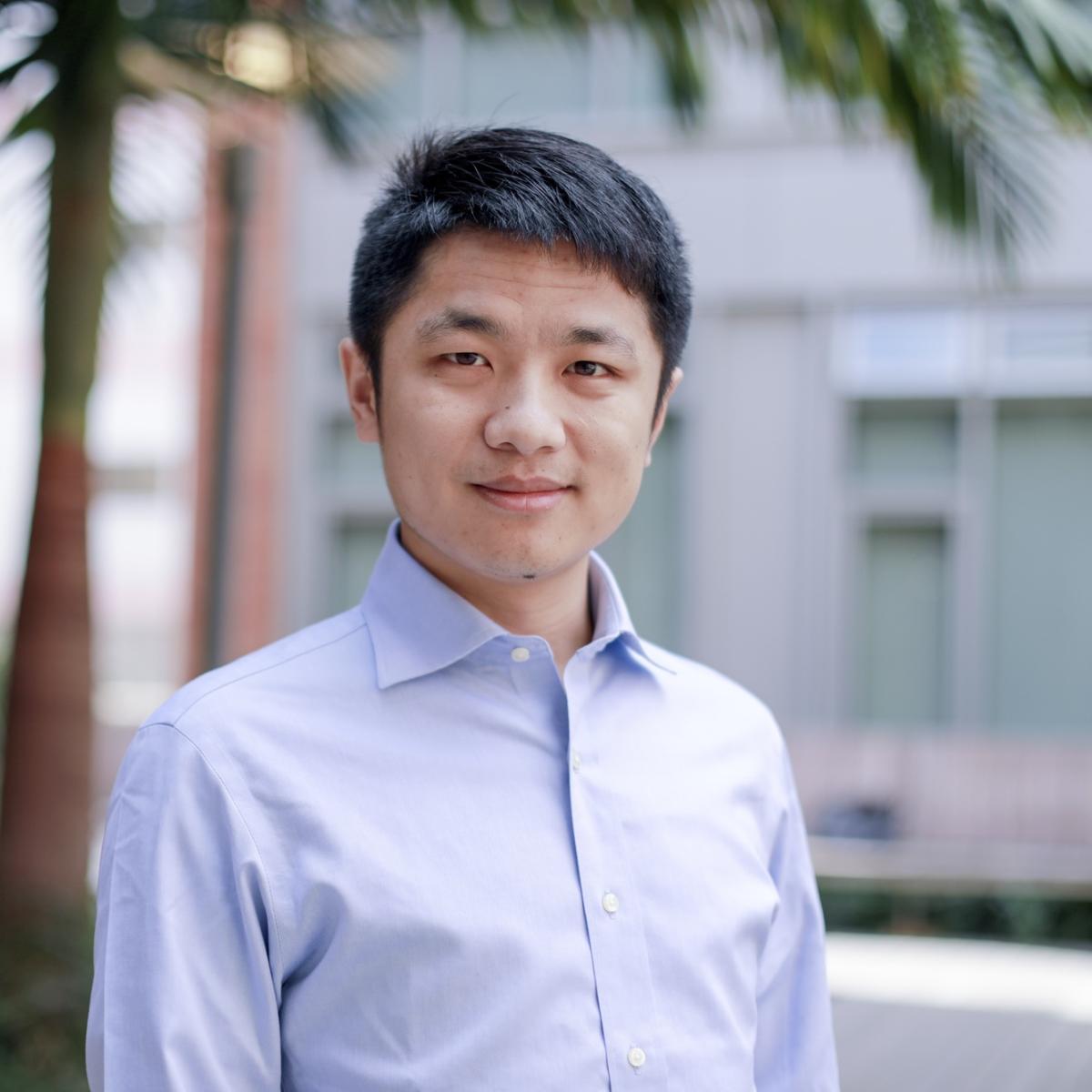
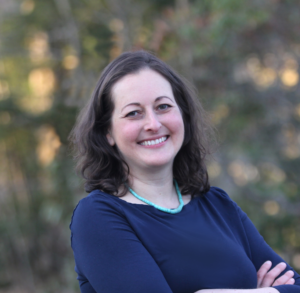
Greg Durrett is an Associate Professor in the Department of Computer Science at University of Texas at Austin, leading the TAUR Lab (Text Analysis, Understanding, and Reasoning ). His research focuses on advancing Large Language Models (LLMs) for knowledge-intensive tasks in medical information processing scientific discovery legal reasoning . He received his B.S. in Computer Science and Mathematics from MIT (2010) and Ph.D. in Computer Science from UC Berkeley (2016). His work develops techniques to train LLMs with new capabilities augment models for reliability assess model outputs improve reasoning frameworks . His 15 most recent publications (2021-2025) span knowledge propagation in LLMs chain-of-thought reasoning code generation benchmarks multi-modal reasoning fact verification discourse analysis . Scientific honors include NSF CAREER Award (2024) NSF grants (2018, 2024) Bloomberg Data Science Grant (2017) Facebook Fellowship (2014) Best Paper Finalist (EMNLP 2013) . Teaching: CS388: Natural Language Processing (graduate) CS371N: NLP (undergraduate) High school NLP module .
Nicole Wein is an Assistant Professor in the Computer Science and Engineering Division of the Department of Electrical Engineering and Computer Science (EECS) at the University of Michigan, College of Engineering. Her research lies in theoretical computer science, focusing on graph algorithms, dynamic algorithms, parameterized algorithms, distributed algorithms, online algorithms, and fine-grained complexity. She is part of the Theory of Computation Lab and advises both PhD and undergraduate researchers. PhD, Massachusetts Institute of Technology (MIT), advised by Virginia Vassilevska Williams Postdoctoral Fellow, DIMACS Research Fellow, Simons Institute, UC Berkeley MS, Stanford University BS, Computer Science/Math, Harvey Mudd College Her research explores fundamental algorithmic questions in combinatorial settings, particularly how algorithms handle dynamic data, extract information efficiently (e.g., in linear time), and understand shortest path structures in graphs—especially directed ones. She investigates problems in distance estimation, spanners, hopsets, dynamic graph algorithms, and hardness of approximation. Her work combines theoretical depth with practical implications for algorithm design. The recent publications reflect a strong trend in fine-grained complexity and graph algorithm design, with a focus on proving tight bounds, developing efficient approximations, and understanding structural limitations in directed and dynamic graphs. Her work frequently appears in top venues such as STOC, FOCS, SODA, and ICALP, often in collaboration with leading researchers in the field. Scientific Awards and Recognition: Invited to special issue of SIAM Journal on Computing (SICOMP) (FOCS 2022 paper) Invited to Highlights of Algorithms (HALG) (FOCS 2022 paper) Invited to minisymposium at CANADAM (ESA 2022 paper) Work featured in Quanta Magazine Nicole Wein actively mentors students, including current PhD student Jubayer Nirjhor and former undergraduate researchers like Sam Hiken (now pre-doc at MIT). She has served on program committees for major conferences including SODA, FOCS, ICALP, and ITCS, and co-organized the DIMACS workshop on Modern Techniques in Graph Algorithms (2023). She also contributes to the academic community through outreach, such as her article offering reassurance to early-stage PhD students in theoretical computer science. She leads and participates in collaborative research groups and workshops, emphasizing supercollaboration and interdisciplinary communication in algorithms. Her lab fosters a strong research environment in theoretical computer science at the University of Michigan.
Yulan Qing is an Assistant Professor in the Department of Mathematics at the University of Tennessee, Knoxville (UTK), part of the College of Arts and Sciences. She holds a Ph.D. in Mathematics from Tufts University. Her research focuses on low-dimensional topology, geometric group theory, asymptotic properties of groups, and big mapping class groups. Notable projects include studies on Gromov boundaries, genericity in groups, and curve graphs. She has published extensively in journals like Geometry & Topology and the Journal of the London Mathematical Society. Dr. Qing has organized conferences such as the 53rd Barrett Memorial Lectures and the GGTea Webinar, fostering collaboration in geometric group theory. She has taught courses like Honors Topology at UTK and supervised graduate students including Sagnik Jana and Alex Squires. Her work bridges theoretical foundations with applications in topology and geometry. Recent invited talks include presentations at the University of Virginia, Caltech, and the 2nd China-Russia Conference on Topology. She actively mentors undergraduate and graduate students, contributing to initiatives like the Math Circle programs at Tufts and MIT's RSI Summer Program.
Clyde Kruskal is an Associate Professor in the Department of Computer Science at the University of Maryland, College Park. His research focuses on parallel architectures, models, and algorithms. He earned a Ph.D. from New York University in 1981 and a bachelor’s degree from Brandeis University in 1976. His work includes foundational contributions to parallel computing, such as the read–modify–write concept in distributed systems. Kruskal’s research spans topics like interconnection networks, synchronization mechanisms, and algorithm design for parallel systems. Education: Bachelor’s Degree: Brandeis University, 1976 Master’s Degree: New York University (Courant Institute), 1978 Ph.D.: New York University (Courant Institute), 1981 Research Interests: Parallel computing architectures, parallel algorithms design, multiprocessor synchronization, interconnection networks, and computational geometry problems like graph coloring and visibility analysis. His work emphasizes theoretical foundations and practical implementations in parallel systems. Notable Contributions: Kruskal co-authored the book Problems With A Point: Exploring Math And Computer Science (2019), and his research includes foundational papers on parallel prefix operations, sparse matrix algorithms, and synchronization protocols. His publications span over three decades, reflecting sustained contributions to parallel computing theory and practice. Advising & Outreach: He has mentored students through programs like the Summer Combinatorial Algorithms REU at UMD, fostering undergraduate research in algorithm design and parallel computing.
Ravid Shwartz-Ziv is an Assistant Professor and Faculty Fellow at NYU's Center for Data Science, with a dual role as Senior Research Scientist at Wand AI. His research bridges theoretical foundations and practical applications in artificial intelligence, focusing on Large Language Models (LLMs), information theory, and neural network interpretability. Ph.D. in Computational Neuroscience, Hebrew University of Jerusalem (2021) B.Sc. in Computer Science and Computational Biology, Hebrew University of Jerusalem (2014) His research spans: Developing min-p sampling for LLM text generation Preventing representation collapse in Transformers Creating contamination-free LLM benchmarks like LiveBench Advancing information-theoretic frameworks for neural networks Exploring representation learning and model adaptation Recent publications demonstrate expertise in LLM efficiency, self-supervised learning, and multi-agent systems. Notable awards include the Google PhD Fellowship, Moore-Sloan Fellowship, and multiple best paper recognitions. He has led research initiatives at Intel and Google AI, focusing on neural network compression, XGBoost comparisons for tabular data, and innovative benchmarking frameworks.
Andrew Lan is an Associate Professor in the College of Information and Computer Sciences at the University of Massachusetts Amherst, where he also serves as the CS Undergraduate Program Director. He was granted tenure by the UMass Board of Trustees in June 2025 and is currently on leave through Spring 2026. His research focuses on developing human-in-the-loop machine learning methods to enable scalable, effective, and personalized learning experiences in education. Dr. Lan received his BS in Physics and Mathematics from the Hong Kong University of Science and Technology, followed by his MS (2014) and PhD (2016) in Electrical and Computer Engineering from Rice University. He completed postdoctoral research at Rice University (2016) and Princeton University's EDGE Lab (2017-2018). His research spans artificial intelligence for education, with particular expertise in educational data mining, knowledge tracing, personalized learning systems, and human-AI collaboration in educational contexts. Dr. Lan's work leverages massive and multimodal learner and content data collected from both traditional classrooms and online learning platforms to develop systems that deliver high-quality, affordable, and personalized learning experiences. He has made significant contributions to areas including computerized adaptive testing, math word problem generation, student affect detection, and automated grading systems. His recent work increasingly focuses on leveraging large language models for educational applications while maintaining rigorous scientific validation of these approaches. Best Student Paper Award at the 2024 AIED Conference (with Alexander Scarlatos) Best Paper Nominee at LAK 2021 Best Student Paper Award at IEEE Big Data 2020 NAEP Math Automated Scoring Challenge Grand Prize Winner Dr. Lan actively mentors graduate students and postdoctoral researchers, with several of his advisees receiving recognition for their work. He has secured substantial funding from the National Science Foundation, including a $90M grant for the SafeInsights project, a secure cyberinfrastructure for educational research. His research group collaborates with institutions including Worcester Polytechnic Institute, University of Pennsylvania, and Rice University. He teaches undergraduate and graduate courses including COMPSCI 240 (Reasoning under Uncertainty) and COMPSCI 590OP (Applied Numerical Optimization), with a focus on the practical application of theoretical concepts in machine learning and artificial intelligence. His educational philosophy emphasizes bridging the gap between theoretical foundations and real-world implementation in educational technology.
Michael J. Shelley is the Lilian and George Lyttle Professor of Applied Mathematics and holds joint appointments in Mathematics, Neural Science, and Mechanical Engineering at New York University's Courant Institute of Mathematical Sciences. He also serves as Co-Director of the Applied Mathematics Laboratory and Director of the Center for Computational Biology at the Flatiron Institute. Education: PhD (Applied Mathematics) from the University of Arizona (1985), MS (Applied Mathematics) from the University of Arizona (1984), BA (Mathematics) from the University of Colorado (1981). Research: Focuses on complex phenomena in active matter, biophysics, and complex fluids. Key areas include fluid-structure interactions (e.g., swimming/flying mechanics), cytoskeletal dynamics, and collective behavior in biological systems. Collaborates closely with experimentalists through the Applied Math Lab and Flatiron Institute. Labs & Affiliations: Co-Director, Applied Mathematics Laboratory; Director, Center for Computational Biology (Simons Foundation); affiliated with NYU’s Courant Institute and Department of Mathematics. Notable Work: Models for microtubule-motor assemblies, active suspensions, and fluid-structure interactions. Pioneered computational frameworks for Stokes suspensions and fiber dynamics in viscous fluids.
Ken Koedinger is a University Professor at Carnegie Mellon University (CMU), holding appointments in the School of Computer Science (Human-Computer Interaction Institute) and the Dietrich College of Humanities and Social Sciences (Department of Psychology). He is the co-founder of Carnegie Learning, Inc., and directs the LearnLab, now the scientific arm of CMU’s Simon Initiative. His research focuses on cognitive modeling, intelligent tutoring systems, and the science of learning. Dr. Koedinger has over 250 peer-reviewed publications and has been awarded prestigious titles such as the Hillman Professorship of Computer Science and Fellow of the Cognitive Science Society. Education: Ph.D. in Cognitive Psychology (CMU, 1990), M.S. in Computer Science (University of Wisconsin, 1986). Prior to academia, he taught in an urban high school, informing his interdisciplinary approach to education research. Research Interests: Cognitive modeling, educational technology, learning analytics, and the integration of AI into learning systems. Key projects include Cognitive Tutors, LearnLab, and the Pittsburgh Science of Learning Center. Awards: Over 30 grants from NSF, Department of Education, and private foundations, including major contributions to K-12 math education and AI-driven personalized learning. Advising: Supervised over 30 graduate students, many now leading roles in academia and industry. Current students focus on AI ethics, scalable education, and mixed-reality learning.
Brendan Dolan-Gavitt is an Associate Professor in the Computer Science and Engineering Department at NYU Tandon School of Engineering and part of the NYU Center for Cybersecurity (CCS). He holds a Ph.D. in Computer Science from Georgia Tech (2014) and a BA in Math and Computer Science from Wesleyan University (2006). His research spans cybersecurity, program analysis, virtualization security, memory forensics, and embedded/cyber-physical systems, focusing on automating the understanding of large software systems to develop novel defenses. Research interests include developing techniques for static and dynamic analyses of real-world software to reveal hidden design assumptions. His work has been presented at top security conferences like USENIX Security, ACM CCS, and IEEE Security & Privacy. He led the development of the open-source PANDA platform for dynamic analysis. His publications primarily focus on AI-driven security solutions, vulnerability discovery, and automated testing tools. Recent work explores LLMs in offensive security, fuzzing enhancements, and secure code generation, emphasizing practical applications in cybersecurity. Scientific Awards: NSF CAREER Award for improving software vulnerability testing and education He leads the OSIRIS Lab, a student-run cybersecurity group, and collaborates on interdisciplinary projects addressing emerging security challenges through grants and industry partnerships.
Xiaoning Qian is a Professor in the Department of Electrical and Computer Engineering at Texas A&M University, where he also serves on the Faculty Advisory Committee for the Texas A&M Institute of Data Science (TAMIDS) and the Executive Committee for the Texas A&M TRIPODS Research Institute for Foundations of Interdisciplinary Data Science (FIDS). He holds a joint appointment in the Applied Math group within the Computational Science Initiative at Brookhaven National Laboratory (BNL). Previously, he was an Associate Professor (2018-2022) and Assistant Professor (2013-2018) at Texas A&M, and an Assistant Professor in the Department of Computer Science and Engineering at the University of South Florida (2009-2013). Dr. Qian received his B.S.E. and M.S.E. degrees from Shanghai Jiaotong University, China, and his M.Ph. and Ph.D. degrees in Electrical Engineering from Yale University. Dr. Qian's research focuses on developing mathematical models and computational algorithms in signal processing, machine learning, and Bayesian methods, particularly in learning, uncertainty quantification, and experimental design. His work spans multiple disciplines, with applications in life sciences and materials science. His research group, the Biomedical Imaging, Sensing, and Genomic Signal Processing Group, actively applies probabilistic models and optimization algorithms to solve complex problems in interdisciplinary domains. His research has evolved from foundational work in bioinformatics and biomedical image processing to more recent applications in materials science and broader AI for science initiatives. Dr. Qian has received numerous scientific awards and recognitions including: National Science Foundation (NSF) CAREER Award Segers Family Dean's Excellence Professorship II in the College of Engineering TEES (Texas A&M Engineering Experiment Station) Senior Faculty Fellow Montague-Center for Teaching Excellence Scholar J. T. Oden Faculty Fellow at the University of Texas, Austin Finalist of the 2023 INFORMS QSR Best Paper Faculty Impact Fellow from the Department of Electrical & Computer Engineering As an advisor , Dr. Qian has mentored numerous graduate students through their PhD and MS programs, with many of his alumni securing positions at prestigious institutions and companies including NIH/NCBI, Microsoft, Baidu Research Lab, and Qualcomm. His research has been supported by multiple grants, including an NSF CAREER award and collaborative research funding from the Information Integration and Informatics program. He is actively recruiting postdoc and graduate student research assistants for projects in machine learning and optimization methods with applications in bioinformatics and materials science. Dr. Qian is involved with several research initiatives including the Objective-Based Uncertainty Quantification (ObjectiveUQ) project, which provides a mathematical framework for integrating prior knowledge and data while enabling effective operational and experimental design under uncertainty. He also co-organizes the Bio-Seminar series for the Biomedical Imaging, Sensing & Genomic Signal Processing group at Texas A&M.
Lin Yang is an Assistant Professor in the Electrical and Computer Engineering Department at the University of California, Los Angeles (UCLA). His research focuses on reinforcement learning theory and applications, learning for control, non-convex optimization, and streaming algorithms. Education: PhD in Computer Science and PhD in Physics & Astronomy - Johns Hopkins University (simultaneously) Bachelor's degree in Math and Physics - Tsinghua University Research Interests: His work spans reinforcement learning theory and its applications, particularly in learning for control systems. He also investigates non-convex optimization techniques and streaming algorithms for efficient data processing. Scientific Awards: Dean Robert H. Roy Fellowship - Johns Hopkins University Previous Positions: Before joining UCLA, he was a postdoc at Princeton University working with Professor Mengdi Wang.
Anna Shusterman is a Professor in the Psychology Department at Wesleyan University, where she has taught and directed research in the Cognitive Development Laboratories since 2007. She co-founded and serves as co-chair of Wesleyan's College of Education Studies, established in 2020. Her educational background includes: Bachelor's degree in Neuroscience from Brown University Graduate studies and post-doctoral fellowship at Harvard University's Laboratory for Developmental Studies under Elizabeth Spelke and Susan Carey Dr. Shusterman's research centers on conceptual development in children, with a focus on the interplay between language and cognition in spatial and numerical domains. She investigates how language shapes children's understanding of numbers and space, and develops methodological approaches for translating developmental science into practical preschool classroom applications. Her work explores how young children perceive and learn about the world through simple, engaging games. Analysis of her recent publications (2019-2025) reveals consistent emphasis on numerical cognition, language acquisition, and spatial reasoning. Key themes include language's role in math development, early numeracy in diverse populations (particularly deaf and hard of hearing children), and implementation of research-based math activities in preschool settings. Her work demonstrates how language exposure in any modality supports numerical concept development and how grammatical structures influence number word acquisition. Dr. Shusterman has secured significant research funding including NSF CAREER grants and collaborative research awards. She mentors undergraduate researchers in her laboratory and actively bridges academic research with practical educational applications through her work with the College of Education Studies. She directs the Blue Lab within Wesleyan's Cognitive Development Laboratories, located in Judd Hall. The NSF-funded lab conducts studies with children under 12 from central Connecticut preschools, schools, and daycare centers, using fun games to investigate how children think about numbers, space, language, and social concepts.
Pavel Panchekha is an Assistant Professor in the School of Computing at the University of Utah, where he holds the Warnock Chair for Junior Faculty. His research spans programming languages, web browsers, and numerical analysis, with a focus on developing programming language techniques to address challenges across computer science. Dr. Panchekha received his educational training at prestigious institutions: PhD in Computer Science from the Paul G. Allen School for Computer Science and Engineering at the University of Washington, advised by Michael D. Ernst and Zachary Tatlock BS in Mathematics from MIT Panchekha's research program has two major thrusts. First, he works on web browser internals , with projects including fuzzing layout invalidation, multi-tenant garbage collection, and optimizing 2D graphics. He is also authoring a textbook on web browsers that informs much of this research. Second, he focuses on automatic numerical analysis , with projects such as automatic accuracy improvement, synthesis via term rewriting, scalable static accuracy analysis, and math library implementation. He leads the FPBench and Herbie projects, which are major deployments of his research. His scholarly output demonstrates consistent contributions across programming languages, verification, and numerical methods. Recent work shows a growing emphasis on bidirectional typing systems, layout invalidation in browsers, and robust floating-point error analysis. His publications reveal a trajectory from foundational work on floating-point accuracy (notably the Herbie tool that won a Distinguished Paper Award at PLDI 2015) toward more comprehensive systems for program synthesis, verification, and browser optimization. Panchekha has received significant recognition for his research contributions: NSF Fellowship ARCS Foundation Fellowship Adobe Research Fellowship Wissner-Slivka Foundation Fellowship 2015 PLDI Distinguished Paper Award for work on the Herbie numerical analysis and repair tool As an advisor, Panchekha mentors a substantial group of students across multiple levels. He currently advises six students: Marisa Kirisame (PhD), Bhargav Kulkarni (PhD), Yumeng He (PhD), Artem Yadrov (MS), Jesus Ponce (BS), and Jonas Regehr (BS). Previously, he has advised over twenty students including PhD candidates like Ian Briggs and numerous MS and BS students. His advising spans theoretical topics in programming languages and practical applications in web browsers and numerical computing. Panchekha leads research groups focused on programming languages applications to web browsers and numerical analysis. His work on the Herbie tool for floating-point accuracy improvement has become influential in the programming languages community, and his more recent work on browser internals is shaping how researchers understand and optimize modern web rendering engines. He is currently developing a textbook on web browsers that aims to synthesize knowledge about browser architecture and implementation.
Margaret Greenwald serves as Associate Professor and Ph.D. Coordinator in the Department of Communication Sciences and Disorders (CSD) within Wayne State University's College of Liberal Arts and Sciences. Previously department chair (2014-2020), she is a Licensed and Certified Speech-Language Pathologist (CCC-SLP) recognized in 2022 as Wayne State's Outstanding Graduate Mentor in the health sciences. Her academic credentials include: M.A. in Speech-Language Pathology (University of Florida) Ph.D. in Communicative Sciences and Disorders (University of Florida) Post Doctoral Research Training in Cognitive Neuropsychology (University of Maryland, Department of Neurology) Dr. Greenwald's research centers on adult neurogenic communication disorders , specializing in aphasia, traumatic brain injury, and stroke rehabilitation through cognitive neuropsychology. Her work employs Magnetoencephalography (MEG) to map brain-behavior relationships during language and musical processing tasks, revealing critical insights for rehabilitation. She actively bridges clinical practice with neuroscience to develop evidence-based interventions. Analysis of her recent publications shows consistent focus on neuroimaging applications for understanding language disorders, with growing emphasis on telepractice implementation and the cognitive effects of musical training. Her work demonstrates strong translational value, connecting basic neuroscience to clinical rehabilitation protocols while maintaining rigorous methodological standards. Her scientific recognition includes: Outstanding Graduate Mentor in the Health Sciences, Wayne State University (2022) As an educator, Dr. Greenwald teaches graduate courses in aphasia, neuromuscular speech disorders, research methods, and doctoral seminars, plus undergraduate speech-language pathology instruction. She supervises doctoral research as Ph.D. coordinator and mentors students through clinical research projects. Her teaching integrates current neuroscience findings with clinical practice standards. She maintains active professional engagement through memberships in the American Speech-Language Hearing Association (ASHA), Academy of Aphasia, and International Neuropsychological Society, contributing to both clinical guidelines development and research community advancement.
Anna L. Boozer is a Professor in the History Department at Baruch College's Weissman School of Arts and Sciences, City University of New York. Her research focuses on households, connectivity, and empires in Roman Egypt and Meroitic Sudan, with extensive fieldwork at Amheida (Dakhleh Oasis) and Meroe. She directs the CUNY excavations at Amheida and the Meroe Archival Project. Boozer earned her Ph.D., M.Phil, and M.A. in Archaeology/Anthropology from Columbia University and a B.A. in Philosophy and History of Math/Science from St. John's College. Her scholarly contributions span household archaeology, imperial borderlands, and material culture studies, examining how domestic spaces reflect broader social and political dynamics in antiquity. Her research interests center on social archaeology of Roman Egypt and Meroitic Sudan, with particular focus on household organization, material culture, and imperial connectivity. She examines how domestic spaces serve as sites of cultural negotiation, exploring themes of identity formation, social memory, and daily life practices at imperial frontiers. Her work challenges traditional Romanization narratives by highlighting local agency and cultural hybridity. Boozer's publications reveal consistent engagement with household archaeology, material culture analysis, and imperial borderlands studies. Her work demonstrates how domestic contexts provide critical insights into larger imperial processes, with recurring themes of connectivity, cultural negotiation, and the social significance of material remains. She frequently employs interdisciplinary approaches bridging archaeology, anthropology, and history. Teaching and Learning Award (University of Reading, 2013) Lump Sum Award (University of Reading, 2012) Boozer actively supervises doctoral dissertations and has secured multiple research grants including PSC-CUNY awards totaling over $20,000 for projects on Roman Egypt and Meroitic Sudan. She serves as Area Editor for the Encyclopedia of Ancient History and sits on editorial boards for Dotawo: A Journal of Nubian Studies and Brepols' Borders, Boundaries, and Landscapes series. She directs two major research initiatives: the CUNY excavations at Amheida (ancient Trimithis), a Romano-Egyptian city in the Dakhleh Oasis, and the Meroe Archival Project which analyzes legacy data from Sudan's ancient Meroitic capital. These projects involve international collaborations with institutions in Egypt, Sudan, and Europe, focusing on household archaeology and imperial connectivity.