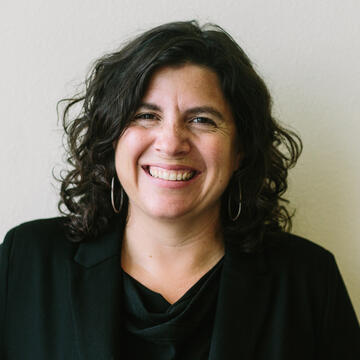
Rachel Brahinsky is an Associate Professor at the University of San Francisco, affiliated with the Politics Department and the Urban & Public Affairs program. Her work bridges urban geography, race studies, and social justice, focusing on urban inequality and spatial politics in the San Francisco Bay Area. She served as director of the Urban & Public Affairs program from 2013 to 2020. Education: PhD in Geography from UC Berkeley (focusing on human/social geography of cities), BA from Hampshire College Her research examines race, class, and space in rapidly changing cities, with emphasis on gentrification, displacement, and community resistance. Key themes include property theory, urban renewal impacts, and marginalized communities’ resilience in tech-driven urban environments. Recent work includes A People's Guide to the San Francisco Bay Area (2020), critiquing dominant narratives to center grassroots histories. Publications span urban sociology, geography, and policy, analyzing topics like postindustrial Detroit, pandemic-era community organizing, and San Francisco’s redevelopment history. Her writing blends academic rigor with accessible public scholarship, informed by her background in journalism. Grants and awards: None explicitly listed in provided texts. Advising focus includes mentoring students in Urban Studies and Politics programs.
Peter A. Dowben is a Professor in the Department of Physics and Astronomy at the University of Nebraska–Lincoln , with a research focus spanning Condensed Matter Physics , Materials Science , and Spintronics . His work emphasizes surface physics , electronic structure , and magnetoelectric coupling , particularly in transition metal compounds , ferroelectric polymers , and graphene-based systems . Key research trends in his recent publications include voltage-controlled spin states for memory applications, magnetoelectric transistors , and interfacial effects in nanoscale materials . His collaborations extend across institutions like the Air Force Institute of Technology and the Institute of Physical Optics, with experimental techniques such as X-ray absorption spectroscopy and photoemission . While no specific awards are documented in the provided texts, his extensive publication record and interdisciplinary work on molecular spintronics , surface segregation , and band structure engineering highlight his contributions to fundamental material science and applied physics . He has advised teams in studies involving spin crossover complexes , self-assembled monolayers , and magnetoelectric heterostructures .
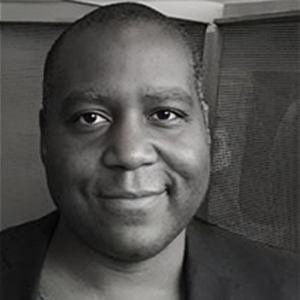
Keith Obadike is a Professor in the Department of Art at Cornell University's College of Architecture, Art, and Planning (AAP), where he also serves as Director of Undergraduate Studies. He is an acclaimed interdisciplinary artist and composer, known for his collaborative work with Mendi Obadike, which spans sound art, digital media, public installations, performance, and internet-based projects. His artistic and academic work critically engages with technology, race, history, and identity. Obadike earned a B.A. in Visual Art from North Carolina Central University and an M.F.A. in Sound Design from Yale University. Prior to joining Cornell, he taught at William Paterson University and held visiting positions at Princeton University, Columbia University, Northwestern University, and the Art Institute of Chicago. His research and creative practice focus on sound art, digital media, public art, performance, and collaborative practice , with strong interdisciplinary connections to Afrofuturism, data sonification, and social justice. He explores how sound and technology mediate racial identity, memory, and liberation, notably through the concept of acousmatic blackness , which he and Mendi developed to describe the racial perception of sound when its source is unseen. Obadike’s selected works include large-scale public sound installations such as Blues Speaker (for James Baldwin) , Free/Phase , Compass Song (Times Square Arts), and GuideStar (Space Needle, Seattle). His projects often use data sonification, archival research, and mythic storytelling, blending historical inquiry with futuristic vision. Notable series include the Opera-Masquerades , Americana Suites , and Numbers Station works, which transform databases of violence into sonic experiences. His honors include: Rockefeller New Media Arts Fellowship (2004) Louis Comfort Tiffany Biennial Award (2015) New York Foundation for the Arts Fellowship in Fiction New Music USA Creator Development Fund (2022) Obadike has received commissions and support from institutions such as the Vera List Center, Harlem Stage, Times Square Arts, the American Composers Orchestra, and the Cornell Mui Ho Center for Cities. He has exhibited and performed at The New Museum, The Whitney Museum of American Art, MoMA, and The Studio Museum in Harlem. His writings and publications include contributions to Studies into Darkness (2022), and artist books such as Four Electric Ghosts and Big House / Disclosure (both 2014). He has also released albums like Crosstalk (2008) and created internet artworks such as Blackness for Sale (2001) and The Interaction of Coloreds (2002), which are foundational in new media and critical race art. While specific advisees are not listed, his role as Director of Undergraduate Studies and Professor indicates active mentorship. His work is deeply collaborative, often co-created with Mendi Obadike, and supported by interdisciplinary teams and institutions.
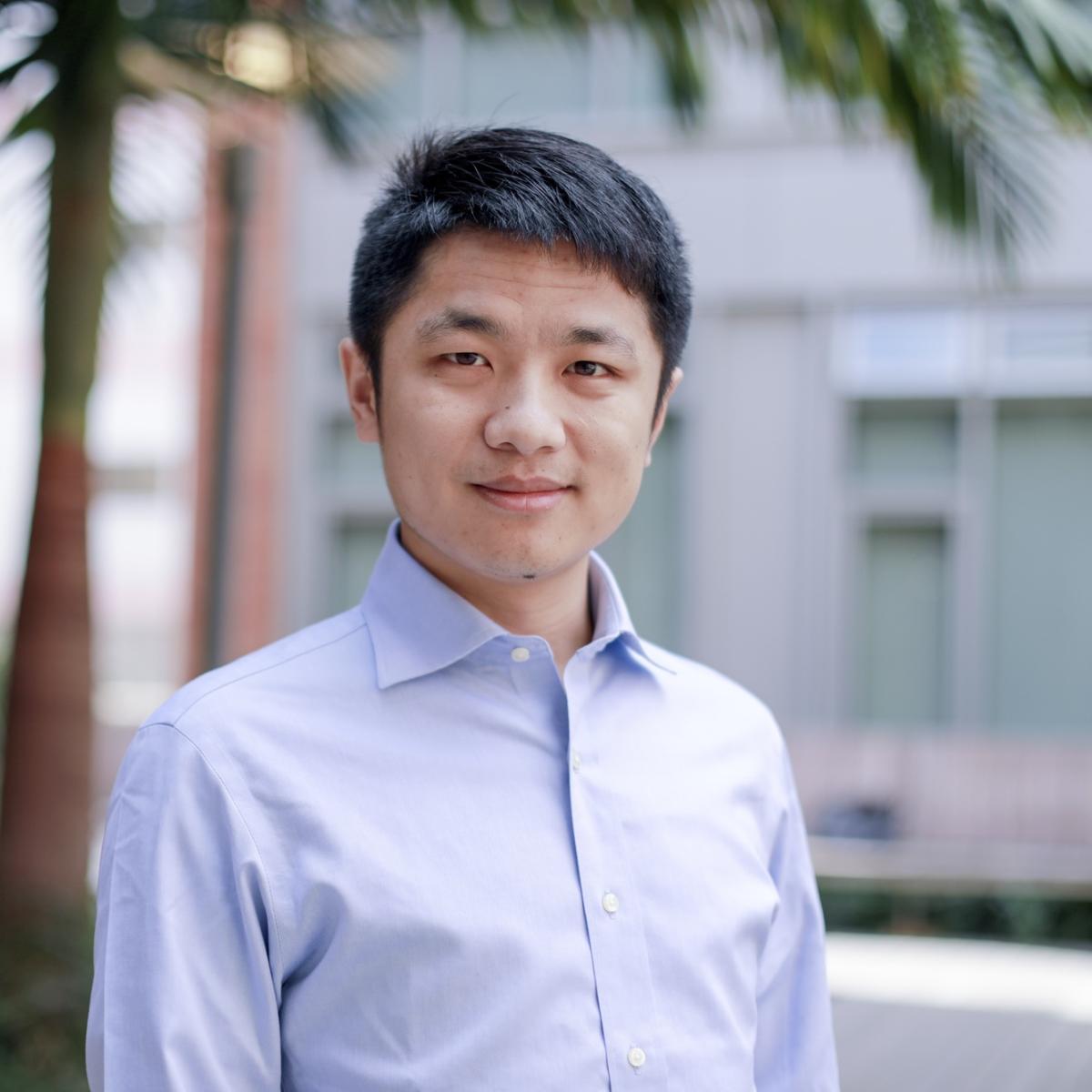
Lin Yang is an Assistant Professor in the Electrical and Computer Engineering Department at the University of California, Los Angeles (UCLA). His research focuses on reinforcement learning theory and applications, learning for control, non-convex optimization, and streaming algorithms. Education: PhD in Computer Science and PhD in Physics & Astronomy - Johns Hopkins University (simultaneously) Bachelor's degree in Math and Physics - Tsinghua University Research Interests: His work spans reinforcement learning theory and its applications, particularly in learning for control systems. He also investigates non-convex optimization techniques and streaming algorithms for efficient data processing. Scientific Awards: Dean Robert H. Roy Fellowship - Johns Hopkins University Previous Positions: Before joining UCLA, he was a postdoc at Princeton University working with Professor Mengdi Wang.
Dr. Anna Baldycheva is a Senior Lecturer in Electronic Engineering at the University of Exeter, within the College of Engineering, Mathematics and Physical Sciences. She leads the interdisciplinary STEMM Laboratory, focusing on applied R&D in smart materials, photonics, AI, and IoT. With prior research experience at MIT, Trinity College Dublin, and Tyndall National Institute, she has established herself as an internationally recognized innovator and entrepreneur in emerging technologies. PhD in Electronic and Electrical Engineering, Trinity College Dublin (2008–2012) BSc (Hons) in Physics, St. Petersburg State University (2003–2008) Postgraduate Certificate in Academic Practice, University of Exeter (2016–2017) Postgraduate Certificate in Technology Management, Smurfit Business School (2009–2010) Her research spans Nano-Engineering, Opto-Electronics, Photonics, AI, and IoT , with a strong emphasis on real-world applications. She pioneers work in fluid opto-electronics , graphene nanocoatings , and AI-driven emotion recognition and early cancer detection . Her lab develops smart composite materials for flexible electronics, e-textiles, and structural applications, integrating machine learning into healthcare, education, and communications systems. The recent publications highlight a strong trend toward applied interdisciplinary innovation , combining materials science with AI and photonics for healthcare diagnostics, energy-efficient computing, and educational technology. Her work frequently bridges fundamental physics with commercialization potential, as seen in spin-out technologies like GSurf and the Electronic-Nose for lung cancer detection. Fellow, Royal Microscopical Society (RMS) Fellow, Higher Education Academy (FHEA) Expert, Future and Emerging Technologies, European Commission Featured in Forbes and Forbes Tech Council Editor-in-Chief, InSTEMM Journal Associate Editor, Nature Scientific Reports and Discover Nano Trustee, Royal Microscopical Society Founder, STEMM Global Scientific Society Founder, It’s Her! Women in STEMM Initiative Dr. Baldycheva actively supervises PhD students and has secured industrial collaborations with organizations such as Qinetiq and Lumentum. She leads multiple outreach initiatives, including STEMM Junior for underprivileged children, and serves on the committee for the Jocelyn Bell Brunel PhD Scholarship. She has raised significant research funding through national and international grants, though specific grant names are not listed. She leads the STEMM Laboratory , a multidisciplinary research group with divisions in Smart Composite Materials, Machine Learning & AI, and Opto-Electronics & Photonics. The lab emphasizes industry collaboration and technology transfer, having produced a university spin-out (GSurf) and multiple media-highlighted innovations.
Murali Mani is a Professor in the Department of Computer Science, Engineering, and Physics at the College of Innovation and Technology, University of Michigan-Flint. He is actively involved in teaching courses such as Database Design (CSC 384, CSC 584) and Independent Graduate Study in Computer Science (CSC 591), and serves as Principal Investigator on multiple research grants focused on computing education and data science. His research interests span database systems, data provenance, generative AI for data augmentation, computing education, and the societal impact of technology . He has developed educational tools including epidemiology calculators and market basket analysis modules to support interdisciplinary learning. His work emphasizes integrating computing skills across disciplines such as health sciences and management. The 15 most recent scholarly contributions reflect a strong focus on data management, AI-augmented data curation, educational technology, and the cognitive aspects of learning programming. These publications appear in venues such as VLDB, IEEE FIE, and ACM conferences, with several under review or in preparation for top-tier journals like Communications of the ACM and the VLDB Journal. Scientific Awards: No awards explicitly mentioned in the provided text. Advising and Grants: Murali Mani actively mentors students through independent graduate studies and collaborative research projects. He has secured funding from the National Science Foundation (SGER grant on provenance metadata) and internal university sources, including the CIT/CHS Joint Grant and the Office of Research at UM-Flint, supporting projects on civic literacy, computational skills integration, and AI for social science data archiving. Labs and Teams: While no formal lab name is mentioned, Murali Mani leads a research group focused on data systems and computing education, collaborating with colleagues across departments and institutions. He contributes to initiatives such as the Michigan Institute for Data & AI in Society (MIDAS) and the Academic Data Science Alliance (ADSA), and has presented at conferences including IASSIST, FIE, and ICCTAC.
Erika Tan is a Reader in Contemporary Art Practice and Course Leader of MA Fine Art at Central Saint Martins, University of the Arts London. With a multidisciplinary background spanning social anthropology, archaeology, and film directing, her research-led practice investigates postcolonial narratives, transnational identities, and decolonial methodologies through moving image, archival interventions, and curatorial projects. Education includes: M.A Fine Art - Central Saint Martins (1997) B.A (Hons) Social Anthropology and Archaeology - University of Cambridge (1991) Advanced Diploma in Film & Video - Central Saint Martins (1995) Film Directing - Beijing Film Academy (1994) Her research focuses on three primary domains: postcolonial museum practices examining colonial collections and restitution; transnational material histories exploring cultural exchange and identity formation; and decolonial methodologies challenging canonical art histories through archival reexamination. Current projects include SOAS-led research on Southeast Asian restitution paradigms and AHRC-funded work on decolonizing national collections through machine learning applications. Publication trends reveal sustained engagement with archival reinterpretation, particularly through the recurring 'Forgotten Weaver' project examining Malayan craft histories. Recent works demonstrate increased focus on participatory sound installations (e.g., Sonic Soundings ) and feminist knowledge-sharing frameworks like Slideshow Party developed for Singapore Biennale 2023. Significant recognitions include: Arts Foundation Digital Arts Fellowship (1998) ACME 5-year Fire Station Residency (2001) Samsung Digital Art Plus Prize Nomination (2012) Stanley Picker Fine Art Fellowship (2018-2020) As Research Associate with UAL's Decolonising Arts Institute, she contributes to major grants including the AHRC's 'Transforming Collections' initiative. She leads the Moving Image research group and has curated geo-locational projects like Sonic Soundings across international contexts.
Marcus Nohlberg is an Associate Professor in the Department of Information Technology at the University of Skövde, Sweden. His primary academic affiliation is with the School of Informatics where he serves as a course coordinator for multiple bachelor-level courses in information security. He maintains an active research profile with numerous publications in cybersecurity, particularly focusing on human aspects of security. His research interests center on cybersecurity training methods, social engineering, usable security, and information security management. Nohlberg has developed the Context-Based Micro-Training (CBMT) framework, which has become a significant contribution to security awareness training. His work frequently examines how cognitive factors impact security behaviors and how training can be designed to be more effective and accessible. His publication trends show a consistent focus on human-centered security approaches, with recent work expanding into automotive cybersecurity, digital inclusion for seniors, and relationship security aspects. His research demonstrates a strong interdisciplinary approach, bridging computer science with psychology, education, and organizational behavior. Nohlberg has received recognition through numerous publications in reputable journals and conferences including Information and Computer Security, Computers & Security, and various IFIP WG 11.12 symposiums. His work often appears in Human Aspects of Information Security and Assurance conferences. He has led several research projects including "Development of Decision Support for Users in Risky Online Situations" (2020-2022) and "Information Security Training with Context-Based Microtraining" (2019-2020), demonstrating his commitment to translating research into practical security solutions. His work frequently involves collaboration with Swedish municipalities, auto workshops, and other organizations to address real-world security challenges. Nohlberg maintains active engagement with the public through media appearances and popular science presentations at the University of Skövde, discussing topics like AI risks and opportunities, digital security in relationships, and BankID accessibility issues.
Ben Seymour is a Lecturer in Fine Art at the Department of Art, Goldsmiths, University of London. His research focuses on the intersections of urban regeneration, gentrification, and culture, alongside critical analyses of contemporary capitalism's ideologies, including precarious labor, creative economy, and financialization of art. He is also a writer and Deputy Editor of Mute Magazine , contributing to debates on digital culture, political economy, and artistic resistance. Position: Lecturer in Fine Art Institution: Goldsmiths, University of London Research Themes: Urban Regeneration, Gentrification, Art and Capitalism, Cultural Politics Email: b.seymour@gold.ac.uk Ben's academic and artistic work critically examines urban development processes, particularly in London's Hackney and other global cities, through films, articles, and visual essays. He has explored the socio-political consequences of regeneration projects, linking them to broader capitalist dynamics such as financialization and the erosion of community spaces. His practice extends to curatorial and editorial projects, including co-programming films on gentrification and organizing reading groups on Marx's Capital in Hackney and Brooklyn. His films have been internationally screened at festivals and galleries in Edinburgh, Leeds, NYC, Amsterdam, and Spain, addressing themes of urban utopianism and capitalist critique.
Thorsten Schmidt is Professor of Mathematical Stochastics at the University of Freiburg, succeeding Prof. Ernst Eberlein in the summer semester of 2015. He also serves as Senior Financial Engineer at MathFinance. Previously, he held professorships at Chemnitz University of Technology (2008-2015), Technical University Munich (2008), and University of Leipzig (2004 onwards). From 2017-2019, he was a Research Fellow at the Freiburg Institute for Advanced Studies (FRIAS) in a joint research group with the University of Strasbourg and USIAS on the topic of Linking Finance and Insurance. His research focuses primarily on financial and actuarial mathematics, stochastic processes, and statistics, with recent work on machine learning methods and their applications in financial mathematics and AI regulation. In Freiburg, his goal with his young team is to tackle complex challenges with improved mathematical models and apply these methodologies to various fields. Key Research Areas: Financial mathematics and credit risks Pricing and hedging of derivative financial products Statistics of stochastic processes Energy markets and nonlinear filter theory Machine learning applications in finance and insurance His recent publications show a strong trend toward integrating machine learning with traditional mathematical finance, particularly in risk management, insurance-finance arbitrage, and robust financial modeling. His work increasingly addresses ethical considerations in AI applications within finance, reflecting his broader interest in responsible AI development. Notable Awards: IDA Award Finance (2015) FRIAS-USIAS Research Fellow (2017/2018) IDA Award Machine Learning and AI (2020) MAPFRE Research Grant (2020) Luis Bachelier Fellow (2021) As Editor-in-Chief of Statistics and Risk Modeling and Associate Editor for Mathematical Finance and International Journal of Theoretical and Applied Finance, Schmidt plays a significant role in academic publishing. He leads the CRC 'Small Data' research center with Harald Binder, focusing on medical problems where disease progression must be estimated with few data points per patient. His LeanAI project, funded by the Vector Foundation, explores the connection between machine learning and theorem-proving software LEAN, aiming to develop AI that can translate between mathematics and formal proof systems. His laboratory work centers around the application of stochastic methods combined with machine learning to solve problems in finance and insurance where data is limited ('Small Data' initiative), with significant funding from DFG (€12 million for CRC Small Data) and the Carl Zeiss Foundation.
Paul R. Genssler is a Dr.-Ing. researcher at the Chair of AI Processor Design (AI-Pro) within the Technical University of Munich (TUM), actively advancing hardware solutions for artificial intelligence under Prof. Hussam Amrouch. His work bridges computer engineering and emerging technologies, focusing on overcoming fundamental limitations in conventional computing architectures through brain-inspired paradigms. His research spans critical domains in next-generation computing: Hyperdimensional Computing for robust pattern recognition and bioinformatics applications Neuromorphic and In-Memory Computing architectures for energy efficiency Reliability engineering for emerging memory technologies (FeFET, etc.) Quantum computing support systems including cryogenic embedded electronics Machine learning-driven transistor aging prediction and mitigation Analysis of his 15 most recent publications (2023-2024) reveals a dominant trend toward hyperdimensional computing as a unifying framework for addressing reliability challenges in emerging technologies. His work consistently integrates in-memory computing techniques to bypass von Neumann bottlenecks while targeting real-world applications like genome matching and unsupervised learning. A significant portion focuses on error-resilient implementations for unreliable nanoscale devices, demonstrating exceptional cross-stack expertise from transistor physics to algorithm design. As a core member of TUM's AI Processor Design group affiliated with the Munich Institute of Robotics and Machine Intelligence (MIRMI), Genssler collaborates extensively on projects spanning cryogenic quantum control systems, FPGA-based AI resilience, and monolithic 3D integration. The team operates at the intersection of semiconductor physics, computer architecture, and machine learning, with strong industry connections evident through publications at DATE, ASP-DAC, and ICCAD.
Michael P. O'Brien is an Associate Professor of Information Management at the Department of Management & Marketing, Kemmy Business School, University of Limerick. He teaches undergraduate and postgraduate modules in Information & Knowledge Management, Business Analytics Simulation, and Technical Communication, serving as Course Director for the MA in Business Management programme. PhD in Computer Science (University of Limerick) MSc in Computer Science (by research and thesis, University of Limerick) BSc (Hons) in Information Systems His research bridges Data Analytics , Software Evolution , and Educational Psychology , focusing on empirical studies of programmers, instructional design, and gamification in education. Recent publications explore experiential learning and gamification for strategic thinking . Michael supervises Masters students in topics ranging from Cloud Computing Security to Blockchain in Finance , with a focus on Big Data and AI Impacts . His advising style emphasizes practical applications and technology-driven solutions. 2000 : AGB Dwyer Memorial Award for Excellence in Education 2017 : KBS Seed Funding Competition He actively contributes to academic networks like the Irish Learning Technology Association and Psychology of Programming Interest Group , aligning his work with UN Sustainable Development Goals.
Professor Udo Oppermann serves as Professor of Molecular Biology and Director of Laboratory Sciences at the Institute of Musculoskeletal Sciences, Botnar Research Centre, University of Oxford. He is also Deputy Director of the Oxford Centre of Translational Myeloma Research and a fellow at St Catherine's College. His educational background includes a Diploma in Human Biology (1990) and PhD in Pharmacology and Toxicology (1994), both earned with distinctions from Philipps University Marburg. Prior academic appointments include Associate Professor at Karolinska Institutet (until 2004) and sabbatical work at Yale University. Research focuses on epigenetic mechanisms in disease through drug and target discovery using systems biology and single-cell approaches . Key disease targets include metabolic disorders, inflammatory conditions, and malignant diseases—particularly multiple myeloma and secondary bone cancers. His group pioneers chemical biology applications in primary tumor microenvironments. Current funding sources include Cancer Research UK, Innovate UK, EPSRC, Royal Society-Newton Fund, Bristol Myers Squibb, Bayer Healthcare, GlaxoSmithKline, Blood Cancer UK, and Leducq Foundation. Notable research trends show increasing emphasis on epigenetic regulation in immune cells (2020-2024), single-cell technologies for myeloma (2022-2024), and translational applications of chromatin modifiers (2016-2019). Recent work integrates metabolomics with epigenetic mechanisms in gynecological and hematological disorders. He supervises doctoral research including Singh K.'s 2024 thesis on sonodynamic therapy mechanisms. Leadership roles encompass directing Oxford's Molecular Laboratory Sciences division and co-leading translational myeloma research initiatives.
Axel Hoffmann is a Professor of Materials Science and Engineering at the University of Illinois at Urbana-Champaign , where he has been since 2019. His research focuses on magnetism , spin transport , magnetic heterostructures , and quantum materials . He has published extensively on topics including skyrmions , spin-orbit torques , and magnonics . Education: PhD in Physics (University of California-San Diego, 1999); Diplom in Physics (RWTH Aachen, 1994) Professional History: Postdoctoral Fellow (Los Alamos National Laboratory, 1999-2001); Staff Scientist to Senior Group Leader (Argonne National Laboratory, 2001-2019) His scientific awards include being a Highly Cited Researcher (2019-2023), Fellow of the American Physical Society, IEEE, and American Vacuum Society, and the David Adler Lectureship Award (2022). Notable research trends from his publications include advancements in antiferromagnetic spintronics , skyrmion dynamics , and hybrid magnonic systems . Editorial Roles: Associate Editor, Journal of Applied Physics (2009-present).
Chongyi Feng is Associate Professor in China Studies at the University of Technology Sydney (UTS) and adjunct Professor of History at Nankai University, Tianjin. He served as head of China Studies at UTS for 11 years from 1995-2006. As China's first holder of PhD in contemporary Chinese history, he brings unique expertise to his position within the Faculty of Design and Society's Social and Political Sciences department. Dr. Feng's research focuses on intellectual and political development in modern and contemporary China, political economy of China's provinces, and the growth of rights consciousness and democratic forces leading to constitutional democracy. His work explores the intellectual and political changes within China, particularly examining the evolution of democratic thought and practice. His scholarship bridges historical analysis with contemporary political developments, providing critical insights into China's political trajectory. His recent publications demonstrate a consistent focus on Chinese political development, democracy movements, and the CCP's internal dynamics, with particular attention to the challenges of authoritarian resilience and democratic transition. His work also critically examines China's international relations, particularly the methods of Chinese 'soft power' projection in democratic societies like Australia. Named one of the hundred Chinese public intellectuals in the world since 2005 Author of numerous influential books including 'China's Constitutional Transformation' (2014) and 'Liberalism within the CCP' (2009) Editor of significant collections including 'The Political Economy of China's Provinces' (1999) Recipient of multiple ARC research grants focusing on Chinese democracy and political development Dr. Feng has actively engaged with media and public discourse, particularly regarding China-Australia relations and human rights issues. His personal experience being detained by Chinese officials in March 2020 for ten days while conducting research on Chinese human rights lawyers has informed his critical perspective on Chinese state power and its international reach.